标签: Haiti

海地

  • Creation of an ad hoc committee responsible for launching the Public University of the West, Haiti

    Creation of an ad hoc committee responsible for launching the Public University of the West, Haiti

    In a formal step to expand public higher education access across western Haiti, the country’s Ministry of National Education has officially ordered the creation of a specialized transitional committee to oversee the launch of the new Public University of the West (Université Publique de l’Ouest, UPO), scheduled for rollout in 2026.

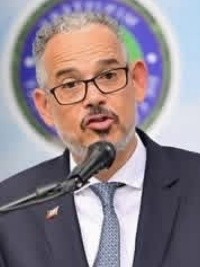
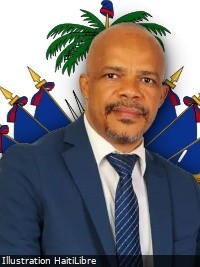
    Announced via a ministerial decision issued on June 10, 2026, the move follows a May 15, 2026 ministerial circular that formally established the UPO by merging three existing regional educational institutions: the Training Center for the Fundamental School (CFEF), the National School of Applied Geology (ENGA), and the National Higher School of Technology (ENST). Education Minister Vijonet Déméro emphasized the urgent need for a temporary governing body to manage the administrative, academic, and logistical groundwork required to stand up the new unified university, leading to the formalization of the ad hoc committee under the oversight of the Ministry of National Education and Vocational Training (MENFP).

    The seven-member committee brings together cross-sector representation from existing institutions, regional stakeholders, and ministerial leadership to ensure balanced input during the transition. Carole Berotte Joseph, a consultant in the Minister’s Office, will serve as committee president, while Michelet Clerveau, a member of the Minister’s Cabinet, will act as committee secretary. The directors of the three merging institutions will each lead academic portfolio for their respective fields: Ronald Jacques Jean of CFEF will oversee education academic affairs, Michael Saimbertil of ENGA will lead on earth sciences academic affairs, and Dieudonné Delva of ENST will handle academic affairs for technology and technical sectors. Two regional educator representatives round out the committee: Yvener Desrosiers for the Palmes Region and Edmy Victor for the Island of Gonâve. The committee is also authorized to recruit additional technical experts as needed to fulfill its mandate.

    The committee carries a clear set of core responsibilities spanning four key workstreams to prepare the UPO for full operation. On the administrative side, members will conduct a full audit of all physical assets, equipment, and human resources from the three merging institutions, then draft a set of transitional internal bylaws to govern the new university during its early phase. Academically, the task force will harmonize overlapping curricula from the predecessor institutions and validate teaching frameworks for two new planned Higher and Technical Education Centers (CEST) located on the Island of Gonâve and in the Palmes Region. Financially, the committee will develop a detailed projected budget for the university’s first full fiscal year, covering both initial setup and ongoing operating costs. Logistically, members will assess and map existing physical infrastructure to accommodate the UPO’s new regional campuses.

    The committee’s mandate is scheduled to run for four months, from June 5, 2026, through October 5, 2026, with a one-time extension permitted if the transition requires additional time. The mandate will automatically terminate once the UPO’s permanent Board of Directors and rectorate are officially appointed and installed. To ensure transparency and accountability to the ministry, the committee is required to submit monthly progress reports to the Minister’s Office, followed by a full comprehensive final report at the conclusion of its work. The ministerial decision went into effect immediately upon its publication.

    The creation of the UPO marks a key investment in expanding accessible public higher education across western Haiti, integrating existing regional training institutions into a unified public university structure that will serve both the Palmes Region and the Island of Gonâve.

  • The UN Secretary-General is expected in Haiti

    The UN Secretary-General is expected in Haiti

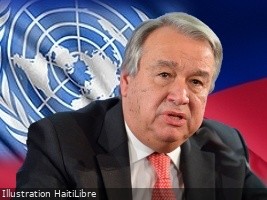
    United Nations Deputy Spokesperson Farhan Haq made a key announcement Monday, confirming that UN Secretary-General António Guterres will undertake an official solidarity visit to Haiti on Tuesday, June 16, 2026. The trip comes as the Caribbean nation grapples with an unprecedented multidimensional crisis that has pushed displacement figures to all-time highs, with nearly 1.5 million Haitians forced to leave their homes due to widespread gang-related violence.

    During the one-day visit, Guterres will prioritize direct engagement with Haitian communities that have borne the brunt of ongoing instability. Haq noted that the Secretary-General aims to witness on the ground the full scope of Haiti’s overlapping humanitarian and security emergencies, while also reviewing ongoing stabilization work led by Haitian national authorities and international allies. He is scheduled to hold direct conversations with women, men and children whose daily lives have been upended by years of escalating violence.

    The United Nations has long backed international intervention in Haiti to address its deepening crisis, in line with UN Security Council Resolution 2793. This mandate includes critical logistical and operational support for the multinational Gang Suppression Force (GSF), which is tasked with cracking down on violent armed gangs that control large swathes of the country.

    Guterres’ schedule for the visit includes meetings with leading humanitarian organizations operating in Haiti, as well as a high-level discussion with Haitian Prime Minister Alix Didier Fils-Aimé. The talks will center on advancing long-term national stability and a democratic transition, as Haiti prepares to hold general elections by the end of 2026 — a vote that is widely expected to mark a critical turning point for the country.

    En route to Haiti, Guterres will travel through the Dominican Republic, Haiti’s neighboring country that shares the island of Hispaniola. He will hold preliminary meetings with Dominican national authorities in the capital Santo Domingo before crossing into Haiti. After concluding his engagements in Port-au-Prince, the Secretary-General will return to UN Headquarters in New York on June 17, 2026.

  • ZED Airlines : Flights from Cap

    ZED Airlines : Flights from Cap

    In an official public statement issued shortly after the cancellation, ZED Airlines has confirmed that its scheduled round-trip flight connecting Cap-Haïtien, Haiti and Montreal, Canada, set to depart on Monday, June 8, 2026, was scrapped at the eleventh hour due to unforeseen new regulatory demands from Canadian border officials.

    The airline noted that all pre-departure preparations had already been completed, and the check-in process for passengers was on the verge of launching when the sudden notification arrived from the Canada Border Services Agency (CBSA). The agency introduced new administrative and operational requirements that the carrier would need to satisfy before the flight could land at Montreal’s airport.

    With only minimal advance warning of the new rules arriving just moments before the flight’s scheduled departure, ZED Airlines confirmed it was impossible to meet the updated specifications immediately. That left the carrier with no choice but to scrap the flight, with operations on the route paused until all the authorities’ demands can be fully addressed and approved.

    In a key clarification, the airline emphasized that the cancellation has no connection to any lapse or issue with its existing air operator certifications. All necessary operating authorizations for the route were already in place and fully valid at the time of the scheduled flight. The entire disruption stems exclusively from the last-minute new administrative and operational rules issued by Montreal authorities and the CBSA, and does not impact any of the operating permits ZED Airlines currently holds.

    ZED Airlines extended its deepest regret for the major inconvenience the cancellation has caused to booked passengers, and offered sincere apologies to all travelers impacted by the situation, which the carrier notes was completely outside of its control.

    Company teams are currently working in active, close coordination with Canadian and relevant authorities to resolve the outstanding issues and lock in a solution as quickly as possible. The airline remains fully committed to supporting all affected passengers, and is working to put forward reasonable alternative arrangements that will cut down on the disruption caused by the cancellation.

    The carrier thanked passengers for their understanding, patience and ongoing trust, and confirmed that it will release additional public updates as soon as a permanent solution is reached and a new rescheduled departure date can be confirmed.

  • Preparation for Brazil 2027 : Victory for Grenadières [3-1] against Equatorial Guinea (video)

    Preparation for Brazil 2027 : Victory for Grenadières [3-1] against Equatorial Guinea (video)

    On June 9, 2026, Haiti’s senior women’s national football team, the Grenadières, picked up a confidence-boosting 3-1 victory over Equatorial Guinea’s Nzalang in their final preparation friendly at Spain’s El Mauli Stadium, located in Antequera, Malaga Province. The fixture marked the second and last warm-up match for the Grenadières ahead of the final round of qualifiers for the 2027 FIFA Women’s World Cup hosted by Brazil, which will run from June 24 to July 25 next year.

    Sweden’s Pia Sundhage, who recently took the helm as head coach of the Grenadières, fielded a adjusted starting XI for the clash, making four changes from the side that defeated New Zealand 2-1 in the first warm-up fixture. In defense, Bethina Petit-Frère and Milan Pierre-Jérôme replaced Kethna Louis and Tabita Dougenie Joseph; attacker Chelsea Domond came in for Darlina Florsie L. Joseph, while midfielder Anyssa Ibrahim earned a starting spot in place of Sherly Jeudy. The full starting lineup featured goalkeeper Oceane Toussaint of Paris Saint-Germain, defenders Betina Petit-Frère (En Avant Guingamp), Claire Constant (DC Power FC), Jennyfer Limage (RC Lens), and Milan Pierre-Jérôme (UNGERN), midfielders Anyssa Ibrahim (Le Man FC) and Melchie Daëlle Dumornay (OL Lyonnes), and attackers Chelsea Domond (En Avant Guingamp), Roseline Eloissaint (FC Nantes), Nerilia Mondesir (Seattle Reign FC), and Lourdjina Étienne (FC Fleury).

    Ranked 47th in the global FIFA rankings, the Grenadières dominated the 90-minute fixture from the opening whistle against their 90th-ranked opponents. The first half saw Haiti take a commanding lead by halftime: rising star Melchie Daëlle Dumornay, popularly known by her nickname “Corventina”, broke the deadlock in the 25th minute to put Haiti up 1-0. Just five minutes later, Lourdjina Étienne converted a rebound to double the Grenadières’ lead, sending the side into the halftime break with a comfortable 2-0 advantage.

    After the interval, the Grenadières extended their lead in the 55th minute, when Étienne’s through ball set up Dumornay for her second goal of the match, putting Haiti up 3-0. Equatorial Guinea avoided a shutout in the 85th minute, when Reina Nñegue scored a late consolation goal to lock in the final 3-1 scoreline.

    Team analysts note this victory carries meaningful weight for Haiti’s preparation ahead of the final qualifying phase, which kicks off in November. The friendly allowed Sundhage and her staff to test new lineup combinations, assess the team’s current progress, and identify areas for improvement ahead of the high-stakes qualifying matches, helping the side maintain positive momentum as they continue their World Cup journey.

  • Urban security and territorial planning in Haiti

    Urban security and territorial planning in Haiti

    Against a backdrop of escalating instability driven by armed criminal groups and unregulated urban expansion, Haiti’s national and local governance stakeholders gathered this week for the 10th iteration of “Territories Thursday,” a landmark forum focused on examining how strategic land-use planning can counter rising urban insecurity across the Caribbean nation.

    The event brought together a cross-sector lineup of experts, policymakers, and international partners to unpack the deep links between haphazard urban development, criminal encroachment on national territory, and systemic governance failures that have eroded public safety. Leading opening presentations were David Telcy, an agronomist who coordinates the Quality and Methodology Unit at Haiti’s National Center for Geospatial Information (CNIGS), and Wadelène Coriolan, a computer engineer and Deputy Mayor of the commune of Gressier. Additional insights were shared by Christine Stephenson, Executive Technical Secretary of the Interministerial Committee for Land-Use Planning (CIAT), and Denoil Anténor, a trained lawyer and graduate of the École Normale Supérieure who serves as President of the National Federation of Haitian Mayors (FENAMH).

    Supplementing the domestic stakeholder perspectives were technical and evidence-based contributions from two specialized experts: anthropologist and sociologist Derinx Petit Jean, and Juan Marquez, Deputy Country Director for the United Nations Office on Drugs and Crime (UNODC). The pair delivered data-backed analysis of shifting urban population dynamics and the unique security challenges that have left Haiti grappling with widespread instability.

    Leveraging geospatial maps and curated statistical datasets, panelists collectively emphasized the grave security risks that stem from unplanned, unregulated urbanization. They also drew sharp attention to how transnational criminal networks have exploited weak territorial governance to occupy and misuse Haitian land for illicit activities. According to the forum’s collective findings, these criminal encroachments do not only amplify national instability: they also undermine institutional control over territory, block inclusive local economic development, and fuel the growth of illegal markets that continue to erode quality of life for Haitian citizens.
    Speaking on behalf of the Haitian government, Secretary of State for Local Government Sharina Lochard opened the event by praising the productive collaboration between Haiti’s Ministry of the Interior and Territorial Communities (MICT) and the International Council for Territorial Development that made the forum possible. She acknowledged the extraordinary complexity of the work facing local authorities in Haiti’s current crisis context, noting that municipal and communal leaders are on the front lines of efforts to control, manage, and organize national territory amid widespread violence.

    Lochard reaffirmed the Haitian government’s core strategic priorities: restoring national security, stabilizing governance, advancing economic recovery, and moving forward with long-delayed democratic elections. She stressed that strengthening decentralized local governance is a non-negotiable prerequisite to improving land management practices and building cities that are safer, more resilient, and better organized to serve residents.

    For the event’s organizing bodies, the 10th edition of “Territories Thursday” is part of an ongoing, collective effort to advance public and institutional dialogue around the policy and planning mechanisms needed to build well-governed territories and secure urban spaces across Haiti. Closing the forum, Lochard reaffirmed the central role of intentional planning in advancing national stability, noting: “Land-use planning is a key lever for strengthening local governance and sustainably improving the living conditions of our people.”

  • «D-5» 2026 World Cup : The Government calls on all Haitians

    «D-5» 2026 World Cup : The Government calls on all Haitians

    Half a century after Haiti’s last appearance on football’s most prestigious global stage, the Caribbean nation is set to make a historic return to the FIFA World Cup in 2026 — and the Haitian government is calling on every citizen, at home and abroad, to rally behind the national team as the country prepares for this momentous occasion.

    Haiti’s men’s national football team, affectionately known as the Grenadiers, secured their qualification for the 2026 tournament on November 18, 2025 — a date deliberately echoing the 1803 Battle of Vertières, the revolutionary conflict that secured Haiti’s independence and gave the team its iconic name. For the administration of Prime Minister Alix Didier Fils-Aimé, this qualification is far more than a landmark sporting achievement: it is a beacon of hope for a nation that has navigated persistent challenges, and a powerful reminder of what collective perseverance can deliver.

    In an official statement, the government praised the squad for embodying the very values that defined Haiti’s founding revolution. The historic battle cry “Grenadiers to the assault!” has carried through two centuries of Haitian history, and today it echoes in the grit and determination of the players who fought through qualifying to claim their spot at the World Cup. “This qualification represents a powerful symbol of hope, perseverance, and confidence in the future of the Haitian Nation,” the statement reads, noting that the team’s journey mirrors the resilience of Haiti’s revolutionary ancestors, who turned the aspiration for freedom into a historic victory.

    Beyond the pitch, the government frames this World Cup run as a unique opportunity to bridge societal, political and geographic divides, uniting all Haitians under a single national banner. Just as sporting success is built on cohesion, discipline and collective faith, the government argues, national progress depends on these same foundational principles. Football, in this moment, becomes a unifying force that strengthens national pride, boosts Haiti’s international standing, and reaffirms a shared sense of national community.

    The Grenadiers will compete in Group C, with all three of their group-stage matches hosted across the United States. Their campaign kicks off on June 13, 2026 at Boston’s Gillette Stadium, where they will face Scotland at 9:00 p.m. local (USA/Haiti) time. Next, they will take on five-time World Cup champions Brazil at Philadelphia’s Lincoln Financial Field on June 19, also kicking off at 9:00 p.m. Their final group-stage match will be against 2022 World Cup semi-finalists Morocco at Atlanta’s Mercedes-Benz Stadium on June 24, with kickoff scheduled for 6:00 p.m. USA/Haiti time. The group is widely regarded as a challenging draw: Morocco currently ranks as Africa’s top national team, while Scotland is known for its physical, robust style of play, and Brazil remains one of the tournament’s perennial favorites.

    The official roster of players called up to represent Haiti at the 2026 World Cup is available via the HaitiLibre portal, where fans can also access full coverage of the team’s pre-tournament preparation, including a recent 4-0 friendly win over New Zealand, a run-down of qualifying matches, and government-led initiatives to support national viewing events for the public. The government extended its call for unity to the millions of Haitians living in the diaspora as well as citizens across all 10 of Haiti’s domestic departments, urging everyone to stand behind the Grenadiers throughout the competition.

    “This success illustrates the immense potential of our youth and the ability of our people to accomplish great things when they move forward together,” the statement notes. The government’s message is clear: the 2026 World Cup is more than a sporting event — it is a chance to show the world that Haiti stands tall, resilient and unified, capable of turning collective dreams into historic reality.

  • Cuba and Haiti affect Latin American growth

    Cuba and Haiti affect Latin American growth

    In its latest 2026 regional economic outlook published in June, the United Nations Economic Commission for Latin America and the Caribbean (ECLAC) has revised down its projected growth rate for the region from the 2.3% forecast made in December 2025 to 2.2%, with prolonged crises in Cuba and Haiti identified as the primary factors dragging down the regional average.

    The UN agency’s analysis warns that 24 out of the 33 economies in the region are set to see an expansion slowdown in 2026, extending a stretch of four consecutive years where regional growth has hovered around 2.3% — a trend ECLAC characterizes as a persistent low-growth trap that limits job creation and poverty reduction across the bloc.

    Cuba is expected to register the sharpest contraction across the region, with ECLAC projecting a 6.5% economic shrinkage for 2026, a deterioration from the 3.8% drop the island recorded in 2025. Haiti, meanwhile, is forecast to shrink by 1.4% this year — a smaller decline than 2025’s 2.7% contraction, but still a continued drag on overall regional performance.

    The impact of these two struggling economies on the regional average is substantial: when the two crisis-hit nations are excluded from calculations, the 2026 average growth for the rest of Latin America and the Caribbean climbs to 3.9%, a modest uptick from the 3.8% expansion the region excluding Cuba and Haiti posted in 2025. This gap makes clear the outsized distorting effect of the two countries’ ongoing economic collapses on regional aggregate data.

    Cuba’s economic crisis has deteriorated dramatically in the first half of 2026, triggered by a critical loss of oil imports. Following the capture of Venezuelan leader Nicolás Maduro on January 3, Cuba lost 80% to 90% of its crude oil supplies from Venezuela, which amounted to between 25,000 and 35,000 barrels of oil per day. Shortly after, Mexico suspended all oil shipments to Cuba on January 9 under pressure from the United States, and former U.S. President Donald Trump signed Executive Order 14380 on January 29, which enforces secondary tariffs on any third country that continues to export oil to the island. This oil supply shock has gutted Cuban energy infrastructure and industrial production.

    Independent analysts have offered an even grimmer outlook for Cuba: The Economist Intelligence Unit projected in February 2026 that the Cuban economy will contract by 7.2% this year, a deeper shrinkage than ECLAC’s official estimate. In contrast to the collapse in Cuba, the region sees stark growth disparities, with Guyana leading all regional economies at a projected 16.3% expansion in 2026, driven by booming output from its fast-growing offshore oil sector. Venezuela follows with a projected 6.5% growth, while Nicaragua and Paraguay are both forecast to expand by 4.5% this year.

    External headwinds are also adding pressure to vulnerable economies across the region. In the first three weeks of April 2026, the price of West Texas Intermediate crude oil was 74% higher than the average price recorded in December 2025, creating new global inflationary pressures that hit already weakened economies like Cuba’s particularly hard.

    Cuban President Miguel Díaz-Canel’s administration has repeatedly pointed to the longstanding U.S. trade embargo as the core cause of the country’s economic collapse, and ECLAC’s data confirms that Cuba is by far the worst-performing economy in the entire Latin American and Caribbean region. Notably, the Cuban government’s official 2026 projection puts economic growth at 1% for the year, a figure that independent economists widely dismiss as completely disconnected from on-the-ground economic realities.

  • The Prime Minister announces the elimination of taxes on batteries and solar panels

    The Prime Minister announces the elimination of taxes on batteries and solar panels

    On June 5, 2026, top Haitian government officials, cross-sector partners, youth environmental activists, and education leaders gathered at Port-au-Prince’s Karibe Hotel for an official World Environment Day ceremony hosted by the country’s Ministry of Environment. Centered on the theme “Green Jobs Serving a Sustainable Haiti,” the event brought together cabinet ministers from eight key government departments alongside technical, financial, and community stakeholders to outline the nation’s path forward for climate action and sustainable development.

    Opening the proceedings, Minister of Environment Valéry Fils-Aimé centered youth leadership as the foundational pillar of Haiti’s environmental transition. He detailed the ministry’s ongoing work across six core priority areas: public sanitation expansion, protected area conservation, degraded ecosystem restoration, widespread environmental education, national climate change mitigation, and targeted green job development. Reaffirming the government’s commitment to realizing Haitian youth’s vision for a sustainable 2050, Fils-Aimé highlighted key recent milestones, including the official launch of the national clean-up initiative “Konbit Ayiti Zewo Dechè” and the removal of more than 60,000 cubic meters of accumulated waste from urban centers across the country.

    In his keynote address, Prime Minister Alix Didier Fils-Aimé underscored the untapped economic potential of green industries to create stable, accessible employment for Haitian young people. The centerpiece of his announcement was a landmark policy change: the full elimination of import and consumption taxes on both batteries and solar panels. Framed as a concrete, ambitious step forward, the policy formalizes the Haitian government’s commitment to advancing a national energy transition, protecting critical ecosystems, and building an inclusive, green-centered sustainable economy. The reform is designed to lower barriers to renewable energy access for households, small businesses, and public institutions, while cutting the nation’s reliance on carbon-intensive traditional energy sources.

    Following the formal ceremony, the Prime Minister toured on-site exhibition spaces hosted by the Ministry of Environment’s technical departments, the National Agency for Protected Areas (ANAP), the National Solid Waste Management Service (SNGRS), private environmental enterprises, and local green artisans. Displayed innovations and achievements spanned recycling technology, waste-to-resource recovery, biodiversity conservation, renewable energy solutions, and circular economy initiatives.

    Minister of Planning Sandra Paulemon used her remarks to outline the severe, interconnected environmental challenges Haiti continues to face. She outlined the extent of existing damage: widespread deforestation has stripped mountain ecosystems, critical watersheds are in decline, rivers suffer from dangerous silt accumulation and pollution, unmanaged waste overwhelms public spaces, residential neighborhoods, and coastal areas, and the nation faces extreme climate vulnerability to recurrent hurricanes, flooding, prolonged drought, soil erosion, and deadly landslides that disproportionately harm low-income and marginalized communities.

    Paulemon emphasized that environmental action is not an abstract policy goal but a matter of national survival. “The environment is the land we cultivate, the water we drink, the air we breathe, and the legacy we will leave to our children,” she stated. Turning to the event’s theme of green job development, she outlined the strategic role that sustainable employment can play in driving Haiti’s broader economic and social transformation. Key green sectors including reforestation, urban sanitation, integrated waste management, watershed protection, sustainable agriculture, renewable energy, recycling, ecotourism, and green infrastructure offer a unified solution to multiple national crises, simultaneously driving job growth, reducing poverty, advancing environmental protection, and strengthening social cohesion across communities.

    Despite acknowledging the scale of the challenges ahead, Paulemon closed with a message of determined hope for the nation’s future. “I refuse to believe that Haiti’s destiny is one of decline, vulnerability, or resignation,” she said. “I believe in the Haitian people’s capacity to transform difficulties into opportunities, challenges into solutions, and crises into new beginnings.”

  • Towards the Digital Transformation of the haitian Education System

    Towards the Digital Transformation of the haitian Education System

    In a landmark move to modernize learning across the Caribbean nation, Haiti’s Ministry of National Education and Vocational Training (MENFP) has officially launched a dedicated national body tasked with steering the full digital transformation of the country’s public education system, announced by Education Minister Vijonet Déméro in a formal ministerial decree published on July 6, 2026.

    Citing longstanding gaps in outdated teaching practices, fragmented school governance, and unequal access to modern learning materials, Minister Déméro framed the new commission as a critical strategic priority aligned with the need to integrate 21st-century information and communication technologies (ICT) into every level of Haitian education. The official order draws its legal authority from the 1989 Decree that governs the structure and operations of the national education ministry.

    Officially named the National Commission for the Digital Transformation of the Education System (CNTNSE), the 11-member intersectoral body will operate directly under the oversight of MENFP. Its core mandate is to design, lead, and coordinate a unified national strategy for digitizing the entire education sector, bringing together stakeholders from government agencies, academic institutions, private industry, and international partners to align efforts and avoid fragmented initiatives.

    The commission’s leadership and membership draws representation across multiple key sectors to ensure broad buy-in and technical expertise. Renan Michel, Inspector General of MENFP, will serve as the commission’s chair. Additional voting members include Gerald Belaire from the National Bureau of External Security (BUNEXE), Jean Joseph Mackenzie Charles from the Tunisian Union of Information and Communication Technologies (UTICE), Pierre Jean from the University of the South (US), Jean Misgaire Fanor from the French Center for Continuing Education (CFCE), and designated representatives from the National Telecommunications Council (CONATEL, technical and financial partners, the Network of Departmental Public Universities, state-recognized private universities, and the Departmental Directorates of Education. The final seat is reserved for an expert in educational and digital engineering appointed directly by the Minister’s office. The commission is also authorized to recruit ad-hoc technical specialists from any public or private entity to support its work as needed.

    CNTNSE’s responsibilities are structured across four core focus areas that cover every stage of the digital transformation process. On the strategic front, the body will develop a comprehensive National Digital Transformation Plan for Education (PNTNE), establish unified technology standards for all schools nationwide, and roll out mandatory digital skills training for all education system employees. For pedagogical initiatives, it will oversee the development and regulation of digital learning platforms, including massive open online courses, manage the conversion of traditional print textbooks to digital formats, and coordinate ongoing upskilling for classroom teachers on digital teaching tools. For infrastructure, the commission will conduct a national audit of existing internet connectivity and technological equipment in schools and regional education offices, then develop a multi-year investment plan to close gaps. Finally, the commission will lead partnership and resource mobilization efforts, working with public, private, and international stakeholders to secure the technical and financial support needed to implement large-scale digital projects.

    The commission’s formal term runs for 24 months, from June 5, 2026, to June 5, 2028, with the option of renewal based on the ministry’s strategic priorities and progress achieved. To ensure full transparency and accountability, the body is required to submit quarterly progress updates on its Digital Roadmap (DRM) to the Minister’s office, in addition to a full annual report covering achievements, challenges, and next steps. The new commission went into immediate effect following the publication of the ministerial decree and will be formally registered with all relevant Haitian government bodies.

    This initiative marks one of the most ambitious structural overhauls of Haiti’s education system in recent decades, with the potential to expand access to quality learning resources for thousands of students across the country who currently lack access to modern educational tools.

  • Technology : DevExpo 2026 Final, list of the 5 winning projects

    Technology : DevExpo 2026 Final, list of the 5 winning projects

    On June 6, 2026, the fifth iteration of DevExpo, Haiti’s premier innovation competition focused on digital transformation, concluded its final round at Port-au-Prince’s Montana Hotel. Co-organized by local tech group Banj and the Digicel Foundation, the pitch event drew high-profile attendees from across the public and international development sectors, including representatives from the United Nations Development Programme (UNDP) Haiti, Haiti’s Ministry of Commerce and Industry, Sogebank Group, the Inter-American Development Bank, and dozens of partner organizations invested in advancing Haiti’s tech ecosystem.

    Launched earlier this year in March 2026, the 2026 DevExpo carried the central theme of “AI for Social Impact,” created to center and amplify the technical talent of young Haitian innovators. The competition challenged participants to leverage artificial intelligence and cutting-edge digital tools to tackle pressing, real-world challenges across key sectors of Haitian society, from public education and healthcare to small business development and expanded access to critical community services.

    The selection process began with more than 200 project submissions from across the country. After an initial rigorous evaluation round, 29 projects advanced, with 10 ultimately earning a spot in the final pitch competition. At Saturday’s finale, five standout startups were selected as winners, splitting a total prize pool of 5 million Haitian gourdes to fund further development and scaling of their community-focused solutions, each of which uses AI to address unmet social and economic needs across Haiti.

    The first-place winner, ZònPam, took home 2 million HTG for its real-time community security platform. The tool alerts local residents to ongoing incidents and marks high-risk areas across the country, while integrating an AI chatbot named Nora that answers user questions related to public safety.

    Second place went to Kòb Mwen, which received 1.5 million HTG. The fintech solution is designed to expand financial inclusion for Haitian communities, offering built-in budgeting education and accessible personal finance management tools for users who often lack access to traditional banking services.

    Three projects tied for third place, each awarded 500,000 HTG. The first of these is Smart Digital Health for Haiti, also known as KURA, an e-health initiative that streamlines medical record management, remote patient monitoring, and telehealth services to expand access to care across underserved areas of Haiti. Next is The Baccalaureate, an AI-powered adaptive learning platform that provides personalized study guidance and targeted practice exercises to help Haitian secondary students prepare for their national baccalaureate exams. The third third-place winner is PHARx, a pharmaceutical sector platform that simplifies medication access for patients, improves inventory tracking for local pharmacies, and streamlines connections between patients and care providers.

    Competition organizers have expressed confidence that the development of these five projects will drive tangible, positive innovation and widespread social benefit across Haiti. UNDP Haiti extended formal congratulations to all five winning teams, noting that their work underscores the extraordinary capacity of Haitian youth to turn ambitious creative ideas into actionable, impactful solutions for national development. By continuing its support for DevExpo, UNDP reaffirms its long-term commitment to strengthening Haiti’s digital innovation and entrepreneurship ecosystem for future generations.