标签: Haiti

海地

  • Social : The CDH denounces the blocking of the recruitment of 80 new customs agents

    Social : The CDH denounces the blocking of the recruitment of 80 new customs agents

    The Haitian Customs Collective (CDH) has issued a formal condemnation of the General Customs Administration’s management practices, alleging systematic corruption in the recruitment process for new agents. The organization expressed profound concern over what it describes as opaque hiring procedures that favor personal connections over merit-based selection.

    According to the CDH’s investigation, the legitimate recruitment process for 80 customs surveillance agents has been effectively sidelined. This process, which involved competitive examinations administered to 3,232 candidates on August 24, 2025, was initially scheduled to conclude with new agents joining the administration by October. However, the CDH claims that Director Gérald Remplais has instead overseen the appointment of 210 agents based on personal connections rather than examination performance.

    The collective’s statement reveals that since November, internal investigations have uncovered evidence of favoritism and irregular practices within the institution. These findings suggest a management approach that allegedly prioritizes personal relationships over professional qualifications, potentially undermining both institutional integrity and operational effectiveness.

    The CDH has called upon relevant state authorities, oversight bodies, and international customs partners to intervene urgently. The organization emphasizes that ethical governance and professional standards are essential for maintaining public trust and ensuring the proper functioning of Haiti’s customs services. The collective reaffirmed its commitment to advocating for transparency, merit-based appointments, and the protection of agents’ rights within the customs administration.
  • ONA : Working meeting on the ONAPolis program

    ONA : Working meeting on the ONAPolis program

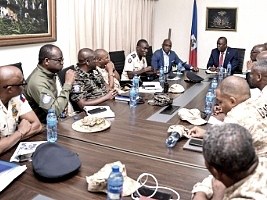
    Port-au-Prince, Haiti – In a significant move to bolster its social security infrastructure, Haiti’s National Old-Age Insurance Office (ONA) convened a high-level interdepartmental meeting on February 25, 2026, to evaluate and reinforce the ONAPolis program. The gathering brought together key stakeholders including representatives from the Haitian National Police (PNH), Portfolio Directorate, Budget Directorate, and the Ministry of Economy and Finance (MEF).

    During the comprehensive working session, participants addressed operational challenges identified during the program’s implementation and developed strategies to enhance institutional cooperation. Ronald Bazile, Director General of ONA, emphasized the importance of adhering to the established memorandum of understanding to ensure clear understanding of respective responsibilities among all participating entities.

    The ONAPolis program, designed as an integral component of Haiti’s structured social protection system, provides police officers with identical benefits and subjection to the same regulations as all ONA insured members. Regarding credit applications, the agency reinforced that all requests must be channeled exclusively through the Police Human Resources Department, with direct submissions to ONA remaining ineligible for consideration.

    To maintain transparency and operational efficiency, ONA has implemented rigorous financial assessment protocols that include systematic verification through the National Credit Bank (BNC) to evaluate applicants’ solvency status. These measures are specifically designed to prevent over-indebtedness, preserve the program’s financial stability, and protect beneficiaries from unsustainable debt burdens.

    Following productive discussions, participating institutions agreed to enhance operational collaboration with the Police HR Department, establish periodic financial reconciliation mechanisms, improve institutional communication channels, and further clarify financial processes and administrative responsibilities.

    ONA reaffirmed its commitment to maintaining stringent financial analysis standards, safeguarding beneficiaries against over-indebtedness, consolidating ONAPolis for sustainable social protection, and facilitating prioritized processing for specialized units where feasible. This strategic approach underscores ONA’s central role in administering a robust social program founded on administrative rigor, institutional accountability, and effective protection of insured individuals.

  • Politic : PM Alix Didier Fils-Aimé met with Secretary of State Marco Rubio

    Politic : PM Alix Didier Fils-Aimé met with Secretary of State Marco Rubio

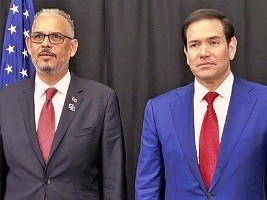
    In a significant diplomatic engagement on the sidelines of the 50th CARICOM Heads of State Summit in Basseterre, Saint Kitts and Nevis (February 24-27, 2026), Haitian Prime Minister Alix Didier Fils-Aimé convened with U.S. Secretary of State Marco Rubio to reinforce strategic bilateral cooperation between their nations.

    The high-level meeting, characterized by open dialogue and results-oriented diplomacy, focused on sustainable institutional stabilization, enhanced public security measures, and establishing frameworks for credible electoral processes in Haiti. Central to discussions was the recently established ‘Pact to Rebuild National Stability and Guarantee Credible Elections,’ which Secretary Rubio endorsed as a critical political breakthrough demonstrating unity among Haiti’s political factions and civil society.

    Security concerns dominated the agenda, with Prime Minister Fils-Aimé detailing governmental efforts to reestablish state authority and dismantle criminal networks undermining public safety. Both leaders emphasized the necessity of strengthened bilateral cooperation to boost operational capabilities of Haitian security forces through enhanced training, equipment, and intelligence sharing.

    Particular attention was given to mobilizing international support for the Gang Repression Force (FRG), addressing needs for specialized personnel, strategic equipment, logistical infrastructure, and financial backing. The officials committed to collaborative efforts ensuring effective implementation of this security initiative, recognizing its fundamental importance in restoring republican order and creating conditions for democratic transition.

    The meeting concluded with mutual commitment to ongoing strategic dialogue, reflecting shared responsibility in addressing Haiti’s governance and security challenges while fostering international confidence in the country’s stabilization efforts.

  • Security : High-level strategic meeting on strengthening national security

    Security : High-level strategic meeting on strengthening national security

    In a significant move to address Haiti’s pressing security challenges, Acting Prime Minister Patrick Pélissier convened a high-level strategic meeting on February 25, 2026, focusing on national security reinforcement and institutional stability. The Justice Minister, serving as interim leader during Prime Minister Fils-Aimé’s attendance at the 50th CARICOM Conference in Saint Kitts and Nevis, orchestrated this crucial gathering that united top governmental and law enforcement officials.

    The high-stakes session assembled the Haitian National Police (PNH) High Command, central government representatives, and Delmas Mayor Wilson Jeudy. Following Prime Minister Fils-Aimé’s directives, key PNH operational divisions participated extensively, including the General Directorate, Central Directorate of Judicial Police, Central Directorate of Administration and Police, alongside West 1 and 2 Departmental Directorates.

    Deliberations yielded comprehensive security enhancement mechanisms designed to:

    • Optimize mobile patrol deployments and stationary checkpoint operations
    • Intensify preventive measures and law enforcement activities across all ten geographic departments
    • Expand police presence through additional outposts and forward operating bases
    • Strengthen internal troop supervision while ensuring clear officer identification protocols
    • Enhance intelligence-driven traffic interventions and targeted search operations

    These measures demonstrate the government’s dedication to reestablishing state authority, safeguarding citizens and property, and dismantling criminal networks while maintaining strict adherence to legal frameworks and fundamental rights.

    The administration highlighted the critical importance of structured community collaboration, identifying citizen participation—particularly through alert systems for kidnapping incidents and suspicious activities—as fundamental to national security strategy.

    This coordinated effort between law enforcement agencies, judicial authorities across eighteen jurisdictions, and municipal governments aims to foster an environment of confidence, stability, and optimism for all Haitian citizens.

  • Leisure : Did you know ?

    Leisure : Did you know ?

    HaitiLibre’s Quiz platform has launched an enlightening series titled “Did you know?” focusing on obscure professions and general knowledge. The inaugural piece spotlights the highly specialized and little-known craft of campanistry—a profession dedicated to the preservation of bell heritage.

    A campanist is a master artisan specializing in the installation, restoration, and maintenance of bells and their associated accessories. This multidisciplinary role demands expertise across several technical domains: mechanics for managing swing systems, electrification for automating bell functions, and structural engineering to assess the integrity of belfries supporting immense bronze weights. These craftsmen frequently operate within historic monuments, repairing monumental clock mechanisms and tuning intricate chimes to acoustic perfection.

    Beyond technical proficiency, the campanist serves as an acoustic conservator, ensuring that bell ringing respects local traditions and architectural integrity. This passion-driven profession requires a unique combination of skills: freedom from heights, operational autonomy, and a profound reverence for historical preservation.

    Working literally between heaven and earth, campanists perform essential conservation work that sustains the auditory heritage of cities and villages across centuries. Their work preserves what the article poetically terms “the voice of our communities.”

    The feature originates from educational materials accompanying Quiz-HaitiLibre’s expert-level challenges. The platform offers dozens of free, registration-free games available in both French and English, with three difficulty tiers across diverse topics including specialized professional knowledge. New content is added monthly to this educational initiative.

  • CONCACAF U-20 World Cup Qualifiers : «D-1», Player List

    CONCACAF U-20 World Cup Qualifiers : «D-1», Player List

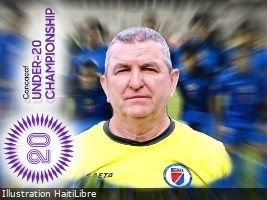
    WILLEMSTAD, CURAÇAO – Haiti’s under-20 national football team, known as the Grenadiers, has officially commenced their campaign in the CONCACAF U-20 World Cup qualifiers after arriving in the capital city of Willemstad on February 24, 2026. The squad, under the strategic guidance of Cuban head coach Raul Gonzalez Triana, is poised to compete in the regional championship scheduled from February 26 through March 4, 2026.

    The Grenadiers will initiate their tournament journey with an opening match against the Anguilla Rainbow Warriors on February 26. The selection features a 21-player roster demonstrating a blend of domestic talent and international experience. Fourteen athletes currently represent clubs within Haiti’s national league system, with thirteen hailing from first-division teams. Notably, the roster includes three players—Clifford Gene, Miguel Joseph, and Emerson Laisse—who have already secured qualification for the U-17 World Cup finals later in 2026, highlighting their exceptional development trajectory.

    The team composition showcases significant geographic diversity in player development. While the majority compete within Haiti’s academy and club system, several key players are gaining experience abroad. Four athletes are currently registered with clubs in Jamaica and the United States, including Mount Pleasant in Jamaica and Orlando City SC in the United States, providing international competitive exposure.

    Goalkeeping duties will be shared between Carlos Albertos Bre (Real Hope Academy), Guivenson Jean Philippe (Racing des Gonaïves), and Clifford Gene (Mount Pleasant, Jamaica). The defensive line features Leston Stanley Volcin, Oracio Marckidens Tanis (both ASC Haiti), along with Dieuvens Kenson Resil (Mount Pleasant, Jamaica), and Xavier Jose Belot (Miami Rush, USA).

    The midfield will be orchestrated by Ramy Fabilus (Real Hope Academy), Josue Stevenson Anglade (ASC Haiti), and John Peter Charles (Real Hope Academy). The offensive contingent includes promising talents Franco Celestin, Emerson Laisse (both Mount Pleasant, Jamaica), and Nikolai Oliver Pierre (Orlando City SC, USA).

    This tournament serves as a critical developmental platform for emerging Caribbean football talent, with teams competing for qualification to the global U-20 World Cup stage.

  • REMINDER : «J-2» UNESCO Participation Programme 2026–2027, call for proposals

    REMINDER : «J-2» UNESCO Participation Programme 2026–2027, call for proposals

    With the submission deadline rapidly approaching, UNESCO has issued a critical reminder for its 2026-2027 Participation Programme funding cycle. The international organization is calling for project proposals from Member States and officially partnered NGOs across its core competency areas: education, science, culture, communication, and information.

    The funding programme establishes clear financial ceilings based on project scope: national initiatives may receive up to $26,000, sub-regional or inter-regional projects qualify for $28,000, while regional projects can secure up to $38,000. A dedicated emergency assistance mechanism provides up to $50,000 for Member States confronting major disasters within UNESCO’s mandate.

    Each Member State may submit a maximum of seven applications, prioritized according to strategic importance. Notably, at least one of the top three priority projects must demonstrate substantive contributions to gender equality. Regional projects require endorsement from at least three Member States within the same geographical region.

    NGOs maintaining official partnership status with UNESCO are eligible to submit two applications for projects with sub-regional, regional, or inter-regional impact, provided they include formal letters of support from concerned nations.

    Eligible expenditures encompass expertise and consultant services, scholarships, publications and translations, equipment acquisition, and conference, seminar, or training organization. All applications must be channeled exclusively through National Commissions for UNESCO and submitted via online portals before the February 27, 2026 deadline.

  • FLASH : Cap

    FLASH : Cap

    The historic northern port city of Cap-Haïtien, Haiti, faced catastrophic flooding on Tuesday, February 24, 2026, after being pummeled by relentless torrential rains. The severe weather, triggered by an active cold front positioned to the southwest and northwest of the nation, began in the early morning hours and rapidly overwhelmed the city’s infrastructure.

    Within hours, major thoroughfares were transformed into violent, muddy rivers, bringing urban life to a standstill. National Highways #1 and #6 were rendered impassable, paralyzing all traffic. In response to the crisis, local authorities mandated the closure of schools and businesses across the city. The extensive flooding was severely exacerbated by drainage canals, which were found to be clogged with debris and sediment washed down from the surrounding hills.

    The most severely impacted districts included downtown areas and their surroundings. Neighborhoods such as Sainte-Philomène, Champin, and Cité du Peuple were among the hardest hit. Specific locations like Rue de la Lettre A, Lafossette, Carrefour Samarie, and Cité Lesko were completely submerged. The flooding also extended to eastern and northern zones, including the overflowing Zétrier Canal, and the areas of Petite-Anse and Fort Saint-Michel.

    Emergency services, including firefighters and specialized rescue teams, were immediately deployed across the city to respond to potential emergencies. With meteorological forecasts indicating that the unstable conditions could persist for another 24 hours, authorities are actively preparing to open temporary shelters for displaced residents if the rains continue.

    Jean Henry Petit, the North Departmental Technical Coordinator for Civil Protection, provided an initial assessment, noting that while significant material damage is evident in Cap-Haïtien, other municipalities within the Northern Department have thus far been less affected. He emphasized the urgent necessity for canal dredging to prevent future disasters. Fortunately, no loss of life has been reported in the immediate aftermath of the flooding.

    Officials have issued critical safety recommendations for the public, advising against attempting to cross flooded areas either on foot or by vehicle due to deceptively strong currents. Residents are urged to secure important personal documents in elevated, waterproof containers and to remain vigilant by continuously monitoring updates from local weather agencies.

  • Politic : Presentation of the «National Pact for Stability and the Organization of Elections» (video)

    Politic : Presentation of the «National Pact for Stability and the Organization of Elections» (video)

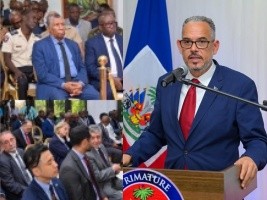
    In a landmark ceremony at the Villa d’Accueil on February 23, 2026, Haitian Prime Minister Alix Didier Fils-Aimé presided over the formal unveiling of the “National Pact for Stability and the Organization of Elections.” The event marked a significant convergence of national stakeholders, including government officials, diplomatic representatives, political party leaders, economic sector delegates, and civil society advocates, all demonstrating unified commitment to institutional stabilization and constitutional restoration.

    The Pact represents a strategic milestone in Haiti’s transitional journey, embodying collective political determination to establish conditions for credible, inclusive, and transparent elections while reinforcing institutional stability and national security. Prime Minister Fils-Aimé praised signatories for choosing dialogue and historical responsibility over partisan interests, emphasizing that “the destiny of an entire nation rests on the decisions and commitments made by its children to serve it.”

    The agreement culminates from intensive consultations and consensus-building efforts, with the Prime Minister highlighting that the true victory lies in “the victory for democracy and the entire nation.” He noted that signatories had demonstrated to the world Haiti’s capacity to “pour the concrete of stability” for the nation.

    This collective commitment establishes a framework for a coordinated and planned transition, granting the government authority to strengthen public security, consolidate institutions, ensure electoral transparency, engage youth actively, and stimulate economic recovery. The Pact provides the Prime Minister and his administration with comprehensive powers without fixed term limits, including constitutional modification authority and power-sharing mechanisms.

    The document (available in French as a 4-page PDF) outlines provisions for implementing these transitional measures, representing Haiti’s most substantial effort to address prolonged political instability through nationally endorsed mechanisms.

  • Tourism : Training on the new «digital card» for embarkation and disembarkation (video)

    Tourism : Training on the new «digital card» for embarkation and disembarkation (video)

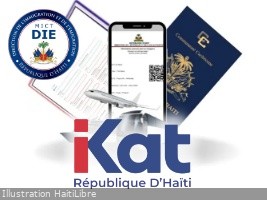
    Haiti’s immigration authorities have initiated a comprehensive training program to implement IKAT, a revolutionary digital border management system designed to transform entry and exit procedures across the country. The Directorate of Immigration and Emigration (DIE) recently conducted an intensive two-day workshop in Cap-Haitien, bringing together inspectors and agents from multiple government agencies including Customs Administration, Public Health, and Tourism ministries.

    This training represents the first phase of a national rollout following the December 31, 2025 decree that established the digital embarkation/disembarkation card system. The IKAT platform aims to fundamentally modernize Haiti’s border management through advanced digital infrastructure that centralizes migration data and streamlines traveler processing.

    Key operational benefits of the new system include enhanced traveler assistance capabilities, strengthened migration flow control through digitized information networks, and improved pre-arrival and post-departure monitoring mechanisms. The system will generate reliable statistics and establish a consolidated database critical for tracking foreign nationals who exceed the permitted 90-day stay limit.

    The training methodology emphasized practical application, with 80% of sessions dedicated to hands-on exercises, simulations, and role-playing scenarios. Participants engaged in eight workshop sessions to master IKAT’s functionalities and understand its operational advantages. Additionally, a specialized Passenger Assistance Agents unit has been established and trained in “Assistance Techniques and Psycho-Communication” to support travelers during implementation.

    All travelers entering or leaving Haiti must now complete the digital form through the official portal 72 hours before their journey, regardless of transportation mode. The system provides online form completion and modification capabilities through dedicated government portals.