标签: Haiti

海地

  • Prime Minister of Haiti met with the President of the WB

    Prime Minister of Haiti met with the President of the WB

    Top-level diplomatic discussions between Haiti’s leadership and the World Bank have opened a new chapter in international engagement over Haiti’s ongoing crisis, with the Caribbean nation’s prime minister laying out a clear three-pillar strategy for stabilizing the country and kickstarting economic revival. The high-stakes meeting took place on April 20, 2026, in Washington D.C., bringing together Haitian Prime Minister Alix Didier Fils-Aimé and World Bank Group President Ajay Banga to align on shared priorities for security and long-term recovery. Fils-Aimé was joined by a senior delegation comprising Haitian Foreign Minister Raina Forbin, Special Advisor Guerly Leriche, Haitian Ambassador to the United States Lionel Délatour, and leading economist Ludmilla Buteau Allien.

    During the closed-door talks, attendees centered the conversation on Haiti’s fragile national context: while the Haitian National Police has made incremental security gains by retaking control of key strategic locations from armed groups, widespread gang violence continues to destabilize communities and derail economic progress, leaving the overall situation deeply concerning. Fils-Aimé argued that addressing the multifaceted crisis requires an integrated, holistic framework rather than piecemeal interventions, anchored in three core priorities: restoring consistent national security, strengthening institutional rule of law, and expanding inclusive economic opportunities for all Haitians.

    In remarks following the discussion, the prime minister emphasized that security alone cannot resolve Haiti’s challenges. While foundational to any recovery, progress on public safety must be paired with tangible, on-the-ground actions that deliver tangible hope and improved prospects for the general population, he said. As Haiti prepares for upcoming national elections, Fils-Aimé stressed that creating immediate, high-impact employment – particularly for the country’s large youth population – is an urgent priority that cannot wait for long-term institutional reforms. He pushed for fast, results-driven intervention through large-scale labor-intensive public employment programs, which are designed to deliver visible, immediate benefits to struggling communities. “Every job created is a direct response to violence and exclusion,” Fils-Aimé emphasized.

    Talks also touched on the need to move beyond outdated, conventional development models that have failed to deliver sustained progress in Haiti. Attendees agreed that future international interventions should prioritize measurable community impact, full financial transparency, and inclusive wealth creation that lifts marginalized populations rather than concentrating gains. The meeting marks a key step in advancing dialogue between Haiti’s transitional government and major international financial institutions, as the country works to chart a path out of years of political instability and gang-fueled violence.

  • FLASH : A first contingent of 400 Chadian fighters already in Haiti, operating discreetly

    FLASH : A first contingent of 400 Chadian fighters already in Haiti, operating discreetly

    In a major development for the international effort to stabilize Haiti, the first group of 400 Chadian soldiers has already arrived and begun low-profile operations in the violence-plagued Caribbean nation, senior Chadian officials confirmed Monday. The deployment forms part of the United Nations-endorsed Gang Suppression Force (GSF), a multinational mission launched to dismantle powerful armed gangs that have paralyzed Haitian governance and displaced hundreds of thousands of civilians.

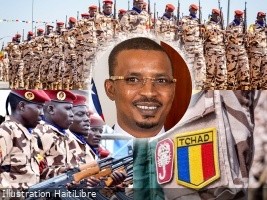
    Chadian President Mahamat Idriss Déby announced the country’s full deployment plans in an official address delivered to the nation’s parliament and senate by National Assembly President Ali Kolotou Tchaïmi. Per the announcement, Chad will contribute a total force of 1,500 personnel split across two battalions of 750 troops each, with the entire contingent set to serve an initial 12-month tour of duty starting in April 2026. The first 400 troops have already completed their deployment to Haiti, joining the anti-gang campaign targeting armed criminal groups and urban terrorist networks.

    Multiple coordinated cargo plane rotations have already delivered a full suite of heavy military equipment to support the mission, including armored vehicles, advanced surveillance systems, engineering machinery and weaponry. Most of this hardware has been transported to the purpose-built GSF headquarters base in Port-au-Prince, where construction to accommodate the incoming Chadian troops was accelerated by early equipment deliveries earlier this month. As of the latest updates, the infantry fighting vehicles included in the shipment have not yet been moved to frontline operational positions, sources familiar with the deployment confirmed.

    The deployed hardware package is tailored specifically to counter the unique tactical challenges posed by Haiti’s gang-controlled territories. It includes wheeled armored infantry fighting vehicles of the BTR class or comparable models, fitted with defensive armor to protect troops from small arms and sniper fire while offering mounted fire support for ground operations. Military engineering assets include armored bulldozers and wheeled loaders, which are critical for clearing the concrete barriers and repurposed shipping containers gangs use to block access to their strongholds in neighborhoods like Cité Soleil and Village de Dieu.

    The contingent also brings a fleet of tactical surveillance and attack drones that provide real-time aerial intelligence, allowing command teams to pinpoint the location of gang leaders ahead of coordinated ground raids. For counter-sniper operations targeting armed gang members positioned on Port-au-Prince’s rooftops, the force is equipped with heavy machine guns and long-range precision sniper rifles.

    In a break from standard international deployment protocols, no official public ceremony was held to mark the arrival of the Chadian troops. Haitian government officials have also not released any public statements confirming the deployment, a choice driven by strategic operational security considerations. That deliberate lack of public fanfare has allowed Chadian forces to establish their presence in Haiti discreetly, avoiding early targeted retaliation from gang groups.

  • FLASH : Sunrise Airways suspends its flights to and from Port-au-Prince

    FLASH : Sunrise Airways suspends its flights to and from Port-au-Prince

    On Monday, April 20, 2026, Haiti-based regional carrier Sunrise Airways announced an immediate suspension of all inbound and outbound air services connecting to Port-au-Prince, set to remain in effect for the rest of the day. The suspension comes in direct response to rapidly worsening security conditions in the immediate surrounding area of Port-au-Prince’s main air hub, Toussaint Louverture International Airport.

    In an official statement released to the public, partner organizations, and its customer base, the airline emphasized that the safety and well-being of passengers, flight crew, and all ground personnel are its non-negotiable top priority, justifying the sudden operational pause.

    Sunrise Airways has acknowledged that the unplanned disruption will create significant inconvenience for travelers with scheduled journeys, and it has apologized for the disruption. The airline is urging all passengers affected by the service suspension to reach out directly via phone or email to access support, arrange alternative flight bookings, or obtain the latest updates on their itineraries. Travelers who booked through third-party travel agencies are also advised to contact their service providers for additional assistance.

    As the situation around the capital’s airport remains unstable, Sunrise Airways confirmed it is maintaining constant communication and coordination with Haitian local authorities to track developments on the ground. The company says it will issue public updates as soon as security conditions improve enough to allow for a safe resumption of normal flight operations to and from Port-au-Prince.

    For customer inquiries, the airline has published multiple contact channels: a local hotline for callers within Haiti at +509 28 11 22 22, with a dedicated short code *606 for Digicel network users; a toll-free contact line for callers in the United States and other international locations at +1 877 652 0202; and a dedicated email address for reservation inquiries at reservations@sunriseairways.net.

  • Montreal : The FNE invites the Haitian diaspora to engage in an educational project for Haiti

    Montreal : The FNE invites the Haitian diaspora to engage in an educational project for Haiti

    MONTREAL – Between April 17 and 19, 2026, the La Renaissance Convention Centre played host to the 8th annual International Days of the Haitian Diaspora (JIDH 2026), a three-day collaborative summit that gathered cross-sector stakeholders united around a single shared mission: unlocking tangible, actionable pathways to drive long-term change for Haiti. As the lead partner for this year’s edition, Haiti’s National Education Fund (FNE) positioned the event as a critical platform to rally the global Haitian diaspora around a new, education-centered vision for national progress, bringing a high-level delegation led by Director General Elysé Colagene to lead discussions.

    For decades, the global Haitian diaspora has been recognized primarily for its critical financial remittances that support households and local economies across the country. But at JIDH 2026, FNE leaders made the case that the diaspora’s contribution can no longer be limited to monetary support. With deep professional expertise, global connections, and proven talent across education, technology, and institutional development, the community is uniquely positioned to drive systemic modernization of Haiti’s public education system – a transformation FNE frames as the foundational pillar of sustainable national development.

    In multiple addresses to summit attendees, Colagene stressed that scattered, uncoordinated diaspora initiatives have historically limited their impact on Haiti’s education sector. Instead, he argued for embedding diaspora leadership into a formal, cohesive national strategy that aligns contributions with clear, measurable outcomes. “Our goal is not just to mobilize the diaspora – it is to center their skills and perspective in every step of our work to deliver real change to Haitian students and educators,” Colagene stated, calling for strengthened alignment between Haitian public institutions, international technical partners, and diaspora-led expertise networks.

    Summit discussions centered on three core priorities for collaborative action: expanding inclusive talent development for Haitian educators and students, integrating digital technology into classroom learning to expand access to high-quality resources, and building formal, sustainable mechanisms for cross-border skills transfer. FNE representatives emphasized that building structured, coordinated frameworks for these efforts is key to avoiding the fragmentation of initiatives that has weakened past education improvement projects, ensuring every contribution advances shared national goals.

    Beyond plenary sessions and working groups, the FNE delegation held a series of closed-door bilateral meetings with key diaspora leaders and stakeholder organizations to lay the groundwork for new cooperative projects. The talks identified multiple new opportunities for partnership in educator training, educational innovation, and institutional capacity strengthening, setting the stage for formal collaborations to launch in the coming months.

  • Washington : The Governor of the BRH presented Haiti’s position on current macroeconomic issues to the IMF and the World Bank

    Washington : The Governor of the BRH presented Haiti’s position on current macroeconomic issues to the IMF and the World Bank

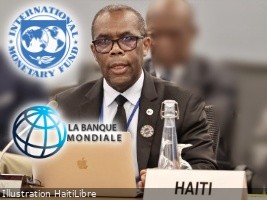
    Against a backdrop of five years of unrelenting domestic security instability, Haiti’s top central bank official has laid out the Caribbean nation’s current macroeconomic posture to global financial leaders at the spring constituency meetings of the International Monetary Fund and World Bank in Washington D.C.

    Gabriel Ronald, Governor of the Bank of the Republic of Haiti (BRH), took the stage to deliver Haiti’s official position, starting by drawing attention to the surprising economic resilience the country has maintained amid ongoing turmoil. Contrary to widespread projections of total collapse, Ronald highlighted that key macroeconomic indicators have stabilized in recent periods: the national exchange rate has remained under controlled movement, and the country’s international reserves have hit a robust milestone, covering more than six months of total import needs.

    Beyond updating delegates on Haiti’s domestic economic landscape, Ronald used the platform to push for deeper technical collaboration across the IMF-WB constituency. He pointed to two successful regional case studies to illustrate the value of cross-country experience sharing: Brazil’s widely adopted instant PIX digital payment system, which has dramatically expanded financial inclusion across Latin America, and French Guiana’s managed inclusive growth framework. These examples, he argued, demonstrate that collective knowledge sharing creates tangible benefits for all member states.

    “Haiti, through its decades of adapting to systemic shocks, has valuable lessons to offer the global community, while our regional and international partners have proven models for expanding financial inclusion and navigating economic crises,” Ronald said, noting that regional integration and collective solidarity are non-negotiable foundations for long-term, sustainable economic stability.

    In his separate address to World Bank stakeholders, Ronald struck a more cautious tone, acknowledging that Haiti’s recent economic gains remain fragile, especially its hard-won exchange rate stability and ongoing disinflation process. Compounding these domestic vulnerabilities, he added, are spillover effects from the ongoing conflict in the Middle East, which have disrupted global supply chains and driven up energy and commodity prices for import-dependent nations like Haiti.

    Against this backdrop, Ronald called on the World Bank to step into a more active “shock-absorbing” role for fragile states, moving away from the long-criticized one-size-fits-all financing approach. Instead, he urged the institution to deliver rapid, flexible financing with terms specifically tailored to the unique challenges of conflict-affected low-income economies. To boost Haiti’s long-term resilience, he also called for targeted structural investment to support the country’s energy diversification efforts, which would cut its heavy dependence on volatile imported fossil fuels.

    Turning to medium- and long-term economic development, Ronald stressed that sustained security improvements are an absolute prerequisite to unlocking private sector growth and building a thriving business climate in Haiti. He echoed his earlier call for expanded knowledge sharing, again highlighting Brazil’s PIX system and French Guiana’s growth framework as replicable success stories, and urged the World Bank to leverage its identity as a global “knowledge bank” to facilitate cross-constituency expertise sharing.

    In closing, Ronald called for a far more agile and flexible approach from the World Bank, one that recognizes the dual reality facing many member states: deep structural vulnerabilities paired with ongoing dynamic economic and social transformation. He ended by reaffirming Haiti’s commitment to building a new model of partnership rooted in responsive listening and expanded South-South cooperation, the only framework, he argued, that can deliver lasting, shared prosperity across vulnerable developing nations.

  • Official visit to USA by Prime Minister of Haiti

    Official visit to USA by Prime Minister of Haiti

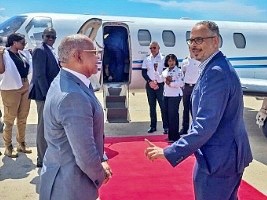
    Haitian Prime Minister Alix Didier Fils-Aimé launched a high-stakes official visit to the United States on April 19, 2026, with a scheduled end date of April 24, the Prime Minister’s Office of Haiti confirmed publicly. The trip, scheduled months in advance as part of Haiti’s ongoing diplomatic outreach, includes a small but senior delegation consisting of Foreign Minister Raina Forbin and Special Advisor Guerly Leriche, signaling the focused priority Haiti places on the engagements ahead.

    This top-level diplomatic mission comes at a critical juncture for the Caribbean nation, which has long grappled with persistent security instability, economic stagnation, and gaps in development progress. It forms a core part of Port-au-Prince’s sustained strategy to deepen strategic dialogue between Haiti and its key international partners, with the central goal of rallying enhanced financial, political, and security backing to shore up domestic stability, upgrade public safety infrastructure, and kickstart stalled national development initiatives.

    During the first leg of the visit, Fils-Aimé will be based in Washington, D.C., where he is set to convene a packed slate of high-level meetings with senior U.S. government officials, leadership from major international financial institutions, and representatives of key regional governance bodies. These discussions are expected to cover everything from debt restructuring support to security assistance for Haitian law enforcement.

    Following his time in the U.S. capital, the prime minister will travel north to New York City to continue his diplomatic consultations. The bulk of his New York engagements will center on talks with United Nations leadership, focusing on pressing, long-running issues that shape Haiti’s domestic and international standing.

    In a statement announcing the visit, the Haitian government reaffirmed its unwavering commitment to advancing the core national interests of the Haitian people, expanding and strengthening long-term strategic partnerships with global stakeholders, and fostering tangible, effective international cooperation that delivers real, on-the-ground benefits to communities across the country.

  • Cap

    Cap

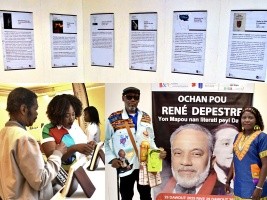
    Haiti’s northern region has formally opened its slate of centennial celebrations honoring iconic Haitian writer René Depestre, launching the regional program on Friday, April 17, 2026 with a curated retrospective exhibition at Cap-Haïtien’s Musée de la Monnaie (Museum of the Mint).

    The exhibition uses immersive informational panels to guide visitors through the extraordinary dual literary and political career of Depestre, best known for his groundbreaking work *Alléluia pour une femme-jardin* (Hallelujah for a Woman-Garden). The launch event brought together cultural leaders, literary institutions, and community members to honor Depestre’s enduring legacy as one of Haiti’s most influential cultural voices.

    In his opening remarks to attendees, Marc Exavier, national coordinator for the centennial celebration year, shared exciting news for literary audiences: a newly reissued complete collection of Depestre’s poetic works, titled *Rage de vivre* (Rage to Live), has just been released and featured in French literary media. The reissue brings Depestre’s powerful poetry back into print for a new generation of readers.

    Alteery Maxi Marc, director of Cap-Haïtien’s Alliance Française, used the occasion to highlight Depestre’s lasting contributions to Caribbean and world literature while drawing attention to the critical role of reading in youth development. Speaking on behalf of Ernst Saint Louis, director general of Haiti’s National Book Directorate (DNL), Stephania Duchel extended formal gratitude to the network of partner cultural institutions that made the launch event and larger centennial program possible. She also reaffirmed the DNL’s long-standing commitment to its core mission: expanding access to books and fostering a culture of reading across every region of Haiti.

    The opening celebration was enriched by live performances, with actors Micken Jeanite and Billy Desir delivering dramatic readings of selections from Depestre’s most beloved works. Adding to the festive atmosphere, Haitian jazz ensemble Stars 262 provided musical entertainment throughout the event.

    Notable guests in attendance included Fritz Alphonse Jean, former presidential transitional advisor; Angélique Jules Verdilus, director of the Museum of the Mint; and Alteery Maxi Marc, representing the Alliance Française. The nationwide centennial initiative first launched on August 29, 2025, and will run through August 29, 2026, with events planned across multiple Haitian cities to bring Depestre’s work to new audiences.

    For audiences interested in engaging further with Haitian literary culture, three interactive educational games focused on Haitian literature are available for public access at https://quiz.haitilibre.com/en, located under the Haiti “Literature” menu. The event was reported by iciHaiti.

  • Haiti : The Ministry of Public Works takes action in response to emergencies

    Haiti : The Ministry of Public Works takes action in response to emergencies

    In the wake of destructive torrential downpours that battered Haiti’s capital and multiple regional areas across the country, the nation’s Ministry of Public Works, Transport and Communications (MTPTC) has launched a large-scale emergency mobilization to mitigate damage and protect at-risk communities.

    With heavy rains having severely stretched Haiti’s already fragile infrastructure and pushed vulnerable populations into heightened danger, the MTPTC has restructured its operational priorities to center urgent, life-saving interventions. The ministry has paused lower-priority long-term rehabilitation projects to reallocate labor and resources to three core emergency tasks: dredging flood-prone water canals, clearing blocked roadways, and delivering direct aid to communities facing the most severe risk.

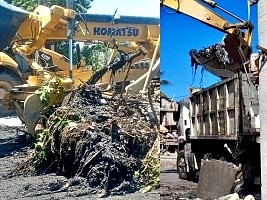
    On-the-ground operations are already underway across hard-hit zones. In the Carrefour Rita district, crews are actively dredging the Brisetout canal to expand its water capacity and reduce the threat of catastrophic flash flooding. Intensive dredging and manual debris clearing are also progressing in the Gonaïves Station area, as well as along Lamarre and Lamartine streets in Port-au-Prince, Haiti’s capital.

    On National Road #3, a critical transportation artery near Morne Granjil, rapid response teams from the North Departmental Directorate of Public Works acted quickly to address a major landslide that blocked the route. Crews cleared fallen rock and dirt, removed damaged infrastructure, and righted overturned trucks, allowing traffic to resume on the key route within a short timeframe and avoiding a prolonged shutdown that would have disrupted supply chains and emergency access.

    In the country’s Northwest department, crews continue working to reopen road access to the community of Anse-à-Foleur, while the vital connection between Port-de-Paix and Saint-Louis-du-Nord was restored rapidly after storm damage. In Haiti’s South department, the road leading to Jérémie remains cut off near Roseau amid extremely challenging conditions, but response teams have maintained full commitment to clearing the route and restoring traffic as quickly as possible.

    Beyond immediate emergency response, ministry officials have noted that the severe alluvial sediment buildup and frequent landslides impacting downstream areas are rooted in decades of inadequate environmental management across the country. To address the root cause of repeated flood and landslide disasters, the MTPTC is calling for a strategic shift to upstream, sustainable solutions centered on improved watershed management to prevent future crises.

    To advance this long-term resilience goal, the MTPTC has established close coordinated working partnerships with multiple government stakeholders, including the Ministry of the Environment, the Ministry of the Interior, the State Secretariat for Territorial Communities, the Directorate General of Civil Protection, and the National Emergency Response Service (SNGRS).

    In a statement, the Haitian government emphasized that emergency response and long-term resilience cannot be achieved by public authorities alone. “This response cannot be complete without everyone’s involvement,” the statement read. “The Government calls for collective mobilization, because it is through unity, shared responsibility, and solidarity that national resilience is built.”

  • The Ministry of the Environment is changing its paradigm in Haiti

    The Ministry of the Environment is changing its paradigm in Haiti

    In a landmark gathering held at Port-au-Prince’s Karibe Convention Center on April 16, 2026, Haiti’s Ministry of the Environment launched a transformative new approach to environmental governance, reframing climate and ecological action as a foundational pillar of the country’s stability, public safety and long-term economic recovery. The two-day strategic planning and consultation summit brought together ministry leadership and key technical and financial partners to align cross-sector work around a newly articulated national vision.

    Jean Marie Claude Germain stood in for Planning Minister Sandra Paulemon, who was traveling on official government business in the United States for the event. In his opening remarks, Germain reinforced the Haitian government’s commitment to improving coordination of international development cooperation, ensuring all external interventions align closely with nationally defined priorities. He praised the ongoing dedication of international partners to Haiti’s development goals and expressed confidence that the new strategic framework would strengthen shared objectives, streamline overlapping interventions, and speed up the delivery of tangible results to communities across the country.

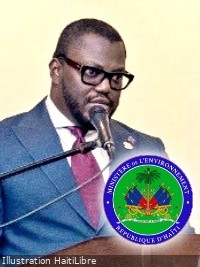
    Following Germain’s opening address, Valéry Fils-Aimé, Haiti’s recently appointed Minister of the Environment, outlined the ministry’s full strategic roadmap, marking a clear break from previous approaches to environmental management. Fils-Aimé emphasized that the environmental sector is no longer treated as a secondary policy area, but as a core strategic lever that directly shapes national territorial stability, public wellbeing and economic revival. Against a backdrop of escalating ecological challenges facing Haiti, Fils-Aimé positioned environmental action as a top national priority that demands coordinated, collective action from government, civil society, and international partners.

    The new strategy is built around four interconnected strategic priorities, the first of which reframes solid waste management from a routine public cleanliness issue to a central component of urban governance, public health and national environmental security. Under the banner of the Konbit Haiti Zero Waste program, the ministry is launching a nationwide mobilization effort to build a formal, functional public waste management system. Key components of the initiative include structured municipal collection routes, capacity building for the National Waste Management and Recycling Service (SNGRS), expanded engagement with local government authorities, and investment in formal recycling and resource recovery sectors. Fils-Aimé noted that the program’s long-term goal is to turn Haiti’s long-standing structural waste crisis into a source of new economic and social opportunity for local communities.

    The second strategic axis focuses on environmental rehabilitation and sustainable natural resource management, addressing widespread ecosystem degradation through an integrated “mountain-to-sea” approach. This framework combines community-led reforestation projects, comprehensive watershed management, coastal zone protection, and investments in territorial climate resilience, all aimed at restoring ecological balance, securing at-risk communities, and protecting the livelihoods of Haitian households that depend on natural resources. In line with this priority, the ministry will launch the Citizen Environmental Initiatives Support Program (PAIEC) in May 2026. The program will issue targeted calls for proposals aligned with national sector priorities, providing funding and support to at least 30 local environmental nonprofits and roughly 100 green entrepreneurs who have developed innovative, locally rooted sustainable solutions. The end goal of this initiative is to nurture a growing ecosystem of green entrepreneurship that creates formal jobs, generates local economic value, and encourages widespread citizen participation and ownership of climate and environmental action.

    Third, the ministry has prioritized strengthening environmental governance and institutional capacity, noting that no national environmental policy can deliver results without robust, functional state institutions. Three key institutional projects are slated to move forward rapidly: first, expanding the mandate and capacity of the Directorate of Environmental Inspection and Monitoring and the National Environmental Assessment Office, working in partnership with other relevant government agencies, to improve regulation of natural resource extraction including water, mining, and sand quarrying; second, elevating the National Solid Waste Management Service (SNGRS) as the primary operational arm of the ministry and a central pillar of national sustainable waste management; third, expanding the mandate and capacity of the National Agency for Protected Areas (ANAP), the ministry-supervised body responsible for the co-management of Haiti’s protected natural areas.

    The fourth and final strategic priority focuses on restructuring external cooperation and securing sustainable financing for national climate action. Fils-Aimé called on partners to work with the Haitian government, under the leadership of the Prime Minister, to rapidly launch a multi-donor climate and environment fund. The new fund will address the long-standing challenge of fragmented donor interventions, strengthen national-level impact, enable coordinated resource mobilization, direct financing to high-impact projects in priority sectors, and improve the speed and effectiveness of on-the-ground interventions.

    Closing the opening session, Fils-Aimé emphasized that the new framework is more than a list of disconnected projects: it represents a cohesive national vision, a clear actionable roadmap, and an open invitation to collective action across all sectors. “Our responsibility is simple, yet demanding: to produce visible results, to tangibly improve the living environment, to strengthen the presence of the State, to create economic opportunities, and to build sustainable resilience,” Fils-Aimé said. “The environment is not just another sector. It is the condition of our stability and the foundation of our development.”

  • Haiti : Important meeting between Minister Paulemon and the Caribbean Development Bank

    Haiti : Important meeting between Minister Paulemon and the Caribbean Development Bank

    Against the backdrop of the 2026 IMF and World Bank Spring Meetings, a high-stakes strategic meeting unfolded between Haiti’s top planning official and leadership from the Caribbean Development Bank (CDB), marking a key step forward in the Caribbean nation’s push for coordinated international support amid ongoing stabilization efforts.

    On April 16, Sandra Paulemon, Haiti’s Minister of Planning and External Cooperation, sat down with a CDB delegation headed by bank President Daniel Best to outline the Haitian government’s core national priorities and map out pathways to deepen bilateral development cooperation. The gathering underscores Port-au-Prince’s formal commitment to streamlining external assistance delivery and building durable, mission-aligned partnerships that directly advance Haiti’s long-term sustainable development goals.

    During the discussions, Minister Paulemon praised the CDB for the impact and relevance of its existing work across Haiti. She outlined the Haitian government’s immediate on-the-ground priorities, noting that authorities are rolling out targeted frameworks and community-focused projects to cut widespread poverty, support the safe return of displaced households, and help vulnerable communities reestablish dignified living conditions. In laying out this work, Paulemon emphasized that meaningful progress depends on robust technical and financial backing from international partner institutions.

    Paulemon reaffirmed the three non-negotiable priorities laid out in Haiti’s National Pact for Stability and the Organization of Elections: restoring widespread security across the country, driving inclusive economic and social recovery, and successfully organizing national elections. She stressed that all international development interventions must be closely aligned with these national priorities to deliver meaningful, measurable change for Haitian people.

    For the CDB, the delegation presented a full update on its current portfolio in Haiti, which totals nearly $200 million in active projects, including roughly $50 million in newly approved funding commitments. President Best reaffirmed the bank’s long-standing commitment to supporting Haiti’s development, and made clear the institution intends to expand its footprint through high-impact, community-centered projects that address the country’s most pressing needs.

    CDB leadership also expressed strong support for the Haitian government’s three priority agenda, noting the bank is ready to scale up assistance to advance these goals. The institution’s overarching aim is to maximize the effectiveness of its support to contribute directly to Haiti’s stabilization and long-term sustainable growth. Moving forward, Best added, the CDB plans to expand its work in building Haiti’s economic, social, and environmental resilience, while also boosting the country’s domestic productive capacities — with a particular focus on the critical agricultural and energy sectors.

    Minister Paulemon for her part pushed for a more robust, results-focused partnership between Haiti and the CDB, outlining key priorities including expanded access to low-interest concessional financing and grants, targeted budget support to shore up government operations, investment in institutional capacity building for Haitian public agencies, and the creation of faster, more flexible funding disbursement processes that cut red tape for on-the-ground project delivery.

    In a move to build local expertise, the CDB delegation also announced plans to hire dozens of young Haitian professionals across key priority sectors including agriculture, education, and energy, to strengthen national institutional capacity and embed local leadership in the bank’s development work across the country.

    By the end of the meeting, both sides reached a consensus to hold a follow-up gathering in May 2026. That upcoming session will include a detailed breakdown of upcoming projects, formal confirmation of priority intervention sectors, and a review of projected funding amounts to be secured for Haiti’s development agenda.