标签: Haiti

海地

  • Morocco : Chancellor Raina Forbin calls for strengthened international mobilization for Haiti

    Morocco : Chancellor Raina Forbin calls for strengthened international mobilization for Haiti

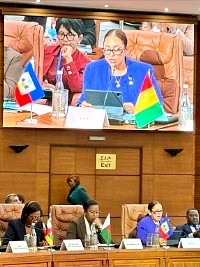
    The second High-Level Ministerial Conference on Peacekeeping in Francophone Environments brought global diplomatic attention to Haiti’s deepening security crisis this week, as Haiti’s top diplomat pressed the international community to speed up support for a critical multinational security deployment. Hosted in the Moroccan capital of Rabat on May 20, 2026, the conference was co-chaired by Nasser Bourita, Morocco’s Minister of Foreign Affairs, African Cooperation, and Moroccans Living Abroad, and Jean-Noël Barrot, France’s Minister for Europe and Foreign Affairs, drawing ministerial representatives from across the French-speaking world to address shared peace and security challenges.

    Speaking during the main ministerial debate, Haitian Foreign Minister Raina Forbin outlined the progress that the administration of Prime Minister Fils-Aimé has already made to rebuild state control across Haiti, shore up public safety, and lay the groundwork for a return to full democratic and constitutional governance. Her core message centered on accelerating the deployment of the long-planned Gang Suppression Force (GSF), a mission that Haiti has pushed for to combat widespread gang violence that has paralyzed much of the country. Forbin stressed that continued delays to the deployment would carry devastating human consequences for ordinary Haitian civilians, and called for far stronger, faster, and more closely coordinated international action to address the scale of Haiti’s ongoing security emergency.

    Beyond the urgent call for security support, Forbin used the conference as a platform to reaffirm Haiti’s longstanding commitment to the values of international solidarity, durable peace, and multilateral collaboration within the global Francophone community, framing the gathering as a key opportunity to deepen ties between Haiti and other French-speaking nations. At the conclusion of the ministerial portion of the conference, all participating delegates formally adopted the Rabat Declaration, a joint document outlining shared commitments to advancing peacekeeping efforts in Francophone regions facing instability.

    In a separate bilateral meeting with Moroccan Foreign Minister Nasser Bourita held after the conference, Forbin once again made clear Haiti’s official position on regional sovereignty issues: Haiti reaffirms its full support for Morocco’s territorial integrity and full sovereignty over all of its territory, including the Sahara region, and backs the Moroccan-proposed Autonomy Plan for the region. The meeting and conference participation also marked a step forward in strengthening bilateral diplomatic ties between Port-au-Prince and Rabat, while keeping global focus on Haiti’s urgent need for international intervention to address its ongoing crisis.
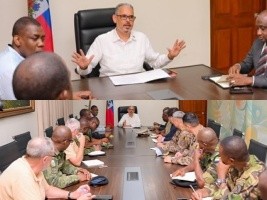

  • The Haitian Gov is toughening its response against gangs.

    The Haitian Gov is toughening its response against gangs.

    In a decisive step to address the country’s long-running gang violence crisis, Haitian Prime Minister Alix Didier Fils-Aimé gathered top security leadership on May 20, 2026, to ramp up the government’s crackdown on armed groups that have seized swathes of national territory.

    The closed-door meeting at the Prime Minister’s Office brought together the highest-ranking command of the Haitian National Police (PNH), the High Command of the Armed Forces of Haiti (FAd’H), Defense Minister Mario Andresol, and leadership of the specialized Gang Suppression Force (GSF), alongside all frontline operational commanders deployed across conflict zones. What started as a one-off security briefing has now become a recurring weekly check-in, with the government formalizing a permanent mechanism held every Wednesday to assess evolving security conditions, coordinate cross-force operations, and refine tactical plans for joint intervention.

    At the core of the gathering was a review of Haiti’s deteriorating national security landscape, and a finalization of aggressive new offensive measures designed to accelerate the recapture of all areas held by armed criminal groups. Following the meeting, the Prime Minister’s office announced that the Haitian government would enact a sustained nationwide security deployment across every region of the country.

    Under the new plan, counter-gang operations led by the PNH, with critical backing from the FAd’H and GSF, will be immediately expanded in scale and intensity. These operations will continue around the clock without interruption until full state authority is reestablished in every territory currently controlled by armed gangs.

    The government also formalized a strict zero-tolerance policy that applies not only to armed gang members and the groups classified as terrorist entities, but also to their supporting networks, logistical suppliers, financial backers, and any individual who directly or indirectly enables the ongoing climate of insecurity.

    In an official statement released after the meeting, the Prime Minister’s office laid out three non-negotiable commitments from the government: no territory held by gangs will be written off as lost, no acts of complicity with criminal groups will be overlooked within state ranks, and no illicit financing for gangs will escape legal punishment.

    “The State is standing firm, the response is underway, the Republic will triumph, and order will be restored,” the statement read, marking a clear show of resolve from the Haitian administration as it launches one of its most ambitious counter-gang campaigns in recent history.

  • Leisure : Did you know ? #25

    Leisure : Did you know ? #25

    In the 25th installment of HaitiLibre’s popular ‘Did You Know?’ leisure series, published May 20, 2026, readers are invited to explore the little-known history and unique culinary character of sumac, a versatile ancient spice with deep roots in Mediterranean and Middle Eastern food traditions.

    Sumac is harvested from the berries of wild shrubs that thrive in the rugged rocky terrain spanning the Mediterranean basin and the Middle East. What sets this spice apart from common acidic seasonings is its bright, lemony-forward profile paired with a subtle astringent bite, which adds fresh, tangy depth to dishes without requiring liquid additives like vinegar or freshly squeezed lemon juice. It has long been a staple in the national cuisines of Lebanon, Syria, and Turkey, and serves as a core component of the iconic Za’atar spice blend—an aromatic mix that also includes dried thyme, toasted sesame seeds, and salt.

    The historical reach of sumac stretches back far earlier than many modern home cooks realize. Long before lemons were introduced to European markets, ancient Romans already relied on sumac for both its medicinal benefits and culinary versatility. This long legacy offers a powerful reminder: regional biodiversity shaped unique culinary identities centuries before the globalization of food ingredients homogenized modern diets. In highlighting sumac’s story, the feature also issues a quiet call to action: to honor distinct regional terroirs, and recognize that every corner of the world holds one-of-a-kind natural treasures that deserve protection from conflict and the gradual erasure of ancient cultural traditions.

    This fun, educational fact comes straight from the HaitiLibre Quiz platform, an interactive general knowledge hub designed to challenge and engage learners across a wide range of topics. The platform caters to casual knowledge seekers and trivia enthusiasts alike, covering everything from Haitian current affairs and culture to global general knowledge. For users ready to test their expertise, the platform’s expert menu, hosted at https://quiz.haitilibre.com/en, offers a diverse array of specialized, challenging themes.

    Currently, the platform hosts 119 unique interactive quiz games, with new content added on a monthly basis. As part of the May 2026 monthly update, 30 brand-new quizzes were added to the library on May 4, expanding the platform’s offerings for all audiences. All HaitiLibre Quiz games are exclusive, completely free to access, and require no account registration to play. They are designed to be accessible to all age groups and knowledge levels, with three difficulty tiers—easy, intermediate, and hard—available for every quiz, and full support for both French and English languages.

    Readers are invited to visit the quiz hub at https://quiz.haitilibre.com/en to explore the full collection of content, test their own general knowledge, share the platform with family and friends, and send feedback to the HaitiLibre team to help improve future updates. This ‘Did You Know?’ entry is pulled from the platform’s International Cuisine 2.1 themed quiz, and previous installments of the series dating back to the 21st entry are also archived on the HaitiLibre website for interested readers to explore.

  • Internships : Launch of the Youth Employment Initiation Program in the Private Sector

    Internships : Launch of the Youth Employment Initiation Program in the Private Sector

    In a formal ceremony held at Port-au-Prince’s Ritz Kinam Hotel on May 15, 2026, Haitian academic leaders and stakeholders marked the official launch of the long-awaited Youth Employment Initiation Program, known locally by its Haitian Creole acronym PIJE, an initiative designed to bridge the gap between academic training and professional employment for the country’s young graduates.

    Dr. Jean Denis Saint-Felix S.J., dean of the Faculty of Economic, Social, and Political Sciences at Notre Dame University of Haiti (FSESP-UNDH), delivered opening remarks at the event, expressing heartfelt appreciation for the collaborative effort behind the program’s rollout. He emphasized that youth unemployment remains one of Haiti’s most pressing social and economic challenges, and called on the Haitian government to prioritize long-term, sustainable funding and implementation of PIJE to ensure that thousands of job-seeking young people across the country can access its benefits in coming years.

    Unlike generic unpaid internship programs that leave young graduates covering their own living costs during training, PIJE is structured to remove common barriers to entry for early-career workers. The initiative targets recent graduates from all accredited public and private universities and vocational training institutions across Haiti, placing selected participants into three-month paid internships at both public sector agencies and approved private companies. All participant stipends are fully covered by Haiti’s Public Treasury, eliminating the financial barrier that often prevents low-income young people from accessing skill-building work experience.

    The core mission of PIJE is to equip new graduates with hands-on, practical professional skills that cannot be taught in a classroom setting. By offering structured on-the-job training, the program prepares participants to enter the open job market with verifiable work experience, expanding their employment prospects while encouraging them to contribute actively to Haiti’s ongoing economic and social recovery.

    The program’s selection process is managed through coordinated outreach between the Ministry of Economy and Finance and Haiti’s post-secondary institutions. Each cohort of participants is selected through a progressive process: ministry officials contact participating universities and vocational schools in phases, requesting institutions to nominate candidates based on a combination of strong academic performance and demonstrated professional aptitude. To date, more than 60 post-secondary institutions across Haiti have already participated in earlier iterations of the program, including 16 vocational training centers, 14 public universities, and 33 private higher education institutions.

    As Haiti continues to work toward stabilizing its economy and expanding opportunities for its growing youth population, PIJE represents a targeted policy intervention that addresses a critical gap in the country’s workforce development ecosystem.

  • Colombia : Haiti participates in an important Conference of Ministers of Labor from Latin America and the Caribbean

    Colombia : Haiti participates in an important Conference of Ministers of Labor from Latin America and the Caribbean

    In a step that underscores Haiti’s growing engagement with regional policy cooperation on labor issues, Haiti’s Minister of Social Affairs and Labor Marc-Elie Nelson departed the country on May 20, 2026, for Bogotá, Colombia, to take part in the upcoming 2026 Conference of Ministers of Labor from Latin America and the Caribbean. The two-day event, scheduled to kick off on May 21, brings together a diverse cross-section of stakeholders to address the pressing, complex challenge of labor migration across the region. Attendees include heads of state, senior labor officials from across the Americas and the Caribbean, multilateral organization representatives, private sector leaders, and leading international experts focused on labor rights and migration policy.

    Over the course of the conference, participants will dive into a broad range of interconnected topics central to creating fair, sustainable migration frameworks. Key discussion themes cover the professional integration of migrant workers and robust protection of their fundamental rights, mechanisms for the mutual recognition of professional skills and qualifications across national borders, the development of regulated, secure pathways for professional mobility, and targeted strategies to advance socio-economic inclusion in communities and regions that face high rates of migration inflow. Additional agenda items include exploring opportunities to support migrant entrepreneurship and address challenges tied to the informal economy, fostering social innovation to strengthen community cohesion, and expanding targeted technical cooperation to improve vocational training systems across the region.

    On the second day of the gathering, Nelson is set to deliver an official address focused on the specific theme of “Migration and Professional Integration,” sharing Haiti’s perspectives and experiences on this critical policy area. When the conference draws to a close, participating ministers will gather to sign two landmark documents: the Bogotá Declaration and the Multilateral Memorandum of Understanding on Dignified Labor Migration and Rights-Based Mobility in Latin America and the Caribbean. These agreements will formalize a new regional cooperation framework centered on advancing decent work for migrant workers, standardizing qualification recognition, and upholding migrants’ rights, all with the goal of supporting seamless socio-economic integration for people moving across regional borders.

    his official participation in the high-profile regional conference makes clear the commitment of Haiti’s Prime Minister Fils-Aimé administration to strengthening inclusive social policies. These policies prioritize both the socio-economic integration of Haitian migrants across the region and the protection of their core fundamental rights, aligning Haiti with broader regional efforts to create more equitable, rights-centered migration systems.

  • Official reopening of the Haitian Embassy in Benin

    Official reopening of the Haitian Embassy in Benin

    In a symbolic event blending national celebration and diplomatic milestone, Haiti officially reopened its embassy in Cotonou, Benin on May 18, 2026, coinciding with the 223rd anniversary of the Haitian national flag. The ceremony opened with heartfelt performances of the Beninese and Haitian national anthems by clarinetist Landry Padonou and vocalist Ayam Sèdjro, as the two national flags were raised side-by-side, a visual testament to the growing bonds between the two nations across diplomatic, historical, cultural and scientific spheres.

    Hosted under the unifying themes of revolutionary memory, mutual fraternity, and cross-cultural exchange, the reopening drew a diverse and high-profile crowd of attendees. Representatives from diplomatic missions across the globe—including France, Cuba, the United States, Japan, the Kingdom of Morocco, the European Union, the Russian Federation, the United Nations, the Apostolic Nunciature, and the Economic Community of West African States (ECOWAS)—joined the gathering. Local attendees included Beninese municipal leaders, members of the Haitian diaspora community based in Benin, embassy partners, working journalists, and multiple crowned traditional authorities from across Benin, whose presence underscored the deep spiritual and historical connections that link the two countries.

    Speaking on behalf of all the traditional monarchs in attendance, His Majesty Guidimadjèdjè, King of Porto-Novo, emphasized the profound kinship between the two populations, stating “Haitians are Beninese and Beninese are Haitians.” He closed his remarks by offering traditional prayers for lasting peace and shared prosperity for the Haitian people, who currently face widespread political and humanitarian instability.

    Dominique Brutus, the Chargé d’affaires a.i. of the Haitian mission in Benin, framed the reopening as a deliberate policy priority for Haiti’s governing bodies. She noted that the move underscores Haiti’s commitment to expanding its diplomatic footprint across the African continent, while reaffirming its commitment to strengthening long-standing historical bonds with African nations and the global Caribbean diaspora. Brutus also reflected on the historical weight of the ceremony’s date: May 18 marks the anniversary of the creation of the Haitian flag in 1803, during the country’s revolutionary fight for independence from colonial rule.

    Marius Loko, Director General of External Relations of Benin and head of the Beninese official delegation, welcomed the renewed diplomatic presence as a new, dynamic chapter in bilateral relations. He reaffirmed Benin’s shared commitment to deepening collaboration across cultural, educational, and scientific domains in the years ahead.

    Following the official diplomatic proceedings, the celebration continued in a warm, fraternal atmosphere, featuring a lineup of artistic and cultural performances that highlighted shared heritage. A standout moment was a slam poetry performance by celebrated Beninese poet Amagbégnon Eklou, which centered Vodou cultural traditions as a vital, living link between communities along the Gulf of Guinea and Caribbean populations, most notably Haiti. The event concluded with a communal gathering of all guests, a symbolic closing that sealed the friendship, solidarity, and mutual cooperation that define the modern relationship between Benin and Haiti.

  • 223rd Anniversary of the Haitian Flag : Message from former Ambassador Bocchit Edmond

    223rd Anniversary of the Haitian Flag : Message from former Ambassador Bocchit Edmond

    On the eve of the 223rd anniversary of the creation of the Haitian national flag, former Haitian Foreign Minister and former Ambassador Bocchit Edmond issued a public message to all Haitian people at home and abroad, calling for a return to the founding spirit that birthed the world’s first Black republic to pull the nation out of its current crisis.

    Two centuries and two decades ago, in the midst of a revolution against colonial slavery, Haiti’s founding fathers united to create what would become the enduring symbol of Haitian identity: the iconic bicolor national flag. Edmond emphasized that this banner is far more than a stitched combination of two pieces of fabric. It represents the historic, unyielding choice of the Haitian people to claim freedom, national dignity and collective unity in the face of brutal, dehumanizing oppression. Credit for crafting the original flag, he recalled, goes to Catherine Flon, whose skilled hands and passionate commitment sewed the first banner that would become a global symbol of liberation for all oppressed peoples.

    Today, as the nation marks this milestone, Edmond said, the legacy of that founding act demands more remembrance than ever. While the flag itself has survived centuries of upheaval and challenge, the Haitian nation is currently navigating one of its darkest periods in modern history. The country is fractured by ongoing instability, he acknowledged, describing Haiti as being “in tatters” — but he stressed that the same people who overcame impossible odds to win freedom and found a nation can rebuild once again.

    Edmond called on every Haitian citizen to come together, comparing national reconstruction to re-stitching the torn fragments of the flag itself. He urged Haitians to combine their strength, intellect and collective will to revive the unity that gave birth to the Haitian Republic, noting that while the nation’s founding leaders broke the physical chains of slavery, the current generation’s task is to break the modern chains of division, national indifference and collective despair.

    “Haiti deserves to live. Haiti deserves to be a livable place for all its sons and daughters, wherever they may be on this earth,” Edmond said. Closing his message with the Creole phrase “Solèy la dwe klere pou tout Ayisyen alawon badè” — meaning the sun must shine for all Haitians across the world — he called on the public to honor the sacrifice of Haiti’s founding ancestors not just with ceremonial words, but with tangible action focused on unity, solidarity and national reconstruction. He closed with rallying cries: “Long live Haiti! Long live the Haitian flag! Long live solidarity! Long live national dignity!”

  • Celebration of the 223rd anniversary of the flag at the Haitian Embassy in Paris

    Celebration of the 223rd anniversary of the flag at the Haitian Embassy in Paris

    On May 18, 2026, the Haitian diplomatic mission in Paris hosted a formal commemoration honoring two landmark national occasions: the 223rd anniversary of Haiti’s national flag creation and the country’s annual University Day. Held under the official Haitian government theme, “With the Grenadiers, let’s raise our flag higher,” the event wove a connection between the nation’s historic identity and its recent achievement in qualifying for the 2026 FIFA World Cup, drawing on the athletic team’s momentum to reignite the spirit of collective achievement that has defined Haiti since its founding.

    The celebration unfolded in the embassy’s stately reception halls, gathering a diverse cross-section of international and local stakeholders. Attendees included diplomatic representatives from the Dominican Republic, Gabon, Taiwan, Bolivia, and Chile, as well as senior officials from France’s Ministry for Europe and Foreign Affairs and other members of the Paris-based diplomatic corps. Also in attendance were Haitian diplomatic and consular staff serving across France, Bruno Fuchs, president of the French National Assembly’s Foreign Affairs Committee, Nicolas Guinard, Director of Political Affairs and Democratic Governance at the International Organisation of the Francophonie (OIF), Jean-Marc Four, Director of Radio France Internationale, alongside French parliamentarians, municipal leaders from multiple French cities, OIF administrative officials, Haitian community leaders, and hundreds of members of the Haitian diaspora based in France.

    The formal commemoration opened with a performance of Haiti’s national anthem, a moment of tribute to the independence heroes who gathered in Arcahaie on May 18, 1803, to adopt the iconic bicolor national flag. In his keynote address at the event, Haitian Ambassador to France Louino Volcy centered his remarks on the profound historical and symbolic weight the flag holds for the Haitian people. “The Haitian flag is first and foremost the symbol of immense pride: the pride of a history of freedom, the pride of the first successful slave revolution in the history of humankind, the pride of the first independent Black republic in the modern world and the first independent state in Latin America and the Caribbean,” Volcy stated.

    Volcy walked attendees through the origins of the flag, noting that its adoption grew out of the political-military congress held in Arcahaie amid Haiti’s war of independence, cementing its status as a tangible marker of the nation’s fight for self-determination. Turning to Haiti’s current domestic challenges, the ambassador emphasized the unwavering commitment of Prime Minister Alix Didier Fils-Aimé’s administration to restoring nationwide peace and security, and advancing political, social, and economic stabilization to clear a path for free and credible national elections.

    Volcy stressed that the flag also stands as a testament to Haiti’s enduring presence as a sovereign, resilient nation, and that upholding this legacy requires collective action aligned with the country’s core national values. “Our national motto, ‘Unity is Strength’ remains a pragmatic formula for action that still possesses infinite power and unlimited energy,” he added. “The unity of Haitians can create the necessary strength to face current challenges and allow our bicolor flag to fly even higher.”

    Framing the flag as a three-layered symbol for the nation, Volcy concluded: “the flag is first and foremost the symbol of immense pride, then the symbol of an immense heritage to preserve and defend, and finally, the symbol of a nation standing tall.”

    By the close of the event, the 223rd anniversary celebration had reaffirmed the deep, unshakable connection of the Haitian people—both at home and in the diaspora—to their national history, their foundational symbols, and the enduring ideals of freedom and dignity that the Haitian flag has embodied for 223 years.

  • 223rd Anniversary of the Haitian Flag and University Day

    223rd Anniversary of the Haitian Flag and University Day

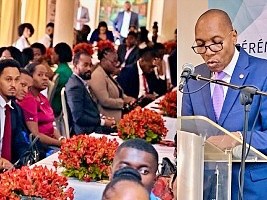
    On May 18, 2026, Haiti gathered at Port-au-Prince’s National Palace for a solemn dual celebration of the 223rd anniversary of the Haitian national flag and the country’s annual University Day. Held under the rallying theme “With the grenadiers, let’s raise our flag higher” — a nod to Haiti’s historic qualification for the 2026 FIFA World Cup — the event brought together senior government officials, military and police leadership, diplomatic representatives, education sector leaders, and student groups from across the Port-au-Prince metropolitan area to honor one of the nation’s most defining symbols of sovereignty.

    The event opened with a formal flag-raising ceremony on the National Palace lawn, where attendees paid tribute to the flag’s origins tied to Haiti’s revolutionary fight for independence. This anniversary honors the enduring legacy of Jean-Jacques Dessalines, Haiti’s founding father, whose unwavering vision and resolve led to the creation of the world’s first independent Black republic in 1804. It also recognizes the iconic contribution of Catherine Flon, the revolutionary icon who sewed together the flag’s iconic blue and red stripes in 1803 as an emblem of national unity, binding all Haitians to a shared mission of freedom and collective progress.

    In his keynote address to attendees, Prime Minister Alix Didier Fils-Aimé framed May 18, 1803 — the date the flag was first unveiled — as a “sublime act in universal history.” He stressed that the legacy of the Haitian Revolution demands national solidarity today, noting “it was courage, vision, and unity that enabled our ancestors to achieve victory.” The prime minister also reaffirmed the government’s core priorities: lifting living standards for all Haitians, cracking down on violent armed gangs, and building a stable, secure environment that allows for long-delayed general elections to be held across the country.

    The dual celebration also centered the critical role of higher education in Haiti’s ongoing national reconstruction. Dieuseul Prédélus, rector of the State University of Haiti (UEH), emphasized that the country’s premier public university carries a core responsibility to train a new generation of innovative leaders capable of building a prosperous, stable future for the nation. Closing out the official remarks, Minister of National Education Vijonet Deméro added that the Haitian flag has always stood as a beacon of unity in the face of chaos and oppression, and remains a powerful symbol of collective security and national renewal today.

    Following the addresses, Haiti’s national security forces, led by the Armed Forces of Haiti (FAd’H), held a disciplined military parade across the National Palace grounds. The well-orchestrated demonstration of strength was framed as a public reaffirmation of the military’s commitment to core republican values, and a visible reminder of the continuity and authority of the Haitian state. Through the parade, security forces reaffirmed their unwavering pledge to defend Haiti’s territorial integrity, protect civilian communities, and preserve the hard-won gains of the nation’s independence. The gathering served as a moment of collective national cohesion, reinforcing the flag’s status as the supreme symbol of Haitian sovereignty, discipline, and shared purpose.

    The ceremony concluded with a vibrant cultural performance of traditional song and dance, drawing inspiration from the founding oath of Haiti’s revolutionary leaders at Arcahaie. Every note and movement wove together the narrative of the pain of colonial enslavement and the explosive triumph of freedom that gave birth to the Haitian nation. Staged alongside the University Day celebrations, the event highlighted the sacred union of academic progress and the unbroken fighting spirit of Haiti’s ancestors. Draped in the national blue and red, performers rekindled the enduring legacy of the revolution for a new generation. After the performance, which shook the National Palace grounds with the rhythmic beat of traditional drums, Prime Minister Fils-Aimé praised the display, noting that for Haiti, the flag is more than a symbol — it is a living, breathing reminder of the nation’s unyielding spirit of freedom.

  • Official launch in Haiti of the rehabilitation works on the RD205

    Official launch in Haiti of the rehabilitation works on the RD205

    On May 16, 2026, Haitian officials gathered to mark the official kickoff of a major infrastructure overhaul for departmental road RD205, a critical transport artery linking the southern coastal city of Les Cayes to the commune of Torbeck. The launch ceremony was led by Joseph Almathe Pierre Louis, Haiti’s Minister of Public Works, and attended by the country’s tourism minister, agriculture minister, and senior local leaders from both Les Cayes and Torbeck.

    For communities across Haiti’s Greater South region, this launch represents the long-awaited start of a project that promises to transform regional connectivity. Stretching far beyond the initial Les Cayes-Torbeck segment, RD205 functions as a primary strategic corridor that connects 12 separate communities along the southern coast, including Chantal, Arniquet, Saint-Jean-du-Sud, Port-Salut, Coteaux, Chardonnières, Roche-à-Bateau, Port-à-Piment, Les Anglais, and Les Irois.

    For years, the existing roadway has fallen into severe disrepair, creating daily crises for everyone who relies on it. The degraded surface generates thick, suffocating dust that plagues nearby residents and creates hazardous driving conditions, while constant potholes and uneven pavement cause persistent travel disruptions for daily commuters, commercial transporters, and small-scale agricultural producers who depend on the road to get their goods to market. Government planners have framed the rehabilitation project as a urgent intervention to unlock economic opportunity and improve access to services for the entire isolated southern region. In a complementary announcement aligned with the government’s broader connectivity goals, the Ministry of Public Works also revealed that feasibility and planning studies are already underway to extend the full rehabilitation work all the way to Port-Salut.

    The entire project is backed by funding from the World Bank, with engineering plans specifically adapted to address the unique challenges of the region’s wetland terrain and variable tropical climate. After assessing local hydrogeological constraints, technical project teams selected hydraulic concrete as the primary construction material, a choice that delivers long-term durability and resilience against frequent heavy rain and flooding. The completed modern roadway will feature two 3.5-meter-wide travel lanes, graded shoulders ranging from 1 to 1.5 meters along both edges, and a fully upgraded longitudinal drainage system reinforced with dedicated hydraulic crossing structures to improve water runoff and reduce flood-related damage.

    On-site construction is scheduled to begin this week, with an estimated total timeline of 10 months to complete the initial segment. Recognizing that construction activity will inevitably cause temporary travel disruptions for local residents and through traffic, the Ministry of Public Works has issued a public call for patience and understanding from the community. The ministry is also coordinating with the Haitian National Police (PNH) to provide on-site security and manage traffic rerouting during the construction period.