标签: Haiti

海地

  • The Silent Metamorphosis of Haiti (report)

    The Silent Metamorphosis of Haiti (report)

    Against the backdrop of one of the most severe crises Haiti has faced in modern memory, a quiet but powerful wave of change led by the nation’s young people is unfolding across the country, according to a new report published this week. Titled *The Silent Metamorphosis: How Haitian Youth Are Reinventing a Nation’s Future*, the report was officially launched on May 14, 2026 at Port-au-Prince’s Quisqueya University, produced as a collaboration between the United Nations Development Programme (UNDP), Haitian development firm Group Croissance, and local policy organization CEDEL Haiti.

    Co-written by Xavier Michon, UNDP’s Resident Representative in Haiti, and Kesner Pharel, noted economist and chief executive of Group Croissance, the report pushes back against the pervasive global narrative that frames Haiti only through the lens of chaos, instability, and widespread vulnerability. Instead, it outlines a series of tangible economic, social, technological, and civic shifts already underway across the nation, all driven by Haitian youth who are operating far outside the scope of mainstream media and international policy attention.

    The core argument of the report rejects the common debate of whether Haiti’s young generation has the capacity to reshape their nation. “The question is not whether these young people are capable of transforming Haiti. They are already doing so,” the authors emphasize. The real pressing question, they argue, is whether Haitian national leaders and their international partners will choose to proactively back this grassroots movement, or continue to overlook its potential to drive long-term recovery and progress.

    To address this gap, the report puts forward a clear three-stage strategic roadmap that is designed to operate effectively even amid Haiti’s current weakened institutional landscape. The plan outlines immediate, quick-action interventions for the first two years, followed by targeted structural investments to scale momentum between years two and five, and large-scale transformative development projects for the longer term, five years and beyond.

    Ultimately, the report frames this quiet youth-led transformation not as a distant, hypothetical hope for Haiti’s future, but as a tangible, already-existing opportunity that only requires recognition, intentional investment, and intentional amplification to deliver widespread, lasting change for the Caribbean nation. The full 68-page report, published in French, is available for public download via HaitiLibre’s official website.

  • Launch of a national training program to strengthen electoral security…

    Launch of a national training program to strengthen electoral security…

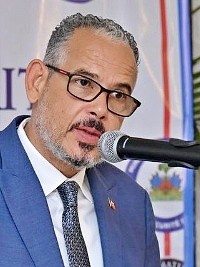
    In a landmark step to lay the groundwork for 2026 inclusive national elections, Haitian Prime Minister Alix Didier Fils-Aimé has formally inaugurated a countrywide training program designed to reinforce electoral security and guarantee the credibility of upcoming votes for key judicial and public authority posts. The initiative, conducted under the official oversight of Haiti’s Ministry of Justice and Public Security (MJSP), aligns directly with the three core policy priorities the prime minister outlined for his administration: eliminating the threat of armed gang activity to restore national security, revitalizing Haiti’s struggling economy, and delivering free, fair, transparent, and inclusive elections by the end of the year. The first phase of the training program focuses on equipping three key stakeholder groups with the tools to uphold electoral integrity: government commissioners, justices of the peace, and uniformed personnel from both the Armed Forces of Haiti (FAd’H) and the Haitian National Police (PNH). Initial training sessions are being rolled out in three strategic municipalities: Port-au-Prince, the nation’s capital, Petit-Goâve, and Croix-des-Bouquets, with plans for a phased expansion that will reach all 146 of Haiti’s municipalities in the coming months. Alongside the training initiative, the Haitian government has also earmarked more than 3 billion gourdes in public funding to support participating political parties and electoral coalitions, a move designed to level the playing field for all candidates. During the launch ceremony, Prime Minister Fils-Aimé delivered a firm, uncompromising rebuke to gang activity, stressing that the Haitian state would never retreat from its duty to protect national territory and would never cede control of any region to armed criminal groups. “We will combat money laundering systematically, and we will not allow dirty money to infiltrate our electoral process and corrupt our ballot boxes,” the prime minister stated. To deliver on this promise, his administration will establish a dedicated specialized judicial unit focused on investigating and prosecuting financial crimes, with a specific mandate to block illicit financing from influencing election outcomes. The prime minister also paid public tribute to the courage and sacrifice of police and military personnel currently deployed to retake residential neighborhoods held by armed gangs, urging security forces to apply the highest level of rigor to pursuing and penalizing any violations of electoral law. Reaffirming the government’s commitment to collaborative governance throughout the electoral process, Fils-Aimé noted that all planning is being carried out in close consultation with Haiti’s Provisional Electoral Council (CEP), civil society organizations, and registered political parties. He closed with a solemn reminder to all electoral stakeholders of their core obligation: “You have only one leader: the Haitian people. It is to them alone that you owe loyalty, discipline, and impartiality.”

  • Ceremony honoring more than 60 Haitian educators (List)

    Ceremony honoring more than 60 Haitian educators (List)

    On May 15, 2026, Haiti marked its annual National Educators’ Day with a central tribute ceremony held in Pétion-ville, drawing top government officials including Prime Minister Alix Didier Fils-Aimé and multiple cabinet members to recognize the outsized role of the country’s teaching workforce. In opening remarks at the event, Prime Minister Fils-Aimé offered a profound, nation-wide tribute to Haitian educators, framing their work as foundational to the country’s future. “This morning, alongside the Minister of Education, I salute the heroic courage and unwavering determination of our educators,” the Prime Minister stated. “I join in this tribute to honor those who carry the spirit of our nation on their shoulders. Educators, you are the silent guardians of the Republic, you are the patient architects of national stability, you are the builders of this new Haiti that we all so fervently desire. You sow the seeds of knowledge, dignity, and hope in people’s minds. That is why, on behalf of the entire nation, I offer you today my most sincere and grateful tribute.” Vijonet Déméro, Haiti’s Minister of National Education, used the occasion to reaffirm the government’s commitment to advancing tangible improvements for educators across the country, whose work he described as central to forging national identity and sustaining collective hope. Déméro emphasized that sustainable, long-term change for Haiti cannot be achieved without the active participation and support of the country’s educators, noting that meaningful progress in the education sector depends on targeted investment in the workforce. “Nothing is possible without their presence in the classroom,” Déméro asserted. “My team and I are convinced that the recovery of the education system requires better training for our educators and a legitimate increase in their salaries.” Elysé Colagene, Director General of Haiti’s National Education Fund (FNE), echoed this sentiment, framing the ceremony itself as a meaningful gesture of national gratitude. He commended the persistent courage and dedication of educators, who he said shape the collective spirit and soul of the Haitian nation. The central event featured a formal presentation of “Honor and Merit” plaques to recognized educators, alongside the official distribution of appointment letters to the two national top graduates of the Teacher Training College and Kindergarten Teacher Training College (ENIJE), presented by Prime Minister Fils-Aimé. To extend the national tribute beyond the capital, parallel recognition ceremonies were held the same day at all nine of Haiti’s remaining Departmental Directorates of Education (DDE). In total, more than 60 educators were honored for their exceptional service and national contributions across all 10 regional directorates on May 15. The full list of recognized educators by regional directorate is as follows: Northwest DDE: 1. DERIUS Naomie, 2. EXCEUS René, 3. LOUIS Reber, 4. EDOUARD Jean Mara, 5. SAINVAL Rolner; North DDE: 1. TABOIS Carlo, 2. CELESTIN Marie-Claude P., 3. LAMOUR Marie Edwige, 4. DENOSCHAMPS Jacques Ulrick, 5. CINALIEN Séraphin, 6. PREVINA Annasta Anne; DDE Nippes: 1. JOSEPH Malyne ORELIEN, 2. HOGU Patrick, 3. JEAN JACQUES Saint Jean, 4. PIERRE Gethro, 5. NICOLAS Fidele, 6. GREANJEAN Hervé; DDE South-East: 1. CONFIDENT Marie Gabrielle, 2. MICHEL Marie Junave, 3. POSY Jean Joseph Quesner, 4. AMBROISE Jocelyn, 5. MARCELIN Dieucin, 6. ROY Bissainthe Andréane; DDE North-East: 1. RICH Chrismène, 2. JOSEPH Jacques-André, 3. JOSEPH Nickson, 4. ELVA Wiltone, 5. JEAN-CLAUDE Jean Baptiste, 6. SIMILIEN Ronel; DDE Grand’Anse: 1. MONROSE Jeanine Sévère, 2. MERCIDIER Paulémond, 3. BOURDEAU Vébert Alcantin, 4. ELIAZARD Ermithe Jeanty, 5. PIERRE Rechet; DDE West: 1. JOSEPH Julmiste, 2. RAMEAU Ralph Vladimir, 3. FRANCOIS Aloude Laura Pierre-Louis, 4. DEMERO Anousse, 5. BERNARD Brousseau, 6. GUERRIER Fergusson Réginald, 7. LAMBERT Erna – Fleurissaint J., 8. JOACCEUS Wilfrid, 9. DUCLAIR Henriette Moisset, 10. DORVIL Anne Marie Darline F., 11. CENATUS Bérard, 12. JEAN-JACQUES Nirvah, 13. CHARLES Volvcik Germain; DDE Artibonite: 1. ALEXIS Borose, 2. ALEXANDRE Emmanuel, 3. PIERRE Iramène, 4. JHON Lucien, 5. MARCELUS Lahens, 6. JEAN Paule Serette; DDE Centre: 1. Israël JOSEPH, 2. JOSEPH Dieudonne, 3. Jean Patrick PIERRE LOUIS, 4. Antoine Gédéon COLAS, 5. André SIMON; DDE South: 1. GACHETTE Claunette Antoine, 2. MASSON Pierre Vanise, 3. JOLIVERT Pierre Rodney, 4. JOACHIM Berting Savio, 5. PETIT Pierre Richard, 6. DENIS Marie Andréa Ribou.

  • Everything you need to know about the different levels of electronic signatures in Haiti

    Everything you need to know about the different levels of electronic signatures in Haiti

    Haiti’s National Telecommunications Council (CONATEL) has issued a public clarification of the country’s newly updated legal framework for electronic signatures, laying out clear tiered classifications that formalize the legal standing and appropriate use cases for each security level.

    Electronic signatures have been formally recognized under Haitian law since the original 2017 legislative act, but recent regulatory updates — including an August 2025 decree and a September 2025 implementing order — have refined the regulatory structure to bring greater clarity for public agencies, private businesses, digital service providers, and the general public. Under the revised regulatory scheme overseen by CONATEL, three distinct levels of electronic signature are codified, each differentiated by specific security protocols, identity verification requirements, and legal weight.

    The most basic tier is the Simple Electronic Signature (SES), designed for low-stakes, routine interactions. Common examples include checking a consent box on a digital form, scanning a physical handwritten signature to insert into a document, or clicking an “I accept” button for terms of service. While SES carries basic legal value and can be submitted as evidence in legal proceedings within defined limits, it offers minimal security protections: it does not provide ironclad confirmation of the signatory’s identity, nor does it guarantee the long-term integrity of the signed document. CONATEL recommends SES only for everyday transactions with minimal legal or financial risk, such as confirming receipt of a document, acknowledging service terms, or approving internal organizational memos.

    The intermediate tier, the Advanced Electronic Signature (AES), delivers significantly stronger security protections that require a unique electronic certificate tied exclusively to the individual signatory, enabling definitive verification of the signer’s identity. The AES leverages cryptographic technology that automatically flags any unauthorized changes made to the document after it is signed, guaranteeing both the identity of the signing party and the unaltered integrity of the document. Because of this enhanced security, CONATEL advises the use of AES for formal professional and commercial agreements, including employment contracts, non-disclosure confidentiality agreements, and binding commercial quotes.

    At the highest end of the security and legal spectrum is the Qualified Electronic Signature (QES), the most rigorous and trusted form of electronic signature available under Haitian law. To create a QES, users must employ a dedicated secure signature creation device, and the signature relies on a qualified certificate issued by a Trust Service Provider that has received official accreditation. QES also requires strict, thorough identity verification, completed either through an in-person appointment or a government-vetted remote video verification process. Under Haitian law, the QES carries the exact same legal weight as a traditional handwritten physical signature, and it is the only tier of electronic signature that provides undisputed probative value in legal disputes. CONATEL reserves recommendation of QES for high-stakes documents carrying major legal or financial risk, including notarial legal deeds, bank loan agreements, official government administrative documents, and public sector procurement contracts.

    This updated framework comes as Haiti continues to expand digital access and formalize digital transaction protocols, providing clear guidance that reduces legal uncertainty for both public and private actors operating in the country’s growing digital economy.

  • Monitoring of projects funded by the BRH for Research and Development in Haiti

    Monitoring of projects funded by the BRH for Research and Development in Haiti

    In a public progress update released May 17, 2026, the Bank of the Republic of Haiti (BRH) has shared the current status of seven innovation-focused research projects supported through its national Research and Development Fund (FRD-BRH). The portfolio of projects, all launched in late September 2025, represents a combined public investment of more than 66 million Haitian gourdes, spanning cross-cutting priority sectors for the Caribbean nation: agricultural development, environmental stewardship, public health, and technological innovation.

    All seven projects received their first 30% to 35% disbursement of funds upon their official launch on September 23, 2025, and most are progressing in line with or ahead of their initial implementation timelines, according to BRH’s monitoring data. Two projects in particular have advanced past the 70% completion mark, outpacing their peers to deliver early outcomes for local communities.

    The first project, centered on assessing Haiti’s existing medical waste management frameworks, follows a holistic One Health framework that links proper waste handling to the long-term health of humans, animals, and local ecosystems. Led by an independent team of researchers over a 12-month timeline, the initiative is currently 30% complete, matching its 30% disbursement rate.

    A second project, implemented by private Haitian firm VALPLAST, is focused on addressing two pressing local challenges at once: widespread plastic pollution and inadequate infrastructure. The initiative collects post-consumer plastic waste from Cité Soleil, one of Haiti’s most densely populated urban municipalities, and processes the waste into durable interlocking paving stones suitable for roads, parking lots, residential driveways, and public green spaces. Running on a 12-month timeline, the project has reached 40% completion with 35% of total funds disbursed to date.

    Third, a team of independent researchers is working to develop an affordable, locally sourced natural biopesticide to target two widespread threats to Haitian agriculture: invasive scale insects that destroy coconut crops, and toxin-producing fungi that contaminate staple cereal and oilseed crops including maize, rice, sorghum, peanuts, and peas. The 18-month initiative is currently 40% complete, with 35% of its budget disbursed.

    The longest-running project in the cohort, led by researchers from the Faculty of Medicine and Pharmacy at Haiti’s State University (UEH), is a comprehensive ethnobotanical study of native Haitian medicinal plants, with the goal of identifying new natural treatment candidates for common infectious diseases that disproportionately impact the country, including urinary tract infections, tuberculosis, and malaria. Scheduled for a 30-month research period, the initiative is 35% complete, matching its 35% disbursement rate.

    An innovation-focused initiative focused on improving waste management is the most advanced project in the portfolio, according to BRH data. The project, led by an independent research team over 12 months, is developing a new smart waste container system and analyzing the long-term economic opportunities generated by expanded integrated waste management infrastructure. With 35% of its total budget disbursed, the project has already hit a 75% completion rate.

    The only artificial intelligence-focused project in the cohort aims to modernize Haitian smallholder agriculture by developing an AI-powered tool that can monitor, detect, and predict crop disease, low soil fertility, and climate-driven heat and water stress in three of Haiti’s most important staple crops: beans, maize, and rice. The 24-month research initiative is currently 30% complete, with 35% of its total funding disbursed.

    Finally, the shortest project in the third FRD-BRH cohort, managed by Quisqueya University over 8 months, is the CAFECLIMAT Science Café initiative, which brings climate change education programming and community conferences directly to Haitian secondary and primary schools. The program’s goal is to shift public attitudes and build more climate-friendly behaviors among young people across the country. With 35% of funding disbursed, the project has already reached 70% completion, putting it on track to wrap up earlier than most other initiatives in the cohort.

    As Haiti continues to address long-standing social, economic, and environmental challenges, the BRH’s R&D funding initiative is designed to support homegrown solutions developed by local researchers and institutions that respond directly to the country’s most pressing needs.

  • Public Works and the World Bank are discussing road infrastructure in Haiti

    Public Works and the World Bank are discussing road infrastructure in Haiti

    On May 16, 2026, top Haitian infrastructure officials and World Bank leadership gathered in Cap-Haitien for a critical working session to review progress and map the future of one of the country’s largest contemporary road infrastructure programs, the Haiti Resilient Corridors Project (P504115). The meeting, hosted by Haitian Minister of Public Works Engineer Joseph Almathe Pierre Louis, included World Bank Country Manager for Haiti Anne Lucie Lefèvre and her team of technical advisors, coming as part of the Haitian government’s broader national infrastructure modernization push.

    At the core of this public-private partnership is a mission to overhaul Haiti’s transportation network to boost inclusive economic growth and climate resilience. The initiative’s primary goal is to lift the rural accessibility index, a key metric that directly impacts connectivity between agricultural heartlands and major consumer markets. The project follows a two-pronged strategic framework: first, targeted upgrades to rural road networks across Haiti’s southern peninsula to streamline the movement of agricultural and commercial goods; second, large-scale rehabilitation and modernization works on critical national arterial routes, including National Road 2, National Road 6, and Departmental Road 41.

    During the talks, Minister Pierre Louis pushed for an expansion of the program to Haiti’s Northwest department, framing the extension as a key step toward advancing territorial equity across the country. The proposed addition would specifically address the longstanding isolation of Port-de-Paix, constructing climate-resilient road infrastructure to protect the city’s connectivity against extreme weather events that have repeatedly damaged Haitian transport networks in recent years.

    The delegation also turned its attention to urgent urban mobility needs in Cap-Haitien, one of Haiti’s most historic population centers. Talks centered on the planned development of the Barrière Bouteille/Morne Rouge corridor, a key gateway to the city. Technical teams confirmed that feasibility and design studies for this high-priority urban project are on track to wrap up within three months, clearing the way for construction that will ease chronic congestion and improve traffic flow at the city’s main northern entrance.

    Anne Lucie Lefèvre commended the Haitian government’s clear, forward-looking vision for infrastructure development, noting that the deepened collaboration between the World Bank and Haitian authorities marks a meaningful turning point for the country’s sustainable development goals. Minister Pierre Louis emphasized that the talks went far beyond routine project checks, advocating for a new wave of more transformative interventions that will reconfigure Haiti’s national connectivity for long-term growth. As technical teams begin work on feasibility assessments for the proposed Northwest extension, the minister reaffirmed the government’s ongoing commitment to partnering with international development bodies to build a more resilient, accessible, and secure national road network that serves communities across every region of Haiti.

  • FLASH : New minimum wages in Haiti for all sectors of activity (official 2026)

    FLASH : New minimum wages in Haiti for all sectors of activity (official 2026)

    In an official policy update released in mid-May 2026, the Haitian government has formally implemented a sweeping overhaul of the country’s minimum wage structure, enacting double-digit percentage wage hikes for workers across every sector of the national economy. The new wage regulations, which officially invalidate all prior conflicting decrees, were published in a special 21st issue of Haiti’s official government gazette *Le Moniteur*, with all adjustments taking effect starting May 6, 2026.

    The government divided the national economy into eight distinct segments, each receiving substantial raises from the minimum wage levels set in 2022 (or 2019 for one segment). For Segment A, which covers high-value service sectors including private power generation, banking and financial services, telecommunications, import-export trade, major retail outlets, media, private education and healthcare, and real estate, the daily 8-hour minimum wage has increased by 29.87% to 1,000 Gourdes, up from 770 Gourdes in 2022.

    Segment B, which includes construction, transportation, small-scale financial services, wholesale trade, light manufacturing for local consumption, and hospitality with lower ratings, saw an even larger 46.34% jump, bringing the daily minimum wage to 900 Gourdes from the 2022 level of 615 Gourdes. For Segment C, encompassing agriculture, food processing, small retail, community media, and non-governmental organizations, the 40.74% increase raises the daily minimum to 760 Gourdes, up from 540 Gourdes four years prior.

    Domestic service workers, categorized as Segment E, receive a 42.85% wage hike that lifts their daily minimum wage from 350 Gourdes to 500 Gourdes. Export-focused industries, grouped in Segment F, now have a standard daily minimum wage of 1,000 Gourdes, a 45.99% increase from 2022’s 685 Gourdes, with specialized export manufacturing production roles set at a higher 1,300 Gourdes per day. Private security firms and petroleum distribution companies in Segment G get the largest percentage increase at 50.41%, bringing their reference minimum wage to 925 Gourdes from 615 Gourdes. Finally, private vocational schools and large inpatient private healthcare facilities in Segment H see a 46.34% increase to 900 Gourdes, matching the Segment B wage level after rising from the 2019 baseline of 615 Gourdes.

    The across-the-board wage adjustments mark one of the most substantial updates to Haiti’s labor compensation policy in recent years, aimed at addressing cost-of-living pressures for working households across all industries and employment types.

  • Official list of Grenadiers called up for the 2026 FIFA World Cup

    Official list of Grenadiers called up for the 2026 FIFA World Cup

    For the first time in the nation’s modern history, Haiti has secured a spot at the FIFA World Cup, and on May 16, 2026, French head coach Sébastien Migné officially named the 26 players that will carry the hopes and pride of more than 12 million Haitians onto the global stage of the 2026 tournament.

    This historic qualification marked a watershed moment for Haitian football, capping a dramatic qualifying campaign that saw the Grenadiers battle through tough Concacaf competition to earn their place at the expanded 48-team World Cup, co-hosted this year by Canada, the United States and Mexico from June 11 to July 19.

    Migné’s final squad features players plying their trade across 12 different top leagues around the world, a reflection of the growing global footprint of Haitian football. Three goalkeepers made the cut: Johnny Placide of France’s SC Bastia, Alexandre Pierre of FC Sochaux (France), and Josué Duverger from Germany’s FC Cosmos Koblenz. The defensive line includes seven players: Carlens Arcus (Angers SCO, France), Wilguens Pauguain (SV Zulte Waregem, Belgium), Duke Lacroix (Colorado Springs, USA), Martin Experience (AS Nancy-Lorraine, France), JK Duverne (KAA Gent, Netherlands), Ricardo Ade (LDU Quito, Ecuador), Hannes Delcroix (FC Lugano, Switzerland), and Keeto Thermoncy (BSC Young Boys II, Switzerland).

    In midfield, the squad brings together Leverton Pierre (FC Vizela, Portugal), Carl-Fred Sainthe (El Paso Locomotive FC, USA), Jean-Jacques Danley (Philadelphia Union, USA), Jeanricner Bellegarde (Wolverhampton Wanderers, United Kingdom), Pierre Woodenski (Violette AC, Haiti), and Dominique Simon (FC Tatran Prešov, Slovakia). Woodenski’s inclusion draws particular attention: he is the only player currently competing in Haiti’s domestic national league to earn a spot in the World Cup squad. Nine attackers round out the roster: Louicius Deedson (FC Dallas, USA), Ruben Providence (Almere City FC, Netherlands), Josué Casimir (AJ Auxerre, France), Derrick Etienne (Toronto FC, Canada), Wilson Isidor (Sunderland AFC, England), Duckens Nazon (Esteghlal FC, Iran), Frantzdy Pierrot (Çaykur Rizespor, Türkiye), Yassin Fortune (FC Vizela, Portugal), and Lenny Joseph (Ferencváros TC, Hungary).

    Ahead of their World Cup opener, the 83rd-ranked Grenadiers will wrap up their preparation with two high-profile international friendlies in Florida. On June 2, they will face 85th-ranked New Zealand at Fort Lauderdale’s Chase Stadium, followed by a June 5 clash against 53rd-ranked Peru at Miami’s DRV PNK Stadium. These matches follow two prior warm-up outings: a narrow 0-1 loss to 44th-ranked Tunisia, and a hard-fought 1-1 draw against 75th-ranked Iceland that showcased the team’s growing cohesion.

    Haiti has been drawn into Group C for the 2026 tournament, with three high-stakes matches scheduled across host cities in the United States. The Grenadiers will kick off their historic World Cup campaign on June 13 at Boston Stadium, facing Scotland – a side that returns to the World Cup after a 28-year drought, qualifying in dramatic fashion. Four days later on June 19, Haiti will take on five-time World Cup champions Brazil at Philadelphia Stadium, a legendary side that remains the only nation to have featured in every edition of the tournament. The group stage will conclude on June 24 at Atlanta Stadium, where Haiti will face Morocco, the 2022 World Cup semi-finalists and one of the top ranked teams in African football.

    Haiti’s Minister of Youth and Sports Pythagore Dumas has welcomed the squad announcement, praising the inclusion of the domestic-based Woodenski as a testament to the growing strength of local Haitian football. Echoing the resilient spirit of the Haitian nation, Dumas emphasized that the team would not be satisfied with just participating in the global elite. “We will play this competition with our heads held high, just as our heroes did at Vertières in 1803, striving to push our limits as far as possible in this global event,” he said in a statement. The minister called on all Haitians, at home and abroad, to rally behind the Grenadiers, attend matches in large numbers, and share the unique passion of Haitian football across the world, noting that this public support will give the team extra energy to deliver strong performances on the pitch.

  • Haiti mobilizes for the 2026 World Cup

    Haiti mobilizes for the 2026 World Cup

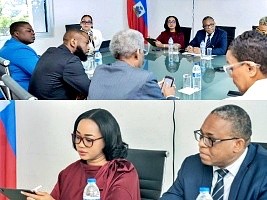
    As the 2026 FIFA World Cup draws near, Haiti is making unprecedented preparations to turn its historic first-ever participation in the global football tournament into a transformative moment that redefines the country’s international image. Top-tier government officials gathered for a strategic planning meeting at the direct request of Prime Minister Garry Conille Fils-Aimé, bringing together cabinet leaders from five key ministries and agencies to coordinate national and international efforts surrounding the event.

    Attendees at the high-level meeting included Stéphanie Smith, Minister of Tourism; Pythagore Dumas, Minister of Youth and Sports; Raina Forbin, Minister of Foreign Affairs; Kathia Verdier, head of the Ministry of Haitians Living Abroad (MHAVE); and Emmanuel Ménard, Minister of Culture. The gathering marked the official launch of a country-wide mobilization initiative that extends far beyond the scope of athletic competition, framing the World Cup as a rare global platform to showcase Haiti’s underrecognized strengths.

    Planned efforts are structured around two core pillars: domestic organization and international outreach, with a central focus on uniting Haitian communities at home and abroad ahead of the tournament. A key strategic component of the initiative centers on leveraging the global Haitian diaspora, with MHAVE tasked with leading outreach and engagement efforts to connect millions of Haitians living outside the country to the national team’s historic run.

    The core end goal of the mobilization is to build widespread, sustained support for Haiti’s national men’s football team, nicknamed the Les Grenadiers. Plans call for coordinated efforts to drive massive fan attendance at team matches in host stadiums, organize community-focused patriotic events across Haiti and diaspora hubs, and launch solidarity campaigns that center Haiti’s positive attributes on the world stage.

    Beyond supporting the team, officials frame the initiative as a long-overdue opportunity to highlight the Caribbean nation’s untapped tourism opportunities, rich cultural heritage, and the strength of its people. This World Cup participation is positioned as a chance to showcase the Haitian population’s well-known resilience, creativity, courage, and national pride, as the country works to turn the page on decades of negative international coverage and write a new, more hopeful chapter in its modern history.

  • Donation of US$23.6 million for improving food security through sustainable agriculture in Haiti

    Donation of US$23.6 million for improving food security through sustainable agriculture in Haiti

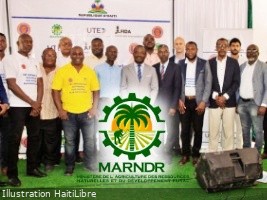
    On May 14, 2026, local and international stakeholders gathered for the official launch of the EFOSE project, an ambitious seven-year initiative designed to boost food security, local economic growth and improved nutrition across Haiti’s hard-hit Southeast Department. The program, formally named the Project to Improve Food Security through Sustainable Agriculture, Local Economic Development, and Healthy Diets, is backed by a $23.6 million grant from the International Fund for Agricultural Development (IFAD), with the funding agreement originally signed between the Haitian government and IFAD in March 2025. The project will run through 2032, targeting 16 communal sections across five municipalities of the Southeast Department, covering more than 1,500 square kilometers and reaching a total of 24,664 vulnerable households. Currently, 45% of the population in the region lives with chronic food insecurity, a crisis exacerbated by recurring climate disasters and economic volatility that have destabilized local livelihoods for years. At its core, EFOSE seeks to lift communities out of poverty while addressing systemic food and nutrition gaps by expanding and diversifying local production of nutrient-dense foods, with a deliberate focus on building long-term resilience to both climate and economic shocks. The initiative is structured into three core components, each designed to address different layers of the food security crisis. The first component focuses on strengthening territorial resilience, local governance, environmental stewardship and critical infrastructure. It works toward two key outcomes: expanding household participation and decision-making power in local development processes, and improving access to reliable drinking water and agricultural irrigation while enhancing local climate resilience. The second component ties production improvements directly to nutrition and economic opportunity, split into two interconnected sub-components. Sub-component 2.1 invests in on-the-ground production support and nutrition education, encouraging smallholder producers to adopt climate-resilient farming techniques and improved nutrition-focused practices to boost output. Sub-component 2.2, by contrast, invests in value chain infrastructure and support services for participating production systems, with the goal of creating new local employment opportunities, expanding consistent food access, and increasing the diversity of nutritious foods available to regional communities. A third, standalone emergency and disaster response component adds critical flexibility to the project, designed to be activated rapidly in the event of a major crisis that threatens the lives and livelihoods of targeted communities. Eligible crises that can trigger this component include large-scale destructive natural events such as hurricanes or major earthquakes, widespread crop or livestock pest and disease outbreaks that threaten livelihoods, acute public health or food insecurity crises requiring immediate intervention, and large-scale civil unrest that destroys productive infrastructure and community assets. To activate the emergency response, a clear causal link must be established between the event and major negative environmental, economic or social impacts to the target population, ensuring the fund is used to address urgent, crisis-related needs. For Haiti, a country that has long grappled with systemic poverty, repeated climate shocks and persistent food insecurity, the launch of EFOSE marks a major coordinated investment in long-term, community-centered development that addresses both immediate nutritional gaps and the root causes of regional food insecurity.