标签: Haiti

海地

  • Brazil : Internationalization of the UEH through the signing of Strategic Agreements

    Brazil : Internationalization of the UEH through the signing of Strategic Agreements

    In a landmark step for the State University of Haiti (UEH) to expand its global academic footprint, UEH Rector Professor Dieuseul Prédélus signed a series of strategic cooperation agreements with three leading Brazilian higher education institutions on June 30, 2026. The signing, which took place following an official invitation from Brazil’s Ministry of Education, partners UEH with the Federal University of Latin American Integration (UNILA), the Federal University of Pará (UFPA), and the Federal University of South and Southeast Pará (UNIFESSPA).

    Designed to formalize cross-border academic, scientific, and cultural collaboration, the new agreements run for an initial five-year term. Under the terms of the partnerships, the participating institutions will open new pathways for student, faculty, and administrative staff exchange across borders. They will also co-develop joint teaching curricula and collaborative research initiatives, host shared academic events including conferences and workshops, pool access to rare documentary and academic resources, and open shared use of specialized research laboratories and campus infrastructure for affiliated researchers and students.

    University leadership confirmed that the new Brazilian partnerships align directly with UEH’s long-running, intentional internationalization strategy. The core goal of this institutional push is to expand the university’s global connections, ultimately strengthening its capacity to deliver high-quality professional training, advance innovative research, and foster a culture of academic innovation that serves Haitian students and researchers. This latest round of agreements is not the final step in UEH’s current expansion push: university officials note that additional partnership deals with other Brazilian higher education institutions are already in the works and expected to be signed in the near future.

    The new Brazilian partnerships mark the latest in a series of international cooperation deals UEH has secured in recent months. Prior agreements have been finalized with academic institutions in the United States, Spain, Morocco, and Colombia, as the public Haitian university continues to build out its global network of collaborative partners.

  • Haiti’s Electoral decree, 7 months of discussions for a 3rd version

    Haiti’s Electoral decree, 7 months of discussions for a 3rd version

    After seven months of tense, iterative negotiations across Haiti’s executive branch, the Provisional Electoral Council (CEP), and major national political parties, a third revised version of the country’s core electoral framework has formally entered into force. The new iteration, which amends the second version published in the official government gazette Le Moniteur on June 2, 2026, was approved by Haiti’s Council of Ministers on Thursday, July 2, 2026, and released via Special Moniteur Issue 34. Notably, only the targeted amendments themselves were made public in this initial release, leaving stakeholders awaiting a full consolidated text of the complete decree.

    The push for a updated electoral regulation began in late 2025, when the first iteration of the Electoral Decree was published on December 1. That initial draft established the foundational legal framework for Haiti’s upcoming electoral cycle, laying out formal rules for poll administration, voter registration, and new caps on political campaign spending. It was developed in alignment with the National Pact for Stability and the Organization of Elections, a broader national agreement designed to pull Haiti out of prolonged political gridlock.

    The process of refining the framework hit early friction after the CEP submitted a revised draft to the executive branch on April 24, 2026, incorporating feedback from initial stakeholder discussions. That CEP-proposed draft became the basis for the second official version of the decree, released in June 2026 — but the executive branch made sweeping, last-minute changes to the text without consulting the CEP, triggering a looming political crisis and raising alarms over the transparency of the process.

    To de-escalate tensions and resolve the impasse, the government organized a series of tripartite negotiations bringing together representatives from the executive, the CEP, and all major political parties. Over months of talks, stakeholders worked through contentious provisions, adjusting term limits for elected offices and addressing longstanding political disputes that threatened to derail the entire electoral schedule. The result of these talks is the third version approved July 2, which has been described by participants as a “relative consensus” that balances competing priorities across all negotiating groups.

    Despite the breakthrough, lingering uncertainty remains. As of the publication of the new amendments, a full consolidated version of the decree integrating all changes to the CEP’s second draft has not been released, leaving political observers and candidates without complete clarity on the final rules that will govern the upcoming election cycle.

  • Zapping Haiti of July 4th, 2026

    Zapping Haiti of July 4th, 2026

    In a series of interconnected updates from Haiti spanning the first days of July 2026, multiple administrative, security and institutional developments have unfolded across the Caribbean nation, alongside a regional security gathering focused on combating transnational crime.

    On July 3, 2026, Serge Gabriel Collin, Haiti’s Minister of Economy and Finance, formally swore in Goethie Varnelle Morency as the new Director General of the country’s Anti-Corruption Unit (Unité de Lutte Contre la Corruption, ULCC). Morency takes over the top leadership role from Hans L. Joseph, whose dismissal from the post came without any public explanation of the underlying reasons.

    Separately, the National Identification Office (ONI) has disclosed a major quality issue with identification cards manufactured between 2019 and 2021. ONI Director General Reynold Guerrier confirmed that internal audits uncovered widespread manufacturing flaws tied to low-quality raw materials supplied by the original vendor. Even under proper storage conditions, affected cards experience lamination peeling and cracking, rendering them invalid for official use. In response to the problem, the office has already transitioned to a new supplier, which produces updated identification cards constructed from far more durable materials that meet stringent international quality standards. To date, the Haitian government has placed an order for nearly 600,000 of these new-generation cards to replace the defective older batches.

    In the security space, law enforcement agents from the Bureau for Combating Drug Trafficking (BLTS) and the Haitian Coast Guard carried out a successful arrest in the southern department on July 2, 2026. The operation, conducted in the Fogas neighborhood of Les Cayes, took alleged marijuana trafficker Emmanuel Louisius into custody. Officers seized 3.7 kilograms of marijuana during the raid, and Louisius remains in detention as legal proceedings move forward.

    A regional security note: Haitian Minister of Justice and Public Security Patrick Pélissier traveled to Martinique on July 2 and 3, 2026, to participate in a regional security conference hosted by the French government. The gathering brought together delegates from 20 regional nations, plus representatives from Canada and the United States, to coordinate cross-border anti-crime efforts. At the close of the conference, participating parties adopted a joint policy document titled the “Martinique Appeal,” which formalizes a collective commitment to deepen regional cooperation, develop unified counter-crime strategies, crack down on illicit weapons and drug trafficking, secure shared borders, protect civilian populations, and reduce the spread of gang activity and transnational organized crime.

    In a consular alert, the Haitian Embassy in Mexico issued an urgent public request for information, asking the Haitian diaspora in Mexico to help connect embassy staff with the parents of Heline Joseph, or any individual who has contact with the Joseph family.

    Finally, administrative updates from foreign missions in Port-au-Prince: the Canadian Embassy in Haiti announced it will suspend all public operations on Monday, July 6, 2026, for a holiday, with regular services resuming on July 7. The embassy noted that members of the public experiencing consular emergencies can reach the 24/7 emergency team toll-free at +1-613-996-8885 or via email at sos@international.gc.ca.

  • Emergency Preparedness : Civil Protection Harmonizes Contingency Plans Nationwide

    Emergency Preparedness : Civil Protection Harmonizes Contingency Plans Nationwide

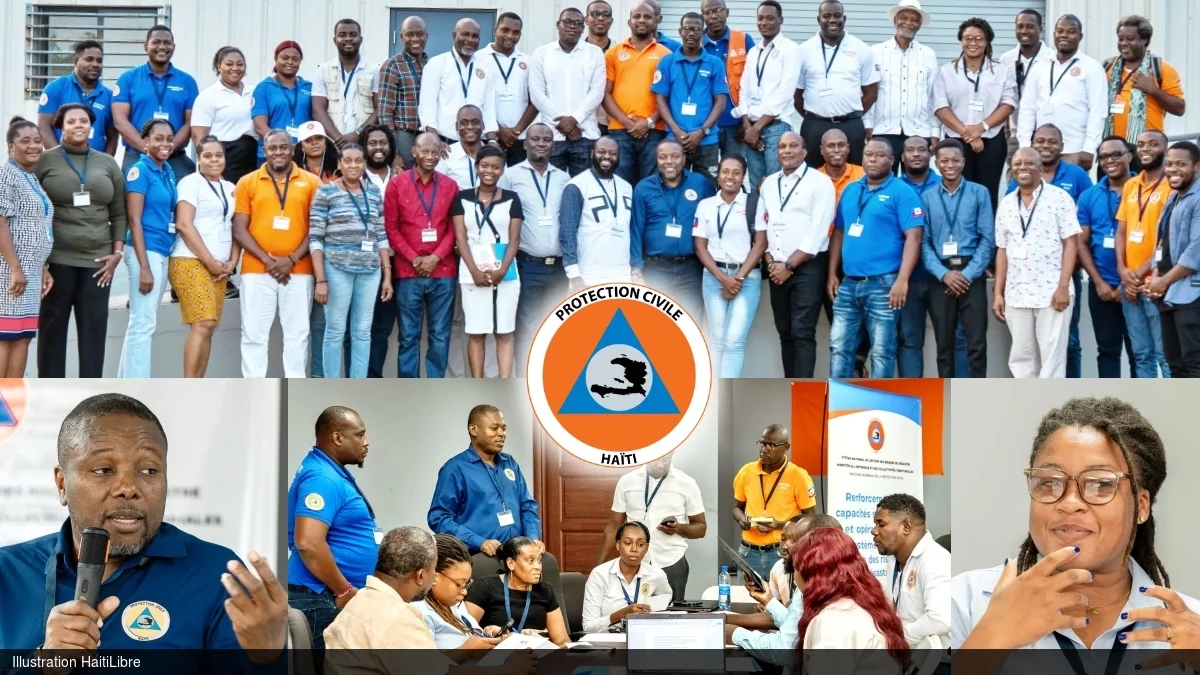
    As the 2026 North Atlantic, Gulf of Mexico and Caribbean hurricane season entered its most active phase weeks after its official June 1 launch, Haiti’s General Directorate of Civil Protection (DGPC) has moved to modernize the country’s disaster preparedness infrastructure with a landmark four-day national workshop held in Les Cayes from June 29 to July 2. The gathering, which brought together 50 key stakeholders across national and departmental emergency management bodies, focused on aligning and updating the country’s scattered contingency plans into a unified, digitized system capable of addressing a full range of natural hazards.

    This workshop marks a major milestone in the DGPC’s five-year ongoing reform agenda to strengthen Haiti’s emergency response capacity. Built on incremental improvements to preparedness frameworks rolled out since 2021, the initiative prioritizes reconciling national and departmental-level contingency protocols, integrating hard-won lessons from recent disaster response operations, standardizing operational workflows, and closing coordination gaps between the multiple public and private sectors involved in emergency relief efforts.

    Fifty participants representing ten departmental emergency management directors, central DGPC leadership, technical civil protection staff, independent national risk experts, and member institutions of Haiti’s National Risk Management System (SNGRD) gathered for the workshop, which was made possible through targeted technical and financial support from international partner organizations. Key backers include the World Food Programme (WFP), the International Organization for Migration (IOM), the United Nations Children’s Fund (UNICEF), the Phoenix Project, and the United States Forest Service (USFS), all of which have long partnered with the DGPC to build sustainable disaster resilience across Haiti.

    Over the four-day event, attendees rotated between in-depth technical presentations, collaborative working groups, hands-on practical training, and simulated hydro-meteorological disaster scenarios designed to test and refine the emerging unified framework. All work was aligned with the 2020 June 15 presidential decree that established the SNGRD and introduced a new unified command structure for disaster management across the country. Core focus areas included comprehensive multi-hazard risk assessment, clarification of cross-sectoral responsibilities, budget allocation for different response scenarios, and the transition from outdated paper-based planning tools to modern digital systems.

    Workshop organizers outlined several concrete, actionable outputs expected from the gathering. These include a fully harmonized overarching national framework for contingency planning, a standardized methodological guide for all stakeholders to follow, tailored departmental work plans to finalize local planning documents, and a clear national roadmap that lays out timelines and protocols for the validation, public dissemination, and full rollout of the updated plans.

    In opening remarks to attendees, DGPC Director General Emmanuel Pierre reaffirmed that proactive emergency preparedness remains the foundational pillar of effective national risk reduction and management. He stressed that accessible, regularly updated, cross-stakeholder aligned contingency plans are non-negotiable for boosting Haiti’s overall preparedness, streamlining operational coordination during crises, and ultimately delivering far more effective response when large-scale disasters strike.

  • Elections : The Prime Minister’s Office approves an electoral budget cut in half

    Elections : The Prime Minister’s Office approves an electoral budget cut in half

    In a significant development for Haiti’s upcoming democratic process, top government officials and electoral leaders announced a landmark budget agreement for national elections on Friday, July 3, 2026. Following multiple rounds of collaborative working sessions, the Prime Minister’s Office and Haiti’s Provisional Electoral Council (CEP) have finalized a slashed budget for electoral operations, cutting the original preliminary proposal by nearly half.

    Technical oversight for the budget review was led by teams from Haiti’s Ministry of Economy and Finance (MEF), which conducted a line-by-line audit of every expenditure category in the initial funding request. The re-evaluation was grounded in practical, context-aware assumptions that balanced core operational needs with the country’s current fiscal realities. Planners incorporated key on-ground factors, including the incremental improvement of Haiti’s security landscape, the restoration of movement in previously hard-to-access regions, the Haitian government’s constrained financial capacity, and global best practices for responsible public financial management.

    Under the final agreement, total authorized funding for electoral operations stands at $120 million USD. The two bodies have also included a provision for future adjustments, stating that the budget may be amended at a later date via joint consensus if unforeseen operational needs arise. The revised total marks a sharp reduction from the $250 million preliminary budget initially submitted by electoral officials. Prior to this agreement, a joint commission featuring representatives from three United Nations bodies—the United Nations Development Programme (UNDP), the United Nations Office for Project Services (UNOPS), and the United Nations Integrated Office in Haiti (BINUH)—had already proposed a downward re-assessment, recommending a budget range of $220 million to $230 million. Even that revised UN-proposed range is nearly double the newly agreed $120 million allocation.

    Leaders from both institutions frame the budget deal as a critical milestone in moving long-planned elections forward. The Haitian government has reaffirmed its commitment to securing all necessary resources for every stage of the electoral process, working within the limits of state capacity and in coordination with domestic and international partners. For its part, CEP has reiterated its pledge to oversee the electoral process with impartiality, professionalism, and full independence, adhering strictly to Haiti’s constitutional and legal framework as well as globally accepted standards for democratic election administration.

  • National Tourism Day : A passionate appeal from Minister Stéphanie Smith

    National Tourism Day : A passionate appeal from Minister Stéphanie Smith

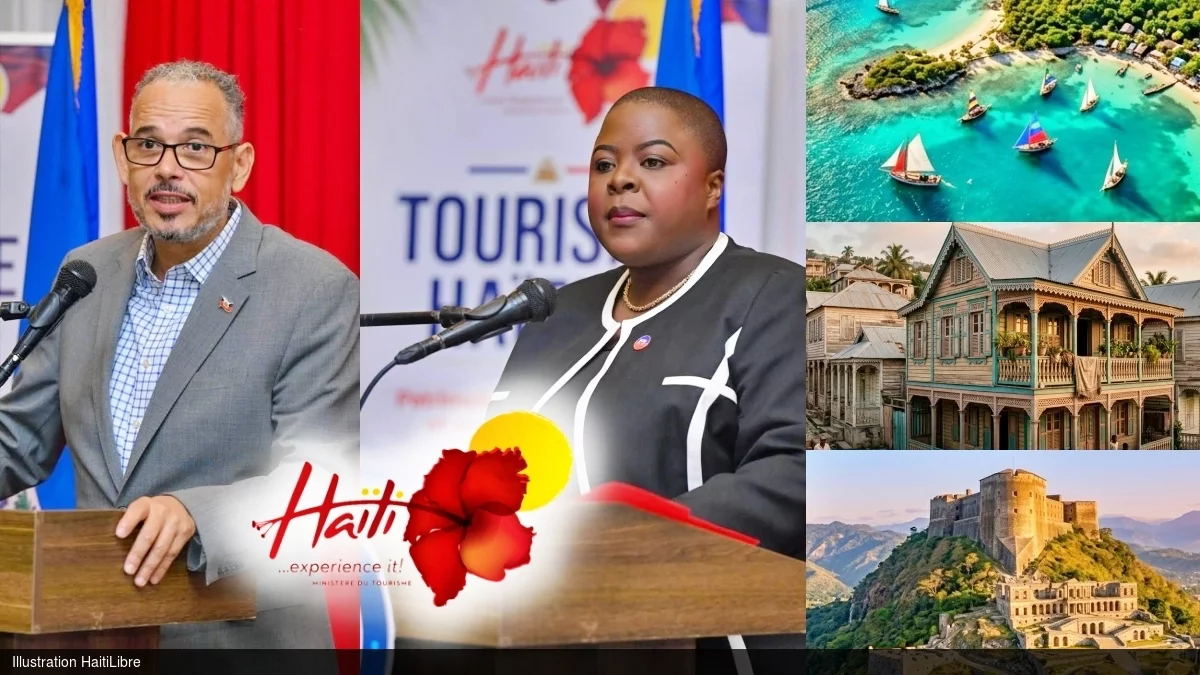
    On July 3, 2026, Haiti’s Ministry of Tourism gathered a broad cross-section of stakeholders at Port-au-Prince’s Oasis Hotel to celebrate National Tourism Day, centered on the unifying theme “Heritage, Investment, and Territorial Recovery.” The high-level event brought together top government officials, private sector leaders, members of the diplomatic corps, international development partners, and representatives from across Haiti’s fractured tourism industry to chart a path forward for an sector that holds enormous untapped potential for the Caribbean nation.

    Attendees included Prime Minister Alix Didier Fils-Aimé and six cabinet ministers spanning the tourism, diaspora, public works, trade, planning, and culture portfolios, reflecting the government’s framing of tourism as a whole-of-economy priority. The day’s discussions centered on positioning the sector as a core engine of inclusive economic growth, job creation, and post-crisis territorial recovery for Haiti.

    In his keynote address to the assembly, Prime Minister Fils-Aimé underscored tourism’s unique cross-cutting strategic value to Haiti’s economy. He stressed that meaningful revitalization of the sector depends on close, sustained collaboration between public agencies, local municipal governments, domestic private businesses, and global partners. He reaffirmed the national government’s pledge to build a policy and security environment that encourages renewed investment, noting that a thriving tourism sector would deliver widespread benefits across all segments of the Haitian economy.

    The Prime Minister also publicly recognized the remarkable resilience of Haiti’s private tourism sector, which has continued to allocate capital to new projects even amid ongoing economic and security challenges. Most recently, Haiti has seen progress on a private $20 million tourist complex development that signals growing confidence in the sector’s long-term prospects. Beyond economic commitments, Fils-Aimé reiterated the government’s core priorities: restoring widespread security across the country, advancing the national electoral process, and strengthening democratic state institutions. He closed his remarks by extending an invitation to international partners, friends of Haiti, and Haitians living in the diaspora to join the sector’s revival by rediscovering the nation’s unique cultural, historical, and natural treasures.

    Tourism Minister Stéphanie Smith delivered a passionate, urgent appeal for global and local audiences to re-examine Haiti as a travel destination, highlighting the extraordinary diversity and richness of the country’s heritage that remains largely underpromoted. Smith outlined three clear strategic priorities guiding her ministry’s new policy agenda: elevating and preserving Haiti’s unique national heritage, rebuilding investor confidence to stimulate new capital inflows to the sector, and revitalizing regional tourism ecosystems across the country. The framework is rooted in an inclusive development model that centers local community participation and ensures regional communities capture shared benefits from tourism growth.

    Smith called on all stakeholders – domestic citizens, the Haitian diaspora, the private sector, and international partners – to align efforts to rebuild Haiti into a competitive, welcoming, and sustainable travel destination for future generations. Echoing Smith’s call, Minister of Diaspora Kathia Verdier emphasized the outsized strategic role that Haitians living abroad can play in promoting Haiti as a credible tourist destination, reaffirming her ministry’s commitment to supporting sustainable, inclusive tourism development projects.

    As part of the day’s celebrations, organizers presented public awards to three institutions that have made notable contributions to raising Haiti’s global profile in recent years: the Haitian Football Federation (FHF), the Haitian Tourism Association (ATH), and domestic carrier Sunrise Airways. By the close of the event, Smith reaffirmed her ministry’s commitment to partnering with every stakeholder group to roll out an ambitious national tourism policy that advances the core goals of heritage preservation, investment promotion, sustainable territorial development, and the repositioning of Haiti as a one-of-a-kind global travel destination.

  • Leisure : Did you know ? #38

    Leisure : Did you know ? #38

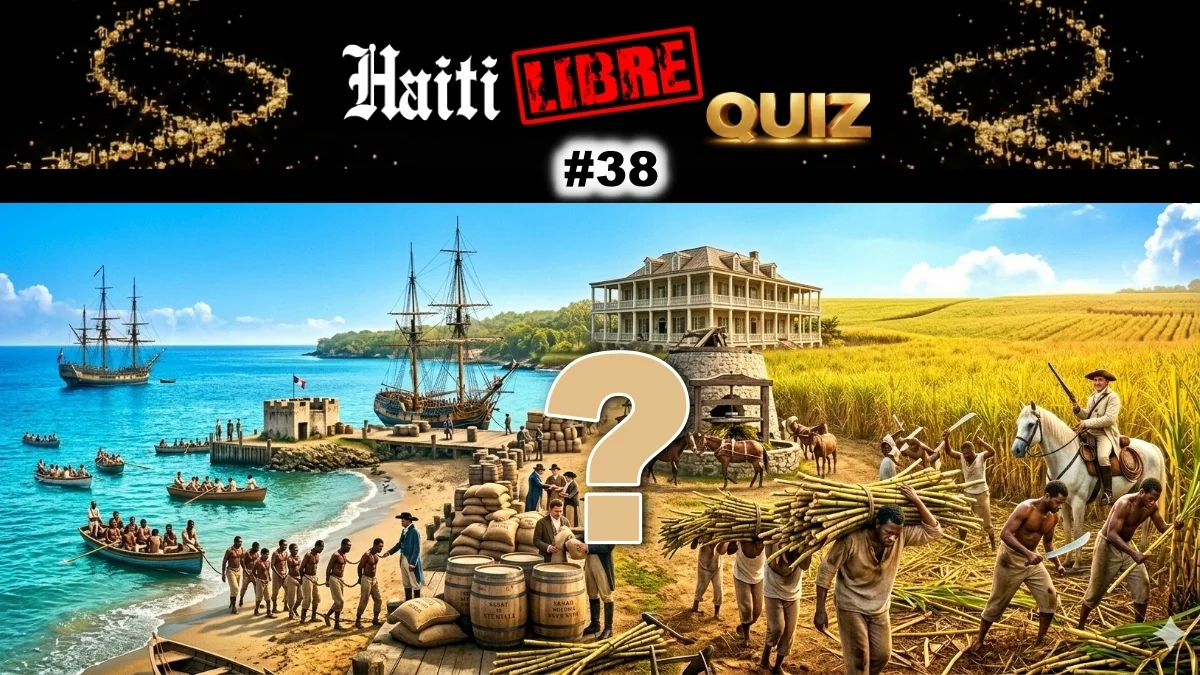
    Haiti’s popular independent news and media platform HaitiLibre has announced a major expansion of its popular educational quiz initiative, Quiz.HaitiLibre, bringing the total number of interactive general knowledge games available on the platform to 180 following a July 1, 2026 monthly content update. As part of the platform’s signature twice-weekly “Did You Know?” knowledge segment – the 38th installment of which was published on March 7, 2026 – the feature this week explores the little-discussed historical mechanics of transatlantic triangular trade, a system that shaped the colonial history of Hispaniola, the island that includes present-day Haiti.

    The educational entry explains that the triangular trade was a structured global commercial system that integrated the colony of Santo Domingo, the precursor to modern Haiti, directly into European imperial economic networks. This sprawling maritime trading operation operated in three distinct, brutal phases. The circuit began when trading ships departed Western European ports – most notably major French harbors – loaded with standardized manufactured goods, firearms, textiles, and distilled spirits.

    These cargoes were then traded on the western coast of Africa to local slave trading intermediaries in exchange for captured African men, women, and children. The enslaved people were then packed tightly into ships for the horrific transatlantic crossing known infamously as the Middle Passage, where vast numbers died from disease, starvation, abuse, or neglect before reaching the Americas.

    Upon arrival in the Caribbean, the surviving enslaved people were sold at auction to white colonial plantation owners. The final leg of the triangle closed when ships returned to Europe with holds full of high-value, labor-intensive tropical export crops including sugar, coffee, and indigo. This closed commercial cycle generated unprecedented wealth for European colonial powers, built entirely on the exploitation and premature death of millions of enslaved African people.

    Quiz.HaitiLibre positions itself as an accessible, inclusive educational resource for curious learners of all ages. All games on the platform are 100% free to access, require no account registration, and are offered in both French and English to serve Haiti’s diverse linguistic communities and international audiences. Every quiz is structured with three graduated difficulty levels – easy, intermediate, and hard – to accommodate both casual learners and seasoned history enthusiasts looking for a challenge. The platform adds 31 new games each month as part of its regular content update cycle, covering topics ranging from local Haitian history and culture to global current events and general knowledge.

    Readers and learners are invited to visit the official Quiz.HaitiLibre website to explore the full collection of games, test their knowledge, share the platform with friends and family, and submit feedback through a contact form available at the end of each quiz to help the team improve the offering over time.

  • Zapping Haiti of July 4th, 2026

    Zapping Haiti of July 4th, 2026

    As of July 3, 2026, Haiti is navigating overlapping political, security, and social developments, with key decisions from the national Council of Ministers and steady progress on counter-gang security operations.

    In the security domain, the Gangs Suppression Force (GSF) has established a sustained presence in the Tabarre neighborhood following offensive operations launched last week to dislodge gang control. GSF members are continuing regular patrols and clearing blocked transport routes to restore safe passage for local residents, with command emphasizing that recapturing gang-held territory is only the initial phase of the mission — securing the area long-term to prevent gang reoccupation remains the core ongoing objective.

    On the political front, the Council of Ministers adopted the long-awaited third version of a national electoral decree on July 2, 2026, wrapping up weeks of negotiations between the Provisional Electoral Council (CEP), the national government, and government-aligned political parties. The finalized decree has been forwarded to the National Press for official publication in the government’s official journal *Le Moniteur*. In addition to the electoral framework, the council approved a series of senior administrative and leadership changes: Gerald Rampliais stepped down from his role as Director General of Customs, and Walter Gabellus was appointed as his replacement. Hans L. Joseph, the former Director General of the Anti-Corruption Unit (ULCC), was removed from his post with no public explanation of the dismissal, and replaced by Goethie Varnelle Morency. Job Pierre was confirmed as Deputy Director General of the National Old-Age Insurance Office (ONA), and a reshuffle of multiple interim municipal councils was also approved, though full details of these local changes have not been released to the public.

    In diplomatic appointments, the Haitian government named two new ambassadors: Guy Lamothe will serve as Haiti’s top representative to Chile, while Antonio Rodrigue has been appointed ambassador to Canada. On July 2, Prime Minister Alix Didier Fils-Aimé personally attended a commemoration of the 250th anniversary of United States independence, held at the official residence of U.S. Chargé d’Affaires Henry T. Wooster. The prime minister praised the U.S. founding milestone as a defining embodiment of the values of liberty and national sovereignty, and reaffirmed the longstanding friendly bilateral ties between Haiti and the United States, extending the Haitian government’s official wishes for continued prosperity to the American people. Separately, Fils-Aimé issued formal congratulations, on behalf of the Haitian government and in a personal capacity, to Keiko Fujimori, daughter of former Peruvian president Alberto Fujimori, following her election as the next president of Peru. He commended the Peruvian people’s exercise of sovereign democratic will, and expressed hopes for Fujimori’s success in advancing national stability, inclusive development, shared prosperity, and stronger democratic institutions during her term.

    In judicial news, former Arnel Bélizaire, who previously represented the Delmas and Tabarre district as a member of parliament, was released from custody on July 2, 2026, by order of investigating judge Loubens Élysée. Bélizaire had been held for more than three months following his March 14 arrest, on charges including terrorism financing, conspiracy against state internal security, and criminal association. The judge ordered his release after concluding a formal hearing into the case.

    In the education sector, national end-of-cycle exams for 9th-grade students, learners at Family Education Centers (CEF), and students at Teacher Training Colleges (ENIJE) concluded successfully on July 2, 2026. Haiti’s Ministry of Education announced preliminary outcomes during a press briefing, expressing overall satisfaction with the orderly conduct of exams across all test centers. Turnout for the exams was high, with between 94% and 97% of all registered candidates attending their scheduled assessments.

  • Grand’Anse (Haiti), Inauguration of the Women’s Center

    Grand’Anse (Haiti), Inauguration of the Women’s Center

    On July 1, 2026, Haitian officials and international stakeholders gathered in the coastal Grand’Anse department to mark a landmark step forward for women’s rights in the country: the official inauguration of a purpose-built Women’s Center focused on supporting survivors of gender-based violence and advancing women’s economic and social independence.

    Led by Pedrica Saint Jean, Haiti’s Minister for the Status of Women and Women’s Rights (MCFDF), the inauguration ceremony opened with a blessing service officiated by Reverend Father Edner Mars, followed by a traditional ribbon-cutting that formalized the opening of the new facility. The event drew a broad cross-section of governmental, civil society, and international partners, including Jérémie Mayor Onel Jacinthe, Jérémie First Instance Court Government Commissioner Jean Marie Alexandre Geatjens, UN Women Haiti Deputy Representative Sophie Havyarimana, Jérémie Vice-Delegate Wilbert Chéry, and Kerling Gaspard Saint Juste, the MCFDF’s departmental director for Grand’Anse.

    In his remarks at the ceremony, Mayor Onel Jacinthe reinforced the municipal government’s unwavering commitment to backing all initiatives that lift up women and girls who have survived violence. He called for broad grassroots civic participation, urging local residents to collaborate closely with the ministry and supporting institutions to strengthen the national fight against gender-based violence, which he described as a persistent societal scourge.

    Commissioner Jean Marie Alexandre Gaetjens brought sharp attention to a growing crisis facing the region: he reported a concerning upward trend in gender-based violence cases logged by the Jérémie Public Prosecutor’s Office. He stressed that sexual violence must not be dismissed as isolated, private incidents, but treated as the serious criminal offense it is, requiring strict, uncompromising judicial action. “There is no room for impunity. Every complaint brought before the courts will be examined with all the rigor required by law,” Gaetjens said, adding that no social, family, or political pressure would be allowed to interfere with the equal application of the law. He urged survivors, their families, and all community members to break long-standing cultures of silence by reporting all acts of violence to authorities.

    Sophie Havyarimana, deputy representative for UN Women in Haiti, welcomed the Haitian government’s investment in the Grand’Anse center, noting it is the first facility of its kind in the department. She called the inauguration a major milestone in building out robust national protection and support systems for violence survivors. Havyarimana emphasized that violence against women and girls remains an unacceptable violation of fundamental human rights, one that can only be defeated through coordinated collective action from government, community groups, and international partners. “We have a duty to break the silence. It is unacceptable to tolerate violence against women and girls. Together, we must put an end to this phenomenon so that every woman and girl can live in a safe, dignified environment free from all forms of violence,” she said.

    Jérémie Vice-Delegate Wilbert Chéry framed the fight against gender-based violence as a core priority for upholding social cohesion and driving Haiti’s long-term sustainable development. No country can achieve meaningful progress when half its population is blocked from accessing their fundamental rights, he noted, and reaffirmed the need for ongoing, coordinated action from public authorities and all sectors of Haitian society to guarantee women and girls effective protection, full exercise of their rights, and equal opportunities to contribute to national development.

    In her keynote address, Minister Pedrica Saint Jean explained that the new Grand’Anse Women’s Center is part of a broader national strategy to build a Haitian state that is proactive, protective, and responsive to women’s rights. “The establishment of the Women’s Center in Grand’Anse is part of a clear national vision: that of a state that protects, listens, and acts. It is based on fundamental principles: equality, social justice, security, solidarity, and the empowerment of women,” Saint Jean said. She outlined the dual symbolic and practical value of the new facility, describing it as “a space of dignity, listening, and rebuilding” where every survivor of violence will receive respectful, non-judgmental support at every stage of their recovery. The center will deliver integrated, multidisciplinary services spanning medical care, mental health support, social assistance, and legal aid, to remove barriers to justice for survivors. Beyond direct support, it will also serve as a hub for prevention education and community-wide cultural change to reduce rates of gender-based violence.

    Closing the ceremony, Saint Jean emphasized that the new center is not a final achievement, but the start of a renewed commitment from the Haitian state to the women of Haiti. “The Women’s Center of Grand’Anse is not an end. It is the beginning of a new pact between the State and the women of Haiti: a pact of protection, justice, and dignity,” she said.

  • Towards the institutionalization of the social protection budget in Haiti

    Towards the institutionalization of the social protection budget in Haiti

    On June 30, 2026, Haiti’s Ministry of Social Affairs and Labor kicked off a landmark hybrid seminar focused on embedding the National Policy for Social Protection and Promotion (PNPPS) into formal national budget structures, hosted at Port-au-Prince’s Karibe Hotel. The gathering brought together a diverse coalition of stakeholders, including senior Haitian government officials, members of the national Sectoral Roundtable, and technical experts from leading regional and global development bodies: the Economic Commission for Latin America and the Caribbean (ECLAC), the World Food Programme (WFP), the World Bank, UNICEF, and the International Labour Organization.

    In his opening address to attendees, Minister of Social Affairs and Labor Marc-Elie Nelson framed the budget institutionalization effort as a critical step to supercharge Haiti’s long-term battle against deep-rooted poverty, systemic inequality, and widespread community vulnerability. Nelson highlighted two existing government initiatives that have already laid critical groundwork for national scale-up: the Klere Chimen program and the Multisectoral Emergency Program (PUM), both designed to support social reintegration and stabilize vulnerable populations. These programs, he noted, serve as proven pilot models for a unified national social protection framework, which already relies on the Ministry’s SIMAST digital information system as the country’s official social registry.

    Nelson stressed that embedding PNPPS within the government’s 2026–2029 Three-Year Action Plan and aligning the policy with national program budgeting is non-negotiable to secure consistent, long-term funding, streamline cross-agency interventions, and strengthen sector governance. He closed his opening remarks by calling for coordinated action from all public institutions and international technical and financial partners to deliver more equitable, accessible, and sustainable social protection services to all Haitian people.

    A core focus of the seminar was the launch of a new 57-page consultancy report, *Analysis and Recommendations for the Budgetary Institutionalization of the National Policy for Social Protection and Promotion in Haiti*, authored by ECLAC external consultant and public finance expert Lordis Bernard. The report outlines the most pressing barriers to sustainable social protection financing in Haiti, analyzes the country’s current socio-economic landscape, existing PNPPS institutional architecture, and the national budget system. It proposes a clear pathway to integrate the social protection policy into the state’s core budget priorities, centered on a program-based budgeting approach, and lays out strategic recommendations to strengthen PNPPS’s long-term viability, governance, and sustainability.

    Lucny Cadet, coordinator of the Ministry of Social Affairs and Labor’s Studies and Programming Unit (UEP), praised the report’s rigor and framed the current moment as a turning point for Haitian social protection. “The question is no longer whether we should finance social protection,” Cadet explained, “it is how to better plan, target, coordinate, and evaluate these investments to maximize their economic and social impact.” He emphasized that the end goal is a national social protection system that is more integrated, efficient, responsive, and reliably funded, adding: “Social protection should not be seen as an unproductive expense, but as a strategic investment in human capital, social stability, household resilience, and more inclusive growth.”

    Erwan Rumen, acting WFP country director for Haiti, echoed this framing, affirming that social protection is an indispensable foundation for long-term national development in the country.

    Closing the seminar, Marie Herolle Michel, director general of the Ministry of Social Affairs and Labor, reaffirmed the Ministry’s commitment as the lead sectoral agency to continue deepening collaboration with all national and international stakeholders. The goal, she said, is to build a Haiti with a coherent, integrated, resilient, and adequately funded social protection system, supported by sustainable mechanisms that deliver tangible results for the needs of the Haitian people. Full versions of the report (in French) and Minister Nelson’s opening address are available for public download via HaitiLibre’s document portal.