标签: Haiti

海地

  • Recruited by gangs, Haitian children «pay a heavy price»

    Recruited by gangs, Haitian children «pay a heavy price»

    Following her inaugural fact-finding mission to violence-battered Haiti, a top United Nations official has delivered a devastating assessment of the country’s child protection crisis, warning that minors now account for almost half of all members of the armed gangs that control large swathes of Haitian territory.

    Vanessa Frazier, the UN Secretary-General’s Special Representative for Children and Armed Conflict, shared her grim findings at a UN Headquarters press briefing on Thursday, May 21, 2026. She detailed that for children growing up in Haiti, daily life is defined by a relentless fight for survival, shaped by unending terror, constant threats of violence, family separation, forced displacement, and severe psychological trauma – all conditions that criminal gangs actively exploit to target vulnerable young people.

    Frazier’s report documented a sharp and alarming escalation in violence against children over just the last year. Between 2024 and 2025, the number of children forcibly recruited and deployed by gangs nearly tripled. Over the same period, killings, mutilations, and abductions of minors almost doubled. Sexual violence, once an occasional byproduct of gang conflict, has become a routine tactic, deliberately deployed to spread terror and retaliate against entire communities that resist gang control.

    Central to Frazier’s recommendations is a fundamental shift in how authorities respond to children found with gangs during security operations. She emphasized that any child encountered in these contexts must first be recognized and treated as a victim of exploitation, not a criminal combatant. These children, she argued, must be transferred immediately to specialized child protection services, where they can access critical care, psychosocial support, and long-term reintegration programming.

    For the small number of children suspected of involvement in serious offenses, Frazier clarified that international juvenile justice standards must be strictly upheld. Deprivation of liberty, she stressed, should only be used as a measure of last resort, prioritizing rehabilitation over punishment.

    To scale up support for former child gang members, UN and local partners are ramping up reintegration efforts across Haiti, most notably in the capital Port-au-Prince and the southern city of Les Cayes. In Les Cayes, a former facility is currently undergoing major renovations to create a dedicated reintegration center that can accommodate up to 600 children who have left gang life.

    Frazier’s visit came amid a widening national humanitarian and security collapse that has deepened the vulnerability of Haitian children. Hundreds of thousands of minors currently live in areas fully controlled by armed gangs, completely cut off from access to education, healthcare, and basic social protection services. During her mission, Frazier learned that more than 18,000 schools across Haiti have been destroyed, damaged, or forced to cease operations due to gang violence. This widespread collapse of the education system leaves children isolated, idle, and far more susceptible to recruitment, exploitation, and abuse by criminal groups.

    “No child should have to grow up in such conditions,” Frazier said, reflecting on her meetings with survivors. “I met young children and adolescents who were already vulnerable in their own homes, and have been trapped in an unbroken cycle of violence both inside and outside their communities. They told me they want only one thing: to go to school, to play, to learn, and simply be children again.”

    Even amid the widespread chaos and trauma, Frazier highlighted the remarkable resilience of Haitian children, who have held onto their hopes for the future despite unimaginable hardship. “Even in the darkest moments, Haitian children continue to show extraordinary strength,” she said. “They deserve more than just survival. They deserve the chance to grow, to chase their dreams, and reclaim the childhood that has been stolen from them.”


  • Official inauguration of the new Haitian airline ZED Airlines S.A.

    Official inauguration of the new Haitian airline ZED Airlines S.A.

    Haiti took a notable step forward in economic and infrastructural development on May 22, 2026, with the official inauguration of its newest private commercial airline, ZED Airlines S.A. The launch ceremony, held in Port-au-Prince, drew high-level attendees from across Haiti’s public sector, diplomatic community, and private business landscape, underscoring the broad significance of the new venture.

    Leading the official government delegation was Joseph Almathe Pierre Louis, Haiti’s Minister of Public Works, Transportation, and Communications. He was joined by fellow cabinet members James Monazard, Minister of Commerce, and Patrick Pélissier, Minister of Justice and Public Security, alongside José Bernard Mathias Schettini, Director General of Haiti’s National Airport Authority (AAN), and senior representatives of the international diplomatic corps based in the country. Davide Jean Charle, President and Chief Executive Officer of ZED Airlines, led the company’s executive team at the celebratory event.

    In his keynote address at the inauguration, Minister Pierre Louis framed the launch of ZED Airlines as far more than a new business entry: it stands, he said, as a tangible symbol of hope, national resilience, and growing confidence in Haiti’s capacity for recovery and long-term growth. He elaborated on the central role that a robust air transport sector plays in advancing a developing nation, noting that expanded air connectivity catalyzes cross-border economic exchange, strengthens personal and cultural ties between communities, boosts tourism activity, attracts foreign direct investment, and deepens Haiti’s integration into regional and global markets.

    Pierre Louis praised the entrepreneurial vision behind ZED Airlines, adding that sustainable growth of Haiti’s civil aviation sector relies on intentional, coordinated collaboration between four key groups: the national government, independent aviation regulators, global industry partners, and private domestic and international investors. He stressed that this synergistic partnership will be critical to overcoming existing challenges in Haiti’s transportation infrastructure and unlocking the sector’s full economic potential.

    In closing, the minister extended his well wishes to ZED Airlines’ leadership and entire workforce, reminding the team that consistent, high-quality customer service will be the foundational driver of long-term success. He also reaffirmed the Haitian government’s unwavering institutional support for all private and public initiatives focused on revitalizing the country’s transportation sector, a core pillar of broader national economic recovery efforts.

    In a notable alignment of milestones, the inauguration ceremony coincided with ZED Airlines’ inaugural commercial revenue flight, operating between Miami, Florida, and Cap-Haitien, Haiti’s second-largest city. Speaking after the formal ceremony, CEO Davide Jean Charles announced the carrier’s near-term expansion plans: beginning the first week of June 2026, ZED Airlines will launch three new additional routes connecting Cap-Haitien to major North American cities: New York, Atlanta, and Montreal. The expanded route network is expected to open new travel and commerce opportunities for Haitian communities at home and abroad, while boosting access to the country for international tourists and investors.

  • Action plan of the Ministry of Culture until September 30, 2026

    Action plan of the Ministry of Culture until September 30, 2026

    On May 23, 2026, Haiti’s Minister of Culture Emmanuel Ménard officially released a comprehensive action plan for his ministry, outlining key priorities and initiatives to be completed by the end of the current fiscal year on September 30, 2026. The roadmap was developed in alignment with the country’s core national priorities and Prime Minister Fils-Aimé’s pledge to strengthen cross-sector governance and upgrade public service delivery across Haiti.

  • Bogotá : Haiti proposes a regional system for the recognition of professional skills

    Bogotá : Haiti proposes a regional system for the recognition of professional skills

    Against a backdrop of growing regional migration pressures and shifting labor market dynamics across Latin America and the Caribbean, Haiti has put forward a bold proposal for cross-border cooperation at the region’s highest-level gathering of labor ministers. The Conference of Ministers of Labor of Latin America and the Caribbean, hosted in Bogotá, Colombia from May 21 to 22, 2026, brought together top labor and social affairs officials to address shared challenges spanning migration, inclusive economic growth, and climate-linked labor disruption.

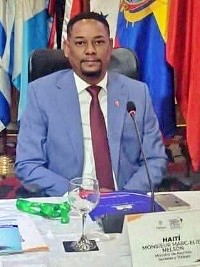
    Leading Haiti’s delegation to the conference, Marc-Elie Nelson, Minister of Haiti’s Ministry of Social Affairs and Labor (MAST), introduced a landmark initiative: the creation of a standardized regional system for the recognition of professional skills. Nelson argued that such a coordinated mechanism would unlock tangible benefits for the entire region, from encouraging cross-border entrepreneurship to expanding equitable access to public employment support services. Most critically, he emphasized, the framework would advance the financial and digital inclusion of migrant workers, a group that often faces systemic barriers to formal economic participation across the region.

    “Investing in these areas is investing directly in the stability, prosperity, and cohesion of our region,” Nelson told conference attendees. Alongside his call for the skills recognition system, Nelson urged regional partners to establish a dedicated regional innovation fund focused on expanding professional inclusion for marginalized and mobile worker populations.

    Beyond labor market reform, Nelson called for unified, coordinated action from regional governments to tackle two of the most pressing shared challenges: irregular migration patterns and climate change impacts on labor systems. He also made a forceful stand against exclusion in workplaces across the region, stating, “We must raise our voices together strongly against xenophobia, discrimination, and all forms of exclusion in the world of work.”

    By the close of the two-day conference, participating officials advanced regional cooperation through two key multilateral agreements: a memorandum of understanding and a joint policy statement titled the Bogota Declaration on Dignified Labor Migration and Rights-Based Mobility in Latin America and the Caribbean. Both documents were initialed by attending delegations, laying the groundwork for future coordinated action.

    For Haiti, signing onto the agreements reaffirms the country’s long-standing commitment to building a regional governance model that centers human dignity as a core priority of public policy, aligning with the nation’s proposal to center marginalized migrant workers in regional labor reform efforts.

  • Social : Launch of the first shelters for women victims of violence

    Social : Launch of the first shelters for women victims of violence

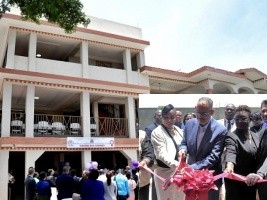
    In a landmark step forward for gender justice in Haiti, top government officials officially opened the nation’s first dedicated safe shelters for women and girls who have survived gender-based violence on Friday, May 22, 2026. The launch ceremony, led by Prime Minister Alix Didier Fils-Aimé alongside Pédrica Saint-Jean, Haiti’s Minister for the Status of Women and Women’s Rights, drew attendance from representatives of UN Women, international technical and financial partners, and members of the diplomatic corps based in Port-au-Prince.

    Across the country, four such shelters will be constructed across four key departments: West, Grand’Anse, Central, and Artibonite. The first completed facility, located in the West Department’s Vivy-Mitchell district, was the site of Friday’s inauguration. Purpose-built to prioritize survivor safety, dignity and holistic healing, the shelter comes equipped with modern amenities including eight private dormitories, dedicated reception zones, a communal cafeteria, an on-site infirmary, a recreation space, and segregated secured areas designed to protect residents. Unlike many temporary support projects in Haiti that rely on international donor funding, this entire initiative is financed directly by the Haitian national government.

    For countless Haitian women who have endured gender-based violence in silence for decades, the opening of these shelters represents more than just a new infrastructure project—it is a tangible demonstration of the state’s commitment to protecting its most vulnerable citizens. Marie Gorreti Nduway, UN Women’s country representative to Haiti, spoke emotionally at the ceremony, praising the launch as a transformative milestone for women’s rights in the country. She called the initiative a concrete victory for Haitian women, and reaffirmed UN Women’s long-term commitment to partnering with the Haitian government to sustain and expand the shelter program.

    Minister Saint-Jean also shared her moving reaction to the completion of the first facility, framing the shelters as an indispensable turning point in the national fight to defend women’s dignity and guarantee their protection. She highlighted that beyond physical safety, the shelters will provide survivors with confidential, individualized psychosocial support tailored to each person’s unique healing journey.

    In his address to attendees, Prime Minister Fils-Aimé framed the project as a powerful act of national solidarity, justice, and collective hope. “Faced with violence, we choose light,” he said. “These houses will be spaces for rebuilding, rebirth, and dignity. Women have the right to protection, to be heard, and to receive support.” To ensure the long-term stability of the program, the prime minister announced that sustained funding for all four shelters will be written into the upcoming national supplementary budget, locking in government support for years to come.

  • Reconstruction : The State comes to the aid of infrastructure in the Southeast

    Reconstruction : The State comes to the aid of infrastructure in the Southeast

    As Haiti prepares for the upcoming 2026 Atlantic hurricane season, the country’s Ministry of Public Works has ramped up on-site infrastructure assessments and reconstruction work across the Southeast department, focusing on critical energy and flood mitigation projects that address long-standing vulnerabilities in the region.

    Following a recent strategic inspection tour of the Palmes region, Minister of Public Works Joseph Almathe Pierre Louis led a ministerial delegation to the Southeast this week, kicking off the visit with a stop at the Gaillard hydroelectric power plant in Cayes-Jacmel. The facility, a key contributor to local energy supply, has been completely shut down for roughly 12 months, creating widespread disruptions to power access for surrounding communities. Minister Pierre Louis emphasized that restoring the plant aligns directly with the Haitian government’s top priority of expanding domestic energy independence, noting that engineering teams will quickly conduct full technical evaluations to launch rehabilitation work and bring the plant back online as soon as possible.

    After wrapping up the inspection at the hydropower plant, the delegation traveled to Bassin Caïman, a geographically critical hydrological hub where three major Haitian waterways — the Rivière Gauche, Rivière Gosseline, and Grande Rivière — converge. The site suffered severe damage during Haiti’s last major cyclone, which washed out a large stretch of the country’s national highway that runs through the area. During the visit, the minister reviewed ongoing gabion construction projects designed to reinforce damaged infrastructure and reduce future flood risk.

    Against a backdrop of increasing climate-related extreme weather events hitting the Caribbean, Haiti’s public works ministry — backed by the Prime Minister’s Office — has rejected short-term, superficial fixes that fail to address the root of the country’s infrastructure vulnerabilities. With the official hurricane season set to begin on June 1, immediate action is the top priority right now: the ministry will launch intensive operations to correct at-risk riverbeds across the Southeast, including embankment reinforcement, dredging of accumulated sediment, and bank protection work designed to lower the risk of catastrophic flooding as storm activity ramps up.

    Over the medium term, the government plans to shift focus to long-term structural improvements for regional watersheds, implementing comprehensive upgrades that will protect both residential communities and critical infrastructure for decades to come. Beyond infrastructure assessments, this cross-country tour of Haiti’s administrative departments has allowed Minister Pierre Louis and his team to gain on-the-ground insight into local infrastructure needs and engage directly with residents to understand their top concerns as the country works toward widespread reconstruction.

  • FLASH : The FAd’H will launch a massive recruitment drive in all 10 departments

    FLASH : The FAd’H will launch a massive recruitment drive in all 10 departments

    Haiti’s Ministry of Defense has formally announced that the Haitian Armed Forces (FAd’H) will soon roll out a large-scale recruitment campaign across all 10 of the country’s administrative departments, in a move aligned with the institution’s 2026-2027 strategic plan to steadily expand and strengthen its military workforce.

    Unveiled via an official press release on Thursday, May 21, 2026, the initiative aims to bring 1,000 new service members into the force, filling ranks across all tiers: enlisted soldiers, non-commissioned officers, and commissioned officers. Unlike targeted recruitment drives limited to specific regions, this campaign will open applications to eligible young men and women across the entire country, expanding access for interested candidates regardless of where they reside.

    In addition to the longstanding mandatory eligibility checks covering physical fitness, cognitive aptitude, and medical clearance, the FAd’H has introduced a new set of alternative social profile criteria to vet candidates. This update is designed to embed core Haitian national values — including civic responsibility, patriotism, and collective mutual support — into the force’s membership.

    Candidates only need to meet one of the 10 listed social criteria to qualify, rather than satisfying all requirements. The eligible criteria include: being an active blood donor registered with the National Transfusion Safety Program; demonstrating consistent eco-citizenship practices; participating in community-led projects that boost local public well-being; contributing to support networks for socially isolated patients; holding membership in a youth educational movement such as Scouting, MEJ, or Junior Achievement; working with mutual aid groups supporting vulnerable adults facing mental, cognitive, or social disabilities, as well as elderly adults; taking part in local or national reforestation initiatives; leading or participating in civic, artistic, or athletic training programs for underserved teens and young adults; serving as a recognized role model for positive masculinity within one’s community; and actively advancing a culture of peace among local residents.

    Official documentation from social or institutional partners confirming a candidate’s participation in one of these activities will be required during the application and vetting process. The expanded criteria mark a notable shift in how the FAd’H evaluates candidates, prioritizing community commitment alongside traditional service qualifications as the force works to build a military that reflects and supports national social priorities.

  • U-17 World Cup Qatar 2026 : Our Grenadiers know their opponents

    U-17 World Cup Qatar 2026 : Our Grenadiers know their opponents

    The stage is now set for the 2026 FIFA U-17 Men’s World Cup in Qatar, after football’s global governing body FIFA completed the final tournament draw in Zurich, Switzerland on Thursday, May 21, 2026. Scheduled to run from November 19 through December 13 this year, the youth football showcase will bring 48 of the world’s top under-17 national teams to compete across world-class venues in Doha’s Aspire Zone complex in Al Rayyan, with 8 match pitches ready for action and the tournament final set to be hosted at the iconic Khalifa International Stadium.

    For Haiti’s young national side, nicknamed the Grenadiers, this tournament marks their fourth appearance at the FIFA U-17 Men’s World Cup, and they have learned they will compete in Group D alongside three formidable opponents: European champions France, Asian side Saudi Arabia, and South American powerhouse Uruguay. The expanded 48-team format sees all participating nations split into 12 groups of four teams for the opening round. After the group stage concludes, the top two finishers from each group will advance to the knockout round of 32, joined by the eight highest-ranked third-place teams from the group stage. From the round of 32 onward, the tournament will follow a single-elimination knockout bracket to decide the world champion.

    Haiti qualified for the 2026 finals after an impressive run through regional qualifying matches, where they picked up decisive wins over Antigua & Barbuda (4-0), Grenada (5-1) and Guatemala (2-1) to secure their spot in the final draw. At the helm of the squad is head coach Kowsky Sainvil, who previously led Haiti’s U-20 national team in 2016 and has served as a coach with Canada’s FC Laval based in Quebec since 2024. Speaking after the draw ceremony, Sainvil shared that he was pleased with the outcome of the group draw, and remains confident in his young side’s prospects. The coach emphasized that with structured, high-intensity preparation in the months leading up to the tournament, his team is capable of pulling off unexpected results, earning a spot in the knockout round, and making a deep run in the competition.

    In the weeks following Haiti’s successful qualification, the country’s prime minister offered official congratulations to the U-17 squad for their achievement, marking another milestone for Haitian youth football as the nation prepares to compete on the global stage this November.

  • Leisure : Did you know ? #26

    Leisure : Did you know ? #26

    In the 26th installment of HaitiLibre’s popular “Did You Know?” trivia series, a revealing fact about Haiti’s two centuries of political history offers new context for the country’s ongoing governance challenges. Data pulled from the outlet’s interactive Haiti History Quiz 2.1 shows that from the reign of founding father Jean-Jacques Dessalines, who led Haiti to independence in 1804, to the current Transitional Presidential Council, the Caribbean nation has been led by more than 90 different heads of state.

    This extraordinary frequency of leadership turnover is rooted in the dramatic shifts in governing systems Haiti has experienced over its modern history, ranging from early imperial and monarchical structures to various republican frameworks and repeated provisional administrations. Across this timeline, long, stable tenures in office have remained rare deviations from the norm rather than the established pattern.

    Of the more than 90 leaders who have held the highest office in Haiti, a vast majority never completed their full constitutional mandates. Their terms ended in one of three common outcomes: forced exile, assassination, or ouster at the hands of popular uprisings or military coups.

    This well-documented historical pattern underscores a critical lesson for national progress: that institutional stability and consistent respect for democratic processes are foundational to long-term development. By tracing this complex history of leadership turnover, observers and citizens alike can gain deeper insight into Haiti’s contemporary political obstacles, as well as the Haitian people’s persistent aspiration for durable, forward-thinking leadership.

    Beyond this historical trivia, the fact was sourced from HaitiLibre’s growing collection of free, public online quizzes, hosted at quiz.haitilibre.com/en. The platform offers hundreds of trivia games covering topics ranging from Haitian history and culture to global affairs, designed to test general knowledge for users of all backgrounds. For more experienced trivia enthusiasts, a dedicated expert menu offers more challenging question sets tailored to advanced learners.

    All quizzes on the platform are free to access, require no user registration, and are available in both French and English, with three adjustable difficulty levels (easy, intermediate, and hard) to accommodate different skill levels. As of the latest monthly update rolled out on May 4, 2026, the platform added 30 new quiz games, bringing its total catalog to 119 interactive knowledge games. New content is added to the site every month, expanding its range of topics for returning users.

  • In Haiti, Collection of local seeds to support national reforestation

    In Haiti, Collection of local seeds to support national reforestation

    In a major push to reverse decades of deforestation and rebuild Haiti’s fragile ecosystems, two key environmental agencies have ramped up a national native seed collection campaign focused on safeguarding the country’s unique ecological heritage. The initiative, led by the Directorate of Forests and Renewable Energies (DFER) in partnership with the Northeast Departmental Directorate (DDNE) under Haiti’s Ministry of the Environment (MdE), kicked off earlier this week with targeted field work in the country’s northern coastal region.

    Teams of DDNE-MdE technical staff have been deployed across two key collection sites: Carrefour Chivry and the Morne Casse Border Police (PoliFRONT) post in the Fort-Liberté commune. Their primary target is seed from two ecologically and economically valuable native species: local mahogany (Swietenia mahagoni) and guaiac tree (Guaiacum officinale), both of which are iconic components of Haiti’s native forest ecosystems.

    Agronomist Eder Audate, head of DFER’s Department of Forestry and Rural Development, publicly praised the relentless work of Luckin Charles, DDNE’s departmental director, and the entire field technical team. Audate emphasized that the seed collection operation is a strategically critical step that will underpin all upcoming national forest restoration projects and long-term biodiversity preservation programs across the country.

    To date, the teams have already collected more than 126 kilograms of high-quality seed, sorted and processed following a strict, science-based methodology. Collectors assess each batch based on fruit maturity and quality, the health and morphology of parent trees, the density of surrounding vegetation cover, and site accessibility to ensure only the most robust seed is selected for propagation.

    This campaign is a concrete reflection of Environment Minister Valéry Fils-Aimé’s commitment to advancing Haitian forest regeneration through native, locally sourced seed. Unlike imported tree stock, locally harvested seed is naturally adapted to Haiti’s specific climatic conditions, soil types, and regional environmental stressors, resulting in higher survival rates for transplanted seedlings. After several months of germination and growth in controlled nurseries, the seeds will develop into seedlings that will be planted out in mass reforestation campaigns scheduled across all regions of Haiti in the coming months.