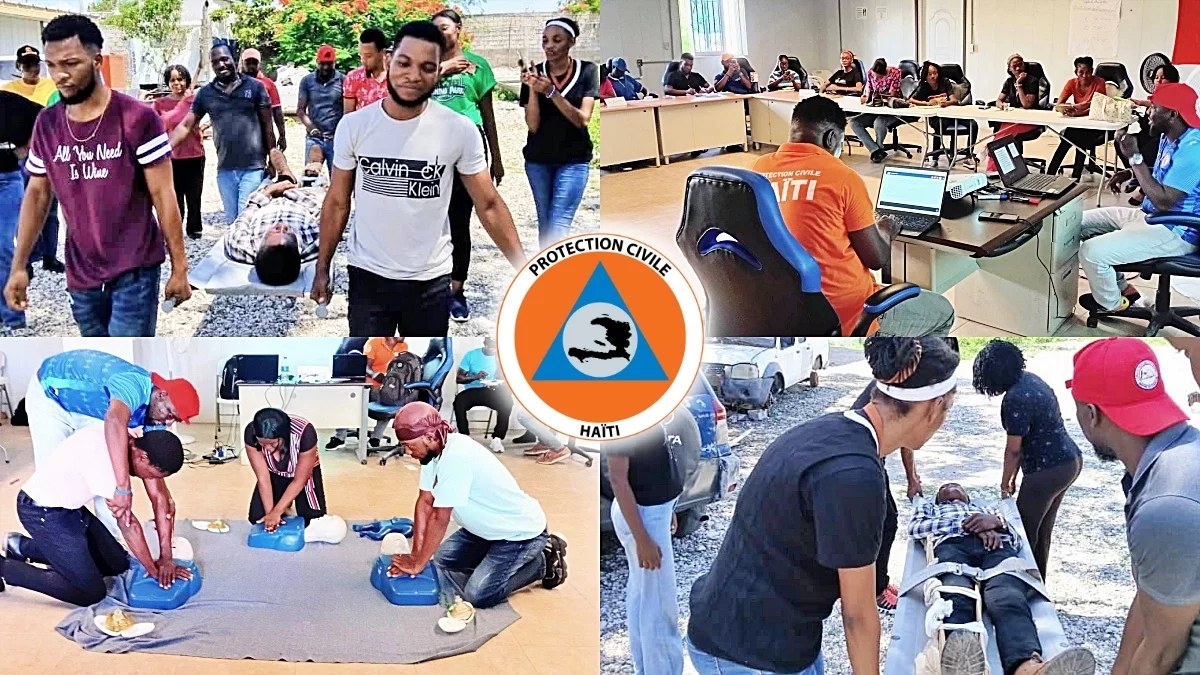
Against the backdrop of Haiti’s persistent vulnerability to natural and humanitarian disasters, local civil protection authorities have launched a targeted capacity-building initiative to boost emergency response capabilities in the Artibonite department. The Artibonite Departmental Directorate of Civil Protection hosted a six-day intensive training program for its newly formed departmental response brigade at the Departmental Emergency Operations Center (COUD) based in Morne-Blanc.
The training forms part of a broader national push by Haiti’s Civil Protection system to upgrade the operational readiness of newly established local brigades, with a core focus on improving disaster risk management, risk reduction, and rapid emergency intervention. Delivered by certified instructors from the Haitian Red Cross and funded by the Agency for Technical Cooperation and Development (ACTED), the curriculum centered on two critical pillars: systematic disaster risk assessment and evidence-based first aid care. Program designers structured the coursework to equip participating volunteer brigade members with the practical skills needed to intervene effectively during crises, filling a key gap in pre-hospital care for vulnerable communities.
Over the six-day program, attendees mastered foundational risk management frameworks and core emergency response techniques that allow them to stabilize disaster and accident victims before they can be transferred to formal medical facilities. Instructors opened the program by outlining the core objectives and life-saving importance of timely first aid, stressing that local first responders are the first line of defense in protecting lives and strengthening the resilience of at-risk communities. Central to the training was the PAS response principle—Protect, Alert, Rescue—a foundational framework that guides all coordinated emergency interventions globally.
A wide range of practical and conceptual topics were covered to address the most common emergency scenarios brigades are likely to face. These included assessment and stabilization of bone, muscle and joint injuries; management of unconscious choking victims; care of unconscious breathing patients; intervention for acute respiratory emergencies; wound cleaning, dressing and infection prevention; proper lifting and stretcher-carrying techniques to avoid further injury to victims and responders; community-level emergency preparedness planning; and core operational concepts for mobile response units, including the Mobile Rescue Unit (MRU), Alert and Transmission Post (ATP), and Rest and Accommodation Unit (RAC).
Unlike traditional classroom-only training, the program relied heavily on hands-on practical exercises, live demonstrations of emergency techniques, and peer-to-peer experience sharing to reinforce learning. This interactive approach allowed volunteer participants to build muscle memory for critical interventions and develop the quick reflexes needed to deliver rapid, appropriate care to victims while waiting for professional medical teams to arrive. By the conclusion of the program, attendees had significantly elevated their first aid competencies and confidence in leading initial emergency response.
In closing remarks, training instructors encouraged participants to apply their new knowledge in real-world scenarios and to continue engaging in ongoing capacity-building opportunities. The initiative reflects a long-term strategy to increase local preparedness and improve response outcomes for the full range of emergency events that impact Artibonite communities, from natural disasters to public health and safety incidents.