标签: Haiti

海地

  • FLASH : PAPEJ program, business plan competition in Haiti

    FLASH : PAPEJ program, business plan competition in Haiti

    Haiti’s Ministry of Trade and Industry has officially opened applications for a new national business plan competition, marking the launch of the fifth cohort of beneficiaries under the country’s Youth Entrepreneurship Support Program (PAPEJ). Backed by program financial partners, the initiative is designed to uplift young Haitian innovators looking to launch, scale up, or strengthen sustainable, forward-thinking businesses across the nation.

    Unlike standard grant programs, PAPEJ combines accessible, tailored financing with structured hands-on technical support, creating a holistic ecosystem for young entrepreneurs to turn their ideas into impactful ventures. The overarching goal of the program is to drive long-term economic growth and widespread job creation across Haiti, by nurturing homegrown entrepreneurial initiatives that address local needs.

    At its core, PAPEJ was developed to boost youth self-employability, with a particular focus on expanding economic opportunity in underserved rural areas. The program works to build a landscape of viable, competitive, and environmentally conscious businesses that can contribute to long-term national development. Its specific objectives extend far beyond just funding: it seeks to expand the number of youth-led enterprises across the country, cut persistent youth unemployment by normalizing entrepreneurship as a viable career path, and encourage business formalization to build a culture of fiscal responsibility that strengthens national public finances.

    To meet these goals, the program offers eligible projects financing of up to 2 million Haitian gourdes, with flexible terms structured to fit the unique realities of young and early-stage entrepreneurs. Funding can be allocated to a wide range of critical business costs, including the purchase and installation of production equipment and materials, development or rental of business premises, acquisition of raw materials, expansion of production capacity, and other core expenditures required to launch or scale a viable project.

    The competition is open to micro, small, and medium-sized enterprises (MSMEs) as well as formal entrepreneur groups, including general partnerships, limited partnerships, and limited liability companies. Eligible sectors cover a broad range of productive industries, from agro-industry and biotechnology to mechanics, manufacturing, processing, and any other productive sector that meets program requirements.

    Once the competition closes, all shortlisted business plans will first undergo validation by the PAPEJ national coordination team before being forwarded to program financial partners for final funding approval. All financing awards remain contingent on candidates meeting full eligibility requirements and passing a rigorous technical, financial, and economic evaluation of their submitted proposal.

    To qualify for consideration, submitted projects must meet a clear set of eligibility criteria. Proposals must feature an innovative value-added business idea, be led by a promoter under the age of 40, and demonstrate clear potential for net job creation. Projects are eligible whether they are early-stage startups seeking launch capital or existing young businesses looking to strengthen their operations. Priority is given to formal partnerships and limited companies with at least 5 members, and proposals that prioritize local products and key national growth sectors. Projects must have a total financing need between 50,000 and 2 million gourdes, and must prioritize environmentally sustainable operations. Existing businesses must demonstrate a minimum track record of revenue generation, and all candidates must either be already formally registered or commit to completing formalization within the program’s required timeline.

    The credit terms offered through PAPEJ are structured to support young entrepreneurs rather than create unmanageable debt. Funding amounts range from 50,000 to 2 million gourdes, with repayment periods extending up to 10 years. The fixed interest rate is set between 3% and 5%, significantly lower than most commercial lending options for young entrepreneurs in Haiti, and includes a grace period of 6 to 12 months to allow businesses to generate revenue before beginning repayments.

    Selected beneficiaries take on clear responsibilities to ensure program accountability: they must adhere to the agreed credit repayment schedule, participate in all capacity-building training sessions organized by PAPEJ, provide regular updates required for project monitoring, follow the technical and managerial guidance offered by program experts, and maintain transparent, responsible financial management of the funded enterprise.

    Interested candidates can access the official business planning template, which is available for free download on the Ministry of Trade and Industry’s website. To apply, candidates must submit three core documents: a completed business plan following the official framework, a valid registration certificate from the Ministry of Commerce and Industry, along with relevant business license (Patente) and CIP documentation, and a copy of the project leader’s national identification card (NIU).

    Completed applications must be sent to the official program email address papej@mci.gouv.ht no later than May 25, 2026. Program organizers note that incomplete application files will not be reviewed for consideration, and only pre-selected candidates will be contacted for next steps. Following evaluation, all approved projects will gain access to the full range of financing and support services offered through the PAPEJ program.


  • Leisure : Did you know ? #24

    Leisure : Did you know ? #24

    In the 24th installment of the popular “Did You Know?” trivia series from Haitian news outlet HaitiLibre, the platform spotlights the extraordinary legacy of Mary Jackson, the groundbreaking mathematician and engineer who made history as NASA’s first Black female engineer. More than a footnote in aerospace history, Jackson’s life story is a powerful testament to resilience against the systemic racism and gender discrimination that defined mid-20th century America.

    Jackson began her career at the segregated West Area Computing unit at NASA’s Langley Research Center, where she worked as a human calculator crunching critical aerodynamic data for early space program projects. To advance from her entry-level role to a formal engineering position, Jackson was required to complete specialized coursework that was only offered at an all-white local high school. Undaunted by the racial barriers blocking her path, she successfully petitioned the local court for permission to enroll in the evening engineering classes, clearing the last hurdle to her promotion. In 1958, she officially claimed her place in history as NASA’s first Black female engineer.

    Throughout her decades-long career at the agency, Jackson specialized in fluid dynamics and wind tunnel testing, where her analytical work analyzing flight data directly improved the aerodynamic design of America’s early crewed space capsules. Beyond her technical contributions to the U.S. space program, Jackson dedicated the later chapter of her career to opening doors for other underrepresented groups: she worked actively within NASA to increase hiring of women and people of color, and advocated for equitable promotion pathways for marginalized staff.

    Her trailblazing journey was popularized globally by the book and Oscar-nominated film *Hidden Figures* (referred to in the original text by its French title *Les Figures de l’ombre*), which brought widespread attention to her dual fight against racial and gender bias in pursuit of scientific excellence.

    This feature on Jackson was pulled from the answer key of the Expert Level “Famous Women 2.1” quiz on HaitiLibre’s dedicated trivia platform, QuizHaitiLibre. Launched officially earlier this year, the platform offers free, no-registration trivia games for audiences of all ages and knowledge levels, with content available in both French and English. Games are split into three difficulty tiers: easy, intermediate, and hard, covering a wide range of topics from Haitian current affairs and culture to global history, science, and pop culture.

    As of its May 4, 2026 monthly content update, the platform added 30 brand-new trivia games, bringing its total catalog of interactive quizzes to 119. New games are added to the platform every month to keep content fresh for returning users, and users seeking more challenging trivia can access advanced themed quizzes in the platform’s expert menu. The outlet invites visitors to explore the full collection of trivia, share the platform with friends and family, and submit feedback to help improve future updates.

  • Towards strengthening cooperation between Haiti and Trinidad and Tobago

    Towards strengthening cooperation between Haiti and Trinidad and Tobago

    In a high-stakes diplomatic mission aimed at addressing deep-seated labor market challenges, a multi-stakeholder Haitian delegation traveled to Port of Spain, the capital of Trinidad and Tobago, on May 13, 2026, to hold a landmark working meeting with Trinidadian officials, International Labour Organization (ILO) representatives, labor union leaders and private sector stakeholders. The delegation was led by Marc-Elie Nelson, Haiti’s Minister of Social Affairs and Labor, and included top figures from Haiti’s key industry and labor groups: Radia Mauluk, President of the Association of Industries of Haiti (ADIH), Yvel Admettre, Secretary General of the Confederation of Public Sector Workers (CTSP), and Fignolé St-Cyr, Secretary General of the Autonomous Central of Haitian Workers (CATH).

    During the meeting, Minister Nelson delivered a candid, comprehensive overview of Haiti’s current labor landscape, outlining the severe structural obstacles that have crippled the sector’s ability to function effectively. Key challenges he highlighted include the oversized informal economy that leaves millions of workers without basic protections, growing precarity in the limited formal employment sector, rising social unrest, outdated social dialogue frameworks, persistent gaps in labor inspection enforcement, and widespread institutional weaknesses in labor regulation and social safety net provision. Despite these significant headwinds, Nelson also outlined the concrete steps the Haitian government has already taken to improve conditions for workers and stabilize the market, including a recent minimum wage hike, expanded social assistance programs targeting the most vulnerable populations, and the creation of a new advisory council to set transparent pricing for petroleum products.

    Nelson emphasized that Trinidad and Tobago’s decades of experience in building effective social dialogue systems and robust labor regulatory frameworks would be an invaluable resource for strengthening his ministry’s institutional capacity, allowing it to deliver more impactful outcomes for Haitian workers and businesses. In response, Leroy Baptiste, Trinidad and Tobago’s Minister of Labor and Small and Micro Enterprise Development, framed inclusive social dialogue as a non-negotiable foundation for sustained economic and social stability, outlining his administration’s core strategic priorities to build a more efficient, inclusive labor market for Trinidad and Tobago. Baptiste and his senior ministry team addressed every question and concern raised by the Haitian delegation, and formally confirmed the Trinidadian government’s commitment to supporting Haiti’s efforts to upgrade its labor sector institutions.

    Joni Musabayana, the ILO’s Regional Representative, also participated in the talks, expressing solidarity with the Haitian people amid the country’s ongoing multifaceted crisis. He noted that Haiti holds the distinction of being one of the ILO’s founding member states, praised the cross-regional exchange between the two Caribbean nations as a model for collaborative problem-solving, and called for increased international attention and support for Caribbean countries grappling with uncommonly severe, unprecedented challenges.

    By the conclusion of the meeting, both sides had mapped out clear, actionable areas for future bilateral cooperation. Key priority areas identified include capacity building for inclusive social dialogue, development of professional mediation frameworks, support for labor legislative reform, upgrades to labor inspection systems, improvement of labor market data collection and statistics, and broad institutional strengthening for Haiti’s labor and social affairs agencies.

  • Towards improved infrastructure partnerships in Haiti

    Towards improved infrastructure partnerships in Haiti

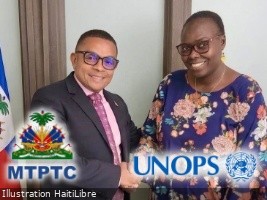
    On May 13, 2026, senior Haitian government officials and representatives of the United Nations Office for Project Services (UNOPS) held a pivotal working meeting focused on rebooting the Caribbean nation’s stalled infrastructure development agenda. Hosting the talks was Engineer Joseph Almathe Pierre Louis, Haiti’s Minister of Public Works, Transport and Communications (MTPTC), alongside UNOPS Haiti Representative Ms. Dabagai Dabagai. The discussion has been framed as a landmark breakthrough in growing collaboration between the Haitian government and the global UN agency, opening new pathways to tackle the country’s long-running infrastructure shortfalls.

    From the opening of the session, UNOPS moved to reaffirm its steadfast commitment to supporting Haiti’s public works priorities. The entire meeting centered on refining the implementation framework for the country’s largest ongoing infrastructure projects, with special strategic focus allocated to the underdeveloped North and West departments, two regions that have faced disproportionate gaps in basic public infrastructure for decades.

    Minister Pierre Louis brought a grounded, pragmatic assessment of on-the-ground challenges to the dialogue, laying out the dual crises facing the national infrastructure sector. He stressed that the country is currently squeezed between crippling, rigid budget limitations that have sidelined dozens of projects and a worsening nationwide infrastructure crisis that has left critical roads, public facilities and utilities in a state of disrepair. Even with constrained public funding, the minister made clear that accelerating both new construction and routine maintenance work is a non-negotiable national priority to support economic recovery and public welfare.

    A separate urgent request was also raised by the minister: targeted support to resolve the complicated management situation of displaced persons currently encamped on the site of Haiti’s National Laboratory for Building and Public Works. The occupation of this critical government facility has delayed critical testing and planning work for new infrastructure projects across the country, creating an additional bottleneck for the sector.

    In response to the multiple barriers outlined by the Haitian government, Ms. Dabagai pledged that UNOPS would step into a direct facilitation role to unlock progress. The agency plans to immediately open structured discussions with potential international donor partners, many of which have already signaled strong interest in targeted infrastructure investment across Haiti’s priority regions. The core goal of this outreach is to mobilize the flexible financial and technical resources needed to keep essential projects on schedule and speed up delivery across the country.

    This high-level dialogue has already done much to strengthen existing synergies between MTPTC and UNOPS, clearing the way for faster resource mobilization and the rollout of tangible, on-the-ground solutions to the infrastructure sector’s most pressing challenges. The renewed partnership between the two institutions highlights the Haitian government’s strategy of leveraging the technical expertise and institutional rigor of established international bodies to tackle pressing national emergencies and lay the groundwork for long-term development.

  • PM of Haiti visited the base of the Gang Supression Force

    PM of Haiti visited the base of the Gang Supression Force

    Amid a nationwide push to curb rampant gang-related insecurity plaguing Haiti, Prime Minister Alix Didier Fils-Aimé traveled to the Gang Suppression Force (GSF) base located in the Tabarre district on May 14, 2026. The visit marked a high-profile check-in on progress of the coordinated international and local operation aimed at disarming violent armed groups that have destabilized large swathes of the country.

    During his time at the base, Fils-Aimé held strategic talks with two key senior officials: Jack Christofidies, Special Representative of the GSF, and Daniela Kroslak, Under-Secretary-General and Head of the United Nations Integrated Office in Haiti (BINUH). The core agenda of the closed-door discussions centered on streamlining the deployment of newly formed operational units and speeding up ongoing offensive operations designed to neutralize dangerous gang factions that have controlled neighborhoods, disrupted basic services and terrorized civilian populations for years.

    Accompanying the Prime Minister on the inspection tour was Vladimir Paraison, Director General of the Haitian National Police (known locally as ONH). Together, the pair reviewed the technical equipment and purpose-built infrastructure that will support incoming contingents. These new forces are tasked with bolstering joint operations carried out by the Haitian National Police and the Armed Forces of Haiti (FAd’H), as the country works to fully reassert government control over territory held by armed gangs.

    In remarks delivered to multinational troops deployed at the base – including service members from Chad, El Salvador, and Guatemala – Prime Minister Fils-Aimé delivered a straightforward message underscoring the stakes of the mission. “The Haitian people expect only one thing from you: concrete results for the lasting restoration of security,” he told the assembled forces. The visit comes as Haiti ramps up its long-awaited crackdown on gang violence, with international support, to create the conditions for long-promised political and electoral stability across the country.

  • Leisure : Did you know ? #23

    Leisure : Did you know ? #23

    For casual learners and bird enthusiasts alike, a fun new installment of HaitiLibre’s popular “Did You Know?” trivia series shares a little-known linguistic detail about the vocalizations of large birds of prey, while also announcing a major expansion of the outlet’s free general knowledge quiz platform.

    Most people have heard the sharp, echoing cries of large diurnal raptors, but few know the specific French term for this distinct call: “glides.” This precise label refers to the short, shrill cry these apex avian predators use, not for hunting—golden eagles, for example, hunt in complete silence to ambush unsuspecting prey—but for intra-pair communication and defending critical nesting territories. The high-frequency sound travels exceptionally well across open plains and rugged mountain landscapes, making it perfectly adapted to the raptors’ natural habitats. Beyond golden eagles, buzzards also produce a version of this call, with a high-pitched tone that is often compared to a very shrill cat’s meow.

    This specific terminology showcases the depth and nuance of French ornithological vocabulary, which carefully differentiates vocal terms for raptors, farmyard fowl, and passerine songbirds. Beyond its linguistic precision, the term “glides” evokes the power and constant vigilance that have made these masters of the sky enduring symbols of majesty dating back to ancient civilizations.

    The fun fact originates from answer explanation sheets for the HaitiLibre Quiz platform, a free general knowledge resource that lets users test their knowledge across a wide range of topics, from local Haitian culture and history to global affairs and specialized niche subjects. Open to all audiences without any required registration, the platform offers three difficulty tiers—normal, intermediate, and advanced—for every quiz, and supports both French and English interfaces to accommodate a broad user base.

    As part of the platform’s monthly content update rolled out on May 4, 2026, 30 brand new quizzes were added to the catalog, pushing the total number of available games past the 100 mark to 119 total. New quizzes are added every month to keep content fresh for returning visitors. Users can access the full platform at any time at https://quiz.haitilibre.com, explore past installments of the “Did You Know?” series via HaitiLibre’s main news site, share the resource with friends, and submit feedback to the platform’s team.

  • Tribute in Haiti to nurses

    Tribute in Haiti to nurses

    On May 12, 2026, Haiti’s Ministry of Public Health and Population (MSPP) joined national health institutions, international organizations, and government bodies to celebrate International Nurses Day, centering the 2026 observance on the theme “Our nurses. Our future. The power of nurses to act saves lives.” The official commemorative ceremony was held at the MSPP’s nursing directorate, drawing a high-profile guest list that included Public Health Minister Dr. Bertrand Sinal, Minister for the Status of Women Pedrica Saint Jean, top executives from the MSPP and the National Ambulance Center (CAN), and delegated representatives from the Pan American Health Organization/World Health Organization (PAHO/WHO), UNICEF, and the Panos Institute.

    In her opening address to attendees, Carine Reveil Jean Baptiste, Director of the MSPP Nursing Directorate, extended formal congratulations to every nurse practicing across Haiti’s public and private health systems. She highlighted the consistent, often underrecognized work of nursing staff to elevate care standards and advance population well-being, even amid systemic and national challenges.

    Gabriel Timothée, Director General of the MSPP, followed with remarks emphasizing the irreplaceable role nurses hold in keeping the national health system functional. He reminded the audience that nurses remain on call day and night at patient bedsides, delivering consistent care with unwavering professionalism and commitment to their mission.

    Minister Dr. Sinal used the occasion to reaffirm that nursing workforce issues have been a top policy priority since he assumed his role at the head of the public health ministry. He shared tangible progress on this commitment, noting that nearly half of all recent senior and frontline staffing appointments published by the ministry have been for nursing positions, signaling the government’s investment in strengthening the nursing workforce.

    As a key component of the national celebrations, the General Directorate of the Office of Workplace Accident, Sickness and Maternity Insurance (OFATMA) issued a formal statement paying tribute to Haiti’s nurses. The statement acknowledged that nurses carry out their daily work with remarkable professionalism, courage, and humanity while serving OFATMA beneficiaries and the broader Haitian population. It noted that despite severe socioeconomic and security challenges that define Haiti’s current national context, nursing staff continue to fulfill their duties with extraordinary dedication, compassion, and a relentless sense of duty, framing their work not merely as an occupation, but as a life-giving vocation. OFATMA closed its statement by expressing profound gratitude for nurses’ exemplary commitment and their irreplaceable contribution to the country’s social and health protection systems.

    Minister Pedrica Saint Jean, who leads the Ministry for the Status of Women and Women’s Rights, also delivered a formal address honoring Haiti’s nursing workforce, the majority of whom are women. She paid respect to the courage, dedication, and professionalism that nurses demonstrate daily while caring for populations across the country, often working in underresourced, challenging conditions. Saint Jean described nurses as the foundational force holding Haiti’s healthcare system together, noting that they carry out a fundamental human and social mission: to treat, comfort, listen to, and save the lives of Haitian citizens. From major urban hospitals and local clinics to rural maternity wards and isolated remote communities, and in the midst of ongoing public health emergencies, their unwavering commitment stands as a powerful symbol of national solidarity and resilience. Saint Jean closed by reaffirming her solidarity with all Haitian nurses, thanking them for their invaluable contribution to the health, dignity, and well-being of the Haitian people, ending with the tribute: “Honor and Merit to Haitian nurses, guardians of life and human dignity.”

  • Presentation of 308 internship letters to graduating students of the École Normale Supérieure of Haiti

    Presentation of 308 internship letters to graduating students of the École Normale Supérieure of Haiti

    In a formal ceremony held earlier this week, Haiti’s Minister of National Education Vijonet Déméro formally delivered 308 internship placement letters to the leadership board of the École Normale Supérieure (ENS), marking a key step in strengthening the country’s public secondary education workforce. The internship placements are reserved for ENS graduating students who are preparing to complete their final requirements for official teacher certification.

    Addressing attendees at the event, Minister Déméro opened by praising the participating students for their long-standing dedication to Haiti’s education sector and their willingness to pass on their expertise, technical skills, and professional standards to the next generation of learners. He emphasized the critical role the new interns will play in supporting secondary education across the country, urging them to approach their assignments with rigor and serve as thoughtful, effective mentors for high school and secondary students.

    The minister also outlined the clear framework governing the three-month posting, including defining the legal rights and core responsibilities of the interns, as well as the specific oversight roles of three key participating bodies: ENS’s board of directors, local school administrations, and Haiti’s 10 regional Departmental Directorates of Education (DDE). At the conclusion of the 12-week placement, each intern is required to submit a comprehensive final report, which will serve as a mandatory component of their evaluation for earning a fully accredited teacher training diploma.

    Beyond the internship initiative, Déméro used the ceremony as a platform to announce progress on a broader push to formalize Haiti’s public education workforce. To date, he confirmed, he has signed more than 600 official appointment letters for newly hired teachers and school principals across all 10 DDE regions, filling long-vacant roles at national primary and secondary schools. Moving forward, the ministry plans to regularize the employment status of an additional 1,200 under-contract teachers in the coming months, with the pace of the process tied to available government funding for education.

    Dieuseul Prédélus, rector of the State University of Haiti (UEH), which oversees the École Normale Supérieure, praised the Ministry of National Education’s sustained commitment to integrating more qualified, formally certified personnel into Haiti’s public education system, noting that the move will help address long-standing staffing gaps and improve learning outcomes for students across the country.

  • Extraordinary Council of Ministers meeting on the security situation in Haiti

    Extraordinary Council of Ministers meeting on the security situation in Haiti

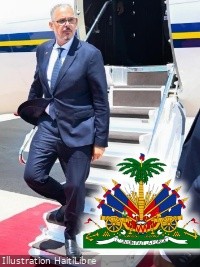
    Fresh off an official working tour of European nations including Italy’s capital Rome, Haitian Prime Minister Alix Didier Fils-Aimé did not delay before prioritizing the country’s escalating security crisis. On Tuesday, May 12, 2026, within hours of his return to Haitian soil, Fils-Aimé called together and led an Extraordinary Council of Ministers at the diplomatic lounge of Port-au-Prince’s Toussaint Louverture International Airport, with the deteriorating national security environment as the sole top agenda item.

    Against a backdrop of renewed criminal activity that has stoked widespread, well-founded unease across Haitian communities, the Prime Minister issued a firm, clear reaffirmation of the executive branch’s unshakable dedication to reestablishing the rule of law across every region of the country. Participants in the working session conducted a granular, rigorous review of on-the-ground security conditions, ultimately approving a series of explicit directives and actionable policy measures designed to immediately boost the operational capacity of Haiti’s law enforcement bodies. The approved framework establishes a structure for a coordinated, forceful, and long-term response to all categories of criminal activity plaguing the nation.

    During the meeting, Fils-Aimé stressed that the Haitian state will not surrender to fear or pressure from violent actors. He confirmed that all required resources are being mobilized to target criminal groups, dismantle transnational and local gang networks, and rebuild durable public safety across the country. The Prime Minister also restated his personal commitment to leading this fight for collective security without relent, urging the Haitian public to remain calm, alert, and united in national solidarity. He emphasized that the state is fully accepting its responsibility to guide the nation out of the ongoing security crisis.

    Immediately after adjourning the extraordinary council meeting, Fils-Aimé traveled to the General Directorate of the Haitian National Police (PNH) to extend his direct support to Acting Director General Vladimir Paraison. He publicly commended the work of the PNH High Command and every frontline police officer deployed across the country to counter rising insecurity. The trip served as a tangible reaffirmation of the government’s backing for law enforcement personnel who work daily to restore national stability, and it aligns with the Prime Minister’s previously issued instructions to all state institutions to ramp up offensive operations against the gangs that have terrorized civilian populations in recent months.

  • «Corventina» wins the UNFP trophy for best player of the season (video)

    «Corventina» wins the UNFP trophy for best player of the season (video)

    On May 11, 2026, one of women’s football’s most exciting rising talents cemented her status as a global star when Haitian midfielder Melchie Daëlle Dumornay, widely known by her nickname “Corventina”, took home the top individual honor at the 34th annual National Union of Professional Footballers (UNFP) Awards. The ceremony, hosted at Paris’ iconic Palais Brongniart, celebrated the best of French women’s top-flight football, and the 22-year-old Olympique Lyonnais standout outperformed a field of elite competitors to claim the Best Player of the Season trophy for Arkema Première Ligue, France’s top-tier women’s football competition.

    Dumornay beat out four other nominated stars to secure the award: her Lyon teammate and last season’s winner Tabitha Chawinga, Paris Saint-Germain duo Sakina Karchaoui and Romee Leuchtführer, and Paris FC’s Clara Matéo. The honor comes as the capstone to a breakout 2025-2026 campaign for the attacking midfielder, who notched a string of impressive goals and game-changing assists to power Lyon’s domestic title run. Over the past two seasons, the Haitian international has rapidly evolved from a promising young prospect to one of the most influential and recognizable figures in European women’s football.

    News of Dumornay’s historic win sparked widespread celebration across her home nation of Haiti, with top government and sports institutions rushing to congratulate the 22-year-old. The Haitian Football Federation (FHF) released a statement framing Dumornay as far more than a national sports icon, calling her a beacon of inspiration for young Haitians across the country. “Melchie is a source of immense pride for our entire nation, and a symbol of hope and determination for Haiti’s youth,” the FHF said. “Congratulations to this incredible daughter of our soil, who has already claimed both the French league title and this well-deserved individual honor.”

    Haiti’s Minister of Youth and Sports, Pythagore Dumas, also extended his warm congratulations, noting that Dumornay’s landmark achievement brings honor to Haitian football and the country’s emerging generation of athletes. “Through this remarkable distinction, the talented Haitian attacking midfielder continues to raise our national flag high on the global stage, thanks to her extraordinary talent, unwavering discipline, and relentless determination,” Dumas said. “She is a true inspiration to Haitian youth, proving once again that hard work, perseverance, and commitment can open the door to the highest levels of world sport.”

    Haiti’s Ministry of Women’s Affairs and Women’s Rights (MCFDF) added its own praise, highlighting Dumornay’s trailblazing path as a young Haitian woman competing at the top of international sport. “This prestigious award is a testament to the exceptional talent, determination, and hard work of this young Haitian athlete, who continues to bring glory to Haiti on the international sports scene,” the ministry said. “Through her remarkable journey, she embodies the excellence, courage, and perseverance of Haitian women.” The MCFDF also commended Dumornay for her work encouraging young Haitian women to pursue their dreams despite systemic and social challenges, calling her recognition a source of national pride and a symbol of hope for an entire generation. The ministry closed by reaffirming its support for Dumornay and wishing her continued success in her career.

    Speaking to attendees at the Paris awards ceremony, Dumornay is expected to reflect on her journey from youth football in Haiti to the pinnacle of the European game, thanking her teammates, coaches, and supporters both in France and her home nation for the role they played in her historic win.