标签: Haiti

海地

  • Haitians under TPS, without work permits as of July 10, 2026

    Haitians under TPS, without work permits as of July 10, 2026

    On June 25, 2026, the U.S. Supreme Court greenlit a long-contested Trump administration policy to end Temporary Protected Status (TPS) for Haitian migrants residing in the United States, triggering urgent alarm from human rights groups and Haitian communities across Florida, the state home to the nation’s largest Haitian immigrant population. The court’s ruling clears the way for a full wind-down of protections, with the Department of Homeland Security confirming that existing work authorization for Haitian TPS holders will expire on July 10, 2026, as part of an administrative transition period for lower court implementation of the decision.

    Human Rights Watch (HRW) partnered with Miami-based community organization Sant La Haitian Neighborhood Center to investigate the potential impacts of the termination, conducting interviews with 40 Haitian TPS beneficiaries across South Florida and 15 leaders from local immigrant advocacy groups, alongside reviewing government and international organizational data. The findings, released July 2, 2026, paint a stark picture of fear and pre-existing instability for Haitian migrant families, who warn that losing TPS protections will expose them to deadly violence if deported and upend decades of economic and social integration in the U.S.

    Juanita Goebertus, HRW’s Americas Director, emphasized that the termination would put Haitian migrants directly in harm’s way, noting that Haiti has suffered catastrophic deterioration of security and humanitarian conditions since TPS was first granted to Haitians in 2010 following a devastating earthquake. One 28-year-old Haitian beneficiary interviewed for the report described losing TPS as a de facto death sentence, explaining that deportees returning from the U.S. are routinely targeted for extortion and kidnapping by armed criminal groups that control large swathes of Haiti. With no savings to meet ransom demands, he said deportation would almost certainly lead to his killing.

    Before the Supreme Court’s ruling, roughly 330,000 Haitians held TPS status across the U.S., 158,000 of whom resided in Florida. These migrants work across critical sectors of the state’s economy, including healthcare, elder care, construction, tourism, and hospitality. Analysis from bipartisan immigration advocacy group FWD.us shows that Florida’s Haitian TPS holders contribute an estimated $2.6 billion annually to the state’s gross domestic product, with $1.5 billion of that activity generated in the Miami metropolitan area alone.

    HRW’s investigation found that many families were already grappling with cascading economic and social hardship in the months leading up to the ruling. Expired work permits, extended delays in status renewals, and employer confusion about the legal status of TPS holders had already pushed some into unemployment, cut household incomes for many others, and left families unable to cover basic costs including rent, groceries, and medical care. Some parents have pulled their children out of public schools, and many beneficiaries have skipped necessary medical appointments to avoid encounters with immigration enforcement authorities.

    International bodies have repeatedly warned against forced deportations to Haiti. Since 2022, both the United Nations High Commissioner for Refugees (UNHCR) and the Office of the United Nations High Commissioner for Human Rights (OHCHR) have issued repeated calls for all nations to refrain from sending Haitians back to their home country, citing widespread human rights abuses, life-threatening safety and public health risks, and the complete absence of conditions that would enable safe, dignified, and sustainable return.

    Thamara Labrousse, a representative of Sant La, noted that the consequences of the TPS termination extend far beyond individual migrant families, saying “Haitian TPS holders have built their lives in this country and are an integral part of the social and economic fabric of communities across Florida and the nation.” Local workplaces, schools, and entire regional economies depend on the labor and contributions of Haitian migrants, she added.

    Advocacy groups are now pressing Congress to take immediate emergency action to reverse the impending termination. HRW and Sant La are calling on the U.S. Senate to quickly pass a bill already approved by the House of Representatives that would extend TPS protections for Haitian migrants through April 2029. The organizations also urged Congress to use the upcoming debate over broader comprehensive immigration reform to create permanent pathways to legal permanent residence and long-term stable protection for all TPS beneficiaries, who have built deep social and economic ties to the United States over more than a decade.


  • FLASH : 180 games now available on «Quiz.HaitiLibre» (July 2026)

    FLASH : 180 games now available on «Quiz.HaitiLibre» (July 2026)

    On July 1, 2026, HaitiLibre announced a major expansion to its popular educational quiz platform Quiz.HaitiLibre, bringing the total number of available interactive games to 180 after adding 30 brand-new quizzes as part of its consistent monthly content update cycle.

    Designed to be accessible for knowledge seekers of all backgrounds, the platform stands out for its user-friendly policy: all quizzes are 100% free to play, and no account registration is required to access any content. Quizzes are structured across three distinct difficulty tiers — easy, intermediate, and hard — to accommodate casual players and dedicated trivia enthusiasts alike, and every game is fully supported in both French and English to serve a broad local and international audience.

    Beyond simple trivia gameplay, Quiz.HaitiLibre is built to turn every play session into a meaningful learning opportunity. Each question answer is paired with a detailed, contextual explanation, turning incorrect guesses and correct responses alike into a chance to learn something new. Players can explore three curated content worlds tailored to different interests: the Haiti-focused hub, which invites users to learn new facts and revisit well-loved details about the country’s history, culture, and society; the World menu, which highlights the geographic, cultural, and political diversity of the global community; and the Expert section, which offers deep-dive, specialized quizzes for players craving a greater challenge.

    the platform’s development team has committed to ongoing monthly updates, adding new quizzes on a regular basis to keep content fresh and keep audiences engaged with new learning opportunities. To further improve the user experience, the team has also added a feedback form at the end of every quiz, encouraging players to share comments, suggestions, and ideas for future content updates. The outlet encourages existing users to share the platform with friends and family who enjoy trivia and learning.

    Additional bite-sized educational content, in the form of HaitiLibre’s weekly “Did You Know?” series, is also available to users via the links provided on the site’s main page, offering more quick, informative insights for curious audiences.

  • Zapping Haiti of July 1st, 2026

    Zapping Haiti of July 1st, 2026

    On July 1, 2026, multiple key developments unfolded across Haiti spanning international security cooperation, economic shifts, infrastructure progress, humanitarian aid efforts, and human rights advocacy. One of the most notable announcements came from Guatemala, where President Bernardo Arévalo confirmed plans to scale up Guatemala’s military contribution to stabilization operations in Haiti. The current contingent of 150 Guatemalan soldiers will be doubled to 300 personnel, with military officials confirming that pre-deployment preparations are already underway, though no official timeline for the additional troops’ arrival has been released to the public.

    In an encouraging economic update, Haiti’s central banking institution, the Bank of the Republic of Haiti (BRH), has reported a dramatic surge in its U.S. dollar foreign exchange reserves. Over the three-and-a-half-year period from 2023 through the end of June 2026, reserves climbed from just $350 million to more than $1.8 billion, marking a more than fivefold increase that could strengthen the country’s economic stability.

    On the infrastructure front, renewable energy development in Haiti continues to advance, with the Caracol photovoltaic power plant project moving steadily toward completion. The initiative calls for the installation of 21,300 solar panels to support a 13.4-megawatt generation capacity, and as of the latest update, over 20,000 panels have already been successfully put in place. Construction on the facility’s administrative buildings has also entered its final phase, bringing the renewable energy project closer to full operation.

    Humanitarian organizations have been ramping up aid efforts to support communities devastated by ongoing widespread violence. Coordinated through the Logistics Cluster led by the World Food Programme (WFP), the International Organization for Migration (IOM) has secured emergency relief supplies tailored to roughly 5,000 families displaced and impacted by conflict. Local Haitian partner organizations will handle the on-the-ground distribution of these critical supplies to reach vulnerable populations.

    In a separate humanitarian initiative, the United Nations Development Programme (UNDP) has launched a targeted support program for displaced women. With funding from the government of the Republic of Korea and in partnership with local Haitian organization ATREPA, the project delivered essential hygiene kits to 953 internally displaced women residing at the Shalom and New Jerusalem displacement camps. This effort falls under the broader REKONEKTE initiative, which focuses on psychosocial support, hygiene access, and community reintegration for Haitians displaced by urban violence.

    Amid these developments, a top United Nations human rights expert has issued an urgent warning to the international community. William O’Neill, the UN Independent Expert focused on human rights conditions in Haiti, is calling on all countries to halt deportations of Haitian nationals back to the country, citing the extreme levels of endemic violence that put every resident’s life at constant risk.

  • Industry Week 2026 : The MCI focuses on promoting Haitian industrial know-how

    Industry Week 2026 : The MCI focuses on promoting Haitian industrial know-how

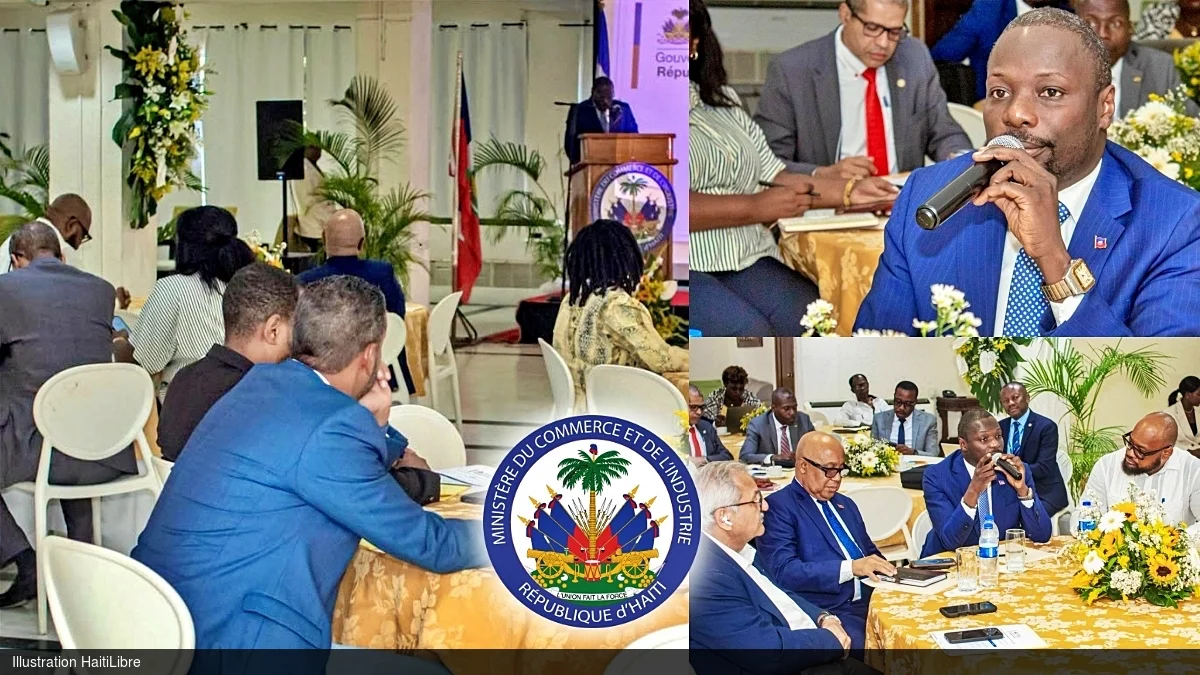
    Against a backdrop of persistent national challenges, Haiti’s Ministry of Trade and Industry (MCI) has laid early groundwork for its landmark Industry Week 2026, convening a cross-sector working session of public and private industry leaders at Port-au-Prince’s Montana Hotel on June 30, 2026. Scheduled to run for three days this coming September, the upcoming event is framed as a strategic, multi-stakeholder effort to breathe new life into Haiti’s underrecognized industrial landscape, creating a structured platform for collaborative reflection, stakeholder consultation, and actionable strategic planning to unlock the nation’s untapped industrial potential.

    In his keynote address to the assembled participants, Minister of Commerce and Industry James Monazard emphasized that close coordination between public bodies, private enterprises, and industry stakeholders will be central to making the 2026 edition a definitive showcase for Haiti’s full industrial ecosystem. According to Monazard, the event’s programming will be centered on interactive panels and targeted thematic workshops, designed to generate tangible, implementable policy and development proposals that address sector-wide barriers and drive long-term growth.

    A core mission of the event, Monazard explained, is to serve as an unrivaled exhibition space where Haiti’s diverse industrial expertise can be shared with both the domestic public and international investor communities, shining a clear spotlight on the country’s full range of domestic production capabilities. Moving beyond the common narrative that frames Haiti’s industrial sector as exclusively focused on textile manufacturing, Monazard emphasized that the nation boasts a broad, diverse landscape of skilled know-how and productive sub-sectors that have long been overlooked and deserve greater recognition and investment.

    Addressing Haiti’s ongoing national challenges head-on, the minister acknowledged the immediate priorities of responding to the urgent humanitarian needs of displaced populations and rebuilding widespread public security. Even amid these pressing concerns, however, he stressed that sustaining core economic momentum and delivering long-term, targeted support to domestic productive sectors remains a non-negotiable priority for national recovery.

    Monazard also highlighted that Industry Week 2026 will serve as a tribute to the remarkable resilience of Haitian entrepreneurs, who have continued to manufacture goods, innovate new products, and create local jobs despite operating in one of the world’s most challenging operating environments.

    Speaking afterward at the Panel Paulemont session, MCI Director General Paulemont reaffirmed the ministry’s full commitment to the initiative, framing it as a pivotal opportunity to deepen the collaborative partnership between the Haitian state and private industry. The ultimate goal of this partnership, he noted, is to build a more structured, competitive national economic landscape that is attractive to domestic and foreign investment alike. Reaffirming the MCI’s commitment to ongoing dialogue and consultation with industry stakeholders, Paulemont emphasized that sustained joint effort between public and private actors is the only path to delivering sustainable long-term recovery for Haiti’s industrial sector, and the ministry remains dedicated to consolidating its collaborative ties with the private industry moving forward.

  • Elections : Refresher courses for future Electoral Registry Agents

    Elections : Refresher courses for future Electoral Registry Agents

    Haiti’s path to upcoming democratic elections took a critical step forward on June 29, 2026, when the nation’s Provisional Electoral Council (CEP) launched nationwide hands-on refresher training sessions for prospective Electoral Register Agents (ADREs), the frontline workers who will oversee voter registration and balloting across the country. The first wave of training kicked off simultaneously across four Haitian departments: South, Artibonite, Nippes, and the western Palmes Region and Gonâve island, bringing together hundreds of prospective poll workers from dozens of local municipalities.

    Three key hub cities are hosting the first cohort of trainees: Les Cayes in the South department, Gonaïves in Artibonite, and Miragoâne in Nippes. Each session hosts roughly 100 young trainees drawn from across the four host departments, with groups split into two working sections to cover both the theoretical foundations of electoral administration and practical on-the-ground skills required to run smooth voter registration and voting operations. Uniquely, the Miragoâne training hub accommodates not only prospective agents from all 11 communes of Nippes but also agents from five additional communes in the West department: Léogâne, Grand-Goâve, Petit-Goâve, Anse-à-Galet, and Pointe-à-Raquette.

    The structured training model will remain in place across the first four departments for several days, to ensure every ADRE scheduled for deployment in every local commune gets the required preparation before voter registration begins. Following the completion of this first phase, CEP training teams will travel to six more Haitian departments: Grand’Anse, South-East, North, North-East, North-West, and Centre, to roll out the same refresher program to remaining agents. The full training initiative is being carried out in advance of the official start of voter registration, which will proceed in line with Haiti’s existing electoral legal framework.

    In a statement accompanying the launch of the program, the CEP reaffirmed its core commitment to building a more professional, modern electoral process for Haiti. The council emphasized that it intends to run the entire election cycle in an inclusive, impartial manner, adhering strictly to foundational democratic principles of institutional independence, full transparency, and democratic accountability, all in service of the long-term interests of the Haitian nation.

  • Competition : «Konbit pou Chanjman 2026» Organizations qualified for the 2nd phase (list)

    Competition : «Konbit pou Chanjman 2026» Organizations qualified for the 2nd phase (list)

    Marking a full decade of impact-driven community work through the Konbit pou Chanjman development campaign, the Digicel Foundation has launched its 2026 edition of the project grant program, a funding initiative designed to uplift local community-led work across Haiti. This year, the foundation has committed to awarding $12,000 in financing to 10 selected community-led projects, all submitted by registered non-profit organizations across the country’s 10 regional departments.

    In a public announcement released on 7 January 2026, the foundation confirmed that 45 local organizations across Haiti have successfully qualified for the program’s second phase of evaluation. The shortlisted groups represent every major administrative region of the country, spanning Artibonite, Centre, Grand’Anse, Nippes, North, North-East, Northwest, West, South, and South-East.

    The 45 advancing organizations bring a diverse range of community priorities to the program, with initiatives focused on agricultural innovation, women’s economic empowerment, child rights advocacy, youth development, food security, public health access, education infrastructure, and poverty reduction. Regional representation includes four organizations from Artibonite, three from the Centre department, five from Grand’Anse, five from Nippes, five from the North department, four from North-East, four from Northwest, three from the West department, five from the South, and four from South-East.

    Final selection of the 10 winning projects will wrap up in the coming months, with all organizations that advance to the final stage of the competition scheduled to receive official notification of their funding status by August 2026. The program reflects the Digicel Foundation’s longstanding commitment to strengthening local Haitian civil society and investing in community-led solutions to the country’s most pressing social and economic challenges, aligned with the 10-year mission of the Konbit pou Chanjman campaign.

  • News : Zapping…

    News : Zapping…

    As of the end of June 2026, Haiti is seeing concurrent developments across multiple sectors, ranging from new commercial air routes to expanded police capacity, economic policy overtures, 2026 World Cup outcomes, cross-border migration trends and local infrastructure investment.

    In the aviation sector, Haiti-based carrier ZED Airlines S.A. has announced the upcoming launch of a new direct route connecting Cap-Haïtien and Fort Lauderdale, Florida, with operations set to begin July 14, 2026. The airline has published official introductory fares for the route: a one-way ticket is priced at $361.89 USD, while a round-trip ticket costs $796.09 USD. Customers seeking additional information or looking to reserve seats can reach the company’s customer service team via two local contact numbers: +509 2814 0708 and +509 3432 3717.

    In public security, Haiti’s national law enforcement body continues to expand its ranks as part of a nationwide capacity-building initiative. On June 28, 2026, the Haitian National Police (PNH) welcomed 1,200 new recruits as part of its 37th incoming class at the National Police Academy (ENP). This cohort marks the third group to enter training under the PNH’s P4000+ recruitment program, and includes 239 women among the new trainees. During the official induction ceremony, recruits received foundational briefings covering core expectations for their training, including rules of discipline, academic performance requirements, professional ethics, and the core values that define policing in Haiti. To optimize supervision and training quality, organizers have split the 1,200 recruits into 20 separate platoons of 60 recruits each.

    On the economic front, Haitian Prime Minister Alix Didier Fils-Aimé used a recent public event hosted at the residence of the European Union Ambassador to outline his administration’s approach to private sector growth. The prime minister reaffirmed that the private sector plays a strategically critical role in driving Haiti’s long-term economic and social development, and renewed the Haitian government’s commitment to partnering with domestic and international business stakeholders. He stressed that this collaboration will be rooted in shared principles of partnership, collective responsibility, and mutual trust. Fils-Aimé also called on economic actors to increase investment focused on creating new jobs and opportunities, particularly for Haiti’s large youth population, as a pathway to building a more stable and prosperous national future. He closed his remarks with a rallying cry to business leaders: “Change your paradigm. Be ambitious and move forward!”

    In international sports, the 2026 FIFA World Cup has reached the knockout Round of 16 stage, marking the end of the road for all Caribbean national teams, including Haiti. The region pinned its hopes of advancement on two sides: Haiti’s Grenadiers and Curaçao’s national team, both of which exited the tournament in the group stage. Haiti, competing in Group C, put in a series of determined performances despite its elimination: the team suffered a narrow 0-1 defeat to Scotland, a 0-3 loss to tournament favorite Brazil, and a high-scoring 2-4 loss to Morocco. The match against Morocco saw Haiti score two historic goals from strikers Lenny Joseph and Wilson Isidor, but the standout performance was not enough to secure advancement. In Group E, Curaçao also bowed out after two defeats, though the side earned a historic 0-0 draw against Ecuador in its final group match.

    On the migration front, new data from the International Organization for Migration (IOM) reveals a sharp volume of deportations of Haitian migrants from the neighboring Dominican Republic in the first half of 2026. According to IOM figures, more than 25,500 Haitians residing in an irregular status in the Dominican Republic were deported back to Haiti in May 2026 alone. Between January and June 2026, the total number of deported Haitians surpassed 117,000. Official demographic breakdowns show that 24% of the deportees returned to Haiti in 2026 are women, and nearly 8% are minor children.

    Finally, local authorities in Haiti’s Southeast Department have broken ground on a new sub-police station to expand security access for area residents. The Belle-Anse City Hall oversaw the formal foundation stone laying ceremony for the new Mare Briole Sub-Police Station, which will be located in the second district of the Belle-Anse municipality. The entire project is funded by the Belle-Anse municipal government, and is designed to deliver modern, fit-for-purpose security infrastructure to meet the safety needs of the local Mare Briole community. The completed facility will include gender-segregated dormitories for officers, separate holding cells for detainees, an office for the station commander, a group meeting room, and a public reception area.

  • Health : 6-day training course for the departmental brigade of Civil Protection

    Health : 6-day training course for the departmental brigade of Civil Protection

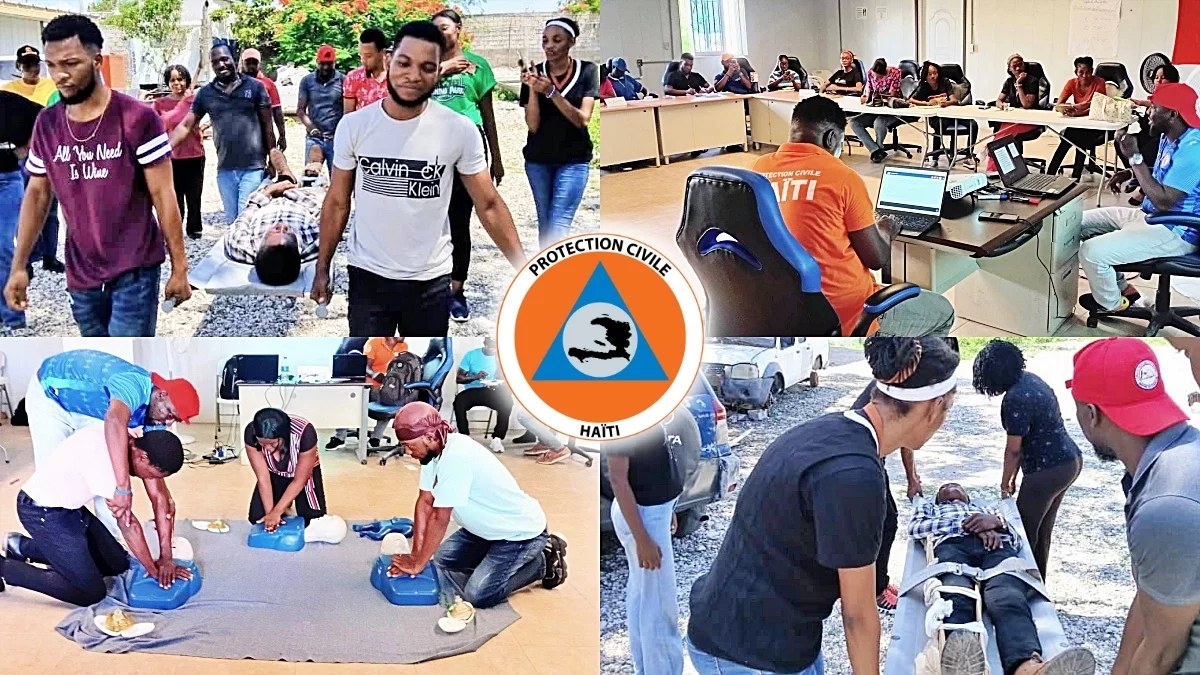
    Against the backdrop of Haiti’s persistent vulnerability to natural and humanitarian disasters, local civil protection authorities have launched a targeted capacity-building initiative to boost emergency response capabilities in the Artibonite department. The Artibonite Departmental Directorate of Civil Protection hosted a six-day intensive training program for its newly formed departmental response brigade at the Departmental Emergency Operations Center (COUD) based in Morne-Blanc.

    The training forms part of a broader national push by Haiti’s Civil Protection system to upgrade the operational readiness of newly established local brigades, with a core focus on improving disaster risk management, risk reduction, and rapid emergency intervention. Delivered by certified instructors from the Haitian Red Cross and funded by the Agency for Technical Cooperation and Development (ACTED), the curriculum centered on two critical pillars: systematic disaster risk assessment and evidence-based first aid care. Program designers structured the coursework to equip participating volunteer brigade members with the practical skills needed to intervene effectively during crises, filling a key gap in pre-hospital care for vulnerable communities.

    Over the six-day program, attendees mastered foundational risk management frameworks and core emergency response techniques that allow them to stabilize disaster and accident victims before they can be transferred to formal medical facilities. Instructors opened the program by outlining the core objectives and life-saving importance of timely first aid, stressing that local first responders are the first line of defense in protecting lives and strengthening the resilience of at-risk communities. Central to the training was the PAS response principle—Protect, Alert, Rescue—a foundational framework that guides all coordinated emergency interventions globally.

    A wide range of practical and conceptual topics were covered to address the most common emergency scenarios brigades are likely to face. These included assessment and stabilization of bone, muscle and joint injuries; management of unconscious choking victims; care of unconscious breathing patients; intervention for acute respiratory emergencies; wound cleaning, dressing and infection prevention; proper lifting and stretcher-carrying techniques to avoid further injury to victims and responders; community-level emergency preparedness planning; and core operational concepts for mobile response units, including the Mobile Rescue Unit (MRU), Alert and Transmission Post (ATP), and Rest and Accommodation Unit (RAC).

    Unlike traditional classroom-only training, the program relied heavily on hands-on practical exercises, live demonstrations of emergency techniques, and peer-to-peer experience sharing to reinforce learning. This interactive approach allowed volunteer participants to build muscle memory for critical interventions and develop the quick reflexes needed to deliver rapid, appropriate care to victims while waiting for professional medical teams to arrive. By the conclusion of the program, attendees had significantly elevated their first aid competencies and confidence in leading initial emergency response.

    In closing remarks, training instructors encouraged participants to apply their new knowledge in real-world scenarios and to continue engaging in ongoing capacity-building opportunities. The initiative reflects a long-term strategy to increase local preparedness and improve response outcomes for the full range of emergency events that impact Artibonite communities, from natural disasters to public health and safety incidents.

  • Haiti’s Agriculture Ministry strengthens hydro-agricultural infrastructure in the Central Department

    Haiti’s Agriculture Ministry strengthens hydro-agricultural infrastructure in the Central Department

    Against a backdrop of worsening climate volatility and widespread environmental degradation that has threatened Haiti’s food security for years, the country’s Ministry of Agriculture, Natural Resources and Rural Development (MARNDR) is advancing a targeted infrastructure upgrade initiative across the Central Department. Delivered through the Resilient Agriculture for Food Security Project (PARSA), the program combines hands-on community participation with targeted technical support to strengthen local irrigation associations and watershed management governing bodies, putting decision-making power in the hands of the producers who rely on these systems most.

    The upgrade work is concentrated across three high-priority agricultural zones: the Gros Trou irrigated perimeter in Cerca-Carvajal, the Abricot growing area in Cerca-la-Source, and the Cave basin in Maïssade. Each site is receiving tailored interventions to address unique water access and management challenges, all aligned with the core project goals: improving irrigation water control and stewardship, boosting agricultural output through crop diversification and higher yields, and increasing the overall productivity of Haiti’s key irrigated farmland.

    For smallholder producers in Cerca-Carvajal, the infrastructure upgrades have already delivered transformative, life-changing results. Pierre-Louis Décimus, president of the Farmers’ Association of the Labocque Community (APCL), explained that prior to the project, water access was an almost insurmountable barrier to production. The region’s original natural catchment area could not hold water due to the local terrain, with most runoff draining straight into nearby ravines before it could reach farm plots. Before the upgrades, only around 60 local producers were able to grow vegetables at any time. Today, after MARNDR and PARSA reinforced the catchment area, between 500 and 600 producers now have reliable access to irrigation water. A transparent rotation system, organized alphabetically, guarantees every producer gets a full day of water access to tend their crops each cycle.

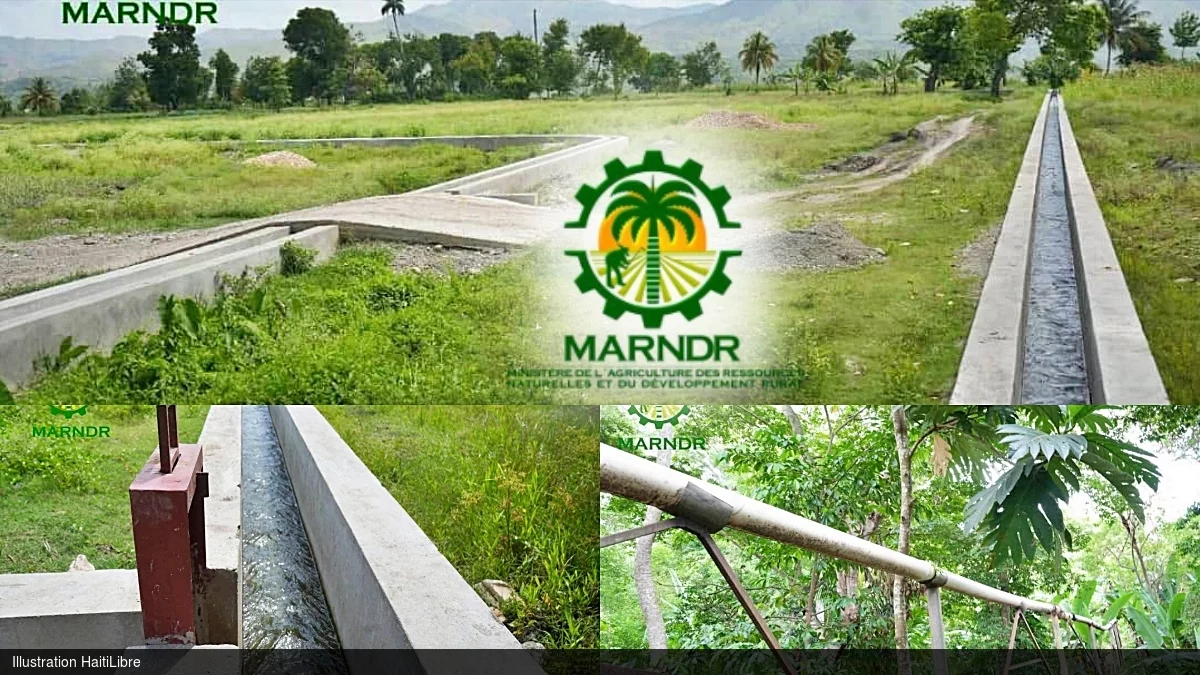
    The Gros Trou rehabilitation project includes a sweeping set of infrastructure improvements designed to cut water waste and expand irrigated farmland. Core works include replacing corroded and leaking primary and secondary irrigation pipes, constructing five new distribution basins, installing four master control valves and eight local distribution valves, rebuilding crossing structures over the Discipline and Sylvain ravines, and extending the pipe network to reach previously unirrigated plots. The expansion adds 390 linear meters of 6-inch main pipe, 280 meters of 4-inch main pipe, 234 meters of 6-inch secondary pipe, and 450 meters of 4-inch secondary pipe to the network. Complementary upgrades to local farm roads are also underway to improve access to production zones, including the installation of crossing slabs over the Carrefour Laboc drainage canal, clearing overgrowth from existing drainage ditches, adding compacted fill to eroded road sections, constructing new roadside drainage features and river swales measuring 7.4 meters long by 4 meters wide, and widening all paths to a minimum usable width of 3.5 meters.

    In Cerca-la-Source’s Abricot irrigated perimeter, rehabilitation work focuses on cutting seepage loss that has long wasted the region’s limited water supply. Teams are extending existing masonry canal sections, which have far lower infiltration rates than earthen canals, to improve overall system efficiency. The project also adds new storage reservoirs and control valves to give farmers more precise control over water distribution. Specific works here include 900 meters of new primary canal, 650 meters of primary secondary canal, 450 meters of secondary canal, nine new distribution reservoirs, and 21 new valves and sluice gates for water regulation and distribution. Complementary agricultural track upgrades will improve access to growing areas and manage rain and irrigation runoff, including clearing overgrowth, leveling road surfaces, widening tracks to a minimum of 4.5 meters, clearing drainage easement areas, constructing new drainage ditches, installing a culvert for canal crossing, repairing eroded track sections with compacted fill, and adding three dedicated runoff evacuation ditches at key points along the track network.

  • Official launch of the first Haiti’s National Investment Forum (video X2)

    Official launch of the first Haiti’s National Investment Forum (video X2)

    On June 29, 2026, Haiti marked a historic turning point in its quest for economic revitalization with the official launch of its first-ever National Investment Forum, branded Global Gateway Haiti 2026. The high-profile event, convened under the leadership of the European Union, drew a diverse cross-section of key stakeholders: top Haitian political leaders, major international donors from the European Union, France and Spain, leading European financial institutions, and representatives from Haiti’s domestic private sector. All attendees gathered around a unified core goal: to mobilize long-term sustainable capital that will drive inclusive, lasting transformation across the Caribbean nation.

    In her opening remarks to the forum, European Union Ambassador Hélène Roos framed the event as a tangible extension of the bloc’s Global Gateway strategy. She emphasized that the initiative is designed to back Haiti’s domestic efforts to build a more secure, stable, and prosperous future by deploying targeted, transformative investments across three critical foundational pillars: governance reform, public security enhancement, and core infrastructure development.

    Across the day’s productive discussions, participants reached a striking consensus on the three highest-priority sectors for investment that will unlock Haiti’s long-term economic potential.

    The first and most foundational priority identified is reliable energy and electricity access. Attendees universally agreed that consistent, affordable power is non-negotiable for boosting industrial competitiveness across every major sector, from value-added agri-food processing to emerging digital services. Discussions centered on scaling up accessible renewable energy solutions, expanding community-focused mini-grids, and building out robust energy storage infrastructure to end chronic power shortages.

    Second, participants prioritized investment in connectivity and transport infrastructure. Plans call for modernizing Haiti’s existing ports, airports, and key logistics corridors to open up economically isolated regions, reconnect Haiti to global trade networks, and help the country integrate meaningfully into regional and global supply chains.

    Third, the forum highlighted untapped potential in agriculture and agribusiness. Haiti boasts abundant natural production capacity in high-value export commodities including cocoa, coffee, mangoes, and vetiver, but has long lacked the infrastructure to convert this potential into shared national wealth. Investment priorities here include building out cold chain storage networks, developing centralized logistics platforms, and rolling out international product certification mechanisms to help Haitian goods access premium global markets.

    In his keynote address, Haitian Prime Minister Alix Didier Fils-Aimé reaffirmed his administration’s unwavering commitment to addressing the country’s most pressing security and economic hurdles to create a welcoming, stable environment for both domestic and international investment. He outlined the government’s core development priorities, which align closely with the forum’s focus areas: expanding infrastructure, modernizing ports and airports, upgrading logistics networks, and transforming the agriculture and agribusiness sectors. The overarching goal of these efforts, he noted, is to sustainably reconnect Haiti to both Caribbean regional and global international markets.

    “The time has come to invest in Haiti’s resilience. The time has come to invest in its youth. The time has come to invest in its productive capacity,” the Prime Minister stated, praising the widespread mobilization of private sector stakeholders that has already laid groundwork for progress. He emphasized that the forum is not a one-off event, but rather the official starting point for an ongoing, structured process to build a transparent, actionable pipeline of investable projects across the country. The Prime Minister reiterated that restoring widespread public security remains an absolute prerequisite for economic recovery and democratic consolidation, while also reaffirming the government’s commitment to putting in place the conditions needed to hold upcoming national elections.

    Serving as guest of honor for the forum’s closing session alongside Ambassador Roos, Haiti’s Minister of Public Works, engineer Joseph Almathe Pierre Louis, delivered a clear, confident address rooted in a sense of national responsibility. He laid out a straightforward vision for the path forward: “Waiting for perfect conditions cannot constitute a development strategy.”