Haiti’s agricultural sector is receiving targeted support to address one of its most costly ongoing challenges: widespread post-harvest losses that have drained rural household incomes for decades. Launched as part of the national Resilient Agriculture for Food Security Project (known locally by its French acronym PARSA), the Ministry of Agriculture, Natural Resources and Rural Development (MARNDR) is rolling out new infrastructure and equipment to small-scale producers across the country’s South Department, with full financing from the World Bank.
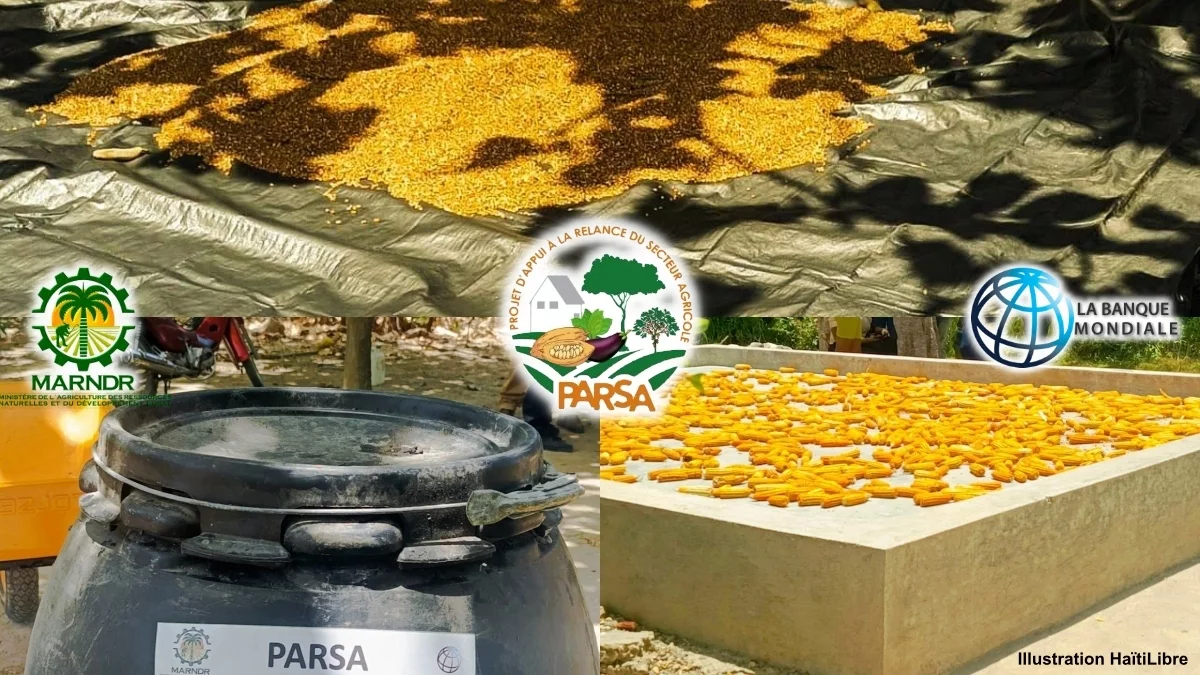
The core of the current initiative focuses on expanding access to on-farm drying and storage infrastructure, a gap that has long left Haitian farmers vulnerable to spoilage and reduced crop quality. To date, project teams have completed construction of 150 20-square-meter drying sheds, distributed across four South Department municipalities: 57 in Cavaillon, 60 in Saint-Louis-du-Sud, 25 in Port-Salut, and 15 in Saint-Jean-du-Sud. Each shed is built directly on the beneficiary’s property to cut down on transport time and make daily drying operations more accessible for small family farms.
The purpose-built drying spaces are designed to accommodate a wide range of Haiti’s staple and export crops, including maize, beans, sorghum, cocoa, and coffee. To amplify the project’s community impact, participating farmers are encouraged to share their drying infrastructure with neighboring producers when not in use, fostering collective benefit across local agricultural networks.
Before the PARSA project launched, the lack of dedicated post-harvest infrastructure led to devastating losses for smallholders in the region. Without proper drying and storage facilities, crops were frequently exposed to moisture, pests, and spoilage, lowering overall produce quality, cutting market value, and shrinking already tight household incomes for thousands of family farms.
Beyond drying infrastructure, the project delivers tailored equipment to match the specific needs of different producer operations. Farmers opting for expanded storage receive two commercial silos, while those requesting small-scale tools receive a kit including two drums, four waterproof tarpaulins, and one wheelbarrow to support post-harvest handling and transport.
In early April 2026, a MARNDR monitoring team traveled to Port-Salut to evaluate how beneficiaries are using the new equipment and infrastructure, and to measure early impacts on local production and processing activities. Early assessments confirm that the new resources have already cut post-harvest loss rates significantly, while improving overall crop quality for market sale.
MARNDR officials note that the investments deliver a tangible, solution-focused response to longstanding post-harvest challenges in Haiti’s southern agricultural region. By combining infrastructure improvements, targeted equipment distribution, and ongoing technical support, the project works to upgrade storage conditions, boost rural household incomes, and drive sustainable modernization of small-scale Haitian farms. Ultimately, the initiative advances MARNDR’s broader goal of building a more productive, climate-resilient agricultural sector that can reliably advance national food security goals.