标签: Haiti

海地

  • 2026-2027 Action Plan of the Haitian Ministry of Defense

    2026-2027 Action Plan of the Haitian Ministry of Defense

    PORT-AU-PRINCE, Haiti – Under the directive of Defense Minister Mario Andresol, Haiti’s Ministry of Defense convened a critical information session on March 27, 2027, to unveil its comprehensive 2026-2027 Action Plan. This strategic blueprint, formally endorsed by the Prime Minister the preceding day, establishes a structured framework for national security enhancement through twelve prioritized initiatives organized around three core objectives.

    The newly ratified plan employs a multi-faceted methodology that integrates situational risk assessments, institutional diagnostics, and specialized analysis from security experts to ensure operational relevance and structural coherence. This evidence-based approach aims to deliver legitimate reform measures addressing Haiti’s most pressing security challenges.

    Central to the defense strategy is the enhanced operationalization of the Haitian Armed Forces (FAd’H) in combating armed criminal factions, with particular emphasis on establishing secure conditions for credible electoral processes before year’s end. The plan further prioritizes the diversification and strengthening of international strategic partnerships to accelerate military professionalization and institutional development.

    Additionally, the initiative focuses on building the Ministry’s capacity for generating proactive strategic intelligence to inform governmental decision-making in security and defense sectors. Following the ministerial briefing, department heads committed to immediate implementation of assigned actions, demonstrating institutional resolve.

    Concurrently, a dedicated Monitoring Committee has been established to oversee execution progress and evaluate plan effectiveness, ensuring accountability throughout the reform timeline.

  • Economy : 7th year of negative growth, BRH perspective

    Economy : 7th year of negative growth, BRH perspective

    Haiti’s economic crisis has deepened with the nation recording its seventh consecutive year of negative growth in 2025, according to the Bank of the Republic of Haiti (BRH). The Caribbean nation’s economic turmoil has been exacerbated by deteriorating security conditions and political instability that have crippled productive sectors.

    The agricultural sector, already struggling with structural deficits, suffered significant damage from Hurricane Melissa in late October 2025 during the first quarter of fiscal year 2025-2026. Concurrently, the critical textile industry—a major employment provider—experienced a substantial workforce reduction, declining from 26,326 employees in December 2024 to fewer than 25,000 by December 2025.

    Export performance reflected this downturn with goods and services exports dropping 4.85% to $114.72 million in the first quarter. Meanwhile, imports surged to $1.24 billion, representing a 4.57% increase from the previous quarter. This contrasting trade dynamic expanded Haiti’s trade deficit by 5.64%, further straining the fragile economy.

    International complications have compounded domestic challenges. The Middle East conflict that erupted in February 2026 and subsequent blockade of the Strait of Hormuz—a transit route for 20% of global maritime energy shipments—threatens to trigger worldwide inflationary pressures. For Haiti, which relies heavily on petroleum imports, this development risks increasing import costs, applying additional pressure on exchange rates, and potentially reversing recent disinflation trends that saw inflation drop to 23.5% in January 2026 from previous highs.

    The BRH emphasizes that restoring security remains the essential prerequisite for economic recovery. Some positive developments include the implementation of a customs facilitation agreement between tax authorities and private sector partners, along with targeted tax exemptions on imported raw materials and capital goods designed to enhance business competitiveness.

    In response to these challenges, Haiti’s central bank has outlined strategic priorities focused on maintaining macroeconomic stability. These measures include continuing its reduction of excess liquidity through BRH bonds and intervening in foreign exchange markets to stabilize currency fluctuations. Additionally, the BRH is revising growth programs to incorporate regional approaches and initiatives like Booster PME III, which specifically supports women-led small and medium enterprises.

  • Security : Return to the Solino Neighborhood Project.

    Security : Return to the Solino Neighborhood Project.

    In a significant move toward urban rehabilitation, Haitian Minister of Planning and External Cooperation Sandra Paulemon convened with project representatives on March 26, 2026, to advance the “Return to the Solino Neighborhood” initiative. The high-level meeting produced a comprehensive integrated development blueprint specifically designed to restore essential services, enhance living standards, and reactivate socioeconomic dynamics within the distressed community.

    Security restoration emerged as the cornerstone of deliberations, with unanimous consensus that sustained stabilization is imperative for both economic revival and social recovery in Solino. Minister Paulemon underscored the project’s human-centric approach, emphasizing the critical need to establish environments that foster youth development through tangible alternatives to radicalization and armed group recruitment.

    The Ministry formally committed to providing structural guidance and oversight to ensure all interventions genuinely contribute to stability, development, and quality-of-life improvements. Upon finalization of the master plan, technical and financial partners will be mobilized to support implementation conceived as a high-impact pilot project requiring clear, technically sound, and readily executable proposals.

    Both parties agreed to schedule subsequent meetings for detailed issue examination and operationalization roadmap development, signaling strong institutional commitment to transforming Solino into a model of sustainable urban regeneration with measurable, replicable outcomes.

  • FAd’H : The Makandal Promotion, soon to be in combat

    FAd’H : The Makandal Promotion, soon to be in combat

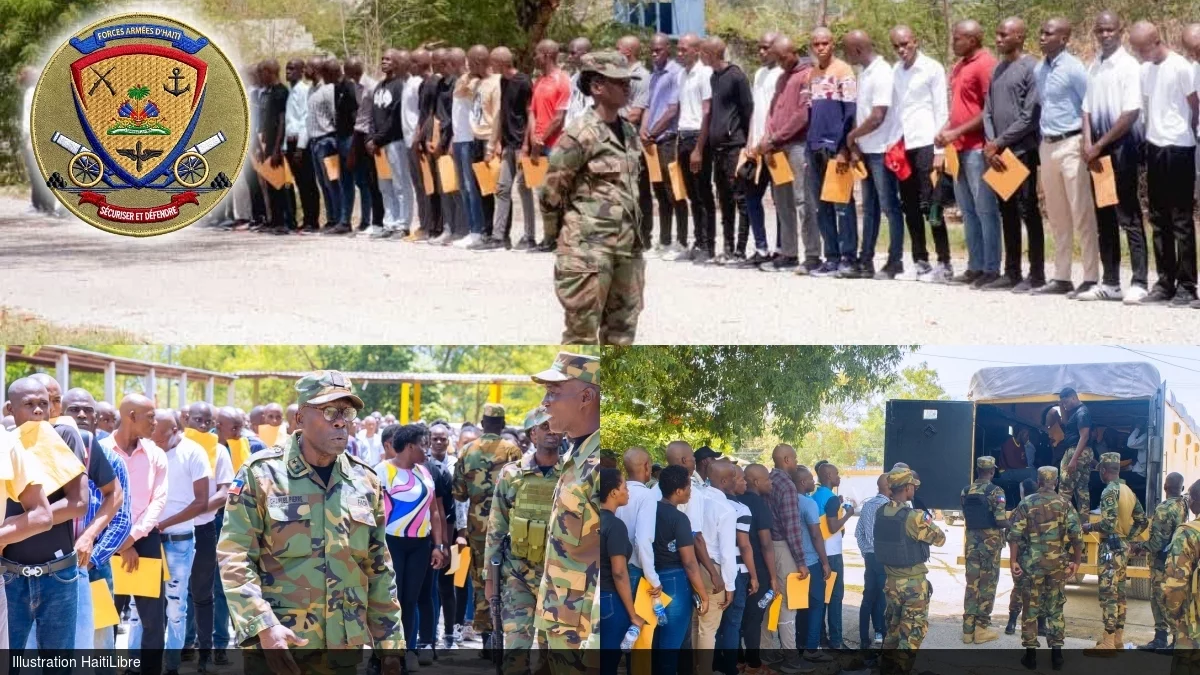
    In a significant demonstration of Haiti’s intensified security mobilization, Defense Minister Mario Andrésol conducted a comprehensive inspection of the Haitian Armed Forces (FAd’H) base in Tabarre on March 26, 2026. The high-level assessment near Vertières marked a pivotal moment in the nation’s ongoing security restructuring efforts.

    During the strategic review, Minister Andrésol unveiled a multi-faceted military enhancement program designed to combat the persistent threat of armed groups and terrorist elements. The comprehensive initiative includes the imminent formalization of an updated military doctrine specifically tailored to contemporary security challenges, the accelerated training of 1,200 new military personnel within a condensed three-month timeframe, and the ceremonial graduation of the elite ‘François Makandal’ intervention unit—the first specialized combat force specifically designated for direct engagement with armed factions.

    Concurrently, Haiti’s Prime Minister has reinforced the government’s parallel commitment to constitutional processes, emphasizing that the restoration of security represents a fundamental prerequisite for the organization of democratic elections. The executive leadership maintains that electoral legitimacy remains indispensable for institutional credibility and the enduring continuity of the Republic.

    This synchronized approach—combining robust security measures with political institutional strengthening—signals a determined governmental effort to establish conditions for nationwide stability and neutralize threats to public safety through both military and democratic means.

  • Quiz : Did You Know ? #10

    Quiz : Did You Know ? #10

    In a fascinating intersection of mathematics and etymology, the term ‘gogol’—popularized in English as ‘googol’—represents the astronomical numerical value of 10¹⁰⁰, equivalent to a digit 1 followed by one hundred zeros. This conceptual giant emerged not from academic circles but from the imagination of nine-year-old Milton Sirotta in 1938, who coined the term at the request of his uncle, renowned American mathematician Edward Kasner. Kasner sought a tangible way to illustrate the vast distinction between extraordinarily large numbers and the abstract concept of infinity.

    The googol’s magnitude transcends physical scales so dramatically that it exceeds the estimated number of subatomic particles in the observable universe, which scientists calculate to be between 10⁷⁸ and 10⁸². While this numerical behemoth lacks practical application in conventional physics or engineering, it serves as an invaluable pedagogical instrument for demonstrating mathematical scale and numerical theory.

    This nomenclature took on cultural significance when the founders of the revolutionary search engine Google adapted the term (intentionally modifying the spelling) to symbolize their ambitious mission to organize the seemingly infinite information landscape of the internet. The mathematical lexicon further expanded with the ‘googolplex’—an even more mind-boggling number defined as 1 followed by a googol zeros. This value is so incomprehensibly large that physical representation would require more space than exists in the entire universe.

    This revelation originates from the educational quiz platform HaitiLibre Quiz, launched in January 2026, which offers free, registration-free access to knowledge games across three difficulty levels in both French and English. The platform features dozens of regularly updated games covering diverse topics about Haiti and global knowledge, inviting users to expand their understanding through interactive learning experiences.

  • State Department reward for information on the terrorist groups «Viv Ansanm and Gran Grif»

    State Department reward for information on the terrorist groups «Viv Ansanm and Gran Grif»

    In a significant escalation of its counterterrorism efforts, the United States Department of State has announced a substantial financial incentive targeting Haiti’s most notorious criminal syndicates. Through its Rewards for Justice (RFJ) program, the U.S. government is offering up to $3 million, plus potential relocation assistance, for intelligence that leads to the disruption of the financial infrastructures of “Viv Ansanm” and “Gran Grif.” Both organizations were formally designated as Foreign Terrorist Organizations (FTOs) in May 2025, placing them in the same category as global terrorist networks.

    The alliance known as Viv Ansanm emerged in September 2023 from a merger of Haiti’s two dominant gang coalitions, G-9 and G-Pép, which operate primarily in the capital, Port-au-Prince. This group has been implicated in a sustained campaign of extreme violence targeting critical national infrastructure, including government buildings, prisons, police stations, hospitals, and the international airport. Their orchestrated terror tactics were a principal factor in the forced resignation of Prime Minister Ariel Henry in April 2024. The organization sustains its operations through systematic extortion, kidnappings for ransom, and arms trafficking, and has been directly involved in mass atrocities, including the murder and rape of civilians, sometimes targeting American citizens. The group is also known for the forcible recruitment of minors.

    Conversely, Gran Grif represents the paramount criminal force in Haiti’s Artibonite department. Originally formed around 2016 by former legislator Prophane Victor as a private militia to secure his political power, the group evolved into a full-fledged terrorist organization. It has conducted brazen attacks against the Haitian National Police and the United Nations-backed Multinational Security Support (MSS) mission, including a February 2025 assault that resulted in the death of a Kenyan officer. Gran Grif’s reign of terror encompasses kidnapping, murder, sexual violence against women and children, forced child recruitment, mass abductions, and the looting of crops and livestock—actions that prompted formal accusations of human rights abuses from the United Nations in 2023.

    The RFJ program is specifically soliciting information that can uncover the economic lifeblood of these groups. This includes intelligence on their owned or controlled businesses, bank accounts, and investments; financial contributions from donors and facilitators; transactions by financial institutions that benefit the groups; front companies acting on their behalf; details of ransom schemes; and information on the transfer of funds, arms, ammunition, and drones.

    The FTO and Specially Designated Global Terrorist (SDGT) designations under U.S. law have severe legal ramifications. All U.S.-based assets of these groups are frozen, and American persons are prohibited from engaging in any transactions with them. Knowingly providing material support or resources to these entities is a criminal offense, subjecting violators to significant sanctions.

    The Rewards for Justice program, established in 1984, has a proven track record, having disbursed over $250 million to more than 125 individuals worldwide for information that has preempted threats to U.S. national security. Confidential tips regarding Viv Ansanm and Gran Grif can be submitted via encrypted messaging services, including Signal, WhatsApp, and Telegram.

  • Public Works of Haiti strengthens its partnership with the IDB

    Public Works of Haiti strengthens its partnership with the IDB

    In a significant move to advance Haiti’s infrastructure development, Public Works Minister Engineer Joseph Almathe Pierre Louis convened a high-level virtual meeting on March 25, 2026 with Inter-American Development Bank (IDB) Representative Ms. Corinne Cathala and her technical team. The strategic session, attended by senior ministry officials including the Chief of Staff and Director General, focused on budget allocation and expediting critical infrastructure projects across the nation.

    The comprehensive agenda prioritized three crucial infrastructure domains requiring immediate financial deployment. Airport infrastructure discussions centered on completing the control tower and securing essential navigation equipment to enhance national sovereignty and air safety. Regarding road networks, progress assessments were conducted on strategic rehabilitation efforts along National Route 7 (Cayes-Jérémie), National Route 4 (Léogâne-Jacmel), and National Route 1 (Ennery-Camp Coq). Additionally, post-disaster repairs necessitated by Cyclone Melissa’s devastation were elevated to top-priority status to restore mobility in affected regions.

    A cornerstone of the meeting was the unveiling of the comprehensive Les Cayes Airport modernization program (HA-J0014), structured around three pivotal components: modernization of airport operations and services, enhancement of road access infrastructure, and institutional capacity building.

    Minister Pierre Louis emphasized the urgency of implementation, stating, ‘The population’s impatience reflects genuine pressing needs. We must synchronize our interventions with national priorities to deliver tangible and rapid outcomes.’ This collaborative session represents a transformative milestone in Haiti’s pursuit of modernization and the effective execution of the National Strategic Road Investment Plan, signaling strengthened international cooperation for infrastructure development.

  • In Cameroon, Haiti advocates for WTO reform

    In Cameroon, Haiti advocates for WTO reform

    YAOUNDÉ, CAMEROON – March 25, 2026: Haitian Minister of Trade and Industry James Monazard articulated a comprehensive vision for transforming the World Trade Organization’s multilateral system during the Ministerial Meeting of Least Developed Countries. The gathering served as a preparatory session for the WTO’s Fourteenth Ministerial Conference (MC14).

    Against a backdrop of escalating geopolitical tensions and mounting strain on multilateral frameworks, Minister Monazard presented Haiti’s official stance advocating for substantial systemic reform. He emphasized that the current international trading architecture requires significant restructuring to address persistent inequities and meet the legitimate developmental needs of emerging economies.

    Haiti’s reform proposal centers on establishing a more equitable, transparent, and inclusive global trade governance model specifically designed to correct existing asymmetries. The initiative prioritizes the integration of developing nations’ interests, with particular emphasis on Least Developed Countries’ economic concerns.

    Regarding agricultural negotiations, the Haitian delegation positioned food security as a fundamental sovereignty and stability issue for vulnerable economies. Minister Monazard demanded concrete advancements proportional to contemporary global challenges in this sector.

    The Caribbean nation aligned itself with the G90 coalition’s position on special and differential treatment provisions, characterizing their adoption as crucial for LDCs’ meaningful economic integration. On fisheries subsidies, Haiti endorsed a balanced approach that reconciles marine conservation objectives with developing nations’ socioeconomic requirements.

    Beyond conventional trade matters, Haiti advocated for an expanded developmental perspective encompassing technology transfer mechanisms, reduced remittance costs, enhanced Aid for Trade programs, and improved trade-environment policy coordination.

    In his concluding remarks, Minister Monazard challenged WTO members to demonstrate genuine multilateral commitment through actionable outcomes benefiting the most vulnerable economies. He asserted that MC14’s historical significance will be measured by its capacity to deliver tangible, inclusive results that advance fair, equitable, and development-centered global trade governance.

  • PNH : Operation summary, 43 terrorists killed, weapons and ammunition seized

    PNH : Operation summary, 43 terrorists killed, weapons and ammunition seized

    In a significant escalation of its campaign against armed criminal factions, the Haitian National Police (PNH) has disclosed comprehensive operational results for the first quarter of 2026. The data, presented on March 25th, reveals a multi-departmental security initiative spanning the West, Center, and Artibonite regions.

    Law enforcement agencies executed 32 distinct tactical operations between January and March, achieving substantial breakthroughs in counter-terrorism efforts. The operations resulted in the elimination of 43 identified terrorists during armed confrontations with security forces. The seized arsenal demonstrates the sophisticated weaponry of these groups, including 46 rifles, 19 pistols, 6 surveillance drones, and 10,659 rounds of ammunition. Security personnel additionally confiscated 5 communication radios, an arsenal of Molotov cocktails, and 2 armored vehicles.

    A specialized operation codenamed “Goudougoudou,” conducted by the Central Directorate of the Judicial Police (DCPJ), yielded particularly notable results. The operation led to the judicial processing of 50 individuals (39 men and 11 women) and the dismantling of a notorious gang led by Rodolphe Louissaint, known by the alias “Chalè.” Among the operation’s critical achievements was the successful liberation of one hostage who emerged unharmed, though seven armed criminals were fatally wounded during rescue efforts.

    The DCPJ’s operation additionally uncovered significant criminal infrastructure, seizing 10 vehicles, one building, and intercepting 76 kilograms of illegal narcotics, including cocaine and marijuana. Authorities also recovered 28,090 Haitian gourdes in suspected illicit funds. In a separate development highlighting cross-institutional corruption, ten officials from the General Directorate of Immigration and Emigration were taken into custody for their alleged connections to criminal networks.

  • Quiz : Did You Know ? #9

    Quiz : Did You Know ? #9

    The Windward Passage, a strategically vital maritime corridor spanning approximately 80 kilometers between northwestern Haiti and eastern Cuba, serves as a critical junction connecting the Atlantic Ocean to the Caribbean Sea. This narrow strait ranks among the world’s busiest shipping lanes, particularly for commercial vessels navigating between the United States’ eastern seaboard and the Panama Canal.

    Historically named for the consistent trade winds that facilitated sailing vessels, the passage continues to play a crucial role in global maritime commerce. Beyond its economic significance, the waterway has fostered centuries of cultural exchange and migration between Haiti and Cuba, creating unique transnational connections between the neighboring nations.

    Geological studies reveal the passage sits above deep ocean trenches, making ongoing monitoring essential for multiple reasons: ensuring maritime security, combating illicit trafficking operations, and managing shared fisheries resources between Haiti and Cuba. This strategic monitoring contributes to both environmental conservation and regional stability.

    As the primary gateway to the Greater Antilles archipelago, the Windward Passage represents more than just a geographical feature—it embodies the interconnectedness of Caribbean nations through trade, culture, and shared ecological resources. The passage’s strategic importance continues to evolve with changing global trade patterns and regional dynamics.

    This analysis is derived from educational materials published by HaitiLibre’s quiz platform, which launched in January 2026 to promote knowledge about Haitian geography and broader global topics. The platform offers free, registration-free access to dozens of educational games in both French and English across three difficulty levels, with new content added monthly.