标签: Haiti

海地

  • Leisure : Did you know ? #46

    Leisure : Did you know ? #46

    In the 46th installment of its popular twice-weekly general knowledge quiz series *Did You Know?*, Haitian news and media platform HaitiLibre has shed light on a little-known cultural and economic practice that sustains rural communities across the country. The series’ latest question asked participants to identify the livestock that has long been called the “farmer’s bank” in Haitian rural culture – and the answer reveals how deeply goat rearing is woven into the fabric of Haitian daily life.

    Locally known as kabrit, goat breeding fulfills a critical socio-economic function for small farming households across Haiti’s rural regions. Unlike other forms of livestock that require large upfront investments, goats carry low entry costs for small-scale producers, and their hardiness allows them to thrive in Haiti’s often harsh tropical climate and steep, mountainous terrain that is poorly suited to larger cattle. For generations, these animals have served as a form of liquid living savings: when unexpected expenses arise – from children’s school tuition to emergency medical bills – a goat can be quickly sold to generate the needed cash, turning it into a functional, accessible bank for families shut out of formal financial services.

    Beyond their economic role, goats are also a core part of Haitian culinary tradition. Goat meat is one of the most popular proteins in local cuisine, and it is the key ingredient in tasso, Haiti’s beloved national dish. But while goats are uniquely resilient, their rearing still requires intentional, sustainable management to avoid negative environmental outcomes. Unregulated grazing has contributed to land degradation in Haiti’s fragile mountain ecosystems, so agricultural advocates are pushing for the adoption of modern, sustainable breeding practices that can protect both the livelihoods that depend on goats and the natural environment that supports the industry.

    The quiz feature itself is part of HaitiLibre’s expanding Quiz.HaitiLibre platform, a free public resource that offers general knowledge content for learners of all ages and skill levels. Launched officially with ongoing monthly updates, the platform added 31 new quiz games on July 1, 2026, bringing its total catalog of interactive quizzes to 180, with new content added every month. The free, no-registration platform offers three difficulty levels – easy, intermediate, and hard – and all content is available in both French and English, covering topics ranging from local Haitian culture and agriculture to global current events and general knowledge.

    Visitors to the platform can access the full catalog of quizzes, including the entire back catalog of the *Did You Know?* series, at https://quiz.haitilibre.com/en. The platform encourages user feedback via a comment form at the end of each quiz, and invites users to share the resource with friends and family to help more people expand their knowledge of Haiti and the wider world.

  • Open Registration : Entrance Examination, State University of Haiti (2026-2027)

    Open Registration : Entrance Examination, State University of Haiti (2026-2027)

    Haiti’s largest public higher education institution, the State University of Haiti (UEH), has officially launched the application window for its 2026-2027 academic year entrance examination, with registration running from July 30 through August 28, 2026. Announced by UEH’s Office of the Vice-Rector for Academic Affairs, the annual admission cycle gives prospective undergraduate students the opportunity to apply to up to three different UEH-affiliated academic units across the country, opening access to a wide range of degree programs for qualified Haitian learners. To be eligible for admission consideration, candidates must meet a clear set of baseline requirements established by the university. First, applicants cannot currently hold active student status at UEH. They must also possess one of the following: a valid secondary school graduation diploma, a 2025-2026 NS4 examination slip (pending official confirmation of results), or an equivalent educational credential formally issued by Haiti’s Ministry of National Education and Vocational Training (MENFP). All applicants are required to pay an examination fee of 800 Haitian gourdes per selected academic institution, and must hold a valid Tax Identification Number (NIF). Candidates under the age of 18, who are not yet required to obtain their own NIF, are permitted to use a parent’s NIF to complete their application. The application process follows a step-by-step structure designed to streamline registration for all candidates. First, applicants must complete their fee payment at any branch of SOGEBANK, depositing 800 gourdes per selected institution into the official UEH admission account numbered 706054558. Once payment is confirmed, candidates must fill out the mandatory online application form through UEH’s dedicated admissions portal at https://admission.ueh.edu.ht. During the online registration process, applicants will be required to input their payment confirmation number, upload a scanned copy of their payment slip, and select up to three academic units they wish to apply to. After submitting the online form, candidates must print a copy of the completed registration form, then attend an in-person validation session at their selected institutions on the scheduled dates and locations provided, where they will receive their official exam entrance card. For the in-person registration validation step, candidates must bring several required documents, including two identical, recent passport-sized photographs (taken within the last six months, with the candidate’s last name, first name, phone number and NIF written on the back of each), the printed online registration form, official proof of NIF, the original SOGEBANK deposit slip for each selected institution, and their secondary school leaving certificate or 2025-2026 NS4 exam slip. Only candidates who successfully pass the entrance examination will be required to submit additional documentation to formally enroll at their chosen academic unit, including an official birth certificate or extract from the Haitian National Archives, two additional recent passport-sized photos with the same identifying information on the back, and official proof of NIF. Entrance examinations are scheduled on a rolling basis across different months, starting in mid-September 2026. The Faculty of Medicine and Pharmacy will hold its exam first, on September 13, followed by the Faculty of Dentistry on September 20, and the Henry Christophe Campus of Limonade will host its exams from September 21 to 23. October 3 marks the exam date for all three National School of Nursing campuses in Cayes, Cap-Haïtien, and Jérémie, with the Faculty of Human Sciences following on October 4, and the Institute of African Studies and Research of Haiti holding its exam on October 11. A large group of 8 academic units will hold their entrance exams on October 18: the School of Law and Economics of Port-de-Paix, School of Law of Hinche, School of Law of Jacmel, School of Law and Economics of Fort-Liberté, School of Law and Economics of Les Cayes, School of Law and Economics of Les Gonaïves, Higher Teacher Training College, and the Faculty of Law, Economics and Management of Cap-Haïtien. The remaining exam dates are: October 24 for the Faculty of Sciences, October 25 for the Faculty of Applied Linguistics, November 1 for the Faculty of Agronomy and Veterinary Medicine, November 8 for the National Institute of Administration, Management and Institute of Advanced International Studies, November 15 for the Faculty of Law and Economics, and November 22 for the Faculty of Ethnology. UEH currently operates 23 academic campuses and units across multiple Haitian cities including Port-au-Prince, Limonade, Hinche, Cap-Haïtien, Les Cayes and Jacmel, with full addresses for all units listed on the official admissions announcement. The university has also issued important reminders for all prospective applicants. No fee refunds will be granted for any reason, including late applications, failure to meet eligibility requirements, failure to follow registration procedures, or payments made to incorrect banks or accounts. The university emphasizes that online registration via the official admissions portal is mandatory for all applicants; no paper applications will be accepted. Candidates with questions about the registration process or eligibility requirements can contact the UEH admissions office via email at admission@ueh.edu.ht, or by phone at +509 3782 3168, +509 4404 5257, +509 3704 1522, or +509 3750 6857. The UEH Rectorate is located at 21 Rue Rivière, Port-au-Prince, Haiti, and additional information can be found on the university’s official website at www.ueh.edu.ht.

  • Haiti’s Minister of Agriculture tours Grand’Anse

    Haiti’s Minister of Agriculture tours Grand’Anse

    In a working visit focused on advancing food security and rural development in Haiti, Minister of Agriculture Marcelin Aubourg, a professional agricultural engineer, recently traveled through Haiti’s Grand’Anse department to conduct on-site oversight of initiatives under the Resilient Agriculture for Food Security Project (PARSA). The primary goal of the tour was to evaluate on-the-ground progress of two high-priority infrastructure initiatives: the construction of family-sized rainwater harvesting tanks and the expansion and upgrade of rural road networks. Both sets of projects are designed to remove longstanding barriers to accessing agricultural production zones and lift living standards for local communities that have long struggled with limited infrastructure.

    The first stop on the minister’s itinerary was the commune of Pestel, where the delegation first traveled to the small community of Deron to check progress on the local water tank program. After walking through the construction sites and speaking with contractors, the team sat down with local residents to hear first-hand accounts of how the new infrastructure has already changed daily life. Beneficiaries told the delegation that the 3,000-gallon rainwater harvesting tanks, installed through the Ministry of Agriculture’s leadership, have put an end to a years-long struggle for consistent access to clean water for household and agricultural use, opening the door to a more stable and dignified quality of life for the whole community.

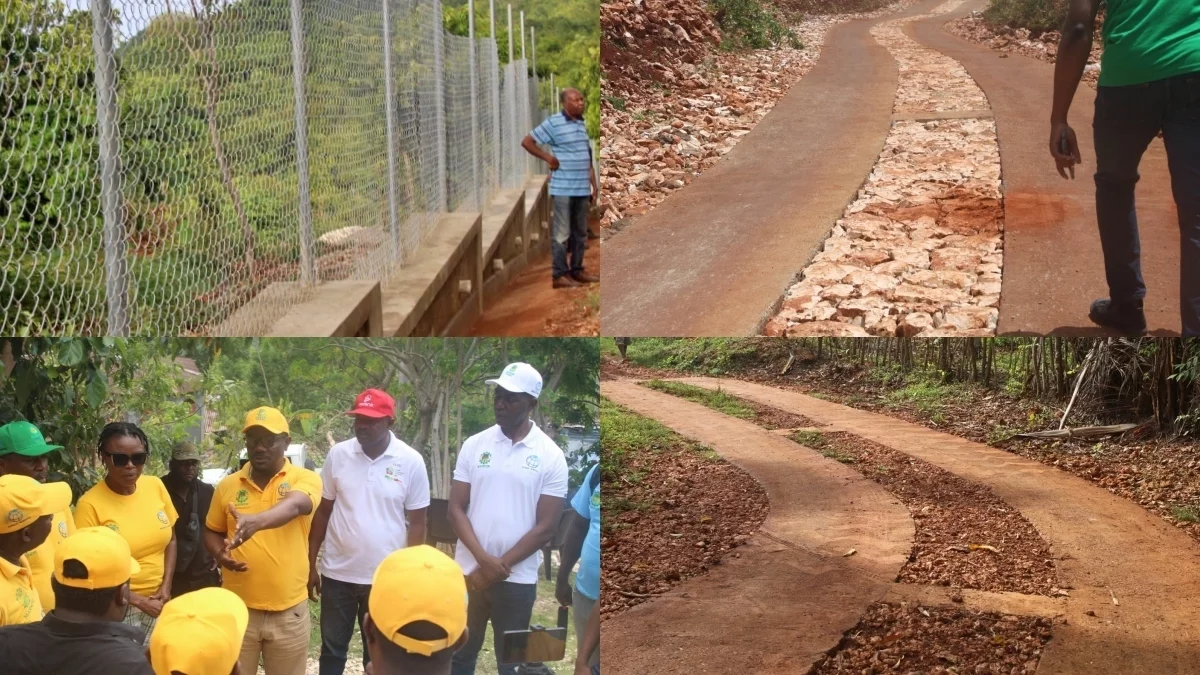
    Leaving Pestel, the ministerial convoy traveled next to the commune of Beaumont, where they inspected ongoing construction on a 300-meter rural road expansion that spans the second communal section of Chardonnette and the nearby locality of Dumois. The journey into Chardonnette itself served as a stark reminder of the daily challenges area residents face navigating poorly maintained roads, underscoring the urgent need for the upgrades the project is delivering.

    Across every community the delegation visited, local residents, parishioners, and the local parish priest turned out to extend a warm welcome to Minister Aubourg and the entire PARSA project team. Conversations with locals were marked by broad smiles and repeated expressions of gratitude for the tangible improvements the projects have already brought to the region.

    To wrap up the multi-site supervisory tour, the minister and his team traveled to Fonds-Rouge Torbeck, the ninth communal section of Jérémie. In this area, the Ministry of Agriculture, Natural Resources and Rural Development (MARNDR) has already completed several key infrastructure projects through the PARSA framework. Finished works include more than 350 linear meters of rural road constructed with reinforced concrete strips, erosion protection infrastructure for the critical Hypollite natural spring, and resurfacing of roughly 200 linear meters of unpaved dirt road. Local leaders say these completed upgrades already represent a tangible, meaningful improvement to daily life for area residents, while creating new opportunities for long-term growth and investment in the region’s agricultural sector.

  • American Airlines announces its daily flights to Cap

    American Airlines announces its daily flights to Cap

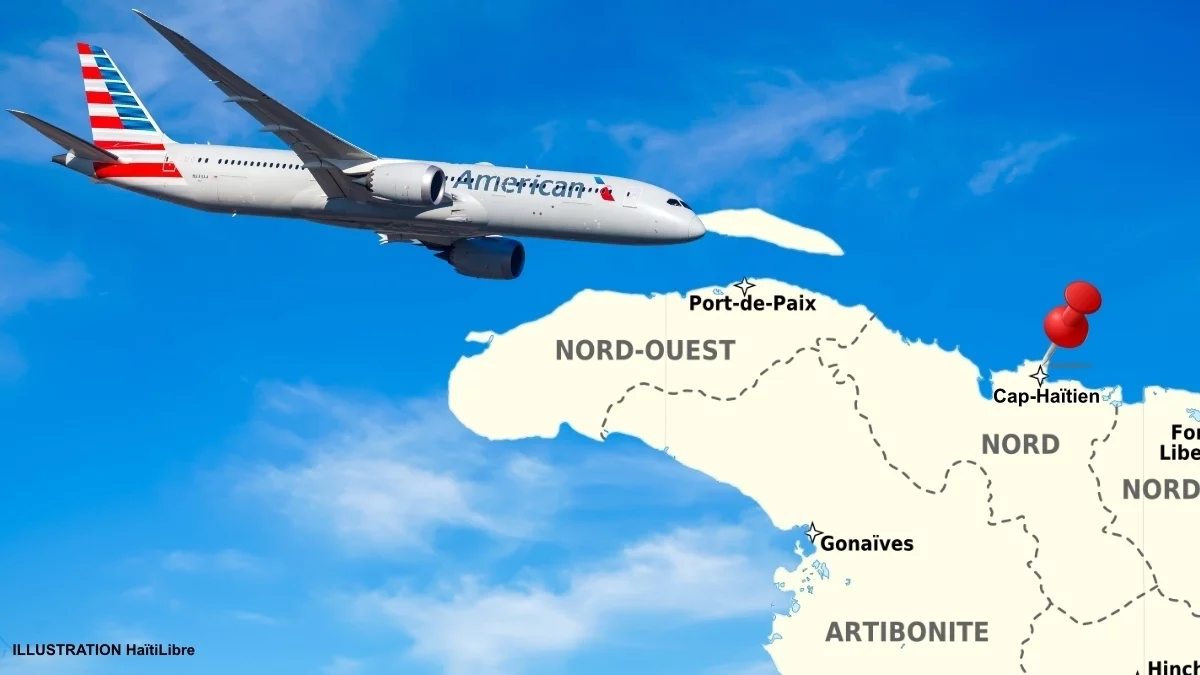
    In a landmark move that re-opens direct air connectivity between the United States and Haiti, Fort Worth-based American Airlines has announced plans to launch daily nonstop flights between Miami International Airport and Cap-Haïtien, starting November 1, 2026. This initiative marks the first resumption of scheduled commercial service to Haiti by any major U.S. airline in recent years, signaling a critical step toward rebuilding the country’s international travel links.

    The new daily route will be operated using Boeing 737 MAX 8 aircraft, with a carefully calibrated schedule designed for maximum convenience for both leisure and travel passengers. Outbound flights from Miami will depart at 10:15 a.m. local time, arriving in Cap-Haïtien at 12:15 p.m. local time. The return leg will depart Cap-Haïtien just one hour later at 1:15 p.m., touching down back in Miami at 3:15 p.m. local time the same day.

    This carefully structured timeline not only creates a seamless direct travel option for passengers moving between South Florida and northern Haiti, but also opens up easy connections to hundreds of domestic and international destinations across American Airlines’ extensive global route network. For the large Haitian diaspora community concentrated in South Florida, the new service removes the need for complicated multi-leg itineraries that have made visiting family and home communities in northern Haiti far more difficult in recent years.

    Beyond the immediate benefits to travelers, the new route strengthens Miami’s long-standing status as American Airlines’ primary gateway to the Caribbean region. The carrier already operates one of the most expansive route networks in the Caribbean, and the addition of Cap-Haïtien reinforces its commitment to growing connectivity across the region.

    Industry observers frame American Airlines’ decision as a pivotal milestone for Haiti’s travel and economic recovery. The move recognizes Cap-Haïtien’s growing role as Haiti’s main northern air gateway, re-establishes a direct air link between the U.S. and one of Haiti’s most historically significant coastal cities, and returns the destination to the active route map of one of the world’s largest commercial airlines.

    For passengers with family and cultural ties to Haiti, the new flights translate to far less stressful, more affordable travel to visit loved ones. For Haiti as a whole, the service represents a tangible vote of confidence in the country’s gradual recovery and a renewal of international connectivity that has been disrupted for years. For Cap-Haïtien, a city rich with Caribbean history and cultural appeal, the launch paves the way for increased visitor traffic and renewed global engagement, putting the destination back on the radar for international travelers after years of limited access.

  • FLASH : Voter registration begins in the West Department

    FLASH : Voter registration begins in the West Department

    Haiti’s Provisional Electoral Council (CEP) has officially kicked off the first phase of voter registration operations in the country’s West Department, marking a key step forward in preparations for upcoming national elections. The initial registration drive, which launched on the morning of Thursday, July 30, 2026, is concentrated across three high-population municipalities: Pétion-ville, Delmas, and Tabarre, with 10 purpose-designated Registration and Voting Centers (CIVs) open to eligible citizens across the region.

    The formal launch ceremony for the initiative was held at 10:00 a.m. local time on July 30 at the Pétion-ville National High School, one of the 10 official registration sites. The five CIVs operating in Pétion-ville include Pétion-ville National High School, Guatemala National School, Meyotte National School, Frères National School, and Benoît Batraville High School in Laboule 13. Three additional sites have been set up in Delmas: Horatius Laventure High School, Antoine and Georges Izmery High School in Petite Place Cazeau, and the Silo CASEC Office. Rounding out the network of registration centers are two locations in Tabarre: Jean-Marie Vincent High School and Tabarre National School (Tabarre 25).

    In its official announcement, the CEP has called on all eligible Haitian citizens holding a valid national identification card to visit their nearest designated center to complete registration and be added to the official electoral roll ahead of the upcoming polls. The electoral body emphasized that successful voter registration is a non-negotiable prerequisite for exercising the fundamental democratic right to vote, and a core requirement for participation in the upcoming electoral process.

    To ensure compliance with national electoral regulations, the CEP has urged all qualified potential voters to finalize their registration within the current phase timeline, following all applicable legal procedures laid out for the process. This initial rollout in West Department paves the way for subsequent registration phases across other regions of Haiti as the country advances toward its scheduled elections.

  • Leisure : Did you know ? #45

    Leisure : Did you know ? #45

    Haiti-based digital publication HaitiLibre has been running a popular twice-weekly general knowledge trivia segment called “Did You Know?”, and its 45th installment, published on July 29, 2026, shares a little-known fact about one of the world’s most iconic historical landmarks. The edition’s core quiz question asks: What is the only European monument counted among the modern Seven Wonders of the World?

    The correct answer, confirmed by the platform’s official quiz answer bank, is Rome’s Colosseum. Selected following a 2007 global public vote that drew millions of participants from across the globe, the 2,000-year-old amphitheater stands as the sole entry on the new 7 Wonders list located on the European continent. This designation honors the far-reaching and enduring cultural legacy the Roman Empire left on modern global civilization, a legacy embodied by the Colosseum’s millennia-long history.

    Beyond its current status as a UNESCO-endorsed landmark and global tourist draw, the Colosseum has a turbulent post-Roman Empire history that is less widely discussed. After the fall of Rome, the massive stone structure was repurposed as nothing more than a public stone quarry. For hundreds of years, local residents and even successive popes stripped the monument of its valuable marble and travertine blocks, hauling the materials away to construct Vatican City buildings and luxurious private palaces across Rome. The visible pockmarks dotting the Colosseum’s surviving walls today are a physical reminder of a second wave of looting: historical scavengers extracted the iron and bronze binding pins that held the structure’s massive stone blocks together, leaving the amphitheater structurally weakened over centuries.

    This trivia entry is just one of more than 180 interactive quiz games hosted on HaitiLibre’s dedicated Quiz.HaitiLibre platform, which launched officially to the public earlier this year. As part of the platform’s scheduled monthly content update, 31 brand new quiz games were added to the roster on July 1, 2026, pushing the total number of available knowledge challenges past the 180 mark. Platform administrators commit to adding fresh quiz content every month to keep the experience engaging for returning visitors.

    All of the platform’s exclusive quizzes are free to access, require no user registration to play, and are designed to accommodate participants of all age groups and knowledge levels. Every quiz offers three tiered difficulty settings—easy, intermediate, and hard—to match different skill levels, and the full platform is available in both French and English to serve a broad audience. Covering topics ranging from global history and geography to Haiti-focused current events and culture, the platform invites casual learners and trivia enthusiasts alike to test their knowledge, expand their understanding, and share the experience with friends and family. Visitors can leave feedback via a comment form at the end of each quiz, helping the platform refine its content for future updates.

  • The Decisive Role of Women in the National Economy

    The Decisive Role of Women in the National Economy

    In late July 2026, high-level gender and economic policy leaders from across the Americas and the Caribbean gathered in Panama City for the Regional Policy Dialogue focused on “Women, Productivity and Growth”, an event convened with support from the Inter-American Development Bank (IDB). The three-day convening brought together 101 attendees spanning cabinet ministers, senior government officials, leading development experts, and technical partners from 24 nations, all united by a shared goal: to reframe women’s economic participation as a foundational driver of broad-based productivity, transformative innovation, and long-term sustainable development across the region.

    Over the course of the dialogue, delegates tackled a range of interconnected strategic priorities central to advancing gender-inclusive economic growth. Key topics included expanding equitable women’s participation in formal economies, designing public policies that accelerate women’s economic empowerment, scaling investment in the undervalued care economy, expanding women’s access to affordable formal finance, integrating women into digital transformation and innovation ecosystems, and building robust frameworks for economic formalization and inclusion for marginalized women.

    Speaking on behalf of the Haitian government, Pedrica Saint Jean, Haiti’s Minister for the Status of Women and Women’s Rights (MCFDF), shared on-the-ground insights into Haiti’s unique economic context. She emphasized that despite facing overlapping systemic challenges – widespread economic informality, persistent national insecurity, repeated political and humanitarian crises, and systemic barriers to accessing formal financial services – women remain the backbone of Haiti’s national economy, sustaining local communities and driving informal and small-scale economic activity across the country. Saint Jean also outlined the Haitian government’s forward-looking policy vision: to invest in expanding women’s human capital, foster the growth of women-led entrepreneurship, and embed a gender equity perspective across all national economic planning and policy frameworks.

    The second day of the dialogue deepened discussions on underaddressed aspects of gender-inclusive growth, including sustainable financing for gender equality policies, replicable successful experiences from across the region, strategies for effective cross-government inter-institutional coordination, the critical link between public health investment and women’s economic participation, and binding government commitments to advance inclusive economic growth. This high-level plenary session included participation from Guatemala’s Vice President, alongside seven cabinet ministers representing Barbados, Belize, El Salvador, Guatemala, Guyana, Suriname, and Haiti.

    For Haiti, Saint Jean’s participation in the regional dialogue underscores the national government’s explicit commitment to placing gender equality at the center of all national development strategies. By engaging with global and regional peers to exchange solutions, the Haitian Ministry for the Status of Women and Women’s Rights aims to advance initiatives that boost national productivity, reduce systemic economic and gender inequalities, and cement women’s position as core leaders of Haiti’s ongoing economic and social transformation.

  • Electoral Calendar : Positive Reactions from CARICOM and the OAS

    Electoral Calendar : Positive Reactions from CARICOM and the OAS

    In a significant development for Haiti’s path back to constitutional democratic rule, two major regional and hemispheric organizations have issued positive responses to the long-awaited publication of a formal electoral timeline by the country’s Provisional Electoral Council (CEP). The announcement, which sets concrete dates for long-delayed general elections, has been met with cautious optimism from international stakeholders who have closely followed Haiti’s ongoing political and security crisis. The Caribbean Community’s Eminent Persons Group (EPG), which has overseen regional diplomatic efforts to support Haiti’s democratic transition, was among the first bodies to welcome the CEP’s announcement.

    The release of the electoral calendar marks a critical milestone in Haiti’s transition process, a step that had been anticipated for months by both Haitian political actors and the broader international community. According to the official timeline, the first round of general elections — covering presidential, parliamentary seats, and a public vote on constitutional reform — will be held on December 13, 2026, with a potential second round of presidential voting scheduled for February 21, 2027. The EPG noted that the formalization of this timeline will immediately accelerate ongoing critical pre-election preparations, including the registration of political parties, electoral coalitions, campaign platforms, and the verification of eligible voter rolls across the country.

    In its official statement, the EPG stressed that the success of the electoral process depends entirely on close, constructive collaboration between the CEP and every Haitian stakeholder, from political parties to civil society organizations. The group called on all actors to participate fully in the process and uphold all electoral rules and procedures, ensuring that Haitian citizens can exercise their democratic right to select a new government through free, fair, and credible balloting that will formally restore constitutional order to the country. Echoing the CEP’s own assessment, the EPG also emphasized that widespread improvement to Haiti’s fragile security situation is non-negotiable for elections to proceed smoothly. To that end, the organization urged member states contributing to the French-led Anti-Gang Force (FRG) to accelerate the deployment of their personnel, expanding the international security assistance already provided to Haitian authorities to curb gang violence that has destabilized large swathes of the country.

    The Organization of American States (OAS) quickly followed with its own endorsement of the electoral calendar, framing the announcement as a key advance toward the restoration of democratic normalcy in Haiti. In a social media statement released on July 28, 2026, OAS Secretary General Albert R. Ramdin confirmed the body’s full support for the timeline, calling it a “significant step” forward for Haiti’s transition. “I welcome the publication of the electoral calendar by the Provisional Electoral Council (CEP), with a first round scheduled for December 13, 2026, and a possible second round on February 21, 2027,” Ramdin wrote. He added that the formal timeline lays clear groundwork for the restoration of democratic and constitutional governance, and reaffirmed that the OAS stands ready to provide full support for a Haitian-led electoral process that is credible, inclusive, transparent, and secure for all participants and voters.

  • Serious traffic accident, 13 DINEPA employees hospitalized

    Serious traffic accident, 13 DINEPA employees hospitalized

    A high-impact traffic collision between two vehicles has left 13 people injured, including 12 staff members from Haiti’s National Directorate of Drinking Water and Sanitation (DINEPA), after a crash in the Delmas district on July 29, 2026. The incident unfolded when a speeding van owned by Professional Security Services S.A. (PSS S.A.) failed to slow down or issue a turning signal before striking a DINEPA-rented pickup truck that was being used to transport the agency’s employees. The force of the collision left both vehicles heavily damaged and left a trail of casualties requiring urgent medical intervention. All 13 injured people — 12 employees from DINEPA’s Port-au-Prince Metropolitan Area Technical Operations Center (CTE-RMPP) and the PSS S.A. van driver — were immediately transported to Port-au-Prince’s La Paix Hospital for urgent care. While PSS S.A. initially agreed to take on financial responsibility for all medical costs, treatment for the injured victims was unexpectedly delayed due to a critical shortage of on-site physicians to conduct required diagnostic examinations. Responding to the dangerous delay in care, DINEPA announced it would cover all costs out of its own budget to transfer the 13 victims to a separate medical facility within the Port-au-Prince metropolitan area, where they can access the care they need without further interruption. In the wake of the crash, Haitian law enforcement and transportation authorities have seized the PSS S.A. van involved in the incident and formally launched a full investigation to pinpoint the root causes of the collision and assign legal responsibility for the event. In an official statement released following the crash, DINEPA shared that it holds deep concern for the well-being of its injured staff and is maintaining constant, close monitoring of each patient’s health status. The agency confirmed that additional details regarding the incident and the condition of the victims will be released to the public as new information becomes available.

  • Champions League 2026 : Haiti wins against Cuba [3-2]

    Champions League 2026 : Haiti wins against Cuba [3-2]

    On July 28, 2026, at Puebla, Mexico’s Estadio Universitario BUAP, Haiti’s under-20 men’s national team—affectionately known as the Grenadiers—pulled off a dramatic 3-2 win against Cuba’s “Lions of the Caribbean” in their second Group A clash of the 2026 CONCACAF U-20 Championship. The result marked Haiti’s first victory of the tournament, a much-needed confidence boost following a lopsided 3-0 opening defeat to the United States three days prior.

    Heading into the match, Haitian head coach Raul Gonzalez Triana made just one forced change to the starting lineup that faced the U.S. Dieuvens Kenson Resil stepped into central defense to replace Stanley Volcin, who received a red card in the opening round loss. The full starting XI for Haiti featured goalkeeper Carlos Bré of Real Hope FA, captain Arthur Alcimé (Real Hope FA), Marckidens Tanis (AS Capoise), Resil (Mount Pleasant, Jamaica), Miguel Joseph (Exafoot), Ramy Fabilus (Real Hope FA), Clavens Exantus (Violette AC), Franco Célestin (Mount Pleasant), Emerson Left (Mount Pleasant), Shaun A Brun (Tacoma Defiance, U.S.), and Nikolaï Pierre (Orlando City, U.S.). Four second-half substitutions adjusted Haiti’s momentum: Jean Jules replaced Alcimé, Da-Benz Jacquet took Pierre’s spot, and J. Charles replaced Fabilus all in the 62nd minute, while E. Jean came on for Célestin in the 72nd, and K. Romulus replaced Exantus in the 81st.

    Haiti controlled the pace of play from the opening whistle, and they capitalized on their first clear chance in the 16th minute. Miguel Joseph pounced on a messy clearance from Cuba’s goalkeeper to slot home the opening goal, putting the Grenadiers up 1-0. The side extended their lead just 18 minutes later, when Emerson Laissé drew a penalty inside the 18-yard box, and Franco Célestin converted the spot kick to make it 2-0 heading into halftime.

    Cuba fought back hard in the final 10 minutes of regulation, finally breaking through for a goal in the 80th minute through Yankarlos Iglesias to cut the deficit to 2-1. The tight contest delivered even more late drama in second-half stoppage time: Da-Benz Jacquet appeared to put the game out of reach for Haiti with a third goal in the 92nd minute, pushing the score to 3-1. Just 60 seconds later, Cuba’s Robert Zerguera responded with a late goal of his own to make it 3-2, but the final whistle blew before Cuba could find an equalizer, handing all three points to Haiti.

    Following the result, the Group A table sees the U.S. sitting firmly atop the standings with six points from two wins, having not conceded a single goal so far. Haiti and Cuba are tied on three points apiece, with Haiti holding second place on the current tiebreaker after scoring three goals and conceding five, compared to Cuba’s five goals scored and three conceded. El Salvador remains at the bottom of the group with zero points from two losses, having failed to score so far in the tournament.

    Haiti will now turn its attention to its final group stage fixture, scheduled for July 31 against El Salvador. A positive result in that match will see Haiti advance to the tournament’s quarter-final stage, keeping its hopes of qualifying for the 2027 U-20 World Cup alive.