标签: Guyana

圭亚那

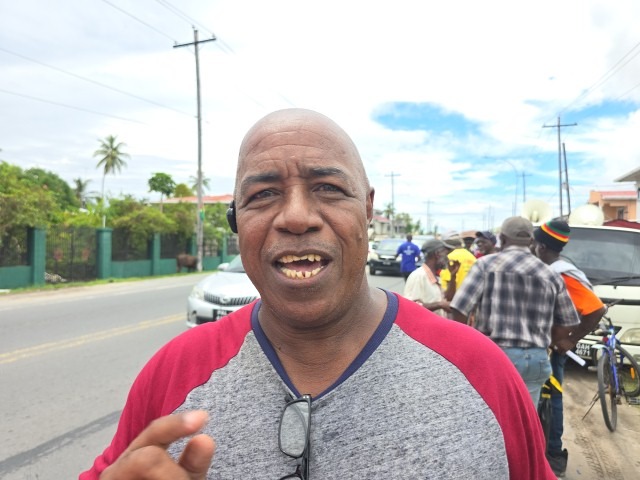
  • Police commissioner receives honorary doctorate

    Police commissioner receives honorary doctorate

    In a historic first for the Guyana Police Force (GPF), top law enforcement leader Clifton Hicken has been awarded an honorary doctorate (honoris causa) in Human Rights and Social Justice from International American University (IAU), marking a groundbreaking milestone for the institution’s leadership ranks. The official announcement was made by GPF on Saturday, confirming that Hicken is the first serving police commissioner in the entire history of the force to earn doctorate-level academic distinction.

    Fact-checking of the GPF’s official announcement confirms the honor was presented during the 2026 Iconic Felicitation of Exemplary Achievements (IFEA) Awards, an event organized by AIMLAY, an India-headquartered global recognition body that facilitates nominations of high-achieving professionals across dozens of industry sectors for outstanding contributions to their fields. Public records from IAU list AIMLAY as one of 38 official authorized recruitment and nomination partners for the institution’s honorary degree programs.

    The formal convocation ceremony was hosted at IHG’s Crowne Plaza San Francisco Airport in Burlingame, California, with the degree conferred by IAU’s Los Angeles-based School of Business. Hicken also received additional recognition for his career-long contributions at the parallel 2026 Global Excellence Summit held alongside the convocation.

    In its official statement, GPF emphasized that the field of human rights and social justice holds particular relevance for 21st-century policing. The agency noted that modern law enforcement carries core responsibilities centered on protecting marginalized and vulnerable populations, building stronger bridges between police and communities, advancing fair and equal treatment under the law, supporting youth development programs, addressing the pervasive crisis of domestic violence, and rebuilding public trust in law enforcement institutions.

    The GPF added that Hicken’s achievement underscores the force’s longstanding institutional commitment to prioritizing education, professional excellence, leadership development, and a culture of continuous lifelong learning among all serving personnel.

    Per GPF’s announcement, the latest honor is far more than a personal accolade: it stands as a key milestone in Hicken’s decades-long academic and professional journey, reflecting his unwavering commitment to ethical leadership, public service, advancing human rights, championing social justice, expanding community development, and strengthening institutional capacity within the Guyana Police Force.

    Hicken brings a robust academic foundation to his role as police commissioner, holding two professional diplomas in public management and related disciplines from the University of Guyana, as well as a Master of Business Administration with a specialization in Human Resource Management from the UK’s University of Bedfordshire. Throughout his decades-long career, he has also completed dozens of specialized professional training programs covering core law enforcement competencies, from leadership and organizational management to human rights practice, domestic violence intervention, public order management, emergency response, search and rescue operations, tactical deployment, and organizational development. His training experience includes programs hosted by leading regional and international institutions, including the University of Guyana, the University of the West Indies Cave Hill School of Business, the San Salvador Law Enforcement Academy, and multiple global law enforcement and security training initiatives.

    The GPF closed its announcement by extending formal congratulations to Hicken on the unprecedented achievement, framing the honor as a point of collective pride for the entire force.

  • AK-47s probe: Ammo magazine found at wash-bay attendant’s home

    AK-47s probe: Ammo magazine found at wash-bay attendant’s home

    Guyana’s ongoing probe into a major seizure of illegal military-grade weapons has yielded a new breakthrough, with law enforcement recovering an extended 9mm ammunition magazine following the surrender of two suspects earlier this week. The investigation first launched in late May, when a routine stop-and-search operation led to the discovery of 10 fully concealable AK-47 assault rifles along a public roadway in Berbice.

    According to an official statement released by the Guyana Police Force on Saturday, the latest recovery was made during a search of a 21-year-old wash bay attendant’s home in the Farm New Housing Scheme, located on the East Bank of Demerara. The 9mm extended magazine, which authorities suspect was intended for use with a 9mm handgun, was found hidden inside a clothes basket in the man’s bedroom. Police did not disclose whether any additional firearms or ammunition were uncovered during the search.

    The 21-year-old suspect, along with 33-year-old Antonio Alonzo “Lanzo” Lawrie, a local businessman who owns the wash bay where the younger man works, turned themselves in to authorities on Thursday. Both men, who also have ties to East Coast Demerara locations, surrendered voluntarily while accompanied by their legal representation. The case continues to move forward alongside earlier court proceedings tied to the weapons seizure.

    The original investigation traces back to May 22, when police conducted an overnight stop-and-search operation between 1 a.m. and 4:30 a.m. on the access road leading to the Berbice River Bridge. During the operation, officers attempted to pull over a black Toyota Corolla Fielder with the registration number HC 9018. Rather than complying with the order to stop, the driver fled the scene, speeding away eastward from the checkpoint.

    Acting on intelligence gathered after the driver’s escape, law enforcement teams launched a targeted search along the No. 11 Village Public Road, where they uncovered the cache of 10 AK-47 rifles. The weapons had been carefully wrapped in layers of plastic and cloth to avoid detection, police confirmed.

    Six days after the weapons seizure, on May 28, 33-year-old Stephen Raja of Goed Fortuin Village’s Back Street became the first suspect to face formal charges in connection with the case. Raja was arraigned on charges of illegal possession of firearms, and bail was ultimately denied by the court. He has been remanded into custody, with the next hearing in his case scheduled for June 15. Police have not yet confirmed whether the three suspects currently in custody or facing charges are connected to the same illegal weapons trafficking network, and investigations remain ongoing as of Saturday afternoon.

  • Road expansion alone will not ease traffic congestion in Caribbean – CDB official

    Road expansion alone will not ease traffic congestion in Caribbean – CDB official

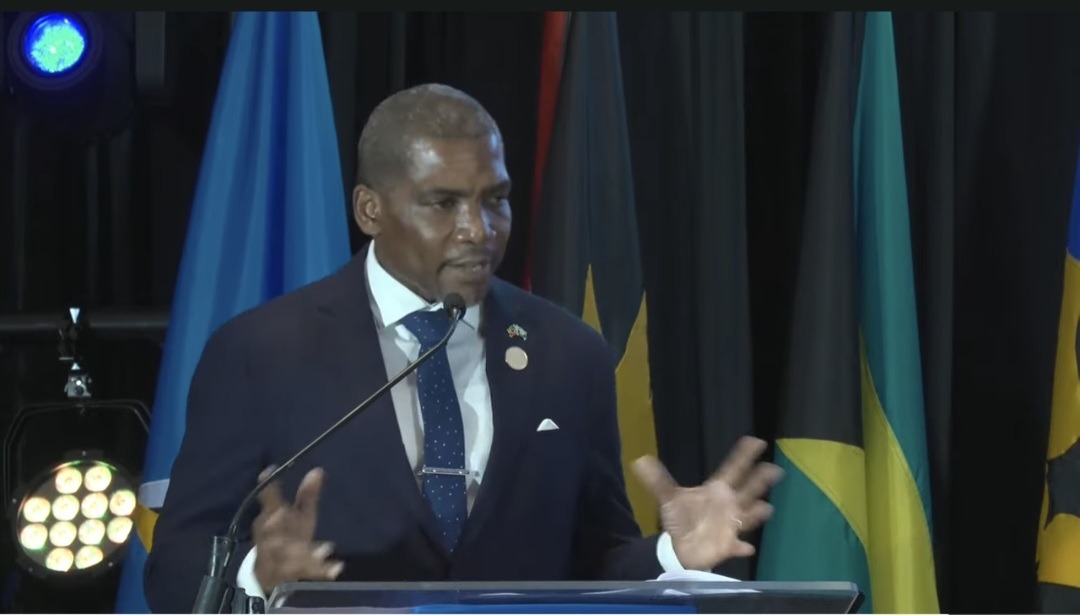
    On Friday, June 6, 2026, a top official from the Caribbean Development Bank (CDB) pushed back against the widespread regional approach of expanding road networks to solve growing traffic gridlock, calling for a holistic, coordinated, and technology-enabled strategy to address what experts frame as a macroeconomic threat to Caribbean development.

    Speaking at the CDB-hosted forum “Edge X by CDB: Unlocked – Stuck in Traffic: What Congestion Is Costing the Caribbean?”, William Ashby, Acting Division Chief of the Economic Infrastructure Division in the CDB’s Projects Department, argued that pouring resources into road expansion alone cannot fix persistent congestion. As Guyana — where the government has framed a surging vehicle count as a marker of growing national wealth, and has already completed multiple road widening projects and new highway construction in West and East Demerara — exemplifies the common reactive approach, Ashby emphasized that the region must shift its focus to integrated urban mobility planning rather than piecemeal road expansion.

    Congestion is not just a local inconvenience, Ashby noted: it is a cross-cutting regional challenge that ripples across national economies, cutting into productivity, raising business costs, and slowing overall growth. It also carries far-reaching indirect impacts for public health, climate resilience, labor market function, and affordable housing access, he added.

    To lay the groundwork for effective solutions, Ashby recommended that governments first build an analytical foundation through comprehensive mobility mapping, targeted congestion studies, and project feasibility assessments. The Barbados-headquartered CDB, he confirmed, stands ready to support this work through technical assistance, project preparation support, and policy-focused financing. For infrastructure investments, the bank can provide loans, grants, and concessional funding for integrated upgrades spanning public transit, active transport (walking and cycling) infrastructure, and smart traffic management systems.

    Ashby warned against the common pitfall of ad-hoc, project-by-project reactive planning, urging decision-makers to adopt evidence-based, cross-sector coordinated strategies. He pointed out that fragmented institutional responsibility — where infrastructure development, transport planning, and traffic policing fall under separate, uncoordinated agencies — often worsens congestion even when new infrastructure is built. Beyond physical infrastructure, he said, the region needs to strengthen institutional coordination and clarify roles across government bodies to make solutions sustainable.

    Capacity building is another critical gap, Ashby added: Caribbean nations need to invest in training for local experts in traffic engineering, transport modeling, and long-term mobility planning to design, roll out, and maintain effective congestion solutions.

    Policy interventions to manage travel demand are also essential, he argued. Measures such as flexible or staggered working hours, structured parking pricing, and incentives for carpooling and ride-sharing can directly reduce peak-hour pressure on overstretched road networks. Ashby also made a strong case for integrating real-time digital tools into congestion management: leveraging data from road sensors, GPS tracking, centralized traffic control centers, and digital monitoring dashboards allows officials to shift from reacting to congestion after it forms to anticipating gridlock and responding in real time.

    To test new approaches before large-scale deployment, Ashby suggested rolling out small targeted pilot projects, such as adaptive traffic signals, smart parking systems, and dedicated bus priority lanes in high-congestion zones.

    “Congestion in the Caribbean is solvable but only if we treat it as the real development issue that it is,” Ashby concluded.

    Joining Ashby at the forum, Dr. Rae Julien Furlonge, Managing Director of regional transport consultancy LF System, traced the roots of the region’s congestion crisis to a 30-year policy trend: governments have encouraged cheap vehicle imports as a source of tax revenue and business growth, but failed to invest in matching public transport infrastructure. This has created a “wicked cycle” where countries are forced to spend increasing amounts of foreign exchange on fuel imports and road repair bitumen, all while public transit systems remain underfunded, unreliable, and inadequate to meet commuter demand. Furlonge noted that more than 60 percent of regular public transit users across the region are women and children, who bear a disproportionate share of the burden of inadequate service.

    Furlonge outlined the wide range of hidden costs of unaddressed congestion: lost worker productivity, wasted fuel, widespread travel delays, billions of hours of lost time, elevated driver stress and fatigue, increased air pollution, missed economic opportunities, and stunted national economic growth. He did note one unexpected local exception: some small business owners have asked for slower speed limits to allow passing commuters to spot their storefronts, a rare conflict of interest in congestion planning.

    To reverse the trend, Furlonge called on Caribbean societies to fundamentally “rethink mobility” — focusing on removing private vehicles from roads during peak congestion periods rather than just diverting them to new or expanded roads, with the core goal of reducing total vehicle kilometers traveled. He pointed to developed economies that have achieved as much as a 30 percent reduction in peak vehicle use through these strategies.

    Even with high private vehicle ownership across the region, Furlonge emphasized that most commuters still lack access to reliable, high-quality public transit, and ordinary commuters bear the brunt of congestion caused by unregulated private vehicle use. Among his proposed policy solutions are pay-as-you-drive insurance schemes that price driving based on actual road use, replacing traditional one-size-fits-all tolls, and offering income tax rebates to both employers and employees that adopt flexible work or shared commuting arrangements. For near-term parking and traffic management, he recommended targeted tweaks including structured parking regulation, expanded park-and-ride facilities, metered roundabouts, intersection design improvements, double-lane roundabout conversions, adjusted traffic signal timings, and cracking down on arbitrary bus stopping that blocks traffic flow.

  • Guyana’s oil sector earns just over half a billion US dollars during Q1 2026

    Guyana’s oil sector earns just over half a billion US dollars during Q1 2026

    Fresh official data released by the Bank of Guyana has revealed strong performance from the South American nation’s rapidly expanding oil sector in the first three months of 2026, with total revenue from royalties, profit sharing, and signature bonuses reaching $577.6 million. The central bank’s quarterly update on the country’s sovereign Natural Resources Fund (NRF) also confirms that a $400 million disbursement from the fund was carried out on March 11, 2026.

    By the close of the first quarter, the NRF, Guyana’s primary sovereign wealth vehicle for managing long-term oil earnings, held a total balance of $3.643 billion. This marks a modest increase from the $3.435 billion recorded at the end of December 2025, according to the fund’s official quarterly report.

    Cumulative data stretching back to the start of Guyana’s commercial oil production in 2020 shows that the nation has earned a total of more than $9.28 billion in oil revenue through March 23, 2026. Since the first disbursement from the NRF in May 2022, total outflows from the fund have hit roughly $6.06 billion as of the end of the first quarter 2026.

    The report details a dramatic upward trajectory for global Brent crude prices through the first quarter, a shift driven largely by escalating geopolitical instability in the Middle East. At the opening of January, Brent crude traded at $60.85 per barrel, dipping slightly to a quarterly low of $59.96 per barrel in the first weeks of the year. From that point, prices began a steady recovery, stabilizing between $65 and $70 per barrel by the end of February. This early recovery was supported by coordinated global oil supply management and emerging early warning signs of rising political friction in the Middle East.

    The most dramatic price surge unfolded in March, as tensions between the United States and Iran escalated, amplifying instability across the wider Middle East region. Critical energy infrastructure suffered damage, and shipping disruptions hit the Strait of Hormuz, the world’s most important chokepoint for global crude oil trade, sparking widespread market fears of major supply shortages.

    As conflict intensified, Brent crude pushed past the $100 per barrel threshold after confirmed reports of extensive infrastructure damage and blockages along the strait. A brief period of market optimism around a potential ceasefire pulled prices slightly back to below $100 per barrel, but that optimism quickly faded as hostilities continued. By the end of the quarter, prices resumed their upward climb, closing at a quarterly peak of $118.35 per barrel, matching the report’s final data.

  • 7-year old child murdered, pensioner injured

    7-year old child murdered, pensioner injured

    A brutal early-morning attack has left a 7-year-old boy dead and a 72-year-old female pensioner hospitalised in the Essequibo region of Guyana, with local law enforcement launching a full criminal investigation into the alleged murder and attempted murder.

    The incident unfolded at approximately 4:45 a.m. on Friday, 5 June 2026, at a residence in Phase 3 of the Zeelugt New Housing Scheme, located along the East Bank Essequibo. Both victims reside at the same address, authorities confirmed.

    According to initial investigative details, the young victim, identified as Adriel Aftab Mohamed, lived at the property with extended family members. Roughly 20 minutes after the alleged attack, a relative arrived at the home and made the grim discovery: the 72-year-old woman suffering from visible injuries, and the young boy unresponsive inside the property.

    Emergency responders quickly transported the injured pensioner to the De Kinderen Regional Hospital for urgent care. As of the latest update, her condition has been classified as stable, and she remains admitted for ongoing treatment.

    Members of the Guyana Police Force’s Regional Division #3 responded promptly to the scene, launching a forensic sweep to collect evidence. Investigators documented visible injuries on the child’s body, and recovered a bladed weapon suspected to be the weapon used in the attack, which has been taken into police custody as evidence.

    The child’s body was transferred to the De Kinderen Regional Hospital, where a duty doctor officially pronounced him dead on arrival. It has since been moved to Ezekiel Funeral Home, where it will remain until a post-mortem examination is conducted to determine the official cause of death.

    As part of the ongoing investigation, law enforcement has interviewed multiple persons of interest connected to the case. Investigators have also confirmed that closed-circuit television cameras are operational in the area surrounding the attack site, and footage from these devices is currently being reviewed to identify potential leads. Police are currently working to track down the suspect responsible for the violence, with the investigation still active and evolving.

  • Three die in Corentyne collision

    Three die in Corentyne collision

    Guyana police have confirmed three fatalities following a high-impact head-on collision between two passenger vehicles on Madia Farm Public Road in Corentyne, Berbice, that occurred on a Tuesday afternoon. Authorities released the official update on Thursday, June 4, 2026.

    All three victims were passengers and the driver of the first vehicle, registered under licence plate PLL 4312. They have been identified as 23-year-old Priyas Mursalin from Chesney Front, 16-year-old Porshatam Hoolasia from Port Mourant, and 19-year-old Ameer Khan from John Village – all communities located along the Corentyne coast.

    The second involved vehicle, carrying registration number PAL 9292, was operated by a 44-year-old male resident of Miss Phoebe, another Corentyne community. Preliminary investigative findings from police paint a clear picture of the chain of events that led to the crash.

    According to witness and initial evidence accounts, the PAL 9292 vehicle was traveling westbound in the southern traffic lane when the incident unfolded. Meanwhile, PLL 4312 was moving eastbound at an excessive speed, when its driver attempted to overtake a slower moving vehicle ahead. This maneuver pulled PLL 4312 directly into the oncoming path of PAL 9292, triggering a catastrophic head-on collision in the southern driving lane.

    The force of the crash propelled the PLL 4312 vehicle off the roadway, where it collided a second time with a concrete utility pole owned and operated by Guyana Power and Light (GPL), located along the southern shoulder of Madia Farm Public Road.

    First responders rushed all people inside PLL 4312 to the nearby Port Mourant Public Hospital for emergency care. However, on arrival, examining medical providers pronounced all three occupants dead from their injuries. The driver of the second vehicle sustained only minor injuries in the crash, received on-site treatment from medical staff, and was subsequently taken into police custody for procedural questioning.

    In a key update, law enforcement officials confirmed that a standard breathalyzer test administered to the PAL 9292 driver returned no traces of alcohol, ruling out impairment as a contributing factor from that side of the collision. Investigations remain ongoing as authorities work to finalize their full report on the crash.

  • Duo wanted for AK-47 assault rifle probe surrender to police

    Duo wanted for AK-47 assault rifle probe surrender to police

    GEORGETOWN, Guyana – Updated 11:41 p.m. local time Thursday, June 4, 2026, by Denis Chabrol

    In a major development in an illegal firearms investigation that has gripped Guyana, two of three suspects wanted by the Guyana Police Force in connection with the seizure of 10 fully automatic AK-47 assault rifles have turned themselves in to law enforcement authorities. The third suspect remains at large more than a week after the weapons cache was discovered.

    The two suspects who surrendered are 33-year-old Antonio Alonzo “Lanzo” Lawrie, a businessman based at Lot 959 Farm in the New Housing Scheme on Demerara’s East Bank, and 21-year-old Gregory Anthony Persaud, a wash-bay attendant with addresses in Area ‘G’ Ogle and Farm, both on Demerara’s East Coast. Both men were taken into custody immediately after presenting themselves at the Criminal Investigation Department Headquarters on Vlissengen Road in Georgetown, accompanied by their legal representation, police confirmed.

    Authorities are still actively searching for the third wanted suspect, Ryan “Satan” Singh, who resides at Parika Outfall Seadam. No additional details on the ongoing manhunt for Singh were immediately released as of Thursday evening.

    The investigation traces back to a routine stop-and-search operation conducted overnight between 1 a.m. and 4:30 a.m. on May 28 along the access road leading to the Berbice River Bridge. During the checkpoint, officers attempted to pull over a black Toyota Corolla Fielder with registration number HC 9018. Instead of complying with the order to stop, the vehicle’s driver accelerated away from police, fleeing eastbound along the roadway, according to official police accounts.

    Acting on intelligence gathered following the escape, law enforcement teams launched a targeted search along the public road in No. 11 Village, where they uncovered the cache of 10 AK-47 rifles concealed in plastic wrapping and cloth. The discovery marked one of the largest illegal arms seizures in Guyana in recent months.

    Separately, in early proceedings connected to the case, 33-year-old Stephen Raja of Back Street, Goed Fortuin Village, was arraigned on charges of illegal possession of firearms on May 28. Bail was denied to Raja, and he was remanded into prison custody ahead of his next court appearance, scheduled for June 15.

  • Guyana joins regional cybersecurity alliance to strengthen digital protection

    Guyana joins regional cybersecurity alliance to strengthen digital protection

    In a landmark step to boost its digital defenses amid a rapidly expanding national digital transformation, Guyana has formally joined the Latin America and Caribbean Cyber Competence Centre (LAC4), an EU-backed regional cybersecurity initiative, the country’s Department of Public Information (DPI) confirmed in an official statement released Thursday.

    The accession agreement was signed during a ceremony held Thursday at the Office of the Prime Minister in Georgetown, marking Guyana’s transition from a collaborating partner to the 19th full participating nation of the organization. Funded by the European Union and launched in 2022, LAC4 operates as a regional cybersecurity hub based in Santo Domingo, Dominican Republic, and is implemented by Estonia’s Information System Authority and CyberNet.

    Through full membership, Guyana will unlock unprecedented access to the centre’s cutting-edge cybersecurity infrastructure, including a hybrid training facility, a fully equipped digital forensic laboratory, and a dynamic cyber range that hosts hands-on simulations and practical exercises. These resources are designed to directly enhance the country’s ability to prepare for and respond to complex cyber threats.

    Beyond infrastructure access, the partnership will drive comprehensive capacity building across technical, policy, and strategic levels, equipping both Guyanese cybersecurity professionals and public institutions with the specialized skills needed to counter evolving digital risks. Guyana will also gain eligibility for cross-border research collaborations, coordinated cyber threat analysis, joint cybersecurity doctrine development, collective lessons-learned initiatives, and expanded access to additional European Union cybersecurity training programs.

    Addressing attendees at the signing ceremony, Prime Minister Brigadier (Ret’d) Mark Phillips emphasized that the Guyanese government identifies cybersecurity as a foundational national priority that supports all areas of national development, effective governance, and the country’s ongoing digital transformation agenda. “As our nation continues to embrace technology and expand digital services, we recognise that this progress must be supported by strong cyber resilience and effective risk management,” Phillips said in the official DPI briefing.

    He added that full LAC4 membership represents a transformative opportunity to advance Guyana’s national cybersecurity goals while deepening collaborative ties with regional and international partners. “Today, we are pleased once again to formalise these cooperation arrangements by joining 18 other participating countries and institutions from across Latin America, the Caribbean, and Europe in this important initiative,” Phillips noted, adding that Guyana is eager to contribute its own expertise, build its domestic capabilities, and work closely with member states to tackle emerging cybersecurity challenges.

    LAC4 head Leonardo Daniel Ortega Prudencio formally welcomed Guyana to the centre, framing the accession as a natural progression of a collaborative partnership that first launched in 2022. Prior to full membership, Ortega Prudencio explained, Guyana had already participated in more than 120 LAC4 activities, exercises, and seminars, working hand-in-hand with centre experts to advance key national cybersecurity projects including the drafting of Guyana’s National Cyber Emergency Response Plan and the completion of national cybersecurity risk assessments.

    “By stepping into LAC4 as a member today, Guyana gains a seat at the table of one of the biggest cybersecurity groups to shape governance and tailor our work plans to align directly with your national priorities,” Ortega Prudencio said.

    Christopher Deen, General Manager of Guyana’s National Data Management Authority (NDMA), noted that the country’s national cybersecurity strategy is focused on four core pillars: expanding public awareness, investing in modern defensive capabilities, strengthening national cyber defenses, and improving incident preparedness across all public sector agencies. Guyana’s full LAC4 membership, he confirmed, aligns directly with these national priorities and will strengthen the country’s entire cybersecurity ecosystem.

    European Union Ambassador to Guyana Luca Pierantoni also attended the signing ceremony to mark the new milestone in the partnership between Guyana, the European Union, and the regional cybersecurity centre.

  • APNU’s parliamentary question on powership negotiations triggers govt’s response

    APNU’s parliamentary question on powership negotiations triggers govt’s response

    Almost one full week of public silence on the future of Guyana’s powership electricity supply came to an end on Thursday 4 June 2026, after the country’s parliamentary opposition tabled an urgent oral question without notice to press for answers on the critical energy deal.

    Public Utilities and Aviation Minister Deodat Indar broke the informational drought in a public statement posted to Facebook, addressing growing public and political commentary around the renewal of the contract for two Turkish-owned Karpowerships that currently supply a large share of the country’s electricity.

    Indar emphasized that negotiations are actively ongoing, with the government focused exclusively on securing the lowest possible commercial rate for the continued supply of power, framing the work as aligned with the best interests of all Guyanese citizens. “I would like to assure the public that the Government of Guyana is working in the best interests of the people of Guyana to get the best possible commercial rate for the renewal of the contract,” Indar said in the statement.

    Prior to Thursday’s public update, all senior government officials—including President Irfaan Ali, Vice President Bharrat Jagdeo, Finance Minister Ashni Singh, and Indar himself—had declined repeated requests for comment on the status of the talks. This silence came even after Karpowership issued a formal warning that power supplies could be interrupted after the end of a grace period on 1 June, when the previous contract expired.

    While Indar moved to reassure Guyanese that the national grid has not experienced any power disruptions to date, he confirmed that no additional details will be released publicly until negotiations conclude between state-owned utility Guyana Power and Light Inc., UCC JV, and Karpowership. “We continue to be in the negotiation process, while the powership maintains an uninterrupted supply of electricity to the national grid. The public will be apprised at the appropriate time on the completion of the contractual negotiations,” he added.

    The government’s statement came just two hours after A Partnership for National Unity (APNU), the country’s main parliamentary opposition, submitted its urgent question to National Assembly Speaker Manzoor Nadir. APNU parliamentarian Ganesh Mahipaul, who filed the question around 11:15 AM Thursday, is seeking answers to a series of pressing public concerns: whether Karpowership has demanded additional payments outside the terms of the original contract, the total amount of any such demands and their legal or commercial basis, and whether the government has conducted a formal assessment of grid risks if one or both powerships suspend operations before the long-delayed Wales Gas-to-Energy Project comes online. Mahipaul also pushed for clarity on contingency plans to prevent a return to widespread blackouts and rolling load shedding that would harm households and businesses across the country.

    Currently, the two Karpowerships are anchored off Guyana’s coast: one at Meadowbank in Greater Georgetown on the Demerara River, and the second at Everton on the Berbice River. The status of their contract has emerged as a critical flashpoint amid ongoing delays to the 300 megawatt Wales Gas-to-Energy Project, which has already missed multiple publicly announced completion targets. Without power supplied by the two powerships, Guyana Power and Light does not have enough domestic generation capacity to meet the country’s peak demand of just over 200 megawatts, leaving the national grid heavily dependent on the Turkish firm’s output.

  • Cornelia Ida man charged with murder of mother

    Cornelia Ida man charged with murder of mother

    A Guyanese construction worker has been formally arraigned on a charge of murdering his own mother, in a case that has drawn local attention to the small West Coast Demerara community of Cornelia Ida. The defendant, 24-year-old mason Greedesh Ramkissoon, whose residential address is listed as Lot 80, Block ‘Y’, Cornelia Ida, appeared before the Leonora Magistrate’s Court on Wednesday, June 3, 2026, to face the indictable homicide charge.

    According to official statements from the Guyana Police Force, the fatal incident that led to the charge took place at the shared family residence on Thursday, May 28, 2026. The victim was identified as 58-year-old Surujdai Kahrui, who worked as a workplace supervisor. Ramkissoon was taken into police custody days after the killing, and formal charges were officially filed against him on May 29, 2026.

    During Wednesday’s arraignment hearing, Magistrate Rabindra Singh presided over the proceeding and read the full murder charge aloud to the defendant. Under Guyana’s criminal procedural rules for indictable offenses, Ramkissoon was not required to enter a formal plea at this early court stage. Following the brief hearing, the magistrate ordered that Ramkissoon be remanded into state custody at a prison facility, with no bail granted.

    The case has been scheduled for its next procedural hearing on Friday, August 7, 2026, when further developments in the legal process are expected to unfold. Local law enforcement has not yet released additional details about the alleged motive or circumstances surrounding the killing, as the investigation remains ongoing through the pre-trial phase.