标签: Guyana

圭亚那

  • Electrician fined for trespassing on Lethem aerodrome

    Electrician fined for trespassing on Lethem aerodrome

    Updated Wednesday, June 10, 2026, at 7:22 a.m. by Denis Chabrol

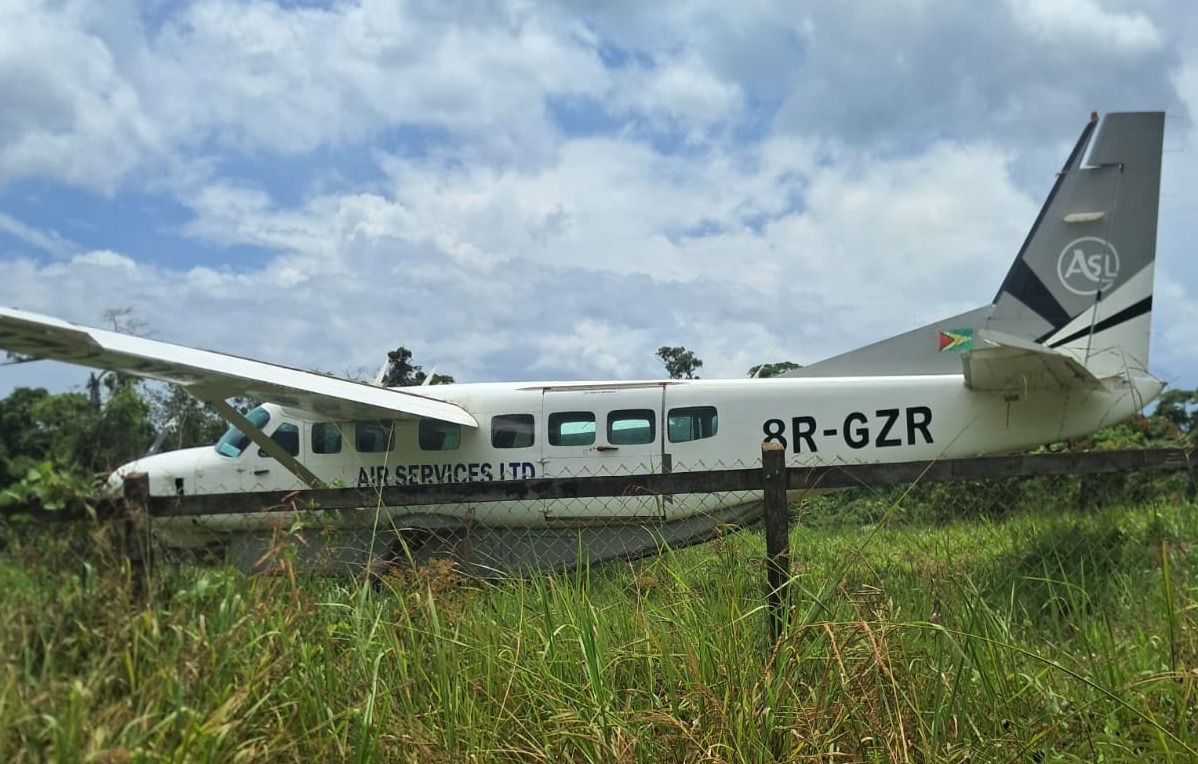
    In a landmark enforcement of Guyana’s civil aviation safety rules, a local man has become the first person convicted of unauthorized trespassing on a hinterland aerodrome, just 10 days after national aviation regulators issued urgent public warnings about unsafe activity around the country’s remote airstrips.

    Forty-three-year-old Leonard Pompey, an electrician residing in Culvert City, Lethem, Central Rupununi, entered a guilty plea to one count of trespassing on the Lethem Aerodrome, a violation of Section 83(1) of Guyana’s Civil Aviation Act. Presiding over the case at the Lethem Magistrate’s Court, Magistrate Omadatt Chandan imposed a fine of GY$300,000. Pompey will face three months of imprisonment if he fails to pay the penalty within the required timeframe. The charge carries a maximum penalty of GY$1 million in fines and six months behind bars, underscoring the severity of aviation safety violations under Guyanese law.

    The conviction comes on the heels of a joint public appeal from the Guyana Civil Aviation Authority (GCAA) and the Aviation Operators Association of Guyana (AOAG) calling for heightened public accountability around all national airstrips and runways. The warnings were triggered by a disturbing incident reported in late May, when unidentified actors deliberately placed large rocks across the entire length of the Lethem Aerodrome runway. Regulators labeled the act as an unacceptable threat to aviation operations and the lives of passengers, crew, and remote communities that rely on Lethem’s air link for essential access to goods and services.

    Despite the urgent push for improved public safety awareness, a long-standing administrative gap has left required aerodrome warning signs gathering dust in the compound of the former Ministry of Public Works in Kingston’s Wight’s Lane for multiple years. The oversight comes amid a recent government restructuring that moved aviation oversight from the Ministry of Public Works to the newly created Ministry of Public Utilities and Aviation.

    In the wake of the conviction, the GCAA reaffirmed its commitment to protecting public safety, urging all Guyanese to treat every aerodrome as critical safety infrastructure. The authority asked community members to report any suspicious activity or threats to aerodrome operations directly to regulators, including anonymous reports via the GCAA’s dedicated safety hotline at 608-4222. “The safety of the travelling public remains our highest priority,” the agency stated.

    AOAG officials have emphasized that hinterland airstrips face far greater safety risks than major international hubs, making unauthorized activity especially dangerous. Most of Guyana’s remote runways are short, narrow, and unpaved, meaning pilots already operate with extremely limited safety margins, particularly during periods of heavy rain or poor visibility. Every foot of usable runway is critical for safe takeoffs and landings, and even small hazards can drastically increase the risk of a catastrophic crash.

    The association says it continues to receive frequent reports of reckless and dangerous behavior across airstrips nationwide. Common violations include motor vehicles, motorcycles, bicycles, and pedestrians crossing active runways while aircraft are approaching or departing; leaving debris, glass bottles, and other foreign objects on runway surfaces; deliberately or accidentally placing stones and other obstacles on landing strips; using active runways as public thoroughfares or shortcuts; causing permanent damage to runway surfaces and shoulders from repeated vehicle traffic, which creates ruts, erosion, and narrows the usable landing area; and even law enforcement personnel using active runways for recreational games.

    “While these actions may seem trivial to people who do not work in aviation, they create life-threatening hazards for pilots, passengers, and entire remote communities,” the AOAG noted in its public warning. “A single discarded bottle, loose stone, uneven rut, or unexpected vehicle crossing can cause a pilot to lose control of an aircraft, trigger a propeller strike, blow a landing gear tire, cause irreparable structural damage, or result in a deadly crash. The consequences of these irresponsible acts are often irreversible.”

    Beyond the immediate risk of injury and death, such incidents can destroy aircraft valued at hundreds of millions of dollars, disrupt critical regional services, and leave long-lasting economic and social impacts on communities that depend on air travel for access to healthcare, education, and supplies. Irresponsible runway use also drives up operational costs across the entire Guyanese aviation sector: aircraft repairs, unplanned maintenance, flight delays and cancellations, insurance claims, and infrastructure repairs all ultimately raise the cost of air services for the hinterland residents who rely on them most.

  • Five arrested, guns seized after violent home invasion, robbery

    Five arrested, guns seized after violent home invasion, robbery

    Authorities in Guyana have taken five suspects into custody and recovered two unregistered .32 caliber pistols following a brazen early-morning armed home invasion and robbery in the GoodHope community, located along East Coast Demerara. Regional police made the announcement in an official statement released to the public on Wednesday, 10 June 2026.

    The incident unfolded at approximately 3:45 a.m. on Monday, when seven armed attackers targeted the residence of a 49-year-old self-employed man. Police records show the gang arrived at the property carrying an arsenal of weapons, including two firearms, cutlasses, and knives, according to witness accounts. After repeatedly striking the residence’s front door, witnesses reported hearing multiple loud blasts that investigators have classified as suspected gunfire. The attackers then forced their way inside the home, catching the sleeping family off guard.

    During the home invasion, the victim, his wife, and one of their daughters were physically assaulted by the suspects, according to preliminary investigative reports. After subduing the family, the intruders ransacked nearly every room of the property, stealing a cache of personal property including an assortment of jewelry, two mobile phones, an undisclosed amount of cash, and critical personal identification documents. As of Wednesday, the total monetary value of the stolen items has not yet been finalized.

    The victim managed to evade the attackers and alert local law enforcement shortly after the robbery. Responding police officers immediately arrived at the crime scene to secure the area and provide assistance, before escorting all three injured victims to the Enmore Regional Hospital for mandatory medical evaluations and treatment for their injuries.

    Following days of coordinated investigative work, law enforcement personnel executed a targeted search warrant at a property in Phase Two, GoodHope on Tuesday, 9 June 2026. During the search, investigators made a key discovery: the two .32 pistols were concealed inside a blue cookie tin stored at the location.

    Two suspects, a 21-year-old day laborer and a 33-year-old taxi driver, both residents of the GoodHope Squatting Area in East Coast Demerara, were taken into custody immediately following the search. Both remain in police custody as of Wednesday, helping investigators piece together details of the robbery and the gang’s broader activities. Subsequent follow-up inquiries led law enforcement to three additional co-conspirators, who have also been taken into custody. The investigation remains ongoing as police work to identify the two remaining attackers who have not yet been apprehended.

  • UG earns ACCA accreditation for Bachelor of Accountancy programme

    UG earns ACCA accreditation for Bachelor of Accountancy programme

    In a landmark step for higher education and professional training in Guyana, the University of Guyana’s (UG) School of Entrepreneurship and Business Innovation (SEBI) announced Tuesday that its Bachelor of Accountancy Degree Programme has earned formal accreditation from the Association of Chartered Certified Accountants (ACCA), one of the world’s most prominent global professional accounting bodies.

    The accreditation, which took effect on January 1, 2026, will remain valid through December 31, 2030. It provides official international validation that UG’s accounting education meets rigorous global quality benchmarks, elevating the degree’s standing for graduates seeking employment or professional advancement across international markets.

    While UG accounting graduates have previously been eligible for individual ACCA exam exemptions, this marks the first time the university has secured program-wide institutional accreditation. This milestone aligns UG’s academic curricula with global professional standards and solidifies the institution’s position as Guyana’s top provider of business-focused higher education.

    UG Vice-Chancellor Professor Paloma Mohamed Martin publicly recognized the contributions of Dr. Alfred Aaron, Head of the Department of Accountancy and Finance, SEBI Dean Professor Leyland Lucas, ACCA representatives, and leaders of local accounting firms for their guidance and collaborative work throughout the multi-stage accreditation preparation process. She framed the achievement as a key milestone in UG’s broader push to become a globally competitive world-class university.

    “We are delighted to celebrate another step towards making the University of Guyana into a world-class university,” Professor Mohamed Martin said in a statement. “Dr Aaron and SEBI are working with local partners and ACCA on several other initiatives which will add value to our students and accelerate their certifications for quicker entry into professional practice. This is a big win for our students.”

    Echoing that sentiment, Dr. Aaron described the accreditation as a transformative landmark achievement for the entire institution. “This accreditation confirms that our Bachelor of Accountancy programme meets internationally recognised standards and reflects the quality of teaching, curriculum design, and assessment within the department,” he explained. “It is a significant achievement for the University and a major advantage for our students, who will now have a more direct pathway towards global professional certification.”

    The new accreditation unlocks tangible benefits for all current and future students pursuing careers in accounting, finance, auditing, and related fields. Starting in 2026, all graduates of UG’s Bachelor of Accountancy programme who go on to pursue full ACCA qualification will be eligible to waive four foundational ACCA papers: Business and Technology, Management Accounting, Financial Accounting, and Corporate and Business Law. That leaves graduates with just nine remaining papers to complete before earning the globally respected ACCA professional credential, cutting down the time and cost required to reach full certification.

    Dr. Aaron credited the cross-institutional collaboration between UG faculty, administrators, and international professional partners for the successful outcome, thanking the vice-chancellor and SEBI’s dean for their consistent leadership and support throughout the years-long accreditation process. Dr. Aaron himself led the initiative, coordinating all documentation, submissions, and stakeholder engagement required for ACCA review.

    UG also highlighted the critical support provided by ACCA’s Trinidad-based regional team, specifically singling out Senior Business Relationship Manager Anouska Sammy and Business Relationship Manager Aisha McKenna for their consistent guidance throughout the accreditation journey.

    The new program accreditation reflects UG’s long-term commitment to delivering academically excellent, professionally relevant education that prepares graduates to compete in the global workforce and contribute to Guyana’s fast-growing economy. “As the country continues its unprecedented growth and development, UG remains committed to producing highly skilled accounting and finance professionals equipped with academic knowledge and internationally recognised professional credentials,” the university said in its official announcement.

    This milestone builds on a series of recent expansions to SEBI’s industry-aligned program offerings. Just months prior, the school launched two new specialized credentials focused on the country’s booming energy sector: an Associate Degree in Oil and Gas Accounting, Taxation and Audit, and a Graduate Executive Diploma in the same specialization.

    The ACCA accreditation also comes on the heels of another major milestone for UG: in 2025, the university earned its first-ever institutional accreditation from Guyana’s National Accreditation Council (NAC), 62 years after it was founded in 1963. That institutional accreditation confirmed UG meets consistent high standards across academics, administration, and student support services, boosting confidence in the quality of a UG degree both locally and around the world.

  • Suspected killer of 7-year old boy charged with murder

    Suspected killer of 7-year old boy charged with murder

    Guyana’s law enforcement officials have confirmed that a 23-year-old farmer has made his first court appearance this Tuesday, facing a murder charge connected to the brutal killing of a 7-year-old child and a violent assault on an elderly woman in the Zeelugt New Scheme community, East Bank Essequibo.

    Identified by authorities as Shaheed Mohamed, who maintains residences in both Zeelugt New Scheme and Providence on East Bank Demerara, the defendant was not required to enter a plea to the indictable murder charge during Tuesday’s hearing. The charge accuses Mohamed of the killing of 7-year-old Adriel Aftab Mohamed.

    Following the brief hearing, Alisha George, the sitting magistrate at the Leonora Magistrate’s Court, ordered that Mohamed be remanded in state custody ahead of his next scheduled court appearance, set for July 20, 2026.

    The timeline of the incident dates back to Friday, June 5, 2026, when the attack is alleged to have occurred at the victims’ home in Phase 3 of the Zeelugt New Housing Scheme. Mohamed was taken into police custody two days later on Saturday, June 6, 2026. Investigative records indicate that the violence left the 7-year-old boy dead from a slit throat, while the child’s 72-year-old grandmother suffered severe, non-life-threatening injuries in the assault.

    It was a visiting relative who first discovered the scene at approximately 5:05 a.m. on June 6, finding the injured elderly woman and the motionless body of the young boy. The grandmother was immediately transported to a nearby medical facility for treatment, and hospital officials have confirmed her condition remains listed as stable as of the latest update.

    Police investigators have noted a key detail emerging from early probes into the attack: Mohamed has no known family connection to either the young victim or the injured grandmother, and no evidence has been uncovered to suggest theft was a motive for the violence. The case remains active as law enforcement continues to piece together details surrounding the attack that has shaken the small coastal community.

  • Brazil, IICA examine aging agricultural workforce, other issues

    Brazil, IICA examine aging agricultural workforce, other issues

    A high-level strategic gathering focused on the future of hemispheric agriculture brought senior representatives from the Brazilian government and the Inter-American Institute for Cooperation on Agriculture (IICA) to the World Trade Centre Georgetown (WTCG) last Friday, with the aging agricultural workforce emerging as a top priority for collaborative action.

    Chaired by WTCG Executive Director Wesley Kirton, the meeting opened with urgent discussion of how to reverse decades of aging in farming workforces across the Americas, centering talks on actionable strategies to draw younger generations into agricultural careers. Participants agreed that modernizing the sector’s appeal is critical, outlining a path forward that leverages digital innovation, advanced agricultural technologies, entrepreneurial opportunities, and expanded market access to make farming and agribusiness more attractive to young people.

    Beyond workforce challenges, delegates delved into the sweeping transformative power of cutting-edge science and technology in modern agriculture. The conversation highlighted the rapidly expanding adoption of artificial intelligence and precision agriculture methodologies, tools that have already demonstrated clear potential to lift crop and livestock productivity, boost environmental sustainability, and strengthen the sector’s ability to withstand systemic shocks. Additional topics on the agenda included longstanding logistics and transportation bottlenecks that limit market access, strategies to meet global food safety and phytosanitary compliance standards, evidence-based best cultivation practices, and the development and selection of high-performing crop varieties, livestock breeds, and quality seed stock.

    Climate change’s growing threat to consistent agricultural output and regional food security also took center stage in the talks. Delegates shared insights into context-specific climate adaptation approaches, emphasizing that coordinated regional and international collaboration is non-negotiable for building agricultural systems that can absorb and recover from climate-related disruptions.

    The meeting also laid groundwork for future collaboration between IICA and WTCG, coming just days after IICA signed a formal cooperation agreement with the Government of Guyana earlier that Tuesday. Both institutions confirmed shared interest in partnering on initiatives focused on inclusive agricultural development, streamlined cross-border agricultural trade facilitation, sector-wide innovation, and skills-based capacity building for local agricultural stakeholders.

    Attendees highlighted existing private sector investment in Guyana’s agricultural transformation as a model for future growth, specifically calling out two ongoing projects from local industry leader Demerara Distillers Limited (DDL): a large-scale dairy farm under development at Moblissa, and juice production operations run by DDL’s subsidiary TOPCO. These ventures were held up as successful examples of how private investment can strengthen Guyana’s domestic agro-processing sector, cut the country’s reliance on food imports, and generate new inclusive economic opportunities for local communities.

    A working lunch wrapping up the formal discussions reinforced a core shared conclusion: cross-sector partnerships between national governments, intergovernmental agricultural bodies, and private enterprise are the foundation for advancing meaningful agricultural transformation and lasting food security across the Latin American and Caribbean region.

  • ExxonMobil stacks up almost US$500 million for decommissioning fund

    ExxonMobil stacks up almost US$500 million for decommissioning fund

    On Tuesday, June 9, 2026, ExxonMobil Guyana announced that it has already set aside more than 489 million U.S. dollars (equivalent to 102.8 billion Guyanese dollars) as its proportional contribution to a national decommissioning fund, which will be used to safely retire offshore oil infrastructure and seal depleted production wells once extraction operations conclude in the Stabroek Block. Negotiations over the formal terms and operational structure of this fund are still ongoing between the energy giant’s local subsidiary, ExxonMobil Guyana Limited, and the government of Guyana, company officials confirmed during a public media briefing.

    John Colling, ExxonMobil Guyana’s Vice President and Business Services Manager, told reporters that while no firm deadline has been set for concluding negotiations, discussions between the two parties have progressed smoothly and been marked as “very productive” to date. The allocated sum already appears as an “asset retirement obligation” on the company’s 2025 audited financial statement, which was recently filed with Guyana’s Corporate Registry. The total accumulates proportional contributions from three operating years: 2023, 2024, and 2025.

    Colling emphasized that ExxonMobil’s goal is to reach a final agreement that aligns with multiple key priorities. “Ultimately what we’re looking for is a fund that is consistent with the Petroleum Act as well as international best practices, that ultimately provides the financial assurance required by the government of Guyana and is also industry best practice to encourage future investors to continue to do business here in Guyana,” he explained.

    The contribution amount reflects ExxonMobil’s 45 percent ownership stake in the Stabroek Block, the prolific offshore oil development that transformed Guyana into one of the world’s newest major oil producers. The remaining shares are held by two other global energy firms: China National Offshore Oil Corporation (CNOOC) holds 25 percent, while Chevron controls the 30 percent stake previously owned by Hess Corporation. Per industry norms, all co-owners will contribute to the decommissioning fund proportional to their ownership shares.

    Guyana made history in 2019 when it launched its first ever commercial oil production from the Stabroek Block’s Liza 1 well. Since that first launch, the country’s oil sector has expanded rapidly, drawing billions in foreign investment and reshaping the small South American nation’s economic outlook. Decommissioning planning is a standard regulatory requirement for offshore oil operations, designed to ensure that funds are available to clean up infrastructure and close wells safely at the end of their production lifespans, eliminating future financial and environmental risks for the host government.

  • ExxonMobil’s nominee for US$214 million cost oil maybe in conflict of interest

    ExxonMobil’s nominee for US$214 million cost oil maybe in conflict of interest

    On Tuesday, June 9, 2026, ExxonMobil Guyana Limited declined to address public questions surrounding its proposed nominee for a neutral sole expert tasked with resolving a long-running $214 million cost oil dispute tied to exploration activities between 1999 and 2017, while openly signaling the deadlocked issue may soon head to international arbitration.

    The disagreement first emerged in 2019, when a formal audit conducted by UK-based industry firm IHS Markit found major irregularities in the claimed costs: $34.34 million of the total claims were deemed ineligible for classification as cost oil, and a further $180 million lacked any supporting documentation to back up the expenditures. Industry sources familiar with the negotiations confirmed that ExxonMobil has repeatedly pushed for its own preferred candidate to oversee the resolution process, despite the dispute entering its seventh year of stalled talks with the Guyanese government.

    During a press briefing Tuesday, John Cullen, ExxonMobil Guyana’s Vice President and Business Services Manager, dodged direct questions asking whether conflict of interest concerns over the company’s chosen nominee is one of the core obstacles to reaching a negotiated resolution. Cullen only outlined general criteria for the role, noting that any selected sole expert is required to meet a set of pre-agreed qualifications acceptable to both parties. “Objectivity is one of them. That is one of the criteria that we are discussing with the government, as well as experience, relevant experience, which is another key factor,” he told reporters.

    Cullen sidestepped multiple follow-up inquiries about the impasse over selecting the expert, stating only that the company and the Guyanese government are continuing to work “very diligently” to identify a candidate that all sides can agree on. Despite this, he openly hinted that arbitration at the Paris-based International Chamber of Commerce (ICC) is the most likely next step if the deadlock persists. “If we’re unable to arrive at a mutual selection, that can be referred to the ICC to make the selection, which very well may be the next step in the process,” Cullen said.

    The Guyana Revenue Authority (GRA), the South American nation’s national tax body, has already taken a hard line on the dispute, ruling out any adjustments to the disputed cost figures laid out in the 2019 audit. This position comes in direct response to ExxonMobil’s argument that the full $214 million should not be classified as cost oil.

    For context, total exploration spending across the Stabroek Block between 1999 and 2017 added up to $1.6 billion. If ExxonMobil concedes that the $214 million cannot be counted as cost oil, Guyana will be entitled to half of that sum – equal to $107 million – with the remaining portion distributed to the Stabroek Block co-venturers: ExxonMobil itself, US energy firm Hess, and China National Overseas Oil Company (CNOOC).

  • Top former US govt trade expert to discuss “Growing Business with the United States” in Guyana

    Top former US govt trade expert to discuss “Growing Business with the United States” in Guyana

    Against a backdrop of shifting global trade dynamics and recent U.S. tariff policy changes that have impacted cross-border commerce, World Trade Centre Georgetown (WTCG) is preparing to host a high-profile business luncheon focused on expanding commercial ties between Guyanese enterprises and the U.S. market. Scheduled for Wednesday, June 17, 2026, the event titled “Growing Business with the United States” will feature Arun Venkataraman, a globally recognized veteran trade policy expert with decades of high-level experience in international commerce.

    This luncheon forms a core part of WTCG’s long-standing mission to foster and strengthen bilateral trade and investment links between Guyana and its international economic partners. As Guyana continues to grow its global economic footprint and work to diversify its national export base, the organization has curated this event to give local business leaders direct access to insights from one of the most authoritative voices on U.S. trade and commercial policy.

    Venkataraman brings over 25 years of specialized experience across international trade, commercial strategy, and global economic policy. Most recently, he held a Senate-confirmed position as Assistant Secretary of Commerce for Global Markets and Director General of the U.S. and Foreign Commercial Service at the International Trade Administration, serving from 2022 to 2025. In this senior role, he led U.S. federal government initiatives to expand commercial opportunities for both American enterprises operating abroad and international firms looking to enter and invest in the U.S. market.

    His core responsibilities during his tenure included facilitating cross-border business transactions, advocating for improved global commercial policy frameworks, resolving trade and investment barriers, and negotiating bilateral agreements to strengthen commercial cooperation between the U.S. and partner nations. During the upcoming luncheon, WTCG confirms Venkataraman will deliver actionable insights on current U.S. trade and commercial policies, existing trade preference programs, and other regulatory mechanisms designed to support foreign businesses entering the U.S. market. His presentation will center specifically on how Guyanese companies can leverage these frameworks to boost export volumes, build strategic cross-border partnerships, attract foreign direct investment, and strengthen their overall global competitiveness.

    The event comes at a critical juncture for Guyanese exporters, as global trade continues to be reshaped by evolving geopolitical dynamics, ongoing global supply chain realignment, and shifting trade and investment policies among the world’s largest economies. Policy decisions made by the U.S. on tariffs, market access, and commercial partnerships increasingly shape global business strategies and the competitive position of exporters across every region, including Guyana.

    For Guyana, deep familiarity with these evolving policy shifts has grown even more urgent following recent changes to U.S. tariff rules that affect a range of Guyanese exports. The elimination of duty-free treatment for certain products, replaced by tariff rates as high as 15 percent, has created new headwinds for exporters working to maintain and grow their share of the U.S. market. These policy changes underscore the urgent need for local businesses to stay updated on evolving U.S. trade rules and develop targeted strategies to preserve their competitiveness while capitalizing on new emerging opportunities in the U.S. market.

    In an increasingly complex global trading landscape, access to authoritative, first-hand insight on U.S. trade policy is an invaluable resource for local enterprises. WTCG emphasizes that Guyanese businesses need to understand both the challenges created by recent policy shifts and the untapped opportunities that remain within the growing framework of U.S.-Guyana commercial relations.

    This exclusive luncheon offers a one-of-a-kind chance to gain direct insight from a leader who helped shape and implement U.S. trade policy at the highest level of government. WTCG argues that equipping local businesses with timely, accurate information and practical industry knowledge is essential to allow Guyana to fully capitalize on its rapid economic expansion, while deepening its integration into regional and global value chains.

    The event is expected to deliver particular value for exporters, manufacturers, service providers, cross-border investors, business support organizations, and entrepreneurs seeking to expand their commercial operations beyond Guyana’s borders. Beyond the formal presentation, attendees will have the opportunity to engage directly with Venkataraman during a dedicated question-and-answer session, as well as in targeted private one-on-one discussions following the main program.

    The luncheon aligns with WTCG’s core institutional mission: connecting Guyanese businesses to global markets and creating avenues for meaningful international economic engagement. As a member of the World Trade Centers Association Network, which includes more than 300 World Trade Centers across over 100 countries, WTCG remains dedicated to providing local Guyanese enterprises with access to world-class expertise, actionable market intelligence, and high-impact business development opportunities.

    All members of Guyana’s business community and interested stakeholders are invited to register for the event. For registration details and additional information, interested attendees may contact the WTCG Secretariat at 592-763-9824 or 592-515-9824 to speak with Ms. Noel or Ms. Peters.

  • New Online newspaper eyes different funding model

    New Online newspaper eyes different funding model

    On June 8, 2026, a new independent digital news platform Kiskadee Watch announced its official launch in Guyana, introducing an innovative alternative funding model designed to preserve independent journalism and press freedom across the nation. Helmed by Anand Persaud, former Editor-in-Chief of the shuttered Stabroek News, the new outlet is stepping into a gap created by the collapse of one of Guyana’s most long-standing and respected news publications earlier this year.

    Unlike many modern news outlets that rely on paid subscription models to generate revenue, Kiskadee Watch has adopted a hybrid financing framework adapted from two established global media organizations: the United Kingdom’s the Guardian and the United States’ National Public Radio. The model combines distributed share ownership with voluntary contributions from a broad range of stakeholders, including individual readers, non-profit foundations, civil society groups, and private sector businesses. Under this structure, all digital content on Kiskadee Watch’s official website kiskadeewatch.com will remain permanently free and accessible to all readers, both in Guyana and across the global Guyanese diaspora. While the organization has confirmed plans to launch a high-quality weekly print edition before the end of 2026, it has not yet announced whether the print publication will require paid access.

    The launch comes months after Guyana Publications Inc., the publisher of Stabroek News, ceased all operations after 35 years of independent reporting. The company cited crippling rising operational costs paired with a major industry-wide shift of advertising spending away from print media toward digital platforms, which have increasingly bypassed traditional local news outlets entirely. In its official statement, Kiskadee Watch emphasized that it is building directly on the 35-year legacy of journalistic professionalism, integrity, and editorial independence that Stabroek News established over its decades of operation. The outlet has committed to upholding that legacy as a trusted, fact-centered news institution dedicated to protecting editorial freedom and strengthening open democratic discourse in Guyana.

    Acknowledging that upholding press freedom and free expression carries significant financial costs, Kiskadee Watch has issued a public call for contributions from Guyanese residents, the diaspora community, and all supporters of independent journalism across the Caribbean and beyond. The organization will publish official bank details for public donations at a later date, noting that every contribution will help the outlet keep its digital content free for all readers.

    The outlet’s distinctive name and branding draw on a beloved local icon: the kiskadee, a common bird species found across every region of Guyana. Known for the loud, recognizable call that gives the bird its name, the kiskadee is a hardy, highly adaptable species that survives challenging environmental conditions including unregulated pesticide use, limited access to clean water in polluted urban areas, and widespread replacement of native vegetation with concrete development. In its statement, Kiskadee Watch drew a parallel between the bird’s resilience and that of the Guyanese people, saying the species embodies the endurance that independent journalism in the country requires.

    A six-member steering committee, composed of Janette Bulkan, Rhett Gordon, Jocelyne Josiah, GHK Lall, Cheryl Springer and Alissa Trotz, will guide the new outlet’s operations and governance as it builds out its audience and programming.

  • Martinique ready to supply Guyana with radioactive drugs to fight cancers

    Martinique ready to supply Guyana with radioactive drugs to fight cancers

    On June 7, 2026, Guyana’s Minister of Health Dr. Frank Anthony made a key announcement during a cancer survivorship celebration hosted jointly by the national Ministry of Health and the non-profit Lotus Cancer Initiative Inc.: the French Caribbean overseas department of Martinique has agreed to supply Guyana’s public health system with specialized radiopharmaceutical nuclear drugs designed to treat specific forms of cancer.

    Discussions between the two jurisdictions to secure this supply have been underway for several months, Dr. Anthony confirmed. An oncology facility in Martinique that manufactures the targeted cancer isotopes has formally agreed to ship the medications directly to Guyanese clinicians, expanding the range of treatment options available to local patients living with hard-to-treat cancers.

    The event brought together dozens of cancer survivors, their families, public health leaders and advocacy supporters to celebrate recovery and highlight ongoing gaps in cancer care. Several survivors shared their personal journeys from diagnosis through treatment, with two guests highlighting the critical support provided by Guyana’s public health system.

    Alyson Chester, a breast cancer survivor currently residing in neighboring St. Lucia, praised the high-quality free care and diagnostic testing she received at the Georgetown Public Hospital (GPHC) Oncology Department, noting that such care would have been prohibitively expensive in her home country. “In St. Lucia, every blood test related to cancer treatment comes out of pocket,” Chester explained. “At GPHC, the entire team—from clinicians to nursing staff—provides compassionate, consistent care that makes patients feel supported through one of the hardest journeys of their lives. You never feel alone there.”

    Prostate cancer survivor Aubrey Knight used his platform to encourage all men over the age of 40 to get routine Prostate-Specific Antigen (PSA) screening, addressing a common fear that has kept many from early detection. Knight clarified that modern prostate screening no longer relies exclusively on uncomfortable digital rectal exams; a simple blood test can now deliver key early insights into cancer risk. “I was scared of the old procedure too, but screening today is quick and simple,” Knight said. “Don’t put off getting tested because of fear—early detection saves lives.”

    Dr. Anthony echoed Knight’s call to action, noting that systemic gender barriers have long delayed prostate cancer diagnoses in Guyana. “Too many men hold off on seeking care until they are already severely ill, when treatment is far less effective,” he said, adding that ongoing public outreach programs have already started to shift this trend, with more men coming in for routine PSA testing than ever before. He urged continued work to overcome the cultural stubbornness that keeps many men from accessing life-saving preventive care.

    Beyond the new agreement for radiopharmaceuticals, Dr. Anthony outlined a series of ongoing public health initiatives to expand cancer care access across Guyana. The government is rapidly increasing the number of mammography screening centers for breast cancer detection across all regions of the country, and has already expanded HPV vaccination coverage to 69% of the target population, with a goal of reaching 100% coverage to eliminate cervical cancer as a public health threat. The public health system also now offers free biopsy testing for patients, eliminating a US$100 out-of-pocket cost that had put the diagnostic procedure out of reach for many low-income Guyanese.

    To further strengthen local cancer care capacity, Dr. Anthony noted that Guyana is building new international partnerships with leading global cancer institutions, including the UT MD Anderson Cancer Center based in Texas, the Pan-American Health Organization (PAHO), the National Cancer Institute of India, and a leading pediatric cancer center in Colombia. “We have to keep growing our local system and access the global expertise we need to improve outcomes for our patients,” the minister explained.

    Dr. Shivani Samlall, CEO of Lotus Cancer Initiative Inc. and an adjunct professor of obstetrics and gynecology at the University of Guyana, said her community-based organization works hand-in-hand with the Ministry of Health to advance cancer care across the country. The group’s core mission is to improve cancer outcomes through public education, prevention outreach, early screening advocacy, patient navigation support, and policy work.

    “Lotus Cancer Initiative is more than an organization—it is a community of survivors, family members, clinicians, volunteers and supporters all united behind a shared vision,” Samlall explained. “We work to raise public awareness, push for more widespread screening, empower communities with life-saving health knowledge, and support patients navigating the complex cancer care system. Our goal is to build a future where fewer people suffer from preventable cancers, and every person facing a cancer diagnosis gets the compassionate, high-quality care, dignity and support they deserve.”