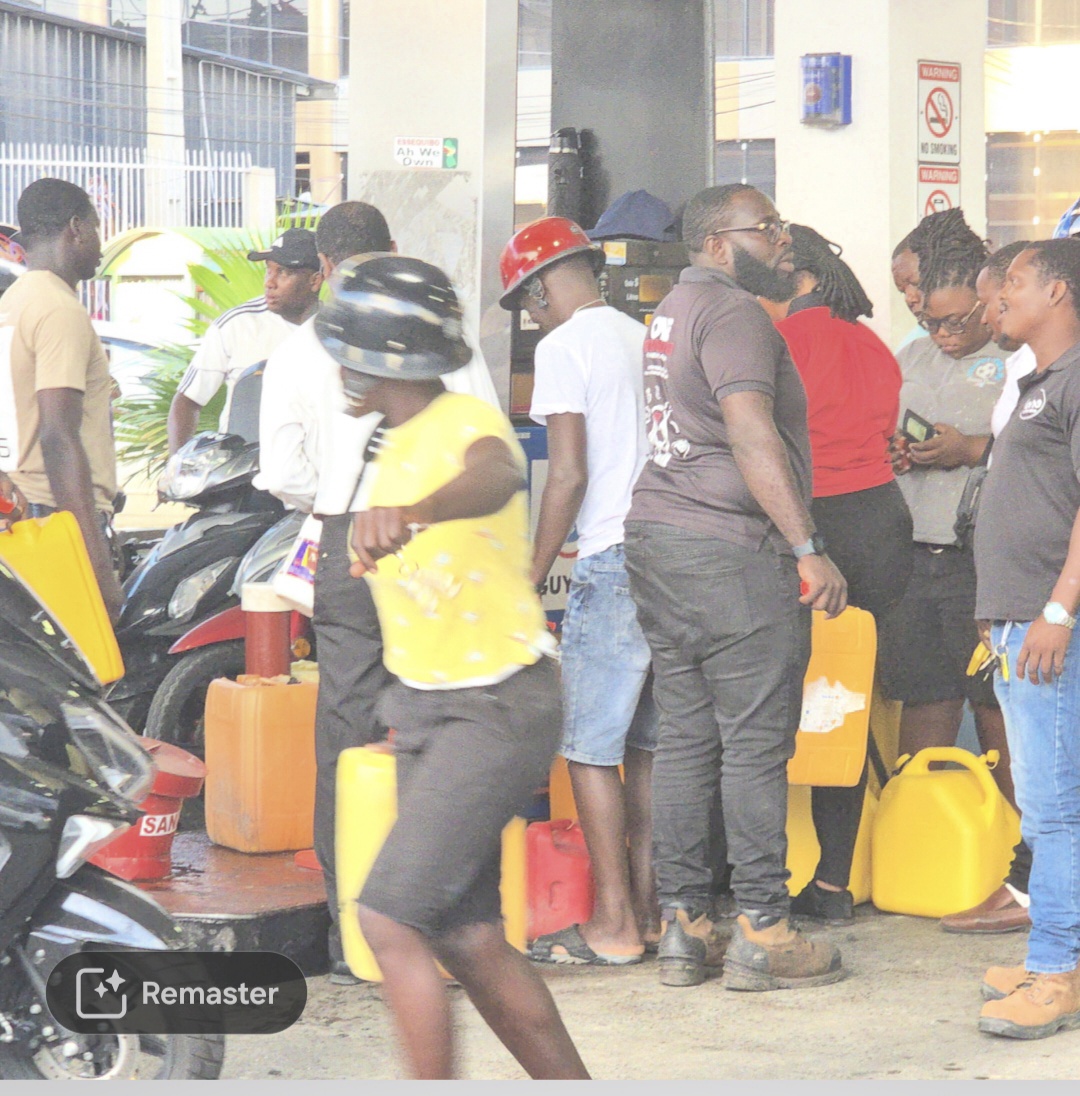
On Monday, April 13, 2026, widespread panic buying of gasoline and diesel swept through major population centers in Guyana, leading to kilometer-long lines at operating fuel stations and leaving stations without stock completely empty. Even after President Irfaan Ali publicly confirmed that fresh fuel shipments would reach the country by Monday night following emergency talks with the nation’s top fuel importers, motorists rushed to fill their tanks and stock up on extra fuel supplies.
The most dramatic scenes unfolded at GUYOIL and RUBIS stations, which remained partially stocked as the shortage unfolded. At GUYOIL’s high-traffic Regent Street location, motorcyclists bypassed standard vehicle queues entirely, arriving with five-gallon containers to stock up on reserve fuel to avoid future shortages. Local law enforcement was forced to implement emergency traffic restrictions on Regent Street, blocking through traffic west of Camp Street to accommodate the massive queues that wrapped from Regent and Camp Streets all the way back to South Road. A second, similarly large queue formed further west on Regent Street near Kong Street.
In sharp contrast, the MOBIL filling station located at the intersection of Regent and King Streets sat almost entirely deserted, with no pump attendants on site — a clear indication the location had already sold out of all fuel stock.
President Ali explained the root of the shortage during an interview with Demerara Waves Online News, noting that industry leader SOL/MOBIL encountered unexpected shipping and logistics issues after the anchorage for one of its fuel tankers failed, forcing the vessel to return to port for repairs. He clarified that the disruption has not impacted fuel supplies for Guyana Power and Light (GPL), the country’s primary public electricity provider, adding that critical power infrastructure would remain fully operational through the temporary disruption.
The president added that state-owned GUYOIL confirmed it maintains adequate existing fuel stocks, while competitor RUBIS is already ramping up its incoming supply volumes. “RUBIS and GUYOIL said that they don’t foresee a challenge and they have orders in line and some of it will arrive as early as tonight (Monday) night,” Ali stated, noting that government officials are continuing to monitor the situation closely to ensure importers follow through on their delivery commitments.
This level of widespread fuel shortage and consumer panic has not been seen in Guyana since the 1980s, when the country endured years of prolonged, widespread shortages of multiple fuel types including kerosene for household use.