标签: Guyana

圭亚那

  • Almost 400,000 Guyanese received cash grant – finance minister

    Almost 400,000 Guyanese received cash grant – finance minister

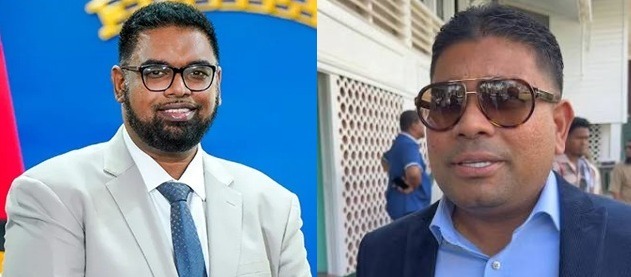
    On Tuesday, June 2, 2026, Guyana’s Minister of Finance Ashni Singh provided an updated progress report on the country’s landmark universal cash grant initiative, announcing that close to 400,000 Guyanese have already received their one-time GY$100,000 payment, most through direct deposits to registered bank accounts. The government has also put in place tailored alternative distribution mechanisms to ensure no eligible resident is left behind, including those without formal bank accounts, disabled people, homebound shut-ins, and communities in remote hinterland regions.

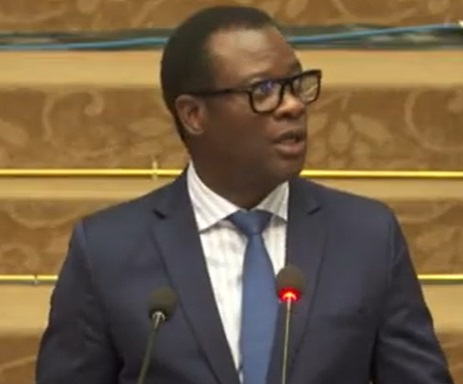
    Speaking to reporters on the sidelines of the national Local Content Summit, Singh emphasized that the program’s rollout has exceeded early expectations given the ambitious timeline and scale of the initiative. “I think we’ve done extremely well because we’ve been able to register and pay now close to 400,000 persons, which is quite a large number if you consider the speed with which this has been done,” Singh noted.

    Funded by a GY$60 billion allocation earmarked in the 2026 national budget, this universal cash grant program marks the first time the Guyanese government has distributed public benefit payments through direct bank deposits to recipients who registered via a national online portal. According to Singh, direct bank transfers have emerged as the most efficient delivery channel, with the overwhelming majority of processed payments going through this method.

    To address gaps in access, the government has launched targeted outreach campaigns for populations that cannot use direct bank deposits. Singh confirmed that inter-ministerial teams from the Ministry of Finance and Ministry of Human Services have already been deployed to hard-to-reach regions including Region 7 (Cuyuni-Mazaruni) and Region 9 (Upper Takatu-Upper Essequibo), where workers are conducting in-person registration and using alternative delivery methods to get grants to local residents. The two ministries are also collaborating closely to coordinate home delivery of payments for disabled people and people with severe illness who are unable to leave their homes.

    Singni stressed that lack of a bank account, or even unwillingness to use a bank account, will not disqualify any eligible resident from receiving the grant. “We continue to try to explain to people that this [direct deposit] is the easiest way to get your cash grant, but we also assure you that if you don’t have a bank account and you don’t want a bank account, you’re not going to be denied your cash grant,” he said, noting that the government prioritized processing bank account holders first to streamline the early rollout.

    The program did encounter some early technical challenges with the online registration portal, which Singh attributed to the unexpectedly high volume of users attempting to sign up in the first days of the registration window. However, he was quick to praise the work of local technology specialists at the National Data Management Authority, who built the registration portal endogenously and quickly resolved the early issues. After rolling out real-time adjustments to improve the system’s capacity to handle high traffic, Singh noted the portal has functioned smoothly, facilitating direct bank payments for more than 300,000 recipients to date.

  • Guyanese-owned SISPRO teams up with Nigeria’s Bono Energy for offshore exploration

    Guyanese-owned SISPRO teams up with Nigeria’s Bono Energy for offshore exploration

    As of Tuesday, June 2, 2026, a landmark new energy partnership is poised to expand offshore oil exploration in Guyana, after locally-owned energy firm SISPRO announced a joint venture agreement with Nigerian exploration and production operator Bono Energy. The collaboration targets one shallow-water and one deep-water offshore concession, with total projected investment across both blocks reaching as high as $600 million U.S. dollars.

    Senior leaders from Bono Energy, including Director Deji Fawole and Head of Legal and Compliance Leke Solanke, are currently in Georgetown to finalize exploration agreements with Guyana’s Ministry of Natural Resources, with formal signing expected in the coming days. Speaking to reporters on the ground, Fawole outlined the framework for the joint project, confirming the venture has secured full initial funding to launch operations across both concession blocks.

    “We are aligned with SISPRO to advance development of both the shallow-water and deep-water blocks off Guyana’s coast, and we have committed up to $600 million in capital to kickstart this work,” Fawole stated. He added that Bono Energy is dedicated to upholding Guyana’s local content requirements, and will work closely with national authorities to grow the country’s emerging oil and gas sector. Fawole also confirmed that the required signing bonus for the concessions, totaling just under $14 million, will be transferred to the government within the 30-day timeline mandated by regulation.

    Fawole noted that the venture will leverage new seismic data collected by the Guyana government to guide early exploration activities, and expressed strong confidence in the resource potential of both blocks. “Preliminary geological assessments already point to significant untapped potential across our shallow and deep-water concessions,” he said, adding that early estimates place recoverable oil reserves at approximately 300 million barrels in the shallow-water block alone. SISPRO Company Secretary Abbigail Loncke-Watson clarified that initial phase investment will fall between $150 million and $200 million, with additional funding allocated for subsequent exploration and appraisal work.

    While the partnership moves toward final approval, Guyana’s Minister of Natural Resources Vickram Bharrat issued a public timeline for the agreement, warning that the government may revoke the concessions and reoffer them in a future competitive bidding round if SISPRO fails to resolve outstanding internal issues before the signing deadline. “If we do not have signed agreements in place by the required date, those blocks will almost certainly be added to the next bid round,” Bharrat told reporters. He declined to share specific details of the internal disputes, but noted that the government has already extended significant flexibility to SISPRO due to its status as a majority Guyanese-owned company. “We have been very lenient, primarily because this is a local firm,” Bharrat said.

    For its part, SISPRO has moved to address the outstanding issues, which Chairman Dr. Ayodele Dalgety-Dean confirmed centered on confusion around the company’s beneficial ownership structure. Speaking to reporters, Dr. Dalgety-Dean expressed full confidence that the agreement would be finalized imminently, “within a matter of weeks.” She clarified that all ownership questions have now been resolved, with three officially registered beneficial owners: Dr. Dalgety-Dean, Ms. Loncke-Watson, and Dr. Melissa Varswyck. The chairman also pushed back against earlier rumors, confirming that local hotelier Dee George was never a beneficial owner of SISPRO, and has already stepped down from her position as a company director.

  • APNU puts poultry industry under parliamentary microscope

    APNU puts poultry industry under parliamentary microscope

    As of June 1, 2026, Guyana’s main opposition bloc A Partnership for National Unity (APNU) has placed a series of targeted parliamentary questions on the agenda for the upcoming National Assembly sitting, scheduled for June 5, putting the country’s poultry industry policy and progress toward food self-sufficiency under formal legislative scrutiny.

    Leading the inquiry is APNU’s parliamentary chief Dr. Terrence Campbell, who has directed a suite of detailed questions to Agriculture Minister Zulfikar Mustapha, centered on the government’s timeline and strategy for securing long-term poultry meat self-sufficiency for the South American nation. Three years prior, in May 2023, Guyana implemented a national ban on most imported poultry products, introduced by the Guyana Livestock Development Agency as a dual food security and biosecurity measure. At the time of the ban’s launch, Minister Mustapha framed the restriction as a necessary tool to protect local producers from rampant cross-border chicken smuggling and to shield the domestic industry from the risk of avian influenza outbreaks.

    Now, three years on, Campbell is pressing the government for concrete answers on how much progress has been made toward the policy’s core end goal: full self-reliance that meets domestic demand entirely through local output. His first line of inquiry asks the minister to disclose a formal target date or projected timeline by which Guyana will end its reliance on imported poultry to meet local consumer and market demand. He has also requested clarity on the specific key performance indicators and incremental milestones the Agriculture Ministry has mapped out to track progress toward self-sufficiency. Campbell’s proposed metrics for these targets span a range of critical industry areas: pre-defined production volume goals, measurable reductions in overall poultry imports, expansion of domestic broiler breeder and hatching egg facilities, growth in local production of poultry feed and grain, and improved access to the market for producers in Guyana’s regional hinterland areas.

    Beyond timeline and performance tracking, Campbell is seeking full disclosure of the government’s support to the domestic poultry sector to speed up self-sufficiency progress. He has asked the minister to outline all current and planned support measures, including direct financial subsidies, expanded agricultural extension services for small and medium producers, public-sector investment in critical industry infrastructure, enhanced biosecurity systems to prevent disease outbreaks, and skills training programs for industry workers.

    The final key question on Campbell’s list addresses the enforcement of the 2023 ban itself. He has asked Minister Mustapha to confirm to the 65-seat National Assembly whether any exemptions or special import licenses have been granted for poultry-related goods since the ban took effect, including hatching eggs, breeding stock, and emergency poultry product imports.

    The formal questions will be taken up during the National Assembly’s next sitting this week, where the government will be required to respond on the record to the opposition’s inquiries.

  • Iwokrama, Beharry Holdings sign multi-year agreement to support conservation

    Iwokrama, Beharry Holdings sign multi-year agreement to support conservation

    On June 1, 2026, one of Guyana’s leading private sector firms formalized a landmark partnership dedicated to tropical rainforest protection, marking the largest local private sector donation in the 30-plus year history of the Iwokrama International Centre for Rain Forest Conservation and Development.

    Beharry Holdings Inc. (BHI), a decades-old homegrown business group with operations spanning Guyana and international markets, signed a three-year, GY$150 million agreement that will allocate GY$50 million annually to advance Iwokrama’s core conservation and sustainable development missions. The partnership was first unveiled to the public during May 2026 celebrations marking the 30th anniversary of the Iwokrama Act, and moved to formal signing on the first day of June.

    In remarks following the signing ceremony, Iwokrama CEO Dane Gobin emphasized the unprecedented scale of the contribution, noting that it will first strengthen the centre’s critical biodiversity monitoring programs. In subsequent years, BHI and Iwokrama’s leadership will collaborate to identify additional priority areas for investment, including public conservation education, scientific research initiatives, community engagement with Indigenous and local populations, and expanded outreach to raise global awareness of rainforest protection.

    Gobin highlighted that the partnership aligns directly with the priorities set by Guyanese President Dr. Mohammed Irfaan Ali, who has tasked Iwokrama with playing a central leadership role in his Global Biodiversity Alliance initiative. He called on other private sector entities across Guyana to follow BHI’s example in supporting the centre’s globally recognized conservation work.

    The announcement comes just weeks after Iwokrama earned international acclaim when it was named one of the world’s top 50 eco-tourism destinations, cementing its reputation as a leading model for balancing conservation, sustainable economic development, and scientific research.

    For BHI Chairman Suresh Beharry, the investment is a natural extension of the group’s 90-year history rooted in Guyana’s growth. “For nearly nine decades, the Beharry Group has grown alongside Guyana, and we recognize that our country’s future prosperity must be balanced with the protection of the natural assets that make Guyana unique,” Beharry said. “Iwokrama is a globally respected model of conservation, sustainable development, and scientific research, and we are proud to support its important work through this multi-year partnership.”

    Iwokrama’s leadership also reiterated ongoing gratitude to the Government of Guyana for its sustained institutional support, and extended special recognition to the centre’s on-the-ground staff and local community partner, the North Rupununi District Development Board, for their ongoing commitment to protecting the Iwokrama forest ecosystem.

  • Efforts to protect Giant River Otters in Rupununi areas paying off

    Efforts to protect Giant River Otters in Rupununi areas paying off

    Marking World Otter Day 2026, conservation leaders gathered for a panel discussion hosted jointly by Guyana’s EMC Foundation and the Protected Areas Trust (PAT) on May 29, where they shared promising updates on efforts to protect the endangered giant river otter across the Rupununi region of southern Guyana.

    The EMC Foundation reported that joint monitoring projects carried out in two critical conservation landscapes – the Kanuku Mountains Protected Area and the Karanambu preserve – have already established comprehensive baseline population data for the species. Early observations confirm that stable otter groups now occupy multiple river systems across the study area, a major milestone for long-term recovery efforts. A large part of this progress is credited to the on-the-ground work of trained local community rangers and volunteer citizen scientists, who not only map otter distribution across remote waterways but also identify growing threats to the species’ survival. Chief among these threats are unregulated illegal gold mining operations, which contaminate freshwater habitats with mercury, disrupt aquatic food chains, and destroy critical wetland ecosystems.

    Globally classified as an Endangered species by conservation authorities, the giant river otter holds unique ecological importance across the Amazon and Guiana Shield. As a top predator in river and wetland systems, the species acts as a key indicator of overall freshwater ecosystem health. Guyana’s vast stretches of intact old-growth forest, expansive untouched wetlands, and interconnected undamaged river networks have made the country one of the last remaining strongholds for the vulnerable species.

    During the panel discussion, stakeholders outlined the multifaceted strategy needed to secure the giant river otter’s long-term future in Guyana. Alona Sankar, Commissioner of the Guyana Wildlife Conservation and Management Commission (GWCMC), stressed that policy progress must be paired with stronger enforcement. “What we need to strengthen is our monitoring and enforcement capability to ensure that persons are actually abiding by what the law requires. Now we want to increase our giant otter populations, so if you’re affecting the viability of the species, that is very negative,” Sankar said, calling for bolstered protections, expanded monitoring infrastructure, and consistent regulatory enforcement to safeguard the species and Guyana’s broader wildlife resources.

    Melanie McTurk, Managing Director of Karanambu Lodge, highlighted the persistent gaps in scientific understanding that still hamper conservation work. “Many people don’t realise that giant otters are one of the most understudied species, to the point where we don’t even know if they exist in some areas,” McTurk explained. She noted that this knowledge gap creates a critical opportunity for new research, including genetic studies of fragmented populations, to better understand how human activity impacts distinct otter groups and support more targeted conservation planning.

    Dr. Deirdre Jafferally, a Community-Based Natural Resource Management Specialist, emphasized that lasting conservation depends on centering local leadership and traditional ecological knowledge. She pointed to successful community-led efforts to rescue and care for abandoned or injured giant river otter pups, which have already supported species recovery and helped otters return to regions where they had not been seen for decades. “Citizen science is an important part of that, as well as education and awareness. Educating people is important, getting them involved, not just those who already know and see and want to be involved in established forums,” Dr. Jafferally said.

    Today, giant river otter conservation in Guyana relies on an unprecedented coordinated model that brings together Indigenous and local communities, government regulatory agencies, non-profit conservation organizations, academic researchers, and private sector partners. This cross-sector collaboration has already delivered tangible, on-the-ground results: community-led biodiversity monitoring systems have strengthened local governance of natural resources, and adaptive fishing management plans, designed to account for otter habitat needs, have supported recovery of both fish populations and otter territories.

    Sarah Singh, speaking for the EMC Foundation, outlined the organization’s ongoing outreach work in the Mahaica Watershed through the Giant River Otter Education and Conservation Programme, launched in October 2025. Split into two core components – Research and Monitoring, and Education and Awareness – the initiative partners with local environmental clubs along the Mahaica River and leverages social media to reach broader audiences with science-based conservation messaging.

    Founded by Shyam Nokta, recipient of the 2022 Anthony N Sabga Award for Entrepreneurship, the EMC Foundation works across Guyana to expand environmental education and awareness, build networks of conservation-focused stakeholders, and create opportunities for Guyanese to connect with the country’s extraordinary natural biodiversity. The Protected Areas Trust, the EMC Foundation’s partner for the panel discussion, was established to provide sustained flexible funding for effective management and protection of Guyana’s protected area network, supporting long-term biodiversity conservation, ecosystem stewardship, research and community engagement to safeguard the country’s natural heritage for future generations.

  • Guyana Bar Association’s election heads to court- Attorney Darren Wade

    Guyana Bar Association’s election heads to court- Attorney Darren Wade

    On Sunday, May 31, 2026, defeated candidate and attorney-at-law Darren Wade announced plans to mount a legal challenge to last Friday’s Guyana Bar Association (GBA) Council election, claiming ineligible voters were permitted to cast ballots in direct violation of the professional body’s bylaws.

    Wade, whose slate of candidates lost to the opposing ticket led by incoming GBA President Arudranauth Gossai, confirmed his firm intention to file a lawsuit over the disputed poll. He told Demerara Waves Online News that the core of the legal challenge rests on the GBA’s decision to allow government-employed attorneys, who hold non-private practice positions, to vote. Under GBA regulations, only full private practice attorneys qualify for regular voting membership, while government-employed and other non-private practitioners are limited to associate membership that carries no voting rights.

    The contested election was held via a virtual Zoom Annual General Meeting (AGM), which the GBA says drew the highest number of attending members in the organization’s history. But Wade alleged that after he raised formal objections to the presence of government-employed attorneys in the voting process, GBA organizers allowed these ineligible participants to remain. He added that official records do not clearly identify who cast ballots, despite preliminary data indicating that 100 percent of the ineligible government-employed lawyers he identified participated in the vote.

    Citing explicit GBA bylaws, Wade explained that Section 3 of the organization’s governing rules restricts voting membership exclusively to attorneys engaged in full private practice, defined as attorneys not employed by the state. All other attorneys, including those on government payrolls, are restricted to associate membership, which explicitly excludes voting rights, a restriction that is also clearly posted on the GBA’s official website. Wade emphasized that the election’s core irregularity stems from organizers’ failure to adhere to these longstanding rules.

    The GBA has formally confirmed that Gossai’s ticket defeated Wade’s slate to take control of the 2026-2027 GBA Council. The new leadership includes former GBA President Kamal Ramkarran as First Vice-President, Teni Housty as Second Vice-President, Yashmini Singh as re-elected Secretary, Samuel Glasgow as Treasurer, and Mohanie Anganoo as Assistant Secretary. Seven additional members, including senior counsels Robin Stoby and Jamela Ali, were elected to fill at-large Council seats. Wade has criticized that the GBA only released vote results as percentages, refusing to publish raw vote totals to verify the outcome.

    Ramkarran, who served as outgoing GBA President during the election, has rejected Wade’s allegations outright. In a May 25 response to Wade’s pre-election concerns, Ramkarran denied any rules were broken and challenged Wade to produce concrete evidence to back his claims. “Despite your allegations, I must point out that the Bar Association’s rules have been complied with in every regard, as always. If you are aware of any rule in particular which has been inadvertently missed, I would be grateful if you could bring it to our attention,” Ramkarran said. He also dismissed as “untrue and defamatory” Wade’s claim that the outgoing Council refused to commit to a transparent, free and fair election without intervention from senior independent members of the legal profession.

    Wade’s concerns over electoral fairness predated the Friday vote. In the lead-up to the election, he raised multiple red flags about procedural irregularities, including his claim that a number of eligible voting members were not invited to the virtual AGM. He also formally requested key procedural details ahead of the poll, including the identity of the appointed Returning Officer, formal rules governing nominations, voting, counting and result declarations, Zoom platform participant access and capacity controls, constitutional provisions governing the election, contingency plans for technical failures, and a complete official list of eligible voters. Wade also warned of an uneven playing field, noting that the incumbent GBA leadership had full access to all member contact and eligibility data that was not shared equally with all competing candidate slates.

    This electoral controversy comes amid a similar recent dispute in Guyana’s independent professional bodies: just prior to the GBA vote, elections for the Guyana Press Association (GPA) were also marred by allegations of partisan political preference from the ruling People’s Progressive Party Civic (PPPC).

  • Govt silent on possible blackouts, as Karpower warns of “interruption”

    Govt silent on possible blackouts, as Karpower warns of “interruption”

    On the eve of a looming deadline that could trigger major electricity cuts across Guyana, top government officials have remained unresponsive to repeated requests for clarification on whether a last-minute deal has been struck to keep two floating Karpowership power plants operational. Multiple attempts to reach President Irfaan Ali, Vice President Bharrat Jagdeo, and Public Utilities Minister Deodat Indar for an update on the negotiations went unanswered on Sunday, May 31, 2026, just 24 hours before the existing contract is set to expire. When contacted, Alfonso de Armas, Director-General of the Ministry of Public Utilities and Aviation, directed all inquiries to Indar, who was accompanying the president on a public outreach trip to Region Seven (Cuyuni-Mazaruni).

    The standoff stems from a formal notification Karpowership sent to the Guyanese government on May 25, 2026, warning that all operations from its two power-ships would cease if a new long-term agreement was not finalized by June 1. The Turkey-based energy provider had already granted a final extension of the existing contract to reach this deadline, a detail first confirmed when the privately-run Kaieteur News published the full correspondence, which was copied to GPL Executive Team Leader Kesh Nandlall. In the letter, Karpowership urged authorities to accelerate internal negotiations and approval processes between May 25 and May 31 to wrap up the new contract without further holdups. The firm stressed that updating and aligning commercial terms and pricing structures for all its operations across Guyana remains a non-negotiable requirement to continue supplying power to the national grid. “We trust the remaining matters can now be concluded promptly to avoid any interruption to operations,” the company wrote in the correspondence.

    The potential shutdown carries major stakes for Guyana’s electricity supply. The two Karpowership vessels currently contribute a combined 96 megawatts to the national grid: the moored vessel at Meadow Bank on the Demerara River supplies 60 megawatts, while the second vessel at Everton on the Berbice River adds 36 megawatts. The country’s total peak electricity demand tops 220 megawatts, meaning the remaining supply from state-run Guyana Power and Light (GPL) and private partner Power Producers and Distributors Inc (PPDI) would fall far short of meeting consumer and industrial demand if both power-ships go offline. Beyond the immediate gap, the long-delayed Wales Gas-to-Energy facility – which is expected to add up to 300 megawatts of generation capacity once fully operational – will not come online before the end of 2026, leaving no backup source to offset the lost supply in the short term. As of Sunday afternoon, senior officials had not offered any public comment on whether alternative backup plans are in place, or whether GPL and PPDI have enough capacity to avoid widespread blackouts if the deadline passes without a deal.

  • US-registered plane crashes in Guyana’s interior

    US-registered plane crashes in Guyana’s interior

    On a Sunday morning in late May 2026, a small single-engine aircraft registered in the United States went down in the remote interior region of Guyana, aviation and local news sources have confirmed. The downed aircraft, identified as a Cessna 182 with the registration marking N1-82UG, is owned by Domestic Airlines, a local air service founded and operated by experienced Guyanese pilot Orlando Charles.

    According to a senior source familiar with the incident, the crash occurred at Aricheng, a remote location in Guyana’s interior. Egbert Field, Director-General of the Guyana Civil Aviation Authority (GCAA) and a retired Lieutenant Colonel, confirmed the details of the accident to Demerara Waves Online News, noting that the only person on board — the pilot — escaped with only minor injuries.

    As of the latest update on 31 May 2026, investigators have not yet determined the root cause of the crash. Investigative teams are expected to be deployed to the remote crash site in the coming days to conduct on-site inspections and reconstruct the sequence of events that led to the accident. Multiple attempts to reach Orlando Charles for direct comment on the incident via mobile phone have gone unanswered as of press time.

  • Private sector must improve customer service, international standards- Finance Minister, PSC Chairman

    Private sector must improve customer service, international standards- Finance Minister, PSC Chairman

    On Friday, May 29, 2026, Guyana’s apex business body the Private Sector Commission (PSC) concluded its Annual General Meeting with two key developments: the formal election of its 2026–2027 executive committee, and a unified call from government and newly re-elected leadership for local businesses to raise their competitive standards ahead of the country’s next phase of economic growth.

    Gerald Gouveia Jr. was re-elected to the post of PSC Chairman, leading the new executive team that includes Vice Chairwoman Kathy Smith, Treasurer Imran Sacoor, Honorary Secretary Josephine Tapp, and Corporate Coordinator Manniram Prashad. Following his confirmation, Gouveia laid out a clear vision for the local private sector, emphasizing that future investment must align with international benchmarks while retaining local ownership, participation, and benefit across Guyana’s business community.

    Addressing the opening of the AGM, Guyana’s Finance Minister Dr. Ashni Singh echoed this call, zeroing in on a persistent gap in local business operations: subpar customer service. Dr. Singh noted that too often, businesses prioritize the polished physical appearance of new facilities over the quality of consumer experience. Common shortcomings identified included rude communication from frontline staff, impatience with customer inquiries, inattention to patron requests, and distraction from personal social media use during work hours. To build a truly modern, globally competitive Guyana, he argued, customer service must match global standards of excellence, with considerable room for improvement across the sector.

    Beyond service quality, Dr. Singh pushed for structural evolution among Guyana’s predominantly family-owned businesses, urging them to consolidate into larger conglomerates to capture economies of scale. He pointed to successful regional giants including Ansa McAl, Massy Group, and Grace Kennedy, all of which grew from small family-owned operations into major Caribbean corporate powers. The minister encouraged PSC members to pursue strategic partnerships, adopt innovative capital mobilization strategies, leverage digital technology, and scale their operations to unlock their full potential, access larger markets, and compete for major national projects.

    Gouveia reinforced this message, noting that local firms are often dismissed as too small to bid on large-scale opportunities across infrastructure, housing, tourism, agri-processing, and the country’s growing oil and gas sector. Pooling shared resources, technical expertise, and industry connections, he argued, is the only path to sustained global competitiveness. This collective approach would also ensure that the economic benefits generated by Guyana’s current growth wave are distributed broadly across the local business community, allowing more domestic entrepreneurs and sectors to meaningfully participate in national development and compete for large-scale government opportunities that are increasingly available.

    Dr. Singh also challenged local businesses to look beyond Guyana’s borders for expansion, pointing to Surinamese firms that have successfully entered Guyana’s insurance and food supply sectors as an example of cross-border growth. He reminded attendees that decades ago, when regional transportation relied primarily on sea travel, much smaller Guyanese insurance companies successfully established branches across multiple Caribbean islands, proving that regional expansion is an achievable goal for domestic firms that build sufficient capacity.

    Following the election, the newly seated PSC executive committee reaffirmed its core mandate: fostering a competitive national business environment, driving sustainable economic growth, and serving as a strong collective voice for Guyana’s private sector as the country enters a new period of economic expansion.

  • Former Turks and Caicos Premier jailed for corruption

    Former Turks and Caicos Premier jailed for corruption

    On Friday, 29 May 2026, a historic corruption prosecution in the Turks and Caicos Islands reached its conclusion when former premier Michael Misick received an effective custodial sentence of four years and 26 days, closing a years-long legal process that has reshaped public expectations of political accountability in the territory.

    Misick’s conviction dates back to 4 February 2026, when Supreme Court Justice Rajendra Narine found him guilty on three separate counts of bribery tied to fraudulent government land and development deals. The sentencing hearing was held in a packed Supreme Court courtroom, drawing widespread public attention as the most high-profile political corruption case in the territory’s history.

    In his remarks from the bench, Justice Narine emphasized that corrupt conduct by elected public officials constitutes a profound violation of the public trust granted by citizens. He ruled that the public interest demands custodial sentences to both hold wrongdoers accountable and send a clear deterrent message to other public officials who might consider similar illegal activity. The justice rejected repeated arguments from Misick’s defense team that the former premier should receive a suspended sentence, noting that even the defense had implicitly acknowledged the severity of the offenses crossed the threshold requiring jail time.

    Narine classified Misick’s crimes as falling into the highest category of corruption severity, citing three core aggravating factors: the massive illegal financial gains tied to the schemes, the deliberate abuse of the highest public office in the territory, and the sophisticated, carefully constructed systems the defendants used to execute and hide their criminal activity. He initially set an eight-year prison term for each of the three bribery convictions before reviewing both aggravating and mitigating circumstances presented during the sentencing phase.

    The court ultimately reduced the combined sentence by five years after accounting for a series of mitigating factors. These included the multi-year delay in bringing the case to trial, a violation of Misick’s constitutional right to a trial within a reasonable timeframe, the 339 days he already spent in pre-extradition custody in Brazil, and personal circumstances submitted by the defense. Narine also factored in Misick’s lack of prior criminal convictions, his decades of prior public service to the territory, his family situation, and medical evidence submitted during the hearing.

    After adjustments, the court handed down three-year sentences for counts one and three, and a five-year sentence for count two. Further credit was granted for the pre-trial custody Misick served in Brazil during extradition proceedings, reducing those sentences to two years and 16 days for counts one and three, and four years and 26 days for count two. All sentences will run concurrently, resulting in the final effective term of four years and 26 days.

    Misick was not the only defendant convicted in the case: former Cabinet minister McAllister Hanchell was found guilty on two bribery counts, and local attorney Thomas “Chal” Misick was convicted on four counts of money laundering connected to the same scheme. Prosecutors allege the illegal land and development deals generated millions of dollars in unlawful, off-the-books payments for the co-conspirators.

    In his February ruling upholding the conviction, Narine reiterated a core principle of democratic governance, stating that public office “is not a licence for personal enrichment.” He found that Misick had repeatedly violated the baseline standards of honesty and integrity that the public is entitled to expect from all elected officials.