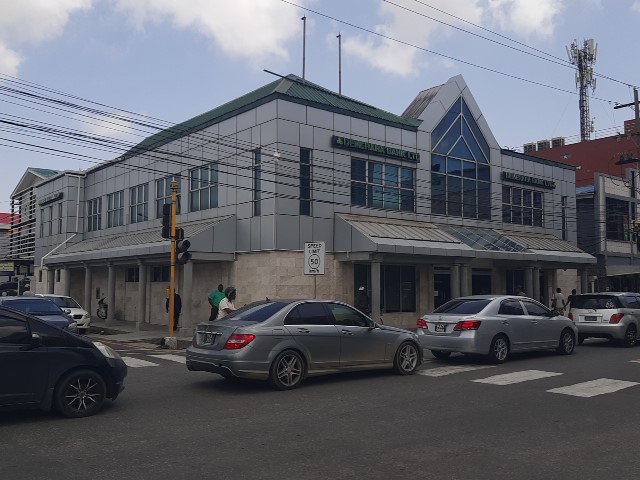
On Thursday, 7 May 2026, Guyana’s Full Court delivered a landmark ruling against Demerara Bank, dismissing the financial institution’s appeal that sought to block six senior members of the country’s main opposition party We Invest in Nationhood (WIN) from legally challenging the bank’s unexplained closure of their personal accounts.
The three-judge panel — led by Chief Justice Navindra Singh, alongside Justices Deborah Kumar-Chetty and Nigel Niles — upheld the lower court’s original decision, ordering Demerara Bank to submit a formal defensive affidavit to the court by 21 May 2026. The ruling also mandated that the bank pay 100,000 Guyanese dollars in legal costs to each of the six claimants by 1 June 2026. The six affected WIN members are Gobin Harbajhan, Denodra Park, Dexter George, Joel Ramesh, Lester Benjamin, and Denitta Parkes, who are represented by private attorney Darren Wade. Demerara Bank’s legal team was led by Devindra Kissoon, Natasha Vieria, and A. Dev.
In its written judgment, the Full Court panel clarified that Demerara Bank’s procedural choice to pursue a strike-out application against the claimants’ Fixed Date Application (FDA), rather than filing a substantive defense directly, caused unnecessary delays in the legal process. “The appellant’s decision to challenge the FDA by way of a strike-out application has protracted the resolution of this matter,” the judgment read. “When weighing the core arguments presented to the lower court, we find that a defensive affidavit should have been filed from the outset, allowing the trial judge to assess the substantive claim on its legal merits.”
The court further noted that Demerara Bank failed to provide sufficient evidence to support its claim that the opposition members’ FDA was scandalous, frivolous, vexatious, or an improper abuse of court process. The panel confirmed that the claimants had raised an arguable legal case with reasonable grounds to bring their challenge, rejecting the bank’s assertion that the suit had no legitimate path to success.
Demerara Bank’s appeal originated from a dispute over the unexplained account closures. Instead of responding to the claimants’ FDA with a formal substantive defense, the bank opted to file a motion to have the entire claim struck from the court docket. The bank’s core arguments included that the FDA did not disclose a valid legal cause of action, that the claim was legally misconceived, and that the requested relief could not be granted under Guyanese law. Demerara Bank also argued that there was no connection between the account closures and Guyana’s Anti-Money Laundering and Countering of Financing Terrorism (AML/CFT) Act, that no private legal claim could arise from alleged breaches of that legislation, that the claimants lacked legal standing to bring the suit because the bank is not subject to public law remedies, that no implicit duty of good faith exists in customer banking contracts, and that the bank owes no fiduciary duty of trust or confidence when making the decision to close a customer’s account.
Counsel for the six opposition members pushed back against all of the bank’s claims, arguing that a clear legal cause of action does exist. The claimants contend that an implicit duty of good faith is a standard component of all banking contractual relationships in Guyana, and that Demerara Bank breached that fundamental overriding duty when it shut down their accounts without any warning or explanation.