标签: Guyana

圭亚那

  • Call off Corentyne River bridge talks unless Suriname scraps tariff for Guyanese cargo vessels – private sector

    Call off Corentyne River bridge talks unless Suriname scraps tariff for Guyanese cargo vessels – private sector

    Tensions between Guyana and neighboring Suriname over cross-border trade on the Corentyne River have reached a new boiling point, with Guyana’s leading business organizations now calling for a full suspension of planned discussions to build a cross-border bridge linking the two nations, until long-simmering trade disputes are fully resolved. What began as a public complaint from Guyanese President Irfaan Ali over Suriname’s new fees for Guyanese cargo vessels navigating the shared river has expanded into a broad pushback from the private sector, which has linked the levies to deeper trade grievances and a long-standing border territorial dispute.

    Following Ali’s initial public critique of Suriname’s policy earlier this month, the Guyanese central government has declined to comment publicly on the negotiations, with senior foreign ministry officials only confirming that back-channel discussions between the two administrations are ongoing, shrouded in complete secrecy. For its part, Suriname has pushed back against Guyanese criticism, arguing that the fee structure is rooted in long-standing domestic regulations, not a new policy, and notes that Guyana may formally request exemptions for its vessels through standard diplomatic channels.

    The Georgetown Chamber of Commerce and Industry (GCCI), a leading private sector body with close ties to Guyana’s ruling People’s Progressive Party Civic administration, first tabled the call to pause bridge talks in an official public statement. The organization argues that no progress on the cross-border infrastructure project can move forward until Suriname reverses the vessel fees and addresses a list of other persistent trade issues, most notably the widespread dumping of counterfeit, illicit, and substandard goods from Suriname into Guyana’s domestic market.

    This call comes amid already stalled momentum for the bridge project, which has languished since the National Democratic Party (NDP), led by Dr Jennifer Geerlings-Simons, won Suriname’s general election less than a year ago. Severe budget constraints and strict fiscal oversight from the International Monetary Fund have left the new Suriname administration unable to secure funding for its share of the east-west connectivity project, a pledge the previous Santokhi-led government had made ahead of last year’s election if it retained power.

    One week after President Ali emphasized that any cross-border cooperation must be rooted in reciprocal benefit, the GCCI echoed that sentiment, arguing that Guyana should not extend goodwill to a neighboring partner that does not extend the same treatment in return. “The GCCI calls on the Government of Guyana to halt discussions on the development of the Corentyne River Bridge linking Guyana and Suriname unless these issues are permanently resolved,” the chamber’s statement read. The organization added that Guyana should only direct public resources toward cross-border projects that deliver mutual, balanced benefits, “and ought not include partners who frustrate and obstruct our people’s advancement.”

    Ali has already left the door open to retaliatory action if Suriname does not reverse the fees, which apply to vessels carrying Guyanese quarry products and timber along the Corentyne. “For me, reciprocity is very important and let’s see how this goes in another few days and, you know, as a country we will have to make the necessary adjustments to ensure that we are not placed at a disadvantage with the other businesses from Suriname,” he said last week.

    Other Guyana business bodies have echoed the GCCI’s frustration, warning that the fees will have severe cascading impacts on border communities and local economic competitiveness. The Upper Chamber of Commerce and Industry (UCCI) noted that remote river communities including Orealla and Siparuta will “feel the full brunt” of Suriname’s policy, as the additional costs are passed directly to consumers, eroding the competitiveness of local businesses in regional markets. “This certainly will have a deleterious effect on the local economy with catastrophic repercussions,” the UCCI warned.

    The UCCI detailed the steep cost burden placed on Guyanese operators: vessels are charged up to $2,500 USD per trip for pilot license fees, on top of broker fees ranging from $1,000 to $1,500 USD. The chamber described these charges as “exorbitant, extortionate, and unaffordable, far beyond the ability of the river users to pay.” To eliminate total reliance on Suriname’s control of the river, the UCCI is calling on the Guyanese government to fast-track construction of an overland road connecting Crabwood Creek to Orealla. “This unfortunate development has once again reignited the call and determination to expedite the completion of the road linking Crabwood Creek and Orealla. This would obviate the need to become totally dependent on Surinamese discretion and approval. The road will be ours to use,” the statement said.

    The Guyana Manufacturing and Services Association (GMSA) added that the fees threaten to raise operating costs across a wide range of sectors tied to the Corentyne River, including trade, transport, timber, and quarrying. Beyond individual businesses, the association warned that the unilateral fees will damage broader cross-border supply chains, hurt investment confidence between the two nations, and harm livelihoods in border communities.

    In one of the most serious allegations to emerge from the dispute, the GCCI argued that the new river levies are not an isolated policy, but part of a broader campaign to advance Suriname’s long-standing colonial-era territorial claim to the 6,000-square-mile New River Triangle in southeastern Guyana. “The pursuit of Suriname of this illegal claim seems to be one of the key motivations for the creation of impediments to the rapid pace of development being undertaken in Guyana, including in Berbice, and aimed at preventing this country from reaching its peak potential,” the GCCI said.

    The chamber added that the current dispute has brought decades of unaddressed unfair trade practices to a head. For years, Guyanese business owners and fishing crews have faced systemic barriers from Surinamese authorities, the organization said. In addition, Guyana’s adherence to the free movement rules of the Caricom Single Market and Economy (CSME) has left the country vulnerable to a flood of illicit and counterfeit goods from Suriname, ranging from counterfeit cigarettes to banned pesticides and toxic mosquito coils that pose severe public health risks to Guyanese consumers. Beyond the health threat, the influx of these unregulated products has created unfair competition for legitimate domestic manufacturers in Guyana, the GCCI added.

    The Berbice Chamber of Commerce and Development Association (BCCDA), which represents the border region most impacted by the dispute, has put forward a three-pronged strategy for the Guyanese government to resolve the standoff: pursue a diplomatic resolution with Suriname, issue clear guidance and formal protection for Guyanese operators working on the river, and deploy permanent Guyanese official presence in the upper Corentyne region to monitor conditions and assist affected citizens.

    “These unilateral fees represent a significant escalation that our small business owners and residents cannot absorb. We are witnessing a situation where Guyanese are being penalized for utilizing shared water-space that has always been used freely for legitimate trade and travel. This action directly impedes the ease of doing business and disrupts the longstanding relations between our border communities,” BCCDA President Samantha Reid said in the organization’s statement.

    While pushing for urgent action to reverse the fees, the GMSA reaffirmed its commitment to closer cross-border economic integration between the two nations, calling on Suriname’s authorities to reverse the policy to preserve regional goodwill and long-standing cooperation. “The GMSA says Guyana and Suriname must continue to pursue closer economic collaboration, not policies that restrict movement and make cross-border trade more costly and uncertain,” the association said, urging Suriname to roll back the levies in the interest of shared regional development.

  • GWI continues to pour millions down recurring city leaks near Bank of Guyana

    GWI continues to pour millions down recurring city leaks near Bank of Guyana

    For years, a stretch of over 100-year-old water mains along Georgetown’s Church Street has been a persistent, costly problem for Guyana’s state-owned water utility, Guyana Water Incorporated (GWI). Despite repeated public promises to fully replace the aging infrastructure years ago, the company has only carried out temporary patchwork repairs – racking up millions of Guyanese dollars in annual expenses for recurring leak repairs that could have been avoided with a full replacement.

    The problem is concentrated in a high-traffic central district near key Guyanese institutions: the National Library, the Bank of Guyana, and Guyana Stores. Local industry sources familiar with the issue confirm that the pipeline network suffered at least 12 major bursts in 2025 alone, with four more leaks already recorded in the first four months of 2026.

    Each leak comes with staggering hidden and direct costs for the utility. In 2025, data shows excavation, pipe repairs, and subsequent road restoration cost GWI more than GY$1 million per individual incident. When the Ministry of Public Works is unable to complete road repairs after GWI fixes a leak, the utility is forced to hire private contractors to restore the roadway for vehicle access, adding further unplanned expenses. Beyond direct repair costs, GWI also loses significant revenue every time a break occurs: workers must cut or reduce water pressure to complete repairs, which prevents residential water tanks from being refilled overnight, cutting into the utility’s billed water output.

    The persistent leaks and repeated repair work have also caused collateral damage to public infrastructure in the area. A section of the pedestrian sidewalk directly outside the National Library has been completely destroyed, weakened by ongoing water seepage from the burst pipes and repeated vehicle movement from repair crews and passing traffic that has eroded the damaged walking surface.

    Why has the full replacement project, promised repeatedly by GWI leadership, not moved forward? The main justification cited by officials has been concerns over traffic disruption in the already congested central business district.

    As far back as July 2025, GWI Chief Executive Officer Shaik Baksh publicly assured residents and stakeholders that the old water mains would be fully replaced before the end of that year. At the time, he explained the phased approach was designed to limit gridlock: “Because of the heavy traffic flow, we don’t want to disrupt traffic along that whole area so have to do phase by phase.” When the project did not break ground by the end of 2025, it remained unstarted into 2026.

    Speaking to Demerara Waves Online News on March 21, 2026, current Public Utilities Minister Deodat Indar repeated the same traffic concerns, noting that any full pipe replacement would require special traffic management arrangements to mitigate widespread disruption. “We have to schedule to work as there would be a major disruption of traffic,” Indar stated. When pressed, however, the minister was unable to provide any concrete timeline for when full replacement work would actually begin. The most recent leak in the area has already worsened, bringing renewed urgency to the long-unresolved problem, with no clear end in sight.

  • Renaming of former Convent of the Good Shepherd as Waveney Benjamin Building

    Renaming of former Convent of the Good Shepherd as Waveney Benjamin Building

    In a solemn ceremony blending spiritual reverence with community recognition, the Anglican Diocese of Guyana has permanently immortalized the legacy of women’s rights advocate Waveney Benjamin through architectural dedication. The former Convent of the Good Shepherd at the Queenstown intersection of Lance Gibbs and Oronoque Streets now officially bears the name The Waveney Benjamin Building, housing the Mothers’ Union Day Care Centre that she helped establish.

    The ceremonial redesignation occurred during Evening Prayer services on March 25, 2026—a date carrying profound symbolic significance. Presided over by The Right Reverend Charles Davidson, Bishop of Guyana, the event gathered clergy, Mothers’ Union representatives, and community members in a collective tribute to Benjamin’s transformative social work.

    Reverend Mother Wendell Roberts, former MU president, delivered a commemorative address highlighting Benjamin’s nineteen-year tenure as Diocesan Worker. Her pioneering efforts expanded the organization’s reach across Guyana’s diverse regions, including remote hinterland communities. Beyond geographical expansion, Benjamin’s visionary leadership materialized through the creation of the Mothers’ Union’s inaugural daycare facility—an institution sustaining early childhood education for over thirty years.

    The temporal alignment of the ceremony revealed multiple layers of significance: March 25th marked both Benjamin’s original MU membership date and the liturgical observance of Lady Day within the Anglican tradition. Serendipitously, the date also coincided with Bishop Davidson’s ordination anniversary, creating a multidimensional celebration of spiritual service.

    The late Mrs. Benjamin, spouse of Major the Reverend Canon Neil Benjamin, extended her humanitarian commitments beyond the Mothers’ Union to various Anglican and interdenominational initiatives. Pending final architectural renovations, formal commemorative plaques will be installed to permanently designate the building that now eternally honors her community legacy.

  • Policemen under close arrest after Haslington man dies in custody

    Policemen under close arrest after Haslington man dies in custody

    Two officers from the Guyana Police Force have been placed under close arrest following the death of 30-year-old Jordan Payne while detained at the Cove and John Police Station in East Coast Demerara. The incident has triggered multiple investigations and drawn significant political attention.

    The police force confirmed through an official statement that its Office of Professional Responsibility (OPR) has initiated a comprehensive investigation into the circumstances surrounding Payne’s death. Investigators have interviewed multiple police and civilian witnesses and obtained formal statements as part of the ongoing probe.

    The political opposition party A Partnership for National Unity (APNU) has become directly involved in the case. The party announced that former Health Minister Dr. Karen Cummings would serve as an independent medical professional to witness Friday’s post-mortem examination of Payne’s body.

    Additionally, APNU dispatched a delegation including attorneys Dexter Todd and Ronald Daniels, along with party representatives Robin Sion and Delon Carter, to meet with Senior Superintendent Dennis Stephens, the acting commander of Region Four. The meeting was characterized as part of ongoing efforts to demand clarity and accountability in the case.

    The police force has sought to reassure the public that the matter is being treated with appropriate seriousness and that all necessary procedures are being followed throughout the investigation. The case continues to develop as both official and independent investigations proceed.

  • Guyana protests Suriname charging Guyanese to use Corentyne River

    Guyana protests Suriname charging Guyanese to use Corentyne River

    Guyana has officially lodged a diplomatic protest against Suriname’s controversial decision to impose fees for usage of the shared Corentyne River, President Irfaan Ali announced Thursday. The Guyanese government characterized the move as a “troubling development” that primarily affects Guyanese timber and quarry operators who rely on the bordering waterway for commercial activities.

    In a statement published on his official Facebook page, President Ali revealed that his administration has formally communicated its objections to Surinamese authorities and is currently awaiting their response. The President emphasized that Suriname’s unilateral action carries significant implications for established economic activities and long-standing bilateral arrangements between the two South American nations.

    Ali expressed hope that Suriname would reconsider the fees in the interest of preserving bilateral trade relations, fostering private sector development, and maintaining principles of good neighborly relations. He cautioned that such measures risk creating unnecessary commercial barriers and could undermine business confidence that depends on predictable operating conditions.

    The Guyanese leader reminded Suriname that Surinamese businesses have historically enjoyed non-discriminatory access to economic opportunities within Guyana’s borders. “This openness has been a cornerstone of our engagement. Reciprocity remains a fundamental principle underpinning our relationship,” President Ali stated.

    The protest was raised in the spirit of diplomatic dialogue and mutual respect, with Guyana emphasizing the importance of preserving cooperative relations between the neighboring countries. President Ali called for urgent attention to the matter, expecting Surinamese authorities to “reconsider and ultimately desist from any actions that may be perceived as arbitrary or detrimental to the shared objective of deepening cooperation.”

  • GCAA probing aircraft accident at Port Kaituma airstrip

    GCAA probing aircraft accident at Port Kaituma airstrip

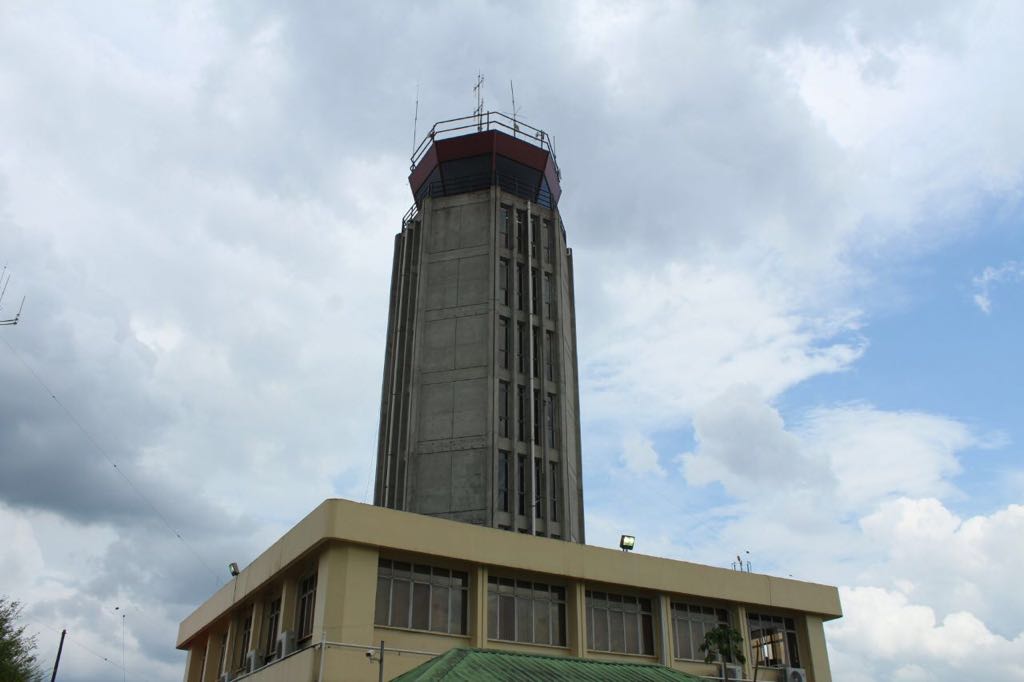
    Aviation authorities in Guyana have initiated a formal investigation following a ground collision incident involving two aircraft belonging to Trans Guyana Airways at Port Kaituma Airstrip. The incident occurred when a departing aircraft’s wing made contact with another plane parked on the tarmac, resulting in visible damage to at least one wing.

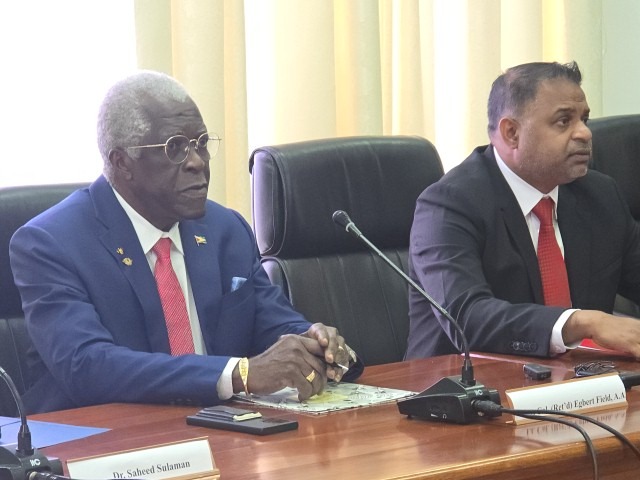
    Retired Lt. Col. Egbert Field, Director-General of the Guyana Civil Aviation Authority (GCAA), confirmed the regulatory body’s active investigation into the matter. Preliminary assessments suggest that operational consequences may follow for one or both pilots involved, pending the investigation’s findings.

    Aviation industry sources revealed to Demerara Waves Online News that the underlying issue extends beyond pilot operation to fundamental infrastructure limitations. The Port Kaituma Airstrip’s restricted parking capacity presents significant challenges when accommodating multiple aircraft simultaneously, creating potentially hazardous conditions.

    Industry insiders have identified the airstrip’s constrained dimensions as a critical safety concern, particularly when three aircraft attempt to utilize the facility concurrently. This incident has prompted renewed calls for infrastructure expansion at the regional aerodrome to address capacity constraints and enhance operational safety measures.

    The investigation will likely examine multiple factors including pilot procedures, ground operations protocols, and the adequacy of current infrastructure to handle domestic flight operations safely. The GCAA’s findings are expected to influence both immediate operational adjustments and long-term infrastructure planning for regional airstrips across Guyana.

  • PAS Cargo launches new logistics, off-site commercial GRA customs facilities

    PAS Cargo launches new logistics, off-site commercial GRA customs facilities

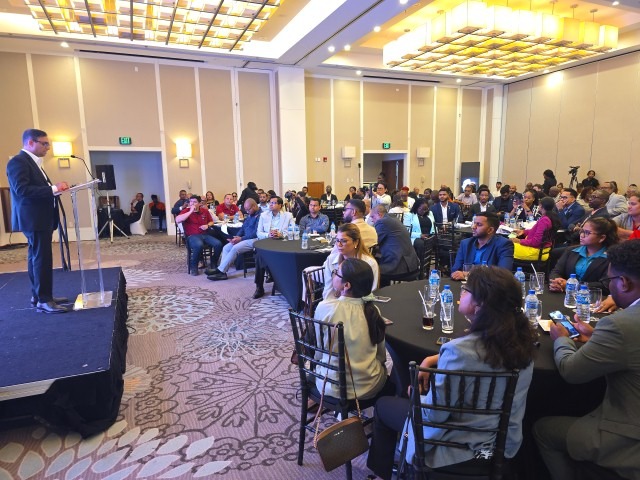
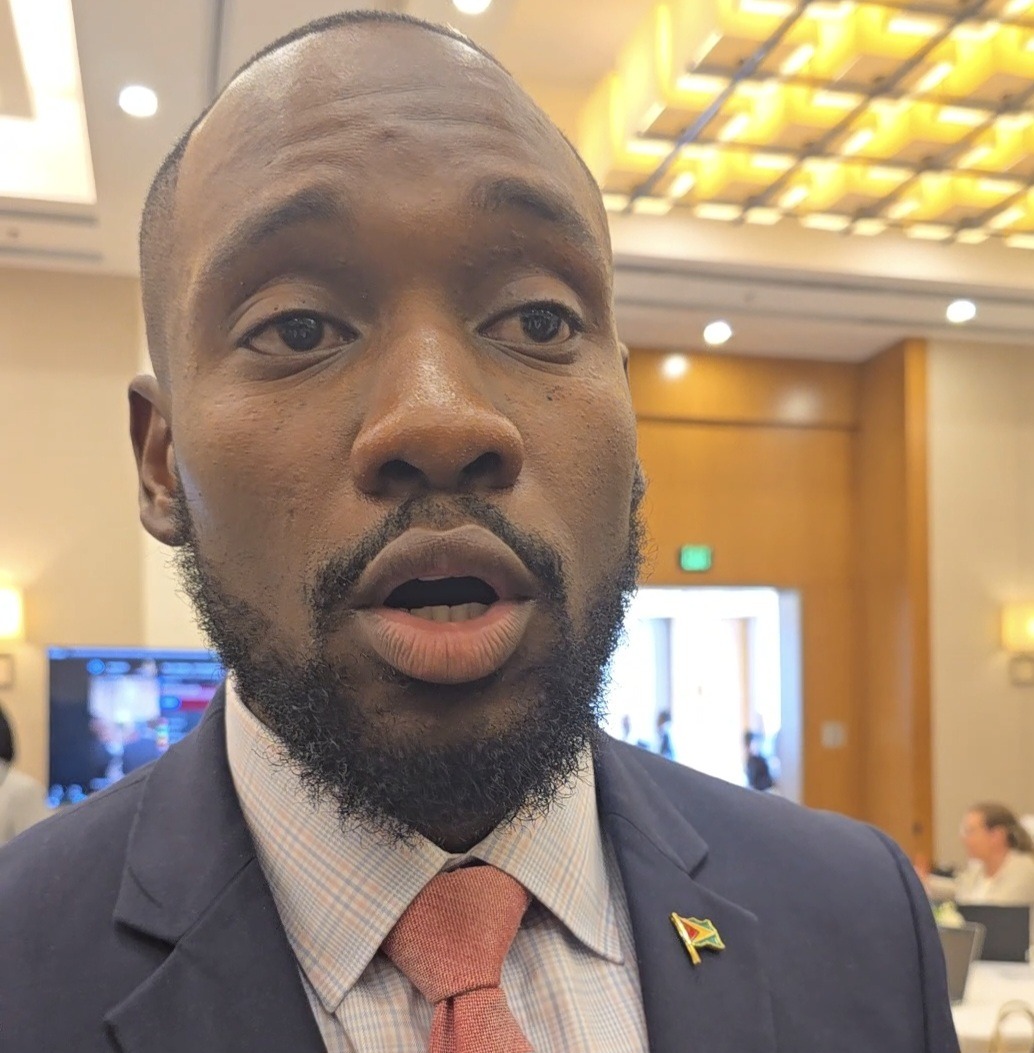
    In a significant development for Guyana’s trade infrastructure, Florida-based PAS Cargo USA has inaugurated groundbreaking logistics and customs facilities at its East Bank Demerara location, promising to transform the nation’s cargo clearance processes. Sector leaders unanimously hailed the March 25, 2026 opening as a solution to longstanding congestion issues that have plagued Guyana’s supply chain operations.

    Colin Moore, President of the Guyana Customs House Brokers and Clerks Association, characterized the new facility as addressing “one of the biggest nightmares” in cargo clearance. “Especially in Guyana, we have a system here where there is a lot of congestion and this because we’re a small country, we are now developing,” Moore stated during the official launch at Georgetown Marriott Hotel. He emphasized that brokers typically achieve satisfaction when processing cargo within 30 minutes—a benchmark PAS Cargo has consistently met.

    The facility represents Guyana’s first approved offsite commercial customs facility by the Guyana Revenue Authority (GRA), featuring state-of-the-art racking systems that enable rapid cargo location and retrieval, contrasting sharply with previous one-week waiting periods. Moore particularly praised the adequate accommodations provided for customs officers, addressing a critical operational concern.

    Komal Singh, Chairman of the Shipping Association of Guyana (SAG), highlighted the facility’s role in addressing storage space shortages on wharves while preparing the nation for future manufacturing expansion. “We cannot wait until the time when we have excess and massive amounts of exports in place and start working then to increase our efficiency,” Singh cautioned, emphasizing the need for proactive infrastructure development to meet international standards.

    Shridat Naraine, Vice President of PAS Cargo USA, described the “first-of-a-kind” secure off-port bond facility as offering spacious vehicle maneuverability and comprehensive parking solutions. The facility addresses environmental concerns and operational inefficiencies previously experienced at Demerara River port locations, positioning the company to serve industrial, commercial, and oil gas sectors with enhanced capability. “This is a statement that Guyana deserves world-class infrastructure; a statement that local talent, innovation and vision can compete at the highest level,” Naraine asserted.

    The technological integration allows customers to seamlessly navigate documentation, customs clearance, and cargo collection within a single location, significantly streamlining supply chain operations.

    Thandi McAllister, Parliamentary Secretary in the Ministry of Public Utilities and Aviation and Guyana’s representative to the International Maritime Organisation, framed the development within broader international trade conventions. She noted that states are bound by international agreements to simplify administrative formalities in international trade, describing the facility as exemplifying “powerful synergies” between public policy and private sector innovation. McAllister hailed the project as a “landmark achievement” in national trade development that would generate increased job opportunities while addressing inconsistent and excessive port clearance processes that have historically frustrated users and hindered efficiency.

  • Guyana contributing rice to Cuba’s relief effort

    Guyana contributing rice to Cuba’s relief effort

    In a significant demonstration of regional solidarity, Guyana has pledged a substantial rice consignment to Cuba as part of a Caribbean Community (CARICOM) humanitarian assistance program. President Irfaan Ali confirmed the initiative on Wednesday, March 25, 2026, emphasizing his nation’s ongoing commitment to regional cooperation and crisis response.

    President Ali explicitly stated to Demerara Waves Online News that “We’re part of this effort, we have always been, and we’re committed to have rice supplied,” underscoring Guyana’s consistent role in supporting neighboring Caribbean nations during times of need. While specific quantitative details regarding the shipment volume were not immediately disclosed, the characterization of the consignment as “huge” indicates a substantial contribution that will likely address significant food security needs in Cuba.

    This humanitarian gesture occurs within the broader framework of CARICOM’s collective relief mechanisms, which mobilize resources from member states to address emergencies and shortages throughout the Caribbean region. Guyana’s agricultural capacity, particularly in rice production, positions it as a key contributor to such regional food security initiatives. The announcement reflects ongoing diplomatic efforts to strengthen inter-Caribbean relations and mutual support systems, particularly important given the complex economic challenges facing several nations in the region.

    The timing of this commitment suggests continued cooperation despite evolving global economic pressures and shifting international alliances. Such bilateral assistance within the CARICOM framework reinforces the organization’s founding principles of economic integration and functional cooperation among member states, demonstrating practical application of these principles through tangible humanitarian assistance.

  • CCJ says process contract must be “recognised” in Guyana’s procurement process

    CCJ says process contract must be “recognised” in Guyana’s procurement process

    In a landmark judicial decision with far-reaching implications for commercial law, the Caribbean Court of Justice (CCJ) has formally recognized the doctrine of process contracts within Guyana’s legal framework. The ruling emerged from the protracted case of Cara Investments Limited versus Christopher Ram, Receiver of Hotel Towers Limited (HTL), which originated from a 1999 receivership sale.

    The regional court, serving as Guyana’s final appellate authority, determined that process contracts may arise in both public and private tender processes when the intention of parties—objectively derived from tender documents and surrounding circumstances—supports such a conclusion. Justice Maureen Rajnauth-Lee, delivering the lead judgment, emphasized that this legal doctrine enhances competitive bidding integrity by imposing binding obligations of fairness, good faith, transparency, and accountability throughout tender proceedings.

    The case centered on whether Cara Investments’ response to a 1999 Request for Proposal (RFP) constituted a binding process contract (termed ‘Contract A’). The court meticulously examined the submission, which was explicitly framed as a conditional Expression of Interest subject to due diligence completion and additional information provision. Justice Rajnauth-Lee concluded that the proposal lacked necessary elements for contract formation, functioning instead as a preliminary inquiry rather than a compliant bid.

    Critical to the determination was the court’s finding that Cara’s conditions—including altered timelines and pending financial backer approval—demonstrated absence of intent to form immediate contractual relations. The CCJ further noted that Cara’s premature initiation of legal proceedings potentially disrupted the tender process, undermining its own claims.

    The unanimous judgment upheld prior decisions from Guyana’s High Court and Court of Appeal, dismissing Cara’s allegations of contractual breach, unfair treatment, and misrepresentation. The court affirmed that without the foundational ‘Contract A,’ no claims for damages or lost opportunities could be sustained.

    Legal representatives for the Receiver expressed satisfaction with the clarification provided by the CCJ, acknowledging the guidance established for future jurisprudence. The ruling establishes significant precedent for tender processes across the Caribbean community, balancing bidder protections with procedural realities in commercial transactions.

  • Guyanese ethnomusicologist contributes to prestigious Palgrave Encyclopedia

    Guyanese ethnomusicologist contributes to prestigious Palgrave Encyclopedia

    Guyanese ethnomusicologist Rohan Sagar has achieved academic recognition through his groundbreaking contribution to the prestigious Palgrave Encyclopedia of Cultural Heritage and Conflict. His chapter, titled “Caribbean Sonic Humanities: Digital Archives, Music Pedagogy, and Computational Preservation,” presents an innovative framework for safeguarding the Caribbean’s diverse musical traditions and cultural expressions against modern threats.

    Sagar’s work integrates digital humanities, computational ethnomusicology, and SEED-SCALE methodology to create sustainable cultural preservation models. Rather than advocating for artificial intelligence, his approach emphasizes data science techniques that enable researchers to identify patterns, relationships, and gaps in cultural materials that were previously undetectable through traditional methods.

    The ethnomusicologist explained that his methodology allows for the identification of key characters, their frequency of appearance in texts, and their contextual relationships to thematic elements. This computational approach provides educators and students with tools to analyze cultural materials through coding, mathematical functions, and logical systems that produce reproducible results.

    Sagar described the publication process as rigorous, involving multiple iterations and expert validation from data science specialists to ensure methodological authenticity. Despite the significance of this academic achievement, Sagar expressed mixed emotions, noting that the publication represents years of intensive work that often felt overwhelming.

    The researcher expressed hope that regional educational bodies, particularly the Caribbean Examinations Council (CXC), would recognize the potential of his digital preservation model to address concerning trends in Caribbean education. While hesitant to approach Guyanese policymakers due to previous rejections of innovative ideas, Sagar hopes his work might spark Caribbean-wide conversations about integrating digital tools in cultural education and preservation.