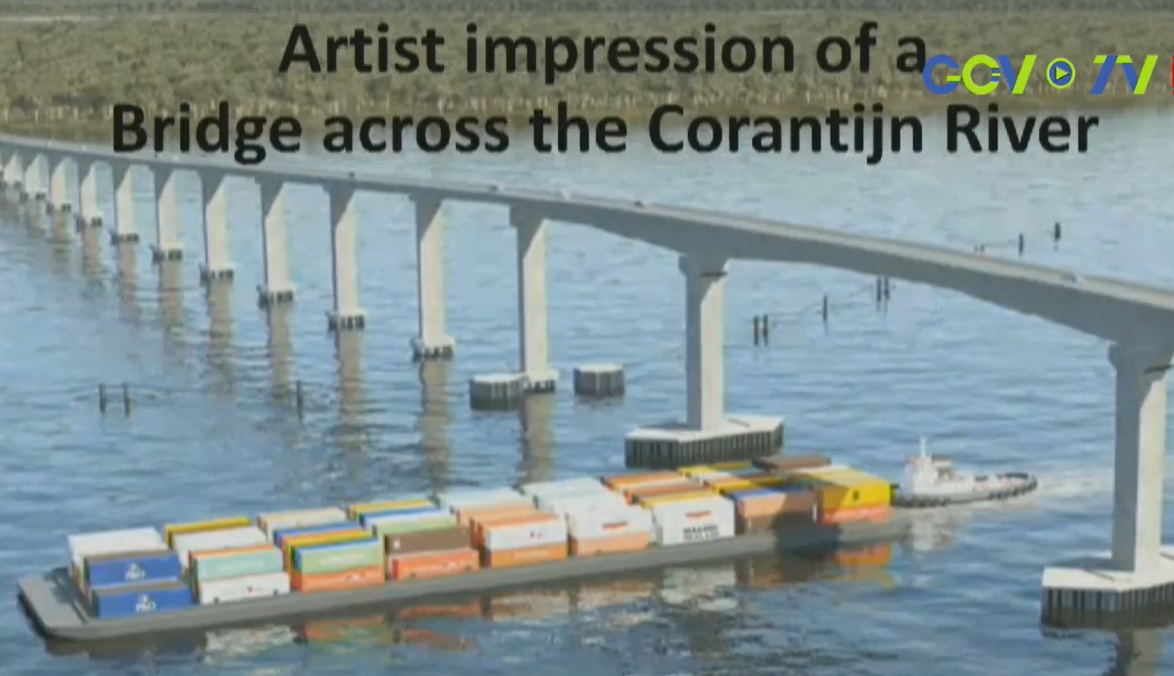
Tensions between Guyana and neighboring Suriname over cross-border trade on the Corentyne River have reached a new boiling point, with Guyana’s leading business organizations now calling for a full suspension of planned discussions to build a cross-border bridge linking the two nations, until long-simmering trade disputes are fully resolved. What began as a public complaint from Guyanese President Irfaan Ali over Suriname’s new fees for Guyanese cargo vessels navigating the shared river has expanded into a broad pushback from the private sector, which has linked the levies to deeper trade grievances and a long-standing border territorial dispute.
Following Ali’s initial public critique of Suriname’s policy earlier this month, the Guyanese central government has declined to comment publicly on the negotiations, with senior foreign ministry officials only confirming that back-channel discussions between the two administrations are ongoing, shrouded in complete secrecy. For its part, Suriname has pushed back against Guyanese criticism, arguing that the fee structure is rooted in long-standing domestic regulations, not a new policy, and notes that Guyana may formally request exemptions for its vessels through standard diplomatic channels.
The Georgetown Chamber of Commerce and Industry (GCCI), a leading private sector body with close ties to Guyana’s ruling People’s Progressive Party Civic administration, first tabled the call to pause bridge talks in an official public statement. The organization argues that no progress on the cross-border infrastructure project can move forward until Suriname reverses the vessel fees and addresses a list of other persistent trade issues, most notably the widespread dumping of counterfeit, illicit, and substandard goods from Suriname into Guyana’s domestic market.
This call comes amid already stalled momentum for the bridge project, which has languished since the National Democratic Party (NDP), led by Dr Jennifer Geerlings-Simons, won Suriname’s general election less than a year ago. Severe budget constraints and strict fiscal oversight from the International Monetary Fund have left the new Suriname administration unable to secure funding for its share of the east-west connectivity project, a pledge the previous Santokhi-led government had made ahead of last year’s election if it retained power.
One week after President Ali emphasized that any cross-border cooperation must be rooted in reciprocal benefit, the GCCI echoed that sentiment, arguing that Guyana should not extend goodwill to a neighboring partner that does not extend the same treatment in return. “The GCCI calls on the Government of Guyana to halt discussions on the development of the Corentyne River Bridge linking Guyana and Suriname unless these issues are permanently resolved,” the chamber’s statement read. The organization added that Guyana should only direct public resources toward cross-border projects that deliver mutual, balanced benefits, “and ought not include partners who frustrate and obstruct our people’s advancement.”
Ali has already left the door open to retaliatory action if Suriname does not reverse the fees, which apply to vessels carrying Guyanese quarry products and timber along the Corentyne. “For me, reciprocity is very important and let’s see how this goes in another few days and, you know, as a country we will have to make the necessary adjustments to ensure that we are not placed at a disadvantage with the other businesses from Suriname,” he said last week.
Other Guyana business bodies have echoed the GCCI’s frustration, warning that the fees will have severe cascading impacts on border communities and local economic competitiveness. The Upper Chamber of Commerce and Industry (UCCI) noted that remote river communities including Orealla and Siparuta will “feel the full brunt” of Suriname’s policy, as the additional costs are passed directly to consumers, eroding the competitiveness of local businesses in regional markets. “This certainly will have a deleterious effect on the local economy with catastrophic repercussions,” the UCCI warned.
The UCCI detailed the steep cost burden placed on Guyanese operators: vessels are charged up to $2,500 USD per trip for pilot license fees, on top of broker fees ranging from $1,000 to $1,500 USD. The chamber described these charges as “exorbitant, extortionate, and unaffordable, far beyond the ability of the river users to pay.” To eliminate total reliance on Suriname’s control of the river, the UCCI is calling on the Guyanese government to fast-track construction of an overland road connecting Crabwood Creek to Orealla. “This unfortunate development has once again reignited the call and determination to expedite the completion of the road linking Crabwood Creek and Orealla. This would obviate the need to become totally dependent on Surinamese discretion and approval. The road will be ours to use,” the statement said.
The Guyana Manufacturing and Services Association (GMSA) added that the fees threaten to raise operating costs across a wide range of sectors tied to the Corentyne River, including trade, transport, timber, and quarrying. Beyond individual businesses, the association warned that the unilateral fees will damage broader cross-border supply chains, hurt investment confidence between the two nations, and harm livelihoods in border communities.
In one of the most serious allegations to emerge from the dispute, the GCCI argued that the new river levies are not an isolated policy, but part of a broader campaign to advance Suriname’s long-standing colonial-era territorial claim to the 6,000-square-mile New River Triangle in southeastern Guyana. “The pursuit of Suriname of this illegal claim seems to be one of the key motivations for the creation of impediments to the rapid pace of development being undertaken in Guyana, including in Berbice, and aimed at preventing this country from reaching its peak potential,” the GCCI said.
The chamber added that the current dispute has brought decades of unaddressed unfair trade practices to a head. For years, Guyanese business owners and fishing crews have faced systemic barriers from Surinamese authorities, the organization said. In addition, Guyana’s adherence to the free movement rules of the Caricom Single Market and Economy (CSME) has left the country vulnerable to a flood of illicit and counterfeit goods from Suriname, ranging from counterfeit cigarettes to banned pesticides and toxic mosquito coils that pose severe public health risks to Guyanese consumers. Beyond the health threat, the influx of these unregulated products has created unfair competition for legitimate domestic manufacturers in Guyana, the GCCI added.
The Berbice Chamber of Commerce and Development Association (BCCDA), which represents the border region most impacted by the dispute, has put forward a three-pronged strategy for the Guyanese government to resolve the standoff: pursue a diplomatic resolution with Suriname, issue clear guidance and formal protection for Guyanese operators working on the river, and deploy permanent Guyanese official presence in the upper Corentyne region to monitor conditions and assist affected citizens.
“These unilateral fees represent a significant escalation that our small business owners and residents cannot absorb. We are witnessing a situation where Guyanese are being penalized for utilizing shared water-space that has always been used freely for legitimate trade and travel. This action directly impedes the ease of doing business and disrupts the longstanding relations between our border communities,” BCCDA President Samantha Reid said in the organization’s statement.
While pushing for urgent action to reverse the fees, the GMSA reaffirmed its commitment to closer cross-border economic integration between the two nations, calling on Suriname’s authorities to reverse the policy to preserve regional goodwill and long-standing cooperation. “The GMSA says Guyana and Suriname must continue to pursue closer economic collaboration, not policies that restrict movement and make cross-border trade more costly and uncertain,” the association said, urging Suriname to roll back the levies in the interest of shared regional development.