标签: Guyana

圭亚那

  • Increased oil price, production accelerating ExxonMobil’s cost recovery

    Increased oil price, production accelerating ExxonMobil’s cost recovery

    ExxonMobil Guyana has announced a significant acceleration in recovering its historic exploration and production costs from the Stabroek Block, moving the timeline forward from 2027 to this year. This expedited recovery is attributed to the current favorable market conditions, with oil prices hovering around $100 per barrel and production exceeding 900,000 barrels per day.

    Company President Alistair Routledge confirmed the development during a recent press conference, stating that the combination of robust production levels and strong global oil prices has created an optimal financial environment. “What we’re now seeing in this price environment is that [recovery] will accelerate. If you stay at the current oil price, then it will happen this year,” Routledge explained.

    The historic costs, dating back to the original 1999 contract with Guyana, currently stand at approximately $5 billion out of a total cost bank estimated at $40 billion. Under the Production Sharing Agreement, up to 75% of gross revenues can be allocated to cost recovery.

    Routledge emphasized that this accelerated cost recovery marks a pivotal moment for Guyana’s revenue prospects. Once these historic costs are fully recovered, Guyana’s share of profit oil will increase substantially beyond the current 14.5% (including 2% royalty). The exact percentage increase will depend on ongoing market conditions, production volumes, and operational expenditures.

    The ExxonMobil executive described this transition as moving into “a much more dynamic world” regarding national revenue, noting that the country’s financial trajectory remains “positive.” This development also reinforces the Production Sharing Contract’s effectiveness in encouraging continued investment in the Stabroek Block’s development.

    ExxonMobil has committed to spending up to $60 billion in capital expenditure throughout its operations in Guyana, in addition to annual operating expenses amounting to billions of dollars.

  • Guyana on literacy, numeracy drives- Education Minister tells CXC conference

    Guyana on literacy, numeracy drives- Education Minister tells CXC conference

    Guyana is implementing sweeping educational reforms with the introduction of Grade Two and Four literacy assessments, Education Minister Sonia Parag announced at the Caribbean Examinations Council (CXC) Ministerial Forum in Jamaica. The initiative aims to ensure students achieve literacy before completing primary education, addressing what Minister Parag acknowledged as the region’s problem with “producing functionally illiterates.”

    The comprehensive strategy includes establishing community literacy tents where parents can assist children with homework, creating a collaborative learning environment that extends beyond classroom walls. Minister Parag, who also chairs CARICOM’s Council for Human and Social Development, revealed that numeracy assessments will follow in 2027.

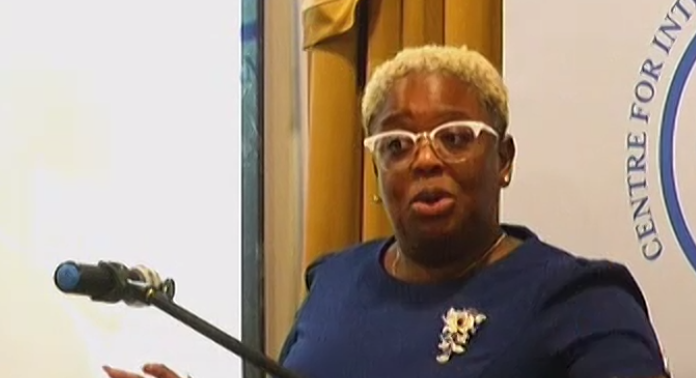
    The conference, themed “Navigating the Digital Age: Rethinking Teaching, Learning and Assessment,” became a platform for Caribbean education leaders to address both the opportunities and challenges presented by artificial intelligence. While recognizing AI’s potential for personalized learning and immediate feedback, Minister Parag warned of risks including false imagery, plagiarism, data privacy concerns, and increased bullying. She advocated for responsible integration with “clear frameworks” focusing on ethics, data protection, and academic integrity.

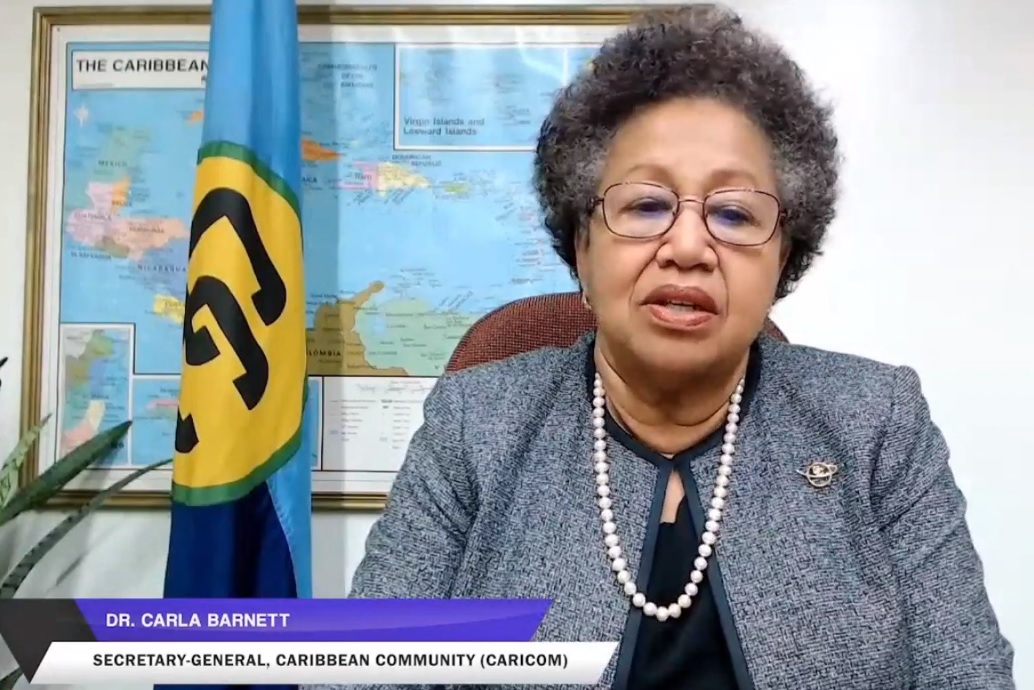
    CARICOM Assistant Secretary General Alison Drayton emphasized the urgency of educational transformation, stating incremental changes are insufficient in the face of rapid technological advancement. She cautioned that delays risk widening existing inequities, particularly when combined with the lingering impacts of COVID-19 and annual hurricane disasters.

    The conference concluded with several key resolutions: assessment systems prioritizing fairness and authenticity, sustained investment in teacher development and digital infrastructure, and strengthened regional collaboration. CXC Chairman Sir Hilary Beckles highlighted the concerning decline of history as a compulsory subject over the past fifty years, noting the visible consequences of historical ignorance in contemporary society.

    All speakers emphasized that educational reform must be implemented through phased, consultative approaches rather than sudden, heavy-handed measures that could leave teachers and students feeling unprepared or excluded. The consensus emerged that Caribbean nations must collectively navigate digital transformation while preserving regional identity and cultural values.

  • Brickdam Secondary School teacher sent off job amid sexual allegations

    Brickdam Secondary School teacher sent off job amid sexual allegations

    Education authorities in Guyana have initiated a formal investigation into serious allegations of a sexual nature involving a teacher at Brickdam Secondary School. Chief Education Officer Saddam Hussain confirmed on Wednesday that the educator was immediately placed on administrative leave following established protocols.

    The teacher was removed from duty on March 13, 2026, the same day the allegations were formally brought to the attention of the Ministry of Education. The case has triggered a multi-agency response involving both governmental and non-governmental organizations specializing in child protection.

    Blossom Inc., a respected non-governmental organization focused on child rights, has been engaged to conduct forensic interviews with affected students. Hussain reported that one such interview has already been completed as part of the ongoing investigation.

    Concurrently, the Welfare Department of the Georgetown Department of Education has been actively engaging with parents of potentially affected students. Meetings were held with three separate parents between March 13 and March 17, with each receiving official referral letters to the Child Protection Agency in accordance with standard operating procedures.

    The Chief Education Officer explicitly addressed circulating social media claims, stating: “The Ministry of Education wishes to state unequivocally that, contrary to certain misleading claims circulating on social media, there has been no delay in the investigative process.” The statement emphasized the ministry’s commitment to thorough and timely resolution of the matter while ensuring proper procedural safeguards are maintained throughout the investigation.

  • CCJ President proposes international climate injuries compensation fund

    CCJ President proposes international climate injuries compensation fund

    In a significant development in climate justice advocacy, Caribbean Court of Justice (CCJ) President Winston Anderson has formally proposed the creation of an International Climate Injuries Compensation (ICIC) Fund during the Inter-American Seminar on Climate Emergency and Human Rights in Brasilia, Brazil. The landmark proposal, presented on March 16, 2026, calls for mandatory corporate contributions to address climate-related damages in vulnerable nations.

    President Anderson articulated his vision before the gathering hosted by the Inter-American Court of Human Rights and Brazil’s Supreme Court, emphasizing that existing regulatory frameworks fall short of addressing urgent climate realities. While acknowledging the importance of the Inter-American Court’s Advisory Opinion No.32 of 2025, which establishes government obligations to regulate climate-harming corporations, Anderson stressed the necessity of practical implementation mechanisms.

    The proposed ICIC Fund would operate under the ‘Polluter Pays’ principle, requiring multinational corporations exceeding specific greenhouse emission thresholds to contribute financially through their operating states. Drawing inspiration from the International Maritime Organisation’s successful oil pollution compensation model, the fund would possess legal personality enabling affected nations to seek compensation for damages caused by extreme weather events.

    Anderson expressed particular concern about the inadequate capitalization of the existing Fund for Responding to Loss and Damage (FRLD) established under the Paris Agreement. He highlighted the stark disparity between actual damages and available compensation, noting Jamaica’s situation where USD 6-7 billion in hurricane damages contrasts with maximum potential FRLD compensation of merely USD 20 million.

    The initiative, first introduced during Anderson’s keynote address at the CANARI Partners Forum in Barbados this January, represents a growing consensus among vulnerable nations that corporate accountability must translate into tangible financial responsibility for climate impacts.

  • Georgetown Public Hospital asks Court to order removal of street vendors

    Georgetown Public Hospital asks Court to order removal of street vendors

    Georgetown Public Hospital Corporation (GPHC), Guyana’s premier healthcare institution, has escalated its ongoing battle against unauthorized street vending by filing a formal legal petition with the High Court on Tuesday, March 17, 2026. The hospital seeks judicial intervention to compel Georgetown’s Town Clerk to immediately clear vendors obstructing critical access routes to the medical facility.

    Through legal representation by Attorney Sase Gunraj, GPHC demands the municipal authority enforce its statutory obligations under Guyana’s Municipal and District Councils Act. The application specifically targets food, beverage, and miscellaneous vendors operating mobile trucks, carts, and temporary stalls along New Market, Middle, East, Lamaha, and Thomas Streets—all crucial perimeter roads surrounding the hospital complex.

    CEO Robbie Rambarran’s supporting affidavit outlines severe operational impacts caused by the vendor congestion. Emergency vehicles, medical staff, and patients face significant access challenges due to obstructed ingress and egress points. Additionally, the hospital administration cites serious sanitation concerns, with vendors allegedly leaving substantial waste and debris across the hospital vicinity.

    The court documents reveal a protracted history of failed resolutions, dating back to April 2024. Despite multiple formal communications—including letters sent on April 30, 2024, May 7, 2024, and January 5, 2026—the Mayor and City Council have not implemented permanent solutions. While municipal officials acknowledged the problem in a May 2024 response and expressed intentions for amicable resolution, no substantive action followed.

    Rambarran emphasized that GPHC lacks necessary vendor particulars to initiate individual legal proceedings, making municipal intervention the only viable pathway to restore order. The hospital contends that successful court action would not only benefit medical operations but also uphold public order around one of Guyana’s most critical healthcare infrastructures.

  • Court of Appeal dismisses Mohameds’ case of bias against Home Affairs Minister in extradition case

    Court of Appeal dismisses Mohameds’ case of bias against Home Affairs Minister in extradition case

    In a significant judicial ruling, the Guyana Court of Appeal has unequivocally dismissed allegations of political bias against Home Affairs Minister Oneidge Walrond regarding her authorization of extradition proceedings against political figures Azruddin Mohamed and his father Nazar “Shell” Mohamed. The unanimous decision, delivered by Chancellor of the Judiciary Roxane George-Wiltshire on Tuesday, March 17, 2026, found the case “has absolutely no merit” and upheld the minister’s compliance with statutory requirements under the Fugitive Offenders Act.

    The court determined that Minister Walrond merely executed an administrative function in accordance with legal provisions when issuing the Authority To Proceed (ATP) on October 30, 2025. Chancellor George-Wiltshire emphasized that the appellants failed to substantiate claims that the process was tainted by political prejudice, stating that “bias does not arise” in circumstances where the minister fulfills statutory obligations without discretion between competing parties.

    The ruling also addressed and rejected the application for a stay of extradition committal proceedings pending appeal to the Caribbean Court of Justice, suggesting that matter should be directed to the regional judicial body. Furthermore, the court clarified that the ultimate decision regarding extradition rests with the judicial system—specifically the magistrate and potentially the Court of Appeal—rather than the minister.

    The appellate court additionally dismissed arguments concerning potential delegation of ministerial authority, noting that any cabinet minister would similarly operate within the same governmental framework. The court awarded substantial costs of GY$1.5 million each to the Minister of Home Affairs and the Attorney General, reinforcing the lack of merit in the appellants’ claims.

    The case originated from committal proceedings currently before Principal Magistrate Judy Latchman, who issued arrest warrants for the Mohameds on October 31, 2025. The appellants had contended that political statements made during the 2025 election campaign by President Irfaan Ali, Vice President Bharrat Jagdeo, Attorney General Anil Nandlall, and Minister Walrond demonstrated institutional bias against them, particularly as Azruddin Mohamed leads the opposing We Invest in Nationhood (WIN) political party.

  • Pomeroon man found not guilty of rape

    Pomeroon man found not guilty of rape

    In a significant judicial outcome, 37-year-old Desmond George from Charity Housing Scheme, Pomeroon, Essequibo Coast has been fully exonerated of rape allegations dating back to July 2023. The acquittal was formally delivered on March 11, 2026, following a unanimous not guilty verdict from the jury presiding over the case at the High Court.

    Presiding Judge Madam Justice Fidela Corbin-Lincoln oversaw the proceedings that culminated in Mr. George’s liberation from the serious criminal charge. The defendant had maintained his innocence throughout the legal process, which included both preliminary inquiries and the full High Court trial.

    Defense attorney Jermaine Jervis, representing Mr. George, characterized the prosecution’s case as a “complete fabrication” against his client. “My defense was predicated on the assertion that the entire prosecution case was manufactured against my client,” Mr. Jervis stated in his post-trial comments to Demerara Waves Online News.

    The original allegation claimed that Mr. George, then 35 years old, had committed the offense on July 22, 2023, in the Siriki Upper Pomeroon River area against a female resident of the Essequibo Coast region. During the extended judicial process, Mr. George had been released on bail set at GY$300,000 while awaiting resolution of the case.

    The unanimous jury decision highlights the critical role of evidential standards in criminal justice systems and underscores the principle that accusations require substantiation beyond reasonable doubt for conviction.

  • US boosting Caribbean, South American medical systems

    US boosting Caribbean, South American medical systems

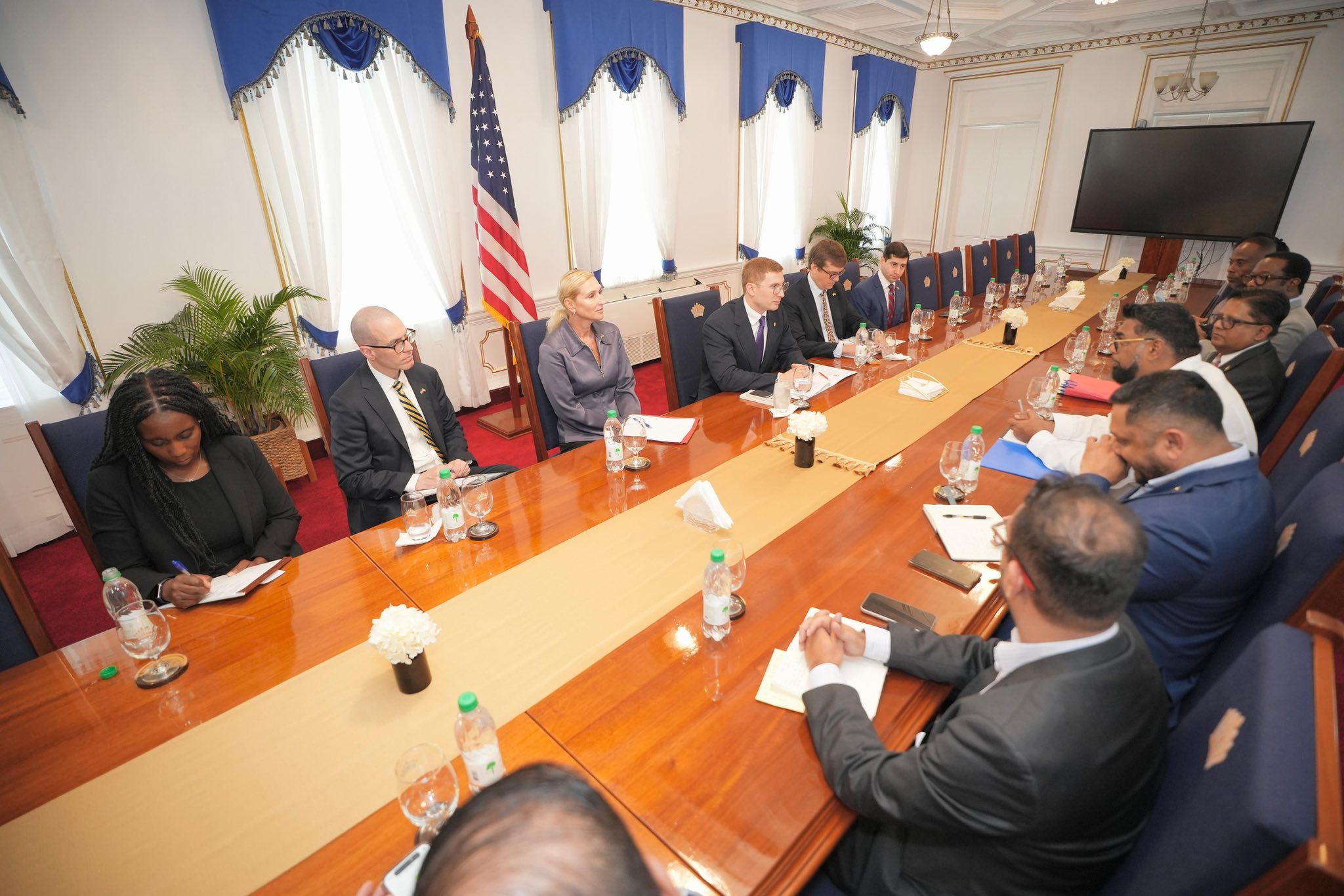
    The United States Southern Command (SOUTHCOM) has initiated a significant multinational medical cooperation initiative across several Caribbean and South American nations, with Guyana serving as a key regional partner. This strategic healthcare enhancement program, officially launched on March 17, 2026, represents a concerted effort to strengthen regional medical capabilities and emergency response readiness.

    At the formal commencement ceremony held at the Marriott Hotel, US Embassy Deputy Chief of Mission John Crippen outlined the program’s overarching objectives. “Under SOUTHCOM’s strategic direction, these medical engagements are designed to build enduring partnerships, bolster partner nations’ medical systems, and enhance our collective readiness for complex global challenges,” Crippen stated during the opening of the 2026 Lesser Antilles Medical Assistance Team (LAMAT) mission.

    The current LAMAT deployment marks the third such initiative, featuring collaboration between American medical professionals and their counterparts from Guyana, Suriname, St. Lucia, and St. Kitts and Nevis. The comprehensive mission includes over US$300,000 worth of medical supplies alongside extensive knowledge transfer and hands-on medical treatment programs.

    A specialized detachment from the United States Air Force, operating under SOUTHCOM’s coordination, is conducting emergency response training for Guyanese security personnel while simultaneously providing medical and dental services to local communities across multiple healthcare facilities. The program includes a four-day mass casualty training workshop at the Civil Defence Commission headquarters, involving approximately 60 healthcare professionals from regional medical facilities, emergency services, and security agencies.

    Colonel Theodore Liszeski, LAMAT Mission Commander, emphasized the program’s core philosophy: “Readiness begins with relationships. By working together today, we ensure when future challenges arise—whether natural disasters or public emergencies—we are already prepared to respond with trusted partners.”

    The 89-member multinational medical team will deliver services at six major healthcare institutions: Linden Hospital Complex, Diamond Regional Hospital, West Demerara Regional Hospital, De Kinderen Regional Hospital, Georgetown Public Hospital Corporation, and the Cheddi Jagan Dental School. Services encompass medical, surgical, ophthalmological, and dental care, building upon decades of US-Guyana medical cooperation that previously included HIV/AIDS prevention through PEPFAR and COVID-19 response initiatives.

    Guyana’s Health Minister Dr. Frank Anthony highlighted the mutual benefits of the partnership, noting that previous LAMAT missions introduced advanced surgical techniques previously unavailable in Guyana. “This collaboration provides valuable knowledge-sharing opportunities while allowing American medical professionals to gain experience in diverse clinical environments,” Dr. Anthony remarked. The Minister additionally expressed hope that future missions could extend services to remote interior regions, further expanding healthcare access to underserved communities.

  • STEMGuyana joins Eastern Caribbean Robotics and Innovation Association

    STEMGuyana joins Eastern Caribbean Robotics and Innovation Association

    In a significant advancement for Caribbean technological education, STEMGuyana has established a formal partnership with the Eastern Caribbean Robotics and Innovation Association (ECRIA) through a memorandum of understanding signed in February 2026. This strategic alliance creates a framework for enhanced collaboration in robotics, innovation, and STEAM education throughout the Caribbean region.

    The newly formed partnership enables STEMGuyana to participate as a member organization within ECRIA’s regional network, facilitating unprecedented opportunities for student engagement, knowledge sharing, and technological cooperation. The collaboration will be prominently featured at the ongoing OECS Super Regional Robotics Challenge in St. Kitts and Nevis (March 16-20), where Ms. Elsie Harry, STEMGuyana’s Board Member and Fundraising Coordinator, will deliver official remarks representing the organization.

    Ms. Harry, who also serves as STEMGuyana’s Liaison to ECRIA, emphasized the critical importance of regional cooperation in preparing Caribbean youth for the rapidly evolving global technology landscape. “Through this partnership with ECRIA, STEMGuyana looks forward to strengthening opportunities for students in Guyana to engage in robotics, innovation, and collaborative learning across the Caribbean while sharing our best practices in the STEM field with regional counterparts,” she stated in an official release.

    Although STEMGuyana will not field a competitive team in this year’s challenge, the organization has committed to sending Guyanese students to future Eastern Caribbean competitions as part of its expanding robotics education initiatives. The partnership represents a strategic move to create pathways for Guyanese students to participate in regional robotics competitions, collaborate with Caribbean peers, and access advanced STEAM learning opportunities.

    STEMGuyana, founded to promote equitable access to science, technology, engineering, arts, and mathematics education, has extensive experience working with youth across Guyana to develop technical skills, problem-solving abilities, and entrepreneurial thinking. Through robotics programs, coding workshops, and mentorship initiatives, the organization continues to empower young people with essential tools for participation in the digital economy.

    The collaboration signals a growing movement toward regional integration in technology education and youth development, positioning Caribbean nations to collectively cultivate the next generation of innovators, engineers, and technology leaders.

  • Guyana’s outdated credit union legislation flagged for modernisation

    Guyana’s outdated credit union legislation flagged for modernisation

    In a landmark gathering at the Four Points by Sheraton on Heroes Highway, Caribbean credit union officials launched their premier Caribbean Development Education (CaribDe) training program in Guyana for the first time, delivering a powerful appeal for legislative modernization. The event spotlighted Guyana’s outdated 1948 Cooperative Societies Act as a regional anomaly requiring immediate reform.

    CaribDe Programme Director Melvin Edwards emphasized the critical inadequacies of the nearly 80-year-old legislation, noting its complete absence of provisions addressing contemporary financial challenges. “An almost 80-year-old piece of legislation cannot be relevant to the present day,” Edwards stated, highlighting the act’s failure to incorporate modern standards against money laundering, terrorism financing, proliferation risks, International Financial Reporting Standards (IFRS), and credit union prudential management protocols.

    Edwards formally urged Labour Minister Keoma Griffith to collaborate with local and regional credit union movements to overhaul Guyana’s cooperative framework, pointing out that most Caribbean nations have already updated their legislation. The Caribbean credit union sector represents a substantial economic force, serving 2.8 million members across the region with accumulated assets of US$3.5 billion.

    In response, Minister Griffith revealed that Guyana has been receiving technical assistance from the International Labour Organisation (ILO) to conduct an extensive review of the Cooperative Societies Act. The objectives include strengthening legal provisions, improving governance structures, and ensuring greater accountability. Griffith confirmed that Guyana is examining Jamaica’s cooperatives legislation among other models to inform their modernization efforts.

    The minister concurrently acknowledged concerning governance issues within segments of Guyana’s cooperative sector, noting that some societies “have operated in ways that have undermined public confidence and weakened the effectiveness of the movement.”

    The event also addressed internal divisions within Guyana’s credit union leadership. Edwards made a direct public appeal to Secretary of the Guyana Cooperative Credit Union League Colin Beaton and Chairman of Guyana Public Service Cooperative Credit Union Ltd Trevor Benn to resolve their differences before the Caribbean Confederation of Credit Unions’ 2026 Annual International Convention in Barbados this June. Both leaders indicated ongoing efforts to resolve what Beaton termed “little teething issues,” with Benn emphasizing his organization’s commitment to improvement and membership growth.