标签: Grenada

格林纳达

  • Opposition party condemns imposition of VAT on services provided through social media

    Opposition party condemns imposition of VAT on services provided through social media

    Grenada’s main opposition bloc, the New National Party (NNP), has raised sharp objections to the sitting Dickon Mitchell-led National Democratic Congress (NDC) government’s move to table a Value Added Tax Amendment Bill that would extend value-added tax to a wide range of digitally delivered services. The proposal, if enacted, would apply VAT to nearly every corner of the modern digital economy, according to the opposition’s breakdown.

    Among the services targeted by the new tax are streaming platforms and on-demand digital entertainment, online advertising and digital marketing services, cloud computing infrastructure, website hosting, and remote data storage. The legislation also covers a broader set of digital products: downloadable software, mobile applications, Software-as-a-Service (SaaS) tools, automated online e-learning platforms, pre-recorded digital educational content, and all other digital goods distributed through electronic channels.

    In a formal statement released Wednesday, the NNP emphasized that the timing of this tax expansion could not be worse, as ordinary Grenadians already grapple with soaring household expenses that have eroded purchasing power across the country. The opposition pointed to a regional trend of policy action to buffer consumers from global inflationary pressures: many neighboring governments have rolled out fuel subsidies, utility bill relief, expanded food assistance programs, and VAT cuts on essential goods to ease the burden on working families. The NNP argues the NDC administration has failed to match these relief efforts, choosing instead to expand the tax base at the most inopportune moment.

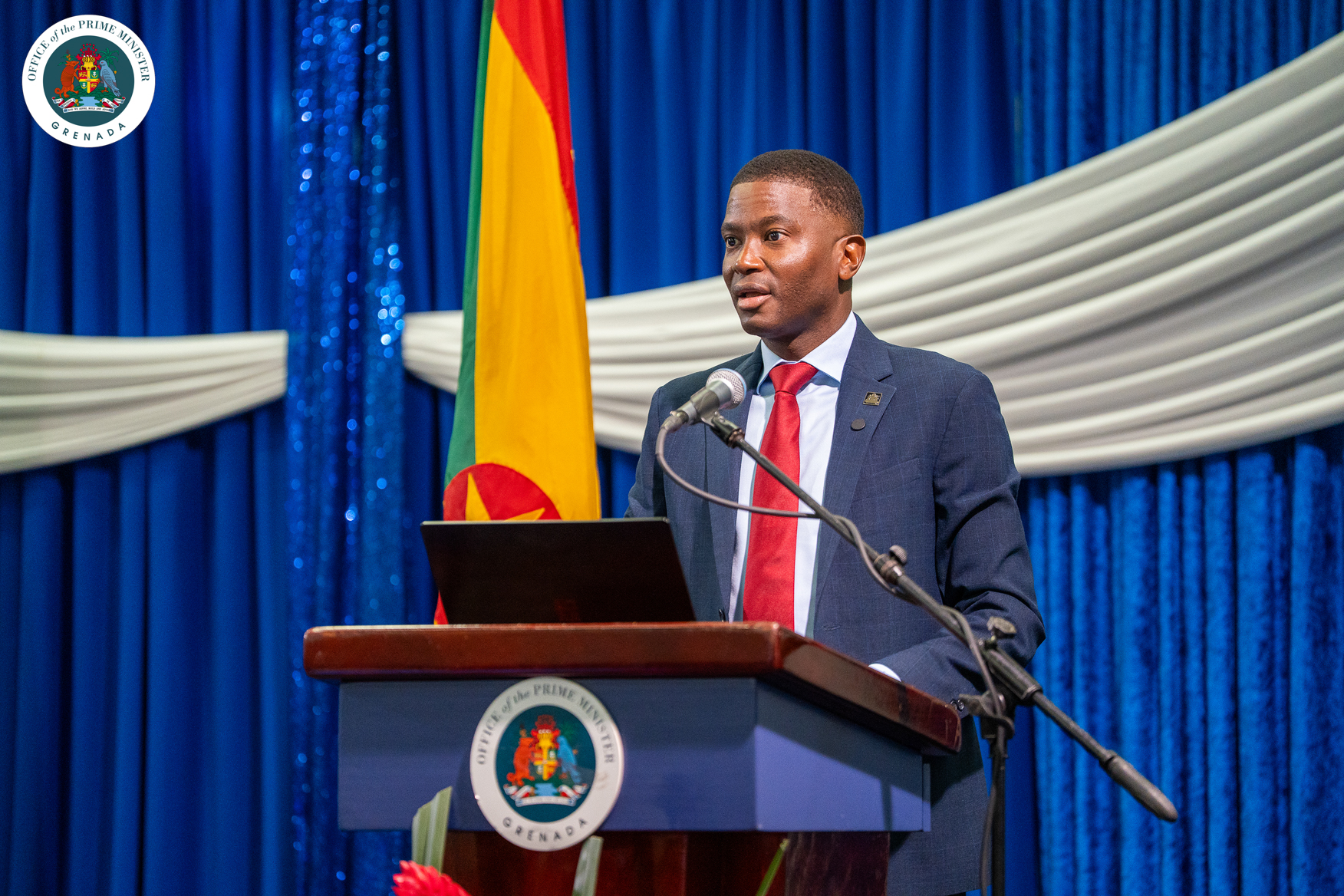
    Emmalin Pierre, leader of the NNP and Grenada’s Opposition Leader, criticized the government’s misplaced priorities in a press briefing. “The cost of food, utilities, and basic services continues to rise, and now this NDC government wants to add VAT to the digital tools that families, students, and entrepreneurs depend on,” Pierre said.

    She went on to argue that the government has failed to uphold its basic responsibility to support the digital sector before imposing new taxes. “Before you tax a sector, you have a responsibility to support it, and this government has done nothing for digital content creators, nothing for small online businesses, and nothing for the Grenadian who is simply trying to access education or entertainment through their phone. This government speaks about economic empowerment, but this bill tells a different story.”

    Pierre stressed that new government revenue should never be generated by deepening financial hardship for ordinary citizens. “Grenadians deserve a policy approach that supports both economic progress and everyday affordability,” she added. This report was compiled via contributing reporting from CMC, with NOW Grenada disclaiming responsibility for contributor statements and opinions.

  • High Commissioner Croney represents Grenada at  Singapore Maritime Week 2026

    High Commissioner Croney represents Grenada at  Singapore Maritime Week 2026

    The 20th iteration of Singapore Maritime Week (SMW) 2026 closed its doors at the Suntec Singapore Convention and Exhibition Centre after a five-day run from April 20 to 24, drawing more than 20,000 stakeholders from nearly 80 countries and regions to confront the most critical issues facing the global maritime sector. Representing the Caribbean island nation of Grenada at the landmark gathering was Her Excellency Rachér Croney, Grenada’s High Commissioner to the United Kingdom.

    Organized under the central theme “Actions Meet Ambition”, this year’s anniversary edition of SMW brought together cabinet ministers, senior government officials, diplomatic representatives, C-suite industry leaders and veteran maritime professionals to unpack pressing challenges and untapped opportunities spanning decarbonization, digital transformation, geopolitical supply chain resilience and workforce talent development.

    The official opening ceremony featured keynote addresses from two senior Singaporean leaders: Hon. Jeffrey Siow, Singapore’s Acting Minister for Transport and Senior Minister of State for Finance, and Gan Kim Yong, Deputy Prime Minister and Minister for Trade and Industry. In his remarks, Siow highlighted the urgent need to bolster cross-border digital connectivity across the maritime ecosystem, outlined the game-changing potential of artificial intelligence to reshape industry operations, and outlined core global priorities including accelerating decarbonization, fostering disruptive innovation, and deepening cross-stakeholder collaboration. To advance digital integration, Siow formally announced the launch of OCEANS-X, a groundbreaking new digital platform built to unify fragmented maritime systems and data pools across public and private stakeholders worldwide. For his part, Deputy Prime Minister Gan emphasized the growing need to rebuild trust and strengthen systemic resilience in an increasingly fragmented geopolitical landscape, calling on all nations to deepen collaborative action and uphold the principles of the United Nations Convention on the Law of the Sea (UNCLOS) to ensure no country or seafarer is left behind in the global maritime transition.

    Beyond official plenary sessions, High Commissioner Croney held a series of high-level bilateral engagements on the sidelines of the summit. In a one-on-one meeting with Acting Minister Siow, the two representatives explored a wide range of mutually beneficial priorities, including maritime policy development frameworks, bilateral technical cooperation agreements, targeted capacity-building initiatives, and the potential to expand commercial shipping routes connecting to Grenada. The Grenadian High Commission noted it is eager to build on these early discussions, leveraging Singapore’s global reputation as a leading maritime hub and home to one of the world’s busiest container ports to turn ambitious goals into tangible progress for Grenada.

    Croney also held productive talks with Karen Tan, Singapore’s Ambassador and Plenipotentiary Representative to the Caribbean Community (Caricom), focused on expanding the bilateral relationship between Grenada and Singapore as fellow member states of the Commonwealth. Dialogue centered on advancing capacity building, cross-border technology transfer, and technical cooperation across four core sectors: transportation, marine science and management, public administration, and foreign affairs. Both sides expressed enthusiasm for expanding training opportunities through the Singapore Cooperation Programme, as well as structured technical exchanges for mid- and senior-level Grenadian government officials, as the two governments work to deepen long-term collaborative ties.

    As a core part of her program, High Commissioner Croney took part in a dedicated expert session focused on advancing global maritime decarbonization, which brought together top industry leaders to navigate the complex challenges of the global energy transition amid ongoing geopolitical uncertainty and shifting international regulatory frameworks. The session emphasized the so-called “energy trilemma” of balancing three core priorities: energy affordability, widespread accessibility, and long-term environmental sustainability, while also drawing attention to growing concerns around energy resilience and national energy security. Participants highlighted that ongoing innovation in alternative fuels — including the adoption of methanol, ammonia and liquefied natural gas (LNG) as lower-carbon replacements for traditional heavy fuel oil — marks meaningful progress toward meeting the International Maritime Organization’s (IMO) global greenhouse gas strategy, which targets net-zero maritime emissions by 2050.

    For climate-vulnerable Small Island Developing States (SIDS) like Grenada, progress on maritime decarbonization is far more than an industry goal — it is an existential priority. Croney emphasized that Grenada remains fully committed to partnering with pioneering nations and organizations leading the energy transition, and welcomes the opportunity to collaborate with global leaders to advance shared climate goals.

    During the accompanying EXPO@SMW industry exhibition, Croney explored the latest cutting-edge technologies, sustainable infrastructure solutions and transformative innovations shaping the future of global trade and maritime connectivity. The exhibition serves as a global showcase for progress across four key pillars of maritime transformation: innovation, digitalization, decarbonization and talent development. Croney specifically highlighted strong interest in the newly launched OCEANS-X digital platform, noting that advanced cross-border maritime digital connectivity offered by the system could deliver outsized benefits to small island developing states like Grenada. The High Commission added that it looks forward to exploring opportunities for technology transfer and knowledge sharing of global best practices in partnership with the Maritime and Port Authority of Singapore going forward.

    As both a Small Island Developing State and a self-identified “Big Ocean State,” Grenada’s high-level participation in SMW 2026 underscores the nation’s recognition that the future of its blue economy is deeply interconnected with global maritime trends and collective action. It also demonstrates Grenada’s commitment to active diplomatic engagement in multilateral maritime forums, and to building the strategic partnerships needed to deliver a resilient, sustainable and digitally connected maritime future for the island nation.

    In closing remarks following the event, High Commissioner Croney noted: “SMW 2026 was an extraordinary platform for Grenada to engage at the highest levels on the issues that matter most to our maritime future, from decarbonisation to digital connectivity and bilateral cooperation with Singapore. We leave with strengthened relationships and a clear pathway to turning ambition into action for Grenada, Carriacou and Petite Martinique.”

    Organized annually by the Maritime and Port Authority of Singapore, Singapore Maritime Week brings the global maritime community together for a full week of flagship conferences, policy dialogues, industry exhibitions and networking events. The 2026 anniversary edition marks two decades of pioneering innovation and cross-border partnership in the global maritime space.

  • From protest to productivity

    From protest to productivity

    For nearly 70 years, the Grenada Trades Union Council (GTUC) has stood as one of the most influential and effective labor umbrella organizations across the Caribbean. Founded on March 13, 1955 in the coastal town of Gouyave, St. John, and officially registered just three weeks later on April 4 that same year, the GTUC today operates out of the Grenada Public Workers’ Union building along Port Highway.

    Over its decades of service, the body has built a strong legacy of community and worker advocacy, most notably through its rotational approach to annual May Day observances that brings major celebrations to every parish across the country in sequence. This model does not only center worker voices it also provides a measurable economic boost to both rural and urban local communities. Every May Day, union presidents take to the stage to lay out pressing labor concerns, while workers parade through streets carrying placards ranging from subtle to unapologetically bold that highlight gaps and injustices in the modern labor market. As Grenada’s largest employer, the national government gets a formal opportunity to respond to these concerns and defend its labor policies through the Ministry of Labour, before the day concludes with community networking celebrations that blend militant advocacy with genuine worker camaraderie.

    The GTUC’s commitment to inclusive community impact is set to reach a new milestone in 2026, when full May Day celebrations will be hosted for the first time on Carriacou, Grenada’s sister island. This decision is more than a logistical adjustment it is a strategic, community-focused move that will deliver much-needed economic momentum and morale support to Carriacou, which is still working to recover from the devastating damage caused by Hurricane Beryl in July 2024. This kind of community-centered initiative is not an isolated case: the GTUC and Grenada’s wider labor movement have a long track record of stepping in to support vulnerable citizens, including major donations to residents displaced by the 2024 Chantimelle wildfire.

    Even with these notable achievements, writes author Brian Grimes a former trade union leader and current public servant the time has come to ask a critical question: can traditional trade unionism alone carry Grenada’s labor movement forward into the future? Grimes argues that the GTUC, currently led by Comrade André Lewis, is already one of the strongest labor bodies in the Caribbean, with a proven record of delivering tangible gains for workers: consistent wage hikes to offset inflation in organized workplaces, successful legal and grassroots advocacy including high-profile victories on pension reform that reshaped national politics, and years of pushing for the minimum wage amendments that have lifted low-income workers out of poverty. But even with this success, continuous improvement requires constructive self-reflection, and the labor movement must now confront a changing world of work to stay relevant.

    Grimes stresses that core union services including wage negotiation, workplace safety advocacy, member credit unions, and group health insurance must be preserved and expanded where possible. But modern trade unionism must also expand its mandate to position itself as an active partner in national development, rather than only an advocate for worker rights. This is especially urgent as the digital economy reshapes traditional employer-employee relationships: the rise of remote work, gig work platforms, digital entrepreneurship, and automation has left a growing share of workers outside the protective framework of traditional union organizing. To adapt, unions must rethink their organizing models, service offerings, and core mission to serve a new generation of workers who may never work in a conventional office or factory setting. This means advocating for fair labor standards for gig workers, expanding access to digital literacy training, and equipping workers with the skills they need to thrive in an increasingly technology-driven labor market. Failing to innovate, Grimes warns, will risk gradual erosion of union relevance as the world of work changes.

    A core part of this evolution, he argues, is an open, non-partisan conversation about productivity. While unions emerged from the fight against exploitative capital practices a fight that Sir Eric Gairy, Grenada’s most iconic trade union leader, led during the 1951 Sky Red social revolution to reduce systemic inequality the movement must now adapt to become an even more effective agent of national change. Unions must bring their perspective to the table with government and employers to design fair performance metrics that drive mutual benefit and overall national growth. Grimes argues that while employers must commit to paying living wages, unions must also prioritize productivity among their members to grow the overall economic pie that can be shared equitably. Asking for wage increases from struggling contracting businesses, he notes, is unsustainable, and this uncomfortable conversation is necessary to drive real systemic change. Drawing a comparison to high-growth economies like Singapore and South Korea, Grimes notes that even with Grenada’s smaller scale, the core principle holds: sustainable national growth requires a shared commitment to productivity, discipline, and collective national purpose. A coordinated “Big Push” that brings together unions, government, and employers is the only way to build long-term sustainable development.

    Grimes draws on his own decades of experience in the labor movement, from ordinary member of the Grenada Public Workers’ Union to youth representative, public relations officer, and eventually union president, to highlight a proven model for this evolution. He notes that union leaders who prioritized member human resource development through training consistently delivered stronger outcomes for workers, pointing to Sister Madonna Harford who led the GPWU from 2003 to 2013 and the GTUC from 2005 to 2015 as a key example. During her tenure, Harford organized dozens of development workshops focused on financial literacy, continuing education, youth development, and worker self-care. Today, Grimes argues this model must be expanded to address growing national skills gaps gaps that include not just technical hard skills like construction or information technology, but soft skills like punctuality, customer service, integrity, and collaboration. Doubling down on member training, Grimes argues, will deliver benefits for every stakeholder: more skilled and motivated workers increase productivity and business profits, which in turn creates a stronger negotiating base for unions to push for further wage gains.

    Grimes concludes that the reforms he outlines do not need to be revolutionary to be effective, but if adopted across Grenada’s trade union movement, they could deliver a transformative paradigm shift for both labor and national development. The question facing Grenada’s unions today is no longer whether evolution is necessary it is whether the movement is ready to lead that change.

    *This opinion piece is from contributor Brian Grimes. NOW Grenada does not take responsibility for contributor statements and opinions.*

  • GWP-C Regional Coordinator presents impactful contributions of GEF CReW+

    GWP-C Regional Coordinator presents impactful contributions of GEF CReW+

    From April 21 to 24, 2026, the closing event for the GEF CReW+ project took place in Panama City, drawing stakeholders from across the Caribbean, Latin America and beyond to assess years of collective work on sustainable wastewater management and map the path forward. At the event, Dr. Roxanne Graham-Victor, Regional Coordinator for the Global Water Partnership-Caribbean (GWP-C), took the stage during a session focused on strengthening regional frameworks for sustainable wastewater management, moderated by Leverne Walker, Programme Management Officer for Marine Pollution at the Cartagena Convention Secretariat. During her presentation, she detailed the organization’s multifaceted contributions to advancing Integrated Water and Wastewater Management (IWWM) across the Caribbean and expanding into broader Latin American regions.

    Dr. Graham-Victor emphasized that progress in wastewater management extends far beyond constructing physical infrastructure. Under the GEF CReW+ initiative, GWP-C’s work has centered on three core pillars: capacity-building and national-level support, innovation and on-the-ground project development, and public outreach and knowledge sharing. All these pillars work together to create lasting, systemic change, she explained.

    On the capacity-building front, GWP-C has delivered targeted regional training and engaged directly with national stakeholders to boost local wastewater planning expertise. A standout example was a 2022 regional workshop focused on Shit Flow Diagrams (SFDs), a hands-on planning tool that visualizes the flow of wastewater and human waste through urban systems. The training gathered 28 water and sanitation practitioners from 13 Caribbean countries and territories, equipping them to develop SFDs and integrate the tool into city-wide sanitation strategies. For policymakers and local leaders, SFDs provide clear, actionable insight into where gaps exist in wastewater services, treatment and disposal, helping guide more effective resource allocation and policy design.

    The second core pillar of GWP-C’s work under the initiative has been nurturing innovation and building a pipeline of implementable projects, turning abstract dialogue about water sustainability into tangible action. Key initiatives included the Young Caribbean Water Entrepreneurs Shark Tank competition, open calls for locally driven IWWM project proposals, and direct implementation support for selected grantees. To date, GWP-C has funded projects across Trinidad and Tobago, Colombia and Panama, marking the first time the partnership has supported on-the-ground water management work in Central and South America – a major milestone for expanding cross-regional impact.

    Thirdly, GWP-C prioritized expanding public understanding of wastewater and sanitation challenges through targeted knowledge products and communications campaigns. Recognizing that these issues have long been confined to technical circles, the organization developed a range of accessible, audience-focused content: youth-created social media videos under the #WastewaterMatters campaign, evidence-based perspective papers, a regional video series breaking down IWWM principles, and specialized workshops for young leaders and journalists. These efforts have successfully brought wastewater and sanitation into broader public discourse, encouraging cross-stakeholder dialogue and building public support for reform.

    Reflecting on the initiative’s outcomes, Dr. Graham-Victor outlined key lessons for the region going forward. The project has clearly demonstrated that cross-regional collaboration is a powerful driver of technical progress and can turn innovative ideas into implemented solutions, she noted. However, it also highlighted a critical need: to embed long-term gains in stronger national-level governance and systems, to ensure progress outlives individual, time-bound projects.

    The GEF CReW+ closing event brought together national governments, regional bodies and implementing partners from across the Caribbean and Latin America to celebrate collective achievements and identify opportunities to continue advancing sustainable wastewater management in the region. For GWP-C, the event represented a valuable opportunity to share its lessons learned and reaffirm its commitment to building a stronger, more resilient regional foundation for integrated water and wastewater management. This article was distributed via NOW Grenada, which notes it is not responsible for the views expressed by contributing authors.

  • Growing stronger together against cybercrime

    Growing stronger together against cybercrime

    Against a backdrop of accelerating digital transformation across the Caribbean region, a collaborative regional cybersecurity project has emerged to address growing threats of cybercrime, fraud, and unauthorized system access. The Caribbean Digital Transformation Project (CARDT P), backed by the World Bank and implemented in coordination with the Caribbean Community (CARICOM) and the Organization of Eastern Caribbean States (OECS), is prioritizing public and institutional awareness of practical cyber defense strategies.

    Central to the initiative’s outreach is the promotion of robust cybersecurity hygiene practices, including the use of complex, unique passwords and the adoption of multi-factor authentication (MFA) — widely recognized as one of the most effective additional layers of protection against unauthorized account access and hacking attempts. The project also works closely with regional Computer Security Incident Response Teams (CSIRT) to coordinate threat response and build local capacity to mitigate cyber risks across public and private sector networks.

    As part of the project’s public engagement, NOW Grenada, a regional media platform, hosts information resources about the initiative while maintaining standard editorial disclaimers: the outlet clarifies that it does not take responsibility for opinions, statements, or third-party content shared by contributors to the project. For users who encounter abusive or inappropriate content linked to the initiative’s materials, NOW Grenada provides a direct reporting pathway to address violations. Individuals seeking full documentation, program updates, and additional cybersecurity guidance can access all official resources via the project’s dedicated website at https://cardtpconnect.org.

    The initiative comes as Caribbean digital ecosystems expand rapidly, bringing new economic opportunities but also increasing exposure to global cyber threats that target small and developing economies. By combining capacity building, public awareness campaigns, and institutional coordination, CARDT P aims to strengthen the region’s overall digital resilience and ensure that digital transformation delivers benefits while minimizing risk to individuals, businesses, and governments across CARICOM and OECS member states.

  • Grenada advances Canadian tourism market strategy

    Grenada advances Canadian tourism market strategy

    The Grenada Tourism Authority (GTA) has recently closed out a strategically focused marketing mission in the Canadian city of Toronto, a trip designed to solidify the Caribbean destination’s standing in one of its most valuable international source markets through tailored engagements with travel industry stakeholders, media outlets, and airline partners.

    Headed by GTA Chief Executive Officer Stacey Liburd, the delegation included Director of Sales for Canada Sekou Stroude and Marketing Executive Melinda Telesford. Throughout the mission, the team centered its work on three core priorities: deepening existing strategic partnerships across the Canadian travel ecosystem, unlocking new opportunities to expand airlift access, and sharpening Grenada’s brand positioning as a top-tier luxury and leisure travel destination for Canadian holidaymakers.

    One of the most notable outcomes of the mission was productive strategic discussions with Canadian carrier WestJet. The two sides explored expanding Grenada’s existing seasonal direct flight service, which currently runs from December through April, to an extended window spanning November through May. A longer operating schedule would significantly improve travel convenience for Canadians looking to visit the Caribbean island. The GTA also held collaborative talks with WestJet Vacations to grow the company’s range of pre-packaged Grenada travel offerings, a move expected to boost both market visibility and booking conversion rates for the destination.

    “Our work in Toronto is part of a deliberate, targeted strategy to strengthen Grenada’s foothold in the Canadian travel market,” Liburd explained during the mission. “By opening strategic dialogues with airlines, engaging closely with travel trade partners, and connecting with key media outlets, we are not just raising awareness of Grenada—we are building clear pathways to drive higher visitation and deliver long-term, sustainable growth for our tourism sector.”

    Grenada’s luxury travel brand received additional high-profile exposure through the GTA’s participation in Virtuoso On Tour Toronto 2026, a leading industry event for luxury travel professionals. At the event, the delegation met with more than 80 elite travel advisors from across Canada, who specialize in curating high-end holiday experiences for discerning clients. To amplify destination awareness, the GTA hosted a sponsored dinner for event attendees, which featured a dedicated presentation on Grenada’s travel offerings, remarks from Liburd, curated immersive experiences highlighting the island’s culture and hospitality, and a prize giveaway supported by three of Grenada’s top luxury resorts: Calabash Grenada, Six Senses La Sagesse and Silversands Grenada.

    Beyond trade engagements, the GTA carried out a targeted media outreach campaign, connecting the delegation with 20 top Canadian travel journalists and social media influencers. The outreach has already generated immediate press coverage, including a featured story in leading industry publication Travelweek, with additional national exposure planned for coming months. Liburd also made a live television appearance on CHCH Morning Live, bringing information about Grenada’s travel offerings directly to a mass consumer audience across Ontario.

    Stakeholder engagement extended beyond major events to include a private dinner for leading travel agencies, including top Canadian brands Flight Centre, U Travel and Maritime Travel. The delegation also held strategic partnership talks with Sandals Resorts to coordinate upcoming joint marketing and promotional activations across Canada. The mission also included a check-in with the GTA’s in-market representation partner VOX International, where both sides confirmed that ongoing collaborative marketing campaigns have already delivered strong results, with high audience engagement and solid conversion metrics across all active initiatives.

    To cap off the mission, the GTA delegation held a diplomatic engagement at the Grenada Consulate in Toronto, aligning tourism promotion efforts with the country’s diplomatic outreach to support Grenada’s ongoing expansion of its global presence. According to Stroude, the response from all partner groups has underscored just how strong existing demand for Grenada already is among Canadian travelers. “The relationships we strengthened during this mission put us in a great position to drive immediate booking growth and advance long-term market expansion, especially in our key luxury and experience-driven travel segments,” Stroude noted.

  • NTRC welcomes Grenada’s appointment as 2nd Vice-Chair of CTO Executive Committee

    NTRC welcomes Grenada’s appointment as 2nd Vice-Chair of CTO Executive Committee

    During the 64th Council Meeting and Commonwealth Digital Roadshow hosted in Maseru, Lesotho, from April 20 to 24, 2026, the Caribbean island nation of Grenada earned a prominent leadership position on the Executive Committee of the Commonwealth Telecommunications Organisation (CTO), clinching the role of Second Vice-Chair. The appointment was officially announced by Grenada’s National Telecommunications Regulatory Commission (NTRC), marking a notable step up for the country, which previously held a non-leadership ordinary member seat on the committee.

    The newly constituted 2026-2027 CTO Executive Committee brings together a geographically diverse group of Commonwealth nations. Mauritius takes the top position as Chairperson, Uganda serves as First Vice-Chair, with Grenada filling the Second Vice-Chair role. Samoa joins as Immediate Past Chair and an Ex-Officio Committee Member, while Cameroon, Lesotho, and Mozambique complete the lineup as additional Exco-Members.

    This year’s gathering convened under the overarching theme “The Digital Future: Cultivating Opportunities, Safety and Sustainable Growth.” Per the CTO’s official mandate, the new Executive Committee will steer the organization’s long-term strategic direction, deepen cross-country collaboration across the 54-nation Commonwealth bloc, and advance targeted initiatives to speed up digital innovation, widespread digital transformation, and inclusive connectivity for underserved communities. The body is also tasked with fostering public-private and cross-national partnerships to expand resilient digital infrastructure, and leverage technology as a catalyst for equitable socio-economic growth across all member states.

    Grenada’s delegation at the high-level meeting was led by NTRC Commissioner Andrew Millet, who has been widely praised for his work securing the leadership appointment. The NTRC released a statement congratulating Millet, noting that his consistent professionalism, demonstrated commitment to the sector, and sharp strategic leadership throughout the gathering brought significant recognition to both Grenada and the national regulatory commission, and was instrumental to the successful outcome.

    The Government of Grenada has echoed this praise, framing the appointment as a landmark win for the country’s international profile. In an official communication to the NTRC, Cabinet Secretary Carvel Lett described Grenada’s elevation to a leadership role as “a noteworthy achievement” that “reflects the growing confidence placed in our country’s leadership and contribution at the regional and international levels, particularly in the areas of ICT, telecommunications, and digital transformation.”

    Looking ahead, the NTRC has reaffirmed its long-standing commitment to advancing Grenada’s national digital development agenda, and to expanding the country’s constructive influence in regional and global telecommunications policy discussions. The appointment positions Grenada to shape the future of digital transformation across the Commonwealth, bringing a small island developing state perspective to global digital policy conversations.

  • Applications open: 2027 MEXT Scholarship Programme

    Applications open: 2027 MEXT Scholarship Programme

    Opportunities for international students aiming to pursue advanced academic study in Japan have arrived, as the Embassy of Japan has officially launched the application window for the 2027 Ministry of Education, Culture, Sports, Science and Technology (MEXT) Scholarship Programme, fully funded by the Japanese government.

    Designed to connect exceptional global talent with world-class Japanese higher education institutions, the program serves a dual purpose: it opens doors for transformative academic growth for outstanding overseas students, while advancing cross-border people-to-people exchange and nurturing the next generation of globally minded leaders.

    Per the official announcement from the Embassy of Japan, applications are only open to candidates who plan to enroll in a Master’s degree or higher-level doctoral or professional research program at a Japanese university. Successful awardees will receive comprehensive financial support that removes key barriers to studying abroad: the scholarship covers all academic-related costs including entrance examination fees, university admission fees, and full tuition fees. Beyond academic costs, recipients also get a monthly living stipend to cover daily expenses during their studies, plus a complimentary round-trip air ticket between Japan and their home country.

    All applications must be submitted no later than 1 June 2026, and the embassy has confirmed that no deadline extensions will be granted under any circumstances.

    To showcase the program’s long-running impact and the diversity of its past recipients, the embassy shared portraits of recent MEXT scholars from across the Caribbean region: 2022 awardee Darey Ann-Louisville from Suriname, who studies at the University of Tokyo; 2023 recipient Melanie Griffith-Quintyne of St. Lucia, enrolled at Akita University; 2024 scholar Brandon Tulsie from Guyana, attending the Shibaura Institute of Technology; and 2025 awardee Bridget Francis of Trinidad and Tobago, pursuing study at Kyoto University. All photographs included in the announcement are provided by the Embassy of Japan.

    Prospective applicants are advised to review full eligibility criteria and step-by-step application guidance by accessing the Embassy of Japan’s official website, or by scanning the QR code included on the program’s informational flyer.

    Highlighting the value of the opportunity, the embassy emphasized that the program is an ideal fit for driven, ambitious individuals seeking advanced academic experience in Japan, while also creating pathways to contribute to stronger bilateral and global cultural and educational exchange. For students ready to begin their academic journey in one of the world’s leading higher education systems, the application window is open now.

  • CXC calls on Caribbean to rally behind May–June 2026 Examination Candidates

    CXC calls on Caribbean to rally behind May–June 2026 Examination Candidates

    As the 2026 May-June regional examination cycle approaches, the Caribbean Examinations Council (CXC) has released a heartfelt, personal appeal to thousands of test-takers across the Caribbean, encouraging candidates to enter their exams with confidence while prioritizing self-care, and reaffirming the institution’s unwavering support for every learner sitting its assessments.

    The message, delivered via a public video address to candidates, parents, teachers and regional education stakeholders, comes from CXC Registrar and Chief Executive Officer Dr. Wayne Wesley, who framed his communication as a personal note from a lifelong Caribbean educator to students in their final preparation phases. This appeal also lands at a meaningful milestone for the 54-year-old regional assessment body, which has anchored Caribbean education systems for more than half a century.

    Founded in 1972, CXC was created to build and operate a locally rooted assessment system that centers the lived realities, collective aspirations, and sovereign cultural identity of Caribbean people. The first CXC examinations were held seven years after its founding, in 1979, and today, decades later, Dr. Wesley confirmed that the organization’s core founding commitments remain unchanged. “While much has shifted across education and the region over the decades, there are values that have stood the test of time: the cultural relevance of our syllabuses, the global recognition of our qualifications, the dedication of our team, and our absolute commitment to the success of every single candidate that takes a CXC exam,” he stated in his address.

    The upcoming 2026 May-June session will include the full range of credentials offered by CXC, spanning the Caribbean Advanced Proficiency Examination (CAPE), Caribbean Secondary Education Certificate (CSEC), Caribbean Vocational Qualification (CVQ), Caribbean Certificate of Secondary Level Competence (CCSLC), and the Caribbean Primary Exit Assessment™ (CPEA™).

    A highlight of the 2026 cycle is the official pilot launch of the Caribbean Targeted Education Certificate (CTEC) Mathematics Module 1, a development Dr. Wesley framed as proof of CXC’s ongoing work to expand accessible learning pathways for regional learners. More than 2,400 candidates from 13 CXC member states have already registered to participate in this first pilot. Participants in the pilot will earn a CTEC micro-credential as they work toward completing their full CSEC certification, marking a new flexible direction for assessment across the Caribbean.

    The CTEC initiative was first introduced as a key flexible education pathway proposal during CXC’s inaugural Regional Education Conference and Ministerial Forum, co-hosted with Jamaica’s Ministry of Education, Skills, Youth and Information in Kingston this past March. Education observers have described the four-day gathering as a watershed moment for Caribbean education; the event brought together more than 400 education leaders, policymakers, and practitioners from 27 nations to address the pressing challenges of teaching, learning, and assessment in an increasingly digital era. During the conference, Dr. Wesley emphasized that the region’s assessment systems must adapt to match how digital-native learners engage with and process knowledge, adding that educational equity is not a compromise on excellence, but rather its most authentic form.

    Closing his address to upcoming exam candidates, Dr. Wesley framed current innovations like CTEC as the tangible future of Caribbean education already taking shape across the region. “As you wrap up your final preparations, use your study time wisely. Look after yourself and your mental wellbeing. Eat well, and rest when you need to. Be confident, show up for all of your examinations — you’ve got this,” he urged.

    This report carries a disclaimer from NOW Grenada, which notes that the outlet is not responsible for the views, statements, or third-party media content shared by contributors, and provides a channel for users to report abusive content.

  • Contract signed for Balthazar Bridge Reconstruction and Soubise Coastal Protection

    Contract signed for Balthazar Bridge Reconstruction and Soubise Coastal Protection

    The Caribbean island nation of Grenada has officially entered a new delivery phase for its flagship disaster resilience infrastructure initiative, with the government inking three civil works contracts worth a combined total of EC$36.25 million to upgrade key at-risk assets. The formal signing ceremony, hosted at the Ministry of Infrastructure’s conference room, paves the way for on-the-ground construction work to launch within the next few months, bringing long-awaited flood and storm protection to vulnerable communities in the St Andrew region.

    The contracted works fall under Component 1 of the national Grenada Resilience Improvement Project (GRIP), an overarching program designed to reinforce critical public infrastructure across the country against extreme weather and natural disasters. Two of the project’s three lots focus on coastal protection infrastructure along the Soubise coastline, while the third covers full reconstruction of the Balthazar Bridge, a key transportation link for the area.

    Breaking down the awarded contracts, General Earth Movers Limited (GEML), a local Grenadian construction firm, secured two of the three tenders. The company will lead the EC$20.7 million reconstruction of the Balthazar Bridge, and also take on the EC$4.34 million first phase of Soubise coastal protection works. The second phase of Soubise’s coastal protection upgrades, which includes installation of rock and step revetments to stem coastal erosion, has been awarded to Construction & Industrial Equipment Limited (CIE) for a contract value of EC$11.21 million.

    Alva Browne, Grenada’s Permanent Secretary for Infrastructure, signed the agreements on behalf of the Government of Grenada, with senior leadership representatives from GEML and CIE signing on behalf of their respective companies. The ceremony was attended by multiple high-ranking government officials, including Prime Minister Dickon Mitchell, who also serves as the country’s Minister for Infrastructure. Other dignitaries in attendance included Delma Thomas, Minister for Youth and Sports, Minister for Mental Health, Wellness and Religious Affairs, and Parliamentary Representative for St Andrew NorthWest, as well as David Andrew, Minister of Education and caretaker parliamentarian for St Andrew SouthEast.

    In his remarks at the signing, Prime Minister Mitchell emphasized the critical public safety and economic importance of the GRIP initiative, noting that stronger disaster-resilient infrastructure will protect Grenadian communities from the growing impacts of climate change and extreme weather events. He also recognized the collaborative efforts of the Ministry of Mobilisation, Implementation and Transformation, the Ministry of Infrastructure, and the GRIP internal project management team for advancing the initiative from planning to the contract award and execution phase.

    All contracted civil works are scheduled for completion within 13 months of the official signing date, meaning upgraded infrastructure is expected to be fully operational by mid-2027 if construction proceeds on schedule. The GRIP project is part of Grenada’s broader national strategy to build long-term climate resilience across its transport and coastal infrastructure sectors, as small island developing states continue to face disproportionate risks from climate-driven sea level rise and extreme storm activity.