标签: Grenada

格林纳达

  • ECCB Career Opportunity: Facilities Maintenance Technician

    ECCB Career Opportunity: Facilities Maintenance Technician

    The Eastern Caribbean Central Bank (ECCB), the primary monetary authority for the Eastern Caribbean Currency Union (ECCU) with its headquarters in Basseterre, Saint Christopher and Nevis, has announced an open call for qualified applicants from across ECCU member states to fill a vacant position of Facilities Maintenance Technician specializing in Electricals within the organization. The role is housed in the Facilities Maintenance Unit of the bank’s Support Services Management Department (SSMD).

    The selected candidate will be permanently based at the ECCB’s headquarters in St. Kitts, with an initial two-year fixed-term contract. Following the completion of the initial contract term, the appointment may be renewed, or the technician may be transitioned to a permanent role within the bank, contingent on satisfactory work performance.

    To be considered for the position, applicants must meet a set of clear academic and professional requirements. A minimum qualification of a technical certification from an accredited apprenticeship program, a diploma, or an associate degree in Electrical Engineering Technology is required, with a full bachelor’s degree in an engineering discipline listed as a preferred qualification. Candidates must also have 3 to 5 years of hands-on professional experience troubleshooting critical industrial machinery and building infrastructure, with prior experience working in a commercial office setting considered a strong advantage.

    Beyond academic and experience credentials, the ECCB is seeking candidates with a robust skill set aligned to the role’s demands. Required soft and technical skills include advanced engineering and technical troubleshooting abilities, working knowledge of modern energy management protocols and regional building codes, strong written and verbal communication capabilities, advanced analytical and critical thinking skills, a proactive professional attitude and demonstrated strong work ethic, flexible scheduling, excellent time management and proven multitasking skills, and the ability to collaborate effectively on cross-functional teams while also completing independent work with minimal supervision.

    The successful hire will report directly to both the Director of SSMD and the Facilities Engineer of the Facilities Maintenance Unit. Core job responsibilities include conducting specialized maintenance for campus solar energy systems and passenger elevators, servicing and inspecting core campus electrical infrastructure and specialized life safety systems, performing scheduled and reactive maintenance for the campus’s backup generator fleet, ensuring all work adheres to regional and organizational health and safety compliance standards, and completing any other job-related tasks assigned by the ECCB’s executive leadership and department management.

    Interested candidates can access full vacancy details and official application forms via the ECCB’s official careers page at https://www.eccb-centralbank.org/careers. All applications must be submitted no later than Friday, June 19, 2026.

    In addition to the completed application form, applicants are required to submit a full updated curriculum vitae, two original professional reference letters, certified copies of all academic and professional credentials, official academic transcripts, and a recent original or certified copy of a criminal record check or police character certificate. All supporting documentation can be uploaded directly to the corresponding fields in the online application form, or alternatively submitted via email to the ECCB’s Human Resource Department at [email protected].

    This vacancy announcement was published via NOW Grenada, which notes that it is not responsible for the content, opinions or statements shared in contributor-provided announcements, and provides a channel for users to report any abusive content.

  • GCF Private Sector Readiness REOI

    GCF Private Sector Readiness REOI

    The Caribbean island nation of Grenada, whose core economic pillars of tourism, agriculture, and construction are disproportionately vulnerable to climate shocks ranging from extreme hurricanes to accelerating sea-level rise, is taking a key step to unlock critical climate investment by launching a search for a specialized Climate Finance Public-Private Partnership (PPP) Strategist.

    As the country charts a path toward the low-carbon, climate-resilient economic transition laid out in its official Nationally Determined Contributions (NDC) and National Adaptation Plan (NAP), official estimates indicate more than $500 million in targeted investment will be required over the next decade to meet these climate goals. However, persistent gaps in access to international climate finance and limited familiarity with innovative green financing mechanisms have created a critical barrier to progress, making expanded private sector participation an urgent priority.

    To address this gap, the Government of Grenada is leading the “Getting Grenada Private Sector Ready for Grenada’s Climate Finance (GPS-4-GCF)” initiative, implemented by the Grenada Development Bank (GDB) with funding from the Green Climate Fund (GCF) through its Readiness and Preparatory Support Programme. The overarching goal of the project is to build local institutional and industry capacity to leverage climate finance, including targeted training and framework development for private sector stakeholders on core skills such as green finance management, climate risk screening, and climate-aligned investment planning. By cultivating a supportive ecosystem for private sector climate action, the project aims to unlock local contributions to both national climate adaptation and emissions reduction efforts.

    A broad cross-section of local stakeholders stand to benefit from the initiative, including commercial and development banks, credit unions, financial regulatory bodies, insurance providers, private sector businesses ranging from micro-enterprises to large hotel operators, commodity boards and state-owned enterprises, private education and medical providers, construction firms, architects, and engineering professionals.

    The selected consultant will be tasked with delivering clear, results-driven outputs aligned with the project’s objectives. Three core deliverables have been outlined: first, supporting private sector stakeholders to identify existing barriers to investment in climate resilience and emissions reduction, and co-developing actionable recommendations to remove these barriers while helping local actors leverage available public climate finance; second, designing a formal PPP Strategy and Investment Framework for climate mitigation and adaptation infrastructure projects, including the identification of high-priority, investment-ready climate-resilient PPP opportunities; and third, leading outreach and sensitization campaigns to educate private sector actors on the unique investment and development opportunities PPP structures can unlock for climate action in Grenada.

    This is a fixed-price consultancy assignment scheduled to run over a four-month period. The GDB has outlined strict qualifications for interested candidates, requiring a master’s degree or equivalent in finance, climate finance, economics, public policy, development studies, or a related field, with a Certified PPP Professional (CP3P) certification considered a major advantage.

    Candidates must demonstrate a minimum of seven years of hands-on experience developing and implementing PPP investment strategies, with preference given to candidates with existing work experience in the Caribbean or other small island developing states that share similar geographic, financial, and cultural contexts. Additional requirements include at least five years of experience working with the Green Climate Fund, multilateral development banks, or private investors in structuring capital investment arrangements, proven experience delivering climate adaptation and mitigation projects, deep expertise in climate finance, institutional capacity building, and climate risk management, and a track record of collaborating with Caribbean governments and regulatory bodies to design PPP frameworks and policies. Candidates must also have direct experience structuring PPP transactions, blended finance deals, and building pipelines of investment-ready projects, with technical expertise in blending commercial and concessional financing for both sovereign and non-sovereign projects, identifying and mitigating financial, operational, and political climate investment risks, conducting qualitative research and data analysis to develop evidence-based strategies, and building cross-sector partnerships with a diverse range of stakeholders from private investors to micro, small, and medium enterprises (MSMEs).

    The GDB is currently accepting expressions of interest from individual candidates, though firms may nominate one qualified individual candidate per firm for the role; selection will be based solely on the individual candidate’s qualifications and experience, not the nominating firm’s credentials.

    The selection process adheres to the procedures for Individual Consultant Selection laid out in Grenada’s Public Procurement Act 39 and Public Procurement Regulations SRO 32. Candidates will be evaluated on two core criteria: relevant qualifications account for 35% of the total score, while relevant professional experience accounts for the remaining 65%. Only candidates shortlisted through the expression of interest stage will be invited to submit full technical and financial proposals for the assignment.

    Interested candidates must submit their expressions of interest no later than 3 pm Eastern Standard Time on June 26, 2026, with the subject line “GCF Readiness and Preparatory Support Programme – Climate Finance Public-Private Partnership Strategist”. Submissions must include a Statement of Capability confirming the candidate’s availability for the four-month assignment, and a detailed curriculum vitae highlighting relevant completed projects. All expressions of interest must be sent via email to [email protected], with a copy to [email protected], addressed to the General Manager of the Grenada Development Bank in St George’s, Grenada. Full detailed Terms of Reference for the role are available for download on the Grenada Public Procurement website (www.procurement.gd) and the Grenada Development Bank website (www.grenadadevelopmentbank.com), or can be requested via email.

  • Grenada community group considers legal action over Woodford’s Rayneau Development

    Grenada community group considers legal action over Woodford’s Rayneau Development

    A local community advocacy group in Grenada has formally notified the national Planning and Development Authority (PDA) of impending judicial review action, contesting the agency’s approval of a large-scale industrial project in the Woodford district of St. John. Founded in 2025 specifically to push back against threats to local environmental and public health, the Woodford Environmental Alliance for Community Transformation (WEACT) represents hundreds of area residents and is being represented in the looming legal battle by international human rights law firm Leigh Day, in partnership with Grenada-based Ciboney Chambers. The disputed development, branded the Rayneau Development, is a sprawling industrial complex combining active quarrying operations, an asphalt manufacturing plant, a concrete batching facility, and a new coastal jetty, all situated in a heavily residential coastal zone.

    While portions of the project secured planning approval via a General Development Order in December 2025, the approval came with explicit conditions: developers were required to complete a full independent Environmental Impact Assessment (EIA), draft and receive approval for an Environmental and Social Management and Monitoring Plan (ESMMP), and complete all mandatory environmental assessment processes before breaking ground. WEACT alleges that these preconditions were never met, and developers launched site work early despite the outstanding regulatory requirements.

    To date, the group confirms that land clearing, road grading, and large-scale excavation have already been completed, with immediate negative impacts already documented across the local area. Ecological harm already recorded includes the destruction of critical protected habitat for the endangered Grenada dove, a species found almost exclusively on the island. Sediment runoff from the exposed construction site has already contaminated the Douce River, disrupting local water access, while heavy construction activity has damaged local public infrastructure and blocked long-established access routes to small-scale local farms.

    Beyond immediate environmental harm, WEACT warns of significant looming public health risks for the thousands of residents living within close proximity of the site, which is also near multiple local schools and places of worship. The group points to expected chronic air pollution from asphalt and concrete production, as well as constant noise, fine particulate dust, and ground vibration from ongoing quarrying operations that will disrupt daily life and raise long-term respiratory and cardiovascular health risks for local people.

    The development also threatens core community livelihoods that have depended on the Woodford coastal area for generations, WEACT argues, particularly small-scale traditional fishing operations that will be displaced by the jetty and industrial activity. Early archaeological surveys of the area have also identified unexamined cultural and historical heritage sites that could be permanently destroyed by construction, with no mitigation plans in place.

    In the formal pre-action protocol letter delivered to PDA, WEACT outlines multiple counts of unlawful action by the planning authority. These include claims that PDA unlawfully withdrew or abandoned the required full EIA, failed to conduct any meaningful consultation with affected local residents, improperly split the single integrated industrial project into smaller segments to evade stricter planning scrutiny, misused a General Development Order to approve a large specific project that does not qualify for the streamlined process, failed to enforce the binding planning conditions including the requirement for an approved ESMMP, ignored critical environmental, public health, and cultural heritage considerations during approval, failed to implement mandatory safeguards under Grenada’s coastal protection legislation, and acted irrationally and disproportionately in allowing the project to move forward.

    On May 20, 2026, WEACT submitted a formal request for the disclosure of all key internal documents related to the project’s approval, including records of environmental assessment decisions, planning approval meeting minutes, and compliance monitoring reports. The group has given PDA a three-week window to provide full disclosure and address its concerns.

    If the authority fails to deliver a satisfactory response, WEACT will move forward with full judicial review proceedings, asking the court to invalidate the original planning approvals and force the project to comply with all statutory environmental and planning requirements before any further construction can proceed. The legal challenge is supported by the Legal Empowerment Fund managed by the Fund for Global Human Rights, a global non-profit that supports community-led rights advocacy.

    Christelene Henry, a representative of WEACT, emphasized that the community exhausted all other avenues before turning to legal action. “We have watched our community and environment change rapidly without the proper safeguards being followed,” Henry said. “We are already experiencing impacts from dust, noise and disruption, and are deeply concerned about what this development means for our health, livelihoods and natural surroundings. We have tried to raise these concerns but feel we have been left with no option other than to pursue legal action to ensure the law is properly followed and our community is protected.”

    Jacqueline McKenzie, a partner at Leigh Day leading the legal team, noted that the case raises broader questions about regulatory accountability and transparent development decision-making in Grenada. “Our clients have serious concerns this development has been allowed to proceed in breach of Grenada’s planning and environmental laws,” McKenzie said. “The requirement for proper environmental assessment and community consultation is not optional; it is a fundamental safeguard to protect both people and the environment. This case raises important issues about the rule of law, transparency and accountability in decision-making. Our clients hope these matters can be addressed without the need for court proceedings, but they are prepared to pursue further action if necessary.”

  • GWP-C participates in critical regional meetings in The Bahamas

    GWP-C participates in critical regional meetings in The Bahamas

    Against a backdrop of growing climate vulnerability for Caribbean Small Island Developing States (SIDS), two landmark regional climate-focused gatherings wrapped up in Nassau, The Bahamas, in late May 2026, uniting cross-sector stakeholders to scale up early warning systems, climate services, and collective climate resilience across the region. Dr. Roxanne Graham-Victor, Regional Coordinator of Global Water Partnership-Caribbean (GWP-C), played a central role in both events, bringing critical expertise on water security and integrated water management to the table.

    The first gathering, the 14th Coordination Partners Meeting of the Consortium of Regional Sectoral Early Warning Information Systems across Climate Timescales (EWISACTs), ran from May 25 to 26, followed immediately by the 2026 Wet/Hurricane Season Caribbean Climate Outlook Forum (CariCOF) Stakeholder Forum, held May 27 to 28. Both events were convened by the Caribbean Institute for Meteorology and Hydrology (CIMH), with core financial and technical backing from the World Meteorological Organisation (WMO), the Climate Risk and Early Warning Systems (CREWS) Initiative, the ClimSA programme, and the European Union.

    GWP-C has long held observer partner status within the EWISACTs Consortium, contributing specialized technical and strategic guidance on issues spanning water security, integrated water resources management, climate adaptation, and the integration of climate data into cross-sector policy and decision-making. At this year’s EWISACTs meeting, representatives from more than a dozen leading regional institutions and development partners spanning climate, water, disaster management, health, agriculture, tourism, and energy came together to advance shared resilience goals. Attendees included delegates from the Caribbean Disaster Emergency Management Agency (CDEMA), the Caribbean Public Health Agency (CARPHA), the Caribbean Water and Wastewater Association (CWWA), the Caribbean Tourism Organisation (CTO), the Caribbean Centre for Renewable Energy and Energy Efficiency (CCREEE), the Caribbean Agricultural Research and Development Institute (CARDI), and the Caribbean Meteorological Organisation (CMO), among other global development partners.

    Over the course of the two-day EWISACTs meeting, participants reviewed progress on ongoing climate services rollout across the region, explored new avenues for collaborative resource mobilization, moved forward work on the expanding Caribbean Climate Impacts Database (CCID), and tightened coordination mechanisms between organizations working on discrete climate resilience initiatives. The meeting also dedicated focused discussion to the proposed Caribbean Climate Impacts Monitoring Network (CCIMNet) and mapped out next steps for ongoing collaboration under the ClimSA programme.

    Following the conclusion of EWISACTs, Dr. Graham-Victor took on the role of chair for the final day of the CariCOF Stakeholder Forum, where participants delved into the emerging tools, cross-sector partnerships, and targeted investment needed to bolster weather, climate, and hydrological services across every Caribbean island nation. Sessions led by Dr. Graham-Victor featured detailed presentations on the existing Global Flood Awareness System (GloFAS) and the newly proposed Caribbean Flood Awareness System (CaribFAS), which would tailor global flood monitoring capabilities to the unique hydrological and geographic needs of the Caribbean. Attendees also explored specialized tools for disaster risk assessment tied to regional weather and climate patterns, and discussed pathways to secure sustainable funding for fit-for-purpose climate and hydrological services tailored to local needs.

    Collectively, the forum sessions underscored a core truth for climate action in the Caribbean: stronger forecasting capabilities, expanded climate information services, reliable hydrological outlooks, and coordinated regional partnerships are non-negotiable foundations for effective disaster preparedness, sustained water security, long-term climate resilience, and evidence-based decision-making across the region’s SIDS.

    In reflections shared after the gatherings, Dr. Graham-Victor emphasized that meaningful climate resilience requires sustained investment not just in technical climate information systems, but also in the regional institutions that translate raw data into actionable policy and on-the-ground action. “Water security, disaster risk reduction, agriculture, tourism, health, and infrastructure planning all depend on access to reliable climate and hydrological information,” she noted. “The EWISACTs and CariCOF meetings helped move this agenda forward by advancing regional collaboration, identifying practical opportunities for resource mobilisation, and strengthening coordination around the climate services needed to support informed decision-making and resilience-building across Caribbean SIDS.”

    Looking ahead, GWP-C reaffirmed its longstanding commitment to supporting regional climate action, continuing to collaborate with Caribbean governments, regional specialized institutions, and global development partners to strengthen collective climate resilience, advance universal water security, and advance climate-informed sustainable development across the Caribbean region.

  • Grenada outlines ambitious tourism agenda

    Grenada outlines ambitious tourism agenda

    Against a backdrop of robust post-pandemic industry recovery, the Caribbean island nation of Grenada has laid out a sweeping 12 to 24-month strategic roadmap to expand its tourism sector, boost visitor spending, and cement its reputation as one of the region’s most desirable authentic destinations.

    Speaking at the Caribbean Tourism Organisation’s annual Caribbean Week gathering in New York, Adrian Thomas, Grenada’s Minister for Tourism, the Creative Economy and Culture, reaffirmed the country’s commitment to building an inclusive tourism model that delivers tangible, long-term benefits to local communities while driving sustainable national growth.

    At the core of the agenda are six key priorities: lifting overall visitor arrival numbers and expenditure, upgrading key tourism infrastructure, expanding community-led tourism programming, scaling up digital outreach, attracting responsible sustainable investment, and forging stronger collaborative ties across regional and global tourism networks. Thomas noted that these goals will be advanced by expanding direct air access to the country, strengthening Grenada’s brand presence in key source markets, elevating the overall visitor experience, and positioning the nation as a top safe, authentic, and naturally stunning destination in the Caribbean.

    “Product enhancement stands as one of our most critical immediate priorities,” Thomas emphasized. The country is targeting upgrades for a roster of high-profile visitor attractions spanning the main island of Grenada and its smaller sister territories of Carriacou and Petite Martinique, including iconic Grand Anse Beach, the scenic Annandale, Seven Sisters, and Concord Falls, Grand Etang National Park and Lake, historic Fort George and Fort Frederick, the world-famous Underwater Sculpture Park, local rum distilleries, the historic Belmont Estate, and dozens of important heritage and community sites across the tri-island nation.

    All improvement projects will center on expanding public access, upgrading directional signage, adding contextual interpretation of sites, enhancing visitor amenities, boosting digital visibility for attractions, strengthening on-the-ground safety measures, and increasing local community participation in tourism operations. The end goal, Thomas explained, is to deliver a consistently high-quality, authentic Grenadian experience that meets modern traveler expectations while preserving the destination’s unique cultural and natural character.

    Recognizing that local culture forms the backbone of a memorable visitor experience, the ministry is also working to deepen integration between tourism, the creative economy, and local culture. This integrated approach is designed to unlock new income opportunities for a broad cross-section of local stakeholders: from artists, musicians, chefs, farmers, and fisherfolk to craft vendors, tour guides, taxi operators, and young local entrepreneurs, ensuring that a greater share of tourism revenue circulates within local communities.

    To support the expansion, Grenada is actively inviting responsible, sustainable investment in targeted high-growth segments of the sector, including boutique accommodation, eco-lodges, wellness tourism experiences, yachting and marina infrastructure, and cultural and heritage tourism offerings.

    “Our message to global investors and travelers is simple: as a Big Ocean State, we approach tourism growth strategically. We are safe, authentic, rich in cultural heritage, naturally stunning, and fully ready to step into the next chapter of Caribbean tourism growth,” Thomas added.

    Grenada’s ambitious expansion plan is backed by a string of strong industry results that confirm the destination’s post-pandemic recovery is well underway. Official data from the Grenada Tourism Authority (GTA) shows the country welcomed 178,020 stayover visitors in 2023. That figure marks a 34% jump compared to 2022 arrivals, and even a 9% increase over pre-pandemic 2019 volumes. Cruise tourism also saw a sharp rebound in 2023, with 305,627 passengers arriving across 200 port calls, while yacht visitor arrivals grew 18% year-over-year to hit 20,758. This positive growth momentum has continued into 2026, with GTA preliminary data showing significant year-over-year increases in stayover arrivals compared to the same period in 2025.

  • Grenada Transport Commission invest in public transport sector

    Grenada Transport Commission invest in public transport sector

    The Grenada Transport Commission (GTC), backed by full government funding, has released new details outlining more than EC$1.7 million in targeted investments made to the island nation’s public transportation sector over the 2025–2026 period. The funding was distributed through two key policy schemes: the Fuel Tax Rebate Programme and the Western Bus Passenger Relief Initiative, designed to ease cost pressures on bus operators and keep transit services affordable for everyday commuters.

    Under the flagship Fuel Tax Rebate Programme, registered operators affiliated with the National Bus Association (NBA) received a combined EC$1,449,037.52 in direct financial support. Disbursements were split across the two-year window, with EC$688,614.73 distributed to qualifying operators in 2025, followed by an additional EC$760,422.79 in 2026 as global fuel price volatility continued to impact operational costs for transit providers.

    The second scheme, the Western Bus Passenger Relief Initiative, allocated a total of EC$250,985 in targeted support specifically for operators running routes along Grenada’s high-traffic western commuter corridor. Of this total funding, EC$172,050 was released in 2025, with the remaining EC$78,935 disbursed in 2026 to help providers keep fares stable for local residents relying on western corridor routes.

    Beyond the completed disbursements for the two initiatives, the GTC confirmed Wednesday that it is currently putting the finishing touches on preparations to roll out a new, far-reaching policy: the government’s 50% Duty Free Concessions Programme. This new scheme will offer substantial duty exemptions on essential vehicle parts and replacement tires for all registered bus owners and licensed operators across the island.

    Officials frame the upcoming concession program as a landmark measure for Grenada’s public transit sector. By cutting the cost of critical vehicle components, the initiative aims to slash the long-term financial burden of routine maintenance and major repairs for operators. In turn, the savings are expected to support consistent, safe, and efficient operation of public transit fleets, benefiting both providers and the traveling public.

    Both the Government of Grenada and the GTC have reaffirmed their ongoing commitment to building and maintaining a public transportation system that is affordable, accessible, safe, and reliable for all residents and visitors across the island.

    This announcement was distributed via GTC. NOW Grenada notes that it does not take responsibility for the opinions, statements, or third-party content included in contributor-provided announcements, and provides a channel for users to report any abusive content related to published materials.

  • The watchman has walked off the wall

    The watchman has walked off the wall

    As June 2026 ushers in another Atlantic hurricane season, the ritual of preparation for Caribbean communities has changed in form but not in stakes. For generations, islanders have marked the season with old rhymes and quiet urgency: June too soon, July standby, August a must, September remember, October not yet over. Where once communities huddled around radios to catch storm coordinates from distant forecasters, today they track storm cones on social media. But one unchanging truth remains: hurricanes are spotted first by others, and early detection is the line between a disrupted week and a tragic funeral. Today, U.S. policy choices have made that early detection far harder.

    The human cost of this vulnerability is not a new statistic — it is etched into the displaced lives of Caribbean people. I still recall Hurricane Lenny, the 1999 off-season storm that struck Chateaubelair from an unexpected western direction, tearing away a fishing boat one man named Joseph had spent seven years of skipped lunches and mended nets paying off. When the storm cleared, only frayed ropes remained tied to the shore. Joseph never rebuilt his life on St Vincent; a month later, he left to work on a cruise ship out of Miami, and has come home just four times in 25 years. Hurricanes do not always kill. They force you to live out the rest of your life on someone else’s terms.

    That same violence visited the Grenadines just two years ago, in July 2024. Hurricane Beryl, the earliest Category 5 Atlantic storm ever recorded, destroyed 90% of homes on Union Island and stripped every roof from buildings on Mayreau. Three weeks after the storm, I met a mother named Celia who had sheltered with her two young children in a stone church. When the eye of the storm passed over, her four-year-old son Malachi looked up and asked, “Mummy, is God angry at us?” Celia reassured him no, but never shared that the church walls were shaking, that stained glass was exploding into a horizontal rain of colored shards. When they emerged, only one wall of their home remained standing. Pinned to that wall, where their kitchen once stood, was Malachi’s baby photograph — a small, fragile miracle that will likely cross oceans before Celia ever sees a cent of compensation from global climate loss and damage funds.

    The warming of Caribbean waters by nearly 2°F since 1980 is not an abstract climate number. It is why Beryl intensified to Category 5 in July, when storms of that strength almost never form before September. For Caribbean nations, hurricanes are never just weather events — they are reverse development, erasing decades of progress in a single night. When Hurricane Maria hit Dominica in 2017, it destroyed 226% of the country’s annual GDP, 90% of its housing stock, and its entire power grid. Poverty rates were projected to jump to 43%, and with no emergency reserves to draw on, Dominica was forced to borrow against its children’s future to replace infrastructure the country had already paid for once.

    The statistics never tell the full story. Maria hit just two years after Tropical Storm Erika had already gutted the island. A teacher in Roseau described 12-year-old students who had already lost three homes since 2015. Three childhood homes, one single childhood. Caribbean communities are hit again before they can finish rebuilding, mortgaging the same schools and clinics twice in one generation, and forced to pay interest on the debt. We call repeated trauma “resilience” because admitting we have failed these children is too unbearable to face. But these children are not resilient — they are exhausted.

    This year, forecasters at the U.S. National Oceanic and Atmospheric Administration (NOAA) are predicting a below-average hurricane season, and many are breathing a sigh of relief. But Caribbean communities know better than to celebrate. Every forecaster attaches the same critical warning: it only takes one storm to destroy a life, a community, a country. A “quiet” season just means fewer chances that the catastrophic storm will miss your island.

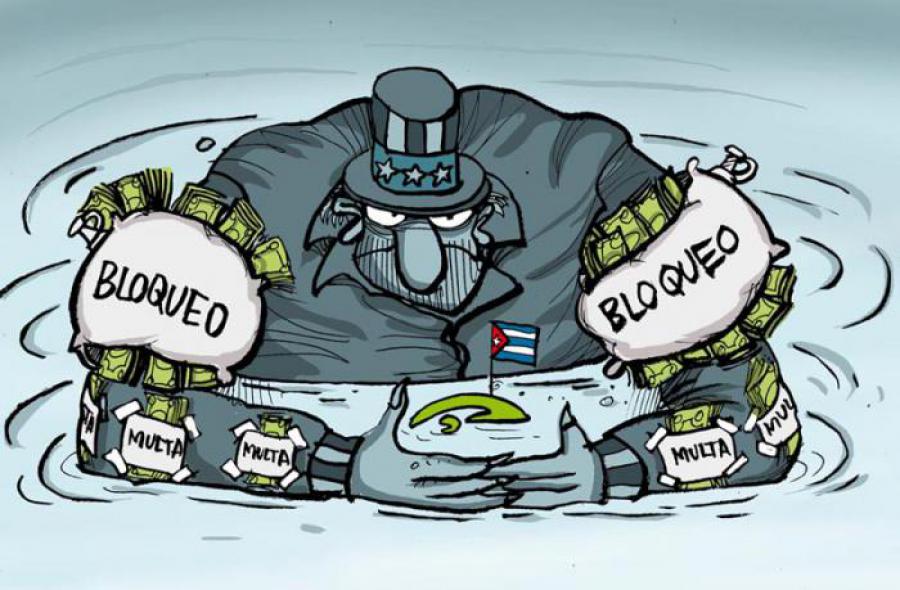
    The question today is, who is watching the sky for us? The answer has been deliberately altered by Washington. In February 2024, the U.S. administration revoked the official legal finding that greenhouse gases endanger human health — even as the U.S. National Academies of Sciences confirmed that the evidence for climate harm is stronger than ever. Far from refuting the science, the administration simply side-stepped it. A cabinet secretary publicly declared that carbon dioxide was never a pollutant. Can we imagine that: a politician sitting in a temperature-controlled office declaring carbon harmless, while the people of Mayreau dig through the wreckage of their homes around a collapsed church? That politician will never have to bury a neighbor killed by a storm he helped make more dangerous. He lives in a world where climate bills are always sent elsewhere — to small islands that contributed almost nothing to global emissions, but will pay almost the full price.

    This climate denial has tangible, deadly consequences. Washington has cut hundreds of jobs from the U.S. National Weather Service and proposed defunding the Miami-based forecasting laboratories that refine storm track predictions for the entire Caribbean. Experts warn this could cut forecasting accuracy by as much as 40%. For a mother in Basseterre, Bridgetown, Castries, Kingstown, Kingston, St George’s or St John’s, that 40% drop in accuracy is the difference between evacuating your grandmother in time and leaving her behind because the forecast said the storm would turn north. That is not an abstract modeling error — that is the difference between a family gathering for the holidays and a search party combing the shoreline. The storms themselves are fueled by ocean waters warmed by the very carbon emissions Washington now calls harmless. The storm cone that tells a family when to board up their home comes from Miami. When Washington blinds its own forecasting system, it blinds us too.

    Caribbean thinkers have long understood our regional reality as a legacy of colonialism: our economies structured to benefit distant powers, and the systems meant to protect our people always held in someone else’s hands. That has not changed. The U.S. has pulled out of the Paris Agreement, abandoned the board of the UN Loss and Damage Fund, and walked away from its global climate pledges. When wealthy nations decide science is negotiable, small island states do not get a vote. We only get the bill and the graves to dig. The colonial mindset did not disappear — it was repackaged as domestic budget cuts, sold to voters as “putting your country first,” while the cost is passed to us.

    But failure is not limited to Washington. Earlier this year, when Pacific island nation Vanuatu brought a landmark International Court of Justice climate ruling to the UN General Assembly, asking member states only to affirm their legal duty to protect vulnerable climate-hit nations, one of our own Caribbean neighbors — Trinidad and Tobago — was absent from the vote. Not opposed, not abstaining, simply not there, while a fellow small island spoke up for all of us. We cannot demand global solidarity if we do not practice it among ourselves.

    This 2026 hurricane season is not a season to endure and then forget. The U.S. president who rolled back climate protections and cut forecasting funding will hold office for this season and two more, but the damage he has done will not expire when he leaves office. A community’s climate resilience takes a decade to rebuild, and can be destroyed in one storm. When we say the Caribbean cannot wait, we mean it: we face three full hurricane seasons with a warning system that has been deliberately weakened on purpose. Our lives are on the line, and waiting is nothing less than betting our people’s lives on good luck.

    We refuse to make that bet. Lament must turn to action, because despair is just dependency dressed in darker clothes. We are not starting from nothing. We already have a regional disaster agency that responded effectively to Beryl, a regional insurance facility that disburses funds within days, and a Caribbean meteorological institute in Barbados that trains our own forecasters. What these institutions lack is scale, sustainable financing, and the global and regional commitment to make them work.

    Now is the time to find partners and build our own regional systems. We need our own independent satellite reception, free from the budget cycles and political whims of foreign governments. We need our own regional forecasting center, free to issue warnings without needing approval from Miami. We need our own regional disaster bond facility, funded by a small levy on the tourism industry that profits from our beautiful beaches — while we bear all the risk of climate disaster.

    Let us set clear, binding deadlines: by the 2029 hurricane season, we will have a fully Caribbean-owned regional forecasting capability. By 2030, we will have a fully regionally capitalized disaster bond facility to cover emergency response costs. This work does not need Washington’s permission. It only needs our own collective resolve.

    We build this for the people who actually call this region home: for Celia and Malachi, for the 12-year-old children in Roseau who have lost three homes before they even hit puberty.

    I think of the faces of my childhood, gathered around the radio, straining to hear a distant voice that could see the storm before they could. That voice is being switched off now, by choice, in another hemisphere. The watchman has walked off the wall and called it freedom. But the wall is still ours. Our children are standing behind it. We have to hold it ourselves. No one is coming to save us.

  • Peters shares Diamond League lead after 2nd-place finish in Rome

    Peters shares Diamond League lead after 2nd-place finish in Rome

    The 2026 Wanda Diamond League men’s javelin competition is halfway through its preliminary qualifying stage, and two elite throwers now share the pole position after back-to-back meets in Rabat and Rome. Two-time world champion and 2024 Olympic bronze medalist Anderson Peters has climbed to 15 total qualification points after a solid second-place finish at the Rome Diamond League meeting held on June 4, 2026, putting him level at the top of the standings with Sri Lanka’s Rumesh Tharanga Pathirage.

    Peters kicked off his 2026 Diamond League campaign in strong form on May 31, taking the top spot on the podium at the Rabat stop with an 86.08-meter throw that earned him the maximum 8 points for a first-place finish. He carried that momentum to Rome one week later, where he delivered a consistent 83.91-meter throw to secure seven additional points for second place. The day’s win went to Pathirage, who set a new meeting record with a world-leading 92.62-meter throw, also collecting 8 points to match Peters’ total 15-point count.

    For the 2026 season, the men’s javelin discipline will hold its preliminary qualifying competitions across five Diamond League stops: Rabat, Rome, Doha, Lausanne, and Zurich. The top six athletes in the overall qualification standings will earn an automatic spot in the prestigious Diamond League Final, scheduled to take place in Brussels on September 4 and 5. Under the circuit’s standard scoring system, first place earns 8 points, with each subsequent rank from first through eighth earning one fewer point, down to 1 point for eighth place.

    A decorated veteran of the circuit, Peters is no stranger to top-level success on the Diamond League stage. He claimed the Diamond League Final javelin title in 2024, and currently holds the second spot on the circuit’s all-time men’s javelin performance ranking thanks to his historic 93.07-meter throw in Doha back in 2022. After the Rome meet, Peters offered a measured take on his second-place finish, emphasizing the steady rhythm of elite track and field competition. “Second place with 83.91m is pretty good. I won in Rabat, this time I came second — you win some and you lose some, this is athletics,” he said.

    While the wider Diamond League circuit heads to Stockholm, Sweden for its next meeting on June 7, Peters will next compete in the javelin discipline at the Doha Diamond League stop on June 19. There, he will look to build on his strong early-season form, extend his consistent performances, and break the deadlock for sole possession of first place in the qualification standings ahead of the final in Brussels.

  • Grenadian senator appointed VP Inter-American Commission for Women

    Grenadian senator appointed VP Inter-American Commission for Women

    In a historic victory for Caribbean representation in hemispheric gender equity governance, Grenada’s Minister for Social and Community Development, Senator Gloria Ann Thomas, has been elected Vice President of the Steering Committee of the Inter-American Commission of Women (CIM). The vote took place during the 40th Assembly of Delegates, held May 28–29, 2026 in Washington, D.C., hosted by the Organisation of American States (OAS).

    This win marks a landmark milestone for Grenada, which has not held a leadership position on CIM’s governing body for more than four decades. Official historical records show the last time a Grenadian representative occupied a seat on the CIM Steering Committee was between 1979 and 1983, making Thomas’s election a symbolic and strategic reentry into regional gender policy leadership.

    The quadrennial? No, triennial Assembly of Delegates stands as CIM’s ultimate decision-making authority, bringing together cabinet ministers and senior government officials leading women’s affairs portfolios from across all OAS member states every three years. Over the course of the 2026 assembly, delegates debated pressing cross-regional priorities impacting women across the Americas, approved new multi-year strategic frameworks, and held elections for the body’s 9-member Steering Committee. The committee structure includes one president, three vice presidents, and five at-large elected members.

    Grenada was the sole Caribbean nation to put forward a candidate for one of the three open vice president seats, joining a competitive field of four contenders that also included Canada, Honduras, and Paraguay. When final vote totals were tabulated, Grenada secured a clear leading position with 27 votes, outpacing Canada’s 23, Paraguay’s 22, and Honduras’s 19. The top three vote-earners claimed the three vice president seats, advancing Thomas to the leadership role.

    Beyond the symbolic weight of returning to CIM leadership after 40 years, Thomas’s election carries significant strategic benefits for Grenada and other Small Island Developing States (SIDS) across the Americas. The position places Grenada at the center of high-level hemispheric discussions on critical issues including women’s economic empowerment, gender-inclusive digital transformation, cross-cutting gender equality, equitable labor inclusion, and community-focused social development.

    The appointment also grants Grenada a high-profile platform to elevate national and regional SIDS priorities in global and inter-American policy dialogues, contribute to the design of gender-responsive policy frameworks that address the unique needs of small island nations, and deepen collaborative ties with other OAS member states and international development partners across the hemisphere.

    Officials noted that the achievement reflects Grenada’s expanding leadership role in advancing global women’s rights and gender equity, and reinforces the Caribbean nation’s government commitment to ensuring that the unique perspectives and urgent priorities of Small Island Developing States are not overlooked in regional and international decision-making processes. The news of the election was released by Grenada’s Ministry of Foreign Affairs, Trade and Export Development.

  • Notice of Annual Meeting of Shareholders

    Notice of Annual Meeting of Shareholders

    Carib Brewery (Grenada) Limited, a prominent beverage industry player operating in Grenada, has officially issued a formal notification to all its shareholders detailing plans for the company’s 66th Annual Meeting. Scheduled to take place on Friday, June 26, 2026, the gathering will kick off at 4:30 p.m. local time at the Greenery Room within the Radisson Grenada Beach Resort, located in Grand Anse, St. George’s.

    The meeting will center entirely on standard corporate business that aligns with the company’s annual governance requirements. First on the agenda is the formal presentation and review of the audited financial statements for the full 12-month fiscal period ending December 31, 2025, alongside the annual reports submitted by the company’s Board of Directors and independent auditors covering this financial cycle. Following the review of financial documents, shareholders will proceed with two key electoral and appointment matters: the re-election of sitting board directors and the re-appointment of the company’s independent auditors, with the Board of Directors granted authorization to set the auditors’ remuneration for the upcoming fiscal term.

    In compliance with venue requirements, all shareholders planning to attend the in-person meeting are reminded that they must adhere to all existing public safety and entry protocols established by Radisson Grenada Beach Resort, as well as any additional public health or access policies that may come into effect by the date of the meeting. For shareholders seeking to review the company’s full 2025 Annual Report ahead of the gathering, the document is currently available for digital access via the Ansamcal group’s official website at www.ansamcal.com.

    This official notification was dated April 27, 2026, and signed by Aldyn Henry-Bishop, the Company Secretary of Carib Brewery (Grenada) Limited. This announcement was published through NOW Grenada, which includes a standard disclaimer stating that the platform does not take responsibility for opinions, statements, or third-party contributed content featured in its publication, and provides a channel for users to report any content that violates platform guidelines.