标签: Grenada

格林纳达

  • Temporary road closure: Morne Rouge public road, St George

    Temporary road closure: Morne Rouge public road, St George

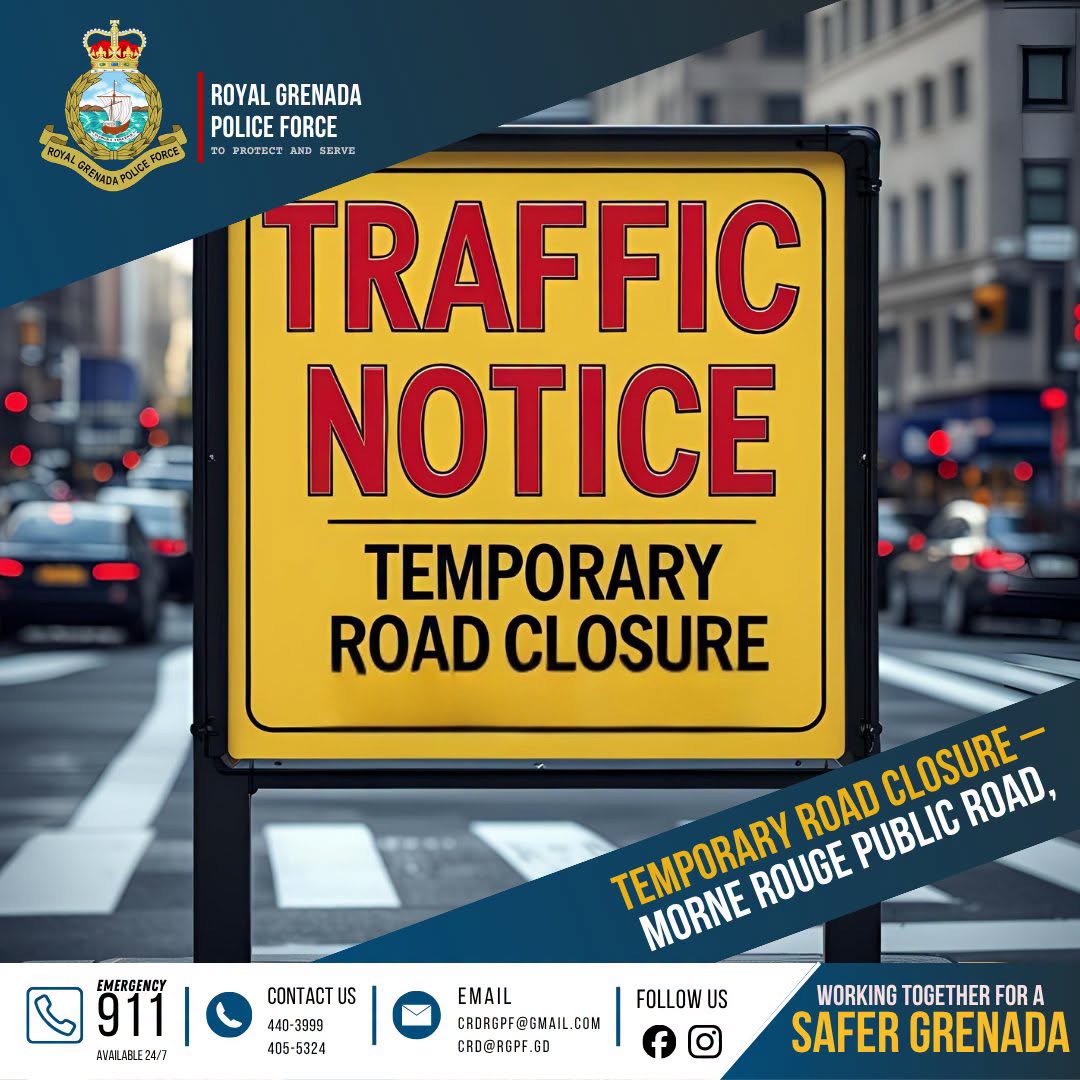
    The Traffic Department of the Royal Grenada Police Force (RGPF) has issued an official public advisory outlining a planned temporary closure of a key stretch of Morne Rouge public road, scheduled across two days in July to accommodate ongoing concrete construction work in the area.

    The affected section of the roadway sits adjacent to the intersection connecting the Le Marquis Shopping Complex and the Spiceland Mall compound. According to the advisory, the closure will be in effect from 7:00 a.m. to 5:00 p.m. on two separate days: Saturday, July 11, and Tuesday, July 14.

    Drivers traveling toward the construction zone from multiple directions will face restricted access, the RGPF confirmed. For motorists approaching from the Grand Anse main road corridor, no vehicles will be allowed past the affected intersection. The entire Morne Rouge public road will operate as a no-through route starting from its intersection near the South Saint George Police Station. Additionally, no traffic will be permitted to proceed beyond the Spice and Sip vicinity during the closure hours.

    In the advisory released via the Office of Commissioner of Police, the RGPF extended a formal apology to local residents, business owners, and commuters for any disruptions or inconvenience that the scheduled road work may cause. Law enforcement officials also noted that they are counting on the full cooperation of the public throughout the duration of the project to ensure work progresses smoothly and safely.

    As a standard publishing note, NOW Grenada, the platform sharing this official advisory, clarified that it does not take responsibility for the content or statements shared by contributing official bodies, and provides a channel for users to report any inappropriate content related to posted materials.

  • GCIC and Ethniv equip MSMEs with practical costing and pricing skills

    GCIC and Ethniv equip MSMEs with practical costing and pricing skills

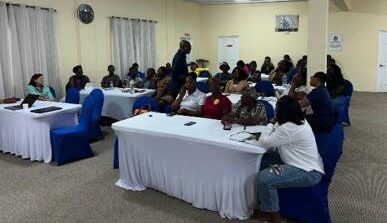
    Over 30 owners and founders of micro, small and medium enterprises (MSMEs) gathered at Grenada’s Point Salines Hotel for a hands-on professional development workshop focused on robust product costing and strategic profit-driven pricing, organized jointly by the Grenada Chamber of Industry and Commerce (GCIC) and local enterprise support partner Ethniv.

    Led by Gilbert Williams, a subject matter expert from Ethniv, the interactive session was crafted to address a critical gap for small Grenadian businesses: building practical capacity to calculate production costs accurately and design pricing frameworks that deliver consistent profit. Unlike generic business workshops, the training centered on actionable tools and techniques that small operators can implement immediately to strengthen their bottom lines and build long-term, resilient enterprises.

    This specialized training is a core component of GCIC’s broader MSME Development Programme, a multi-faceted initiative designed to boost the global competitiveness of local Grenadian businesses. The programme delivers support across five key pillars: targeted skills training, digital transformation enablement, expanded market access, professional networking opportunities, and strategic cross-sector partnerships. As part of this ongoing collaboration with Ethniv, the two organizations have developed a dedicated e-commerce marketplace that will give participating MSMEs a digital platform to showcase and sell their goods to international and domestic audiences far beyond their local customer base. The platform is scheduled for launch in the coming weeks.

    Participants in the workshop came from a wide cross-section of Grenada’s small business ecosystem, including food agro-processors, independent artisans, handmade craft creators, natural skincare product manufacturers, and a range of other small service and goods providers. Over the course of the session, attendees dived deep into foundational and advanced concepts, including alternative costing methodologies, value-based pricing models, healthy profit margin targeting, and actionable tactics to build brand visibility in Grenada’s increasingly crowded and competitive retail and online marketplace.

    In remarks opening the workshop, GCIC leadership reaffirmed the organization’s long-standing commitment to lifting up the domestic MSME sector through targeted, relevant skills training and holistic business development support. MSMEs form the backbone of Grenada’s private sector, and sustained support for their growth translates directly to broader economic resilience and job creation across the island.

    Feedback from participating entrepreneurs was uniformly positive, with the vast majority describing the training as timely, practically focused, and directly applicable to the day-to-day operations of their small businesses. One attendee shared in a post-workshop comment: “I extend sincere thanks to the GCIC for affording me the opportunity to be part of this timely activity. It was great. I had a great opportunity to learn new techniques that will surely enhance my small business.”

    Beyond classroom learning, participants also gained access to an added value perk: complimentary professional product photography services from Reynaldo Bernard, lead photographer at Grenada’s Unique Photography. The sessions allowed dozens of entrepreneurs to capture high-resolution, professional-grade images of their core products, ready to use for digital marketing, social media promotion, and the upcoming e-commerce platform launch. This extra support further boosted the overall impact and value of the programme for small business owners operating on limited marketing budgets.

    GCIC closed the event by extending formal gratitude to all collaborating partners: Ethniv for their expertise and program development support, Point Salines Hotel for donating venue space to host the workshop, and Reynaldo Bernard for his pro bono contribution of photography services. This cross-organizational collaboration created a rich, impactful learning experience that is projected to deliver tangible long-term benefits to the participating businesses and the broader MSME community.

    Organizers also used the event as an opportunity to invite non-member participating entrepreneurs to join GCIC, outlining the wide range of membership benefits, including policy advocacy on behalf of private sector interests, exclusive networking events with industry leaders and potential partners, tailored business support services, discounted access to future training programmes, and early access to market intelligence and partnership opportunities.

    As one of the longest-standing private sector representative bodies in Grenada, GCIC continues to center MSME support as a core organizational priority, with a sustained mission to nurture a culture of entrepreneurship, strengthen collaboration across the domestic business community, and drive sustainable, inclusive growth and competitiveness for small businesses across every region of the island.
  • Scholarship announcement: 2027–2028 Ireland Fellows Programme

    Scholarship announcement: 2027–2028 Ireland Fellows Programme

    A transformative educational opportunity has opened for aspiring leaders in Grenada, as the Ireland SIDS Fellows Programme partners with the Government of Grenada to launch full-funded graduate scholarship applications for the 2027–2028 academic year. This strategic initiative is designed to equip emerging local changemakers with advanced master’s-level education at Irish higher education institutions, while directly strengthening Grenada’s domestic capacity to advance its national Sustainable Development Goals (SDGs).

    Unlike partial funding schemes, the programme covers all associated costs of graduate study in Ireland, aligning with a broader global focus on investing in human capital for small island developing states (SIDS) to tackle pressing social, economic, and environmental challenges. By cultivating a new cohort of homegrown leaders, the collaboration aims to create long-term, sustainable impact that benefits communities across Grenada after scholars complete their studies and return home.

    To be eligible for the competitive scholarships, applicants must meet clear, structured criteria. First, candidates must hold a bachelor’s degree that was awarded no earlier than 12 years before the application deadline. Second, applicants cannot already hold a master’s degree or any higher-level academic qualification. Third, candidates are required to have a minimum cumulative grade point average of 3.0 on a standard 4.0 grading scale. Finally, all applicants must provide official verification that their English language proficiency meets the programme’s required standards, completed through an approved English language testing assessment.

    The application process follows three key steps that interested candidates must complete in order. First, prospective applicants must initiate the process by sending an email to [email protected] to request the official catalogue of eligible academic programmes and university-specific entry requirements. Second, after receiving the programme list, candidates must carefully review all application procedures and instructions outlined on both the official Ireland Fellows Programme website (available at https://www.ireland.ie/en/ireland-fellows-programme/) and the official programme flyer. Third, once all application materials are prepared, candidates must submit a full, complete copy of their application packet to Grenada’s Ministry of Education for internal review and official government nomination, a mandatory step for consideration.

    All application materials must be submitted by the deadline of 26 July 2026; late submissions will not be considered for review. For candidates with additional questions, or those seeking access to official application forms or the full programme list, inquiries can be directed to the Scholarship Desk at the Human Resource Development Division of Grenada’s Ministry of Education. Interested candidates can reach the division by telephone at (473) 417-9762, or via email at [email protected].

    This announcement is published by NOW Grenada, which notes that it does not take responsibility for opinions, statements, or third-party media content shared by programme contributors. Users can report any suspected abusive content related to this announcement through official channels.

  • Vacancy: Operations Manager – Zirachi Group Airbnb properties

    Vacancy: Operations Manager – Zirachi Group Airbnb properties

    As the short-term vacation rental market continues to grow across the Caribbean, Grenada-based Zirachi Group has opened a new full-time position for an experienced Operations Manager to lead the daily oversight and strategic management of its expanding portfolio of Airbnb and other short-term rental properties.

    The successful candidate will take ownership of every core operational function across the property network. Primary duties include end-to-end management of day-to-day property activities, seamless coordination of guest arrival and departure processes, and maintaining consistent, clear communication with guests throughout their stay. The role also requires supervising all housekeeping workflows, scheduling proactive and reactive property maintenance, and conducting routine property inspections to uphold brand standards. A key performance target for the position will be maintaining the highest possible benchmarks for cleanliness, property presentation, and overall guest satisfaction to drive positive reviews and repeat bookings.

    Additional responsibilities include managing all listings across major booking platforms, implementing data-driven strategies to optimize occupancy rates and maximize revenue, addressing guest inquiries in a timely fashion, resolving any on-site or pre-arrival issues, and mediating feedback from customer reviews. The Operations Manager will also be tasked with liaising closely with third-party vendors, contractors, and local service providers to ensure all outsourced work is completed on time and to specification, as well as compiling regular operational reports and tracking key performance metrics to assess individual property and overall portfolio performance.

    To be considered for the role, candidates must demonstrate prior hands-on experience in one of the following sectors: hospitality management, residential or vacation property management, or the short-term rental industry. Required soft skills include strong leadership capabilities to coordinate cross-functional work, exceptional organizational skills to manage multiple properties simultaneously, and top-tier communication and customer service abilities to engage with both guests and external partners. While not mandatory, prior experience working directly with Airbnb and other major short-term booking platforms is considered a significant advantage. Candidates must also be comfortable working independently, managing competing priorities in a fast-paced environment, and have working proficiency with Microsoft Office and standard basic reporting tools.

    Ziraachi Group highlights several key benefits for the successful applicant, including clear pathways for professional career growth within a dynamic organization that is actively expanding its footprint in Grenada’s tourism and short-term rental sector, as well as a supportive, collaborative, and professional work culture. The position is based on-location in Grenada, and all candidates must be able to work locally in the country.

    Applicants interested in joining the team and helping the company deliver standout, memorable guest experiences to visitors to Grenada are invited to submit a updated professional resume and a tailored cover letter to the company’s dedicated recruitment email at [email protected].

    This recruitment posting is provided by contributor Zirachi Group, per the statement of local publication NOW Grenada, which does not take responsibility for the content, opinions, or statements included in contributor-provided content. Users can report abusive content through the publication’s official reporting channel.

  • ECCB unveils designs of new EC banknotes featuring national heroes and regional icons

    ECCB unveils designs of new EC banknotes featuring national heroes and regional icons

    In a historic milestone marking a new chapter for regional currency, Eastern Caribbean Central Bank (ECCB) Governor Timothy N J Antoine has officially unveiled a fully redesigned series of Eastern Caribbean (EC) banknotes, created to celebrate the diverse people, cultural heritage, and collective achievements of the Eastern Caribbean Currency Union (ECCU)’s eight member states.

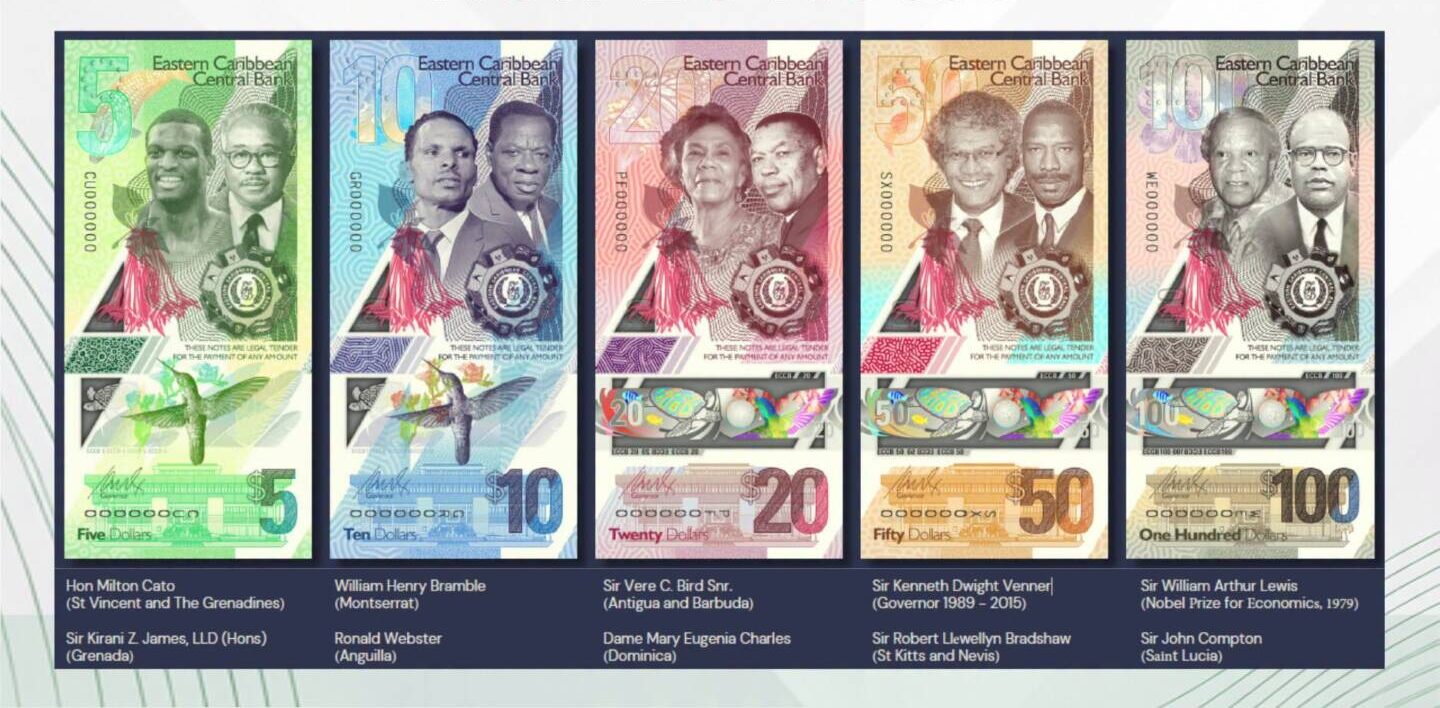
    For the first time since the EC dollar’s introduction, the redesigned banknotes do not carry the portrait of the late Queen Elizabeth II. In her place, the new currency series highlights distinguished national heroes and foundational nation-builders from across the ECCU, a choice that reflects the bloc’s shared regional identity, independent history, and transformative collective progress.

    Each denomination in the new series features a pair of iconic regional figures: the $100 banknote honors Nobel Prize-winning economist Sir William Arthur Lewis and former St. Lucia Prime Minister The Right Honourable Sir John George Melvin Compton; the $50 note spotlights long-serving former ECCB Governor (1989–2015) The Honourable Sir K Dwight Venner and St. Kitts and Nevis national hero The Right Excellent Sir Robert Llewellyn Bradshaw; the $20 note carries the portraits of Antigua and Barbuda founding father The Right Honourable Sir Vere Cornwall Bird Snr and former Dominica Prime Minister The Honourable Dame Mary Eugenia Charles; the $10 note features Montserrat leader The Most Excellent William Henry Bramble and Anguilla founding father The Honourable James Ronald Webster; and the lowest denomination, the $5 note, showcases St. Vincent and the Grenadines first prime minister The Right Honourable Robert Milton Cato and Olympic gold-medal winning sprinter Sir Kirani James, LLD (Hons).

    The shift away from the late monarch’s portrait was not a sudden decision: the ECCU’s Monetary Council first approved the change at its 105th meeting held on July 21, 2023, and later directed the ECCB to carry out region-wide public consultations to gather input from residents across the bloc. These consultations, conducted between July and December 2023, revealed overwhelming public support for replacing the former portrait with images of homegrown heroes and leaders who shaped the modern Eastern Caribbean.

    Governor Antoine framed the new banknote series as a meaningful step forward in the evolution of EC currency. Beyond celebrating the region’s rich cultural diversity and the enduring legacy of leaders who built the bloc, the updated series also retains the advanced security features that have long protected the EC dollar’s integrity, stability, and public trust.

    The official unveiling took place during a public ceremony marking the ECCB Monetary Council’s change in chairmanship, which was broadcast to a global regional audience via live stream on the ECCB Connects Facebook page and YouTube channel.

  • Shipment with 88 containers of relief supplies on the way to earthquake-hit Venezuela

    Shipment with 88 containers of relief supplies on the way to earthquake-hit Venezuela

    In a collective show of regional solidarity, a large humanitarian shipment packed with 88 containers of life-saving emergency supplies has departed from Georgetown, Guyana, bound for earthquake-ravaged Venezuela. The cross-border relief effort, coordinated by Guyana with backing from seven member states of the Caribbean Community (Caricom), marks one of the largest regional responses to the recent disaster in the South American nation.

    The cargo is being carried by the Motti, a vessel chartered through the BK Group of Companies, which set sail from BK Wharf in Kingston, Georgetown on Tuesday. Loaded onto the ship are a diverse array of urgent supplies tailored to post-disaster needs: 300 water tanks, essential pharmaceuticals and medical products, bulk food supplies, cleaning materials, and two heavy-duty earth-moving pieces of equipment donated by regional conglomerate Ansa McAL. The 1,500-tonne capacity vessel is projected to complete the four-day journey to Venezuela, where distribution of the aid will be coordinated through a broader international humanitarian relief framework to ensure supplies reach the most hard-hit communities.

    The relief initiative was first launched by Guyanese President Irfaan Ali, who called for domestic and regional support in the wake of the disaster. In addition to the seven contributing Caricom nations, the effort drew significant donations from Guyana’s domestic private sector and members of the Venezuelan diaspora community residing in Guyana.

    Witnessing the vessel’s departure, Senior Minister in the Office of the President with Responsibility for Finance Dr Ashni Singh emphasized that the operation represented far more than a single country’s contribution—it was a demonstration of unified regional care for a neighboring nation. “What we see today is not only the mobilisation made by the government of Guyana but also contributions made by seven member states of Caricom,” Singh told reporters on-site. “On President Ali’s behalf, I want to acknowledge the generosity of all those who supported this initiative. Venezuela is our neighbour, and the Venezuelan people are our neighbours. So, we consider this to be the least that we could do in this moment of tragedy.”

    Singh detailed that the cargo includes locally produced Guyanese rice, alongside the heavy equipment and medical supplies that are critical for rescue and recovery operations after a major seismic event.

    Minister of Public Utilities and Aviation Deodat Indar noted that the rapid response was rooted in core humanitarian values and longstanding regional cooperation commitments. “When your neighbour faces a natural catastrophe, it is only the human thing to do to respond,” Indar explained. “President Ali committed that Guyana would help, and Guyana has risen to that challenge. The private sector, the Venezuelan community here, and our Caricom brothers and sisters all came together to fill this massive vessel behind us.” He added that as Venezuela’s closest neighbor, Guyana had a particular responsibility to step up amid the crisis, and the joint effort stands as proof of the region’s commitment to collective support. “The need is great, and we are Venezuela’s closest neighbour. This is a testament to Guyana standing firm as a partner during this crisis,” he said.

    Retired Colonel Nazrul Hussain, Director General of Guyana’s Civil Defence Commission (CDC), shared that relief items were gathered from all 10 of Guyana’s administrative regions in response to President Ali’s public appeal for assistance. “Over a little more than a week, we were able to amass a considerable amount of relief supplies, amounting to about 88 containers. This became a consolidated Caricom effort with Guyana taking the lead,” Hussain said. The seven contributing Caricom states that joined the effort are Grenada, The Bahamas, St Kitts and Nevis, Saint Vincent and the Grenadines, St Lucia, Belize and Jamaica, he confirmed.

    Hussain highlighted that the speedy mobilization of the large shipment speaks to the region’s ability to coordinate rapid relief when disaster strikes a neighbor. “It demonstrates how quickly Guyana and our regional partners were able to mobilise and consolidate support for our neighbour in a time of need,” he added.

  • Berger Paints named Official Paint of the Caribbean Premier League (CPL)

    Berger Paints named Official Paint of the Caribbean Premier League (CPL)

    Two of the Caribbean’s most iconic homegrown institutions are joining forces in a landmark three-year collaboration, as leading regional paint manufacturer Berger Paints has been named the Official Paint Partner of the Caribbean Premier League (CPL), one of the Caribbean’s most popular and high-profile annual sporting events.

    This union pairs two brands deeply rooted in Caribbean identity, both united by shared core values: a relentless drive for excellence, passionate celebration of regional culture, and unwavering pride in Caribbean heritage. For the duration of the agreement, Berger Paints will take an active, visible role across every iteration of the T20 cricket tournament, rolling out creative fan engagement activations, consumer promotions, and immersive brand experiences that reach audiences both in-match at host stadiums and online via digital platforms.

    The partnership is far more than a branding exercise; it underscores Berger Paints’ long-standing track record of investing in Caribbean communities and backing regional initiatives that bring people from across the islands together. Cricket has long occupied a central place in Caribbean cultural life, and since launching in 2013, the CPL has solidified its status as the region’s top domestic sporting event, drawing tens of thousands of in-person spectators annually and drawing millions of broadcast viewers from across the globe.

    A standout component of the partnership will see Berger Paints’ specially formulated Grass Paint used to condition and maintain cricket pitches at all host venues across the Caribbean, helping keep playing surfaces looking vivid, uniform, and professional throughout every match of the tournament.

    “For generations, Berger Paints has worked to enhance and protect Caribbean homes, businesses, and public spaces. Becoming the Official Paint Partner of the CPL is a natural extension of our brand’s mission: we get to champion Caribbean excellence while connecting directly with consumers through the region’s most beloved sporting event,” explained Reyan Neckles, Commercial Manager at ANSA Coatings Grenada Limited.

    With more than six decades of operation in the region, Berger Paints has built an unrivaled reputation for quality product innovation, consistent performance, and reliability that has made it a household name across the Caribbean. All of the brand’s products are manufactured locally in facilities across Grenada, Trinidad, and Jamaica before being distributed to markets across the region, supporting local manufacturing sectors, driving regional economic growth, and engineering paint solutions specifically engineered to withstand Caribbean climate conditions.

    This new collaboration reinforces Berger Paints’ dual commitment: not only does the brand focus on beautifying and protecting residential and commercial spaces across the Caribbean, but it also prioritizes investing in the events, institutions, and community initiatives that unite the region. As the upcoming CPL season kicks off, the brand is preparing to connect with cricket fans across every island and showcase its brand promise as a product truly “Made for the Caribbean.”

    About Berger Paints
    Berger Paints stands as one of the Caribbean’s leading paint and coating brands, offering a full range of high-performance decorative, industrial, and specialty coating solutions tailored to regional needs. The brand is manufactured and distributed across the Caribbean by ANSA Coatings Grenada Limited, ANSA Coatings Limited (Trinidad & Tobago), and Berger Paints Jamaica Limited, all subsidiaries of the ANSA McAL Group.

  • Trinidad to provide ferry to temporarily move goods between countries

    Trinidad to provide ferry to temporarily move goods between countries

    Against a backdrop of growing regional efforts to cut trade costs and deepen economic integration, the 15-nation Caribbean Community (Caricom) has secured a temporary solution to advance its long-planned affordable intra-regional ferry service, with Trinidad and Tobago agreeing to deploy one of its existing vessels for cargo transport across member states. The agreement emerged from the 51st Caricom summit, a four-day gathering that wrapped up this week where regional leaders prioritized boosting connectivity, strengthening food security, and advancing the goals of the Caricom Single Market and Economy (CSME), the bloc’s framework for free movement of goods, labor, skills and services across the region.

    St. Lucia Prime Minister Phillip J Pierre, who currently holds the Caricom grouping’s chairmanship, outlined key takeaways from the summit at a post-meeting press conference Wednesday. He confirmed that leaders had agreed to accelerate work on the permanent ferry initiative, noting that a reliable, low-cost intra-regional ferry connection would not only ease cross-border travel for residents but also streamline trade flows and shore up regional food security by making it easier to move agricultural and essential goods between islands. Pierre added that the summit also delivered further progress on expanding the free movement of Caricom nationals across the bloc, with more member states moving toward full participation in the policy.

    Barbados Prime Minister Mia Mottley, who leads CSME coordination in Caricom’s quasi-cabinet structure, explained that the temporary ferry arrangement comes as the region grapples with volatile global oil prices driven largely by ongoing Middle East conflicts, a key factor pushing up regional cost of living. Lower-cost intra-regional transport is seen as a critical lever to bring down prices of essential goods across Caribbean island nations. Mottley shared that Trinidad and Tobago Prime Minister Kamla Persad-Bissessar has offered one of the country’s five active ferries for the temporary pilot, which will run while the regional private sector works to acquire a permanent purpose-built vessel, a process expected to take roughly 12 months.

    The pilot program, which will serve as a proof of concept for the full permanent service, will initially focus on ports across the southern and eastern Caribbean. Mottley noted that the program first requires assessments of existing port infrastructure, including whether existing ramps can accommodate the ferry or if upgrades are needed. In the coming weeks, Mottley plans to hold tripartite talks with Persad-Bissessar and St. Vincent and the Grenadines Prime Minister Dr. Godwin Friday to work out logistics for utilizing the Trinidadian ferry during the pilot phase.

    Beyond vessel logistics, Mottley is leading work to put in place the required regulatory framework for cross-border cargo movement. She is coordinating with fellow regional leaders to draft cross-border agreements for mutual recognition of vehicle operating licenses and insurance coverage, which will allow cargo trucks to travel seamlessly off the ferry and into destination member states. Mottley has set an ambitious target to finalize and put these regulations into effect within three months.

    Private sector stakeholders have been deeply involved in advancing the initiative, and expressed confidence that the project will deliver tangible results in the near term. Dr. Patrick Antoine, chief executive and technical director of the Caricom Private Sector Organisation (CPSO) Secretariat, told Caribbean Media Corporation (CMC) earlier this week that Mottley and Friday have already held two working sessions with private sector partners on the ferry plan in the past two weeks. Antoine pushed back against any suggestion that the project is an unrealistic proposal, emphasizing that the work is already well underway.

    Antoine explained that the initiative has hit delays in past years in part due to shifting election cycles across member states that disrupted planned ministerial-led working meetings, but he noted that momentum has now firmly shifted toward implementation. Three private firms have already completed preparatory work for the permanent service, he added, with two of the companies already securing preliminary financing contingent on the completion of the required cross-border regulatory protocols. Over the next three months, Antoine said, Barbados and Jamaica will take leading roles in advancing the operational details of the initiative, with the CPSO providing data, analysis and coordination between the regional government and the three private sector entities that will ultimately operate the full service.

    The temporary ferry pilot marks a key milestone for Caricom’s decades-long push toward deeper economic integration, with leaders and private sector stakeholders aligned on the need to deliver a functional low-cost service that addresses longstanding barriers to intra-regional trade and movement.

  • Haiti sends major medical mission to Venezuela

    Haiti sends major medical mission to Venezuela

    In an extraordinary display of cross-regional solidarity amid widespread global disaster response, Haiti — a small French-speaking Caribbean nation grappling with its own deep-seated economic and security challenges — has launched a dedicated humanitarian medical mission to support Venezuela in the wake of devastating twin earthquakes that struck the South American country on June 24.

    Led by Haiti’s Minister of Public Health and Population Dr. Sinal Bertrand, the 29-member team of specialized medical professionals touched down in Venezuela on Tuesday, accompanied by 5.5 metric tons of critically needed medical supplies to boost the country’s ongoing disaster relief and recovery operations. The June earthquakes have already left Venezuela reeling from an unprecedented humanitarian crisis: official government data confirms the disaster has claimed at least 3,685 lives, injured more than 16,700 people, and left thousands more unaccounted for across affected regions.

    The Haitian medical delegation brings specialized expertise across high-priority disciplines for disaster response, including orthopedics, general surgery, anesthesiology, gynecology, and internal medicine. The team will integrate directly with local Venezuelan health systems to deliver direct care to thousands of displaced and injured earthquake survivors. Beyond clinical personnel, the donated medical shipment includes critical care equipment ranging from ultrasound machines and oxygen concentrators to specialized pediatric care tools, all prioritized for emergency response needs.

    Speaking at the delegation’s arrival in the country, Dr. Bertrand emphasized that this gesture was rooted in shared fraternity rather than token support. “We did not come here to deliver leftovers, but to share what little we have with the Bolivarian people of Venezuela as a sign of solidarity and fraternity,” he stated. “We did not send a consultative delegation; we came with specialists ready to make themselves available to the Venezuelan government for 15, 20 or 30 days, or even as long as necessary.”

    The Haitian team was formally welcomed at Simón Bolívar International Airport by senior Venezuelan health officials, led by Vice Minister of Outpatient Care Networks Dr. Noly Fernández. Fernández expressed profound gratitude for the unexpected support from Haiti, framing the mission as a landmark demonstration of regional solidarity at one of Venezuela’s darkest moments in recent history. She confirmed that Venezuelan health authorities are already coordinating to deploy the Haitian medical team to the most hard-hit disaster zones, primarily the capital Caracas and the coastal state of La Guaira.

    “Venezuela welcomes them with great love, solidarity and respect for Bolivarian ideals. We share a common history that will allow us to move forward together,” Fernández added.

    For the Haitian government, the mission reflects a long-standing commitment to multilateral humanitarian cooperation and Latin American and Caribbean regional solidarity. Officials extended formal condolences to all families who lost loved ones in the disaster, and expressed full confidence in Venezuela’s capacity to rebuild and recover from the tragedy. The medical team will remain deployed in the country for as long as Venezuelan authorities require their support, to fill gaps in emergency healthcare services and sustain ongoing recovery operations across affected regions.

  • Improving the Digital Competencies of Literacy Educators

    Improving the Digital Competencies of Literacy Educators

    Literacy educators form the foundational backbone of global efforts to deliver inclusive, quality education for all, but a widespread gap in support leaves countless practitioners facing systemic barriers to success. From limited access to up-to-date professional development opportunities to unstable working conditions and a persistent lack of access to modern digital teaching resources, these challenges directly undermine the ability of educators to serve diverse learner communities. As education systems around the world undergo rapid digital transformation, the urgency to address these gaps has grown exponentially: literacy educators now require robust digital competencies to deliver accessible, effective instruction that meets the changing needs of 21st-century learners.

    To respond to this unmet critical need, the UNESCO Institute for Lifelong Learning (UIL), in partnership with Huawei – an associate member of the Global Alliance for Literacy (GAL) – has launched a groundbreaking, free multilingual online course titled *Improving Digital Competencies for Literacy Educators*. Hosted on the UIL Learning Hub, the self-paced program is currently available in four widely spoken languages: English, French, Arabic, and Spanish, making it accessible to literacy educators across diverse regional and linguistic contexts.

    The course curriculum is carefully aligned with established global education frameworks, including the UNESCO Recommendation on Adult Learning and Education (RALE) and the DELTA digital competency framework, to ensure it meets international quality standards. Its core mission is to equip literacy educators with the practical digital skills needed to confidently integrate technology into their teaching practices, leverage digital tools to enhance learning outcomes, and advance the professionalization of adult literacy education globally. This initiative represents a targeted step toward ensuring educators can adapt to evolving learner needs and advance progress toward United Nations Sustainable Development Goal 4 (SDG 4), the global commitment to inclusive and equitable quality education for all.

    As an open-source, completely free resource, the course removes common financial and access barriers that prevent many educators from accessing professional development. Key benefits of the program include: practical, step-by-step instruction tailored specifically to the unique needs of literacy educators, immediately adaptable teaching resources that can be integrated into diverse educational contexts from rural community programs to urban adult learning centers, and an official certificate of completion co-issued by UIL and Huawei for participants who successfully finish all requirements.

    The course is structured into 11 self-guided learning units, totaling 2.5 hours of instruction that educators can complete on their own schedule to fit around existing work commitments. Core learning objectives include exploring innovative approaches to embedding digital tools into literacy instruction, building capacity to design engaging, inclusive learning materials and accessible learning environments powered by technology, and supporting ongoing professional growth through evidence-based educational technology practices.

    Direct access links for each language version of the course are publicly available: English at https://learninghub.uil.unesco.org/course/view.php?id=78, French at https://learninghub.uil.unesco.org/course/view.php?id=84, Spanish at https://learninghub.uil.unesco.org/enrol/index.php?id=83, and Arabic at https://learninghub.uil.unesco.org/course/view.php?id=81&notifyeditingon=1. Educators with questions about enrollment or course content can reach the program administration at [email protected].