标签: Grenada

格林纳达

  • CARPHA and Small Arms Survey partner to advance Caribbean health and security frameworks

    CARPHA and Small Arms Survey partner to advance Caribbean health and security frameworks

    In a significant move to address regional security challenges, the Caribbean Public Health Agency (CARPHA) and the Small Arms Survey have formalized a three-year strategic partnership through a Memorandum of Understanding. This groundbreaking collaboration aims to enhance arms and ammunition management while mitigating risks associated with illicit small arms throughout the Caribbean region.

    The agreement represents a novel convergence of public health expertise and security research, combining CARPHA’s regional health leadership with the Small Arms Survey’s internationally recognized capabilities in arms monitoring and security analysis. This interdisciplinary approach seeks to develop comprehensive solutions to the complex interplay between armed violence and public health outcomes.

    CARPHA Executive Director Dr. Lisa Indar emphasized the critical nature of this collaboration during the signing ceremony, noting that violence and firearm-related injuries present escalating public health challenges across Caribbean communities. The partnership will enable strengthened surveillance systems, generate robust research data, and support member states through evidence-based policies designed to protect civilian lives and enhance community wellbeing.

    Dr. Nicolas Florquin, Head of Data and Analytics at the Small Arms Survey, welcomed the agreement as a strategic advancement in regional security response capabilities. The Geneva-based organization, an associated program of the Geneva Graduate Institute, brings decades of specialized experience in reducing illicit arms proliferation and armed violence through policy-relevant knowledge generation and capacity development.

    Under the agreement’s framework, the partners will pursue five key objectives: integrating firearm-related injury data into health surveillance systems; conducting joint studies on the health impacts of firearm violence; developing capacity-building materials for multiple government ministries; supporting evidence-based policymaking for Caricom governments; and facilitating public awareness campaigns using research findings.

    This innovative partnership marks a paradigm shift in addressing armed violence through public health methodologies, underscoring CARPHA’s commitment to regional health security while supporting member states in creating safer environments for Caribbean citizens.

  • Reach Within launches Joy Box Project

    Reach Within launches Joy Box Project

    In Grenada, the charitable organization Reach Within has initiated its annual Joy Box Project, calling upon community members to contribute to the welfare of at-risk youth during the holiday season. Since its establishment in 2003, the organization has dedicated itself to enhancing the lives of countless children and teenagers residing in foster care and residential homes across the island.

    The Joy Box Campaign represents a holistic approach to youth support, combining essential nutritional provisions with enriching experiences designed to foster emotional resilience, positive social connections, and practical life skills. Each donated box helps fund critical programs including therapeutic counseling, cultural activities like drumming and dance, swimming lessons, and educational toolkits, while simultaneously stocking the organization’s food pantry.

    A particularly pressing issue addressed by Reach Within is the transition of teenagers from state care upon reaching adulthood. With no transitional living facilities currently available in Grenada, many young adults face significant challenges when aging out of the child protection system at 18.

    The organization maintains a dedicated drop-in center on Lucas Street in St. George’s, offering comprehensive support services including bathing facilities, vocational training, life skills education, clothing resources, and a welcoming environment staffed by professionals who recognize every individual’s inherent dignity and potential.

    Community participation is encouraged through donations of nutritious food items such as fresh produce, grains, canned goods, eggs, and protein sources. These contributions will be assembled into special Christmas Joy Boxes, providing tangible support while conveying a powerful message of care and validation to vulnerable youth.

    The Reach Within Drop-In Centre will accept donations during specified hours on December 16th (5-7 PM), December 18th (4-6 PM), and December 19th (4-6 PM). Additional information regarding donation procedures and alternative support methods is available through General Manager Donnet Williams or via the organization’s official website.

  • Why do libraries still matter today? Part 1

    Why do libraries still matter today? Part 1

    In an era dominated by digital information, the enduring relevance of libraries faces renewed scrutiny. This examination, the first in a four-part series exploring library significance, traces the institution’s remarkable evolution from ancient origins to contemporary community centers.

    Historical records reveal libraries have existed for over five millennia, originating in Mesopotamia where clay tablets and papyrus scrolls contained humanity’s earliest documented knowledge. Access remained restricted to scribes, religious figures, and government officials during these formative periods, with royalty maintaining private collections. This historical context demonstrates civilization’s long-standing recognition of knowledge preservation—a fundamental need that persists despite technological transformation.

    The digital revolution has fundamentally altered information access patterns. Where libraries once served as primary repositories for physical materials, modern society now experiences constant information saturation through portable devices. This paradigm shift has introduced new challenges including information overload, misinformation proliferation, and digital inequality.

    Contemporary libraries have responded by transforming into dynamic community institutions that transcend their traditional roles. They now provide critical digital literacy training, facilitate lifelong learning opportunities, and actively bridge the digital divide. The International Federation of Library Associations and Institutions (IFLA), representing 1,500 members across 150 nations, exemplifies this global transformation through initiatives like their 2025 theme “Uniting Knowledge, Building the Future.”

    At the T.A. Marryshow Community College (TAMCC) Library, this evolution manifests through innovative programs including the Gilda Campos Outreach initiative serving schools and senior facilities, Storytime @ TAMCC Library promoting local culture through artistic expression, and an upcoming student-led Book Club integrating community service requirements. These programs collectively address reading promotion while strengthening community bonds.

    Despite operating with limited resources, libraries continue adapting to societal needs. Their continued evolution suggests these institutions will remain essential as long as information requires curation, accessibility, and contextualization within communities.

  • FAO and partners help Grenada to use One Health Approach

    FAO and partners help Grenada to use One Health Approach

    Seventy-two officials from public health, agriculture, and environmental sectors across four Eastern Caribbean nations have completed a groundbreaking series of workshops to combat emerging health threats. Conducted in Grenada, St Vincent and the Grenadines, St Lucia, and St Kitts and Nevis, these sessions focused on prioritizing zoonotic diseases using advanced methodological frameworks.

    The initiative received substantial technical backing from major international organizations, including the Food and Agriculture Organisation of the United Nations (FAO) and the Pan American Health Organisation (PAHO). Specialized support was provided through PANAFTOSA (The Pan American Centre for Foot-and-Mouth Disease and Veterinary Public Health) and PAHO’s Eastern Caribbean office.

    Participants engaged in a comprehensive evaluation of 40 zoonotic diseases utilizing PANAFTOSA’s adapted prioritization methodology. The assessment incorporated multiple critical factors: human transmissibility patterns, animal-to-human transmission potential, severity indicators, public health consequences, economic ramifications, surveillance feasibility, climate sensitivity, and impacts on vulnerable populations. This evidence-based approach enabled each nation to identify their most concerning zoonotic threats, establishing a robust foundation for policy development within the One Health framework.

    The workshops produced concrete action plans featuring strengthened multisectoral surveillance systems, harmonized case definitions, improved information-sharing protocols, and enhanced private veterinarian engagement. Additional priorities include developing national emergency response plans and implementing long-term initiatives such as simulation exercises and integrated surveillance infrastructure.

    Dr. Frédérique Dorleans, PAHO/WHO Advisor for Social and Environmental Determinants for Health Equity, emphasized the workshops’ critical importance: “This collaborative effort represents a significant advancement in regional preparedness against emerging infectious threats. The project establishes common ground for strategic activities targeting surveillance, prevention, and optimized resource allocation.”

    Tania de Getrouwe Hoost, FAO’s Lead Technical Officer for the project, highlighted the technical rigor of the methodology: “The prioritization exercises applied an evidence-based approach integrating epidemiological, environmental, and socioeconomic criteria to guide national decision-making. This process represents a crucial technical step toward operationalizing the One Health approach at national levels.”

    These workshops constitute a vital component of the broader “Strengthening Prevention, Preparedness and Response to Health Emergencies in the Eastern Caribbean Countries” project, supported by the Pandemic Fund and implemented through collaboration between national governments, PAHO/WHO, FAO, and the World Bank.

  • Vacancy: Finance Officer

    Vacancy: Finance Officer

    The Grenada Council for Technical and Vocational Education and Training (GCTVET) has announced a career opportunity for qualified finance professionals to join the Grenada National Training Agency (GNTA) as Finance Officer. This senior position represents a critical role within the organization’s financial infrastructure, reporting directly to the Chief Executive Officer.

    The successful candidate will assume comprehensive responsibility for all financial management, disbursement procedures, accounting operations, and audit-related matters. The position demands expertise in maintaining meticulous financial records while ensuring strict compliance with International Financial Reporting Standards (IFRS). Key functional areas include financial record management, regulatory compliance, and sophisticated financial reporting and analysis.

    Core responsibilities encompass preparing quarterly financial reports, annual financial statements, and donor-specific financial documentation. The officer will maintain regular communication with management and staff to facilitate accurate financial information exchange while keeping leadership informed of significant financial developments.

    The role requires advanced proficiency in accounting systems and internal controls, including journal entry preparation, payment processing, and monthly bank reconciliation. Additionally, the Finance Officer will contribute to budget and cash flow projection development under CEO supervision, evaluate project proposal costings, and manage payroll processing with accurate statutory deductions.

    Applicants must possess a Bachelor’s degree in Accounting or Finance from an accredited institution, or equivalent NVQ/CVQ Level 4 certification. Professional accounting qualifications such as CAT certification or intermediate progression toward ACCA, CGA, or CPA designations are mandatory. The position requires minimum five years of general accounting experience with demonstrated expertise in IFRS and computerized accounting systems.

    Essential qualifications include comprehensive knowledge of accounting software, governmental accounting standards, and advanced proficiency in spreadsheet applications and financial data analysis. Critical abilities include exceptional attention to detail, organizational skills, and the capacity to meet strict deadlines while exercising independent judgment within established procedural guidelines.

    Interested candidates must submit applications with supporting documentation via email to gnthr.stgeorges@gov.gd addressed to the Chairman of GCTVET. The application deadline is December 31, 2025, at 4:00 PM local time.

  • Vacancy: Quality Assurance Assistant

    Vacancy: Quality Assurance Assistant

    The Grenada Council for Technical and Vocational Education and Training (GCTVET) has announced a professional opportunity for qualified individuals to join the Grenada National Training Agency (GNTA) as a Quality Assurance Assistant. This position represents a critical component in maintaining the integrity of the country’s vocational education certification system.

    Operating under the guidance of the Quality Assurance Coordinator, the selected candidate will assume comprehensive responsibility for overseeing candidate registration processes and monitoring Training Centre activities related to assessment administration and verification. The role demands a combination of technical expertise and administrative proficiency to ensure the seamless operation of Grenada’s vocational qualification framework.

    Primary responsibilities encompass four key operational domains:

    Quality Assurance and Compliance: The assistant will collaborate closely with training and assessment centers to enforce adherence to established quality assurance protocols while supporting the development and implementation of specialized training programs.

    Assessment and Certification Administration: This includes coordinating all activities related to CVQ/NVQ candidate registration, ensuring efficient administrative processes for timely certification, maintaining comprehensive assessment records, and updating the National Qualifications Register with candidate information.

    Assessment of Prior Learning (APL) Support: The position requires developing self-assessment instruments based on occupational standards, orienting applicants to the APL process, and providing expert guidance in portfolio development for candidates seeking recognition of prior learning.

    Reporting and Committee Support: The assistant will serve as recording secretary for the Certification Review Committee, preparing and submitting detailed reports to the Council while generating comprehensive documentation for all areas of responsibility.

    Applicants must possess a Bachelor’s degree in Education, a CVQ/NVQ Level 4 qualification in a relevant field, or equivalent certification from an accredited institution. Additional certification in Education Quality Assurance is highly desirable. Candidates should demonstrate minimum three years of experience in education or related sectors, with preference given to those with background in Technical and Vocational Education and Training (TVET) or tertiary education.

    Essential knowledge requirements include familiarity with assessment and verification regulations, proficiency in Microsoft Office applications, data extraction and analysis capabilities, and experience with Information Management Systems. The position demands exceptional organizational abilities, advanced communication skills, and the capacity to manage multiple projects simultaneously while maintaining meticulous attention to detail.

    Interested professionals should submit their applications with supporting documentation via email to recruitment@gctvet.gd, addressed to the Chairman of GCTVET. The application deadline is December 31, 2025, at 4:00 PM local time.

  • German–Caribbean climate talks spotlight urgent need for ambition and adaptation

    German–Caribbean climate talks spotlight urgent need for ambition and adaptation

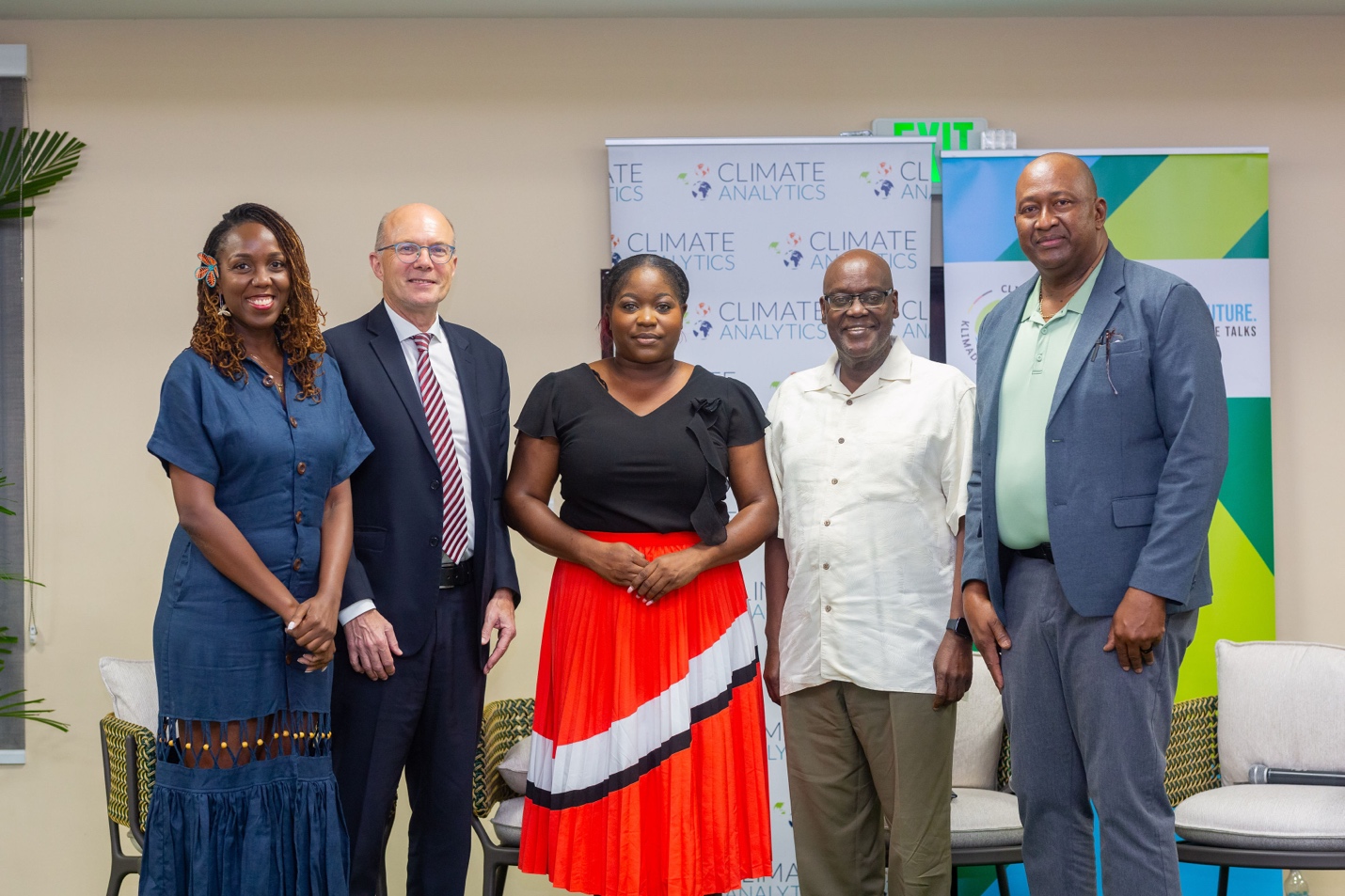
    In a significant demonstration of international climate solidarity, senior diplomats, policy experts, and youth advocates assembled in Grenada on December 4th for the third German-Caribbean Climate Talks. This high-level dialogue, hosted at the Radisson Hotel in Grand Anse, served as a critical forum for evaluating outcomes from the recent COP30 summit and strategizing enhanced adaptation measures for vulnerable Caribbean nations.

    The conference gained profound urgency as Grenada continues its recovery from the catastrophic impacts of Hurricane Beryl in 2024. His Excellency Dr. Christophe Eick, Germany’s Ambassador and Special Envoy for Caribbean Climate Issues, inaugurated the proceedings by acknowledging the indispensable moral leadership of Small Island Developing States (SIDS). “Germany stands firmly alongside the Caribbean in building resilience, advancing clean energy transitions, and confronting ongoing climate impacts,” Ambassador Eick declared.

    Financial commitments took center stage as Germany announced new cooperation agreements exceeding €30 million with CARICOM. Ambassador Eick reaffirmed Germany’s position as the foremost contributor to the Adaptation Fund while issuing a stark warning: “Global efforts must accelerate dramatically, especially among major emitters, to preserve the attainable 1.5°C warming threshold.”

    UNFCCC Executive Secretary Simon Stiell joined virtually, recognizing COP30’s achievements while emphasizing implementation gaps. “Ambition unsupported by action will inevitably falter,” Stiell observed, noting the particular urgency for regions rebuilding from consecutive hurricane disasters.

    Rueanna Haynes of Climate Analytics Caribbean delivered a penetrating assessment of COP30 outcomes, noting critical advances including the tripling of adaptation finance by 2035, the Just Transition Work Programme mechanism, and the Global Implementation Accelerator. “The divide between scientific necessity and current action remains dangerously wide,” Haynes cautioned. “Implementation must advance at unprecedented velocity.”

    Grenadian Ambassador Safiya Sawney emphasized regional unity as the Caribbean’s paramount advantage: “Our strength derives from speaking collectively. We must consolidate expertise, align strategies, and position CARICOM as an investment bloc to influence global decisions affecting our survival.”

    Ambassador Dr. Spencer Thomas identified climate finance as the principal obstacle: “The policy architecture exists. What we require is a consistent, predictable financial framework that translates commitment into concrete action.”

    Youth representative Abigail Ellis of the Caribbean Youth Environment Network issued a powerful call for intergenerational justice: “Young people possess the readiness and capability to lead, but we demand meaningful access, investment, and opportunities to shape economies that serve our future.”

    The dialogue concluded with consensus that while COP30 represented progress, the global community must demonstrate radically heightened ambition. As Haynes summarized: “We possess the knowledge, evidence, and partnerships. Now we must summon the courage to act at the scale and speed this emergency demands.”

  • Louis Williams appointed first chair of PSEP Fund Board

    Louis Williams appointed first chair of PSEP Fund Board

    The Grenadian government has formally established the inaugural Board of Trustees for the Public Sector Employees Pension Fund, appointing veteran financial expert Louis Williams as its first chairman. The appointments were officially gazetted on December 12, 2025, following Cabinet approval during its October 6 meeting.

    Mr. Williams brings substantial expertise to the role, having recently concluded a distinguished 23-year career with the National Insurance Scheme (NIS) where he retired in December 2020. His extensive background in financial management positions him to lead the critical oversight of public sector pensions.

    The nine-member board will serve a three-year term effective October 1, 2025, comprising professionals with diverse expertise as mandated by the Pension Fund legislation. Adrian Strachan assumes the role of Deputy Chairman, while other members include legal representative Wynette Baker, actuarial expert Shontell T Mc Guire, human resources specialist Peterlyn Cooper, investment professional Mervin Lord, and labor representative Daisy Hazzard from the Grenada Trades Union Council.

    The board also includes ex-officio government representatives Lyndonna Hillaire Marshall (Permanent Secretary for Public Administration) and Mike Sylvester (Permanent Secretary for Finance). Their appointments reflect the governance structure outlined in Part IV of the Pension Fund law, which requires specific qualifications including legal practice experience, actuarial expertise, financial knowledge, human resources background, investment proficiency, and representation from both trade unions and statutory bodies.

    The legislation further stipulates that trustees shall bear duties and obligations in accordance with the Trustee Act, Chapter 329, ensuring proper accountability mechanisms for the management and administration of the Fund.

  • Bernard Antoine chairs new Public Service Commission

    Bernard Antoine chairs new Public Service Commission

    The Grenadian government has initiated a comprehensive restructuring of its Public Service Commission (PSC), with several key membership changes announced through an official notice in the 12 December 2025 Government Gazette. Former Chairperson Deborah St Bernard, who had held the position since November 2022, will not continue for a second three-year term, alongside commissioners Judy Benoit and Jim Alexander.

    The newly reconstituted commission will be chaired by Bernard Antoine, with additional members including Faye Thompson (returning from the previous commission), Patricia Telesford, Adrian Francis representing the Public Workers Union, and James Alexander representing the Grenada Union of Teachers. This newly formed team is scheduled to commence their official duties on 22 November 2025, serving a standard three-year term.

    Established under Section 83 of the Grenada Constitution, the PSC operates as an autonomous entity with clearly defined appointment protocols. The Chairman and two members are appointed by the Governor-General following recommendations from the Prime Minister, while the remaining two members are selected after consultation with appropriate representative bodies, specifically the Grenada Union of Teachers and the Grenada Civil Service Association. The Constitution explicitly mandates that no appointments can proceed without obtaining agreement from these consulted organizations.

    Commission members are required to take official oaths of allegiance and office, affirming their operational independence from external influence or control when executing their constitutional responsibilities. The PSC maintains critical authority over public service personnel matters, including appointments, disciplinary actions, removals from office, and leave approvals, as outlined in Section 84(1) of the Constitution, subject only to provisions in Section 91.

  • Niger Timothy Houston graduates as Agricultural Engineer from EARTH University

    Niger Timothy Houston graduates as Agricultural Engineer from EARTH University

    Grenada has marked a significant educational achievement with Niger Timothy Houston’s graduation as an Agricultural Engineer from EARTH University in Costa Rica. The December 5th ceremony recognized 108 graduates from 27 countries, highlighting Grenada’s growing commitment to sustainable agriculture education.

    Houston represents an expanding cohort of Grenadian students choosing EARTH University for advanced training in sustainable agriculture. With four currently enrolled students and one previous graduate, this educational partnership strengthens as Grenada prioritizes agricultural modernization and food security resilience.

    In reflective remarks, Houston described his EARTH University experience as fundamentally transformative, providing both technical skills and personal development. “EARTH has equipped me with the confidence, global perspective, and practical abilities to serve Grenada meaningfully,” he stated, emphasizing the program’s focus on real-world problem solving and leadership development. Houston actively encouraged other young Grenadians to pursue this educational opportunity.

    The graduation ceremony attracted significant support from international education advocates. Dr. Khan Nedd, Chair of the W.K. Kellogg Foundation Board of Trustees and EARTH University director, attended to affirm the importance of educational investments that strengthen communities. Dr. Nedd’s philanthropic leadership aligns with EARTH’s mission to prepare professionals for agricultural, climate, and equity challenges.

    Victor Sánchez of EARTH’s Development and Advancement Division highlighted the university’s comprehensive educational approach, combining technical training with character development. “Our program cultivates persistence, discipline, and environmental responsibility while preparing students for global leadership,” Sánchez noted, expressing particular confidence in Grenadian students’ potential.

    Belmont Estate, through Managing Director Shadel Nyack Compton, has developed a robust partnership with EARTH University, providing internship opportunities for third-year students and graduates. Compton expressed strong endorsement of EARTH’s educational model, stating, “This institution delivers exactly the training Grenada needs to build an innovative, sustainable agricultural future.”

    The graduation celebrations concluded with vibrant cultural presentations featuring active participation from Grenadian students, symbolizing both national pride and global connectivity. This educational milestone represents Grenada’s strategic investment in developing leaders capable of advancing climate-smart agriculture and rural transformation.