标签: Grenada

格林纳达

  • Full circle: Kurt Felix returns to Commonwealth Games

    Full circle: Kurt Felix returns to Commonwealth Games

    Twelve years ago, under overcast, damp skies at Glasgow’s Hampden Park, Grenadian decathlete Kurt Felix crossed the finish line of a grueling 1500-meter race, wiped stinging sweat from his eyes, and turned toward the stadium scoreboard. When the final total of 8,070 points illuminated the display, it confirmed more than a bronze medal win: it marked the first senior international multi-event medal in Grenada’s history, proving that a small Caribbean nation long celebrated for its individual sprinting talent could produce a world-class decathlete.

    “It represented pride,” Felix reflected on that landmark podium moment. “It represented years of sacrifice, discipline, and resilience through one of the toughest events in athletics. The decathlon demands excellence across 10 different events over two grueling days, and every point is earned through hard work. It was proof that as a small nation we can compete with the best in the world.”

    Now, as the 2026 Commonwealth Games return to Glasgow, Felix is back on the Scottish ground where his international career launched. The former NCAA champion and two-time Olympian now serves as Team Grenada’s official multi-event coach, ready to guide a new cohort of combined-events athletes on the exact stage where he once made history.

    Felix’s path to decathlon stardom was never a planned route, rooted instead in schoolboy camaraderie and unexpected setback at Grenada Boys’ Secondary School (GBSS). Long before Grenada gained recognition as a combined events contender, decathlon was virtually uncharted territory in the southern Caribbean. Local track culture centered on explosive sprints, 400-meter races, and successful throwing events, while the 10-discipline decathlon requires a rare mix of speed, strength, technical precision, endurance, and mental toughness that few in the region pursued.

    “During my tenure at the GBSS, it was more about fun with friends,” Felix recalled with a smile. “It was always who could run the fastest, jump the highest, throw the furthest. I actually used to hate running.”

    Even so, his natural athletic versatility stood out immediately. At his 2004 CARIFTA Games debut in Bermuda, he followed the path of many Grenadian athletes before him, taking gold in the under-17 javelin throw with a 50.29m mark and bronze in the high jump at 1.80m. But an unexpected finger injury forced a career-altering shift to multi-events, as he adjusted his training to secure a spot on the national team.

    “The heptathlon medals came after a finger injury which led me to the multi,” Felix explained. “I felt like that could have gotten me on the team.” The strategic gamble paid off immediately: he claimed bronze in the under-20 heptathlon in Guadeloupe in 2006, followed by gold at the same age category in the 2007 Turks and Caicos CARIFTA Games with 4,675 points.

    A scholarship to study and compete in the United States turned Felix’s raw natural talent into polished world-class technique. At Central Arizona College, he earned two NJCAA national decathlon titles while making his senior international decathlon debut at the 2008 Pan American Combined Events Championships in Santo Domingo, scoring 6,946 points. A transfer to Boise State University elevated his performance to elite NCAA Division I standards, and on June 7, 2012, at the NCAA DI Outdoor Championships in Des Moines, Iowa, he delivered a historic performance. Backed by a 4.60m pole vault clearance and a 41.51m discus throw, he scored 8,062 points to claim the NCAA national decathlon title, becoming the first Grenadian athlete ever to win an NCAA multi-event championship.

    Yet for years after turning professional, Felix stood alone as the only active decathlete representing Grenada on the global stage. Being the lone pioneer brought a mix of isolation and quiet determination to build a legacy for future athletes.

    “At the time, we were never known for the decathlon, so it took a while for people to understand the events, and it didn’t carry the hype as the sprinting events,” Felix said. “It drove me to want to show that as a small nation we can compete and stand out on the big stage. I felt like there were bigger talents than I was at the junior level that would have been great decathletes. We dominated on the CARIFTA level, so why not the world stage?”

    Fresh off his 2012 NCAA victory, Felix launched an extraordinary 5-year run of consistent top performances on the global stage. He made his Olympic debut at the 2012 London Games just months after winning his NCAA title, followed by his breakthrough 2014 Commonwealth Games bronze in Glasgow. He took silver at the 2015 Pan American Games in Toronto with 8,269 points, notching personal bests in the 100m (10.91s) and shot put (15.23m), and placed 8th at the 2015 World Championships in Beijing with a total of 8,302 points and a lifetime best 14.58s in the 110m hurdles. He finished 6th in the indoor heptathlon at the 2016 World Indoor Championships in Portland, then posted an impressive 9th-place finish at the 2016 Rio Olympic Games with 8,323 points, highlighted by a 69.92m javelin throw.

    That Rio result was overshadowed by a far more meaningful milestone: competing alongside him in the decathlon was his younger brother, Lindon Victor. For two brothers from an island nation of just 110,000 people to compete side-by-side in an Olympic decathlon remains one of the rarest family achievements in modern track and field, and it served as clear proof that Felix’s pioneering work to put Grenadian decathlon on the global map was already bearing fruit.

    Felix hit the peak of his competitive career on June 25, 2017, at the prestigious Ratingen Mehrkampf-Meeting in Germany, where he scored a personal best 8,509 total points and set a meeting record with a massive 72.80m javelin throw. He followed that with a 7th-place finish (8,227 points) at the 2017 London World Championships, capping a career that included five World Championship appearances and multiple top-eight finishes against the world’s best.

    Returning to Glasgow in 2026 as part of Team Grenada’s coaching staff marks a profound shift for Felix. For two decades, he controlled his own performance and outcomes across 10 events; stepping into a sideline role requires an entirely new kind of discipline.

    “The hardest part of transitioning from competing on the track to guiding from the sidelines has been learning that I no longer control the outcome,” Felix admitted candidly. “As an athlete, especially as a decathlete, I knew that every result came down to the work I put in the early mornings, the injuries, the countless hours mastering ten different events. Now I have to channel that into others to get them to buy into what it takes. Oftentimes we hear young ones talk about competing at the highest stage and don’t necessarily want to put in the work required.”

    Felix brings the same unwavering dedication to mentorship that he brought to his own training. If he could speak to the young GBSS student who first wore a national singlet at the CARIFTA Games, he said his message would be simple: “Don’t worry about disappointments along the way. Stay hungry and driven and focus on the process. The journey is its own reward. There will be ups and downs, but there are moments that make it all worth it.”

    For Kurt Felix, the journey has come full circle. He now serves as the foundation on which Grenada’s current and future decathlon stars will build, carrying forward the path he blazed as a one-of-a-kind pioneer. Though his role has shifted from competitor to coach, his core goal remains the same: keeping the door he unlocked for Grenadian decathletes wide open for generations to come.

  • Republic Bank helping to revitalise Carriacou Regatta Festival

    Republic Bank helping to revitalise Carriacou Regatta Festival

    For over four decades, Republic Bank has stood as a steadfast partner to one of Grenada’s most beloved cultural cornerstones, the Carriacou Regatta Festival, and the regional financial institution has now formally committed to continuing that legacy with confirmed funding for the 2026 iteration of the event.

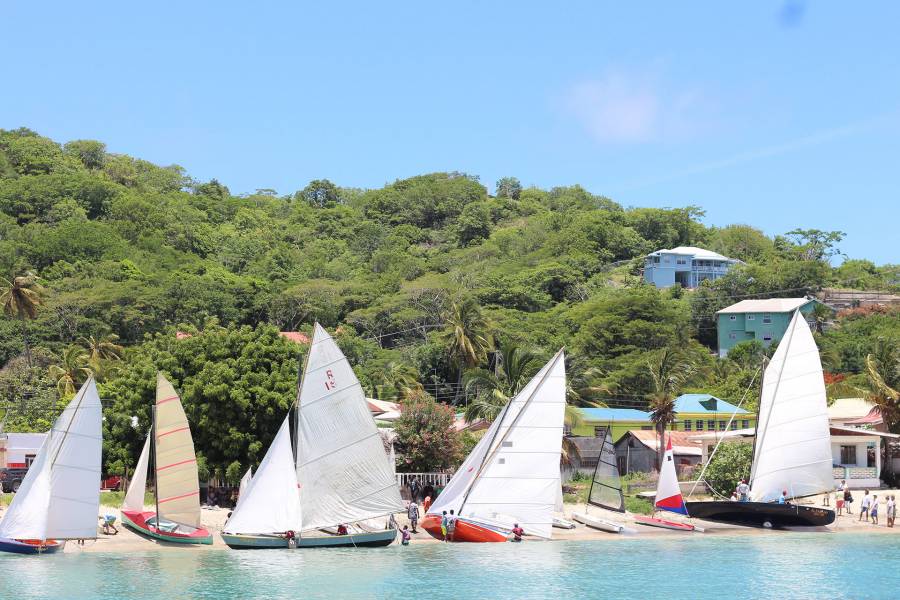
    Scheduled to run from July 31 to August 2 on the scenic island of Carriacou, the 2026 festival carries far greater weight than past installments. It marks the first full regatta held after Category 4 Hurricane Beryl tore through Carriacou and neighboring Petit Martinique in July 2024, leaving widespread destruction of infrastructure, homes and local livelihoods in its wake. For the island’s community, the revival of the annual regatta is far more than a seasonal gathering: it is a powerful public symbol of the resilience, unyielding determination and enduring communal spirit that defines Carriacou’s population in the wake of crisis.

    As part of its long-running sponsorship, Republic Bank will continue its support for the regatta’s popular Large Deck Sloop racing category. For the bank, however, the partnership extends far beyond backing a single sporting competition. The festival is a living celebration of Carriacou’s one-of-a-kind ancestral heritage, centered on the traditional practices of wooden boat building and open-ocean sailing that have been core to the island’s cultural identity for generations. Beyond preserving culture, the event also drives critical economic activity for local residents, drawing thousands of regional and international visitors that support local hospitality, small businesses, and cross-cultural exchange that sustains the island’s tourism economy.

    “Republic Bank is honoured to stand with the people of Carriacou as they celebrate the return of this iconic festival,” said Mavis Mc Burnie, Republic Bank’s General Manager for Operations. “For more than 4 decades, we have proudly supported the Carriacou Regatta because it preserves an important part of our national heritage, while creating meaningful economic opportunities for the island. We are especially pleased to support this year’s event as Carriacou continues its journey of recovery and renewal.”

    In closing, Republic Bank extended its warmest wishes to the Carriacou Regatta Festival Committee, competing participants, local residents and incoming visitors, hoping for a safe, successful and unforgettable 2026 festival that honors the island’s past and paves the way for its future.

    This announcement was carried by NOW Grenada, which notes that it is not responsible for the opinions, statements or media content presented by third-party contributors, and provides a channel for users to report any abusive content.

  • Understanding the Reformed SBA Framework

    Understanding the Reformed SBA Framework

    For decades, the Caribbean Examinations Council (CXC)’s School-Based Assessment (SBA) framework has provided Caribbean students with a flexible pathway to showcase their knowledge and practical skills in authentic school and community learning environments. Working hand-in-hand with regional governments across the Caribbean, CXC has spent years refining SBA administration to align with regional education goals. In recent years, however, growing gaps in the SBA’s ability to accurately measure student ability, paired with the rapid spread of generative artificial intelligence (GenAI), have pushed the council to implement a multi-stage, far-reaching reform initiative that will roll out its full updated framework in 2026.

    CXC’s reform process did not begin overnight. Steady adjustments to SBA oversight started in 2020, when the council expanded moderation to cover 100% of SBA submissions across all assessment centers. In 2022, CXC shifted from center-level moderation to teacher-led moderation to increase scrutiny of assessment quality, while expanding the actionable feedback provided on student work. By 2024, the council issued a formal reminder to all education stakeholders of the requirement for candidates to submit original work aligned with CXC’s official examination regulations. The most recent policy update came in 2025, when CXC launched two landmark resources for the regional secondary education system: the CXC Responsible Generative AI Policy Framework, and the CXC Standards and Guidelines for the Use of AI in Assessments. These new guidelines include the Adapted Scale Levels and Descriptors for the AI Assessment Scale (AIAS), which defines clear boundaries for acceptable AI use in student work, guidance for teachers designing SBA-aligned assessments, and structured mechanisms for educators to verify the originality of student work when GenAI is used.

    The fully updated, reformed SBA framework, set to launch ahead of the 2026/2027 academic year, is designed to help the Caribbean regional education system keep pace with rapid technological change while protecting the academic integrity of school-based assessment as GenAI becomes increasingly accessible to students. Beyond upholding assessment standards, the reform will encourage responsible GenAI use among learners, deepen subject mastery, and better prepare students to demonstrate their competence in formal invigilated examinations. To further advance regional assessment transformation as a top strategic priority, CXC is also establishing a dedicated Educational Assessment Taskforce. While long-term systemic changes are already in early development, CXC moved to implement immediate updates to address widespread concerns about SBA quality ahead of the 2026/2027 academic year.

    All reform changes were developed following extensive consultation with education stakeholders across 21 Caribbean states, including classroom teachers, school principals, curriculum officers, local registrars, and national Ministries of Education. The finalized reforms have been formally approved, reflecting a shared regional commitment to upholding the rigorous standards that underpin CXC’s qualification and certification awards. CXC emphasizes that it takes seriously its responsibility to all stakeholders — students, parents, teachers, employers, and governments — to protect the validity of Caribbean Secondary Education Certificate (CSEC) and Caribbean Advanced Proficiency Examination (CAPE) certifications for both higher education matriculation and workforce entry.

    The reforms impact all 32 current CSEC subjects and 36 CAPE subjects offered by CXC, grouped into three categories each based on assessment changes. Practical, performance-based subjects will retain their existing SBA requirements, while non-practical subjects will shift to invigilated assessment via the Alternate Paper 032.

    For CSEC subjects, the 32 offerings are split into three groups: 12 subjects will retain their current SBA requirements with no changes; 7 subjects will expand SBA use, phasing out the Alternate Paper 032 entirely; and 13 subjects will transition to exclusive use of the Alternate Paper 032. The CSEC transition will proceed in phased stages: Group 1 subjects retain existing assessment rules permanently. For Group 2 subjects, the Alternate Paper 032 will be eliminated starting with the May–June 2028 examination session, requiring all candidates to complete the SBA. For Group 3 CSEC subjects, both SBA and Alternate Paper 032 will be accepted in May–June 2027, with only the Alternate Paper 032 permitted starting in May–June 2028.

    For CAPE subjects, the 36 offerings are similarly grouped: 11 subjects will retain current SBA requirements with no changes; 8 subjects will expand SBA use by eliminating the Alternate Paper 032; and 17 subjects will remove the SBA entirely and rely exclusively on the Alternate Paper 032. All CAPE changes will go into full effect starting with the May–June 2027 examination session.

    CXC has addressed common candidate questions regarding score reuse and transfer for the updated assessment model. Alternate Paper 032 scores will be transferable over a two-year period for both CSEC and CAPE, matching the previous transfer policy for SBA scores. For syllabuses modularized for the new Caribbean Targeted Education Certificate (CTEC), Alternate Paper 032 scores will be transferable over a four-year window, with full guidance available in subject syllabuses posted to CXC’s official website. For candidates pursuing modular CSEC Mathematics, Alternate Paper 032 scores from a first sitting can be reused across all modules within the four-year transfer window. Candidates registered for both CSEC English A and English B, or for CSEC Economics, Principles of Accounts, and Principles of Business, will only need to complete one combined Alternate Paper 032, matching the combined SBA structure previously in place. Longstanding score transfer policies, such as the ability to transfer CSEC Additional Mathematics scores to CSEC Mathematics (but not the reverse), and the ability to transfer CAPE Alternate Paper 032 scores between units where permitted by subject syllabi, will remain in effect.

    The Alternate Paper 032 itself will also see format updates to support candidate preparation. Assessment topics will be released approximately one month before the examination date, candidates will be permitted to bring printed or handwritten prepared reference notes into the examination room, and the allotted examination time may be increased. Electronic devices with stored notes are not permitted, and full additional guidance will be released to candidates before the examination period. Sample papers, marking schemes, and answer keys for the updated Alternate Paper 032 are already available for free download in subject syllabuses on CXC’s website.

    For the 2027 CSEC transition year, all decisions around assessment choice are made at the school level, not by individual candidates: a center must select either SBA or the Alternate Paper 032 for all its registered candidates across all subjects, though candidates who began an SBA in the 2025-2026 academic year will be permitted to complete and submit their existing SBA for the May-June 2027 session. For CSEC science subjects, the shift to exclusive SBA use does not take effect until May-June 2028, so the Alternate Paper 032 will remain available for January 2027 and January 2028 sittings. Starting in January 2029, only resit candidates carrying forward previously earned SBA scores will be permitted to register for January sittings of subjects where the Alternate Paper 032 has been eliminated. First-time private candidates registering for CSEC Biology, Chemistry, or Physics after May-June 2028 will be required to affiliate with a public or private examination center to complete required laboratory exercises.

    A clear timeline guides the full rollout of reforms: the updated SBA framework goes into effect for the 2026-2027 academic year, giving schools and candidates time to prepare for new arrangements. All CAPE changes take full effect in May-June 2027, while CSEC operates under a transitional arrangement that year. Full CSEC changes go into effect in May-June 2028, and the updated January sitting policy takes effect starting in January 2029.

  • Grenada launches 988 crisis hotline

    Grenada launches 988 crisis hotline

    On Tuesday, July 28, the Caribbean tri-island nation of Grenada marked a critical milestone in public mental health infrastructure with the official launch of a 988 toll-free suicide prevention and mental health crisis hotline, designed to deliver immediate, accessible support to residents grappling with suicidal ideation, severe emotional distress, and other acute mental health emergencies.

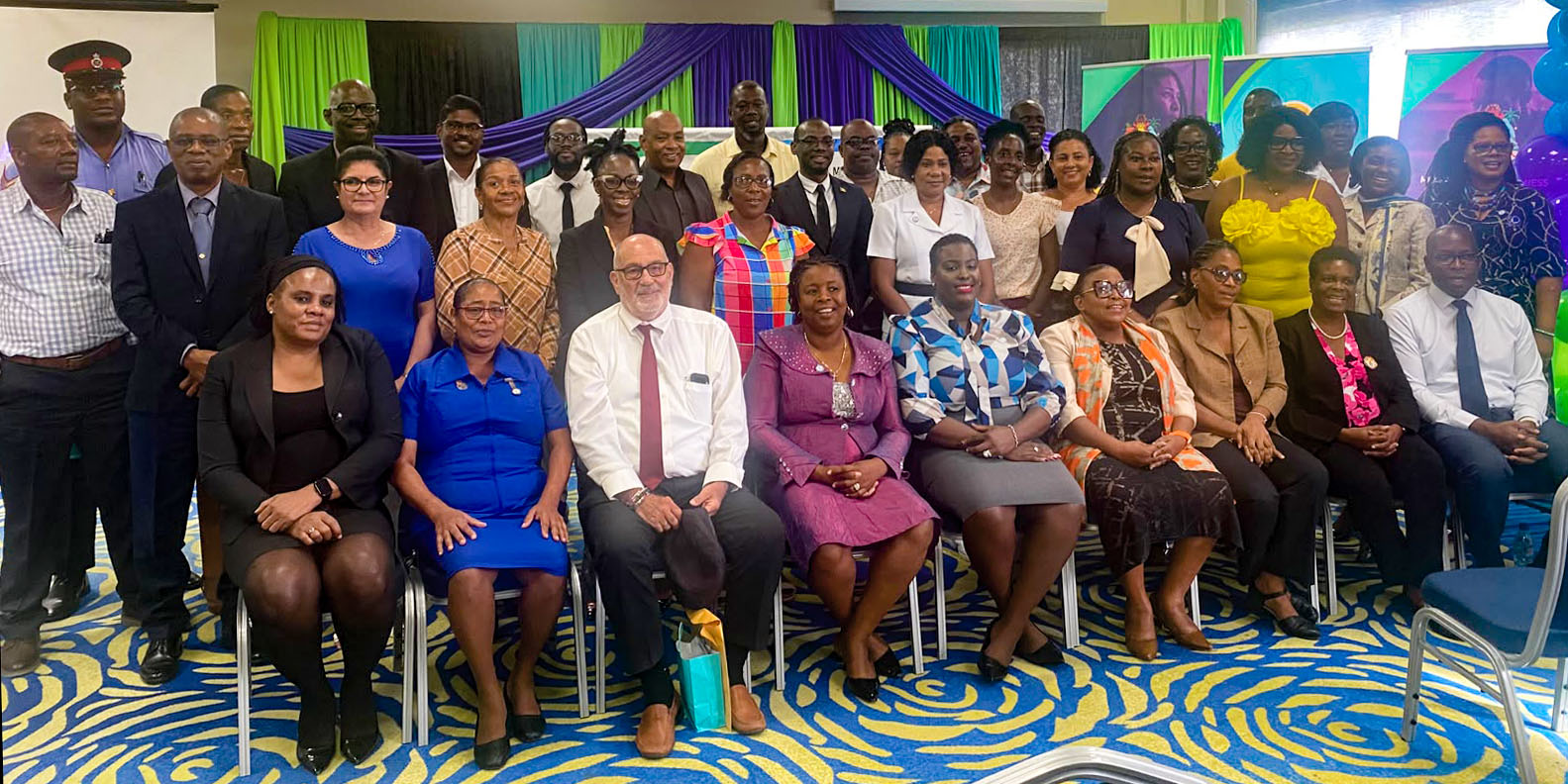
    The launch ceremony, hosted at Grenada’s Radisson Beach Resort, brought together a broad cross-section of stakeholders, including senior government officials, frontline mental health care providers, educators, secondary school students, parent representatives, and leaders from faith-based community organizations, underscoring the widespread consensus that suicide prevention is a collective national priority.

    Speaking at the event, Hon. Delma Thomas, Minister for Mental Health, Wellness, and Religious Affairs, emphasized that life-saving support is now just three dialed digits away for those in need. She urged members of the public to reach out for help without fear of judgment or stigma, reinforcing that seeking support during a crisis is not a sign of weakness but a courageous step toward healing.

    To address common public questions about the new service, ministry officials outlined clear operational details at the launch. All incoming calls are answered by rigorously trained responders who follow evidence-based, standardized crisis intervention protocols. These protocols are designed to de-escalate high-stress situations, deliver empathetic emotional support, and uphold strict standards of caller privacy.

    Recognizing that taking the first step to reach out during a mental health crisis can feel daunting, Director of Mental Health and Substance Abuse Josh Hector extended a message of hope to hesitant residents. “We encourage people to choose life,” he said. “Even if you feel there is nobody in your life who will listen, someone will be waiting on the other end of that hotline to hear your story, offer non-judgmental support, and give you the assurance you need.”

    Hector confirmed that all hotline personnel are bound by strict confidentiality requirements that they are required to uphold in every interaction, eliminating concerns about private information being shared without consent. The service also accepts calls from third parties: friends or family members who are concerned about a loved one’s mental health can reach out either by dialing 988 or contacting the team via dedicated WhatsApp numbers shared by the ministry.

    Far from being a standalone service, the 988 hotline functions as a critical entry point to Grenada’s entire network of mental health and social support services. Depending on the unique needs of each caller, responders can connect individuals to ongoing counseling, psychiatric care at the island’s General Hospital, or specialized support for overlapping crises including domestic violence and other social emergencies.

    Permanent Secretary Naomi Jeremiah confirmed that the hotline initiative is funded through the Ministry of Mental Health, Wellness and Religious Affairs’ annual budget, with additional critical support from community volunteers and international public health partners, most notably the Pan American Health Organization (PAHO).

    The launch event included powerful personal testimony to illustrate the life-changing impact of accessible crisis support. Pastor Anton Strachan shared a pre-recorded video account of his own experience surviving suicidal thoughts as a teenager, using his story to encourage others experiencing similar struggles to reach out for help instead of suffering in silence. Students from two local secondary schools, Presentation Brothers’ College and Grenada Boys’ Secondary School, also took part in the ceremony, performing original mental health awareness jingles that centered themes of hope, resilience, and the importance of open conversation about emotional challenges.

    Government and health officials acknowledged that a single hotline cannot solve the full scope of Grenada’s mental health challenges, but framed the launch of 988 as a transformative, long-overdue step toward expanding equitable access to life-saving crisis support across the country. In the coming weeks, a nationwide public awareness campaign will roll out across the tri-island state, including televised infomercials and educational broadcasts, to ensure all residents understand how the service works and when to reach out.

  • The trader who kept a diary

    The trader who kept a diary

    As we count down to Emancipation Day 2026, a long-overdue deep dive into the inner commercial mechanics of the transatlantic slave trade, drawn from archival records and modern scholarship, reveals unflinching truths about how this centuries-long system operated. My first encounter with the business side of slavery came during my doctoral research at the University of Manchester, where I studied the evolution of global financial institutions from ancient to modern times. The unusual stories I uncovered in that research demand to be shared, even as they challenge comfortable narratives about this dark chapter of human history.

    One of the most remarkable surviving artifacts of the trade is the daily diary kept by Antera Duke, a prominent Efik merchant prince and leader of Duke Town (in what is now modern Nigeria) between 1785 and 1788. Written in the coastal trade English of the era, the diary was published in a scholarly edition by Oxford University Press in 2010. To date, it remains the only known day-to-day account of the slave trade written by a slave trader from any continent. Far from the dramatic, charged narratives one might expect, Duke’s diary reads exactly like what it is: a routine business journal. It details customs duties (called *comey*) collected from European ship captains, social dinners aboard Liverpool trading vessels, negotiations to resolve credit disputes, and records of consignments of enslaved captives delivered downriver to waiting ships. Its tone is uniformly flat, commercial, and unemotional— a quality that makes it all the more unsettling.

    Duke’s diary forces a critical question that is rarely centered in popular conversations about slavery: Before enslaved people were auctioned in Richmond’s slave markets, before they were forced to work on Barbados’ sugar plantations, even before they were packed onto transatlantic crossing ships, who ran the on-the-ground business of enslavement in West Africa, and under what terms? The surviving archival records are uncomfortable from every angle, forcing a reckoning with truths that have long been sidelined.

    A frequently misunderstood fact is that Europeans rarely captured enslaved people themselves: they simply could not. West Africa’s tropical disease environment killed roughly half of all newly arrived European visitors within their first year, earning the region the well-documented nickname “the white man’s grave.” Confined to their ships and isolated coastal forts, European traders could only wait to purchase captives that were already brought to the coast by African actors. The capture, overland marching, and wholesale trade of enslaved people was entirely controlled by regional African states and established merchant networks: the Kingdom of Dahomey, which ran the key port of Ouidah under a state-controlled customs system; the powerful Aro merchant network of Igboland; and the canoe-house trading firms of Bonny and Old Calabar, where Antera Duke was a leading partner. Enslaved people were obtained through war, raids, judicial punishment, debt seizure, and kidnapping, before being sold directly to European traders on the coast— where the African procurement business connected to the European shipping business.

    There is no reason to soften these uncomfortable truths, because history demands honesty. Equally important, the archival record also preserves the other side of this story. As early as 1526, Afonso I, the Christian King of Kongo, wrote an official letter to the King of Portugal protesting that European-aligned merchants were seizing his people every day. “Our country is being completely depopulated,” he wrote, requesting that Portugal send priests and sacramental supplies rather than slave traders and trade goods. This letter is preserved in official archives to this day. The historical record holds two simultaneous truths that do not cancel each other out: African rulers and merchants who ran the supply side of the trade for profit, and African rulers who recognized the catastrophic harm of the trade and formally opposed it five centuries ago. The massive demand for enslaved labor that came from across the Atlantic turned inland violence into a large-scale, industrialized system— both facts must be acknowledged.

    Tracing the flow of money through the trade reveals how interconnected the early modern global economy already was. Enslaved people were priced in negotiated “assortments” of trade goods, valued in standardized units of account like the trade ounce. Contrary to popular myth, these bundles were not filled with cheap trinkets. In a landmark survey of more than 90 English slaving voyages, historian David Richardson found that the largest category of goods by value was textiles, most notably handwoven Indian cottons from Gujarat and Bengal. Next were guns from Birmingham, with hundreds of thousands of firearms exported to West Africa each year at the peak of the trade. Other common goods included iron bars, distilled spirits, and cowrie shells harvested in the Maldives, shipped by the ton to the Slave Coast to be used as small currency. The famous abolitionist Olaudah Equiano recorded that he himself was sold for 172 cowrie shells. A weaver in Bengal, a gunsmith in Birmingham, a shell diver in the Maldives, and an enslaved field hand in the Grenadines were all connected, often without their knowledge, in a single global supply chain. Like any market, the price of captives responded to supply and demand: Richardson’s data shows that the price of an enslaved person on the West African coast rose roughly fivefold over the course of the 18th century, as growing demand outstripped existing supply.

    Even the transatlantic slave ships themselves functioned as formal financial instruments. A typical English slaving voyage was divided into 64 tradeable shares, held not just by wealthy elite merchants but also by small investors: local shopkeepers, clergymen, and even widows who held one 64th share as a retirement investment. Outfitting a single slaving voyage out of Bristol cost roughly £8,500 by 1790. The full round trip from England to West Africa to the Americas and back took 12 to 18 months, and most profits were returned to investors as bills of exchange drawn on London banks. The popular simplified “triangular trade” model of goods, slaves, and sugar is partially a myth: most of the value from the return leg came in the form of paper financial instruments, not raw cargo. Voyages were fully insured, with total premiums equal to roughly 10% of outward costs. The Middle Passage crossing itself was priced at a 4.8% premium, with each enslaved person insured for £30 a head. Insurance policies explicitly excluded coverage for deaths from illness or suicide, and did not cover losses from insurrection unless the insurrection destroyed more than one-tenth of the cargo. What do these clauses reveal about how the trade’s architects viewed the people they traded? Modern economic historians who reconstructed these insurance underwriting records found a surprising fact: insuring a slaving voyage was not considered an unusually risky investment. It was actually less risky to insure a slaving voyage than a voyage of the British East India Company.

    When the British Parliament first passed regulation of the slave trade in 1788, it regulated the trade for what it was: a logistical commercial enterprise. Dolben’s Act set strict limits on how many captives a ship could carry based on its tonnage. The Liverpool ship *Brookes*, which had once packed 609 enslaved people onto a single voyage, was now legally limited to just 454. Each captive man was allotted a space just 6 feet long and 16 inches wide to lie during the crossing. The act even included performance incentives: a £100 bonus for the captain and £50 for the ship’s surgeon if mortality during the crossing fell below 2%. Mortality was explicitly treated as a key performance indicator, with financial rewards for lower death rates. Across the entire history of the trade, roughly one out of every seven enslaved captives died during the Middle Passage. A damning fact that defenders of the trade could never refute is that crew mortality was just as high. Abolitionist Thomas Clarkson analyzed ship muster rolls and found that in a single year, 216 of 910 Bristol slave-trade sailors died on voyages— more deaths than the rest of Britain’s entire commercial shipping industry lost over two years. The trade, often called a “nursery of seamen” by its supporters, was in fact a mass grave for sailors as well as captives.

    So what profits did the trade actually generate? Modern scholarship delivers a cold, clear answer. The best contemporary estimates put average profits for British slaving voyages at roughly 8 to 10%, with one careful analysis by historian Roger Anstey finding an average return of 10.2%. Returns varied wildly from voyage to voyage, and some historians argue that the largest trading firms earned far higher returns during boom years. But the consensus average tells a critical story: the trade generated normal, respectable commercial returns, comparable to other shipping investments of the era. It persisted for three centuries not because it was an extraordinary bonanza for investors, but because it was ordinary, diversified, insurable, socially acceptable, and open to small investors like a clergyman’s widow with a single share.

    While European and African merchant investors earned steady returns, Africa paid a catastrophic price that no ledger could ever record. One careful demographic estimate suggests that by 1850, Africa’s total population was half what it would have been without the transatlantic slave trade, and modern economic analysis still finds the long-term scars of this demographic collapse in contemporary development data.

    The slave trade was built and maintained through careful record-keeping and accounting, and it was ultimately dismantled the same way. Thomas Clarkson’s mortality tables from muster rolls, the widely distributed diagram of the *Brookes* printed seven thousand times to show how captives were packed, Olaudah Equiano’s bestselling memoir: these were the tools of the first data-driven human rights campaign in history, where numbers and records were marshaled against entrenched political and economic power. This series of reflections on Emancipation Day stands in that same tradition. But Antera Duke’s diary leaves no room for comfortable moral compartmentalization, and it should not for readers either. Both European buyers and African sellers kept careful ledgers. No actor in this story can be neatly separated into “good” and “bad” sides. The intersection of these two ledgers was the slave trading beach on the West African coast, and every generation since has had to examine its own relationship to that history, and decide which side of that beach it stands on.

    *This op-ed is contributed by Professor C Justin Robinson, Pro Vice-Chancellor and Principal of The UWI Five Islands Campus. NOW Grenada is not responsible for the opinions, statements or media content presented by contributors.*

  • FBI assisting in missing person investigation

    FBI assisting in missing person investigation

    A weeks-long search for a missing American citizen in Grenada has expanded to include international investigative support, as local law enforcement works closely with U.S. authorities to piece together the circumstances of 44-year-old Elizabeth “Liz” Waddell’s disappearance.

    Waddell, a physical therapist from North Carolina, was first reported missing to the Royal Grenada Police Force (RGPF) at 5:50 p.m. on Wednesday, July 22, nearly six hours after she was last seen in the water north of popular Grand Anse Beach. The high-profile case has since drawn widespread international media coverage, putting significant public attention on the ongoing investigation.

    During an official press briefing held on Tuesday, July 28, RGPF Police Commissioner Randy Connaught outlined the latest updates on the search, confirming that local investigators have formally requested assistance from the Federal Bureau of Investigation’s regional office. This request comes as part of broader coordination with U.S. diplomatic officials, Connaught explained, noting that the force has maintained consistent communication with Cindy Diouf, the principal officer of the U.S. Embassy in Grenada.

    The goal of bringing the FBI into the investigation, Connaught added, is to help investigators build a clearer, more complete picture of Waddell’s background ahead of her disappearance. As a U.S. citizen, cross-border cooperation is critical to moving the case forward, he emphasized.

    Timeline details released by police paint a clearer picture of Waddell’s final known movements. The therapist arrived in Grenada on July 11 from Miami, traveling alongside a female friend. After spending 10 days at a resort on the island’s west coast, the pair relocated to accommodation in southern Grenada on July 21, one day before Waddell went missing.

    Surveillance footage reviewed by investigators confirms that Waddell entered the water near a local jetty at 11:51 a.m. on July 22, and was recorded swimming under the structure 13 minutes later. Critically, no footage captures her exiting the water. Her traveling companion was captured on camera walking toward the jetty, before returning alone roughly 40 minutes later. That companion ultimately filed the missing person report more than five hours after that encounter.

    Since the report was filed, RGPF has launched a sweeping multi-agency search effort, bringing in resources from the Grenada Coast Guard, local commercial dive teams, the RGPF’s own drone unit, and the St. George’s University canine unit. Local community members have also joined search operations, which have covered shoreline, open water, and underwater terrain. The Coast Guard has additionally conducted analysis of local tides, currents, and drift patterns to narrow potential search areas.

    Beyond search operations, investigators have worked through evidence systematically: they have reviewed all available surveillance footage, conducted interviews with witnesses, mapped Waddell’s movements across her time in Grenada, and are currently processing hundreds of photos, videos, and tips submitted by members of the public. Investigators are also working to identify any people, vessels, or vehicles that were in the area around the time Waddell disappeared to rule out or follow up on potential leads.

    Connaught pushed back against widespread public speculation surrounding the case, stressing that investigators have not reached any final conclusions and that the incident remains formally classified as a missing person investigation. He issued an appeal for continued public assistance, noting that even seemingly insignificant details could prove critical to breaking the case open. “No information should be considered too minor,” he said, urging both the public and media to only rely on the RGPF as the official, verified source of updates on the investigation.

    Speaking to the media, Connaught extended his deepest sympathy to Waddell’s family, who have joined the search effort. Waddell’s husband, Cailen Waddell, has traveled from the U.S. to Grenada to work alongside local authorities on the search. In a public social media post shared before his arrival, Cailen Waddell said he expects nothing less than his wife’s safe return, and asked supporters to send love, prayers, and positive thoughts for the operation. Echoing that sentiment, Commissioner Connaught said investigators remain optimistic about the outcome. “It is our hope that Elizabeth will be found, and found alive and well,” he said.

  • The future of Grenadian football takes centre stage

    The future of Grenadian football takes centre stage

    The Grenada Football Association (GFA) has announced a highly anticipated community event: the Summer of Soccer Festival, which will serve as the exciting concluding celebration for the organization’s island-wide youth grassroots football initiative this season.

    After weeks of structured training, skill development, and recreational play across program centers distributed across Grenada, Carriacou, and Petite Martinique, nearly 800 participating young boys and girls will gather at a single venue to showcase their progress and connect with fellow young football lovers from across the country. The one-day event is scheduled to take place on Thursday, 6 August, running from 9 a.m. to 12 p.m. at the Roy St John Playing Field located in Tanteen.

    In a move designed to make the celebration accessible to every member of the public, the GFA confirmed that entry to the festival will be completely free of charge for all attendees. The association is encouraging local families to turn out in full force to cheer on the next generation of Grenadian football talent, highlighting the event as a reflection of the GFA’s longstanding commitment to growing the sport through intentional grassroots development.

    It should be noted that this event announcement was contributed by the GFA to NOW Grenada, and NOW Grenada holds no responsibility for the opinions, statements, and any media content shared by third-party contributors. Users may report any inappropriate content shared through the platform via the official reporting channel provided by the outlet.

  • Applications for UK Government’s Chevening Scholarships now open

    Applications for UK Government’s Chevening Scholarships now open

    One of the world’s most prestigious international scholarship programmes, the UK’s Chevening Scholarships, has officially opened its application window for 2026, with prospective candidates able to submit their materials between August 4 and October 6 2026.

    Designed to nurture the next generation of global leaders, Chevening offers full funding for one-year master’s degrees at accredited UK universities, alongside access to an extensive global professional network. Beyond financial support, the programme equips selected scholars with world-class academic training, cross-border professional connections with UK institutions and leaders, and a shared foundation of values focused on solving pressing global challenges and advancing inclusive sustainable development in scholars’ home communities and across the world.

    With a 40-year legacy of empowering emerging leaders, the programme has received hundreds of thousands of applications from across the globe since its launch in 1983. To date, more than 60,000 professionals from diverse backgrounds have used Chevening as a springboard to advance their careers and create meaningful global impact, embodying the UK government’s long-term commitment to developing future leadership capacity worldwide.

    Successful candidates are not selected solely for academic achievement. The programme prioritises individuals who align with Chevening’s core vision of building a more resilient, prosperous, and sustainable global future, and who can demonstrate proven leadership ability, meaningful influence, and strong networking skills through clear, evidence-based examples in their applications.

    Emma Hennessey, Head of the Chevening Scholarships Unit at the UK Foreign, Commonwealth and Development Office (FCDO), emphasized the programme’s core mission in a statement. “Chevening is looking for exceptional individuals who are ready to collaborate with the UK to help build a more resilient, prosperous, and sustainable future,” Hennessey said. “We are committed to building a diverse and inclusive cohort of global future leaders, so we are particularly interested in receiving applications from under-represented groups.”

    She added that selection is based on more than past accomplishments: “Our scholars and fellows are chosen not only for their achievements, but for their leadership potential, their ability to build meaningful connections, and their commitment to creating lasting impact in their communities and globally. Through access to UK education, networks, and experiences, Chevening equips future leaders with the tools and connections needed to address shared international challenges together.”

    Hennessey encouraged all potential applicants to take time to align their personal and professional goals with the programme’s mission before applying. “I encourage anyone considering applying to reflect carefully on Chevening’s vision and purpose, and on how their own experiences and ambitions align with the impact our global community is working to achieve,” she noted.

    All applications must be submitted through the official Chevening website at chevening.org/apply. Ahead of applying, the programme strongly recommends that candidates review Chevening’s full vision and available resources at chevening.org/vision to assess their readiness to submit a competitive application. Full details on eligibility requirements and scholarship terms can be found at chevening.org/resources.

    This announcement was shared by the British High Commission in St George’s. NOW Grenada, the platform hosting the announcement, notes that it is not responsible for the views, statements, or content shared by contributing organizations, and provides a reporting channel for any reported abuse of the platform.

  • Jamara Patterson advances to 400m Semifinals at Commonwealth Games

    Jamara Patterson advances to 400m Semifinals at Commonwealth Games

    Glasgow, Scotland – Rising 400-meter sprint star Jamara Patterson has kicked off her 2026 Commonwealth Games campaign with a solid opening-round performance, locking in her place in the event’s semifinal stage and earning a surprise visit from her formative coach along the way.

    Competing in the first preliminary heat of the women’s 400m at Scotstoun Stadium on July 28, Patterson crossed the finish line in 52.79 seconds to claim third place. She finished just fractions of a second behind Great Britain’s top pair – Charlotte Henrich, who took the heat win in 52.13 seconds, and Laviai Nielsen, who clocked 52.76s for second – a result good enough to earn Patterson an automatic spot in the next round.

    The young Grenadian comes into the Glasgow Games fresh off a career breakthrough earlier this year, when she set a blistering new personal best of 50.98 seconds. That mark cemented her position as the second-fastest 400m woman in Grenada’s recorded history, and Patterson has entered the Commonwealth Games with clear, ambitious goals: shave time off her personal best, push through to the final, and prove her potential on one of athletics’ biggest global stages.

    What made the opening round even more memorable for Patterson was the unexpected presence of Ronald Charles, her high school coach from St Joseph’s Convent and a lead mentor with Grenada’s Finishline Sports Club. Charles, who has supported Patterson since her early athletic development, kept his trip to Glasgow a secret, turning his appearance into a warm surprise for the sprinter, who has competed and studied on the U.S. collegiate circuit since 2023.

    After watching Patterson’s opening heat, Charles shared that the young athlete remains calm, focused, and grounded despite the pressure of competing at a major international championship for Grenada. For the coach himself, sharing the Commonwealth Games stage with his former trainee marks a major milestone in his decades-long coaching career, which includes previously leading Grenada’s Paralympic delegation to the Para Pan American Games.

    “It is a surreal experience being at a global event like this,” Charles reflected. “It’s a major learning experience for me that builds directly on my coaching background.”

    Patterson is set to return to the track for the 400m semifinals on July 30, with the race scheduled to kick off at 7:45 a.m. Grenada local time. She will now turn her focus to earning one of the coveted spots in the event’s final round, as she chases her first major international medal and a new personal best.

  • The cost of courage

    The cost of courage

    The ongoing debate over healthcare reform in Grenada consistently circles around one unaddressed core question: where will the funding for meaningful improvement come from? Across the island nation, there is widespread consensus that the current healthcare system is broken, and urgent change is needed — a need reinforced by countless personal testimonies and lived experiences of inadequate care. What is missing from the conversation, however, is open honesty about the true cost of upgraded healthcare, and more critically, who must bear that cost.

    As a small developing nation with no oil or mineral reserves to generate large state revenue, Grenada cannot rely on natural resource extraction to fund a robust public health system. Its largest economic driver, tourism, is inherently seasonal, hyper-competitive on the global stage, and extremely vulnerable to cross-border shocks — a vulnerability laid bare by the devastating economic impact of the COVID-19 pandemic. For Grenada, building a better health system means financing it deliberately and progressively through the existing economy, with no quick windfall to fall back on.

    Many Grenadians are told the public healthcare system is free: patients walk out of government facilities without paying any upfront fee at the counter. But a closer look at the system’s hidden costs reveals a far different reality. Data from the Pan American Health Organization (PAHO) shows that out-of-pocket health spending makes up 53% of total national health expenditure in Grenada — the highest rate in the entire subregion, and more than double the average across the Caribbean.

    This means Grenada does not actually have a free public health system. Instead, it operates the most inequitable, disorganized, and expensive payment model possible: patients pay for care one at a time, when they are already ill and vulnerable, and often lack health insurance to cushion the financial blow. What is framed as “free care” is actually a hidden, regressive cost that hits low-income and vulnerable Grenadians hardest.

    A dedicated national health tax offers a deliberate, transparent solution to this crisis. Such a system redistributes health risk across the entire population, protects the most vulnerable groups, and generates sustainable, predictable revenue to fund public health improvements. It would also convert the hidden out-of-pocket costs that Grenadians already pay every day into a visible, formal tax that can be debated, adjusted, and improved through democratic process.

    So why has this evidence-backed policy not been implemented? The answer lies in political incentives, not policy flaws. Any sitting administration that introduces a health tax will bear immediate political cost: it will be remembered for ending the illusion of free public healthcare and requiring explicit payment from citizens. That administration will likely face electoral backlash long before the new funded health system can deliver visible results and win public support. If the governing party loses office before those benefits materialize, the incoming administration will inherit the expanded public revenue, the ability to open new hospital wards, create jobs, and improve health outcomes — reaping the political rewards of a difficult decision they never had to make.

    This gap between short-term political cost and long-term national benefit is no accident. It is an unspoken institutional logic that makes bold political leadership risky and inaction the safer bet for incumbent politicians, creating a trap that punishes any government willing to make the hard choice for the public good.

    Two critical questions remain unanswered for Grenada: Will the nation ever develop a political class courageous enough to prioritize long-term national good over short-term political legacy? And do Grenadians need a new health tax, or simply an honest acknowledgment that they already pay far more for healthcare than they realize — with costs that extend far beyond their wallets?