标签: Grenada

格林纳达

  • Annalisa Brown joins elite company with 800m Silver

    Annalisa Brown joins elite company with 800m Silver

    At the 2026 CARIFTA Games, young Grenadian middle-distance runner Annalisa Brown delivered a career-defining performance that etched her name into her country’s regional athletics record books, claiming silver in the Under-17 Girls 800 metres to secure a historic milestone. With this result, Brown became the first Under-17 female athlete from Grenada to earn medals in both the 800m and 1,500m events at a single edition of the Caribbean’s premier youth track and field competition, a feat not achieved by a Grenadian competitor of the same age group since Daniella Abraham’s 1999 performance in Fort-de-France, Martinique.

    Brown crossed the finish line at the 800m event with a time of 2:14.40, marking a new personal best for the rising star. This clocking also stands as the second-fastest 800m time recorded by any female Grenadian athlete in the 2026 competitive season, demonstrating the significant progress Brown has made since her last appearance at the games. Her silver medal marks an upgrade from the bronze medal she claimed in the same division at the 2024 CARIFTA Games, which were hosted on her home track in Grenada. Gold in the 2026 Under-17 800m went to Guyana’s Olivia Solomon.

    With this latest podium finish, Brown’s total CARIFTA medal count over her Under-17 career has risen to three, a tally that underscores her consistent competitiveness across multiple distances and multiple years of regional youth competition. A student at Boca Secondary School, Brown trains with the local Finishline Sports Club under the guidance of head coach Ronald Charles. In a post-race reflection, Charles opened up about the grueling multi-event schedule his young athlete navigated throughout the 2026 championships.

    “I’m very pleased with Anna,” Charles said. “It’s not the time we were hoping to get, but she participated in the 4×100m, the 1500m, and the rounds of the 800m. When we assessed her, she did mention slight discomfort, so the legs were a bit tired.” Even with the accumulated fatigue and physical strain of a packed competition schedule, Charles emphasized that Brown’s ability to hit a new personal best and secure an individual silver medal was a remarkable outcome.

    “Against that backdrop, achieving a new personal best and winning an individual medal on the track is a good look for us,” he added. Looking ahead, Brown is already scheduled to make her next competitive appearance at the 2026 Classic Lighting Communal Invitational, which will run from 25 to 26 April at Grenada’s Kirani James Athletic Stadium, where she will look to build on her historic CARIFTA Games success.

  • Condolences on the passing of H E Chandrikapersad Santokhi

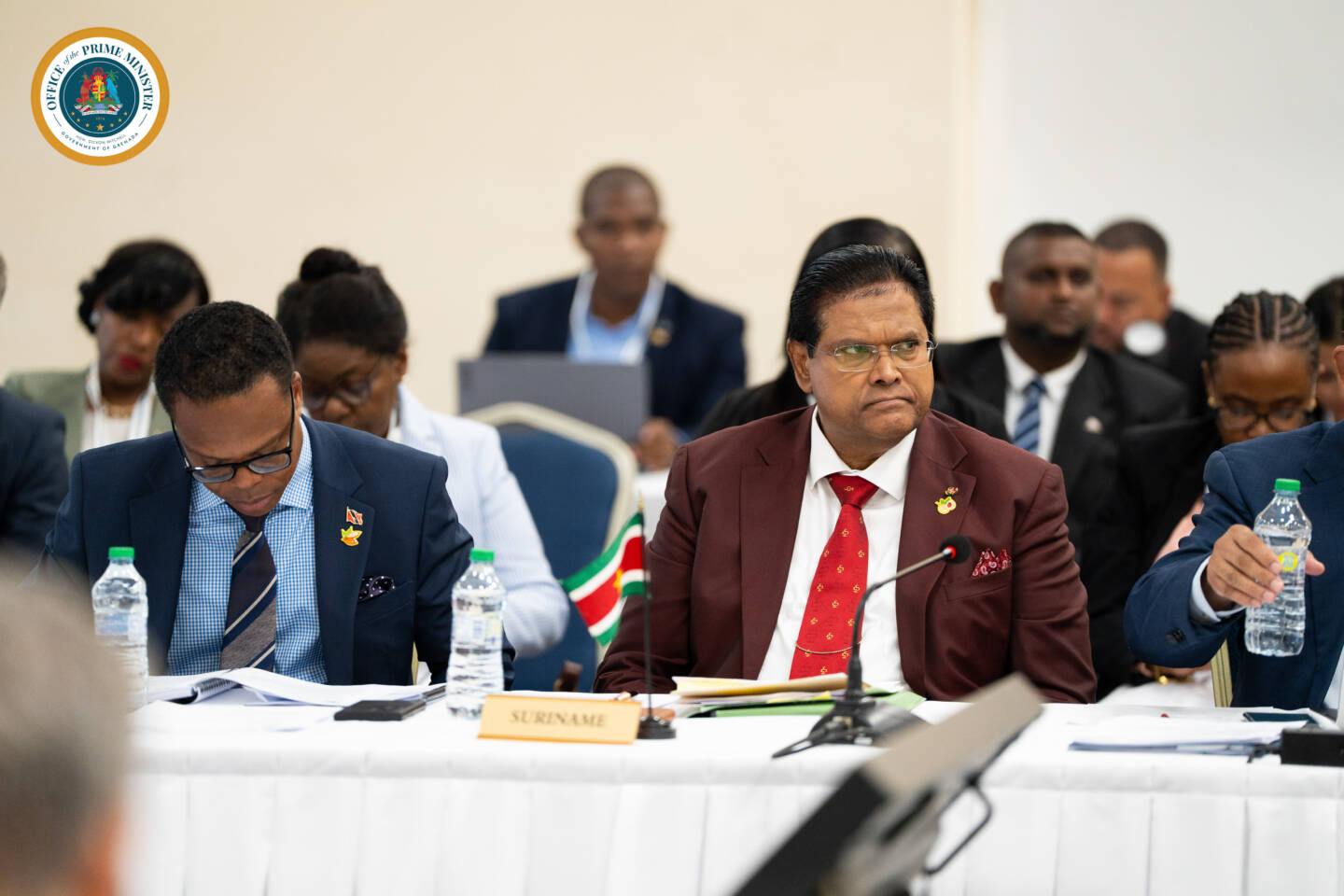
    Condolences on the passing of H E Chandrikapersad Santokhi

    The Office of the Prime Minister of Grenada has issued an official statement of deep condolence to the government and people of the Republic of Suriname following the passing of former Surinamese President Chandrikapersad Santokhi.

    Widely remembered across the region as a committed public servant and a principled leader, Santokhi built his decades-long public career around a core belief in collaborative progress and collective action across the Caribbean. Throughout his tenure in public office, his work was defined by unwavering integrity, a dedication to public service, and a persistent commitment to strengthening democratic governance and expanding cross-regional partnerships.

    Santokhi served as Chairman of the Caribbean Community (Caricom) from July through December 2022, a period marked by widespread global volatility and uncertainty. During his time in this leadership role, he delivered steady, goal-oriented direction for the bloc, consistently advocating for Caribbean unity, prioritizing investments in regional resilience, and pushing for coordinated collective responses to shared transnational challenges. These challenges included the accelerating impacts of climate change, growing gaps in food and nutrition security, advancing sustainable development goals, and driving inclusive economic recovery in the wake of global shocks. His leadership centered on the enduring vision that the Caribbean region gains its greatest strength when all member states advance forward together.

    A core tenet of Santokhi’s approach to regional governance was the repeated emphasis that progress cannot be achieved in isolation. Instead, he argued that lasting advancement grows from intentional cross-border partnership and shared responsibility. This collaborative approach deepened constructive dialogue between Caricom member states and strengthened the foundational frameworks that support ongoing regional integration efforts.

    On behalf of the government and people of Grenada, the Prime Minister extended sincere sympathies to Santokhi’s immediate family, close friends, professional colleagues, and all communities in Suriname and across the broader Caribbean who are mourning his passing. The statement closed with a note of hope that Santokhi’s legacy of principled leadership, selfless public service, and unwavering commitment to Caribbean unity will continue to inspire current and future generations of regional leaders.

    The statement ends with a prayer for the eternal rest of Santokhi’s soul.

    *Editor’s note: NOW Grenada notes it is not responsible for the opinions, statements or third-party media content shared by contributors to its platform. Users may click to report any content that violates platform community guidelines.*

  • Possessory Titles (Amendment) Bill, 2026 to strengthen land ownership processes and transparency

    Possessory Titles (Amendment) Bill, 2026 to strengthen land ownership processes and transparency

    The Ministry of Legal Affairs, Labour and Consumer Affairs of Grenada has tabled a landmark piece of legislation, the Possessory Titles (Amendment) Bill 2026, designed to overhaul the nation’s existing framework for granting legal land titles through adverse possession. The proposed changes target longstanding gaps in the 2016 Possessory Titles Act, prioritizing three core goals: boosting procedural transparency, upholding fairness for all stakeholders, and speeding up the resolution of legitimate land claims.

    At the heart of the reform package are a series of targeted adjustments to eligibility and procedural rules that reshape how adverse possession claims are processed. First, the bill introduces stricter qualifying thresholds for claimants, including hard caps on the size of land that can be claimed via this process unless a compelling, documented justification for a larger claim is provided. It also raises the bar for required supporting documentation, making formal reports from licensed land surveyors a mandatory requirement for all applications, replacing the looser documentation standards of the original 2016 legislation.

    To address a longstanding criticism of the existing system—that affected parties are often left unaware of pending claims against their property—the amendments outline enhanced notification protocols. These rules require all relevant stakeholders, including former registered landowners and owners or occupiers of adjacent parcels, to receive formal, timely notice of any active claim, giving them a clear opportunity to contest the application if they wish.

    Additional oversight measures have also been built into the revised framework: the Attorney-General is now required to participate in every possessory title proceeding, creating an extra layer of government accountability to prevent improper rulings. The bill also modernizes procedural practices by expanding the use of digital communication tools, including allowing required public notices to be published electronically alongside traditional print publication, improving accessibility and reducing processing delays. Notably, the legislation grants courts new flexibility to review and adjust prior rulings in exceptional, unforeseen circumstances, correcting a major inflexibility in the current law.

    To crack down on fraud and routine misuse of the system, the bill includes targeted anti-abuse provisions. These include restrictions on filing repeated unsuccessful claims within a set time frame, as well as a requirement for claimants to submit a financial deposit to cover the full cost of administrative processing for their application. This deposit structure discourages frivolous claims that clog up the court system and create unnecessary costs for the public.

    According to the ministry, the overarching objective of these changes is to strike a careful, balanced compromise between two competing priorities: on one hand, ensuring that legitimate claimants who have occupied and maintained land for the required period can still access formal legal title, and on the other, protecting the established property rights of registered landowners. The reforms are also intended to rebuild public trust in the land titling legal process by making its rules and outcomes more predictable and fair.

    The amendments will also align Grenada’s possessory title system with contemporary regional legal standards, specifically bringing the local rules into compliance with the Eastern Caribbean Supreme Court Civil Procedure Rules. This alignment is a key step toward building a more transparent, accountable national land administration system, which the government says will support broader national goals. As part of the administration’s wider agenda for sustainable development, attracting foreign and domestic investment, and maintaining social stability, strengthening land governance remains a top policy priority for the government.

    This report is based on an official release from the Ministry of Legal Affairs, Labour and Consumer Affairs of Grenada. NOW Grenada disclaims responsibility for content from external contributors, and provides a channel for reporting misuse of its publication platform.

  • Kazim Telesford claims double Silver for Grenada at CARIFTA

    Kazim Telesford claims double Silver for Grenada at CARIFTA

    The 2026 CARIFTA Games have delivered another standout performance from a rising Grenadian throwing talent, as 17-year-old prospect Kazim Telesford claimed two silver medals in the men’s Under-17 shot put and discus throw events, cementing Grenada’s decades-long legacy of excellence in throwing competitions.\n\nTelesford, a student at St David Catholic Secondary School, carries impressive local credentials into the regional championships: he is the reigning InterCol Junior champion in both throwing disciplines, and already holds the InterCol Junior discus record, setting a 53.77-meter mark earlier this 2026 season. Ahead of CARIFTA, he proved his elite form by winning gold in the 5kg shot put at the 2026 InterCol Games with a 15.72-meter throw, then took the national Under-17 shot put title at the ARIZA National Championships with an even stronger 15.80-meter effort. He trains under the guidance of head throws coach Paul Phillip at the St David Track Blazers Track Club — the same program that produced two-time world champion Anderson Peters, giving Telesford access to world-class coaching and development.\n\nIn the Under-17 shot put competition, Telesford got off to a blistering start, opening with a 14.76-meter throw that put him atop the leaderboard after the first two rounds. However, strong third-round throws from Trinidad and Tobago’s Jafari Shaw and Barbados’ Kamal Armstrong pushed him down to third place entering the final round of throws, which only the top eight competitors advanced to. Telesford responded to the pressure with a clutch 15.67-meter throw on his first final-round attempt, catapulting him into second place. He could not improve on that mark across his remaining attempts, and ultimately held on to win silver, with Armstrong taking gold after a final-attempt 15.96-meter throw.\n\nThis result carried historic meaning for Grenada: Telesford is the seventh Grenadian athlete ever to earn a medal in CARIFTA shot put, and the first Under-17 athlete from the country to medal in the 5kg shot put event in 12 years.\n\nTelesford didn’t stop there, adding a second silver medal in the Under-17 discus throw. This finish ended a 10-year medal drought for Grenada in the Under-17 discus event at CARIFTA, and makes Telesford just the eighth Grenadian athlete to claim a medal in the discipline at the regional games. Following his double medal performance, Grenada’s all-time CARIFTA medal count across Under-17 shot put and discus now stands at two gold, four silver, and three bronze.\n\nTelesford is one of only two Grenadian athletes to win multiple individual medals at the 2026 CARIFTA Games, joining compatriot Annalisa Brown in the rare achievement. His double silver finish confirms his standing as one of the Caribbean’s most promising young throwing talents, and signals that Grenada’s storied tradition of producing elite throwers remains on strong footing for the next generation.

  • Government advances Intellectual Property Framework

    Government advances Intellectual Property Framework

    Grenada’s Ministry of Legal Affairs, Labour and Consumer Affairs has tabled the landmark Trademarks (Amendment) Bill 2026, a pivotal legislative move designed to modernize the country’s intellectual property regulatory framework and boost its standing in the global competitive landscape.

    This legislative update comes directly in response to Grenada’s formal accession to the Madrid Protocol on December 15, 2025. Administered by the World Intellectual Property Organization (WIPO), the Madrid Protocol is a key international agreement that simplifies global trademark protection by allowing applicants to secure intellectual property rights across dozens of member jurisdictions through a single, unified application process.

    Prior to this amendment, Grenada’s domestic trademark laws did not include the formal legal structures required to fully implement the terms of the protocol. The new bill fills this regulatory gap, creating a clear domestic legal foundation to bring the country’s IP regime into compliance with its international commitments under the treaty.

    For trademark holders based in Grenada, the reform delivers tangible, practical benefits. Moving forward, local brand owners will be able to secure trademark protection in multiple international markets far more efficiently and at a substantially lower cost than the previous fragmented process of applying for protection in each jurisdiction individually.

    The amendment outlines a series of core advantages that are expected to drive economic activity: First, it establishes a centralized streamlined system for international trademark registration, cutting through layers of complex cross-border bureaucracy. Second, it directly reduces both financial costs and administrative workload for domestic businesses looking to protect their brands in overseas markets. Third, it delivers targeted support to small and medium-sized enterprises (SMEs), independent creatives, and national exporters that are working to expand their footprint in global markets, groups that previously faced disproportionate barriers to international IP protection. Fourth, it aligns Grenada’s intellectual property governance standards with widely accepted international best practices, bringing the country’s regulatory system in line with global norms.

    Additionally, the bill enshrines equal legal treatment for international and domestic trademark registrations: any international trademark registration that designates Grenada as a target jurisdiction will receive the same level of legal protection as trademarks registered directly through domestic channels, while still adhering to existing domestic legal safeguards including formal opposition and invalidation procedures to protect against improper registration.

    Senator the Honourable Claudette Joseph, Minister for Legal Affairs, Labour and Consumer Affairs, emphasized that this trademark reform is a core component of the government’s broader economic strategy. The update is intended to foster a culture of innovation, draw greater foreign direct investment to Grenada, and support sustainable growth of the country’s private sector. It also aligns fully with Grenada’s National Strategic Development Plan and the country’s long-term vision for broad-based economic diversification away from overreliance on any single sector.

    In closing, the ministry reaffirmed its ongoing commitment to building a modern, efficient, and globally competitive legal ecosystem that empowers local businesses to compete internationally and strengthens Grenada’s position in the global trading system.

  • Javid Noel becomes Grenada’s 3rd‑ever CARIFTA Octathlon Medallist

    Javid Noel becomes Grenada’s 3rd‑ever CARIFTA Octathlon Medallist

    Grenada’s storied tradition in combined track and field events gained a new milestone at the 2026 CARIFTA Games, where 17-year-old Javid Noel secured a bronze medal in the Boys’ Octathlon, becoming just the third Grenadian athlete ever to earn a podium finish in the discipline at the regional Caribbean athletics championship.

    Noel’s breakthrough regional performance came less than two months after he competed in his first ever official octathlon at the ARIZA National Championships, where he defeated St Andrew’s Anglican Secondary School rival Kidon Hillaire to claim the national title. A student at Grenada Boys’ Secondary School, Noel competes for the island nation’s acclaimed 473 MVP Track Club, where he trains under the guidance of Albert Joseph, one of the most decorated youth track coaches in Grenadian athletics. Over a decades-long career, Joseph has nurtured numerous elite athletes, including Olympic champion Kirani James, global sprinter Janelle Redhead and rising middle-distance star Ethan Sam, cementing his legacy as a foundational contributor to Grenada’s global standing in track and field.

    Consistent performance growth marked Noel’s path to the CARIFTA podium. After scoring 4,658 total points to win the national title, he improved his overall mark by 150 points to hit 4,808 at the regional championships, delivering targeted gains in several key events. He shaved almost a full second off his 110m hurdles time from the national championships, dropping from 17.31 seconds to 16.40 seconds, and added nearly 80 centimeters to his shot put throw, moving from 11.18 meters to 11.97 meters. He also cut 0.18 seconds off his 400m time, showing steady improvement across multiple disciplines despite limited training in two of the octathlon’s most demanding events.

    In a post-medal comment, Joseph praised his young athlete’s achievement while outlining areas for future growth, noting that Noel had barely practiced hurdles or the 1500m until the final two weeks leading up to the CARIFTA Games, leaving significant room for improvement. As Noel prepares to move up to the Under-20 age division next year, he will transition from the eight-event octathlon to the 10-event decathlon, a shift that brings new technical and infrastructure challenges. Joseph highlighted that access to adequate training facilities will be a key barrier: pole vault, a new discipline added in decathlon, requires specialized equipment that is only available at one national stadium, limiting consistent training opportunities.

    Noel’s bronze extends Grenada’s decades-long dominance in combined events at the CARIFTA Games, where the small island nation has already claimed six gold medals in the Open Heptathlon. That legacy includes past titles from Kurt Felix and Lindon Victor, two Grenadian decathletes who went on to compete at the Olympic Games and earn global rankings among the world’s top combined events athletes. Before Noel’s 2026 bronze, only two other Grenadians had reached the octathlon podium at CARIFTA: Shyiem Phillip, who took silver in 2025, and Javel St Paul, who earned silver in 2014.

    For Grenadian athletics, Noel’s performance confirms that the country’s pipeline of young combined events talent remains strong, though sustained progress will depend on addressing infrastructure gaps to support the next generation of rising decathletes as they work toward international competition.

  • Division of Culture to host National Steelpan Arrangers Workshop

    Division of Culture to host National Steelpan Arrangers Workshop

    Grenada’s cultural landscape is set to receive a major boost with the upcoming National Steelpan Arrangers Workshop, scheduled for April 11–12, 2026 at the GBSS Auditorium. Organized by the Division of Culture under the Ministry of Tourism, Creative Economy and Culture, the two-day training forms the cornerstone of the government’s flagship COMS-PAN (Community Steelpan Programme), a long-term strategic plan designed to reinforce the country’s iconic steelpan sector.

    The core goal of COMS-PAN is to build and empower community steelpan groups across every parish of Grenada, expand equitable access to professional steelpan training, and give local communities a powerful platform for cultural expression through music. This workshop is also intentionally timed to align with advance preparations for Spicemas 2026, particularly Grenada’s celebrated National Panorama Competition, one of the country’s most anticipated annual cultural events.

    Leading the workshop will be Duvone Stewart, a highly decorated and innovative steelpan arranger hailing from neighboring Trinidad and Tobago. A respected figure across the Caribbean, Stewart has built a reputation for his decades-long work advancing steelpan education and youth development throughout the region, alongside his acclaimed collaborations with top Trinidadian steel orchestras including the renowned Phase II Pan Groove.

    Over the course of the two-day program, Stewart will deliver structured, hands-on training covering core skills including steelpan arrangement, original composition, and full orchestration. The initiative’s primary mission is to cultivate a continuous, sustainable pipeline of skilled arrangers across Grenada, Carriacou, and Petite Martinique. It will also serve to elevate the existing skills of both active working arrangers and emerging new talent, ultimately strengthening musical leadership across all community and national steelbands.

    Cordel Byam, Steelpan Officer at the Ministry of Tourism, Creative Economy and Culture, framed the workshop as a foundational investment in the future of Grenada’s steelpan tradition. “By developing our arrangers, we are strengthening the very foundation of our bands and ensuring that each community ensemble has the musical leadership needed to grow and excel,” Byam explained.

    Beyond immediate skill-building, the initiative is projected to raise the overall quality and competitive standard of performances at the National Panorama Competition. It also aims to encourage greater participation from new, emerging bands and early-career arrangers, and lays the groundwork for the long-term expansion of Panorama competition categories to include more small and large ensemble groups.

    Chief Cultural Officer Kelvin Jacob highlighted the broader societal impact of the targeted investment in the steelpan sector. “The sustainability of Grenada’s steelpan sector depends on deliberate investment in human capital,” Jacob noted. “Through initiatives like this, we are not only preparing for Panorama 2026 but also building a long-term framework where every community can find its rhythm and contribute meaningfully to national cultural development.”

    The workshop will run from 9 a.m. to 3 p.m. each day, and the Division of Culture has issued an open invitation to steelpan practitioners, music educators, and aspiring arrangers across the country to take part in the transformative training event. As Grenada continues to invest in its rich cultural heritage, the workshop marks a key step toward the country’s goal of establishing itself as a leading hub for cultural excellence across the Caribbean.

  • Statement of facts CCCCI construction

    Statement of facts CCCCI construction

    A major construction materials supplier and contractor in Grenada has issued a formal public statement pushing back against recent claims made by the country’s Prime Minister regarding its contractual performance and operational competence. Consolidated Contractors Company Caribbean Inc (CCCCI), a locally based firm that holds a monopoly on key construction materials for Grenada’s infrastructure projects, has released a full breakdown of facts to correct what it frames as misinformation about its work.

    As the exclusive provider of asphalt across the island nation, and the sole supplier of road construction aggregate sourced from its own Mount Hartman Quarry, CCCCI emphasized that it has consistently met all contractual requirements for delivery timelines, volume of materials, and pricing for every client—including the Government of Grenada, third-party subcontractors, and independent contractors.

    Turning to one high-profile unfinished project, the Moliniere Road upgrade, CCCCI clarified the circumstances behind the incomplete road work. The company was contracted by lead contractor Rayneau to lay two layers of asphalt on the approaches to the new concrete segment of the road, over a base that Rayneau was responsible for preparing. Under the terms of the agreement, advance payment was required for each asphalt layer before work would commence. CCCCI confirmed it never installed the second layer because the required advance payment was never received. The firm also noted that the substandard condition of the current road surface stems from two factors beyond its control: the missing second asphalt layer due to non-payment, and an improperly prepared base layer delivered by main contractor Rayneau.

    CCCCl went on to detail significant unresolved payment arrears owed to it by the Government of Grenada across multiple active and completed infrastructure projects. On the ongoing Cliff Road Project, the company has completed 90 percent of the required work, but has only received roughly 25 percent of the total contracted sum—equaling just $4 million of the project’s full $16.5 million price tag. Despite this major breach of payment terms, CCCCI says it has continued work on the project in good faith, prioritizing the best interests of the Grenadian public over enforcing contractual payment requirements.

    For the True Blue Road Project, which CCCCI fully completed in compliance with all contract terms in 2024, the government still owes approximately 30 percent of the total agreed payment, equal to around $1.5 million. Additional unpaid balances for hot mix asphalt supplied by CCCCI to government projects in 2025 add another estimated $3.5 million to the government’s outstanding debt to the firm.

    The statement also addressed a separate prior agreement between CCCCI and the government. As part of a deal to secure three new contracts—two for River Road and one for the Cliff Road Project—the government requested a discount on the Cliff Road project, which CCCCI approved under the expectation that the two River Road contracts would be awarded to the company as agreed. CCCCI followed through on its end of the deal, reducing the Cliff Road project price by roughly $3 million, but the government has not yet awarded the promised River Road contracts to the firm.

    This formal statement from CCCCI marks a rare public break between a major private contractor and the Grenadian government, bringing long-running unresolved contract and payment disputes into the public eye following critical comments from the Prime Minister about CCCCI’s performance. Contact information for CCCCI is listed at the end of the statement for further inquiry: Queen’s Park, St George, Grenada, West Indies, email: [email protected], telephone: +1 (473) 444-3522/403-3522.

  • Jumby Bay Island vacancy: Assistant Director of Engineering, Island Services

    Jumby Bay Island vacancy: Assistant Director of Engineering, Island Services

    Jumby Bay Island Company, Ltd., the developer and operator of an exclusive private residential island community and luxury resort in Antigua and Barbuda, has announced an opening for a senior leadership position: Assistant Director of Engineering for Island Services (Infrastructure & Operations). Built on a foundation of thoughtful long-term stewardship and detail-focused daily management, the company prioritizes preserving the island’s high-end living standards and elite guest experience, with a service-driven culture centered on meeting the needs of homeowners, visitors, and internal team members alike.

    The newly opened role operates as a senior strategic position, tasking the successful candidate with supporting the Director of Engineering in overseeing all island-wide infrastructure, mechanical systems, and marine operations. The company is seeking a demonstrated leader capable of building high-performing teams, driving measurable improvements in productivity and operational efficiency, and upholding rigorous financial management standards. As the principal deputy to the Director, the Assistant Director will own the development and execution of preventive maintenance strategies for the island’s residential properties, collaborate cross-functionally with other department leads, and step in to lead the department during the Director’s absences to maintain uninterrupted operations.

    Key responsibilities for the position include serving as the core liaison between executive engineering leadership and frontline operational teams to ensure strategic directives are carried out seamlessly. The role also requires developing and implementing departmental budgets, capital expenditure plans, and maintenance frameworks aligned with the company’s long-term cost efficiency and operational goals. Additional core duties include leading team-building initiatives focused on employee development, succession planning, and performance management that balance operational targets with team productivity and morale; overseeing the mechanical engineering, maintenance, and marine teams to ensure on-time delivery, quality control, and full adherence to global health and safety standards; managing all property maintenance services for contracted residences, including direct liaison with homeowners, daily supervision, and both preventive and reactive maintenance work; delivering in-house maintenance for company-owned assets and standing by for 24/7 emergency response; and leading hurricane preparedness and response planning for all island residential properties and service departments.

    Candidates applying for the role must meet a set of strict competency and experience requirements. Essential competencies include a proven track record of measurable improvements in team performance, such as higher preventive maintenance compliance, reduced equipment downtime, and lower overall maintenance costs; a history of successfully developing internal technical leaders and building actionable succession plans; strong commercial acumen including experience with budgeting, cost reduction initiatives, procurement optimization, and labor efficiency; hands-on leadership experience with computerized maintenance management systems (CMMS) and consistent delivery against key performance indicators including preventive maintenance completion rates, mean time to repair, and backlog reduction; sound practical technical judgment for assessing risk and evaluating contractor work on remote island infrastructure; a consistent record of delivering maintenance projects on scope, on schedule, and on budget; and effective stakeholder and crisis management skills paired with a clean record of health and safety compliance.

    Mandatory experience requirements include prior work experience in remote private island operations or similarly isolated settings, with previous assignments in the Caribbean required for all candidates. Applicants must have a minimum of 8 years of progressive engineering leadership experience overseeing teams of 20 or more employees, either directly or indirectly. They also need at least 5 years of hands-on experience working with electrical systems and water/wastewater treatment plant operations, 5 years of experience managing construction projects and capital programs, and 5 years of facilities management experience in high-end residential or luxury resort environments leading medium-sized teams. Preferred qualifications include proficiency with maintenance and remote operations systems such as CMMS, condition monitoring tools, and PLC/SCADA systems, strong technical software skills including advanced Excel and Word proficiency, experience collaborating with procurement, finance teams and external vendors on contract management and project delivery, a technical diploma or degree in an engineering-related field (or equivalent professional experience), relevant industry certifications, and existing familiarity with Antigua & Barbuda’s local laws and regulatory frameworks.

    The opportunity offers the rare chance to build a meaningful impact in a one-of-a-kind remote island environment for professionals committed to excellence and collaborative teamwork. Applications for the position must be submitted by April 30, 2026. Interested candidates must send application materials via email to [email protected] with “Assistant Director of Engineering, IS” included in the subject line of the message. The company notes that only shortlisted candidates meeting the role requirements will receive acknowledgment and further consideration. This posting carries a standard disclaimer that NOW Grenada is not liable for any opinions, statements or content shared by third-party contributors, and invites users to report any abusive content via official channels.

  • Chamber survey highlights business concerns over rising costs

    Chamber survey highlights business concerns over rising costs

    Against a backdrop of ongoing global economic volatility, the Grenada Chamber of Industry & Commerce (GCIC) has recently released findings from a member survey designed to measure how shifting international conditions are rippling through the Caribbean nation’s local business ecosystem. The survey specifically focused on three key pressure points: international shipping expenses, prices for imported goods, and the general operating climate for domestic enterprises.

    The results paint a clear picture of mounting strain across Grenada’s business community. A large share of responding firms reported that they are already facing sharp increases in the cost of imported inputs and finished goods, which has compressed profit margins across multiple sectors. Beyond immediate financial pressure, businesses have also voiced deepening anxiety about further price hikes in the months ahead. Top concerns raised by participants include spiraling fuel and energy costs, broad-based inflation, persistent global supply chain disruptions, and an expected pullback in consumer discretionary spending as household budgets tighten.

    Following the survey’s identification of shipping costs as a primary pain point, GCIC leadership initiated direct discussions with shipping companies that service Grenada. Those conversations confirmed that carriers already implemented an approximate 8.5% rate increase in March, and a second additional hike is scheduled for April. Chamber analysts note, however, that some of the overall cost increases reported by local businesses may stem from other intermediate points along the supply chain, not just carrier rate hikes. These additional contributing factors include price increases from overseas suppliers, elevated fuel and logistics fees, higher insurance premiums, and other international operational charges.

    GCIC has emphasized that the survey accurately captures the on-the-ground perceptions and lived experiences of local businesses, as well as the projected shipping rate increases that have been confirmed for the coming month. Crucially, the Chamber stresses that the concerns raised by the business community are not abstract: they directly tie to the rising overall cost of doing business in Grenada, which in turn drives upward pressure on the country’s cost of living for ordinary households.

    Moving forward, GCIC says it will maintain close monitoring of the evolving situation, maintaining ongoing dialogue with member businesses, shipping agents, and other key industry stakeholders. The organization also plans to engage the Government of Grenada to discuss potential policy interventions that could mitigate cost pressures for both businesses and consumers. GCIC reaffirmed its longstanding commitment to collaborating across the public and private sectors to address emerging economic challenges in a timely, constructive manner that protects the interests of local enterprises and households alike.