标签: Grenada

格林纳达

  • Spicemas Corporation announces appointment of new CEO

    Spicemas Corporation announces appointment of new CEO

    Grenada’s leading carnival organizing body, the Spicemas Corporation (SMC), has revealed a key leadership change this week with the appointment of Teshia Noel-Grant as its new Chief Executive Officer. Bringing more than 20 years of cross-sector leadership and organizational expertise to the role, Noel-Grant enters the position with a well-established professional background spanning both education and cultural industries.

    Previously, Noel-Grant served as the Executive Officer of the Grenada Union of Teachers, and built her reputation as a respected educator across the country’s education sector. Beyond her work in education, she has long been an active and passionate advocate for Grenada’s native cultural traditions, particularly its world-famous carnival celebrations. For decades, she has worked behind the scenes of Spicemas events, including serving as a judge for core carnival competitions such as Calypso, Soca, Groovy and Mas. This hands-on experience has given her an intimate, nuanced understanding of the unique value of Grenada’s carnival offering and the broader creative ecosystem that supports it. She has also contributed her time and expertise to the National Queen Show Committee, helping to grow and raise the profile of one of the nation’s most iconic cultural events.

    SMC officials note that Noel-Grant’s proven track record of strong administrative leadership, combined with her deep personal commitment to the arts, makes her uniquely suited to steer the corporation into a new phase of expansion and creative innovation. She is widely recognized across professional circles for her sharp strategic thinking, strict commitment to professionalism, and meticulous attention to detail—core traits that align directly with SMC’s institutional values and long-term strategic goals.

    The corporation expressed unwavering confidence that Noel-Grant will build on the foundation of previous work to strengthen the Spicemas brand, deepen collaboration and engagement with all stakeholders, and elevate Grenada’s cultural footprint on local, regional and global stages. In a statement announcing the appointment, SMC extended a warm welcome to its new CEO and affirmed that it looks forward to the positive progress her leadership will bring to Grenada’s premier cultural festival.

  • Grenada hosts engagement on cybersecurity and cybercrime readiness

    Grenada hosts engagement on cybersecurity and cybercrime readiness

    As Grenada accelerates its push toward comprehensive digital transformation of public services and national data systems, a landmark national cybersecurity preparedness initiative is set to convene public sector employees across the country on April 13, 2026. The upcoming Institutional Readiness Session on Cybersecurity and Cybercrime has been designed to directly address the rising tide of cyber threats targeting government infrastructure, equipping civil servants with the tools and knowledge needed to protect critical national systems and sensitive resident information.

    Organized and led by Grenada’s National Cybersecurity Incident Response Team (CSIRT Grenada), the strategic session will bring together a cross-functional cohort of attendees: sitting civil servants, national security personnel, digital service administrators, and senior institutional leaders who oversee the management of public information infrastructure and citizen personal data. This multi-stakeholder gathering reflects the growing consensus that whole-of-government coordination is essential to mitigating modern cyber risks.

    The training session forms a core component of the Cybersecurity and Cybercrime Public Awareness Campaign under the Caribbean Digital Transformation Project (CARDTP), a regional effort implemented in formal partnership with the CARICOM Implementation Agency for Crime and Security (CARICOM IMPACS) and the Organisation of Eastern Caribbean States (OECS) Commission. The broader initiative’s core goals are to boost cybersecurity literacy across the Eastern Caribbean, embed proactive safe digital habits within public and private sectors, and build consistent institutional preparedness across all participating island nations.

    Against a backdrop of rapid digital expansion across Grenada’s public sector, the demand for targeted cybersecurity training for government employees has never been more urgent. Recent regional risk assessments have documented steadily increasing exposure to a range of pervasive cyber threats, including widespread phishing campaigns, disruptive ransomware attacks, large-scale identity theft, and repeated attempts at unauthorized access to sensitive government and citizen data. These trends have underscored the urgent need for upskilling public sector workforces to recognize and respond to digital risks.

    During the full-day readiness session, attendees will gain actionable, practical training across five key priority areas: secure protocols for handling sensitive citizen and government data, evidence-based methods for identifying and neutralizing phishing attempts and online fraud, updated frameworks for strengthening internal cyber incident reporting procedures, strategies for improving cross-ministerial and inter-agency coordination during cyber events, and actionable steps to embed a persistent culture of cybersecurity awareness across all government departments.

    Beyond practical skills training, the session will also facilitate a discussion on how Grenada’s national cybersecurity efforts align with the regional Caribbean Cybersecurity and Cybercrime Action Plan (CCSCAP) and other broader regional resilience-building initiatives. This alignment is designed to create a unified, coordinated defense against transnational cyber threats that target small island developing states across the Caribbean.

    As part of the wider CARDTP public awareness campaign, programming is tailored to reach multiple segments of Caribbean society, including young people, women, senior citizens, private sector businesses, and public institutions. Each tailored initiative focuses on encouraging context-appropriate safe online behavior and strengthening collective digital resilience across the entire region.

    In conjunction with the announcement of the readiness session, local officials have reminded the general public to maintain vigilance in their online activities, seek official support when encountering suspicious activity, and report any confirmed or suspected cyber incidents to CSIRT Grenada directly. Members of the public can reach the response team via phone at (473) 423-2478 or email at [email protected] for assistance.

  • PM believes diplomacy has role to play in ending global tension

    PM believes diplomacy has role to play in ending global tension

    In a press briefing held Wednesday, Grenadian Prime Minister Dickon Mitchell emphasized his urgent call for global diplomatic engagement to de-escalate rising international tensions, including the ongoing violent conflict in the Middle East involving the United States, Israel and Iran. Reaffirming his administration’s unwavering commitment to dialogue over confrontation, Mitchell noted that a broad consensus among nations already favors diplomatic pathways to conflict resolution. He expressed hope that intensified diplomatic efforts will reverse the current trend of escalating hostilities and harsh rhetoric, reframing global conflict resolution around sustained dialogue rather than armed conflict.

    Beyond his remarks on global affairs, Mitchell drew a clear connection between widespread international instability and Grenada’s domestic development priorities, highlighting that ongoing conflicts around the world have created tangible headwinds for the small island nation. For Grenada, advancing critical infrastructure upgrades remains a top national priority, Mitchell explained, noting that functional transportation networks—including safe roads and bridges—are foundational to protecting residents’ basic right to mobility and keeping the national economy from grinding to a standstill. In response to growing global uncertainty, his administration maintains constant surveillance of international risks that could threaten Grenada’s development, social cohesion, and long-term economic and social stability.

    Mitchell, who was sworn in as Grenada’s ninth Prime Minister in June 2022 after leading his National Democratic Congress to a 9-6 electoral victory over the incumbent New National Party, outlined the string of unprecedented challenges his government has navigated since taking office. “As an administration, you could probably say everything that could happen to an administration in the last three and a half years has happened,” Mitchell told reporters. In addition to mounting global conflicts, the government has overseen the nation’s post-Covid-19 pandemic recovery, responded to devastating hurricane seasons, and navigated shifting geopolitical tensions, trade tariffs, and international trade embargoes. Mitchell acknowledged that small island developing states like Grenada have no direct control over global systemic stability, and current trends suggest the world will face greater instability rather than calm in coming years. For that reason, continuous monitoring of global risks remains a core administrative priority.

    To build domestic resilience against external shocks, Mitchell outlined three core policy pillars his administration has already implemented. First, the government has enshrined strict fiscal prudence and responsibility in binding national legislation, requiring adherence to a structured fiscal framework that mandates emergency savings for unforeseen crises, ranging from natural disasters to sudden economic shocks. The government has also mitigated risk through comprehensive catastrophic risk insurance, a critical safeguard for a hurricane-prone small island nation.

    Second, the administration has prioritized improving tax collection efficiency through digital modernization. Simple upgrades, such as launching user-friendly online tax payment platforms, have already delivered significant gains in collection rates, Mitchell reported. The government will continue expanding these modernization efforts to broaden the national tax base and refine the country’s tax model to support long-term revenue stability.

    Third, Mitchell noted that Grenada’s long-running Citizenship by Investment (CBI) programme, which grants citizenship to foreign investors in exchange for large-scale investments in the country’s socio-economic development, remains a key pillar of the national revenue base.

    Addressing ongoing domestic cost challenges, Mitchell identified rising global fuel prices as a major immediate concern. The government currently provides targeted subsidies for consumer fuel and residential electricity costs, but Mitchell cautioned that imprudent broad-based subsidy expansion would divert limited resources from the country’s critical ongoing infrastructure projects. “We have to be very prudent in not jumping to subsidise things simply because there’s an increase in price, because in doing so it means there’s less revenue for the infrastructure work that we require and that is ongoing,” he explained. The administration will continue monitoring global energy market trends to adjust policy accordingly.

    Despite the array of global and domestic challenges, Mitchell closed his remarks on a measured optimistic note, reaffirming his confidence in Grenada’s ability to navigate ongoing volatility notwithstanding ongoing conflicts in the Middle East and Ukraine.

  • Progress and delays across major infrastructure projects

    Progress and delays across major infrastructure projects

    In a recent post-Cabinet briefing, Grenada’s Prime Minister and Minister for Infrastructure Dickon Mitchell delivered a comprehensive update on the country’s ongoing national infrastructure initiatives, laying out clear completion timelines for major projects, addressing unforeseen challenges that have caused delays, and outlining new governance measures to boost public transparency and engagement.

    Among the most advanced projects is the long-delayed Cliff Road rehabilitation, which Mitchell confirmed is on track to hit a critical milestone by the end of April. According to Mitchell, the route will be open for motor vehicle traffic by the end of this month, with all ancillary surrounding works scheduled for full completion by the end of May, with visible construction progress already evident at the site. For the Clozier region, where a major landslip upended original project plans, full redesign work has been finalized, and contractor negotiations launched in March, with construction set to resume within just a few weeks.

    Another key road project, the Willis Road rehabilitation, was previously stalled due to contractor issues and unanticipated setbacks, but has now restarted. The contract has been awarded to Construction and Industrial Equipment Limited, commonly known as Rayneau, and work is already proceeding, with a full completion target set for the end of 2026. Outside of transportation infrastructure, the flagship Simon Cultural Centre public facility project remains on schedule for completion by June 2026.

    Mitchell also drew attention to urgent coastal erosion risks in St Patrick parish, particularly in the Mount Rodney area. While the full Sauteurs Coastal Protection Project is still awaiting final approvals, the government has moved forward with interim protection measures. “We recognise that because of the damage being done to the coastline in St Patrick… we can’t wait on the main breakwater project itself,” Mitchell explained, confirming that a contractor has already been mobilized to begin protective works for Mount Rodney residents.

    Looking ahead to upcoming projects, Mitchell confirmed that St John’s River Road rehabilitation is scheduled to begin in the second quarter of 2026, though he acknowledged long-standing capacity constraints in Grenada’s infrastructure sector. Until recently, the country only had one local contractor capable of completing large-scale asphalt paving works. To address this gap, the government has adopted a new segmented delivery model: smaller local contractors will handle civil works, while larger specialist firms manage asphalt paving across multi-segment projects running from Perdmontemps to Vincennes. The government will also implement upgraded road standards, including the application of durable plastic pavement markings.

    Design work for the Woolwich Road project is fully complete, and bid invitations have already been issued. Mitchell encouraged greater participation from local contractors, noting that all government tender opportunities, including requests for proposals, expressions of interest, and bid invitations, are publicly posted on the central procurement unit’s website. He also urged smaller local firms to form joint ventures to boost their competitiveness for large contracts.

    Multiple large road packages are being advanced under a new finance-design-build model, where contractors cover upfront project costs before receiving incremental reimbursement from the government after work milestones are completed. These projects include routes from Cliff Junction to the Maurice Bishop Highway, the Mabuya landslip area to Mt Kumar, and additional corridors across St David and St George parishes. Multiple bridge projects, including the replacement of the Marquis Bridge, are scheduled to launch by mid-2026, after a temporary bypass route is installed.

    Beyond transportation and cultural infrastructure, upgrades to public safety facilities are also underway across the country. Mitchell announced that the full demolition of the current Grenville police station is targeted for June 2026, while construction work on the new Union Police Station will begin this month. In the education sector, multiple school rehabilitation projects are progressing on schedule, with the Grenadian Christian Academy set to reopen in time for the 2026 September school year.

    To close the briefing, Mitchell reaffirmed the government’s commitment to greater transparency and public engagement around infrastructure delivery. “We are committed to being as transparent as we can and to updating the public on what is taking place,” he said. As part of this commitment, the government will expand the Ministry of Infrastructure’s official website to add dedicated sections for procurement notices, real-time project updates, and a new public complaints system to address community concerns more efficiently.

  • Government and CAF set framework for expanded cooperation in health and digital innovation

    Government and CAF set framework for expanded cooperation in health and digital innovation

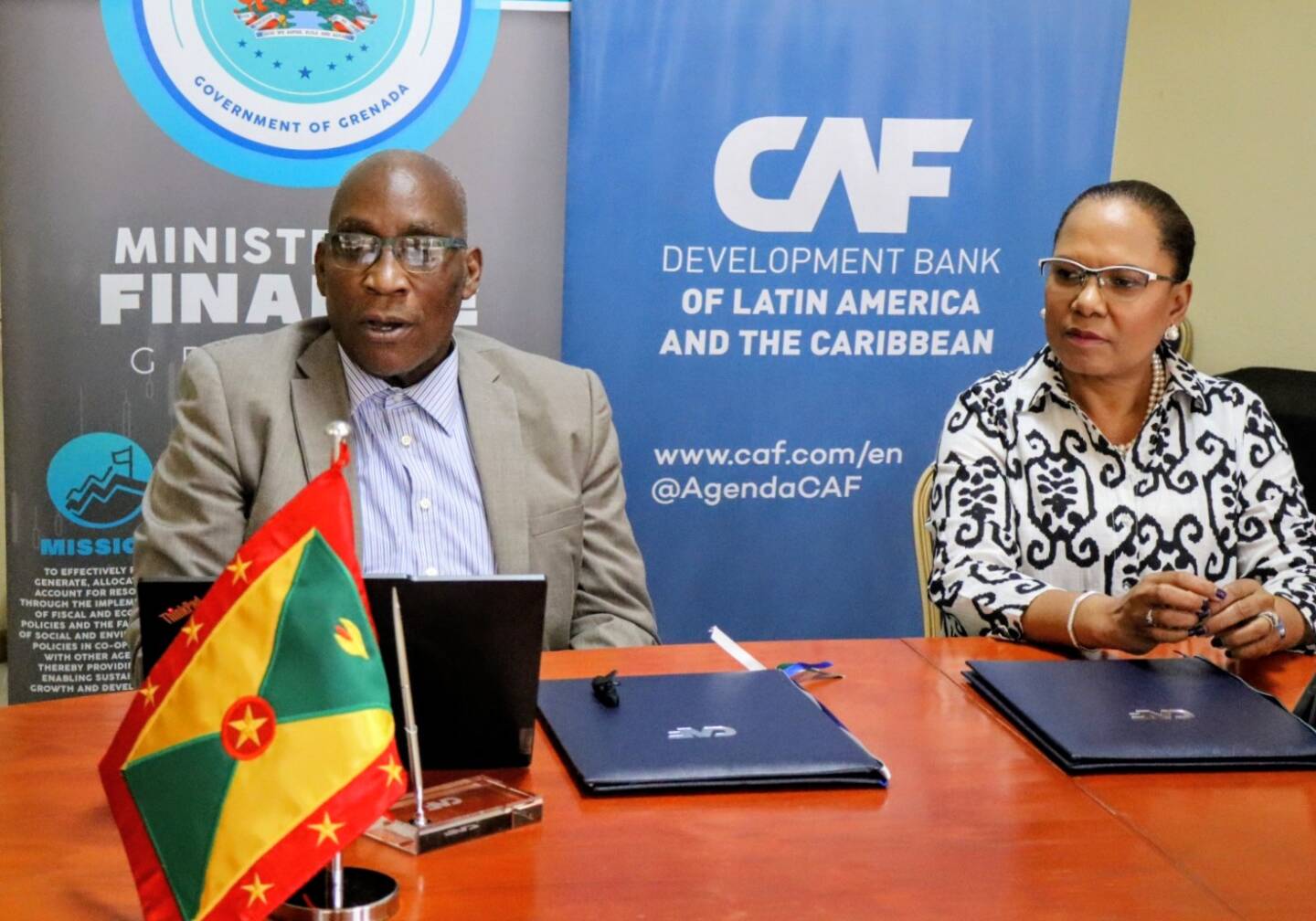
    On March 27, 2026, the Government of Grenada formalized a new strategic partnership by signing a non-binding Letter of Intent (LOI) with CAF – the Development Bank of Latin America and the Caribbean, marking a key step toward advancing the island nation’s national sustainable development goals through targeted international collaboration.

    The official signing ceremony saw Honourable Dennis Cornwall, Grenada’s Minister for Finance, sign the document on behalf of the Grenadian government, while Dr. Stacy Richards-Kennedy, CAF’s Regional Manager for the Caribbean, represented the regional development bank. Under the terms of the agreement, Grenada’s Ministry of Finance has been named the central coordinating body for all future joint activities between the two parties. While the LOI carries no binding legal obligations, it creates a formal, structured foundation for advancing shared projects, technical assistance programs, and other collaborative efforts aligned with both parties’ priorities.

    Two core priority areas for future partnership have already been outlined in the agreement. First, the parties aim to boost institutional capacity and improve public service delivery across Grenada’s entire health sector. Second, the agreement paves the way for the development and potential future financing of a nationwide telehealth initiative designed to expand healthcare access and connectivity across all three of Grenada’s constituent islands: Grenada itself, Carriacou, and Petite Martinique.

    In remarks following the signing, Minister Cornwall emphasized his confidence that the new partnership will deliver mutual benefits and make a substantial contribution to Grenada’s long-term sustainable development targets. “Through this engagement, we are laying the groundwork for enhanced collaboration in key priority areas, particularly institutional strengthening and the advancement of digital integration within our health sector,” Cornwall explained. “These are critical pillars as we work to modernize our systems, improve service delivery, and ensure that all Grenadians — across Grenada, Carriacou, and Petite Martinique — can benefit from more accessible and resilient healthcare.”

    Dr. Richards-Kennedy echoed this optimism, noting that CAF views the new agreement as an important milestone in supporting Grenada’s national development vision. “Telehealth has the potential to fundamentally transform healthcare in Grenada and the wider Caribbean, by expanding access, improving quality and enhancing efficiency across the health system,” she said. “CAF stands ready to share our expertise and lessons learnt as we work with the authorities and beneficiaries to co-create a tailored programme that will deliver quality services quickly and reach communities across Grenada, Carriacou and Petite Martinique.”

    The LOI aligns with the Grenadian government’s broader strategy of diversifying its international development partnerships and leveraging cross-border cooperation to address high-priority national needs, with a particular focus on strengthening health system resilience and expanding digital innovation across key public sectors.

  • GHTA and ANSA Coatings Grenada Ltd announce strategic partnership

    GHTA and ANSA Coatings Grenada Ltd announce strategic partnership

    Grenada’s leading tourism industry group has joined forces with a top regional paint supplier to drive quality improvements across the island nation’s hospitality sector, marking a new collaborative milestone for local tourism infrastructure development.

    The Grenada Hotel and Tourism Association (GHTA) and ANSA Coatings Grenada Limited (ACGL), a subsidiary of the diversified ANSA McAL Group specializing in high-performance paint manufacturing and distribution, formally signed their strategic partnership agreement on March 31, 2026. The deal was sealed by GHTA Chief Executive Officer Arlene Friday and ACGL Commercial Manager Reyan Neckles during an official signing ceremony.

    This cross-sector collaboration is built around a shared goal of elevating the standard of building maintenance and renovation services available to tourism and hospitality operators across Grenada, while making premium paint products more affordable for industry stakeholders. Under the 3-year terms of the agreement, ACGL will hold official designation as a GHTA-endorsed Paint Partner, and extend exclusive discounted pricing on two of its flagship product lines, Berger and Sissons paints, to all active GHTA member businesses.

    In comments following the signing, Friday emphasized the tangible value the partnership delivers to GHTA’s membership, noting that the arrangement does more than just cut costs for hoteliers and hospitality providers. “This agreement not only offers tangible benefits to our members but also strengthens the overarching quality and appeal of Grenada’s tourism and hospitality facilities,” Friday said, framing the partnership as a key investment in the island’s global reputation as a top travel destination.

    Neckles echoed Friday’s optimism, emphasizing ACGL’s longstanding commitment to supporting the growth of Grenada’s core economic sectors. “We are proud to support the Grenada Hotel and Tourism Association. Our collaboration underscores our commitment to providing superior products and services that contribute to the vibrancy and success of Grenada’s tourism sector,” Neckles said.

    The partnership is structured as an ongoing collaborative effort, with formal commitments from both organizations to expand engagement over the 3-year term. GHTA has pledged to actively promote ACGL’s full range of products and services to its membership through multiple dedicated channels, including increased digital brand visibility and targeted social media outreach to hospitality operators.

    Leaders from both organizations say the alliance exemplifies how cross-sector partnerships can advance shared priorities: it delivers cost savings and quality improvements to GHTA members, strengthens ACGL’s position as a leading local supplier, and drives sustained, quality-focused growth for Grenada’s $1.5 billion tourism sector, the island’s largest contributor to GDP. By aligning the expertise of a local industry association with the product offerings of a trusted regional manufacturer, the partnership aims to lift the overall quality and long-term sustainability of Grenada’s tourism infrastructure for years to come.

    *Disclaimer: NOW Grenada does not assume responsibility for the opinions, statements, or third-party contributed content included in this announcement. Individuals may report alleged content abuse via official channels provided by the outlet.*

  • Traffic arrangements: CARIFTA Games, National Stadium

    Traffic arrangements: CARIFTA Games, National Stadium

    As Grenada prepares to host the 53rd edition of the CARIFTA Games in 2026, the Royal Grenada Police Force (RGPF) has announced a full set of adjusted traffic regulations to keep movement orderly around the event’s primary venue, the Kirani James Athletic Stadium. The special arrangements will run from Saturday, April 4 to Monday, April 6, 2026, and will be enforced daily between 5:00 a.m. and 11:00 p.m.

    To guide inbound vehicle traffic to the stadium, all motorists heading to the venue will be required to access the site via two designated routes: the Queen’s Park Ring Road starting from its intersection with Cherry Hill in St. George, and the Hump Back Bridge connection to River Road Public Road. Once daily competition concludes, no vehicles will be permitted to enter the venue area at all. Critically, the RGPF has emphasized that no entry will be granted to motorists approaching the stadium from the Mt Gay or Mt Rush directions.

    Several additional road sections will be completely closed to vehicle traffic throughout the event. These include Old Fort public road starting from its junction with Lucas Street, Cemetery Hill from its intersection with Church Street, and the section of the Ring Road stretching from the Mt Rush Public Road junction toward Humpback Bridge.

    To accommodate all attendees and personnel, the RGPF has rolled out a segmented parking plan tailored to different groups. VIPs will be allocated parking in the concrete paved zone directly in front of the Kirani James Athletic Stadium, while official event personnel will park in the lot immediately to the left upon entering the stadium grounds. Media outlets, catering vendors, and senior police officers working on-site during the games will use the grass parking area located on the left side of the main stadium car park entrance. Performers participating in activities at the event’s Culture Village will park at the rear of the National Cricket Stadium near the River Road end, an area typically reserved for VIP parking. Buses carrying athletes and team management staff will be assigned parking at Gate 6, immediately to the left of the entrance.

    For general spectators, two public parking zones have been designated: the Wesley College ground, and the right side of Gate 6 upon entry. Multiple high-traffic areas around the venue have been marked as no-parking zones to prevent congestion, including Melville Street from the Fish Market to Keep Left, the stretch from Keep Left to Cherry Hill (including the entire Queen’s Park Public Road), the section from the Cemetery Hill and River Road intersection to Purcell’s Lumber Yard, both sides of the stadium ring road, and Mt Rush public road from its junction with the Stadium Ring Road up to the start of the hill.

    At the end of each day’s events, three major roads will be converted to one-way traffic flow to ease post-event exit congestion: River Road public road will only allow travel toward the DeCaul roundabout, Mt Rush public road will be one-way toward Mt Gay, and Mortley Hill will only permit travel toward Sans Souci.

    The RGPF also confirmed a pre-planned emergency access route: all emergency response vehicles will travel along Cemetery Hill, Church Street, and Grand Etang Road to reach the General Hospital if needed. This announcement was officially released from the Office of the Commissioner of Police.

  • Project Polaris Groundbreaking Ceremony

    Project Polaris Groundbreaking Ceremony

    On a historic plot of land that has carried centuries of Grenadian narrative—from Indigenous Amerindian settlement through colonial slave and sugarcane plantations—Prime Minister Dickon Mitchell has officially launched the groundbreaking ceremony for Project Polaris, the nation’s ambitious new state-of-the-art Grenada General Hospital. Far more than a construction milestone, the event marked a defining step forward for the island nation’s long-term national development plan, Vision 75, which aims to transform Grenada into a resilient, inclusive, innovation-driven economy by its 75th independence anniversary in 2050.

    For more than a century, Grenada’s existing General Hospital, originally built as a colonial infirmary by French rulers, has stood as a quiet witness to the nation’s tumultuous history. It survived the 1850 Great Fire of St. George’s, weathered devastating hurricanes Janet and Ivan, and endured through Grenada’s political revolution. Over generations, successive governments have patched and expanded the aging facility: adding new wings, expanding overcrowded wards, repainting walls, and repairing leaky roofs. But officials have long acknowledged that retrofitting a 19th-century structure to meet 21st-century clinical standards is no longer feasible. For years, Grenadian healthcare workers have delivered life-saving care against steep odds, working within severe space constraints while the public has waited patiently for systemic change. Today, that change finally begins, Mitchell emphasized.

    The path to this groundbreaking ceremony was the result of deliberate, accelerated action by Mitchell’s administration, which took office in 2022. Built on the non-negotiable principle that all Grenadians deserve access to world-class healthcare without leaving their home country, the project moved from concept to land acquisition in just 12 months, with the 2023 purchase of the strategic plot from the Neckles family. Mitchell highlighted the family’s stewardship of the land for a full decade, from 2013 onward, when they chose to hold the entire parcel intact rather than subdivide and sell it for private development, recognizing its long-term strategic value to the nation.

    Mitchell acknowledged that the road ahead still holds significant hurdles, from financial constraints to logistical challenges, and that skeptics have questioned the project’s feasibility. But he reaffirmed that the government’s commitment to delivering tangible progress for the Grenadian people remains unwavering. Years of rigorous feasibility studies, environmental impact assessments, and intensive negotiations have laid a strong foundation for the project, which is designed not just as a new hospital building, but as a sustainable, integrated ecosystem of care. Today’s ceremony moves the project from planning to active construction, turning a decades-long policy discussion into tangible progress.

    Project Polaris stands as the cornerstone of Vision 75, the government’s national development roadmap. “You cannot have a wealthy nation without a healthy nation,” Mitchell noted, framing public health as the bedrock of all national prosperity. A productive economy depends on a healthy workforce, and a thriving society cannot exist without a modern, accessible healthcare system that meets the needs of all citizens. Echoing the transformative impact of two of Grenada’s most iconic national infrastructure projects—the Maurice Bishop International Airport completed in 1984 and St. George’s University founded in 1977—Project Polaris is set to reshape the nation’s trajectory. During construction, the project will create hundreds of local jobs, and once completed in 2029, it will support thousands of high-skilled clinical and support roles, strengthening Grenada’s human capital for decades to come.

    The new hospital facility is the core infrastructure, or “hardware,” of a broader public healthcare transformation that includes complementary policy and system reforms, labeled the initiative’s “software.” Key reforms include transitioning hospitals to a semi-autonomous management structure to speed up procurement, improve operational efficiency, and boost maintenance standards; laying the regulatory and financial groundwork for a national universal health insurance scheme that will eliminate the cruel choice for Grenadians between life-saving care and losing their life savings; revitalizing local community health centers and village medical outposts to expand preventative primary care, reducing the burden of advanced illness on the acute care hospital; and implementing a system-wide quality improvement program at the existing General Hospital to boost patient experience and clinical outcomes immediately, while construction on the new facility progresses.

    Beyond improving domestic care, Project Polaris will position Grenada as a regional leader in healthcare excellence among the Organisation of Eastern Caribbean States (OECS), turning the Spice Isle into a global health tourism destination and a regional hub for specialized clinical care. To mark the occasion, the government of Grenada signed a new Letter of Intent with CAF, the Development Bank of Latin America and the Caribbean, outlining a framework for expanded collaboration to strengthen the nation’s health sector, advance digital health integration, and develop sustainable, high-impact initiatives that improve health outcomes for all Grenadians. Mitchell extended an open invitation to local private sector stakeholders, the Grenadian diaspora, and international partners to join the project, framing the initiative as proof that small island developing states can lead regional progress when they commit to bold ambition. “Grenada is no longer a passenger in the story of Caribbean development; it is a pilot,” he said.

    To underscore the shared responsibility of building a healthier nation, every member of the Grenadian Cabinet has pledged to donate one month of their annual salary to the project each year until its completion in 2029. Mitchell extended a call to all Grenadians at home and abroad to join the effort, whether through public advocacy, personal commitment to healthy lifestyles, or direct partnership. Beyond bricks and mortar, he framed the project as a shift in national mindset: health is not just a service to access when illness strikes, but a collective priority to protect every day.

    In closing, Mitchell extended gratitude to the cross-government team that brought the project to this milestone, international development and financing partners, and the Neckles family for their stewardship of the land. He also recognized long-standing institutional partner St. George’s University, whose expertise in medical education will make the new hospital a hub for clinical training as well as patient care. “May God bless this project, and may God bless our beautiful nation,” he said.


  • Grenada launches landmark vision restoration programme

    Grenada launches landmark vision restoration programme

    In the coming weeks, 50,000 residents across Grenada’s tri-island territory will gain access to life-changing vision care through a new pioneering national vision restoration programme, a initiative set to deliver clearer sight, restored personal dignity, and expanded opportunity for thousands living with unaddressed vision impairment.

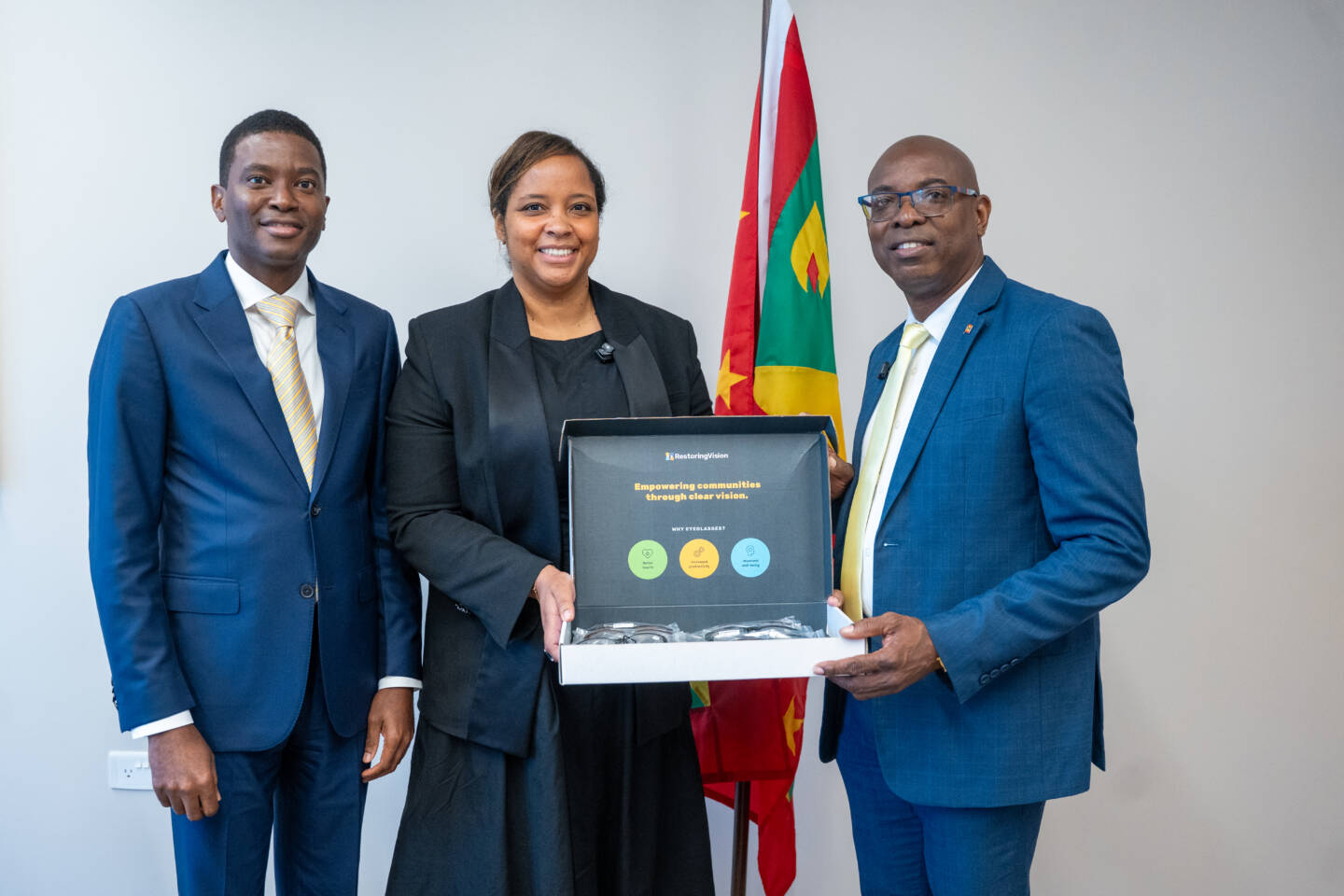
    The official partnership for the programme was formalized on March 27, 2026, during a signing ceremony held in St. George’s. The Memorandum of Understanding (MOU) was signed by Grenada’s Minister of Health, Hon. Philip Telesford, and Keisha McGuire, Chief Global Affairs Officer of the global non-profit organization Restoring Vision. Since details of the programme were made public, it has sparked widespread national attention and enthusiasm, rooted in the personal commitment of Grenada’s Prime Minister, Hon. Dickon Mitchell, who first championed the initiative.

    Prime Minister Mitchell opened up about his own experience struggling with unaddressed vision problems during his secondary school years, framing the programme as a deeply personal priority. “For me, any opportunity to help someone who suffers from vision loss is something I am deeply passionate about,” he said. He further emphasized that the project centers on tangible, people-focused healthcare improvement, noting that uncorrected poor vision creates unnecessary barriers to nearly all routine daily activities for affected people.

    Minister Telesford echoed this sentiment, highlighting the urgent need and strategic importance of the cross-sector collaboration. “This comes at a critical time in our efforts to strengthen primary health care and expand access to essential services. Vision health is often overlooked, yet it is fundamental to productivity, independence, and quality of life,” he explained. For Small Island Developing States like Grenada, unaddressed presbyopia represents a widespread public health gap: data shows 6 out of 10 adults over 40 live with the age-related vision condition, yet the vast majority lack access to even a basic pair of reading glasses to correct it.

    Over the 12-month pilot period, the programme will integrate free vision screenings and near-vision eyeglass distribution directly into Grenada’s existing public health system. The rollout will leverage the country’s established primary care network and trained community health workers to bring services directly to citizens, both at local clinics and in remote, hard-to-reach communities across all three islands.

    McGuire, representing Restoring Vision, framed the partnership as a model for other small island nations facing similar public health challenges. “This programme reflects a shared vision to advance the health and wellbeing of our people. No one in Grenada should be held back by something so easily corrected as poor near-vision,” she said. Restoring Vision, the global non-profit behind the collaboration, has made addressing uncorrected presbyopia its core mission: the age-related near-vision deterioration is the most common cause of vision impairment across the globe, and the organization works to expand affordable access to correction globally.

    The partnership marks a major turning point for essential eye care access in Grenada, with the shared goal of helping all residents access the care they need to see clearly, participate fully in daily life, and build more stable futures. Approximately 50 Grenadians already confirmed to have unaddressed near-vision impairment will be the first to receive free eyeglasses as the programme launches in the coming weeks.

  • TAMCC students explore career opportunities in cruise ship industry

    TAMCC students explore career opportunities in cruise ship industry

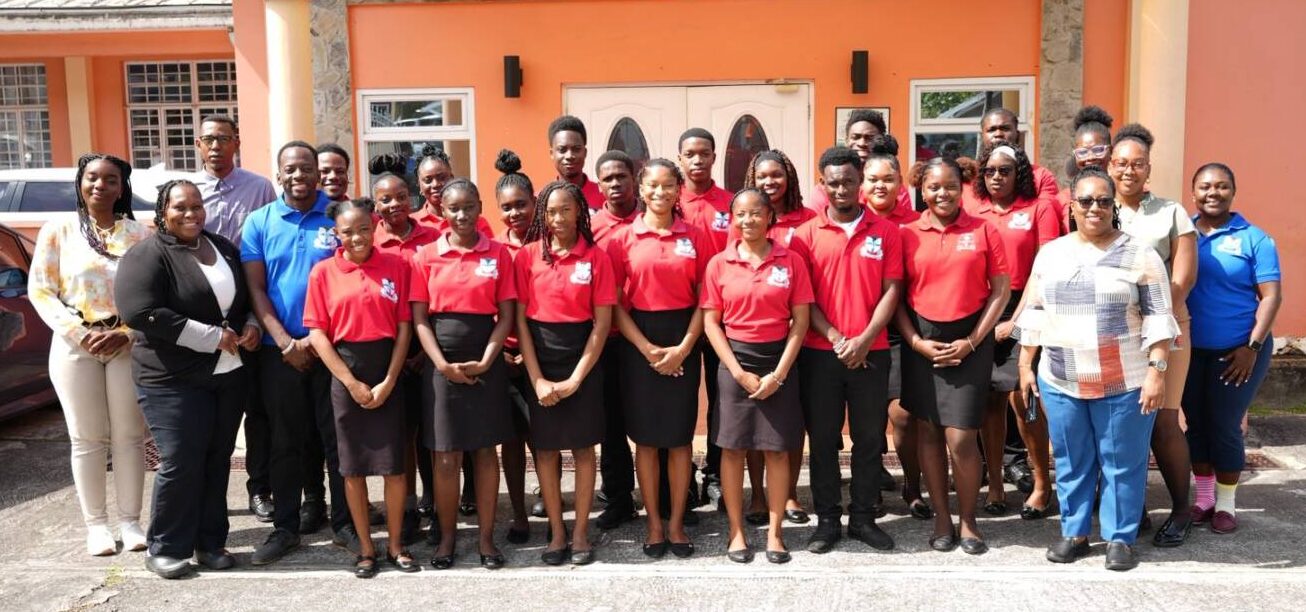
    Twenty tourism and hospitality students from T A Marryshow Community College (TAMCC) gained unprecedented access to career opportunities in the maritime sector during an immersive educational tour aboard the sophisticated MSC Virtuosa cruise ship. The event, orchestrated by Grenada’s Ministry of Tourism, Creative Economy and Culture, formed the concluding segment of the first quarter’s Immersive Edutainment Tour initiative under the national Tourism Awareness Campaign.

    Accompanied by two faculty members, the delegation comprised students specializing in Tourism and Hospitality, Food and Beverage, and Culinary Arts. They engaged in an comprehensive informational briefing that detailed diverse professional pathways within the cruise industry and provided operational insights into modern maritime hospitality management.

    Following the theoretical component, participants experienced a guided exploration of the vessel’s advanced facilities. The tour highlighted the ship’s technological innovations, including the spectacular LED-domed Galleria Virtuosa, premium dining establishments, entertainment venues, and state-of-the-art recreational infrastructure that define the Meraviglia-Plus class cruise experience.

    This maritime career day continues a series of educational excursions that previously included primary school visits to the George Brizan House of Nutmeg and Tri-Island Chocolate Factory in Beaulieu, alongside secondary school tours of Coyaba Beach Resort. These strategically designed edutainment initiatives aim to cultivate tourism awareness among Grenada’s youth while providing substantive exposure to the nation’s hospitality ecosystem, including cruise operations, hotel management, and cultural attractions.

    The program represents a significant investment in human resource development within Grenada’s vital tourism sector, creating tangible connections between academic preparation and industry requirements for the next generation of hospitality professionals.