标签: Grenada

格林纳达

  • Job Opportunity: Project Manager

    Job Opportunity: Project Manager

    The Government of Grenada has launched a call for applications from experienced, highly qualified professionals to fill a critical Project Manager position within the Project Implementation Unit (PIU) for its high-priority Project Polaris. This newly opened role sits at the center of cross-team coordination for the multi-component initiative, serving as a key link between the PIU and the project’s dedicated corporate body, Polaris Development Company Ltd (PDCL).

    Unlike frontline operational roles that carry direct contractual, financial or on-the-ground construction risk responsibilities, this Project Manager position centers on structured coordination, consistent monitoring and centralized stakeholder reporting. The core mandate of the role is to ensure full alignment across all of Project Polaris’ key workstreams, which span construction oversight, financial management, regulatory compliance, and phased implementation sequencing.

    Breaking down the role’s key responsibilities, the first core area is integrated project controls and performance monitoring. The successful candidate will be tasked with maintaining a unified master project schedule that tracks all critical milestones, updating and managing the centralized project risk register, and regularly assessing whether PDCL’s delivery outputs align with the Government of Grenada’s overarching strategic objectives for the initiative. They will also be responsible for tracking key performance indicators and flagging any deviations from the approved project timeline.

    Second, the role carries primary accountability for governance and official reporting. This includes preparing formal submissions for the national Cabinet and its sub-committees, consolidating cross-functional technical, financial and performance reports from multiple workstreams, and developing high-level executive dashboards, stakeholder briefing notes, and summary reports for senior leadership. The position also requires maintaining organized decision logs and centralized documentation registers to ensure full institutional accountability.

    Third, the Project Manager will lead strategic integration and implementation sequencing. They will support coordinated alignment of procurement, financing and construction timelines, map and track interdependencies between all workstreams, and ensure that all government actions are synchronized with on-the-ground project delivery milestones.

    Fourth, the role covers proactive risk escalation and issue resolution. The incumbent will be expected to identify emerging risks to project delivery early, escalate policy-sensitive issues to relevant senior stakeholders in a timely manner, and monitor progress on all agreed corrective actions to ensure resolution.

    Finally, the role requires upholding rigorous documentation and institutional governance standards. This includes maintaining structured document control systems, enforcing clear version control for all official Cabinet submissions, and supporting the development of standardized reporting templates and formal governance protocols for the project.

    To be considered for the position, candidates must demonstrate a proven track record of strong project management and reporting capabilities, advanced analytical and risk-tracking skills, and high-quality written communication skills tailored for executive and government stakeholder briefings. The ideal candidate must also be able to navigate complex multi-stakeholder environments, demonstrate exceptional organizational skills, strict attention to accuracy, and sound discretion when handling sensitive government information, and have working familiarity with infrastructure and public sector governance frameworks.

    Formal educational and experience requirements include a bachelor’s degree in Engineering, Public Administration, Business, Construction Management, or a related field, plus a minimum of five years of relevant professional experience. Candidates with prior experience working on infrastructure or capital projects, or in government program coordination, and with a background preparing official documentation for Cabinet or board-level governance bodies will be prioritized. Prior experience working with public-private partnerships (PPP), special purpose vehicles (SPV), or structured project financing environments is considered a strong added advantage.

    On the technical side, candidates must show advanced proficiency in the full Microsoft Office Suite, prior hands-on experience working with standard project scheduling tools such as Microsoft Project or Smartsheet, demonstrated ability to build custom performance dashboards and consolidated reports, and a proven skill for synthesizing complex, multi-source data into clear, actionable insights for stakeholders.

    For candidates interested in applying, applications must include a formal cover letter outlining relevant experience and a detailed curriculum vitae. Submissions should be sent via email to [email protected], with copies copied to [email protected] and [email protected]. All emails must use the subject line “PDCL Application — Project Manager” to be correctly routed and considered. The closing deadline for all applications is 31 May 2026. The Government of Grenada notes that while all expressions of interest are appreciated, only shortlisted candidates will be contacted for subsequent stages of the recruitment process.

    A disclaimer from NOW Grenada, the platform hosting the vacancy announcement, notes that the outlet is not responsible for the views, statements or content shared by contributing entities, and provides a channel for users to report any abusive content related to the posting.

  • Hon. Kerryne James advocates for inclusive energy integration

    Hon. Kerryne James advocates for inclusive energy integration

    The Africa Energy Technology Conference 2026, one of the continent’s leading gatherings focused on sustainable energy innovation and integration, recently hosted a high-stakes Ministerial Session centered on harmonizing cross-border policy frameworks for continental energy cooperation. Hon. Kerryne James, Grenada’s Minister of Climate Resilience, the Environment and Renewable Energy, joined the event as a featured distinguished panellist for the session, titled “The Policy Bridge: Harmonising Frameworks for Continental Integration”.

    This closed-door high-level dialogue brought together top policymakers, regulatory leaders and senior energy industry executives from across Africa and beyond, all gathered to address long-standing regulatory and policy barriers that have slowed progress on regional and continental energy trade and collaborative infrastructure development. Attendees agreed that fragmented national rules have long blocked the seamless flow of energy across borders, making it far harder to build the resilient, interconnected energy systems that are critical to expanding access and meeting climate goals. Session discussions centered on the urgent need to align divergent national legal frameworks, tariff structures, industry regulations and core energy policies, with a shared focus on how coordinated action can accelerate progress toward universal energy access, environmental sustainability and inclusive economic growth across the continent.

    During her interventions, Minister James drew attention to the unique position that small island developing states (SIDS) like Grenada occupy amid the global energy transition, highlighting both their disproportionate climate vulnerability and their untapped potential to lead on innovative renewable energy solutions. She emphasized that equitable global partnerships, adaptive regulatory structures, and accessible, inclusive financing models are non-negotiable to enable SIDS to fully engage in and benefit from emerging regional and international energy markets.

    Beyond policy and financing, Minister James used the high-profile platform to push for greater representation and meaningful leadership opportunities for women and youth across the global energy sector. She argued that inclusive progress cannot stop at token representation; instead, women and young people must be centered in core decision-making processes, elevated to senior leadership roles, and given direct access to deploy cutting-edge clean energy technologies.

    “Women and young people must not only be viewed as beneficiaries of the energy transition, but as innovators, leaders, and active contributors shaping the future of sustainable energy systems,” James told the gathered participants.

    She further added that targeted investments in human capacity building and intentional creation of accessible pathways for youth engagement are foundational to delivering a just, inclusive energy transition—especially for vulnerable developing economies that face the steepest barriers to climate action.

    Grenada’s presence at the 2026 Africa Energy Technology Conference underscores the Caribbean nation’s ongoing commitment to strengthening cross-border and global climate partnerships, scaling up domestic renewable energy deployment, and contributing valuable perspectives from small island states to global conversations about building sustainable, climate-resilient energy systems for all.

  • Job Opportunity: Finance Manager

    Job Opportunity: Finance Manager

    Polaris Development Company Ltd (PDCL), the special purpose entity created to deliver Project Polaris — one of the government’s flagship infrastructure initiatives — has launched a search for a seasoned, highly qualified Finance Manager to lead its financial operations.

    As the company’s senior financial lead, the appointed Finance Manager will hold end-to-end responsibility for PDCL’s entire financial management function, spanning core activities from financial administration and accounting integrity to comprehensive budgeting, active cash flow oversight, and strict adherence to both lender stipulations and government statutory requirements. A core mandate of the role is embedding robust financial governance, transparent reporting protocols, and disciplined internal control systems across every phase of the project’s lifecycle. The role reports directly to PDCL’s Chief Executive Officer and provides critical analytical and reporting support to the company’s board of directors through accurate financial disclosures and proactive risk management.

    The position is structured around seven key responsibility areas. First, in financial planning and budget management, the successful candidate will develop and oversee capital expenditure budgets and financial forecasts, track ongoing spending to deliver variance analysis and early expenditure warnings, and contribute to long-term planning for the company’s financial sustainability.

    Second, for lender administration and compliance, the Finance Manager will oversee all drawdown processes aligned with the terms of existing financing agreements, guarantee full compliance with all lender conditions, financial covenants, and mandatory reporting requirements. They will also prepare required compliance certificates, formal financial reports, and drawdown requests, and maintain consistent, structured communication with lending partners, facility agents, and external auditors.

    Third, in accounting and internal controls, the role requires building and maintaining rigorous accounting systems and internal control frameworks, ensuring all financial records are maintained in a permanent audit-ready state and meet all statutory compliance standards, and overseeing all tax and regulatory reporting activities.

    Fourth, for payment and cash flow management, the Finance Manager will review payment applications submitted by project contractors, lead cash flow forecasting and liquidity planning to maintain stable operations, and ensure all fund disbursements are completed accurately and on schedule.

    Fifth, in financial reporting and board support, the appointee will prepare monthly, quarterly, and annual full financial statements, deliver tailored financial insights and reports to the CEO and board of directors, and identify emerging financial risks while proposing actionable mitigation strategies.

    Finally, the role carries dedicated risk management responsibilities, including ongoing monitoring of core financial risks such as potential cost overruns and covenant exposure, supporting financial assessments related to project claims, and maintaining structured regular reporting on the company’s financial risk profile.

    To be considered for the role, candidates must demonstrate advanced expertise in infrastructure finance and project-specific accounting, a solid working knowledge of public-private partnership (PPP) frameworks and PDCL’s unique financial structure, and prior experience managing lender compliance and complex financing arrangements. Candidates are expected to hold high professional standards of integrity, transparency, and accountability, paired with strong analytical, forecasting, and reporting capabilities, and the ability to translate complex financial data into clear insights for senior leadership and board stakeholders.

    Minimum educational and professional requirements include a bachelor’s degree in finance, accounting, economics, or a closely related field. An active professional accounting designation such as CPA, ACCA, CA, or an equivalent global qualification is strongly preferred. Candidates must also have a minimum of 10 years of progressively responsible experience in financial management, with prior work on infrastructure projects, PPP frameworks, or project-financed operational environments. Previous experience working with international lenders or development finance institutions is considered a valuable added asset for candidates. Technical requirements include advanced proficiency in financial modeling and Microsoft Excel, strong working knowledge of the full Microsoft Office Suite, and prior experience with accounting and project cost management systems is a preferred qualification.

    For candidates interested in applying, application packages including a detailed curriculum vitae and a tailored cover letter must be submitted via email to [email protected], with copies sent to [email protected] and [email protected]. All applications must use the subject line “PDCL Application — Finance Manager” to be correctly routed. The closing deadline for all submission is 31 May 2026. PDCL notes that while all applications are appreciated, only shortlisted candidates will be contacted for further recruitment steps.

    This posting was published with a disclaimer from NOW Grenada, which states that the outlet is not liable for the opinions, statements, or third-party content shared by contributors, and provides a channel for users to report any abusive content related to the posting.

  • Job Opportunity: Chief Executive Officer (CEO)

    Job Opportunity: Chief Executive Officer (CEO)

    Polaris Development Company Ltd. (PDCL), a purpose-built special entity created to advance Project Polaris — one of the government’s highest-priority flagship infrastructure initiatives — has opened applications for a highly qualified Chief Executive Officer (CEO) to lead delivery of the project’s core new hospital development.

    Reporting directly to PDCL’s Board of Directors, the successful candidate will hold full executive accountability for every stage of the new hospital’s delivery, tasked with ensuring the entire project aligns strictly with pre-approved scope, budget timelines, technical specifications and binding financing agreements. As the top executive, the CEO will own ultimate responsibility for corporate governance, financial integrity, contractual performance and enterprise-wide risk management, while leading coordinated engagement with the national government, project lenders and all other key stakeholders.

    The role’s core responsibilities span five key functional areas. First, in strategic and governance leadership, the CEO will roll out the Board’s approved strategy and delivery framework, ensure full adherence to financing covenants and legal statutory requirements, uphold robust governance structures, transparent reporting protocols and strong internal controls, and provide expert guidance to the Board on emerging risks and strategic directional decisions.

    Second, for contractual and delivery oversight, the CEO will supervise all major project contracts, including agreements with design-build-maintain contractors, third-party consultants and key suppliers, hold contractors accountable for meeting technical specifications, cost targets and schedule milestones, oversee end-to-end contract administration, change control processes and timely risk escalation, and ensure all commissioning and operational readiness milestones are met on schedule.

    Third, in terms of financial accountability, the role requires oversight of overall project financial performance, compliance with lender requirements and capital drawdown processes, ongoing monitoring of capital expenditure and emerging cost risks, and maintenance of full audit readiness and financial transparency across all operations.

    Fourth, for risk and compliance, the CEO will maintain and refine a comprehensive enterprise risk management framework, lead enterprise-wide claims management and proactive dispute mitigation, and ensure unwavering compliance with national procurement regulations and global anti-corruption standards.

    Finally, as the primary stakeholder engagement lead, the CEO will act as the main point of contact for the government, lending institutions and project partners, prepare regular Board reports covering financial performance and risk updates, and lead high-stakes strategic negotiations with key external parties.

    To be considered for the role, candidates must demonstrate a proven track record of senior leadership in large-scale infrastructure or public-private partnership (PPP) projects, deep specialized expertise in project finance, contract management and corporate governance, advanced enterprise risk management capabilities, exceptional negotiation and C-suite communication skills, and uncompromising standards of integrity, sound judgment and decisive decision-making.

    Preferred qualifications include a master’s degree in engineering, finance, business administration or a related field. Candidates must hold a minimum of 15 years of senior leadership experience, have a verifiable history of successfully delivering large-scale infrastructure projects valued at $100 million or more, and prior experience working with special purpose vehicles (SPVs), PPP structures or board-governed entities. Previous experience collaborating with international lenders or development finance institutions is considered a significant added advantage.

    Interested eligible candidates are required to submit a complete application package, including a personalized cover letter and detailed curriculum vitae, to [email protected], with copies sent to [email protected] and [email protected]. All applications must use the subject line “PDCL Application — Chief Executive Officer” to be considered. The closing deadline for submission of applications is 31 May 2026. PDCL notes that while all applications are appreciated, only shortlisted candidates will be contacted for further stages of the recruitment process.

  • PM secures critical energy, trade, and security alliances

    PM secures critical energy, trade, and security alliances

    From May 18 to 19, 2026, Grenada Prime Minister the Honourable Dickon Mitchell completed a high-stakes, two-day official working visit to Washington, D.C., marking a landmark step in deepening diplomatic and economic collaboration between the Caribbean island nation and the United States. The packed itinerary centered on five core priority areas: cross-border investment, energy development, trade expansion, critical infrastructure upgrades, and regional security cooperation, with Mitchell holding direct, substantive talks with senior officials from the U.S. Cabinet, congressional leaders, and major U.S. private sector stakeholders.

    ### Strengthening Bilateral and Economic Partnerships
    The entire diplomatic mission was framed around boosting Grenada’s global visibility as an attractive destination for sustainable trade and international investment, starting with high-level dialogue across key U.S. government branches. At the U.S. Department of State, Mitchell sat down with Deputy Secretary of State Christopher Landau to reaffirm shared commitments to regional collaboration and expand mutually beneficial bilateral economic ties.

    Moving to the Department of Commerce, the prime minister held targeted discussions with Commerce Secretary Howard Lutnick and William Kimmett, Under Secretary for the International Trade Administration. The talks centered on unlocking Grenada’s emerging oil and gas potential while streamlining and optimizing existing trade routes between the two nations to reduce barriers for Grenadian exporters. Mitchell also made direct outreach to key congressional leaders, including Representative Joe Wilson of the House Foreign Affairs Committee and Senator Bill Hagerty, ranking member of the Senate Foreign Relations Subcommittee on the Western Hemisphere, to secure ongoing legislative support for the deepening of U.S.-Grenada bilateral relations.

    ### Advancing Energy Security and Maritime Logistics
    A central pillar of Mitchell’s visit was advancing Grenada’s goals of energy sovereignty, climate resilience, and long-term economic sustainability, with technical and private sector discussions focused on renewable energy development and supply chain improvements. At the U.S. Department of Energy, the Grenadian delegation met with a senior leadership team including Juan Pablo Varela, Special Advisor for International Affairs, and John Lassek, Deputy Assistant Secretary for the Office of Subsurface Energy, Hydrocarbons and Geothermal Energy. The two sides explored opportunities for U.S. technical assistance and international private investment in Grenada’s geothermal and utility-scale solar energy sectors.

    Separately, Mitchell held talks with Adam Cortese, CEO of UGT Renewables, focused on mobilizing global private capital to deliver large-scale solar energy projects and related infrastructure to unlock Grenada’s abundant renewable energy potential. For maritime logistics, a meeting with Tropical Shipping CEO Tim Martin centered on practical improvements: streamlining cross-border supply chains, cutting freight costs for Grenadian businesses, and building more efficient maritime logistics networks that support the island nation’s trading community.

    ### Aligning on National and Regional Security Priorities
    Addressing shared border management challenges and aligned geopolitical interests across the Western Hemisphere, Mitchell held strategic strategy sessions at the White House National Security Council with Michael Jensen, Senior Director of the NSC, and Will Turner, Special Advisor to the Vice President for the Western Hemisphere. Discussions focused on advancing regional stability in the Eastern Caribbean, advancing the U.S. ‘Americas First’ policy framework, expanding U.S. support for Grenada’s disaster response and risk management systems, and strengthening joint air and maritime border security enforcement in the subregion.

    In his post-visit commentary, Mitchell emphasized that the two days of intensive engagement marked the starting point of a deeper, long-term partnership with the United States, one centered on driving Grenada’s national development goals through expanded bilateral cooperation. “By solidifying direct alliances with U.S. federal agencies, key congressional committees, and major industrial leaders, we are positioning Grenada to attract premium, sustainable investments that deliver long-term benefits to our people,” Mitchell noted.

    Before arriving in Washington for official diplomatic talks, Mitchell undertook a two-day engagement with the Grenadian diaspora in New York City from May 16 to 17. During that trip, he attended the graduation ceremony of St George’s University at Madison Square Garden, where renowned Grenadian physician Dr. Dolland Noel was honored with the institution’s Distinguished Service Award. Alongside the Project Polaris Team and Grenada’s Ambassador for Diaspora Affairs Terry Forrester, Mitchell also led a well-attended town hall meeting at Medgar Evers College, where he addressed questions and priorities from the local Grenadian community. He also took part in the Spice Excellence Awards, where 12 accomplished Grenadians from diverse professional fields were recognized for their outstanding career achievements.

    Following the conclusion of his official travel, Mitchell and his delegation completed their itinerary and returned to Grenada on Wednesday, May 20, 2026. This report was issued by the Office of the Prime Minister of Grenada.

  • World Bee Day: Bee together for people and the planet

    World Bee Day: Bee together for people and the planet

    As one of the planet’s most ecologically critical groups of insects, bees play an irreplaceable role in supporting global ecosystems and sustaining the world’s food supplies. Science has already documented more than 20,700 distinct bee species across the globe – a total that exceeds the combined number of all bird and mammal species on Earth – and new species are added to scientific records every year.

    Bee species exhibit extraordinary diversity in their lifestyles: well-known groups including honeybees, bumblebees, and stingless bees live in cooperative social colonies, while over 96% of all bee species lead solitary lives. Beyond their ecological role as primary pollinators of most staple food crops, many bee species also produce valuable goods for human use. More than 600 species of stingless honey bees, for example, thrive in tropical and subtropical regions worldwide, nesting in large colonies in tree hollows and producing a nutrient-rich, flavorful honey prized by communities.

    Despite their overwhelming importance, the vast majority of bee species remain poorly studied by scientists, and pollinator populations around the world are now declining at an alarming rate. Habitat destruction, intensive industrial agriculture, widespread pollution, invasive species incursion, and the accelerating impacts of climate change are pushing wild pollinators – including bees, butterflies, hoverflies, and moths – into growing jeopardy, with consequences that extend far beyond biodiversity loss to threaten global food security and ecosystem resilience.

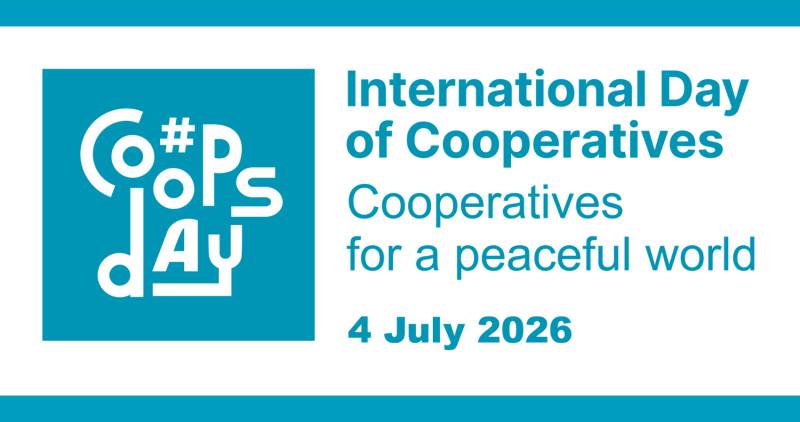
    Since 2018, the global community has marked May 20 as World Bee Day, a dedicated observance designed to encourage action from governments, organizations, civil society groups, and individual members of the public to protect pollinators, restore their habitats, boost their populations, and support sustainable beekeeping practices. The date was chosen to honor the birth of Anton Janša, a Slovenian pioneer of modern apiculture who came from a multigenerational family of beekeepers in a region where beekeeping has deep cultural and agricultural roots.

    The 2026 theme for World Bee Day, “Bee Together for People and the Planet. A partnership that sustains us all,” centers on the longstanding, mutually beneficial relationship between humans and bees, and underscores the urgent need for cross-sector collaboration to address the threats pollinators face. This year’s observance explores how human-bee partnerships have evolved over thousands of years across diverse cultures and landscapes, while elevating innovative strategies that improve bee health and productivity, and support sustainable livelihoods for beekeepers – particularly marginalized groups including women and young people. It also emphasizes how combining traditional ecological knowledge of beekeeping with modern technological innovation can advance sustainable apiculture, and how inclusive cross-stakeholder partnerships can secure a resilient future for both pollinators and human communities, while driving much-needed transformation of global agrifood systems.

    In the Caribbean region, the Caribbean Agricultural Health and Food Safety Agency (CAHFSA), an intergovernmental body established by the Caribbean Community (CARICOM) to strengthen regional agricultural health, food safety, and cross-border agricultural trade, is using World Bee Day to draw attention to the outsized role pollinators play in supporting Caribbean agriculture, biodiversity, and food security. By raising public awareness of pollinator conservation needs, CAHFSA is backing regional efforts to build safe, resilient, and sustainable agricultural systems across the Caribbean.

    At the global level, the Food and Agriculture Organization (FAO) is currently consulting with national governments, researchers, and a wide range of stakeholders to develop a new Global Pollinator Platform, an initiative designed to strengthen international cooperation, expand knowledge sharing, and improve policy support for pollinator conservation worldwide.

    In Jamaica specifically, beekeeping has emerged as a fast-growing, profitable agricultural sub-sector that delivers multiple benefits to local communities. Beyond their critical role boosting crop yields and supporting national food security as pollinators of fruit and seed crops, bees produce a range of high-value products including honey, royal jelly, pollen, beeswax, propolis, and honeybee venom. For many Jamaicans, beekeeping has become a vital source of income, with honey sales offering particularly strong profit margins.

    To protect local bee populations from the global threat of Colony Collapse Disorder and introduced pathogens, Jamaica enforces a strict ban on imported bee products. This policy has successfully shielded domestic bee colonies from outside diseases, but requires local beekeepers to manage their own colony development and wax production independently.

    Jamaica’s Apiculture Unit, under the country’s Ministry of Agriculture, Fisheries and Mining, continues to lead the expansion of the domestic beekeeping industry, and reports growing public interest in joining the sector. Dozens of new inquiries from prospective beekeepers are received every month, and numerous community groups have applied for formal beekeeping training to enter the industry. As of 2026, Jamaica is home to more than 100,000 managed bee colonies.

    Industry leaders emphasize that young Jamaicans have particular opportunities to build successful careers in the growing sector, as global and local demand for honey and other bee products far outpaces current supply. “Jamaica has potential; very, very big potential in beekeeping, because honey is in short supply both locally and internationally,” explained Elton Cawley, First Deputy Chairman of the Jamaica Federation of Commercial Apiculturists (JFCA). Formal beekeeping training is currently available to aspiring beekeepers through HEART Trust/NTA’s Ebony Park Academy in Clarendon and the Jamaica 4-H Clubs, giving young people the skills they need to enter the field.

    Proponents of pollinator conservation note that young people are uniquely positioned to drive change in the sector, as the future generation of beekeepers and environmental stewards. Young people bring energy, digital literacy, and innovative vision to advance pollinator protection and build more sustainable apiculture practices, and many are already actively engaged in global and local conversations about bee conservation.

    As the world marks World Bee Day, the 2026 theme calls on all stakeholders to strengthen the collaborative partnership between humans and bees that sustains both people and the planet. Echoing the words of St Francis de Sales, bees exemplify sustainable harvest: they collect honey from flowers without damaging the plants, leaving them whole and healthy just as they found them – a model of harmonious coexistence that human communities can strive to emulate.

  • Nawasa: Concord Water System interruption notice

    Nawasa: Concord Water System interruption notice

    Residents and businesses across 12 districts and communities in Grenada served by the Concord Water System are preparing for a planned full-day water outage next year, as local water utility provider Nawasa has confirmed the shutdown to carry out critical repairs on a damaged water main. The interruption is scheduled to run from 9 a.m. to 6 p.m. on Thursday, 21 May 2026, affecting a broad swath of the region that includes the communities of Concord, Brooklyn, Woodford, Perseverance, Brizan, Happy Hill, Beausejour, Cherry Hill, Grand Mal, Fontenoy, River Road, and the entire territory of the Town of St George. In its public advisory, the utility company has urged all customers falling within these affected zones to pre-store sufficient quantities of drinking and household water to cover their needs throughout the 9-hour shutdown period. Nawasa officials noted that the maintenance team will exhaust all available resources to complete the repair work and restart water distribution strictly within the published timeline. Even so, the utility has warned customers to prepare for minor post-shutdown delays: as the water network re-pressurizes and refills, supply will be restored incrementally across the system, and properties located in higher-elevation areas may wait up to two extra hours beyond the 6 p.m. scheduled end time for service to return. Additionally, the company reminds consumers that temporary cloudiness or discoloration of tap water is a common, harmless side effect once service resumes. When normal water pressure is reestablished, it disturbs sediment that has built up along the inner walls of pipelines over time, leading to visible turbidity. In closing, Nawasa issued a formal apology to all customers for the unavoidable disruption to daily routines, and expressed gratitude to the public for their patience and cooperation as the utility carries out this infrastructure upgrade to deliver more reliable water service long-term. This announcement was originally released by Nawasa. NOW Grenada disclaims responsibility for the content, opinions and statements from external contributors, and provides a channel for users to report any inappropriate content related to this advisory.

  • GASA commends inaugural SolidBase Invitational Swim Meet 2026

    GASA commends inaugural SolidBase Invitational Swim Meet 2026

    The Grenada Amateur Swimming Association (GASA) has issued a formal statement celebrating the resounding success of the first ever SolidBase Invitational Swim Meet 2026, which ran from May 15 to 17 at the Good Hope Swimming Pool. This landmark competition marked an important milestone for competitive swimming in the Caribbean nation, carrying official GASA sanction as a qualifying event for the upcoming Goodwill Championships.

    A total of four local aquatic clubs brought their top athletes to compete across the three-day event: Grenfin Swim Club, SolidBase Triathlon and Swimming Team, Sailfish Swim Club, and Stingray Swim Club. Throughout the intense schedule of races, participating swimmers showcased remarkable levels of grit, competitive spirit, and technical skill, all while upholding high standards of sportsmanship. Athletes pushed themselves to hit the qualifying times needed for the Goodwill Championships and compete for overall team glory, delivering a series of standout performances that impressed organizers and spectators alike.

    At the conclusion of the meet, GASA awarded top team honors to two standout squads: Grenfin Swim Club claimed the title of Overall Female Champions, while SolidBase Triathlon and Swimming Team took home the Overall Male Champions trophy. The association also highlighted the exceptional results of age group champions across every competing division. For the 6 & Under category, Kitania Scott of Grenfin claimed female top honors, while Nelson Wilson-Louison II of SolidBase took the male title. In the 7–8 division, Tyler Charles and Zion Doughlin, both of Grenfin, secured female and first place respectively. For 9–10 year olds, Halle Gooding of SolidBase won the female division, with Keshon Cobb of Grenfin taking male top spot. The 11–12 category saw both titles go to SolidBase, with Angliner Jackson-Bain claiming female gold and Mateo Thomas winning the male division. In 13–14, Eliza Rose Benjamin of Grenfin took female first, while Ethan Chu Fook of Sailfish claimed male top honors. For 15–17 age group, Maggie Watson of Grenfin won the female division, and Jacob Collymore of Sailfish took the male title. Rounding out the awards, Sara Dowden of Grenfin claimed the 18 & Over female championship, with Fernando Gabriel of SolidBase winning the male open division.

    In its statement, GASA extended praise to every athlete who stepped onto the starting blocks for the meet, noting that their hard work and commitment was central to the event’s success. The association also offered special recognition to the army of coaches, supporting parents, dedicated volunteers, and certified officials whose behind-the-scenes work made the smooth running of the competition possible. GASA additionally singled out SolidBase Triathlon and Swimming Team for its work organizing and hosting the inaugural invitational, crediting the team for advancing the growth of all aquatic sports across Grenada.

    Organizers say they are encouraged by the consistent, steady growth competitive swimming has seen in Grenada in recent years, and are looking ahead to a future of expanded development, wider grassroots participation, and more high-level competition opportunities that allow local athletes to test their skills against top talent across the region and around the world. This report appears courtesy of contributor content hosted by NOW Grenada, which notes it is not responsible for the opinions or content shared by third-party contributors.

  • Another strong showing by Team Grenada

    Another strong showing by Team Grenada

    After a historic run of strong performances at the 2026 Roger Boyce Classic Semi Pro and IFBB Pro World Cup hosted in Barbados, Grenada’s national bodybuilding team received a warm official welcome from the Grenada Bodybuilding, Weightlifting and Fitness Federation (GBBWF) on Tuesday, May 19.

    Under the strategic leadership of GBBWF President Cecil Mitchell and IFBB Pro Coach Vonne Francis, the delegation of Grenadian athletes turned in standout results across three competitive divisions: Men’s Physique, Classic Physique, and open Bodybuilding, going head-to-head with elite competitors from across the globe.

    The tournament’s breakout story came from first-time regional competitor Daniel Louison, who clinched the gold medal in the Men’s Physique Up to 179cm category in his debut major outing. Joining Louison on the podium in the same division was compatriot Rashid Bridgeman, who claimed second place.

    In the Men’s Physique Juniors division, Javon Joseph secured a second-place finish, with Bridgeman taking third. Joseph also added a bronze medal to his tournament tally with a third-place finish in the Men’s Physique Up to 176cm category. Veteran competitor Kevon Frederick delivered consistent top performances across two divisions, earning silver in Classic Physique and bronze in Men’s Bodybuilding.

    For the professional division, three Grenadian athletes made their highly anticipated Elite Pros debut, all having earned their IFBB Pro Cards just last year in 2025. Odel Cato turned in the strongest professional debut, advancing all the way to the final round and finishing within the top 10 in the Men’s Physique division. Fellow first-time pros Grantley Charles and Renaldo Parkes also held their own against some of the most decorated bodybuilding professionals in the world, turning in competitive showings in their debut professional outings.

    In comments following the team’s return, GBBWF publicly praised every member of Team Grenada for the extraordinary discipline, relentless determination, and exemplary sportsmanship they displayed while representing the country on the regional international stage. The federation also extended special acknowledgment to key sponsors and supporters, including Grenada’s Ministry of Youth and Sports, Fit for Life, and Mitchell’s Health and Wellness, as well as the broader community of fans and well-wishers who have consistently backed the team’s efforts.

    This report is credited to NOW Grenada, which notes that it is not responsible for opinions or statements shared by third-party contributors.

  • Caribbean voices within the global art conversation

    Caribbean voices within the global art conversation

    On May 8, 2026, the opening day of the 2026 Venice Biennale, four regional artists gathered in the Grenada Pavilion to share their transformative experiences bringing Caribbean creativity to one of the world’s most prestigious contemporary art stages. Curated by commissioner Susan Mains, this iteration of the Grenada Pavilion marked a deliberate shift toward cross-regional collaboration, inviting creators from Grenada, Barbados, and Trinidad to share space, narrative, and creative energy with a global audience of artists, curators, and visitors.

    Across every conversation, a unified thread of excitement, gratitude, and purpose emerged: the opportunity to center Caribbean artistic voices on an international platform has not only validated the region’s creative output but also sparked profound personal and professional growth for each participating creator. All four artists expressed deep pride in representing their home nations and the broader Caribbean community, while highlighting how the biennale’s global context has renewed their creative vision.

    Russell Watson, a multidisciplinary artist based in Barbados, brought a longstanding connection to the Grenada Pavilion’s Venice Biennale journey. Having attended the very first Grenada Pavilion presentation in 2015, he recalled his shock at seeing the small Caribbean nation claim space at the global event, and has followed the pavilion’s work ever since. When Mains extended an invitation to join the 2026 cohort, he jumped at the chance to participate in the pavilion’s new regional inclusion initiative.

    For Watson, the experience affirmed that his creative practice aligns with key global contemporary art movements. Walking through the biennale’s hundreds of exhibitions, he noted a widespread, shared preoccupation among global creators with humanity’s fractured relationship with the natural world, and the growing intersection of environmental themes and spiritual inquiry – a thematic overlap that mirrors his own work. He also pointed to the widespread embrace of video as a fine art medium at the biennale, echoing his own longstanding interest in the format and confirming that video has firmly secured its place in top-tier contemporary practice. Watson emphasized that the pavilion’s commitment to regional integration sends a powerful message: Caribbean nations do not need to be separated by the waters that define them, but rather can share space, build community, and amplify their collective voices. He expressed hope that this collaborative model will continue and expand to include deeper support for creators from more Caribbean states in future editions.

    Jeverson Ramirez, a celebrated Grenadian steelpan virtuoso and recording artist, marked his first visit to Venice with the 2026 pavilion. He described the experience as unexpectedly welcoming, saying the warm energy of the global art community made the far-off European city feel like home. For Ramirez, the greatest honor was bringing the distinct cultural flavor of Grenada and the Caribbean to a new audience, sharing his love of traditional steelpan music with visitors from across the globe.

    Like Watson, Ramirez praised the pavilion’s collaborative regional model, echoing the idea that Caribbean waters connect rather than divide the region’s islands and their peoples. Sharing exhibition space with artists from across the Caribbean and even other nations, including Guatemala, has created rich opportunities for cultural exchange, he said. Ramirez highlighted the shared historical experience of Caribbean nations – from the legacy of colonial slavery and plantation economies focused on cocoa, sugar, bananas, and nutmeg – that shapes shared cultural values, perspectives, and creative themes today. Bringing these connected voices together in one pavilion, he argued, makes their collective message even stronger.

    Edward Bowen, a veteran painter based in Trinidad, called the invitation to join the Grenada Pavilion a life-changing surprise. As an artist with 40 years of painting experience, he said the opportunity to engage with thousands of global artworks and perspectives at the biennale has been an unparalleled creative reset, comparing himself to a sponge absorbing new ideas and inspiration that will fuel his future work.

    Bowen stressed that the Grenada Pavilion’s choice to open its doors to cross-regional Caribbean participation is a bold, necessary step for the art world. Inclusivity is far more common in music than in visual arts, he noted, making this initiative all the more important. He called for less territorial thinking around national artistic representation and a more democratic, thoughtful approach to lifting up regional Caribbean creators. Back home in Trinidad, he plans to leverage his Venice experience to support more local artists in accessing international opportunities like this.

    Arthur Daniel, a Grenadian photographer and videographer, said he arrived at the biennale with an open mind and no expectations of the scale and impact of the event – and left deeply transformed. Grateful to Mains, sponsors, and supporters for the opportunity, Daniel described wandering Venice’s canals and pavilions as a profoundly spiritual experience, where every interaction with art and fellow creators opens up a new dimension of understanding.

    For Daniel, the most meaningful takeaway has been witnessing how his own photographic work connects with global audiences in deeply personal, unexpected ways. Walking 16,000 steps a day through the biennale grounds left him physically energized rather than tired, he said, because his spirit was being fed by constant inspiration. The experience has accelerated his growth as an artist, expanding his understanding of the global art ecosystem exponentially, and he said he has grown tenfold across every dimension – mental, physical, emotional, and spiritual. For Daniel, the greatest reward is not seeing his work displayed, but gaining the experience to educate and lift up other emerging creators in Grenada and across the Caribbean, helping them understand what global art practice entails. He emphasized that the Venice Biennale’s greatest magic lies in slowing down, opening one’s mind, and letting the art and energy of the space speak for itself.

    For this cohort of Caribbean creators, the Grenada Pavilion at the 2026 Venice Biennale is more than an exhibition opportunity: it is a landmark step toward more inclusive regional collaboration and a powerful confirmation that Caribbean creativity holds an essential place in the global art conversation.