标签: Grenada

格林纳达

  • Cuban Ambassador highlights enduring solidarity

    Cuban Ambassador highlights enduring solidarity

    On April 14, Cuba and Grenada gathered to celebrate 47 years of formal diplomatic relations, a milestone that coincided with the centenary of iconic Cuban leader Fidel Castro and brought a fresh opportunity for both nations to reaffirm their deep, people-centered bond.

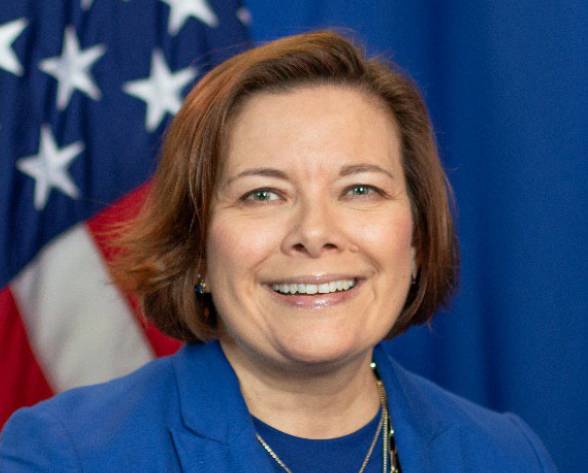
    Diplomatic ties between the two Caribbean nations were first established just one month after the 1979 Grenadian Revolution, rooted in shared anti-imperial values and revolutionary vision championed by Castro and Grenada’s founding revolutionary leader Maurice Bishop. Speaking at the commemorative reception, Cuba’s newly appointed ambassador to Grenada, Yadirys Echenique Paz, traced the unbroken arc of friendship that has defined the partnership from its earliest days.

    “Forty-seven years ago, we opened a path of friendship that has never faltered,” Echenique Paz told the assembled crowd of government officials, diplomats, and civil society representatives. Over nearly five decades, she noted, bilateral cooperation has expanded across nearly every core sector of Grenada’s national development, from education and public health to agriculture, fisheries, construction, and sports.

    One of the most iconic symbols of this joint effort remains the Maurice Bishop International Airport, a transformative infrastructure project that Echenique Paz emphasized was built with Cuban technical and labor support. Recalling Fidel Castro’s 1998 reflection on the project, she noted it was undertaken from a shared conviction that improved air connectivity would become a foundational driver of long-term growth for Grenada as a small island developing state.

    The ambassador also took a moment to honor the 24 Cuban internationalists who lost their lives during the 1983 United States military intervention in Grenada, framing their sacrifice as a permanent pillar of the bilateral relationship. “This bloodshed on Grenadian soil stands as a lasting testimony to Cuba’s unwavering commitment to solidarity and defense of our shared principles,” she said.

    Echenique Paz highlighted Cuba’s long-standing contributions to Grenada’s social sectors: for decades, Cuba has dispatched medical professionals, provided emergency health support, and trained local health workers, while advancing literacy initiatives and awarding hundreds of scholarships that have allowed generations of Grenadian students to access higher education. She emphasized that solidarity has always been mutual, noting that Grenada has consistently stood with Cuba in its calls to end the decades-long economic blockade imposed by the U.S. and offered critical support following major natural disasters that have impacted Cuba.

    This year’s anniversary carries extra meaning as it aligns with the 100th birth anniversary of Fidel Castro, a leader Echenique Paz said embodied the principle that genuine leadership is built on shared solidarity between peoples. Since arriving in Grenada to take up her post, she added, the new ambassador has been heartened by the warm welcome extended by Grenada’s government, parliament, political leaders, civil society groups including the Grenada-Cuba Solidarity Association and the Association of Cuban Graduate Alumni, as well as Cuban residents living in the country.

    Despite mounting global economic and geopolitical challenges facing small island nations, Echenique Paz reaffirmed Cuba’s firm commitment to deepening bilateral cooperation. “This constant support from our Grenadian partners sustains our determination to expand ties,” she said. “Together, our nations can overcome any challenge, no matter how large it may seem.” She also closed her remarks by thanking Grenadian organizers for a recently launched cross-society solidarity campaign supporting Cuba.

    Grenadian Prime Minister Dickon Mitchell echoed the ambassador’s sentiments, reaffirming that the bilateral bond between Grenada and Cuba is far deeper than standard governmental diplomacy—it is a relationship forged in shared struggle and sacrifice. “This is an exceptional people-to-people friendship, forged with the blood of Cuban citizens and the sweat and tears of both our peoples,” Mitchell told attendees. He emphasized that the partnership carries heightened significance for small island developing states navigating an increasingly uncertain and challenging global order, where mutual solidarity is critical for survival and shared prosperity.

    Mitchell formally welcomed Echenique Paz to her new post, expressing full confidence in her ability to advance bilateral cooperation and offering an assurance of full support from both the Grenadian government and public. Looking ahead, the prime minister stressed that sustaining the friendship requires moral clarity and collective resilience, calling on both nations to continue standing firmly for their shared principles.

    “We stand unapologetically for the Grenada-Cuba friendship,” Mitchell said. “No matter what challenges we face, this bond will endure.” He closed by expressing cautious optimism for expanded collaboration across all priority sectors, and a renewed focus on centering the collective development of Caribbean and Latin American peoples in all bilateral efforts.

    The 47th anniversary celebration, which brought together stakeholders from across public and civil society, served as a tangible reminder of the resilience of a partnership that has endured nearly five decades of shifting global politics, rooted in a shared commitment to mutual respect and solidarity.

  • Rotary Club of Grenada expands annual free community health fair

    Rotary Club of Grenada expands annual free community health fair

    The Rotary Club of Grenada has announced the highly anticipated return of its signature Free Community Health Fair, scheduled to run from 9 a.m. to 3 p.m. on Saturday, May 9, 2026, at the Gouyave Health Centre. This expanding community initiative builds on the overwhelming success of 2025’s event, upholding the organization’s long-standing mission to expand access to no-cost, high-quality preventive healthcare services for all Grenadians.

    Rooted in Rotary’s core commitment to advancing public well-being, the 2026 health fair will offer attendees a comprehensive menu of free medical and diagnostic services that cover a wide range of critical health needs. The full lineup of services includes general medical consultations, blood pressure monitoring, blood sugar testing, cholesterol screening, ECG heart testing, sexually transmitted disease and sickle cell screening, cancer screening and pap smears, as well as full dental examinations.

    Unlike many routine healthcare access points that create barriers for underserved community members, this event removes cost barriers entirely, and is open to people of every age and background. Event organizers are encouraging attendees to bring family members and friends along to take advantage of the free services, with an overarching goal of reaching more households than last year’s popular gathering.

    A spokesperson for the Rotary Club of Grenada shared that the organization was inspired to expand the initiative following last year’s strong turnout and transformative positive impact on local residents. “Following the strong turnout and positive impact of last year’s health fair, we are excited to continue growing this initiative and expanding our reach within the community. Our goal is to make healthcare more accessible and to empower individuals to take charge of their health,” the representative said.

    The fair’s core public health message is simple: proactive early detection saves lives, and prioritizing preventive care is the foundation of long-term health. For additional updates and details about the 2026 event, community members can follow the Rotary Club of Grenada’s official social media channels. This announcement is contributed by the Rotary Club of Grenada; NOW Grenada does not take responsibility for contributor-provided content, statements, or opinions, and community members can follow official reporting channels to flag any abusive content.

  • Gasoline, diesel, and kerosene hit $17 for April 2026

    Gasoline, diesel, and kerosene hit $17 for April 2026

    Starting Saturday, April 18, 2026, consumers across Grenada, including its island dependencies Carriacou and Petite Martinique, will face substantially higher retail prices for most major petroleum products, according to an official price adjustment announcement.

    The new pricing structure brings uniform $17.00 Eastern Caribbean dollar (IG) per gallon pricing for three core liquid fuels, a shift that brings sharp increases from previous rates. Gasoline, which previously retailed for $15.18 per IG, will rise by $1.82 to hit the new unified rate. Diesel sees a more moderate increase of $0.89 per IG, climbing from its former $16.11 price to match the $17.00 benchmark. Kerosene bears the steepest hike among liquid fuels, jumping by $3.90 per IG from $13.10 to reach the $17.00 new price point.

    For liquefied petroleum gas (LPG), more commonly known to local households as cooking gas, pricing changes vary by cylinder size and geographic location. Across both the main island of Grenada and the smaller islands of Carriacou and Petite Martinique, the popular 20-pound household cooking gas cylinder will retain its current price, holding steady at $40.00 in Grenada and $49.00 in the smaller island dependencies. However, larger commercial and bulk LPG purchases will see notable increases. In Grenada, 100-pound LPG cylinders will rise from $296.60 to $350.00, a $53.40 increase, while bulk LPG will climb $0.55 per pound from $3.05 to $3.60. In Carriacou and Petite Martinique, 100-pound cylinders increase by $43.40 from $319.60 to $363.00, with bulk LPG following the same $0.55 per pound hike to $3.60 that applies to the main island.

    This official price adjustment, linked to Grenada’s finance ministry, will impact household budgets, transportation costs, and small business operating expenses across the country. Media outlet NOW Grenada notes that it holds no responsibility for contributor content related to this announcement, and encourages reporting of any abusive content related to the fuel price adjustment.

  • Government enforces Crown Lands eviction

    Government enforces Crown Lands eviction

    A growing conflict over public land governance has emerged in Grenada after national authorities issued urgent 7-day eviction notices to dozens of residents living illegally on unapproved Crown land in the Gwankai district of South St George. The enforcement action, which marks a sharp shift in the government’s approach to longstanding squatter issues, has upended the lives of long-term occupants, many of whom have built homes and put down roots on the land over the course of years or even decades.

    Many affected residents say they believed they were following proper legal protocols to secure formal ownership of their properties, leaving them blindsided by the sudden eviction orders. One long-term occupant, who has resided on his plot for nearly 10 years and constructed a permanent concrete home there, told reporters he submitted a formal ownership application in 2022 but never received any feedback on his request prior to the April 7 eviction notice granting just one week to leave. Another resident echoed that frustration, noting that repeated trips to the national Ministry of Agriculture and Lands yielded no clear updates on the status of her land application before enforcement began.

    The dispute has pulled back the curtain on a long-simmering tension between widespread informal land occupation across the country and the state’s formal legal authority over public Crown lands. It has also prompted fresh scrutiny of the government’s backlog of unprocessed land applications and the lack of transparent communication with applicants before punitive action is taken.

    In an official public address on land policy released Thursday, Javan Williams, Permanent Secretary for the Ministry of Agriculture and Lands, made clear that the government is pursuing a new, stricter course of enforcement aligned with existing legal frameworks. Williams warned residents to adjust their expectations around access to Crown land, emphasizing that the ministry is committed to managing all public property in strict adherence to national law. He noted that while many people submit legitimate applications for Crown land allotment, a growing number of individuals have simply moved onto and occupied government property without any formal approval, reminding the public that squatting remains a criminal offense under Grenadian law.

    Williams referenced the Prevention of Squatting on Crown Lands Rules, Statutory Rule and Order (SRO) 5 of 2007, which lays out the official protocols for serving eviction notices to illegal occupants. Per the regulations, eviction notices must be delivered to squatters in person whenever possible; if occupants cannot be located or served within 48 hours of the notice being issued, authorities are permitted to post the notice in a clearly visible location on the occupied land or any structure built on the site.

    Williams confirmed that enforcement teams conduct formal investigations into suspected squatting cases before any notices are issued, but acknowledged that noncompliance with eviction orders has become an increasingly challenging issue. He added that some occupants have gone so far as to remove posted eviction notices to avoid compliance, and issued a formal warning against both the removal of official notices and the construction of unapproved structures on public Crown land.

    The permanent secretary also outlined the legal penalties residents face if they ignore eviction orders. Under the current law, any squatter who fails to comply with a properly served eviction notice commits a criminal offense, punishable by a fine of up to 1,000 Eastern Caribbean dollars (EC$) or a jail sentence of up to three months upon summary conviction.

    According to Williams, this expanded enforcement push is part of a broader government policy shift aimed at addressing a decades-long, complex problem of widespread illegal squatting. For years, he explained, many people have deliberately occupied public or privately held land, operating under the assumption that they will eventually be granted amnesty or formal approval. “We want to advise persons, let us all follow the law because we now are seriously invoking the eviction section of the SRO 5, 2007,” Williams stated.

    Williams acknowledged that some Gwankai residents have submitted formal applications for land allotment, but stressed that submitting an application does not grant automatic right to occupy the land. Under Grenadian law, after an application is received, a formal land survey must be completed and the request must be reviewed and approved by the national Cabinet. Only after a written authorization is issued following Cabinet approval does an individual gain legal right to use the Crown land. Any occupation prior to that formal approval, Williams emphasized, is considered illegal squatting.

    “Under the law, the Cabinet is the sole authority to direct an allotment. So, if you are not allotted a piece of Crown land, then you are deemed a squatter,” Williams added.

    The unfolding situation in Gwankai is already emerging as a critical early test of the Grenadian government’s commitment to bringing formal order to Crown land management across the country, and of how communities with longstanding informal settlements will respond to the new stricter enforcement regime. For the residents facing eviction, the conflict is far more than a policy debate: it is a fight to keep their homes, their livelihoods, and the years of financial and personal investment they have put into their properties. For the government, by contrast, the priority is upholding the rule of law and reasserting formal control over public land, amid longstanding public concerns about unregulated squatting and inefficiencies in the formal land allocation process.

    The outcome of the Gwankai dispute is expected to set a major precedent for how similar informal occupation cases will be handled across Grenada in the coming years, particularly in communities where informal settlement has outpaced formal land approval for decades.

  • Spice Girls dismantle Antigua and Barbuda in U16 Netball

    Spice Girls dismantle Antigua and Barbuda in U16 Netball

    The 22nd edition of the Jean Pierre Youth Netball Tournament has delivered a stunning turnaround story, as Grenada’s Under-16 national netball squad – fondly nicknamed the Spice Girls – stormed to a lopsided 35-8 victory against Antigua and Barbuda on Monday, April 13. This 27-goal winning margin marks the biggest gap between final scores across all matches played in the tournament to date, turning around the young team’s rocky start to the competition in dramatic fashion.

    After two straight opening matches marked by crippling offensive inconsistency that left the Spice Girls with two losses, the squad finally found its clinical footing on the court at the UWI SPEC Grounds. Leading the offensive charge was goal-attack Reshonna Francis, whose exceptional shooting accuracy tore through Antigua and Barbuda’s defensive line. Francis landed 30 successful goals out of 37 total attempts, accounting for nearly 86 percent of Grenada’s total score on the day.

    Grenada seized control of the match from the opening whistle, ending the first quarter with a commanding 10-1 lead. Unlike the team’s earlier outings, where promising early leads slipped away due to unforced errors, the Spice Girls maintained relentless pressure through the entire match, heading into halftime with an overwhelming 20-2 advantage that Antigua and Barbuda never recovered from.

    While Francis dominated the shooting circle, the historic victory was built on a suffocating collective defensive performance that shut down all of Antigua and Barbuda’s attacking chances. Goal-defender Nashauna Noel turned in a standout backcourt performance, notching a game-high six interceptions to disrupt opponent passes. Wing-defense Phebe Rubin added four more interceptions of her own, while goal-keeper Treasure Frederick locked down the goal circle to leave Antigua and Barbuda unable to find any consistent offensive rhythm. Mid-court play was expertly directed by Kamia Lewis, who notched two assists and two interceptions to keep possession and momentum firmly on Grenada’s side.

    Monday’s blowout win comes as a much-needed boost of momentum for the young squad, which navigated a grueling opening weekend of back-to-back matches against the tournament’s most formidable opponents. On April 11, the Spice Girls kicked off their campaign against former champions Barbados, where despite a gritty defensive showing, costly ball-handling mistakes and inconsistent shooting led to a 20-12 defeat. The following day, the team faced arguably their toughest challenge yet: squaring off against defending champions Trinidad and Tobago, also known as the Calypso Girls, on their home turf. Playing through a hostile crowd environment, Grenada fell 32-12, extending the Calypso Girls’ ongoing winning streak that stretches back to 2025.

    For the Spice Girls’ coaching staff, Monday’s performance offers plenty of reasons for optimism, particularly the squad’s marked improvement in two problem areas that sank their first two matches: reducing unforced errors and maximizing scoring opportunities from every possession. Now holding the title of the tournament’s biggest win so far, Grenada advances to the final stages of the competition with renewed competitive confidence and a vastly improved goal average that strengthens their position going forward. The Spice Girls will look to carry this red-hot form into their upcoming fixture against St. Lucia as they continue their push for a podium finish at this year’s tournament hosted in St Augustine.

  • US Embassy launches Next Level Hip Hop Programme

    US Embassy launches Next Level Hip Hop Programme

    A new cross-cultural artistic initiative is set to bring American and Grenadian creative communities together next spring, as the U.S. Embassy in Grenada officially announced the launch of the 2026 Next Level Hip Hop Programme. This dynamic exchange project, developed in collaboration with Grenada’s Ministry of Tourism, Creative Economy and Culture, will host a two-week immersive residency from April 13 to 24, 2026, pairing established American hip hop artists and industry professionals with emerging local Grenadian talent.

    Throughout the residency, participating Grenadian creators will gain hands-on experience across four core pillars of hip hop culture: MCing, breakdance, DJing, and aerosol art. Sessions will combine skill-building workshops, collaborative creation opportunities, and one-on-one mentorship designed to lift up local creative voices.

    Unlike traditional performance programs, Next Level frames hip hop as more than an art form: it serves as a versatile platform for personal storytelling, cross-cultural dialogue, creative entrepreneurship, and grassroots community building. At its core, the initiative aims to foster mutual understanding between the United States and Grenada, strengthen people-to-people connections, and create space for the open, free exchange of ideas between artists from different backgrounds.

    The 2026 iteration of the programme carries special historical significance, as it coincides with the United States’ 250th anniversary of national independence. The program is used as a showcase for the enduring values of free expression, creative innovation, and equal access to opportunity that the anniversary celebrates — values that cultural exchange efforts like Next Level work to advance every day.

    Next Level is a flagship initiative of the U.S. Department of State, with on-the-ground implementation managed by the non-profit Meridian International Centre. Officials from the U.S. Embassy Grenada have publicly expressed gratitude for the partnership with the Government of Grenada, noting the shared commitment to nurturing and expanding Grenada’s growing creative economy.

    To cap off the two-week residency, the program will wrap with a free, open-to-the-public showcase that invites the entire Grenadian community to experience the work created during the collaboration. The event will celebrate the vibrant, unique creative talent of Grenada’s hip hop scene and highlight the new connections forged between the participating artists from both nations.

  • General Hospital dismisses disinformation regarding Nephrology Unit

    General Hospital dismisses disinformation regarding Nephrology Unit

    Misinformation claiming a state of crisis at the Nephrology Unit of Grenada’s General Hospital has been formally and unequivocally rejected by the country’s Ministry of Health and the hospital administration. In an official statement delivered Wednesday during a post-cabinet press briefing held in St. George’s, Health Minister Hon. Philip Telesford clarified that these circulating claims are entirely misleading, and the unit has maintained full, standard operations to deliver quality care to all patients with kidney-related conditions.

    While the minister was firm in dismissing rumors of a unit-wide crisis, he did emphasize that kidney failure itself stands as a serious and rapidly growing public health challenge across Grenada. The core public health crisis, Telesford explained, is not a breakdown of the nephrology department, but widespread noncompliance with public health guidance that could prevent kidney disease. Too many local residents have failed to respond to repeated calls for routine early screening, and many are not taking the necessary steps to manage chronically high blood pressure and elevated blood sugar — two well-documented leading risk factors for developing chronic kidney disease.

    “We have to make a clear distinction between baseless rumor and factual reality,” Telesford stated. “The reality is that kidney failure is a major public health threat for Grenada. The true crisis we face is that too many of our citizens are ignoring public health advice to protect their own health through early detection and proactive lifestyle changes.”

    Telesford went on to outline key, accessible steps that all Grenadians can take to reduce their risk of kidney disease and reduce strain on kidney function. He urged the public to incorporate regular physical activity into daily routines, maintain consistent hydration by drinking adequate water, cut back on alcohol and tobacco consumption, and adopt a nutrient-dense, balanced diet to support long-term kidney health.

    Alongside debunking the misinformation, the Ministry of Health issued three core public health recommendations for all citizens: first, to schedule consistent routine health check-ups that include screening for kidney function; second, to manage blood sugar and blood pressure levels through a combination of healthy diet, regular exercise, and ongoing guidance from medical professionals; and third, to reach out to healthcare providers at the first sign of concerns, rather than waiting for symptoms to progress to a dangerous stage.

    The ministry closed by reaffirming that the Nephrology Unit at General Hospital remains fully operational, with its entire staff dedicated to delivering high-quality care to all patients. It added that the government continues to prioritize resource allocation and public outreach initiatives to combat the growing burden of chronic disease and protect the overall health of the Grenadian population.

  • CARIFTA Champion Deshawn Smart to train with Anderson Peters

    CARIFTA Champion Deshawn Smart to train with Anderson Peters

    Fresh off a dominant gold medal performance at the 2026 CARIFTA Games, rising Grenadian javelin prospect Deshawn Smart is poised to enter a transformative new phase of his athletic career. The 17-and-under standout, who claimed the top spot on the podium with a 65.09-meter throw just 3.75 meters off the event’s long-standing record, will now train alongside two-time world champion Anderson Peters under the tutelage of Paul Phillip, Grenada’s most decorated track and field coach.

    For most young Caribbean athletes, a CARIFTA title represents the crowning achievement of their early careers. For Smart, however, the win looks to be just the starting point of what experts predict could be a historic trajectory. The athletic community has already drawn comparisons between Smart and his new training partner: when Peters claimed CARIFTA U17 gold in 2012, he recorded a winning throw of 60.50 meters, five meters shorter than Smart’s 2026 winning mark. Peters himself has confirmed that Smart is already five meters ahead of where he was at the same age.

    To nurture this once-in-a-generation talent, Niade Simon, head coach of Smart’s home team Altitude Track Academy, made the proactive decision to move Smart into the St David Track Blazers Camp — Grenada’s most successful and proven javelin development program. This is the same program where Phillip coached Peters to global stardom, including a 2024 Olympic bronze medal.

    “Deshawn has continued to show dominance and consistency, but he still has to improve on his technical abilities,” Simon explained. “For now, it’s back to the lab.”

    The arrangement reflects a collaborative, community-centered approach to athlete development: Smart will retain his membership with Altitude Track Academy while training full-time under Phillip, bridging the foundation of his early success with the elite coaching needed to reach his full potential. “It’s always hard to let go of someone that you’ve invested in,” Simon admitted. “But I trust Coach Paul to do what’s best for his development.”

    Born and raised in the small community of Hermitage, St Patrick, Smart’s rise to prominence stems as much from his relentless work ethic as it does from his natural physical talent. A student at St Andrew’s Anglican Secondary School, Smart’s discipline has stood out to coaches throughout his development; Simon often gave up his own lunch breaks to lead extra training sessions, which Smart never missed.

    Despite Smart’s clear elite potential, his path to future competition podiums faces significant practical and financial barriers. His daily commute between Hermitage and St David, paired with the costs of elite nutrition and specialized athletic equipment, creates a heavy financial burden for the young athlete and his team. Simon has issued a public call for support from both the Grenadian government and local private sector, arguing that a talent of Smart’s caliber should not be held back by a lack of resources. “The talent is evident. The guidance is proven,” Simon said.

    As Smart settles into his new training regime under Phillip, the entire nation is watching closely. What began as the emergence of a promising young teenager is now shaping up to be the evolution of a potential future world champion. If Smart continues on his current trajectory, Grenada’s already legendary javelin legacy will not just be preserved — it will be redefined for a new generation.

  • Arthur Daniel to represent Grenada at La Biennale d’Arte di Venezia

    Arthur Daniel to represent Grenada at La Biennale d’Arte di Venezia

    One of Grenada’s most versatile creative voices is set to bring the vibrant soul and natural beauty of his Caribbean island to one of the world’s most prestigious contemporary art stages. Multidisciplinary artist Arthur Daniel—whose career spans photography, cinematography, entrepreneurship and music—has been selected to represent Grenada at the Grenada Pavilion during the La Biennale d’Arte di Venezia in Italy, where he will unveil a carefully curated body of work born from a lifelong fascination with both his native homeland and the broader global landscape.

    Daniel’s distinctive visual style traces its roots to formative childhood experiences that shaped his connection to the natural world and the art of exploration. Growing up, frequent walking expeditions into Grenada’s wild bushlands with his father instilled a deep reverence for nature that continues to anchor every project he takes on. This influence is clearly visible across his portfolio: his striking wildlife shots capture the character of native species ranging from the charismatic Mona monkey to the critically endangered endemic Grenada Dove, while his vivid documentation of Grenada’s iconic carnival and grassroots drag racing events celebrates the island’s dynamic cultural energy. His sweeping landscape photographs do more than showcase scenic vistas—they distill the unyielding spirit of Grenada itself, a testament to his enduring love for his home.

    A graduate in Management Information Sciences from St. George’s University, Daniel built early professional experience in public relations with Grenada’s True Blue Bay Resort before turning his full attention to visual art. He first picked up a camera in 2010, and in the years since, his work has earned international acclaim: his images have appeared in leading global publications and have been officially used by the Grenada Tourism Authority to promote the island to travelers worldwide. What sets Daniel apart is his commitment to unconventional perspective; he actively seeks out overlooked angles and unplanned moments that invite audiences to see even the most familiar Grenadian landscapes in entirely new ways.

    His foray into sailing photography began with local coverage of two beloved regional events: the Workboat Regatta and Grenada Sailing Week. That early work opened doors to international collaborations, including a role with the Royal Ocean Racing Club’s media team covering the Caribbean 600 yacht race in Antigua. Today, his sailing imagery is regularly featured in top yachting print and digital outlets across the globe.

    Fresh off a successful featured exhibition at Carifesta 2025, Daniel is approaching his Venice Biennale debut with palpable excitement, eager to share his vision of Grenada with a global audience on one of contemporary art’s most high-profile platforms. “I am starting to learn more about this creative space,” he shared, noting that this is not his first contribution to the Grenada Pavilion—he previously contributed a video interview with his sister, environmental scientist Dr. Jodi Daniel, centered on the growing challenge of sargassum blooms in Caribbean waters.

    In recent days, Daniel and his small creative team—made up of camera and drone operator Renel Parkes and audio technician Andre Hayes—have begun filming the first segment of a new collaborative video project for the pavilion. The first part of the film captures Grenada-born independent artist Jeverson Ramirez performing on the steelpan aboard Savvy, an authentic hand-built sloop from Petite Martinique moored just off Grenada’s Carenage, with vessel handling supported by Danny Donelan and Brian Samuel. The second segment will be filmed on location in Venice, where Ramirez will reprise his performance aboard a traditional Venetian sandolo sailing through the city’s iconic canals.

    This blend of on-island and international filming aligns with Daniel’s signature creative approach: equal parts research and spontaneous art, he prioritizes staying open to everyday inspiration and crafting stories that resonate with universal human experience. When the Grenada Pavilion opens to visitors, Daniel’s combined video work and curated photography from both Grenada and Venice will not only draw attention to the national presentation but also introduce new global audiences to the rich, diverse cultural heritage of the Caribbean island.

    This 2025 presentation marks the ninth time Grenada has hosted a national pavilion at the Venice Biennale since 2015, with six previous appearances at the art biennale and three at the architecture edition of the event, cementing the country’s growing presence in the global contemporary art scene.

  • 2026 China Scholarship Announcement

    2026 China Scholarship Announcement

    A new round of applications for the 2026 MOFCOM Scholarship-CSC Programme, a fully-funded graduate study opportunity for Grenadian nationals at Chinese universities, has been launched jointly by the governments of the People’s Republic of China and Grenada. Established by China’s Ministry of Commerce, the scholarship initiative aims to nurture professional talent for developing countries while deepening bilateral educational and professional cooperation between China and partner nations around the world. This call represents the second separate application round for the 2026 intake, with a distinct timeline and process from the first opening. Candidates who already submitted materials during the first round are not required to reapply, and all prospective applicants are strongly advised to review program guidelines carefully to confirm their eligibility and submit materials under the correct application channel. To qualify for the program, candidates must meet a set of clear eligibility criteria. All applicants must hold valid Grenadian citizenship, be no older than 45 (meaning they must be born after September 1, 1981), and provide an official medical report from a public hospital confirming good physical and mental health. For Master’s degree applicants, a minimum of a completed bachelor’s degree plus at least three years of professional work experience is required, while PhD applicants must hold a completed Master’s degree from a recognized institution. All candidates must currently be employed, with priority given to division-level or above government officials, senior organizational or corporate management, and academic staff at universities or research institutions. Applicants must also demonstrate sufficient English proficiency to complete graduate-level study in China, and must not currently be enrolled in a Chinese higher education institution or hold another active Chinese government scholarship. A full updated list of participating Chinese universities and available majors for the 2026 intake is published via an official linked portal, accessible to all prospective applicants. The MOFCOM-CSC Scholarship provides comprehensive financial support for all selected recipients throughout their program of study. Coverage includes full tuition waivers, free access to course materials, coverage for research and field survey costs, stipends for English-medium programs, and dissertation supervision fees. Recipients also receive free on-campus accommodation during their studies, a monthly living stipend totaling 36,000 RMB per year for Master’s students and 42,000 RMB per year for PhD students (disbursed monthly based on actual time spent in China), and a one-time 3,000 RMB resettlement allowance for newly arrived students. Additional benefits include free comprehensive medical insurance for international students, a one-time round-trip international airfare between the recipient’s home country and China, and coverage for up to one additional round-trip airfare per year for annual home visits. Continued scholarship funding for multi-year programs is contingent on passing a mandatory annual performance review. All applicants are reminded that all supporting documents must be scanned using professional equipment to ensure clarity, and must be officially certified to be considered valid. A clear, step-by-step application process is outlined for all candidates, completed entirely through the official China Scholarship Council (CSC) online portal: Step 1: Access the official “CSC Study in China” website at http://www.campuschina.org, click “Scholarship Application for Students”, create an individual account, and log in. Step 2: Complete all required personal information via the “Edit Personal Details” tab, verify and save all entries, then click “Finish” to proceed to the application information section. Step 3: Select the correct program category: for MOFCOM-CSC Scholarship applicants, the required selection is “Type A”. Step 4: Enter the official agency number 00010, which is exclusively assigned to MOFCOM-CSC Programme applicants. Program category and agency number are directly matched, so incorrect entries will result in application materials not being received by processing authorities. After entering the number, the matching agency name will automatically populate on the platform. Step 5: Complete the “Language Proficiency and Study Plan” section, upload all required supporting documents as instructed, and review all entries and materials before clicking “Submit” to finalize the application. When selecting preferred higher education institutions, the platform will automatically match available universities based on the applicant’s student category, preferred teaching language, and chosen major. For additional questions about program offerings, applicants can access discipline and major catalogs via the website’s “Help” section. Step 6: After submission, no further edits can be made to personal or application information. However, before processing by authorities, applicants may withdraw their submission to make edits, but must resubmit the revised application for it to be considered. Once authorities have begun processing, withdrawals are no longer permitted. Step 7: Click “Print the Application Form” to download the completed form. The CSC recommends using either Firefox or Internet Explorer for the application process; Internet Explorer users must disable the “compatibility view mode” before editing documents. Step 8: After completing the online application, candidates must submit hard copy materials to Grenada’s official dispatching authority, the Human Resource Development Division at the Ministry of Education, as required. The CSC emphasizes that it never delegates application processing to third-party individuals or intermediary agents. All applicants are advised to submit applications directly via official channels to avoid fraud, and notes that campuschina.org is the only official platform for CSC Study in China information. Required hard copy documents include three copies of each of the following: the completed MOFCOM-CSC Programme application form (confirming online submission has been completed), a certified copy of the biodata page of a valid non-expired passport, three recent passport-sized photographs, certified copies of the highest academic diploma, certified copies of official academic transcripts, a detailed study plan or research proposal, a full curriculum vitae, two recommendation letters (one from the applicant’s current employer and one from an academic referee), a copy of the completed Foreigner Physical Examination Form (for programs longer than six months, valid for only six months from the date of examination and requiring an attending physician’s signature, official hospital stamp and sealed applicant photo to be valid), and a valid police clearance certificate issued within six months of the application submission date. All application materials must be submitted on or before the May 14, 2026 deadline. For additional inquiries about the program or application process, prospective applicants can contact the Human Resource Development Division at Grenada’s Ministry of Education via telephone at (473) 440-2737, WhatsApp at (473) 417-9762, or email at the two official addresses published by the ministry.