标签: Dominican Republic

多米尼加共和国

  • Judges hang up their robes and caps during a nationwide work stoppage

    Judges hang up their robes and caps during a nationwide work stoppage

    SANTO DOMINGO — In an unprecedented show of collective action across the Dominican Republic’s judicial branch, nearly 400 judges from every level of the national court system joined a coordinated work stoppage Thursday, alongside hundreds of other judicial employees, to demand sweeping reforms to their substandard working conditions and unfair pay structures.

    The protest, which included justices of the peace, first-instance judges, and appellate court judges, suspended all routine scheduled hearings with the sole exception of Permanent Attention courts, which continued to process urgent hearings on coercive measures to avoid endangering ongoing criminal cases. The strike was organized jointly by the Association of Judges of the Dominican Republic (Asojurd), the Network of Judges of the Dominican Republic, the Association of Dominican Judges for Democracy (Judemo), the Association of Justices of the Peace, and independent judges unaffiliated with the organizing groups.

    The day of peaceful protest opened with a solemn, unified ritual across courthouses nationwide: after singing the Dominican national anthem and the Judicial Power anthem, all participating judicial workers, dressed in black and carrying protest signs emblazoned with slogans including the rallying cry “justice for justice”, gathered to read the movement’s founding document, the *Manifesto for the Dignity of Justice*, under the central slogan “Let dignity begin at home!” Gatherings were held at major judicial hubs including the Ciudad Nueva Palace of Justice, the Santo Domingo East Judicial City, the Real Estate Jurisdiction courthouse, and regional courthouses across the country.

    At the Ciudad Nueva Palace of Justice, Magistrate Suinda Brito delivered the manifesto’s text, outlining the core grievances driving the action. Brito highlighted systemic understaffing that forces individual judges and court employees to handle the workload of three or four full-time positions, stagnant salaries that have not kept pace with the country’s soaring cost of living despite the enormous legal and ethical responsibilities of judicial roles, and a wave of mass resignations among administrative staff driven by chronic burnout. Protesters also pointed out severe disrepair to court facilities and a total lack of adequate personal safety protections for staff working in courthouses.

    The strikers argue that a functional justice system cannot rely solely on personal vocation, individual sacrifice, and private commitment from the people who run it. To deliver timely, efficient, and impartial justice to the public, the branch requires sufficient material, human, and financial resources that it has long been denied, they said.

    The most contentious complaint centers on stark economic inequity within the judicial branch. Strikers condemned that while local courts operate with crippling basic deficiencies, senior internal management bodies control multi-million-dollar budgets allocated to luxury travel, hotel accommodations, fine dining, advertising, public events, and payments to social media influencers. They added that some senior administrative secretaries and top management staff take home salaries that far outpace the earnings of active sitting judges.

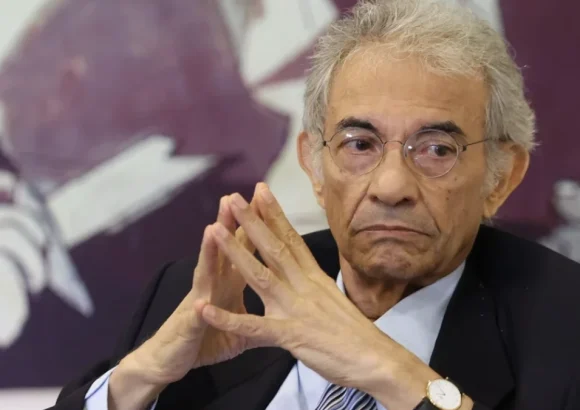
    The national strike has received broad backing from across the Dominican legal community, including the national Bar Association, multiple legal professional associations, and prominent individual jurists such as Carlos Olivares. Olivares expressed unwavering support for the industrial action, calling the current salary structure for sitting judges completely unacceptable. He emphasized that the judicial sector deserves public backing, noting it is long past time judges stopped earning what he described as “miserable wages” and faced routine institutional disrespect.

    The Dominican Association of Prosecutors (Fiscaldom) has also publicly expressed its support and solidarity with the striking judges, joining calls for salary improvements and broader reforms to strengthen the national justice system. In an official statement, Fiscaldom confirmed it recognizes the right of judicial worker organizations to advance demands for improved working, salary, and institutional conditions for public servants, so long as actions remain within the bounds of the country’s legal framework, principles of social democracy, and the rule of law. The association reiterated its backing for the judges’ demands, stressing that ensuring dignified working conditions for judicial staff is a core requirement for institutional strengthening and improved public access to justice. Fiscaldom also called on relevant authorities to open spaces for frank, respectful, and urgent dialogue to address the strikers’ demands and advance fair, sustainable solutions that benefit the entire Dominican justice system.

    In the country’s second-largest city of Santiago, regional judicial staff joined the national movement, with the area outside the Santiago Palace of Justice filled with demonstrators dressed in black, including dozens of judges, court employees, and local lawyers gathered to back the strike. Representatives from regional jurisdictions unified around demands opposing excessive workloads, systemic wage inequality, and what they describe as the “industrialization of justice” — a backlogged system that prioritizes speed over fair process. The regional strike canceled roughly 200 routine hearings in the area.

    Demonstrators in Santiago recalled that the Judicial Council, the judicial branch’s governing body, first issued a formal response to the group’s demands on May 19. But judges dismissed the council’s proposal as “vague, conditional, and ineffective.” The council’s offer includes a salary indexation plan that is contingent on approval from the Ministry of Finance, with no set timeline for implementation or clear mechanisms to roll out changes. Judicial mobility reforms were reduced to a non-binding “roadmap” with no concrete policy measures, the strikers said. Core outstanding issues including rules for horizontal substitution, wage gaps created by the current remuneration manual, and advancement opportunities for administrative staff have all gone completely unanswered, they added.

    Protesters also questioned senior management’s resource allocation across the judicial branch, noting that the Judiciary has spent more than 400 million Dominican pesos on international air travel and accommodations since 2021, while structural and salary deficiencies remain unaddressed in local courts. They also denounced institutional inaction on more than 18 formal communications sent by judges to the Judicial Council dating back to May 2021, requesting solutions to a wide range of systemic issues that have never received a response.

    Despite the full-scale work stoppage, strikers have guaranteed that all urgent judicial services remain operational throughout the country. Single-judge courtrooms, the Second Court of Instruction, and Permanent Attention Offices all remained open to handle emergency matters.

    In addition to the core grievances around wage inequality and misallocated budgets, the movement’s key demands include addressing severe understaffing, a nationwide shortage of sitting judges, excessive workloads, ongoing mass resignations of burned-out administrative staff, crumbling judicial infrastructure, and inadequate on-site security for courthouse employees.

    Protesters emphasized they remain open to good-faith dialogue with the Judicial Council, but warned that if they do not receive concrete, actionable responses to their demands in the near future, they will launch additional collective actions to press their case.

  • LMD admits that the Municipal Police operate without clear legal limits

    LMD admits that the Municipal Police operate without clear legal limits

    In the Dominican capital of Santo Domingo, the nation’s leading municipal governance body has publicly confirmed a long-standing systemic gap: the country currently lacks a detailed, clear legal framework to govern the operations of Municipal Police forces across all jurisdictions. The admission comes directly after local newspaper Listín Diario published an investigative report that exposed the absence of defined boundaries for municipal law enforcement officers, alongside findings that many on-duty agents prioritize personal cell phone use over monitoring public spaces in their patrol areas.

    In an official press statement, LMD President Víctor D’Aza outlined the core flaw in the existing regulation. Current governing provisions, laid out in Articles 173 and 174 of 2007’s Law No. 176-07 covering the National District and municipal governance, fail to fully outline the necessary tools, legal authority, and operational mechanisms required for Municipal Police to carry out daily duties. This regulatory vacuum has created two contrasting problematic outcomes: in some instances, officers remain inactive out of uncertainty over their powers, while in others, unclarified boundaries open the door to excessive use of authority and potential abuses of power.

    To address this out-of-date legislation, D’Aza confirmed that the Dominican Municipal League (LMD), the umbrella organization supporting the country’s municipalities and local municipal boards, is currently developing a new Draft Organic Law of Local Administration. The proposed legislation will expand and update the 17-year-old 2007 law, which D’Aza notes has become inadequate amid major shifts to the Dominican Republic’s broader national legal system. Most critically, the 2007 law does not align with the mandates of the country’s current Constitution, which requires dozens of existing laws—particularly regulations governing municipal legal frameworks—to be adapted to the new constitutional governance model.

    The new proposed law is designed to strengthen key components of local governments’ sanctioning authority across a range of critical municipal matters, including urban planning violations, territorial organization, municipal fee non-compliance, and misuse of public spaces. Once enacted, the updated framework will equip both Municipal Police officers and municipal inspectors with clearer legal authority to address violations that disrupt municipal order and citizen coexistence, D’Aza explained.

    As the new regulatory framework remains in the drafting phase, LMD has already taken preliminary steps to clarify Municipal Police roles for the public and local authorities. In January 2024, the organization published a public informational brochure titled *Municipal Police: Questions and Answers*, which breaks down key details of officers’ work: core functions, their formal relationship with the National Police, hiring requirements, operational guiding principles, roles during emergency responses, responsibilities for violence prevention and neighbor conflict mediation, and other frequently asked topics.

    Through the brochure, LMD has also called on local governments to implement immediate interim measures to ensure Municipal Police operate under clear operational protocols, robust internal institutional controls, and full adherence to due process and constitutional citizen rights. While the Dominican Republic Bar Association has publicly expressed support for updated regulation of municipal law enforcement, LMD identifies one major barrier to advancing the new legislation: a lack of consistent cooperation with the Public Prosecutor’s Office.

    The organization emphasized that limited specialized understanding of municipal regulation among Justice of the Peace Courts has left many violation reports filed by local governments stalled, without progressing through required judicial proceedings. Despite this hurdle, the LMD has reaffirmed its commitment to continuing work on the new draft law and advancing institutional strengthening for Municipal Police nationwide. The end goal, D’Aza stressed, is to ensure that local authority is exercised in a accessible, efficient, and consistent manner—always operating within clearly defined legal limits that protect both public safety and citizen rights.

  • Figures: Mortality and aging: what the latest statistics show

    Figures: Mortality and aging: what the latest statistics show

    Newly released 2025 demographic data from the Dominican Republic’s National Statistics Office, published in the annual *Vital Statistics Yearbook*, offers a clear snapshot of the country’s mortality landscape, reinforcing two persistent demographic trends that have been observed for years: consistently higher death rates among men, and a mortality burden heavily concentrated among older populations.

    According to the official dataset, a total of 43,032 deaths were registered across the Caribbean nation in 2025. Breaking down the figures by gender, men accounted for the majority of fatalities at 25,213, representing 58.59% of all recorded deaths. Women made up 41.35% of total deaths, with 17,795 registered fatalities. Just 0.06% of all deaths had no gender designation recorded on death certificates; of these 24 unclassified cases, 10 involved infants under one year of age, pointing to gaps in early-life vital documentation in some cases.

    The most striking demographic pattern highlighted in the yearbook is the persistent excess mortality among men, a trend that holds particularly strong across the working-age and late middle-age spectrum. For individuals between 15 and 79 years old, male death rates are twice as high as those for women. Demographic analysts attribute this persistent gap to a combination of interconnected factors: inherent biological differences in disease susceptibility, higher rates of risky behaviors among men in the region, and greater occupational exposure to dangerous working conditions that elevate mortality risk.

    When sorted by age group, the data also underscores the heavy impact of population aging on Dominican Republic’s mortality structure. More than 80% of all recorded deaths — 80.34% to be exact — occurred among people aged 50 years or older, confirming that the bulk of mortality burden falls on the country’s older population. Working-age adults between 25 and 49 accounted for 14.05% of total deaths, while children and young people between 5 and 24 made up just 3.41% of fatalities. The lowest share of mortality came from children under five years old, who represented only 1.86% of all registered deaths in 2025. A small fraction of cases, 0.33%, lacked any recorded age information at the time of publication.

    The 2025 yearbook’s findings align with the most recent demographic trends tracked by national statistics officials, confirming that long-standing patterns in Dominican mortality remain intact. As the country’s population continues to age, public health officials note that these data will be critical for shaping targeted healthcare policies, addressing gender-specific health risks, and planning for the evolving health needs of an older population.

  • 400 deaths The tragedy that marked Jimaní: when the Blanco River swept away hundreds of lives

    400 deaths The tragedy that marked Jimaní: when the Blanco River swept away hundreds of lives

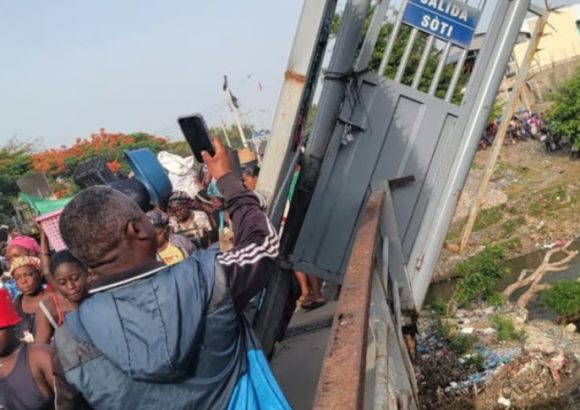
    It has been 22 years since one of the worst natural disasters in Dominican Republic’s modern history reshaped the border community of Jimaní permanently. In the early hours of May 24, 2004, the once-dormant Blanco River — known as the Soliette River on the Haitian side of the border — burst its banks, turning a quiet residential neighborhood into a wreckage-strewn wasteland in mere minutes.

    The transboundary river begins high in Haiti’s La Selle Mountain range, rising more than 2,680 meters above sea level before crossing into Dominican territory where it takes the name Blanco and eventually empties into Lake Enriquillo. For decades, the waterway had posed little visible threat to nearby communities, but days of heavy rainfall had built up deadly pressure along its banks that would break shortly after midnight.

    Residents of the low-lying Las 40 neighborhood were jolted awake by a thunderous cracking sound as the river surged past its barriers. What followed was a raging torrent that swept away entire homes, uprooted mature trees, and carried away personal possessions, lives, and the close-knit fabric of the community. By dawn, the flood had left a landscape of total destruction: most structures were reduced to rubble, with even steel rebar torn away and washed downstream.

    Preliminary casualty figures tell the scale of the tragedy: at least 400 Dominican residents and 300 Haitian nationals were killed by the floodwaters, with an additional 250 people injured and more than 270 still unaccounted for two decades later. Across Jimaní municipality, the disaster displaced and impacted 601 families, totaling more than 3,300 people whose lives were upended overnight.

    For survivors who lived through the catastrophe, the memories remain as sharp as they were in 2004. In a recent interview with YouTube channel Chulo Wey TV, Las 40 survivor Tatis recounted the frantic moments that unfolded after his wife alerted him that rising water had seeped into their home around midnight. Tatis, his wife, and their three-month-old daughter managed to climb onto the roof of a neighboring house to wait out the flood, but many of his family members and friends were not as fortunate. His grandmother, a young niece, and multiple close neighbors died in the surge. “People were shouting: ‘Help, help, help me.’ But that water was higher than a light pole,” Tatis remembered.

    Another survivor, Josefina Gabriela Niquel Bórquez, recalled that unrelenting heavy rain had fallen across the area from the start of the day, and the aftermath was almost too terrible to process. She described the dark, chaotic night after the flood: “Everyone was crying for their loved ones. The night was so dark we couldn’t even see our own hands.” Josefina also shared that the bodies of Haitian nationals swept downstream by the current washed up near her property in the disaster’s wake.

    María Virgen Matos still carries the trauma of searching for her daughter through the flood’s destruction in the chaotic early hours. Before the disaster, she remembered, the neighborhood was a tight-knit, pleasant place full of good people. Refusing to leave the area until she found her child, Matos eventually was reunited with her daughter, who survived the disaster and went on to serve as a soldier 22 years later. For the families who lost loved ones and the community that was washed away, the tragedy remains an indelible part of the border region’s collective memory.

  • Quality: The aim is to reduce the number of chemicals in meat and meat products.

    Quality: The aim is to reduce the number of chemicals in meat and meat products.

    The Dominican Republic has taken a major step forward in protecting public health through the official launch of two groundbreaking national safety programs targeting meat and meat products, overseen by the General Directorate of Medicines, Food and Health Products (DIGEMAPS) via its Meat Products and Derivatives Division. Developed to shield consumers from preventable foodborne hazards, the National Programs for the Control of Pathogens and Chemical Residues aim to guarantee that all meat distributed for human consumption across the country meets rigorous safety benchmarks. The launch ceremony was hosted at the headquarters of the Dominican Agribusiness Board (JAD), with critical technical backing provided by the Dominican Agribusiness Laboratory (LAD), marking a landmark example of productive public-private inter-institutional collaboration designed to reinforce health surveillance and quality control across the nation’s entire agri-food supply chain. Stakeholders from across the sector gathered for the event, including senior public health authorities, leaders of the Dominican Republic’s domestic meat industry, specialized food safety technicians, official government inspectors, and key representatives from every segment of the food production, processing, and distribution network. At their core, the two new programs are designed to eliminate dangerous contaminants from the national meat supply by ensuring all products are free of harmful chemical residues, pathogenic microorganisms, and banned substances. To achieve this goal, the initiative rolls out standardized sanitary controls, validated sampling frameworks, and ongoing microbiological surveillance protocols that align fully with international food safety standards and leading global public health guidelines. During the launch event, organizers presented the full technical and regulatory structure of both programs to attending stakeholders. Key components shared included updated on-site inspection protocols, standardized microbiological testing procedures, targeted surveillance for high-risk pathogens such as Salmonella, E. coli O157:H7, Shiga toxin-producing E. coli (STECs), and Listeria monocytogenes, as well as systematic controls for residues of veterinary medications, agricultural pesticides, and other unintended chemical contaminants. The day’s programming also included a series of targeted technical training sessions covering critical topics: best practices for microbiological risk control, the standardized N60 sampling methodology, strategies for integrating the new programs into existing daily operations at meat processing plants, protocols for managing and responding to positive contaminant test results, and proactive preventive measures that producers can implement to embed food safety into every stage of production. DIGEMAPS officials emphasized that the new initiative marks a substantial leap forward in strengthening the country’s national health inspection system for meat and meat products. Beyond protecting consumers, the agency noted that the programs will deliver broader economic benefits: boosting consumer trust in domestic meat products, improving end-to-end traceability across the livestock supply chain, and raising the global competitiveness of the Dominican Republic’s livestock sector in both domestic and international export markets. For its part, JAD and its technical arm LAD reaffirmed their long-term commitment to supporting cross-sector initiatives that advance food safety, improve the quality of Dominican agricultural goods, and build technical capacity across the domestic agribusiness sector. The launch aligns with DIGEMAPS’ core institutional mission, which uses its comprehensive meat and meat product inspection system to support national agricultural development through rigorous public health surveillance and consistent enforcement of both domestic and international regulatory requirements for all animal-derived products sold in or exported from the Dominican Republic.

  • Alert: Why are more Dominicans wearing masks again?

    Alert: Why are more Dominicans wearing masks again?

    As multiple circulating respiratory viruses including influenza, adenovirus, and COVID-19 drive rising caseloads across the Dominican Republic, local residents have responded by increasing their use of face masks in public spaces, according to the head of the country’s leading medical organization. Waldo Ariel Suero, president of the Dominican Medical Association (CMD), shared the observation of shifting public behavior in recent days amid the growing outbreak.

    Suero stressed that unaddressed early symptoms of these viral respiratory illnesses can quickly progress to severe complications, putting patients at greater risk of worse outcomes. To curb avoidable health deterioration, he issued a clear call to action for the Dominican public: maintain consistent evidence-based preventive measures, and do not delay seeking care at official public or private health centers as soon as the first signs of illness appear.

    The jump in confirmed infections across the country underscores two critical unmet needs, per the CMD leader: strengthening national epidemiological surveillance systems to track virus spread in real time, and ensuring a steady, adequate supply of antiviral medications and diagnostic testing kits across all regions of the nation. “Prevention still stands as the most effective tool we have to stop these viruses from expanding into an uncontrolled, larger public health crisis,” Suero said in his statement.

    Suero’s public warning aligns with growing concern among frontline medical teams across the country, who report that the surge in respiratory cases is placing significant strain on the capacity of local hospitals and outpatient clinics. Medical staff have repeatedly highlighted the life-saving value of up-to-date influenza and COVID-19 vaccinations, as well as the continued importance of wearing well-fitted masks in crowded enclosed spaces to reduce transmission risk.

  • Karpowership consolidates its energy contribution in Latin America and the Caribbean

    Karpowership consolidates its energy contribution in Latin America and the Caribbean

    Global leader in floating power generation, Karpowership — which owns the world’s only full fleet of powerships and operates 45 floating power plants with a combined 8,500 megawatts of installed capacity across four continents — has announced its official market entry into Mexico via a new 250MW project aimed at shoring up the Yucatan Peninsula’s struggling electrical subsystem, one of the country’s fastest-growing regions in terms of energy demand.

    This landmark move marks a major milestone in the firm’s ongoing regional expansion across Latin America and the Caribbean, a geographic zone where Karpowership has steadily built out its footprint in high-priority markets grappling with four core energy challenges: surging consumer and industrial demand, the urgent need for flexible generation capacity, improving grid resilience, and the gradual integration of variable renewable energy sources.

    The Mexican initiative will be advanced in close partnership with Mexico’s federal energy regulators and the state government of Quintana Roo, where the project will be sited. Under Karpowership’s integrated “LNG-to-Power” model, the company will moor its powership alongside an existing liquefied natural gas terminal vessel, a configuration that allows the facility to deliver dispatchable energy to the grid rapidly, with adjustable output and consistent reliability.

    The company’s expansion into Mexico comes as a direct response to the Yucatan Peninsula’s breakneck economic and population growth, a boom fueled by the region’s booming tourism sector, rapid urban expansion, and large-scale public and private infrastructure development. The project is specifically engineered to provide backup and supplemental capacity to the regional grid during periods of peak demand, annual hurricane season, and scheduled grid maintenance. Critically, the floating infrastructure can be fully deployed in a matter of months and repositioned to other locations if energy needs shift over time.

    Across the Caribbean, the Dominican Republic remains one of Karpowership’s most vital established markets. To date, the company has deployed 408MW of installed capacity across the country — equal to roughly 10% of the Dominican Republic’s total firm national generation capacity, enough output to power more than one million Dominican households. Since launching operations in the Azua region, Karpowership has been a key contributor to the stability and resilience of the Dominican grid, delivering flexible generation capacity amid steady demand growth, broad national economic expansion, growing tourism-related energy needs, and the ongoing transition to higher shares of renewable energy. The company’s presence in the country forms a core part of its regional strategy to deliver fast-deployment, high-availability energy solutions to strengthen strained power systems.

    Karpowership has also deepened its footprint in Ecuador, where it recently expanded its total generation capacity to 300MW to support the country through a severe national energy crisis triggered by widespread drought that crippled the nation’s hydroelectric generation output.

    These diverse regional operations underscore Karpowership’s growing role as a go-to energy partner for markets that require urgent, targeted responses to surging demand, extreme weather events, or shortfalls in conventional generation capacity. On a global scale, the company develops custom floating energy solutions that integrate on-vessel power generation, marine infrastructure, and dedicated natural gas supply chains, allowing it to rapidly meet the evolving needs of countries and power systems undergoing energy transition.

    With its new market entry into Mexico and its already well-established position in key markets including the Dominican Republic and Ecuador, Karpowership continues to solidify its standing across Latin America and the Caribbean as a flexible, reliable energy alternative that supports core regional goals: strengthening national energy security, maintaining grid stability, and enabling sustained economic development across the region.

  • Motorcyclists involved in violent incidents in Santo Domingo

    Motorcyclists involved in violent incidents in Santo Domingo

    SANTO DOMINGO — In a single day of widespread unrest, two separate violent incidents involving motorcycle taxi drivers have left one man dead and a school bus driver injured in the Greater Santo Domingo metropolitan area, unfolding against a backdrop of already simmering friction between local authorities and the region’s motorcycling community over widespread reckless operation and links to criminal activity.

    The first and most deadly of the two incidents took the life of 38-year-old Osvaldo Silverio, a seasoned motorcycle taxi driver based out of the La Barquita sector of Sabana Perdida. According to preliminary law enforcement accounts, Silverio was gunned down in cold blood by Ramón Elías Ureña Hernández — a fellow motorcyclist widely known by his alias “Mon Elías” — following a lingering dispute that erupted between the two men days earlier.

    Graphic security camera footage of the attack, which has circulated widely across local social media platforms, captures Silverio walking along a public street in Santo Domingo Norte, wearing his riding helmet, when Ureña Hernández intercepted him from his own motorcycle. After less than a minute of heated verbal exchange, Ureña Hernández drew a firearm and fired two shots directly at Silverio before immediately fleeing the scene on his motorcycle. Investigators later confirmed the root of the conflict was a disagreement over a competing passenger at the shared bus stop where both men worked to pick up fares.

    In the wake of the killing, the Dominican National Police has opened a full criminal investigation into the incident and launched a manhunt to locate and arrest the fugitive shooter, who remains at large as of press time.

    Hours after the fatal shooting, a second violent incident unfolded in the El Café sector of Herrera, Santo Domingo Oeste, where a mob of local motorcycle taxi drivers viciously attacked Henry González, a driver for the National Student Transportation System (TRAE). The attack was triggered by a minor fender bender between González’s school bus and a motorcycle operated by Gregory González, widely known as “Negro Malo,” who was traveling the wrong way down a one-way lane with two young female passengers.

    At the time of the collision, González was in the process of transporting a group of students to the local Rafaela Santaella School. After the crash, dozens of area motorcycle taxi drivers swarmed the bus, pulled González from the vehicle, and beat him, leaving him with visible facial lacerations that required emergency medical treatment. Terrified students trapped inside the bus during the assault screamed for help, with witnesses later confirming that multiple bystanders warned the mob that minors were inside the vehicle — a warning the attackers completely ignored.

    Speaking to medical personnel after the attack, the TRAE driver stated he had been unable to avoid the collision, saying: “I had my seatbelt fastened and I never even saw them coming until it was too late.”

    In a swift law enforcement response to the attack on the school bus driver, National Police officers moved in to detain all motorcycle taxi drivers who participated in the mob assault. Shortly after the incident, Gregory González, the motorcyclist who caused the initial collision that sparked the violence, turned himself in to authorities voluntarily.

    In comments made to reporters alongside National Police spokesperson Diego Pesqueira, Gregory González attempted to justify his actions, claiming the conflict was entirely the bus driver’s fault. “There never should have been a conflict. I did swerve over into his lane, yes, because I was with two kids. He’s the older, more experienced driver, and he never stopped to think that I’m younger and he should have waited for me to pass,” González said. He added that the driver’s facial injuries were a result of González acting in self-defense after the driver failed to brake to avoid hitting him.

    Officials from the Santo Domingo West Prosecutor’s Office have announced they will move forward quickly with formal charges against all suspects connected to the attack, and will file a request for pretrial preventive detention for all of those involved in the coming hours. In a statement, prosecutors emphasized that this kind of unprovoked mob violence, particularly against a school transportation driver who was carrying minor students, will not be tolerated. “This type of dangerous, irresponsible behavior cannot be overlooked. We will seek the strictest appropriate measures available under law to hold these attackers accountable,” the statement read.

  • «If I’m not Dominican, neither is Abinader»: Haitians protest for their rights

    «If I’m not Dominican, neither is Abinader»: Haitians protest for their rights

    SANTO DOMINGO – On Friday, dozens of people of Haitian descent born and raised in the Dominican Republic gathered in peaceful demonstration outside the Dominican National Palace, carrying clear, impassioned slogans to demand long-overdue action from the national government. Chants of “We are Dominicans”, “If I am not Dominican, neither is Abinader”, and “Being Dominican is our right, not a favor” echoed through the public square as organizers called attention to the unfulfilled promises of a decade-old nationality law.

    The demonstration, organized by the grassroots Recognized Movement, marks the 12th anniversary of the passage of Law 169-14, legislation drafted to address the citizenship crisis triggered by the Dominican Constitutional Court’s 2013 ruling 168-13. That ruling stripped nationality from thousands of people born in the Dominican Republic to undocumented Haitian migrant parents, creating a large population of stateless people who were denied access to basic identity documentation. Law 169-14 was intended to resolve this crisis by formalizing pathways to citizenship for two distinct affected groups, labeled Group A and Group B. But protesters say that after 12 years, the government has never fully enacted the regulation.

    One spokesperson for the group emphasized that demonstrators are not asking for special treatment – they are demanding their constitutionally guaranteed birthright. “We are here to claim our Dominican nationality. We are not foreigners or immigrants; we were born on this soil, and we will not leave,” they said. The representative added that even after 12 years, less than half of the people classified in Group A have successfully received their citizenship, while all members of Group B remain waiting for permanent, official resolution of their status.

    Movement coordinator Franklyn Minor detailed the ongoing harms of the government’s delayed implementation. He explained that many people who had held valid Dominican identity cards, birth certificates, and passports for decades have suddenly had these official documents suspended, leaving them legally adrift. Protesters added that stateless and undocumented residents of Haitian descent continue to face routine systemic discrimination: they face arbitrary arrests, unfair deportations, and persistent bureaucratic roadblocks that block them from obtaining even the most basic official paperwork. This lack of documentation in turn cuts off access to fundamental rights including public education and healthcare, turning long-overdue citizenship into a matter of daily survival for thousands of families.

    Protesters anchored their demand in the text of the Dominican Constitution that was in force at the time of their birth, which grants automatic Dominican nationality to anyone born on national territory, with only narrow exceptions for children of foreign diplomats and individuals in legal transit. To move the process forward, Minor called on Dominican President Luis Abinader to directly intervene in the crisis, to enforce the existing Law 169-14, and to clear the backlog of thousands of pending citizenship applications. Rejecting the erasure of their community, one spokesperson summed up the demonstration’s core message: “We are not invisible.”

  • Family members search for young woman who disappeared 15 days ago between Azua and Barahona

    Family members search for young woman who disappeared 15 days ago between Azua and Barahona

    Fifteen days have passed without any trace of 23-year-old Nicol Pérez, who went missing under unusual circumstances along the route connecting the Dominican provinces of Azua and Barahona. Her anxious family has now turned to the public for urgent assistance in locating the young woman.

    At the time of her disappearance, Pérez was a resident of Azua. Since the day she vanished, her relatives have not succeeded in reestablishing any contact with her, a break from routine that has left the entire family deeply worried. One of the most puzzling details of the case that has compounded the family’s concern is the status of Pérez’s mobile phone: the device remains powered on and accepts incoming calls, yet there has been no response to any text messages, calls, or other attempts to communicate with the missing woman.

    “Nicol always gets back to us right away; this complete silence is completely out of character for her,” family members shared in an interview, explaining that the unresolved uncertainty has caused overwhelming anguish for every member of their close-knit family.

    With official investigations yet to yield solid leads, Pérez’s loved ones have ramped up search efforts by leveraging the power of social media and local press. Family and friends have circulated recent photos of Pérez alongside key personal details across multiple social platforms and reached out to regional media outlets to spread their appeal far and wide, all in the hope that a member of the public will come forward with a critical clue about her current whereabouts.

    The family has issued a formal appeal to anyone who may have spotted Pérez in the Azua-Barahona region in the last two weeks, or who holds any relevant information that could help advance the search, to reach out immediately to either law enforcement authorities or the family directly. To streamline tips, the family has released two dedicated contact numbers: 809-772-3023 and 829-337-1508. They have also asked social media users to share their appeal to expand the search’s reach, bringing the request for information in front of more potential witnesses.