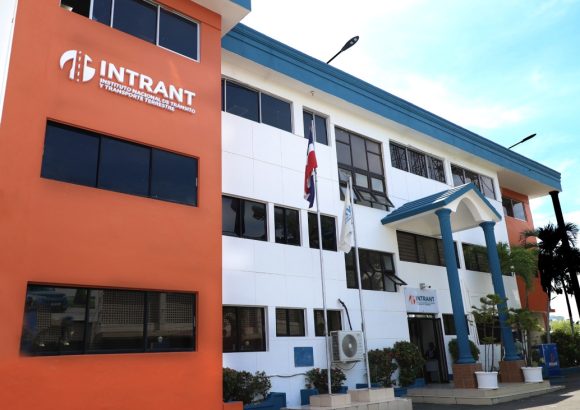
In Santo Domingo, the National Institute of Transit and Land Transportation (Intrant) has issued an official clarification that no official approval has been granted for any upward adjustment to public passenger transport fares across the country. The regulatory body is calling on daily commuters to refuse any demands from transport providers to pay elevated rates that exceed currently mandated pricing. Under the provisions of Dominican Law 63-17, Intrant holds the exclusive legal authority to greenlight any modifications to public transport fares. This regulatory framework rules out any unilateral price increases by individual drivers, transport trade unions, operating companies or third-party service providers, making any unapproved fare hikes illegal under national law. Milton Morrison, Intrant’s Executive Director, has issued a formal warning that unauthorized fare increases constitute a direct violation of national transportation legislation. Offenders that impose unapproved higher rates face a range of administrative penalties, including significant financial fines, for non-compliance with regulatory requirements. To help the agency enforce existing fare rules, Morrison is encouraging members of the public to submit reports of any irregular, unapproved fare charges through Intrant’s verified official communication and reporting channels. He added that any future, legally approved adjustments to transport pricing will be formally and publicly announced directly by Intrant to ensure full transparency for commuters across the country.
标签: Dominican Republic
多米尼加共和国
-

Jarabacoa boosts sports tourism with motocross championship
The mountain town of Jarabacoa took a major step forward this weekend to expand its booming tourism portfolio, playing host to the third installment of the Dominican Republic’s National Motocross Championship. Held at the purpose-built Corocito MX Park, this year’s event carried international flair, drawing not only the country’s top motocross talent but also the acclaimed Los Boricuas del Oeste Racing Team from neighboring Puerto Rico.
Organizers structured the competition across 11 official racing classes, headlined by the sport’s premier MX-1 and MX-2 divisions that put elite riders’ skill, speed, and nerve on full display. The high-stakes race drew thousands of excited spectators to the venue, turning the weekend into a major showcase for what Jarabacoa has to offer as a one-of-a-kind destination that blends world-class outdoor adventure with top-tier competitive sports action. The event headlined by multiple-time national champion Franklin “La Bestia” Nogueras, who led a stacked roster of homegrown Dominican riders against a tough, experienced contingent of competitors from Puerto Rico, lived up to its billing as one of the most anticipated stops on the 2024 championship calendar.
Beyond the on-track excitement, the motocross championship delivered significant economic momentum to the local community, generating a major boost in revenue for area hotels, restaurants, local tour operators, and small neighborhood shops. The event underscores the increasingly critical role that sports tourism plays in Jarabacoa’s long-term economic strategy. Long celebrated for its existing lineup of adventure offerings including white-water rafting, mountain hiking, and paragliding, this scenic mountain destination continues to solidify its reputation as the Dominican Republic’s leading hub for active travel and sports-focused getaways.
-

COPPPAL condemn rising disappearances of women in Latin America
A leading regional political women’s network is sounding the alarm over the escalating crisis of gender-based violence and unexplained disappearances of women and girls across Latin America and the Caribbean, calling on national governments to ramp up coordinated action to address the public safety and human rights emergency. The Women’s Mechanism of the Permanent Conference of Political Parties of Latin America and the Caribbean (COPPPAL) has issued an urgent statement highlighting the unrelenting rise in missing female cases across the region, which organizers say has reached crisis levels that can no longer be ignored.
Dalmira Martínez Juárez, president of COPPPAL Women, laid out the staggering scale of the crisis during the announcement, pointing to Mexico as one of the hardest-hit nations. Official figures from the country show total missing persons have surpassed 135,000, with more than 35,000 of those unaccounted for being women and girls. Juárez emphasized that adolescent girls between the ages of 15 and 19 make up one of the most at-risk groups, facing disproportionate vulnerability to kidnapping, trafficking, and other forms of gender-motivated harm.
In her address, Juárez underscored that national governments across the region hold a non-negotiable legal and ethical responsibility to expand and improve search operations for missing people, advance thorough and unbiased investigations into each case, and guarantee meaningful access to justice for victims and their families. Too many cases have remained stagnant or uninvestigated for years, Juárez said, leaving loved ones without answers and perpetuating a culture of impunity for those who perpetrate violence against women.
To confront the gap in data, coordination, and advocacy, the organization has unveiled a landmark new initiative: the Latin American and Caribbean Observatory of Disappeared Women. The new monitoring body will operate across all 30 countries where COPPPAL maintains a formal presence, bringing together civil society groups, political stakeholders, and family advocates to consolidate data, amplify awareness, and drive systemic change.
Organizers outline four core goals for the observatory: to raise greater public and political visibility around the scale of the missing women crisis, provide direct tangible support to families of victims who have long been left without resources or answers, design and promote evidence-based prevention strategies to stop disappearances before they occur, and strengthen enforcement of women’s fundamental human rights across every corner of the region. The launch marks one of the most coordinated regional efforts to date to address a crisis that has impacted thousands of communities and left tens of thousands of families searching for closure.
-

Aerodom addresses concerns over AILA baggage conveyor belts following viral video
SANTO DOMINGO — Authorities overseeing airport operations in the Dominican Republic have confirmed they are executing a comprehensive preventive maintenance initiative for baggage conveyor systems located in the customs arrivals hall of Las Américas International Airport (AILA). The project, led by Aeropuertos Dominicanos del Siglo XXI (Aerodom), is designed to keep all critical baggage handling infrastructure operating at peak performance for both air carriers and the traveling public.
Luis José López, communications director for Aerodom, shared details of the scheduled work, noting that crews are currently concentrating their efforts on conveyor belt No. 3. All other conveyor units in the customs area are lined up for thorough inspections and necessary repairs as part of the firm’s established routine maintenance cycle. López emphasized that these systems run 24/7 during airport operations, processing thousands of checked and carry-on bags every single day. This constant heavy use leads to gradual wear and tear over time, making regular, proactive maintenance a non-negotiable step to avoid unexpected breakdowns that could disrupt travel.
The public announcement from Aerodom came in direct response to a user-shared video that spread widely across social media platforms in recent days. The footage showed a visibly deteriorated section of one of the airport’s baggage conveyor belts, sparking public concern about infrastructure upkeep and travel safety at the key international gateway. In its statement, Aerodom clarified that the damaged belt shown in the circulating video has already been added to the current maintenance timeline for repairs. The firm also reaffirmed its long-standing commitment to upholding strict operational safety standards, cutting down on avoidable service disruptions, and delivering consistent, dependable baggage handling services to all passengers and partner airlines using AILA.
-

New book examines legal dispute that halted Bávaro International Airport project
One of the Dominican Republic’s most contentious aviation legal battles, which brought the planned Bávaro International Airport (AIB) project to a standstill, has now taken on new life as a formal academic and professional teaching tool. This evolution follows the recent publication of *Doctrinal Analysis of the Jurisprudential Solution to an Airport Conflict*, a specialized legal text that dissects every layer of the years-long dispute.
At the heart of the conflict was a head-on legal clash between the AIB Defense Council and the Dominican Institute of Civil Aviation (IDAC), the country’s top aviation regulator. IDAC launched the legal challenge to the project’s original authorization, arguing that the approval process carried critical procedural flaws. The regulator also maintained that only IDAC held the legal authority to grant approval for the construction of a new commercial airport in the nation. The dispute ultimately landed before the Dominican Constitutional Court, which issued a landmark 2025 ruling that upheld the legality of administrative actions blocking the project’s advancement. That ruling has since established a binding legal precedent that shapes how similar infrastructure authorization disputes are evaluated in the country today.
The book was formally presented by legal and aviation policy experts from two leading international professional bodies: the World Association of Airport Law (WALA) and the Ibero-American Forum of Administrative Law. Countering the widespread idea that a one-size-fits-all model works for successful airport governance, the text’s authors argue that no universal framework can be applied across all development contexts. Instead, the publication prioritizes four core pillars as non-negotiable for responsible airport infrastructure development and management: strict compliance with national and local laws, uncompromising commitment to operational safety, rigorous evidence-based technical planning, and consistent alignment with broader public interest goals. Legal scholars and infrastructure policy experts across Latin America are already expected to integrate the case study into academic curricula and professional training for future regulators and legal practitioners.
-

Human capital: Does the Dominican Republic have what it takes to respond to new investments in high technology?
During a meeting with Spanish business leaders in Madrid, Dominican Republic’s Minister of Industry, Commerce, and SMEs Eduardo “Yayo” Sanz Lovatón delivered a confident response when asked whether the country has the skilled human capital required to build a sustainable semiconductor industry: “We do.”
This bold assertion, however, obscures a far more nuanced reality that Dominican government officials openly acknowledge. Current enrollment data from the country’s university system confirms that developing a workforce tailored to advanced high-tech sectors remains a work in progress, not a completed goal.
During his Madrid trade mission, Sanz Lovatón’s core objective was to court international investors and encourage them to diversify their holdings beyond the Dominican Republic’s dominant tourism sector. A centerpiece of this outreach was the announcement of a new collaboration agreement with Spain’s prestigious School of Industrial Organization (EOI), an institution that has partnered with Dominican higher education programs for years to deliver professional training. The new deal creates 150 specialized scholarships exclusively for Dominican women holding managerial roles in the industrial sector.
Developed in partnership with the Dominican Ministry of Women, the training program will use a blended learning model: seven core modules will be delivered online, with a final in-person capstone course hosted in Santo Domingo. The curriculum covers high-demand skills aligned with modern industrial evolution, including women’s leadership development, project management, digital transformation, Industry 4.0 framework adoption, quality management systems, and circular economy implementation.
“Through this alliance, the Dominican Republic and Spain reaffirm our longstanding cooperative ties, advancing female talent as a core driver of 4.0 industrial transformation,” Sanz Lovatón stated during the official signing ceremony.
The targeted focus on women in this partnership is no coincidence. Official data from the Dominican Ministry of Higher Education, Science and Technology (Mescyt) shows that while women make up the majority of total university enrollees across the country, they remain severely underrepresented in STEM (science, technology, engineering, and mathematics) fields. Of the 91,163 students enrolled in Dominican STEM programs in 2024, just 26,270 are women, compared to 64,893 male students.
The EOI scholarship initiative is just one component of the Dominican government’s broader push to expand its high-tech industrial base. Sanz Lovatón also highlighted ongoing progress on the National Strategy for the Promotion of the Semiconductor Industry (ENFIS), a national plan that has already secured partnerships with both local Dominican universities and leading higher education institutions based in the United States.
Despite these proactive steps, significant structural challenges remain. Semiconductors—the essential microchips that power everything from electric vehicles to cloud-based artificial intelligence data centers—require a specialized workforce of trained engineers, technicians, physicists, and mathematicians. These are exactly the skill profiles that the current Dominican university system produces in far lower numbers than needed to support a fully developed domestic semiconductor industry.
2024 Mescyt data illustrates the scale of the gap: total higher education enrollment across the Dominican Republic reached 520,524 students this year, but STEM fields account for only 91,163 enrollees, or roughly 17.5% of the total student body. The most popular fields of study for Dominican students remain traditional professions: medicine, law, and accounting. A separate analysis from the National Association of Young Entrepreneurs found that only 12% of young Dominican students enroll in high-growth, high-wage fields that include STEM and language studies.
This reality raises a critical question: can targeted scholarship programs and international partnerships alone close a foundational skills gap that originates long before students enter university?
For Sanz Lovatón, the government’s long-term strategy is rooted in market alignment. He argues that once semiconductor investments and advanced manufacturing operations take root in the country, the labor market will send clear signals to young people about which career paths offer the greatest opportunity. “The nature of these technologies is that they are constantly changing. So we continue to create opportunities to prepare our people,” he concluded.
-
“Extremely Severe” When will the heat wave in the Dominican Republic end, and what dangers does it pose? Forecasts
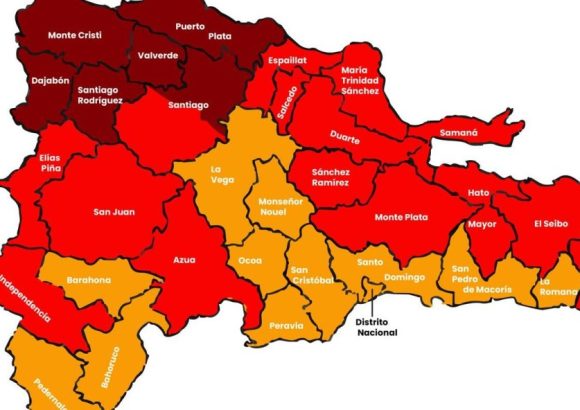
The Dominican Republic is currently grappling with a sustained spell of record-breaking extreme heat, and official forecasts confirm that the sweltering conditions will not abate in the near term. According to updated projections from the United States National Oceanic and Atmospheric Administration (NOAA), the entire country will remain under an official extreme heat warning until at least July 14.
This warning was confirmed to local outlet HOY by Saddan Font-Frías, an engineer and Master of Science who leads the Meteorological Research Department at the Dominican Institute of Meteorology (INDOMET). Font-Frías emphasized that this is no temporary warm spell, but a long-duration extreme heat event that poses tangible risks to public health and critical infrastructure.
Data from INDOMET shows that between July 1 and July 7, there is a very high likelihood that the combined maximum temperature and heat index will remain above 33 degrees Celsius for three or more straight days. The hardest-hit regions are expected to be the country’s northern, northwestern, and large swathes of its central interior, where conditions will be most severe.
Climate model projections analyzed by INDOMET indicate this abnormal heat pattern will persist through the second week of July, from July 8 to July 14, solidifying what experts are calling one of the longest prolonged heat events the country has faced in recent years.
Font-Frías warned that consecutive days of extreme heat create unique public health dangers that are not present in short warm spells. When the body cannot cool down overnight between hot days, it builds up cumulative heat stress, with little time to recover. This drastically raises the risk of serious heat-related illnesses including heat exhaustion and life-threatening heat stroke, he explained.
Meteorologists have identified a combination of overlapping atmospheric conditions driving this prolonged heat event. Trade winds have been consistently pushing warm, moisture-heavy air from the Atlantic Ocean and Caribbean Sea over Dominican territory. On top of that, a persistent high-pressure system is sitting in the mid-levels of the atmosphere, paired with a process called atmospheric subsidence, where air sinks from upper atmospheric layers down to the surface.
“When descending air compresses, it warms up significantly. This process acts like an atmospheric lid that traps heat near the ground, blocks the formation of tall, rain-bearing clouds, and allows unfiltered solar radiation to continue heating the surface,” Font-Frías explained. The combination of elevated baseline temperatures, high humidity, and minimal rainfall pushes the heat index to dangerous levels that far outpace what standard temperature readings would suggest.
Forecasts from NOAA also show there is a more than 50% chance that total precipitation over the coming weeks will stay well below the long-term average for this time of year, creating a cascading set of challenges for the country. The dual pressure of high heat and low rain creates a two-pronged crisis, according to Font-Frías: soaring temperatures drive increased demand for water and electricity as people rely on cooling, while reduced rainfall shrinks available water supplies and puts additional stress on agricultural crops across the country.
“This scenario demands that all residents practice intentional, responsible water use, and that public agencies maintain constant, close monitoring of evolving weather and infrastructure conditions,” he said. The expert added that the current heat event has been exacerbated by another recurring seasonal factor: near-constant presence of Sahara dust air masses over the country. These dust-laden air masses further dry out the local environment, reduce cloud formation, and allow even more solar radiation to reach the surface, amplifying the already extreme heat.
Public health officials are urging residents to stay hydrated, avoid prolonged outdoor activity during peak heat hours, and check on vulnerable community members including the elderly and those without access to consistent cooling as the event continues through mid-July.
-

Only 68% of rural households in the Dominican Republic have safe access to drinking water
Across rural communities in the Dominican Republic, consistent access to safe, drinkable water continues to stand as one of the most pressing unmet public needs, according to new national survey data that lays bare deep gaps in basic infrastructure between urban and rural regions of the country.
The recently published ENHOGAR-MICS 2025 survey documents a stark divide: while 92% of urban households have reliable access to treated, safe water, that figure falls to just 68% for their rural counterparts. In the most marginalized regions — the country’s deep south and remote border zones — the share of communities with access to safe drinking water drops even lower, falling below 60%. This gap does not just represent an inconvenience for the roughly 1.1 million rural Dominicans left unserved; it creates a direct, daily threat to public health that disproportionately harms the nation’s most vulnerable groups.
Public health researchers and policymakers warn that the absence of functional, reliable water distribution systems in underserved rural areas has directly driven a higher incidence of preventable gastrointestinal diseases, with children under five bearing the brunt of this impact. This public health crisis mirrors a broader global challenge: United Nations data estimates that more than 2 billion people across the globe lack consistent access to safely managed drinking water, making this a leading preventable cause of childhood illness and mortality in low- and middle-income nations.
Beyond public health harms, the water access gap entrenches deep social and economic inequalities, the survey finds. In communities without consistent piped water service, the unpaid work of collecting and transporting water falls overwhelmingly to women and girls. This constant burden consumes hours of time each week that could otherwise be spent pursuing formal education, engaging in paid employment, or caring for family members, creating a persistent cycle of economic disadvantage that is passed between generations.
Officials from the Dominican Republic’s Ministry of Economy, Planning, and Development have acknowledged the slow pace of progress in expanding rural water coverage, even with ongoing community-led aqueduct construction projects active across many regions. International development partners including the World Bank and UNICEF have called for urgent, targeted action, urging the Dominican government to accelerate infrastructure investment, expand budget allocations for rural water projects, and strengthen national water quality monitoring systems to ensure that all water delivered to households meets global safety standards. Policy experts note that closing the rural-urban water access gap will not only improve public health outcomes but also advance gender equity and economic growth across the country’s most underserved regions.
-

Crime Rate/Urban Concentration: 43 municipalities account for 80% of homicides
Against the backdrop of widespread national concern over violent crime, a newly released statistical bulletin has uncovered a stark pattern: while the country is administratively divided into 158 municipalities, extreme lethal violence is not evenly spread across the territory. Instead, it is heavily concentrated in a tiny subset of urban zones.
Data from the territorial analysis included in the bulletin shows that just 43 municipalities — less than 28 percent of the total administrative divisions — are responsible for 80 percent of all intentional homicides recorded nationwide.
This quantitative finding marks a critical breakthrough for public safety strategic planning, experts note, because it confirms that severe violent crime is not a diffuse, nationwide problem. It is a geographically focused phenomenon driven by unique, localized socioeconomic and urban development dynamics.
The revelation that nearly a quarter of the country’s municipalities account for the vast majority of violent deaths gives policymakers a clear, targeted framework for deploying limited public safety resources, rather than spreading interventions thinly across the entire country.
Further analysis of the high-concentration zones links them to a consistent set of shared demographic and social characteristics: most of these municipalities have experienced rapid, unregulated population growth, high rates of housing overcrowding, and long-standing histories of systemic social exclusion. It is within these overlapping conditions that the combination of routine street crime, territorial conflicts between drug micro-trafficking groups, and fragmented community cohesion steadily drives up the risk of lethal violent incidents on a daily basis.
Building on this geospatial finding, the country’s Ministry of the Interior and Police has already moved to justify expanding its existing quadrant patrol program, a community-based public safety initiative that allocates fixed patrol teams to small geographic zones to increase police presence and responsiveness in high-risk areas.
-

China’s objective: to connect the Dominican Republic with a direct flight to boost tourism
China’s top diplomatic representative to the Dominican Republic, Ambassador Chen Luning, has identified the creation of a direct air connection between the two nations as a core priority of his mission, framing the initiative as a transformative step to deepen cross-border ties in tourism, commerce, and cultural exchange. In remarks shared by local Dominican outlet Listín Diario, Chen outlined that his diplomatic team is actively advancing negotiations with both Dominican government aviation regulators and interested airline stakeholders to turn the planned route into a reality. Chen emphasized that the Dominican Republic’s unique natural and cultural attractions position it as an ideal new travel destination for Chinese outbound tourists, a market that ranks among the largest and fastest-growing in the world. With China’s 1.4 billion residents generating millions of international trips annually in search of new experiences, the ambassador noted that a direct air link would unlock massive untapped tourism potential for the Caribbean nation. Beyond tourism, the connection would also better serve the sizable community of Chinese citizens already living and operating businesses across the Dominican Republic, streamlining travel and commercial activity for this group. Chen acknowledged that the considerable geographic distance separating the two countries stands as the primary barrier to launching the route. To overcome this challenge, his team is exploring a viable interim solution that would include a scheduled stopover in Europe, a model that would make long-haul operations logistically and financially feasible for airlines. “A priority, and a dream, of my team is to advance this new direct flight that can connect the Dominican Republic and China,” Chen shared in his remarks, adding that ongoing constant dialogue with all relevant parties is keeping the project moving forward. He expressed cautious optimism that negotiations will yield a positive outcome in the near term. Should the route come to fruition, analysts and diplomatic leaders agree it would deliver far-reaching benefits for bilateral relations: it would simplify travel for both tourists and business professionals, open new pathways for cross-border investment and trade, and create unprecedented opportunities for expanded economic and cultural cooperation between the two countries.