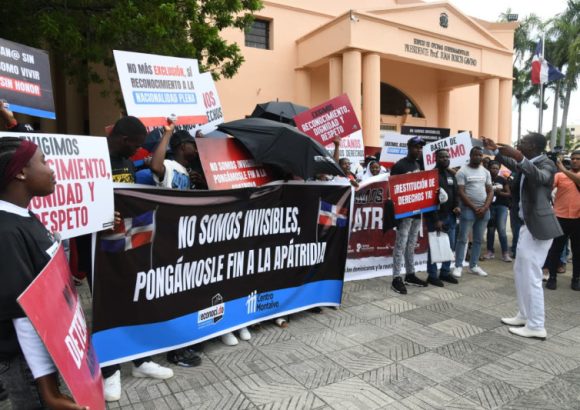
SANTO DOMINGO – On Friday, dozens of people of Haitian descent born and raised in the Dominican Republic gathered in peaceful demonstration outside the Dominican National Palace, carrying clear, impassioned slogans to demand long-overdue action from the national government. Chants of “We are Dominicans”, “If I am not Dominican, neither is Abinader”, and “Being Dominican is our right, not a favor” echoed through the public square as organizers called attention to the unfulfilled promises of a decade-old nationality law.
The demonstration, organized by the grassroots Recognized Movement, marks the 12th anniversary of the passage of Law 169-14, legislation drafted to address the citizenship crisis triggered by the Dominican Constitutional Court’s 2013 ruling 168-13. That ruling stripped nationality from thousands of people born in the Dominican Republic to undocumented Haitian migrant parents, creating a large population of stateless people who were denied access to basic identity documentation. Law 169-14 was intended to resolve this crisis by formalizing pathways to citizenship for two distinct affected groups, labeled Group A and Group B. But protesters say that after 12 years, the government has never fully enacted the regulation.
One spokesperson for the group emphasized that demonstrators are not asking for special treatment – they are demanding their constitutionally guaranteed birthright. “We are here to claim our Dominican nationality. We are not foreigners or immigrants; we were born on this soil, and we will not leave,” they said. The representative added that even after 12 years, less than half of the people classified in Group A have successfully received their citizenship, while all members of Group B remain waiting for permanent, official resolution of their status.
Movement coordinator Franklyn Minor detailed the ongoing harms of the government’s delayed implementation. He explained that many people who had held valid Dominican identity cards, birth certificates, and passports for decades have suddenly had these official documents suspended, leaving them legally adrift. Protesters added that stateless and undocumented residents of Haitian descent continue to face routine systemic discrimination: they face arbitrary arrests, unfair deportations, and persistent bureaucratic roadblocks that block them from obtaining even the most basic official paperwork. This lack of documentation in turn cuts off access to fundamental rights including public education and healthcare, turning long-overdue citizenship into a matter of daily survival for thousands of families.
Protesters anchored their demand in the text of the Dominican Constitution that was in force at the time of their birth, which grants automatic Dominican nationality to anyone born on national territory, with only narrow exceptions for children of foreign diplomats and individuals in legal transit. To move the process forward, Minor called on Dominican President Luis Abinader to directly intervene in the crisis, to enforce the existing Law 169-14, and to clear the backlog of thousands of pending citizenship applications. Rejecting the erasure of their community, one spokesperson summed up the demonstration’s core message: “We are not invisible.”