标签: Dominican Republic

多米尼加共和国

  • Dominican Republic activates preventive measures amid Ebola outbreak in Central Africa

    Dominican Republic activates preventive measures amid Ebola outbreak in Central Africa

    In response to an ongoing Ebola outbreak across multiple Central African nations, the Dominican Republic’s Ministry of Public Health has moved quickly to ramp up epidemiological surveillance and roll out enhanced preventive protocols, following official alerts from global health authorities.

    The current outbreak is driven by the Bundibugyo strain of the Ebola virus, a variant that has no globally approved vaccine available to date. The World Health Organization (WHO) has already categorized the unfolding situation as a Public Health Emergency of International Concern (PHEIC), prompting nations around the world to activate pre-planned international preparedness frameworks, of which the Dominican Republic’s new measures are a part.

    While public health officials in the Caribbean nation have emphasized that the country faces an exceptionally low risk of importing the virus, thanks to its distant geographic location and the absence of direct travel or transportation links to the affected Central African regions, authorities have made the decision to proactively strengthen existing preparedness and rapid response systems for high-threat infectious diseases.

    To achieve this, the Dominican government has launched cross-agency coordination efforts, bringing together stakeholders from public health, migration management, tourism, airport operations, port authorities, and national emergency response teams. The collaborative work focuses on tightening entry screening at all points of entry into the country, including international airports, seaports, and land border crossings.

    Key preventive actions rolled out so far include updated case detection protocols, continuous health monitoring for incoming travelers from high-risk regions, the expansion of dedicated isolation facilities across national and regional medical centers, specialized training for frontline medical personnel to recognize and respond to potential Ebola cases, and clear guidance on the correct use of personal protective equipment (PPE) to prevent transmission.

    Beyond entry screening and clinical response planning, the Ministry of Public Health has also reported ongoing work to upgrade national laboratory diagnostic capacity. These improvements are designed to ensure the Dominican Republic can safely process, handle, and ship biological samples in full compliance with international biosafety standards, reducing delays in confirming potential cases.

    The current outbreak is centered primarily in the Democratic Republic of the Congo, with a small number of confirmed associated cases also recorded in neighboring Uganda. Global health agencies currently assess the risk of widespread global transmission as low, but continuous surveillance remains in place as the situation is still evolving.

    Public health experts note that existing vaccines developed for other known Ebola variants do not offer protection against the Bundibugyo strain. For this reason, global containment strategies continue to prioritize core public health interventions: rapid early detection of cases, comprehensive contact tracing, prompt isolation of infected individuals, and consistent infection prevention practices in healthcare and community settings.

  • Digemaps introduces national surveillance programs for meat safety

    Digemaps introduces national surveillance programs for meat safety

    In a major step forward for public health protection and food system upgrading in the Dominican Republic, the General Directorate of Medicines, Food and Health Products (Digemaps) has officially unveiled the National Programs for the Control of Pathogens and Chemical Residues, a cross-sector initiative focused on tightening regulatory oversight of domestic meat products.

    The launch ceremony took place at the headquarters of the Dominican Agribusiness Board (JAD), with critical technical backing provided by the Dominican Agribusiness Laboratory (LAD). What sets this new program apart from previous regulatory efforts is its collaborative structure, which unites government public health agencies and private agri-food stakeholders to close gaps in health surveillance and quality control across every link of the nation’s meat supply chain.

    Per Digemaps’ official program framework, the core mission of the initiative is to guarantee that all meat products reaching Dominican consumers for human consumption are free of dangerous pathogens, unregulated chemical residues, and banned substances. To achieve this goal, the program has rolled out upgraded sanitary inspections, expanded microbiological monitoring routines, and standardized sampling protocols that match current international food safety benchmarks.

    During the launch event, regulatory and technical officials presented a full set of updated technical and regulatory guidelines. These documents outline standardized procedures for on-site inspections, mandatory microbiological testing, and ongoing surveillance targeting high-risk pathogens that commonly cause foodborne illness, including Salmonella, E. coli O157:H7, Shiga toxin-producing E. coli (STECs), and Listeria monocytogenes. Beyond microbial hazards, the program also establishes rigorous new testing requirements for veterinary drug residues, agricultural pesticides, and other unintended chemical contaminants that can enter meat products during production and processing.

    A series of expert-led technical sessions covered a range of critical implementation topics, from designing and executing robust microbiological control systems and the standardized N60 sampling method, to implementing proactive hazard prevention measures in meat processing facilities and establishing clear response protocols for when testing returns positive results for hazardous contaminants.

    Digemaps officials outlined the far-reaching benefits the program is expected to deliver. Beyond upgrading consumer protection, the initiative will strengthen the overall national meat inspection system, improve end-to-end product traceability, boost public confidence in domestic meat products, and increase the global competitiveness of the Dominican Republic’s livestock and meat processing sector in both local and export markets.

    For their part, JAD and LAD leadership reaffirmed their long-term commitment to supporting national food safety efforts and advancing the technical development of the Dominican agribusiness sector, emphasizing that stronger quality assurance and public health monitoring systems are foundational to the industry’s sustainable growth.

  • RD Vial announces feasibility study for Central Cibao Expressway

    RD Vial announces feasibility study for Central Cibao Expressway

    In a major step forward for regional infrastructure development in the Dominican Republic, state highway authority RD Vial has officially greenlit a feasibility assessment for the long-proposed Central Cibao Expressway, a transformative project designed to boost connectivity across four key provinces in the country’s Cibao heartland.

    RD Vial Director Hostos Rizik outlined the project’s scope in a recent statement, confirming that the new roadway will connect the existing San Francisco de Macorís highway to the heavily traveled Duarte Highway, positioned near the main entrance of Cibao International Airport. Rizik added that a third-party consulting firm has already received formal authorization to kick off preliminary technical analyses, noting that the project is a high-priority initiative for President Luis Abinader’s administration, which has pushed aggressively to advance its development agenda.

    The announcement has drawn broad praise from business leaders and regional development advocates, who have long framed the expressway as a critical catalyst for long-term economic growth in the Cibao region. Ricardo Fondeur, a representative of the Association for the Development of Santiago (APEDI), emphasized that stakeholders are eager to see the feasibility process move forward as quickly as possible, adding that industry groups are confident the assessment will validate the project’s technical and economic viability.

    Juan María García, another prominent regional development figure, expanded on the project’s expected benefits, noting that streamlined traffic flow and cut travel times between two of the region’s largest urban centers – Santiago and San Francisco de Macorís – will unlock broader economic activity across the entire central Cibao region. This area already contributes roughly 20% of the Dominican Republic’s total gross domestic product, making infrastructure improvements here a high-stakes investment for the entire country’s economic future.

  • EGE Haina launches Dominican Republic’s first hybrid wind-solar power plant

    EGE Haina launches Dominican Republic’s first hybrid wind-solar power plant

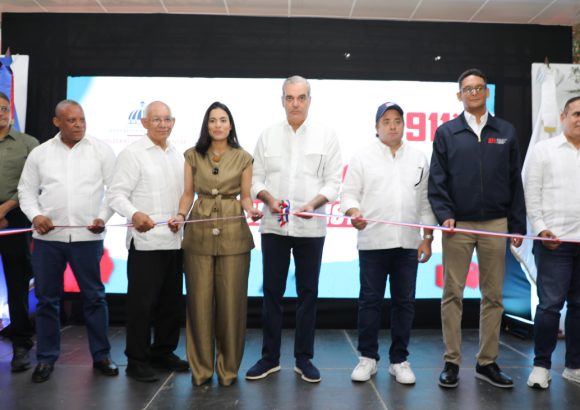
    In a landmark ceremony led by Dominican Republic President Luis Abinader, independent power producer EGE Haina has officially opened the Esperanza Renovable energy complex in Valverde province – the Caribbean nation’s first utility-scale hybrid wind and solar facility connected to the National Interconnected Electric System (SENI). This milestone project brings together three integrated renewable assets to deliver a combined clean power capacity of 200 megawatts, following a total private investment of $246.5 million.

    The Esperanza Renovable complex integrates two newly completed facilities – the 60 MW Esperanza Solar 2 farm and 49.5 MW Esperanza Wind park – with EGE Haina’s already operational 90 MW Esperanza Solar 1 plant, which entered service years earlier. Spanning 246 hectares of land in Valverde, the facility features 259,370 high-efficiency bifacial solar panels and 11 state-of-the-art Vestas wind turbines. Standing 225 meters tall, these turbines are the tallest energy infrastructure structures ever installed in the Dominican Republic. Annually, the complex is projected to generate approximately 485,000 megawatt-hours of carbon-free electricity, enough to power hundreds of thousands of local households annually.

    José A. Rodríguez Silvestre, General Manager of EGE Haina, emphasized that the Esperanza Renovable project represents a critical step forward in diversifying the Dominican Republic’s national energy matrix, which has long relied heavily on fossil fuel imports. Looking ahead, the company has already laid out plans to add a 200 megawatt-hour battery energy storage system (BESS) to the complex, a upgrade that will smooth out variable wind and solar output, optimize grid distribution, and ensure more consistent delivery of clean power to end users.

    Joel Santos Echevarría, the Dominican Republic’s Minister of Energy and Mines, echoed this optimism, noting that the new facility strengthens the country’s long-term energy security by reducing reliance on imported fossil fuels and keeps the nation on track to meet its legally binding renewable energy transition targets. For EGE Haina, the project brings the company’s total installed renewable capacity to 576 MW, allowing it to exceed the sustainability target outlined in its green sustainability bond years ahead of schedule.

    Beyond its energy and climate benefits, the project has delivered significant economic and community gains to the Valverde region. Over the course of construction, the buildout created 1,400 direct local jobs, providing a major boost to the provincial economy. Once fully operational, the complex is expected to cut annual carbon dioxide emissions by more than 275,000 tons, delivering tangible public health and climate benefits for the nation. Since 2022, EGE Haina has also invested more than 34 million Dominican pesos in targeted local community and environmental initiatives across Valverde. These investments include installing solar power systems for local public buildings, upgrading school facilities, improving public infrastructure, and establishing a dedicated arboretum that houses more than 1,000 species of endemic native trees and shrubs, supporting local biodiversity conservation efforts.

  • Omar Fernández assumes Caribbean vice presidency of ParlAmericas

    Omar Fernández assumes Caribbean vice presidency of ParlAmericas

    At a recently concluded plenary assembly held to select new leadership for the 2026-2028 term, Dominican Republic Senator Omar Fernández has officially stepped into the role of Caribbean vice president for ParlAmericas, the inter-parliamentary organization uniting lawmakers from 35 nations across the entire Americas region.

    Headquartered in Ottawa, Canada, ParlAmericas serves as a critical platform for cross-border legislative collaboration, working to advance democratic governance and inclusive parliamentary participation across North America, Central America, South America, and the Caribbean. Its core programming focuses on pressing regional priorities, including gender equity, open parliamentary governance, climate action, and inclusive economic growth, with a membership roster that spans from Canada, the United States, and Mexico across the Caribbean to major South American economies such as Brazil, Argentina, and Chile.

    In his new post representing the Caribbean subregion, Fernández has outlined a clear three-part agenda: deepening cross-border legislative ties, facilitating structured political dialogue between member legislatures, and scaling the sharing of proven parliamentary best practices across the region. A sitting senator for the Dominican Republic’s National District, Fernández highlighted that his top priority will be bridging the gap between national legislative institutions and everyday citizens, ensuring that parliamentary deliberations translate into tangible, meaningful improvements in community livelihoods.

    “I am here to formally assume the vice presidency of the ParlAmericas Open Parliament Network for the Caribbean,” Fernández confirmed during the assembly, underscoring that transparency and grassroots citizen engagement will be central pillars of his tenure in the role.

    Over the 2026-2028 term, Fernández will take point on coordinating regional parliamentary initiatives, leading conversations around forward-thinking, innovative legislative frameworks, and serving as the official representative for Caribbean member states at all major ParlAmericas-hosted global and regional forums.

    The Dominican Republic has long been an active contributor to ParlAmericas’ mission of fostering technical cooperation and joint action among regional legislative bodies. Officials and observers note that Fernández’s appointment does more than expand the country’s institutional footprint in regional parliamentary affairs: it also spotlights the Dominican Republic’s expanding leadership role in advancing democratic dialogue and legislative innovation across the Caribbean subregion.

  • CONSTRUEXPO 2026 opens in Punta Cana with construction reform measures

    CONSTRUEXPO 2026 opens in Punta Cana with construction reform measures

    The 18th iteration of CONSTRUEXPO 2026, the Dominican Republic’s premier construction and infrastructure industry exhibition, has officially commenced at the BlueMall Punta Cana Convention Center, shining a spotlight on the explosive expansion of Punta Cana and the country’s eastern region as leading Caribbean hubs for real estate investment, tourism development, and urban growth.

    Heading the opening ceremony was Dominican government official Víctor Bisonó, who used the occasion to unveil a slate of targeted policy reforms designed to modernize and cut red tape for the nation’s construction permitting process— a long-standing bottleneck that has hampered infrastructure and real estate progress across the country for years. Two core reforms were highlighted: an updated Single Window for Construction digital platform, which streamlines application processing, and the new NORM system, a regulatory framework created to standardize technical project evaluations and boost institutional transparency for all stakeholders.

    In his remarks, Bisonó shared promising early data signaling the reforms are already driving momentum: construction license approvals jumped 93% in the first four months of 2026 compared to the same period in 2025, rising from 380 approved permits to 665. The total value of investments tied to these approved projects surpasses 230 billion Dominican pesos, marking a massive surge in industry activity. Additionally, Bisonó announced the launch of the Alliance for the Promotion of the Construction Sector, a collaborative public-private partnership developed alongside the Association of Industries of the Dominican Republic and leading industry business groups. The alliance aims to strengthen domestic production supply chains and foster long-term, sustainable growth across the sector.

    Organized by José Veras & Associates, CONSTRUEXPO 2026 will run through May 21 to 23, hosting more than 48 exhibitors from across the globe. Sixteen of these participating firms are international, hailing from nations including Italy, Spain, Panama, Ecuador, Colombia, and the United States. Over its 18 editions, the expo has grown into one of the most influential business and networking platforms for the construction and infrastructure ecosystem in the Dominican Republic.

    Industry leaders in attendance outlined the shifting landscape of the Dominican construction sector, noting that Punta Cana’s ongoing expansion across tourism, residential, commercial, and mixed-use developments is transforming the entire national industry. Annerys Meléndez, a prominent sector voice, emphasized that this period of rapid growth must be paired with intentional sustainable planning to avoid overdevelopment and preserve the region’s natural and economic assets. Meanwhile, fellow industry leader Mario Betances underlined that cutting-edge technology and prefabricated, industrialized construction models will be foundational to the sector’s competitive and efficient future growth.

  • Dominican Ministry of Public Health says respiratory virus circulation remains within expected levels

    Dominican Ministry of Public Health says respiratory virus circulation remains within expected levels

    Public health officials in the Dominican Republic have announced that COVID-19 and other common seasonal respiratory viruses are continuing to circulate at stable, expected levels, with no active epidemiological alerts currently in effect across the country.

    Released as part of the official update for Epidemiological Week 18, the latest bulletin from the nation’s Ministry of Public Health outlines that continuous active surveillance is already in place for key circulating pathogens, including SARS-CoV-2, influenza A(H3N2) and influenza A(H1N1). This proactive monitoring system is designed to flag any sudden shifts in virus transmission patterns that could require a public health response.

    to ensure public access to care, the ministry has confirmed that complimentary COVID-19 testing remains widely available for Dominican residents at the National Needle Industry (Inaguja) parking lot, located directly behind the Ministry of Health’s central headquarters. Health officials have also issued a series of public reminders emphasizing core preventive habits to reduce the spread of respiratory illness: frequent handwashing, covering coughs and sneezes to contain respiratory droplets, avoiding close contact with people displaying virus symptoms, maintaining consistent air flow in enclosed indoor spaces, and seeking prompt medical attention if symptoms persist or worsen. The guidance specifically prioritizes COVID-19 vaccination for high-risk groups, including adults over 65, pregnant people, and individuals living with chronic underlying health conditions.

    Beyond respiratory virus surveillance, the latest epidemiological report highlights notable progress in controlling multiple other endemic and infectious diseases across the nation. Compared to the same period in 2025, confirmed malaria cases have plummeted by 84%, with only 78 positive cases recorded nationwide in 2026 to date. Dengue fever transmission also remains well under control, with just 93 confirmed cases recorded across the country. Most notably, no confirmed cholera cases or cholera-related deaths have been reported in the Dominican Republic at any point in 2026.

    Despite these positive outcomes, public health teams are maintaining heightened vigilance for leptospirosis, a bacterial infection that has already reached 117 confirmed cases in 2026. During the 18th epidemiological week alone, officials recorded nine new confirmed cases and two deaths linked to the disease. Health authorities explained that recent heavy rainfall and current environmental conditions across the country have created favorable conditions for leptospirosis transmission, so ongoing prevention and targeted control operations will continue to be prioritized across high-risk regions.

  • Dominican employment reaches 5.2 million workers in early 2026

    Dominican employment reaches 5.2 million workers in early 2026

    Against a backdrop of widespread global economic uncertainty fueled by Middle Eastern geopolitical tensions, volatile commodity pricing, and elevated transportation costs, the Dominican Republic’s labor market has delivered a resilient performance, posting steady employment expansion through the first quarter of 2026, newly released official survey data shows.

    Findings from the country’s National Continuous Labor Force Survey (ENCFT) put total national employment at 5,236,178 workers as of the end of March. Of this total workforce, 2,403,395 positions are in the formal sector, a figure that aligns with official records maintained by the Dominican Social Security Treasury.

    When compared to the same three-month period in 2025, the Dominican economy added a net total of 118,631 new jobs, translating to a 2.3% year-on-year growth rate for overall employment. Key labor market metrics remained near their all-time highs: the national employment rate hit 63.0%, while the labor force participation rate landed at 66.3%, a performance that stands out as strong among regional economies.

    The survey’s breakdown of new job creation reveals that informal sector growth drove most of the past year’s employment gains. Of the 118,631 net new positions added, 98,127 were generated in the informal economy, accounting for 82.7% of all new job creation. Formal sector employment contributed just 20,504 additional jobs over the same period. Even with informal activity accounting for the majority of new growth, the national informality rate settled at 54.1% – still below the long-term historical average recorded since 2014.

    Women emerged as a major driving force behind the country’s labor market expansion in the first quarter. Women make up 43.9% of the Dominican Republic’s total current employed population, and over the 12-month comparison period, female employment grew by 157,078 workers, accounting for the vast majority of all new job creation across the country.

    Unemployment metrics also remained stable and favorable, the data confirms. The open unemployment rate held at 5.0% for the January-to-March period, while the broader measure of labor underutilization fell to 8.8%, down from 9.3% in the first quarter of 2025.

    The working-age population classified as inactive – meaning individuals who are not currently employed and are not actively seeking work – reached 2.8 million people, equal to 33.7% of the total working-age population. That share marks a slight decrease from the recorded inactive rate in 2025.

    Overall, the latest labor force data underscores the Dominican Republic’s economic resilience, as the market maintained low unemployment and continued expansion even amid the external headwinds shaking the global economy in 2026.

  • Dominican activists urge government action on femicides in Dominican Republic

    Dominican activists urge government action on femicides in Dominican Republic

    In Santo Domingo, a broad coalition of civil society groups has launched a high-profile campaign pushing Dominican Republic authorities to label the ongoing crisis of femicide and gender-based violence as a formal national emergency. Spearheaded by the Coalition for Women’s Rights and Life, the movement has already garnered signatures from more than 80 organizations, alongside leading academics, grassroots activists, and ordinary concerned citizens. The push comes in response to alarming new data showing that at least 32 women have lost their lives to gender-motivated killings in just the first five months of 2026, a trend that has sparked widespread public outcry over systemic failures to protect women across the country.

    The official open letter at the heart of the campaign, titled “Not One Less! Women’s Lives Demand State, Justice and Education for Equality,” lays out the urgent need for coordinated, cross-government action to tackle what organizers frame as a deep-rooted systemic crisis, rather than a string of isolated events. To expand public participation and amplify pressure on decision-makers, the Coalition has launched a dedicated public portal at feminicidios.do, where any Dominican citizen can add their name in support of the demands.

    The document outlines a clear, multi-pronged policy agenda that goes far beyond a simple emergency declaration. Signatories are calling for the passage of a sweeping national law dedicated to preventing and penalizing all forms of violence against women, as well as independent, third-party audits of current response systems operated by the National Police and the Attorney General’s Office. Additional demands include harsher and more consistent prosecution of perpetrators, the immediate removal of any police or military personnel facing accusations of gender-based violence, a major expansion of accessible emergency shelters and long-term support programs for survivors, and the mandatory integration of gender equality education into national school curricula.

    In a statement accompanying the letter, Coalition leaders stressed that repeated femicides across the country cannot be dismissed as random, individual acts of violence. Instead, they argue, these deaths are the direct outcome of long-standing institutional failures to proactively prevent harm and provide effective protection for at-risk women. The campaign also addresses overlooked secondary harms of the crisis, calling for targeted, comprehensive support for children left orphaned by femicide killings, as well as a substantial increase in public funding for both the Ministry of Women and community-based violence prevention initiatives operating across all regions of the country.

    Organizers are continuing to ramp up outreach to recruit additional signatories, including more national organizations, professional associations, local community leaders, and everyday citizens. They emphasize that ending violence against women cannot be achieved through piecemeal actions; it requires a unified, nationwide response and sustained, long-term public policies centered on three core pillars: prevention, accessible justice, and consistent protection for all women.

  • Cabo Rojo International Airport set to begin operations in February 2027

    Cabo Rojo International Airport set to begin operations in February 2027

    Plans for transforming the southwestern Dominican province of Pedernales into a next-generation Caribbean tourism hub have hit a major construction milestone, with government officials confirming Cabo Rojo International Airport is on schedule to welcome its first commercial aircraft in February 2027. The confirmation came during a recent on-site progress inspection led by senior Dominican government representatives, who reviewed every stage of the large-scale infrastructure project.

    During the visit, Presidential Administrative Minister José Ignacio Paliza outlined the phased operational roadmap for the new gateway. In its initial launch period, the airport will operate a restricted schedule of commercial flights, with capacity set to expand incrementally in line with growing tourist arrivals and passenger demand in the Cabo Rojo area. Paliza also added that the first batch of hotels, which will anchor the region’s new tourism offer, are projected to open their doors to guests in the latter half of 2027.

    Public Works Minister Víctor Pichardo, who also joined the inspection, shared that core airport infrastructure has already reached advanced development stages. The most critical component of the project, the airport’s main runway, has entered the paving phase. The inspection team also assessed progress on other key facilities within the airport complex, including the air traffic control tower, taxiway, stormwater drainage systems, passenger terminal, and a range of supporting service and utility infrastructure.

    While unseasonably heavy rainfall in recent months caused minor disruptions to some on-site construction activities, lead project engineers confirmed the overall timeline remains aligned with the 2027 operational target. Before the official government inspection, lead contractors and engineering teams had already presented detailed progress updates for each phase of the development to senior authorities, clearing the way for the official review.

    As a centerpiece of the Dominican government’s long-term regional economic development strategy, Cabo Rojo International Airport is designed to unlock the untapped tourism potential of the country’s southwest. The project is intended to reposition Pedernales as a top-tier leisure and travel destination in the Caribbean, driving job creation, foreign investment, and sustainable economic growth across the region for decades to come.