标签: Dominican Republic

多米尼加共和国

  • Government to regulate electric scooters after rise in accidents

    Government to regulate electric scooters after rise in accidents

    The Dominican government has initiated a nationwide regulatory framework for electric scooters in response to escalating safety incidents involving minors. Interior and Police Minister Faride Raful confirmed that security agencies will convene this week to establish comprehensive guidelines aimed at enhancing public safety.

    This decisive action follows mounting public alarm and preliminary local measures, including the recent removal of e-scooters from streets in San Francisco de Macorís by Mayor Alex Díaz. The government’s response also aligns with urgent calls from Listín Diario editorial that highlighted the critical need for legal provisions restricting underage usage, mandating protective helmets, and developing dedicated infrastructure including bicycle lanes.

    Authorities anticipate the new regulations will achieve three primary objectives: significant reduction in minor-involved accidents, enhanced pedestrian protection, and accelerated development of specialized mobility infrastructure. The regulatory approach represents a proactive response to evolving urban transportation challenges while balancing technological innovation with public safety requirements.

    The forthcoming framework marks a significant shift in the nation’s approach to light mobility vehicles, potentially establishing precedent-setting standards for similar regulations across the Caribbean region.

  • Afro-Dominican Action reclaims February 9 as key date in anti-slavery history

    Afro-Dominican Action reclaims February 9 as key date in anti-slavery history

    SANTO DOMINGO – Marking the 204th anniversary of slavery’s abolition in Spanish Santo Domingo, the advocacy group Afro-Dominican Action has initiated a powerful digital campaign to challenge what it terms official historical amnesia. Through a series of video statements released on social media, the organization transformed the day into one of both historical remembrance and political protest.

    The campaign directly confronts the sustained silence from state institutions regarding February 9th, a date the group champions as foundational to the nation’s anti-colonial narrative and the broader Caribbean struggle for emancipation. This initiative builds upon a formal proclamation issued earlier, in which the organization accused the country’s political and intellectual elites of systematically minimizing and distorting the significance of the 1822 abolition event.

    Afro-Dominican Action argues that this erasure has facilitated a national narrative steeped in Hispanophilia and racism, one that deliberately obscures the pivotal role of Afro-descendant resistance movements and the transformative societal impact of abolition. The group has forcefully reaffirmed the date as an indispensable cornerstone in the history of anti-slavery efforts and for Afro-Dominican dignity.

    The video series features compelling testimonies from prominent scholars. Dominican writer and researcher Diógenes Abreu drew attention to the Palm of Liberty, a symbol planted by Haitian ruler Jean-Pierre Boyer that has been largely erased from public memory. Historian María Cecilia Ulrickson contested claims of a ‘benign’ or naturally declining slavery system prior to 1822, asserting that the abolition constituted the island’s first genuine act of emancipation. Providing a regional context, U.S. historian Andrew Walker documented how post-abolition Santo Domingo emerged as a critical sanctuary for formerly enslaved people fleeing across the Caribbean.

    Concluding its campaign, Afro-Dominican Action emphasized that the legacy of abolition is not a settled historical footnote but a fiercely contested and living memory, especially amidst contemporary struggles against racism and human rights violations. The organization has amplified its longstanding demand for the government, led by President Luis Abinader, to officially designate February 9th as the National Day of the Abolition of Slavery—a call for historical justice echoed by public intellectual Miguel Solano.

  • Indotel launches SonanDO project to strengthen cultural sovereignty in border areas

    Indotel launches SonanDO project to strengthen cultural sovereignty in border areas

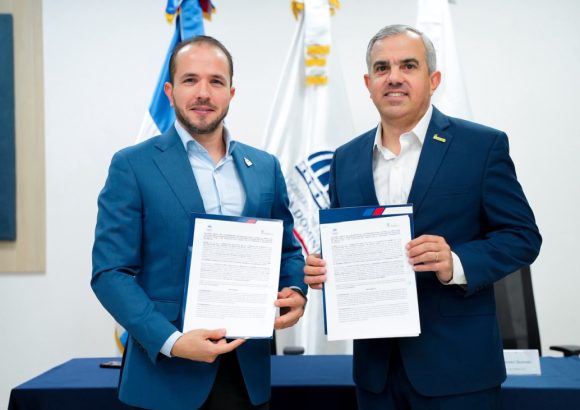
    The Dominican Telecommunications Institute (Indotel) has spearheaded a groundbreaking inter-institutional pact involving over 15 public and cultural organizations to implement Project SonanDO. This initiative forms a crucial component of the broader Sovereignty 4.0 strategy, designed to enhance radioelectric sovereignty while promoting national cultural identity and supporting comprehensive development in marginalized border communities through enhanced connectivity, educational resources, and locally produced content.

    Targeting seven strategic border provinces—Dajabón, Independencia, Elías Piña, Pedernales, Montecristi, Santiago Rodríguez, and Bahoruco—the project will deliver programming featuring authentic Dominican music, historical narratives, educational materials, and social guidance messaging. A innovative mobile recording studio, housed within a bus generously donated by OMSA, will traverse these regions to discover, train, and promote emerging local talents with particular focus on youth development.

    Indotel Board President Guido Gómez Mazara revealed the project was developed following comprehensive studies indicating disproportionate foreign radio broadcaster penetration in border zones, with over 60% of residents expressing dissatisfaction with available content. Gómez Mazara emphasized that SonanDO represents a holistic integration of cultural preservation, technological advancement, and educational enhancement to strengthen national identity while generating opportunities and reducing social exclusion. Sovereignty 4.0 coordinator Pochy Familia noted that participation from 19 institutions demonstrates unprecedented governmental commitment to cultural sovereignty and utilizing music as a catalyst for social transformation.

    This collaborative alliance reaffirms the Dominican Government’s dedication to protecting the radio spectrum as a strategic national asset, amplifying cultural presence in vulnerable border regions, and ensuring communication infrastructure serves as an instrument for identity reinforcement, education, and nationwide social cohesion.

  • Woman dies after fall from fourth level of Ágora Mall

    Woman dies after fall from fourth level of Ágora Mall

    Santo Domingo was struck by tragedy on Monday when a woman lost her life after falling from the fourth-floor parking structure at Ágora Mall. The incident occurred in an area operated by the General Directorate of Customs, prompting immediate response from emergency services including the National Police, Civil Defense, and the 9-1-1 System.

    Authorities have launched a comprehensive investigation to determine the precise circumstances surrounding the fatal incident. While preliminary details remain limited, officials are examining all possible factors that may have contributed to the tragedy.

    Ágora Mall administration released an official statement expressing profound condolences to the victim’s family and friends. The shopping center emphasized the importance of respectful and discreet handling of the sensitive case while acknowledging the swift response of both mall security personnel and emergency authorities who implemented established safety protocols.

    This unfortunate event evokes memories of a similar incident that occurred in July of the previous year, when a male individual died after falling from the parking facility of the same commercial establishment. That previous case was ultimately classified by authorities as an apparent suicide, though no such determination has been made regarding Monday’s incident.

  • Dominican gov’t names new heads at MESCyT and comptroller’s office

    Dominican gov’t names new heads at MESCyT and comptroller’s office

    SANTO DOMINGO – In a significant administrative overhaul, President Luis Abinader enacted Executive Decree 84-26 on Monday evening, appointing new leadership to two critical public institutions. The move represents a strategic effort to enhance governance effectiveness and institutional performance within the Dominican government.

    The decree designates Rafael Evaristo Santos Badía as the incoming Minister of Higher Education, Science, and Technology (MESCyT), succeeding Franklin García Fermín. Santos Badía transitions from his role as Director General of the National Institute for Technical Professional Training (INFOTEP), bringing extensive expertise spanning education policy, labor rights advocacy, and decades of public service.

    Concurrently, Geraldo Espinosa Pérez has been appointed as the new Comptroller General of the Republic, taking over from Félix Antonio Santana García. Espinosa Pérez possesses over 24 years of specialized experience in accounting, financial management, public budgeting, and institutional auditing across both governmental and financial sectors.

    The presidential office emphasized that these reassignments are designed to strengthen operational transparency and administrative rigor. Executed under the president’s constitutional authority, the appointments have been formally communicated to all relevant agencies for immediate implementation.

    This restructuring occurs within the framework of a broader governmental initiative aimed at modernizing public management, reinforcing oversight mechanisms, and promoting accountability across vital state sectors.

  • U.S. Ambassador visits AES Dominicana, highlights strategic U.S. energy investment

    U.S. Ambassador visits AES Dominicana, highlights strategic U.S. energy investment

    Santo Domingo – In a significant demonstration of international energy cooperation, AES Dominicana, under the leadership of President Edwin De los Santos, recently welcomed U.S. Ambassador to the Dominican Republic, Leah Campos, for an exclusive tour of the AES Andrés energy complex. The high-level meeting served as a platform to unveil the company’s strategic investment initiatives and ambitious plans to significantly augment the nation’s natural gas import and distribution capabilities.

    During the comprehensive briefing, President De los Santos detailed the monumental financial commitment AES has made to the Dominican Republic, revealing cumulative investments surpassing US$2.4 billion. This figure solidifies the company’s position as the single largest source of U.S. capital investment within the country. He elaborated on the transformative impact of these funds, which have been instrumental in modernizing the national energy grid and establishing natural gas as a foundational economic driver for more than twenty years, powering diverse industrial sectors.

    The engagement further highlighted the robust and expanding energy trade partnership between the United States and the Dominican Republic. Notably, the Caribbean nation has ascended to become the foremost importer of U.S. natural gas in the entire Latin American region. A cornerstone of this operation is AES’s advanced terminal, which utilizes an innovative ‘LNG plug and play’ operational model. This framework is designed to facilitate swift and dependable scalability to accommodate the country’s escalating energy consumption, a capacity proven by the record import of 4 million cubic meters of LNG in 2025.

    Presently, the strategic alliance between AES Dominicana and its partner ENADOM is pivotal to the national energy matrix. They provide natural gas to seven separate power generation units, collectively injecting 1,800 megawatts into the national electricity grid. The existing infrastructure possesses the immediate capacity to integrate an additional 1,000 megawatts. Beyond power generation, the company’s distribution networks deliver gas directly to a wide array of end-users, including industrial manufacturers, commercial enterprises, the tourism industry, transportation services, and businesses within free trade zones. This comprehensive ecosystem underscores AES’s critical role in fortifying the Dominican Republic’s long-term energy security and sustainable economic development.

  • Mario Díaz warns road accidents will persist without motorcycle restrictions

    Mario Díaz warns road accidents will persist without motorcycle restrictions

    SANTO DOMINGO – Dominican transportation systems are approaching a breaking point as motorcycles increasingly dominate high-speed roadways, creating what union leader and attorney Mario Díaz characterizes as an unsustainable public safety emergency. With motorcycle-involved collisions now representing over 70% of all road accidents, authorities face mounting pressure to implement drastic regulatory measures.

    The crisis is particularly acute in Greater Santo Domingo and the National District, where motorcycles have effectively transformed elevated highways, tunnels, and underpasses into exclusive corridors—often without adequate safety provisions. Díaz specifically highlighted the dangerous proliferation of motorcycles on major arteries including Duarte Highway, Las Américas Expressway, 6 de Noviembre Highway, and the Malecón waterfront thoroughfare.

    Díaz warned that sporadic enforcement operations prove insufficient against this escalating threat. He advocated for comprehensive structural reforms including: permanent bans on motorcycles from expressways; temporary suspension of motorcycle imports; mandatory vehicle inspections; stricter regulations on importing aged vehicles; and a national initiative to remove dilapidated units from circulation.

    Emphasizing the need for coordinated governance, Díaz urged collaboration between national authorities, INTRANT (National Institute of Traffic and Land Transport), DIGESETT (Directorate of Traffic Safety and Land Transport), and municipal governments to implement sustained countermeasures. Without decisive action, he cautioned, the traffic system risks total collapse under the strain of uncontrolled vehicle fleet expansion.

  • Air Europa flights from Havana to Madrid make refueling stop in Dominican Republic

    Air Europa flights from Havana to Madrid make refueling stop in Dominican Republic

    European carrier Air Europa has implemented significant operational changes to its Cuba-Spain route amid growing aviation fuel shortages in Havana. The airline confirmed that flights from José Martí International Airport to Madrid will now require technical refueling stops in Santo Domingo, Dominican Republic, during Tuesday through Friday operations.

    The temporary measure addresses critical fuel supply limitations at Cuba’s main international gateway. While all flights remain operational, the additional refueling stop will result in adjusted schedules and extended travel times. Air Europa emphasized that these disruptions stem from circumstances beyond its control and extended apologies to affected passengers for resulting inconveniences.

    Simultaneously, Iberia Airlines has activated a flexible fare policy permitting travelers with existing Cuba bookings to voluntarily modify their itineraries. The Spanish carrier has not confirmed any flight cancellations or permanent route suspensions despite the deteriorating fuel situation.

    This aviation crisis emerges from Cuba’s severe energy shortages that have intensified throughout 2024. The Cuban government previously alerted international airlines about dwindling aviation fuel reserves, attributing the scarcity to longstanding U.S. oil embargo restrictions. The communist-ruled island nation continues to grapple with cascading effects of energy austerity measures that impact transportation networks, economic activity, and social stability.

    Recent weeks have witnessed the implementation of strict emergency protocols as Cuban authorities struggle to manage severely constrained fuel imports. The aviation sector represents the latest casualty in an escalating crisis that has prompted concerns about the country’s capacity to maintain international connectivity.

  • Government moves forward with reduction of Haitian labor in agriculture

    Government moves forward with reduction of Haitian labor in agriculture

    SAN FRANCISCO DE MACORÍS – In a decisive move signaling a major agricultural policy shift, Dominican Agriculture Minister Francisco Oliverio Espaillat has declared the nation’s commitment to permanently reduce its reliance on Haitian farm labor through comprehensive mechanization and technological modernization.

    Minister Espaillat, during an extensive tour of the Northwest and Northeast agricultural regions, characterized the diminishing Haitian workforce as both increasingly scarce and economically burdensome for local producers. He emphasized that this labor shortage represents a structural challenge requiring fundamental transformation rather than temporary solutions.

    Under direct instructions from President Luis Abinader, the ministry is preparing to launch a national agricultural machinery exposition featuring state-of-the-art equipment including precision seeders, automated harvesters, agricultural drones, and other innovative technologies. The government will facilitate this transition through favorable financing arrangements with credit terms extending up to seven years.

    Espaillat identified complete mechanization as a cornerstone of national agricultural policy, highlighting crops like rice as particularly suitable for full production cycle automation. As an immediate measure, he ordered a comprehensive nationwide inventory of all ministry-owned agricultural equipment to optimize resource allocation and support producers.

    The minister’s regional engagement included substantive meetings with rice growers in Castañuela to assess current sector conditions, the inauguration of new regional agriculture directors, and an inspection of the La Cruz de Manzanillo Project to evaluate its operational status and development progress.

  • Domincan Republic to produce over 400 million eggs in a single month

    Domincan Republic to produce over 400 million eggs in a single month

    The Dominican Republic’s poultry industry is achieving unprecedented production milestones, signaling a robust recovery and significant strengthening of the agricultural subsector. Industry leader Miguel A. Lajara, who serves as president of SANUT and director of the Dominican Poultry Association (ADA), announced that national table egg production will surpass 400 million units this month—the highest monthly output in the country’s history. Concurrently, domestic chicken production is projected to reach approximately 21.4 million units, underscoring the sector’s expanded capacity.

    Lajara emphasized that local poultry production now satisfies over 85% of domestic consumption needs, effectively eliminating concerns about structural shortages. This achievement follows a remarkable 45% growth in output over the past five years, a rate that exceeds regional averages and indicates greater market stability in both supply and pricing. The executive credited this success to coordinated efforts between producers and government authorities that have enabled swift market rebalancing during periods of volatility.

    The SANUT president highlighted the industry’s critical role in enhancing national food security, referencing FAO data showing the Dominican Republic reduced undernourishment by nearly 60% between 2019 and 2025. Consumer benefits are evident in sustained retail chicken prices below RD$100 per pound over the past three months. Strategic imports have complemented rather than undermined domestic production, maintaining chicken and eggs as the most accessible animal protein sources for Dominican families. This success story reflects effective collaboration among producers, government entities, and consumers to ensure stable supply, control inflationary pressures, and protect household purchasing power.