
A transnational criminal recruitment scheme targeting Panamanian nationals for military service alongside Russian forces in the war in Ukraine has led to the provisional detention of three Dominican citizens in Panama, according to official law enforcement updates from the Central American country. The case, which unfolded through an investigation launched by Panama’s Public Prosecutor’s Office, has revealed a coordinated network that used social media platforms to lure vulnerable people with promises of high payments for work that ultimately tied to active conflict.
标签: Dominican Republic
多米尼加共和国
-

Dominican Republic to host Regional Digital Government Summit with 20 countries in October
The Caribbean nation of the Dominican Republic is preparing to welcome hundreds of regional government leaders and digital policy experts for a landmark two-day gathering focused on advancing public sector digitalization across the Americas, scheduled to take place October 1–2 in Santo Domingo.
Nearly 20 countries from across Latin America and the Caribbean will send official delegations to the event, which combines two major recurring regional forums: the 9th Ministerial Meeting of Digital Government of the Americas and the 20th Annual Meeting of the Inter-American Network of Digital Government (Red Gealc). Dominican President Luis Abinader is set to headline the opening ceremony of the summit, which will be held at the JW Marriott hotel in the capital city of Santo Domingo.
The gathering counts high-profile institutional backers including the Dominican Ministry of Public Administration, the Organization of American States (OAS), the Inter-American Development Bank (IDB), and the global development non-profit Co-Develop. This year’s hosting coincides with the Dominican Republic holding the 2026 rotating presidency of Red Gealc, a role held through the country’s Government Office of Information and Communication Technologies (Ogtic). Edgar Batista, director general of Ogtic, currently serves as the network’s sitting president.
Deliberations across the two-day event will center on the most pressing challenges and opportunities in modern digital public administration, with core discussion themes covering digital public infrastructure, cross-system interoperability, universal digital identity, responsible data governance, public sector cybersecurity, and the ethical integration of artificial intelligence into government services.
Batista emphasized that the Dominican Republic’s leadership of the network and hosting of the summit creates a valuable opening to advance a collaborative regional digital transformation agenda, centered on sharing actionable, field-tested solutions between member states. Alongside plenary dialogues and working sessions, the summit will also host the 2026 ExcelGOB Awards, an honors program that recognizes groundbreaking digital government projects that prioritize improved public services and citizen-centric public governance.
Confirmed delegations set to participate in the gathering represent major regional economies and smaller nations alike, including Argentina, Brazil, Chile, Ecuador, Haiti, Honduras, Jamaica, Panama, Paraguay, Trinidad and Tobago, and Uruguay, among others. For host nation the Dominican Republic, the summit represents a key opportunity to highlight its own recent progress in expanding digital public services and scaling public sector innovation, while deepening partnerships with neighboring countries to advance collective digital development goals.
-

Dominican Republic presents digital piracy strategy during Regional Operation Lumen
Five Latin American nations have concluded a coordinated anti-digital piracy campaign that has resulted in the blocking of over 300 copyright-violating websites, marking a major step forward in cross-border collaboration to combat online intellectual property theft. The operation, codenamed Regional Operation Lumen, was hosted in Lima, Peru, bringing together copyright enforcement authorities from Brazil, Ecuador, Paraguay, Peru and the Dominican Republic for two days of strategy sharing and coordinated action September 22–23.
The gathering was hosted by Peru’s National Institute for the Defense of Competition and the Protection of Intellectual Property (Indecopi), the country’s lead body for intellectual property regulation and enforcement. Representing the Dominican Republic was a high-level delegation led by José Rubén Gonell Cosme, director general of the nation’s National Copyright Office (ONDA), alongside Lucía Castillo Arbaje, head of ONDA’s Collective Management Societies Department.
Digital piracy has emerged as a particularly complex challenge for regional regulators, as pirate copyright platforms frequently exploit gaps in cross-border jurisdiction by spreading operations across multiple domains, using automatic redirects, and replicating their technical infrastructure in different countries to avoid detection and enforcement. During the working sessions of Operation Lumen, all participating member states exchanged actionable strategies, detailed case studies, and proven frameworks for preventing, identifying, and dismantling these transnational online copyright violations.
The Dominican delegation took center stage to share ONDA’s systematic, multi-stage approach to tackling online piracy, which combines rigorous technical investigation, proper evidence preservation, and targeted legal analysis. As part of the operation, ONDA investigators carried out on-the-ground technical documentation of suspected piracy platforms, mapping every key detail from web URLs and redirect pathways to screenshots, content formats, and built-in file conversion and downloading tools that enable copyright infringement.
Through this technical review, the Dominican team identified 126 active subdomains linked to suspected pirate platforms, along with the complex multi-domain and redirect mechanisms that these services use to evade blocks. In its presentation, ONDA underlined a core principle of its enforcement work: the mere existence of a website or online platform does not inherently qualify as a copyright violation. All technical findings must be paired with a careful legal assessment to determine if protected intellectual property rights have been infringed, and if the platform’s activity falls outside the allowances established under Dominican Republic’s Law No. 65-00 on Copyright.
Following the completion of coordinated enforcement actions across the five participating countries, Indecopi confirmed that Operation Lumen had delivered a tangible win for copyright protection: more than 300 pirate websites had been permanently blocked across the region.
For the Dominican Republic, the participation in Operation Lumen delivers dual benefits, ONDA officials noted. It strengthens the country’s own domestic capacity to enforce online copyright protection, while also deepening institutional ties and cooperative frameworks with intellectual property regulators across Latin America, laying the groundwork for more effective cross-border anti-piracy action in the future.
-
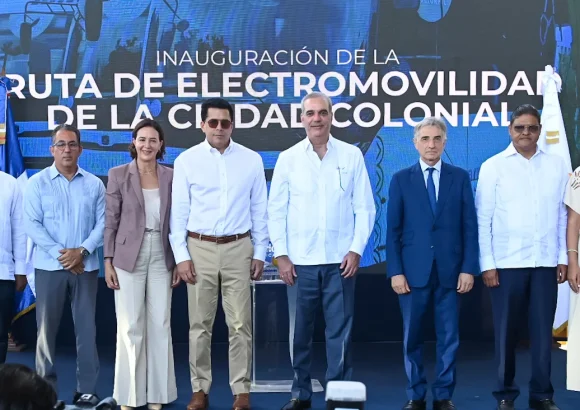
Abinader inaugurates restored Alcázar de Colón Museum and new Electric Route in Colonial City
On a pivotal Monday for cultural preservation and sustainable development in the Dominican Republic, President Luis Abinader officially opened two landmark projects in Santo Domingo’s Colonial City: the fully renovated Alcázar de Colón Museum and the newly launched Colonial City Electromobility Route. These dual initiatives mark a major milestone in the ongoing, multi-partner revitalization of one of the Caribbean’s most historically significant urban districts, bringing together long-term heritage conservation goals with forward-thinking climate-friendly transportation policy.
Funded through a collaborative partnership between the Dominican government, the Inter-American Development Bank (IDB) and the European Union, the projects sit at the intersection of cultural tourism, urban renewal and climate action. During the inauguration ceremony, President Abinader emphasized that protecting the nation’s unique historical legacy is a core national priority, noting that the newly restored museum will function as more than a tourist attraction – it will serve as a dynamic educational space welcoming Dominican citizens, local students and international visitors alike.
Detailed breakdown of the museum restoration project reveals the scale of investment in the historic site. Dominican Republic’s Ministry of Tourism poured RD$100 million into core structural and restoration work, while the IDB contributed an additional US$3 million to develop cutting-edge new exhibits. Beyond the museum itself, the broader revitalization program includes planned and ongoing restoration work for dozens of other historic sites across the Colonial City, including centuries-old churches, civic buildings and underused public spaces.
For the Alcázar de Colón Museum, the renovation was far more than a cosmetic refresh. The work included comprehensive infrastructure sanitation to address longstanding structural risks, targeted archaeological research that uncovered new insights into the site’s centuries-long history, the integration of immersive digital technology to engage modern visitors, and a complete redesign of the museum’s layout and curation to enhance the overall visitor experience.
Alongside the museum reopening, authorities launched the pilot Electromobility Route, a first-of-its-kind sustainable transit system tailored to the unique needs of the Colonial City’s residents and the 1.2 million+ annual visitors that travel to the district each year. The project launched with five fully electric buses, purpose-built charging infrastructure and major upgrades to the transit yard that houses the fleet.
Total investment in the electromobility project totals more than RD$169 million, with RD$71 million contributed by the European Union and RD$98 million coming from the IDB. The 12.4-kilometer route includes 31 stops strategically placed across the district and surrounding neighborhoods: 17 stops are located within the boundaries of the Colonial City to serve major historic sites and residential areas, while 14 additional stops connect the route to other parts of Santo Domingo, improving regional connectivity.
Every bus in the new fleet is designed for universal accessibility, with a 22-passenger capacity, built-in wheelchair ramps and reserved priority seating for people with disabilities, people with reduced mobility and senior citizens. Project organizers project that the route will serve more than 40,000 residents and visitors annually, delivering a wide range of public benefits beyond improved transit access. The shift from fossil fuel-powered buses to electric vehicles is expected to cut local transport emissions, improve neighborhood air quality, reduce noise pollution in the dense historic district, and set a benchmark for energy-efficient public transit across the Caribbean.
The new service will be operated directly by the Dominican state-owned transit company OMSA, with regulatory oversight handled by the national transportation institute INTRANT. In an additional announcement during the inauguration event, Tourism Minister David Collado confirmed that the Ministry of Tourism has already approved plans to acquire five more electric buses to expand the route’s reach and capacity in the near future, responding to projected demand for the service.
Both the museum restoration and the electromobility route are core components of a larger, comprehensive 10-year development program for the Colonial City. The program’s overarching goals focus on three key pillars: restoring the district’s irreplaceable historic cultural spaces, upgrading affordable housing for long-term local residents, and expanding accessible, sustainable mobility options that benefit both the local community and the growing tourism economy.
-
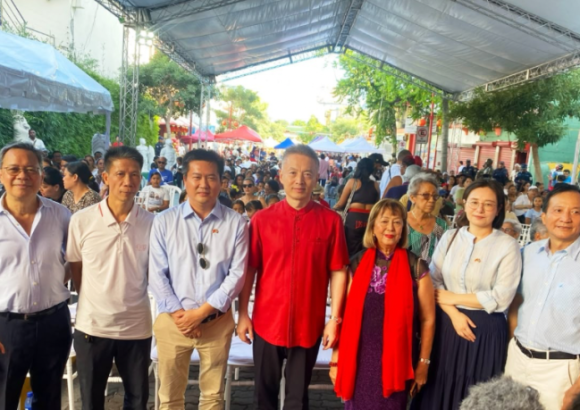
Santo Domingo’s Chinatown hosts Mid-Autumn Festival celebrating Chinese culture
On a recent gathering in the heart of Santo Domingo’s historic Chinatown, hundreds of attendees spanning the local Chinese community, diplomatic officials, local Dominican families, small business owners and non-profit representatives came together to mark the centuries-old traditional Mid-Autumn Festival, turning the annual cultural event into a vibrant celebration of shared history and growing bilateral connection between the Dominican Republic and China.
Organized jointly by two leading local community groups — the Flor Para Todos Foundation and the Chinese Colony Center in the Dominican Republic — the celebration drew high-profile participation, including Chinese Ambassador to the Dominican Republic Chen Luning, leadership from the Fujian General Chamber of Commerce, and delegates from multiple Chinese community associations active across the country.
Leading the opening remarks for the event was Rosa NG, who serves as president of the Flor Para Todos Foundation and is widely recognized as the founding visionary of Santo Domingo’s modern Chinatown. In her address, NG centered the deep roots of Chinese presence in the Dominican Republic, tracing the community’s lineage back more than 160 years to the first wave of immigrants who arrived on Dominican shores.
NG reflected on the origins of the community, noting that the earliest Chinese settlers fled poverty and widespread conflict in their home country to seek new economic opportunity in the Dominican Republic. Over generations, she emphasized, the core values that carried those first immigrants — hard work, mutual solidarity, personal discipline, and a deep commitment to family unity — have remained the foundation of the community’s growth and contribution to Dominican national life.
Unlike closed ethnic enclaves that exist in many global cities, Santo Domingo’s Chinatown has intentionally evolved as a cross-cultural meeting ground for all residents and visitors, NG explained. Today, the bustling corridor stands as a one-of-a-kind multicultural destination where traditional Chinese customs, authentic Asian gastronomy, local Dominican commerce, and cross-cultural public events merge to create a shared public space that welcomes everyone.
This year’s Mid-Autumn Festival embodied that inclusive spirit through a full slate of programming that showcased Chinese cultural heritage for attendees of all backgrounds. The event featured energetic traditional lion and dragon dance performances, live sets of classic Chinese folk music, interactive children’s cultural activities, and a series of art and craft displays that highlighted different regional traditions from across China.
Beyond the celebration of culture, organizers also used the event to highlight the diverse contributions Chinese community organizations have made to broader Dominican society, extending far beyond the business sector. These contributions range from ongoing cultural education initiatives to targeted community assistance programs that provide support to vulnerable Dominican groups regardless of ethnic background.
As a prominent example of the deep culinary and cultural fusion that has developed between the two communities, NG pointed to the widespread popularity of local Chinese-owned eateries known colloquially across the Dominican Republic as “pica pollos” — a beloved local dining staple that blends Chinese cooking techniques with Dominican flavor preferences.
In a nod to the Mid-Autumn Festival’s traditional focus on generosity and shared goodwill, the Fujian General Chamber of Commerce donated hundreds of gifts to local community members, distributed during the event to attendees and families in the surrounding neighborhood. Many of the day’s activities were also designed to strengthen connections between longstanding community members and newer arrivals to the area.
For context, the Mid-Autumn Festival, also widely referred to as the Moon Festival, is one of the most important traditional holidays in Chinese culture, historically centered on family reunions, expressions of gratitude for the year’s harvest, and the sharing of good wishes for health and prosperity among loved ones. In Santo Domingo, the annual celebration has gradually expanded beyond the Chinese community to become a major public event that promotes cross-cultural exchange and deepens people-to-people ties between the Dominican Republic and China.
Looking ahead to future projects, NG used the festival as a platform to announce new community-led plans to revitalize underused public spaces and upgrade aging infrastructure in the neighborhoods surrounding Chinatown. The revitalization project aims to create larger, more accessible public venues to host expanded cultural activities, including future Chinese New Year celebrations that can draw even more attendees from across Santo Domingo.
As the day’s events came to a close, organizers closed the celebration with a unified message of cross-community unity and ongoing cooperation, reaffirming the central role that Santo Domingo’s Chinatown plays as a vital cultural and social hub for both the Chinese community and the broader Santo Domingo public.
-

Dominican Chocolate Festival to showcase more than 18 local brands in Santiago
The Dominican Republic’s beloved annual celebration of artisanal chocolate is gearing up for its sixth iteration, with the Dominican Chocolate Festival scheduled to open its doors at Santiago’s Ágora Santiago Center on October 17 and 18. This two-day immersive event is designed to connect local chocolate producers, emerging and established brands, and chocolate lovers from across the country and beyond, shining a bright spotlight on the nation’s fast-growing cocoa and chocolate sector.
Over the course of the weekend, more than 18 homegrown Dominican chocolate brands will set up exhibits at the venue, showcasing a wide range of premium treats crafted entirely from locally harvested cocoa. Beyond product displays, the festival is packed with interactive experiences for attendees of all ages: guided chocolate tastings that let visitors sample distinct flavor profiles from different growing regions, live cooking demonstrations that show how to incorporate Dominican chocolate into innovative dishes, fun hands-on activities for young attendees, and educational workshops that break down every step of cocoa cultivation and chocolate production, from bean to bar.
A key highlight of this year’s event is a special recognition ceremony honoring the Dominican Association of Chocolate Makers (Adochoco) and all participating brands for their ongoing work to strengthen and grow the country’s chocolate industry on both domestic and global stages.
The 2025 festival arrives at a moment of significant expansion for the Dominican cocoa sector, which has carved out a growing reputation in international markets, particularly for its high-quality organic output. New data from the Dominican Ministry of Agriculture shows that the country produced a total of 85,300 tons of cocoa in 2025, with more than half – 51% of the total harvest – classified as certified organic. As of 2025, the sector counts roughly 42,000 registered cocoa producers across the country, with approximately 2.75 million tareas of farmland cultivated under sustainable agroforestry systems, a practice that supports both biodiversity and long-term crop health.
Organizers outline that the core mission of the festival goes beyond celebration: it aims to bridge the gap between consumers and the full cocoa production chain, giving much-deserved greater visibility to Dominican chocolatiers and their value-added products made from 100% national cocoa. The event is a collaborative effort between the Dominican Environmental Consortium, International Trade Center, Ágora, Mediáticos Comunicación Consultores, and the Ministry of Industry, Commerce and MSMEs (MICM), with additional backing from industry partners Cortés Hermanos, Zorzal Cacao, the Dominican Association of Chefs, and the Ministry of Agriculture.
-
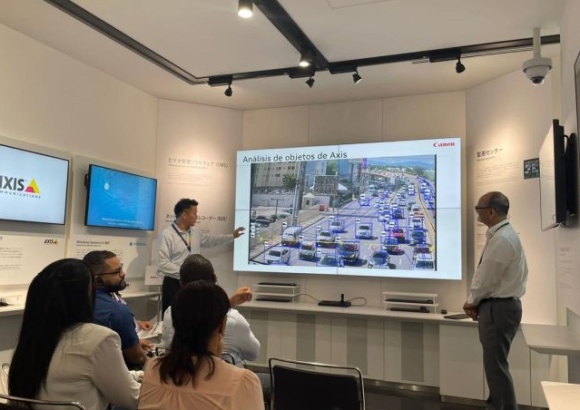
JICA advances projects to improve urban mobility in Greater Santo Domingo
In a push to transform urban transportation across Greater Santo Domingo, the Japan International Cooperation Agency (JICA) has deepened its collaborative ties with local Dominican institutions, centering its work on boosting traffic management capabilities, advancing digital transport innovation, upgrading road infrastructure, and building a transport system that is safer, more efficient, widely accessible, and environmentally sustainable.
The partnership launched in 2025 as a three-year technical cooperation initiative, carried out jointly with the Dominican Republic’s National Institute of Transit and Land Transportation (Intrant), with a core focus on modernizing urban mobility through intelligent transport systems.
One of the most critical pillars of this project is the creation of a comprehensive master plan for intelligent transportation systems (ITS). This strategic framework is designed to unlock the full potential of digital technology and real-time data to streamline day-to-day traffic management and deliver data-backed insights for long-term transportation decision-making. Beyond planning, the initiative includes hands-on capacity building for local technical teams, on-the-ground testing of innovative pilot programs, and the development of interactive digital monitoring dashboards. These tools will enable transport officials to track live traffic conditions, pinpoint bottlenecks, and design targeted interventions to cut down on persistent gridlock across the metropolitan area.
Inclusivity is also a central priority of the partnership. JICA is actively advocating for the integration of universal design principles into all urban mobility planning efforts, a change that will significantly improve access to public and private transport for people living with disabilities and senior residents who have long faced barriers to movement across the city.
The collaboration extends beyond digital traffic solutions to address long-standing gaps in physical infrastructure, with a specific focus on the region’s bridge network. JICA is providing technical and financial support for feasibility studies for proposed new bridge construction projects that are expected to drastically cut congestion by distributing road traffic more evenly across the metropolitan area. Alongside new developments, the agency has also scheduled comprehensive structural assessments for dozens of existing bridges, including several that have been flagged as being in critical structural condition.
These assessment projects will not only evaluate immediate needs for maintenance, structural reinforcement, and seismic retrofitting to improve the infrastructure’s resilience against natural disasters, but also include specialized training for local engineering and infrastructure management teams. This capacity building is designed to equip Dominican professionals with the skills needed to manage and maintain critical transport infrastructure independently over the long term.
Kota Sakaguchi, JICA’s Resident Representative in the Dominican Republic, outlined the core goals of the multifaceted partnership, noting that all initiatives are aligned to cut chronic congestion, elevate road safety standards for all road users, expand accessible transport options for marginalized groups, and strengthen the country’s capacity to manage urban infrastructure. He added that the cooperation goes beyond addressing immediate transport challenges that currently disrupt daily life in Greater Santo Domingo, with a long-term vision of building a more inclusive, climate-resilient metropolitan region that is fully prepared to meet evolving mobility demands in the decades ahead.
-
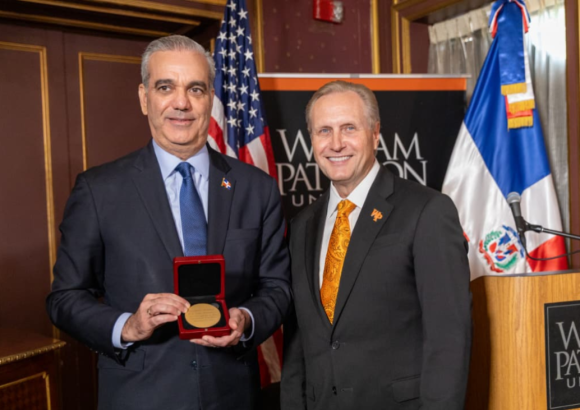
Abinader accepts William Paterson University’s Presidential Meda
In a formal ceremony held on the campus of William Paterson University in New Jersey, Dominican Republic President Luis Abinader was awarded the institution’s Presidential Medal, the highest honor the university bestows on distinguished public figures. First Lady of the Dominican Republic Raquel Arbaje accompanied President Abinader for the honorary event.
Dr. Richard J. Helldobler, president of William Paterson University, opened the ceremony by outlining the rationale for the recognition. He explained that the medal celebrates Abinader’s decisive leadership and unwavering dedication to serving Dominican communities both at home and across the globe, including thousands of Dominican people holding dual citizenship in the United States.
Helldobler went on to detail the breadth of progress the Abinader administration has delivered across multiple critical policy sectors. He called out specific advances, from strengthening institutional transparency and boosting national citizen security to advancing a national energy transition and expanding digital transformation across the country. The university president also highlighted progress in upgrading urban mobility infrastructure, expanding universal access to clean drinking water, modernizing the national electrical grid, and ramping up environmental protection initiatives. Beyond domestic policy, he noted the Dominican Republic has emerged as an increasingly attractive destination for foreign direct investment, expanded women’s equal access and participation in the national labor market, and achieved a robust, inclusive economic recovery in the years following the global COVID-19 pandemic.
Helldobler also emphasized the deep, long-standing ties between William Paterson University and the large Dominican community rooted in New Jersey, noting the institution has built sustained collaborative partnerships with a range of Dominican educational, cultural and governmental organizations and leaders over decades.
After accepting the medal, Abinader addressed the assembled audience, framing the honor not as a final recognition but as a renewed commitment to upholding the core governance principles that have defined his administration: efficiency, honesty, and full transparency in public office.
A central focus of Abinader’s remarks centered on strengthening democratic governance in the Dominican Republic. He identified the consolidation of democratic institutions as the defining legacy of his time in office, and stressed the critical importance of placing clear limits on presidential reelection to safeguard democratic stability.
Abinader explained that despite winning reelection in the 2024 general election and securing a governing majority in the national congress – a political alignment that could have allowed his administration to pursue constitutional changes to open the door for additional presidential terms beyond current limits – his administration instead backed reforms that make it harder to amend the constitution to extend executive term limits.
Reiterating his long-held stance, the president emphasized that peaceful, regular alternation of power is a non-negotiable foundation of any healthy democracy. He confirmed once again that he will step down from office and leave power peacefully when his current second term concludes in 2028, honoring the country’s constitutional term limits.
Abinader also used the occasion to highlight another upcoming milestone for the Dominican nation: the country is set to receive official United Nations Zero Hunger certification on October 12, an achievement he called a transformative win for the country’s development and commitment to ending food insecurity.
Closing his remarks, Abinader expressed profound pride in the vibrant Dominican community based in New Jersey and across the United States. He urged all Dominicans living abroad to carry forward the country’s positive reputation through their daily work and actions, serving as cultural and civic ambassadors for their home nation.
-
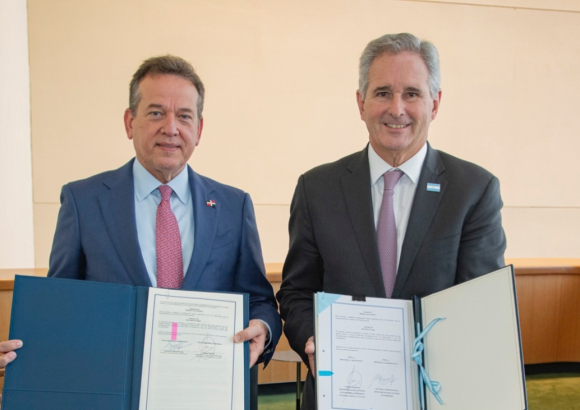
Dominican Republic and Argentina sign agreement to expand air connectivity
Against the backdrop of the 81st United Nations General Assembly High-Level Week, a pivotal new air transport pact between the Dominican Republic and Argentina has been finalized, marking a major step forward in deepening bilateral ties across key economic sectors. The historic deal was signed by Dominican Foreign Minister Víctor “Ito” Bisonó and Pablo Quirno, Argentina’s Minister of Foreign Affairs, International Trade and Worship, on the global stage of New York’s annual UN gathering.
This landmark Air Services Agreement establishes a modern, flexible regulatory framework designed to unlock expanded air connectivity between the two Caribbean and South American nations, opening new avenues for growth in tourism, cross-border trade, and foreign direct investment. Unlike restrictive older aviation pacts, the new framework grants both nations the right to appoint one or multiple air carriers to operate international services between their territories. Carriers will also enjoy broad autonomy to adjust flight frequencies and seating capacity based on real-time market demand, eliminating the rigid regulatory limits that often stifle route development.
The agreement’s scope extends to both regularly scheduled commercial flights and one-off charter operations, while also explicitly permitting codeshare partnerships and other collaborative commercial arrangements between airlines from both countries. It additionally lays out clear, standardized rules covering critical operational areas including aviation safety oversight, consumer protection for airline passengers, ground handling services, and fair competition between carriers, ensuring a level playing field for all operators.
Under the agreed route network structure, airlines designated by either country will have the right to operate between any point in the Dominican Republic and any point in Argentina, with additional provisions allowing carriers to add intermediate stopovers in third countries and continue onward to other destinations beyond both contracting nations, in line with the agreement’s terms.
In a statement following the signing, the Dominican Ministry of Foreign Affairs emphasized that the deal is a core component of the national government’s broader economic diplomacy strategy. By strengthening international air connections and creating new, accessible opportunities for the country’s productive industries, the agreement aligns with the government’s core economic goals: expanding export market access, attracting targeted foreign investment, and growing the Dominican Republic’s key tourism sector.
-
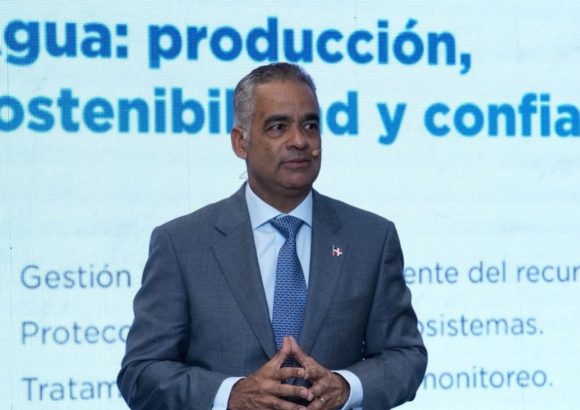
Energy and Mines Minister to address Dominican Republic’s rare earth potential in Washington
As global demand for critical raw materials and cross-border energy connectivity accelerates, Dominican Republic’s Energy and Mines Minister Joel Santos is heading a high-profile delegation to 2026 Dominican Week in Washington, D.C., where he will put the Caribbean nation’s untapped potential in rare earth elements and critical minerals at the center of international dialogue. A core highlight of Santos’ agenda will be his keynote address at the Inter-American Development Bank (IDB) event titled *Rare Earths and Critical Minerals: A Strategic Opportunity for the Dominican Republic*, where he will outline the country’s ongoing work to map and evaluate potential mineral deposits, as well as its policy push to build collaborative, responsible development partnerships with global stakeholders. This engagement comes amid a sharp uptick in global interest in the Dominican Republic’s mineral reserves, a shift driven by the nation’s recent efforts to forge international cooperation frameworks. Just recently, the Dominican government and the United States formalized a joint agreement focused on bolstering resilient critical mineral and rare earth supply chains, attracting private sector investment, and advancing mutually beneficial development projects. Parallel to that, the Dominican Republic and the European Union have also moved forward with a pact to fund and support geological studies of rare earth elements, gallium, and scandium embedded in bauxite reserves located in the Ávila Mining Fiscal Reserve in Pedernales, a project that could unlock significant new resource potential for the region. Beyond mineral development, Santos will also contribute to a high-level panel discussion focused on the transformative Hostos Project, an ambitious infrastructure initiative that plans to build a submarine electricity interconnection between the Dominican Republic and Puerto Rico across the Mona Passage. Developed by the Caribbean Transmission Development Company, the project calls for a high-capacity undersea cable that will be able to transmit up to 700 megawatts of power between the two territories. The panel will unpack the far-reaching implications of the proposed interconnection, including the potential integration of the two regional electricity markets, improvements in cross-border energy security, the expansion of usable generation capacity, and the long-term goal of strengthening holistic energy interconnection across the broader Caribbean region.