标签: Dominican Republic

多米尼加共和国

  • Dominican Republic joins Caribbean plan to diversify cruise tourism

    Dominican Republic joins Caribbean plan to diversify cruise tourism

    The global cruise industry has been grappling with mounting financial strain driven by soaring and unpredictable fuel prices, and three major Caribbean tourism destinations – the Dominican Republic, Jamaica, and the Bahamas – have teamed up to roll out a coordinated regional strategy designed to reinvent and strengthen the sector, industry outlet Travel And Tour World reports.

    Fuel oil typically makes up between 15% and 25% of a cruise line’s total operating expenses, meaning the recent volatility in global energy markets has hit operator bottom lines disproportionately hard. To offset these rising costs and preserve profit margins, major cruise companies have already begun shifting their operational models: they are streamlining voyage routes, cutting back on the number of port stops per trip, and shortening average itinerary lengths. Traditional 7 to 10-day cruises that once dominated Caribbean offerings are increasingly being replaced by shorter 3 to 5-day getaways, a change that has forced regional destination providers to adapt to new industry norms.

    In response to this shifting landscape, the three participating nations are leaning into collective action to build long-term resilience for their shared cruise tourism sector. The multi-pronged strategy includes investments in new purpose-built cruise port infrastructure, upgrades to existing on-shore visitor attractions, and the implementation of aligned regional policies crafted to draw more cruise lines and retain passenger volumes. Proponents of the plan note that deeper cooperation will also give the region greater flexibility to adjust routes dynamically in response to ongoing fluctuations in the global energy market, a key advantage over individual uncoordinated adaptations.

    Cruise tourism has long stood as one of the foundational economic pillars for Caribbean economies, generating billions in annual revenue, supporting hundreds of thousands of local jobs, and sustaining widespread small business activity across coastal communities. But the sector’s heavy reliance on fossil fuel-powered maritime transport leaves it uniquely exposed to external global energy shocks, a vulnerability that has underscored the urgent need for long-term structural change across the region.

    For the Dominican Republic specifically, cruise activity is the lifeblood of key coastal tourism hubs including Puerto Plata and La Romana, where every ship’s arrival ripples through local economies, supporting everything from street vendors and tour operators to hotels and transportation services. Dominican tourism authorities have already prioritized expanding local visitor attractions and upgrading port facilities to keep the country competitive in a shifting market. Through its participation in this regional diversification push, the nation aims to lock in its status as a core stop on major Caribbean cruise routes, while building the flexibility needed to thrive amid a global operating environment defined by persistent energy uncertainty and rising maritime transportation costs.

  • Abinader named keynote speaker at World Free Zones Congress in Panama

    Abinader named keynote speaker at World Free Zones Congress in Panama

    On Tuesday, Dominican Republic President Luis Abinader will embark on an official trip to Panama, where he is set to take center stage at the 2024 World Free Zones Congress. Scheduled to run across May 12 and 13, the global gathering will feature Abinader as the event’s keynote speaker, with a core mission to position the Caribbean nation as a premier investment hub for global companies eyeing expansion in free zone operations, advanced logistics, and high-value manufacturing.

    Beyond his keynote address, Abinader has planned a full schedule of targeted engagements with top international corporate executives and leading figures from Panama’s local business community. These one-on-one and group meetings are designed to highlight the Dominican Republic’s competitive advantages in specialized free trade zone sectors, from favorable regulatory frameworks to strategic geographic positioning, and drum up new foreign capital commitments for the country.

    This investment outreach forms a central plank of the Abinader administration’s broader economic strategy, which aims to steadily boost foreign direct investment inflows and cement the Dominican Republic’s standing as one of the most dynamic and fast-growing economies in Latin America.

    Abinader will also hold a formal bilateral meeting with his Panamanian counterpart, President José Raúl Mulino, to discuss bilateral relations and potential cross-border economic cooperation between the two nations. He will be joined on the trip by a high-level official delegation including Eduardo Sanz Lovatón, Dominican Minister of Industry, Commerce and MSMEs, Biviana Riveiro, and Dominican Ambassador to Panama Roberto Salcedo.

  • Dominican Republic renews U.S. access to Las Américas Airport and San Isidro Air Base

    Dominican Republic renews U.S. access to Las Américas Airport and San Isidro Air Base

    Santo Domingo, Dominican Republic – The Caribbean nation has reauthorized temporary access for United States aircraft and military personnel to two key air facilities, Las Américas International Airport and San Isidro Air Base, as a core component of bilateral security cooperation under the multilateral Shield of the Americas initiative.

    Under the terms of the renewed authorization, U.S. aircraft are permitted to conduct overflights, land, and park at the two sites, with all activity operating under the direct supervision of Dominican national authorities. Local security officials have emphasized that the agreement is designed to bolster cross-border and regional security capacity, boosting joint efforts including aerial surveillance operations, real-time intelligence sharing, specialized training programs for Dominican personnel, and targeted technical assistance.

    These collaborative measures are focused on addressing persistent threats to the Dominican Republic and the broader Caribbean region, including illicit drug trafficking, transnational organized criminal networks, and other evolving cross-border security risks.

    As an addendum to the broader bilateral security framework, the Dominican government also signed a non-binding memorandum of understanding that creates a pathway for the temporary, exceptional entry of a small group of third-country nationals. The provision only applies to transiting travelers with no prior criminal records, and places strict limits on the number of individuals eligible for this arrangement.

    In a parallel move to strengthen national security infrastructure, the Dominican government is currently rolling out modernization upgrades to airport and border security systems. The upgrades integrate cutting-edge biometric identification technologies and new digital verification tools, which officials say will not only enhance domestic and regional security but also lay the groundwork for improved air connectivity and growth in the country’s critical tourism sector in the long term.

  • Valle Nuevo National Park remains public, Environment Ministry clarifies

    Valle Nuevo National Park remains public, Environment Ministry clarifies

    SANTO DOMINGO – Recent circulating speculation around the privatization of the Dominican Republic’s iconic Valle Nuevo National Park has been formally debunked by the nation’s Ministry of Environment and Natural Resources, which confirmed the protected conservation area remains fully public and open to all visitors.

    Tourists and local outdoor enthusiasts can still access and explore the full expanse of the park by paying the standard RD$150 entry fee, the same rate that has been in place for general admission for years.

    The confusion stemmed from a newly implemented separate camping fee that applies exclusively to a newly zoned section of the park called the “Garden of Eden”, a purpose-built area designed specifically to organize and accommodate overnight camping stays. Ministry authorities explained that the new zoning and fee structure was created to address longstanding issues with unregulated camping, which had gone unmonitored for years and caused measurable harm to the park’s fragile native ecosystem.

    First launched in 2021, the zoned camping initiative was developed to advance the goal of sustainable recreation across the country’s protected areas. The Garden of Eden operates with low-impact infrastructure, integrated environmental education programming for visitors, and strictly controlled visitor capacity to limit ecological disruption.

    Officials emphasized that the site operates under an ecotourism concession model, a framework that permits licensed private operators to manage visitor services within the zone – but does not in any way transfer ownership of the public land to private entities. Valle Nuevo National Park remains fully public property under continuous government oversight, and the new camping model is just one part of a broader national strategy to improve conservation outcomes and visitor management across the Dominican Republic’s National System of Protected Areas.

    This concession model is not new to the country’s protected park network. Several other well-known Dominican conservation and recreation sites already operate under the same structure, including Cotubanamá National Park (which encompasses the popular tourist destination Saona Island), Catalina Island, and Damajagua Falls.

  • Public Works announces temporary closure of Tiradentes Avenue overpass

    Public Works announces temporary closure of Tiradentes Avenue overpass

    A major infrastructure upgrade project in Santo Domingo is set to trigger a temporary full traffic shutdown on a key urban overpass, with local transportation authorities releasing detailed timelines and contingency context for the upcoming disruption.

    The country’s Ministry of Public Works and Communications confirmed that the overpass linking two of the city’s busiest thoroughfares, Tiradentes Avenue and 27 de Febrero Avenue, will be closed to all vehicle traffic starting at 10:00 p.m. on Saturday, May 2. The shutdown will extend through the weekend, with the overpass scheduled to reopen to motorists by 4:00 a.m. the following Monday.

    In a public statement addressing the closure, project leaders noted that the decision to concentrate all rehabilitation work within an overnight weekend window was a deliberate strategic choice. By scheduling the entire intervention during off-peak hours, authorities aim to strike a balance between advancing critical infrastructure updates and limiting the impact of the shutdown on the city’s daily commuting routines. This timing also creates a safer working environment for construction crews carrying out rehabilitation tasks, while reducing the risk of accidents that could occur if work progressed alongside active heavy traffic.

    Public works officials acknowledged that even with the carefully planned weekend timing, the temporary restriction will likely force thousands of regular drivers to adjust their travel routes over the closure period. However, they stressed that the long-term benefits of the project far outweigh the short-term inconvenience. The ongoing rehabilitation work is designed to address aging infrastructure, boost overall road safety for all users, extend the service life of the overpass, and improve the long-term functionality of this key urban connection for years to come.

  • CNTT President warns employment growth is concentrated in informal work

    CNTT President warns employment growth is concentrated in informal work

    On the occasion of International Workers’ Day, the top leader of the Dominican Republic’s largest transport workers’ organization has drawn public attention to a worrying discrepancy behind the country’s nominal employment gains over the last two years. Juan Marte, president of the National Confederation of Transport Workers (CNTT), revealed that total employment across the nation has expanded by roughly 5 percent since 2022 – but the overwhelming majority of these new positions have been created in the unregulated informal sector, not in formal, protected work arrangements.

    Marte specifically highlighted unregulated motorcycle taxi services as one of the single biggest drivers of informal job growth in the country. A large portion of the Dominican Republic’s registered and unregistered motorcycles are now deployed for commercial passenger transport, he explained, absorbing tens of thousands of workers who cannot find formal employment opportunities. Beyond motorcycle taxis, Marte outlined that the entire domestic transport sector – including licensed taxis, urban public transit, intercity bus routes, freight logistics, and other passenger services – generates approximately 200,000 total jobs across both formal and informal segments of the economy.

    A key point of concern raised by Marte is the rapidly growing share of immigrant workers filling informal transport roles, especially in the motorcycle taxi segment. He added that this pattern of over-reliance on informal immigrant labor extends beyond the transport sector, noting that core Dominican industries including agriculture, construction, and commercial food production have increasingly turned to non-domestic workers to fill labor gaps left by the absence of formal, attractive working conditions for local citizens.

    In his remarks centered on International Workers’ Day, Marte launched sharp criticism of the Dominican government for failing to implement targeted policy measures to protect formal workers and expand the number of regulated formal employment opportunities. He argued that systemic gaps in state support and labor regulation have pushed thousands of low-income Dominican citizens into unstable, high-risk informal work that offers little to no social protection or labor rights. Marte’s public comments echo widespread concerns shared by labor analysts and advocacy groups across the Dominican Republic, where informal labor has long persisted as one of the most defining structural characteristics of the national workforce.

  • Severe weather keeps four provinces on red alert in Dominican Republic

    Severe weather keeps four provinces on red alert in Dominican Republic

    A slow-moving atmospheric trough continues to dump relentless heavy rainfall across large swathes of the Dominican Republic, triggering a cascade of natural hazards that have left thousands displaced and critical infrastructure damaged, the nation’s Emergency Operations Center (COE) has confirmed. As of the latest official update, a three-tiered alert system remains in place, with four northern provinces – Monte Cristi, Puerto Plata, Valverde and Santiago Rodríguez – placed under the highest-level red alert, 15 additional regions under yellow alert, and a further seven under precautionary green alert.

    The unrelenting downpour has spawned a range of hazards across both urban and rural communities. Flash flooding has inundated low-lying neighborhoods and farmland, multiple rivers and small streams have burst their banks, and saturated hillsides have given way to landslides in scattered settlements across the affected zones. Official damage assessments paint a grim picture of the disaster’s human toll: more than 5,000 local residents have been forced to evacuate their homes to emergency shelters, while over 1,000 residential properties have sustained impacts ranging from minor flood damage to total destruction. Dozens of homes have suffered major structural compromise, and four dwellings have been completely lost to the weather event.

    Transportation networks have been heavily hit, with damaged roads and bridges cutting off access to 42 isolated communities that are yet to regain connection to surrounding areas. The nation’s water distribution network has also taken significant damage: 22 regional aqueducts are currently out of operation, cutting running water service to more than 300,000 registered users across the country. In response to the unfolding crisis, emergency response teams have been deployed across the hardest-hit zones, with 15 residents rescued from floodwaters in Santiago Rodríguez alone as of the latest report.

    Authorities have issued urgent public advisories warning all residents to avoid attempting to cross flooded roadways or swollen rivers, even if crossings appear passable. Drivers have been urged to reduce speeds and exercise extreme caution, as ongoing rainfall continues to cut visibility on roads across the alert zones. Meteorologists with the COE have extended warnings for continued precipitation across much of the nation in the coming days, with officials warning that the risk of further flooding and landslides will remain elevated until the trough system moves out of the region.

  • Senate approves first reading of missing persons alert system bill

    Senate approves first reading of missing persons alert system bill

    In a key legislative move aimed at addressing the critical issue of missing persons across the country, the Senate of the Dominican Republic has greenlit the first reading of a bill that would establish the National Alert System, known locally as ALERTARD. The proposed framework, which originated in the country’s Chamber of Deputies before moving to the upper legislative chamber, is built to create a unified, coordinated response mechanism that cuts through bureaucratic delays to accelerate search and rescue operations when someone goes missing.

    At its core, the legislation is designed to embed clear, standardized prevention and search protocols that guarantee equal treatment for every missing person, explicitly banning any discrimination based on nationality, racial identity, gender, age, religious belief, political affiliation, or socioeconomic status. A defining principle written into the bill mandates that all investigations into missing persons cases must begin with the working presumption that the individual is still alive, no matter the circumstances of their disappearance, how long they have been missing, or where they were last seen.

    Special emphasis is placed on protecting the country’s youngest populations: the bill carves out urgent priority status for missing children and adolescents, requiring law enforcement and government agencies to activate immediate, rapid action to locate and secure any missing or abducted minor. In cases where there is evidence of potential harm to the missing person, the Public Ministry and Dominican National Police are required to operate under the explicit assumption that the individual faces imminent risk, triggering even faster, more resource-intensive response efforts. Once fully enacted, supporters say ALERTARD will fill a longstanding gap in the country’s ability to respond to missing persons cases, ensuring consistent, equitable, and life-saving action across all regions of the Dominican Republic.

  • Red Cross deploys emergency teams and carries out evacuations

    Red Cross deploys emergency teams and carries out evacuations

    Heavy, sustained rainfall has triggered destructive flooding across low-lying, high-risk communities in multiple Dominican Republic provinces, prompting the Dominican Red Cross to roll out full-scale emergency response operations to protect vulnerable residents. The national humanitarian organization has mobilized a full contingent of rapid-response teams, trained volunteers, and technical specialists across the affected regions, with two core missions: delivering immediate support to households impacted by the floodwaters, and maintaining constant surveillance of areas at the highest risk of worsening disaster conditions.

    One of the hardest-hit areas so far is the municipality of Montellano, located in the northern coastal province of Puerto Plata. As the Camú River continues to swell beyond safe levels, response teams are executing organized preventive evacuations for residents in three high-risk sectors: Los Ciruelos, El Saman, and Villa Melesia. Alongside evacuation efforts, teams are distributing essential supplies and providing on-the-ground support to community members who have been displaced or affected by rising water. Local disaster authorities remain on high alert, as hydrological data shows the water flow in the river is continuing to climb, increasing the risk of more severe flooding in the coming hours.

    Beyond Puerto Plata, the Dominican Red Cross is sustaining coordinated emergency operations in five additional provinces: Santiago Rodríguez, Espaillat, María Trinidad Sánchez, Duarte, and El Seibo. All operations are carried out in close partnership with the country’s national Emergency Operations Center and other specialized disaster response agencies, to ensure efficient, coordinated delivery of aid across all affected regions. In a public advisory, the Dominican Red Cross has issued a clear warning to residents across at-risk areas: anyone living in proximity to rivers, streams, or zones with a history of repeated flooding is urged to strictly follow all official safety guidance, and to never attempt to cross flooded roadways or swollen waterways, which carry hidden risks of strong currents and structural collapse.

  • Dominican Republic secures EU support for drug prevention initiatives

    Dominican Republic secures EU support for drug prevention initiatives

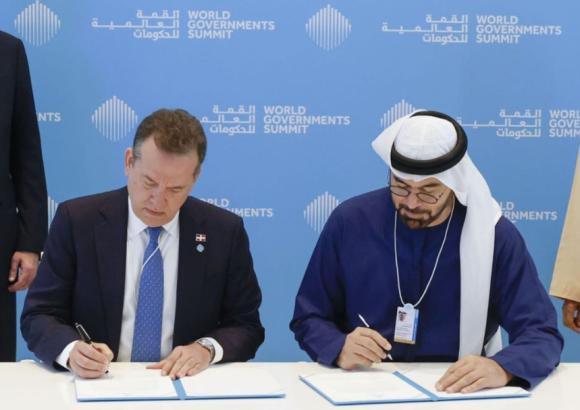
    PUNTA CANA — The Dominican Republic’s National Drug Council (CND) has solidified a landmark inter-institutional cooperation agreement with the European Union through the COPOLAD III program, opening a new chapter of coordinated action to advance evidence-based drug policy across the Caribbean and Latin America. Backed by targeted European technical expertise and dedicated financial investment, the partnership is designed to strengthen regional and national capacity to address evolving drug-related challenges.

    The formal signing ceremony took place alongside the fourth annual gathering of the COPOLAD III initiative, a high-profile international forum that brought together more than 170 drug policy specialists and official delegates from over 60 nations spanning Latin America, the Caribbean and the European continent. The agreement was signed by two key leaders: Alejandro de Jesús Abreu, who serves both as president of the CND and co-president of the EU-CELAC Mechanism, and Olivier Luyckx, head of country programs for Latin America and the Caribbean at the European Commission’s Directorate-General for International Partnerships. A broad delegation of senior Dominican diplomatic and institutional officials also participated in the event, emphasizing that the collaboration marks a critical milestone for collective regional action on drug policy.

    Under the new framework, the partnership will roll out three high-priority initiatives tailored to meet the Dominican Republic’s specific needs while creating a replicable model for other regional nations. First, the alliance will conduct a nationwide, nationally representative survey of drug use among university students, generating actionable data to inform future policy design and ensure all regulatory and intervention efforts are rooted in real-world evidence. Second, the partnership will invest in expanding and strengthening the Dominican Republic’s Drug Policy Training School, which equips national and local decision-makers with the specialized skills and knowledge needed to implement effective drug policy. Third, the initiative will roll out an innovative social support program called the “Wings of Transformation” strategy, which focuses on providing critical resources and support to children whose parents are incarcerated on drug-related offenses. The program will launch as a pilot project at the Baní Women’s Penitentiary Center, with plans to scale the model across the entire country if the initial trial proves successful. Dominican officials noted that the partnership not only advances the country’s domestic drug policy goals but also reinforces its position as a regional leader in collaborative, holistic approaches to addressing drug challenges.