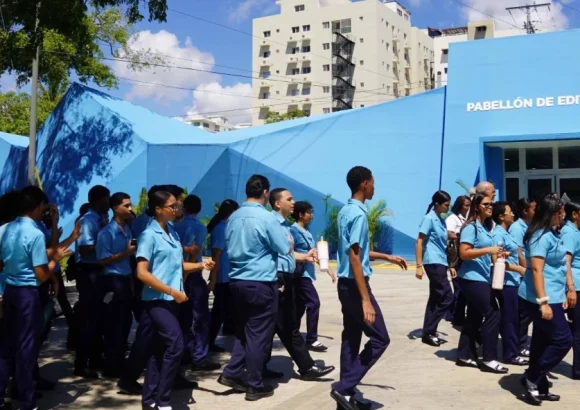
The 28th iteration of the Santo Domingo International Book Fair (FILSD) 2026 entered a bustling new phase of activity Wednesday morning, as rising visitor numbers and coordinated school group visits transformed the Juan Pablo Duarte Cultural Plaza venue into a lively hub of literary and cultural exchange.\n\nFrom the moment gates opened at dawn, the sprawling venue began filling with a diverse stream of guests: teenagers browsing graphic novel stands, older adults searching for nonfiction titles, and organized groups of K-12 students moving between pavilions as part of school-led educational activities. Organizers noted that school participation has been a key driver of the increased foot traffic, injecting far more energy into the fair grounds than the opening days saw.\n\nAs visitors wandered the rows of exhibitor stands exploring the thousands of titles on offer and signing up for scheduled talks, writing workshops, and author meet-and-greets, local reporters conducted casual interviews to gauge public opinion on this year’s edition. Most attendees praised the wide selection of books from both domestic and international publishers, and highlighted how events like the FILSD play a critical role in fostering a reading culture among younger generations.\n\nJunior Méndez, a 24-year-old attendee, told reporters he came to the fair specifically to uncover lesser-known historical narratives that rarely appear in mainstream bookstores. Echoing the views of many literary enthusiasts at the event, he emphasized that consistent reading is one of the most accessible tools for intellectual enrichment. “I think every person owes it to themselves to give reading a real chance,” Méndez explained. “You don’t have to force yourself through genres you hate—just find what sparks your curiosity and give that a shot.”\n\nRetired educator Ernesto Betancourt echoed that sentiment, sharing that he made regular trips to the book fair with his students throughout his decades-long teaching career, and still encourages young people to attend today regardless of their individual interests. “Even when I was working full-time in the classroom, I always prioritized bringing my classes here,” Betancourt recalled. “I pushed them to pick up books, explore new topics, and immerse themselves in all the culture this event has to offer.”\n\nFor all the positive feedback around the breadth of the 2026 fair’s publishing offerings, a number of attendees shared one common criticism: many book prices are higher than expected. Several visitors told reporters that elevated price points will likely prevent them from purchasing multiple titles during their visit, even when multiple books catch their eye. “I came in expecting more accessible pricing, since this is a public book fair meant to encourage reading,” said attendee Pablo Henríquez. “But honestly, a lot of these prices are higher than I see at regular commercial bookstores—it’s disappointing.”’
标签: Dominican Republic
多米尼加共和国
-
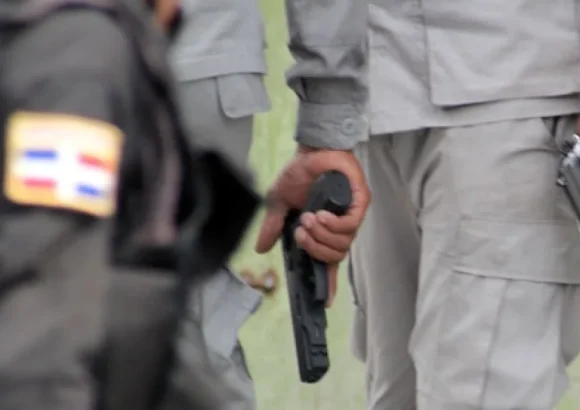
Dominican Republic reports rise in September gunfights
In the wake of a high-profile murder that sent shockwaves through Dominican society, a disturbing pattern of fatal police encounters has emerged, drawing condemnation from human rights advocates. Less than 24 hours after the country’s National Police confirmed that eight alleged criminals were shot and killed during separate gunfire exchanges across multiple regions of the Dominican Republic, human rights officials are sounding the alarm over a rapidly escalating death toll that far outpaces projections.
The most recent wave of police killings follows the murder of Zenaida Castillo, wife of renowned merengue singer Julián Oro Duro. That high-profile incident, which has already resulted in four arrests, shook public trust in law enforcement’s ability to keep communities safe, but human rights leaders say the response from police has raised even more pressing concerns.
Manuel María Mercedes, a representative of the Dominican Republic’s Human Rights Commission, reports that the official 8 fatalities in less than a day do not capture the full scale of the crisis. By his count, at least 31 people have been killed in police shootouts across the country already in September alone. When extended across the full calendar year, that figure jumps to 200 deaths linked to apparent exchanges of gunfire with police agents — a toll that Mercedes says has already far outpaced the projected total for 2025.
Mercedes has publicly called on Dominican President Luis Abinader to intervene immediately, demanding an end to what human rights activists describe as extrajudicial “police killings.” He argues that law enforcement should prioritize capturing suspects alive whenever possible, pointing to the successful arrest of four suspects in the Zenaida Castillo murder as a model for appropriate police action.
National Police spokesperson Diego Pesqueira has defended the most recent operations, noting that all eight people killed were alleged dangerous criminals with active arrest warrants and multiple criminal complaints filed against them. The fatal encounters took place across five jurisdictions: Los Alcarrizos, Cabral in Barahona province, Gaspar Hernández, Santo Domingo East, and Santo Domingo West.
The deceased individuals have been publicly identified by police: Gabriel Luis Montero (also known as “Campeón”), Domingo Santiago Valdez (“La Fama”), and José Daniel De La Cruz Valdez (“Hernán” or “Nay”) were killed in Los Alcarrizos; Carlos Julio Feliz Sena died in Cabral; Ricardo Polanco García (“Richard Gatillo”) was killed in Gaspar Hernández; Genny Santos Franco Jimenez, nicknamed “El Come Hombre de Los Frailes” or “Man Eater of Los Frailes,” was shot dead in Santo Domingo Este; and Haitian national José Manuel San Luis (“Negrón”) was killed in Las Caobas, Santo Domingo West. All were linked to a range of serious crimes including drug trafficking, homicide, and membership in organized criminal groups, with “Man Eater of Los Frailes” having been the subject of a widespread manhunt for months.
A ninth alleged criminal, Hansel “Boca Negra,” was killed separately in Samaná during a confrontation with arresting officers. Police say “Boca Negra” was the prime suspect in the fatal shootings of two DICRIM (Criminal Investigations Department) officers, Major Andrés Pascual and Corporal William Antonio Jesús Heredia, in separate previous attacks. He was found hiding in a building in the Honduras neighborhood of Samaná and was in possession of a Glock pistol when officers located him.
Pesqueira confirmed that the National Police is currently conducting a full review of all recent cases, with official detailed reports set to be released to the public in the coming days.
-

Descendants of Dominicans in the U.S. cling to their roots
NEW YORK — Fifty-two years ago, Juan Díaz relocated to the United States, where one of his earliest and most pressing priorities was mastering English. Two decades later, his son Juan Francisco was born on U.S. soil, and his greatest concern stands in stark contrast: holding onto his cultural ties to his family’s origin, the Dominican Republic.
Juan, who built a career in business administration and now owns his own company, is currently semi-retired, while Juan Francisco pursues a degree in civil engineering. The Díaz family’s experience reflects a broader trend across the more than 2 million Dominicans who have built lives in the United States, where second-generation diaspora members are increasingly advancing into professional careers, higher education, government roles, and private enterprise.
For decades, public discussion of the Dominican diaspora centered almost exclusively on small neighborhood businesses such as corner bodegas, family-owned restaurants, and local beauty salons. But demographic and social shifts over recent years have transformed that narrative, new data shows.
According to 2025 figures from research group INDEX, more than 3 million Dominicans currently reside outside their home country, with the United States hosting the overwhelming majority of that population: 2,398,000 as of the end of 2024, the latest official count available. Research from the Pew Research Center confirms the striking generational advancement of this community: among U.S.-born Dominicans aged 25 and older, 33% hold at least a bachelor’s degree, a rate that nearly doubles the 18% attainment recorded among Dominicans who were born in the Dominican Republic.
This upward mobility is visible across countless individual stories. Ana Mercedes Chireno, a Brooklyn native born to Dominican immigrant parents, earned degrees in philosophy and political science and now works in partnership with nonprofits and New York City government. Arelia Taveras, another U.S.-born daughter of Dominican immigrants, holds a doctorate in law, operates her own legal practice, and leads a regional Latin restaurant association. Charlie Núñez, an architecture graduate, runs a diversified portfolio of businesses spanning event management, real estate, and hospitality.
Across generations, the concerns of diaspora members vary widely, shaped by their place of birth and life experience. Ana Mercedes says she thinks often about the Dominican Republic, particularly its economic trajectory. Like many Dominican-Americans, she still has extended family relying on financial support from relatives in the U.S. “We all want to see the Dominican Republic develop in a stable, advanced way, because most of us hold onto the dream of returning one day,” she shared, her tone soft with nostalgia.
For Arelia, the most pressing worries are rooted in daily life in the United States: access to quality employment, equal opportunity, and the soaring cost of living. “Prices have climbed far too fast,” she noted, adding that the restaurant industry — a long-standing entry point to the workforce for generations of Latino immigrants — is facing unprecedented strain that threatens that pathway for new arrivals.
Charlie highlights ongoing shifts in U.S. immigration policy as the most critical issue facing the community today. “Right now, the biggest conversation is what’s happening with immigration enforcement,” he explained. “People live in fear of being here, of working openly, and the constant uncertainty of interactions with ICE.”
Back to the Díaz family, their differing priorities underscore the generational divide. Juan emphasizes that fluency in English was non-negotiable for his generation of immigrants. “If you don’t learn the language, your opportunities are almost nonexistent,” he said, recalling a recent conversation with a man who has lived in the U.S. for 30 years and still speaks almost no English, leaving him locked out of most economic mobility.
For Juan Francisco, who has spoken English since early childhood, the challenge is the reverse: actively working to preserve his connection to Dominican culture and Spanish language, even as he builds a life in the U.S. “The most important thing for someone whose father was born in the Dominican Republic is to hold onto that culture, that connection to our roots,” the young man explained, speaking Spanish with a noticeable English accent.
One long-standing tradition of the Dominican diaspora has remained unchanged across generations: the regular flow of remittances to family back home. Data from the Central Bank of the Dominican Republic shows that between January and August 2025, the country received $8.4327 billion in remittances from abroad, marking a $511.7 million increase over the same period in 2015. The United States remains the single largest source of these critical funds.
Juan estimates that his family sends an average of $800 back to the Dominican Republic each month. While he previously supported his late mother, he and his wife now cover living costs for other relatives and maintain the family home his mother owned in Moca. Carmen Hernández, who moved to the U.S. from Santo Domingo at age 5 and now works in arts programming in Brooklyn, says remittance culture is a core part of Dominican identity, regardless of how long a family has lived abroad. “Sending money home is just part of who we are, isn’t it?” she said. For most senders, she explained, the monthly amount falls between $200 and $300, covering basic needs: groceries, utility bills, and medication — which is prohibitively expensive for many families on the island. In addition to supporting daily needs, more diaspora members are now investing their money in Dominican real estate and small businesses. Ana Mercedes says her parents send monthly support for relatives’ basic needs, while other diaspora members Arelia works with are funding construction projects and business development in cities like Villa Tapia and Santiago. Juan already owns a fully furnished apartment in the Dominican Republic and is planning additional investments. Even so, Arelia notes that rising living costs in the U.S. have put pressure on this giving: when local expenses go up, the amount many can send or invest back home drops accordingly.
For many Dominicans across generations, the idea of returning to their home country remains a powerful dream, even for those who never lived there. Ana Mercedes, the Brooklyn native, says she hopes to retire in the coastal Dominican towns of Samaná or Las Terrenas. “I miss the sun and the warmth of our country,” she said, her tone brightening. Carmen echoes that sentiment, citing the island’s beaches, open culture, and cuisine as pulling her back. Charlie has made multiple trips to the country this year and is actively considering it as a retirement destination, while Juan already has his apartment waiting for him when he chooses to return.
Juan Francisco has never lived in the Dominican Republic, though he has visited many times — his last trip was two years ago. When asked what draws him to his father’s homeland, he describes an immediate sense of belonging: “The atmosphere, the warmth, the feeling that when you’re there, it feels like home.”
Juan left the Dominican Republic more than half a century ago, and his son was born thousands of miles away in New York. Yet both share a deep, unbroken connection to their Dominican identity, illustrating a simple truth for diaspora communities: a person may leave their country, but the country never leaves them — and Dominican identity is born wherever its people choose to call home.
-

Family seeks RD$3 million to save one-week-old baby
A tiny newborn fighting for her life has sparked an urgent public appeal for solidarity in the Dominican Republic, as just seven days after her birth, Dashley Alahia Calderón Guzmán faces a critical congenital heart condition that requires immediate, costly intervention to survive.
Dashley’s medical diagnosis confirms she was born with a severe congenital heart malformation: her aorta is significantly underdeveloped, meaning the vital artery cannot pump enough oxygenated blood to sustain function across her body’s critical organs. Without prompt open-heart surgery, her prognosis remains grim.
The infant’s desperate family has confirmed that while the country’s National Health Insurance scheme, Senasa, covers a portion of the procedure’s costs, the out-of-pocket expense the family must cover exceeds 3 million Dominican pesos. To date, community contributions have only added up to 60,000 pesos, leaving a massive gap that the low-income family cannot close on their own.
To verify the urgency of their appeal, the family shared complete medical documentation with local national newspaper Hoy, including an official certification confirming Dashley’s diagnosis and the urgent need for surgery. One of these official medical documents was published alongside the original report to confirm the validity of the family’s request.
Currently, Dashley is receiving ongoing stabilizing care at the Center for Advanced Medicine and Telemedicine (Cedimat), one of the country’s leading advanced medical facilities, as the family waits to raise enough funds to schedule the life-saving procedure.
Members of the public who wish to support Dashley’s treatment can make donations to a dedicated Banreservas savings account under number 9605893768. Any members of the public with additional questions can also reach the family directly via phone at (809) 847-5461.
-
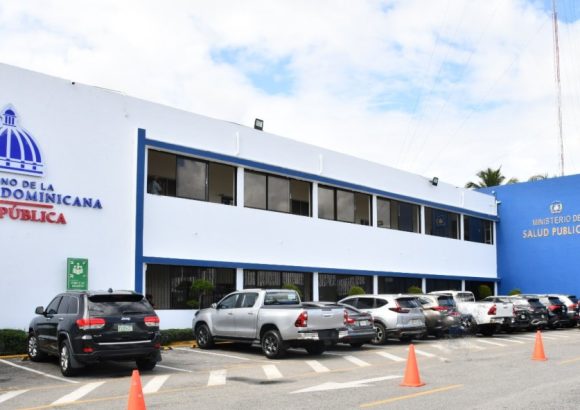
Dominican Republic maternal deaths fall 20%, malaria cases 82%
The Dominican Republic Ministry of Public Health has released its preliminary epidemiological bulletin for the 36th week of 2026, revealing significant across-the-board progress in reducing preventable mortality and controlling endemic and epidemic diseases across the country.
One of the most striking improvements documented in the report is a 20% drop in maternal mortality when comparing the first 36 epidemiological weeks of 2026 to the same period in 2025. The national count fell from 126 maternal deaths in 2025 to 101 in 2026. Breaking down the 2026 figures, 52 of the deceased women were Dominican nationals, 47 were Haitian, and two held citizenship from other countries. During week 36 alone, three maternal deaths were registered: the women were aged 18, 24, and 33, and hailed from the provinces of Duarte, Elías Piña, and San Cristóbal respectively. Every maternal death is now subject to individual investigation and case review to pinpoint gaps in care and develop targeted prevention strategies for future cases.
The bulletin also records steady progress in reducing infant and neonatal mortality. Through week 36 of 2026, 1,349 infant deaths were reported, a roughly 2% decrease from the 1,372 recorded in the same period of 2025. Neonatal deaths, which account for 81.5% of all 2026 infant mortality, also fell from 1,118 in 2025 to 1,100 this year. Forty-nine new infant deaths were added to the national count during the most recent reporting week.
To drive further improvement, the Ministry of Public Health and the National Health Service have ramped up ongoing clinical audit programs. These initiatives involve systematic review of every mortality case, continuous monitoring of care quality across facilities, and targeted tracking of health institutions that report the highest incidence of adverse outcomes.
Beyond maternal and child health, the country has achieved a dramatic reduction in confirmed malaria cases. Year-over-year through week 36, confirmed infections plummeted by approximately 82%, dropping from 760 cases in 2025 to just 137 in 2026. No new confirmed cases or malaria-related deaths were registered during week 36. Public health authorities are maintaining aggressive intervention measures including ongoing surveillance, active case finding, free rapid diagnosis, immediate treatment, and regular follow-up, particularly in the high-transmission hotspots of San Juan and Azua. The long-term goal of these efforts is to interrupt local transmission entirely and move the country closer to complete malaria elimination.
Leptospirosis, a bacterial infection commonly linked to floodwater contamination and rodent exposure, has also seen a sharp decline in recent weeks. No new confirmed cases were reported in week 36, and only five cases have been recorded across the previous four weeks. That marks a stark drop from the 27 cases confirmed in the same four-week window in 2025. To date, the national cumulative total for 2026 stands at 275 confirmed cases. The province of Puerto Plata accounts for the largest share of cases, with 74 infections making up nearly 27% of the national total. Most of these cases emerged during and after major flooding events that impacted the province earlier this year. Authorities are continuing enhanced surveillance, rapid detection and treatment protocols, environmental sanitation work, targeted rodent control campaigns, and public education for communities, with a particular focus on areas recently affected by heavy rain and flooding.
Dengue fever activity remains well within official safety thresholds, the bulletin confirms. Sixteen new confirmed cases were reported in week 36, bringing the 2026 cumulative national total to 338 confirmed cases and one recorded death. The national epidemiological curve stays within the established safe corridor, has not crossed the alarm threshold, and follows the expected pattern of seasonal variation. Notably, the Dominican Republic currently holds one of the lowest cumulative dengue incidence rates among all countries in the Americas. The Ministry continues to carry out territorial monitoring and prevention work alongside regional health directorates and local health services, including the implementation of the popular “Eliminate, Clean and Cover” strategy, which focuses on reducing mosquito breeding grounds and expanding community participation in vector control.
Respiratory disease indicators also remain favorable across the country. Severe Acute Respiratory Infections (SARI) have stayed stable at low levels, with a consistent general downward trend recorded since epidemiological week 27. Influenza-like illness (ILI) activity is also running lower than public health projections and remains within the successful endemic corridor. Authorities continue to maintain multi-layered surveillance systems including routine, sentinel, and virological monitoring, alongside ongoing vaccination campaigns for high-priority groups and widespread public outreach for preventive measures.
A key structural improvement to the country’s epidemiological monitoring system has also delivered major gains in reporting timeliness this year. During week 36, 2,692 of the 2,945 authorized health facilities nationwide submitted required epidemiological reports, representing a national reporting coverage rate of 91%. Ninety-one percent of these submitted reports were filed on time. Through the national SINAVE digital surveillance platform, 974 cases of notifiable diseases and public health events requiring immediate attention were reported, with 86% of these submissions meeting timely reporting requirements. Since the national strengthening intervention rolled out in 2026, the average time to notify public health authorities of a priority case has fallen dramatically from 17.6 days in 2025 to just 1.05 days this year. This drastic reduction in reporting delay enables public health teams to access more up-to-date data, verify potential alerts faster, and deploy interventions to affected communities much more quickly.
Public health officials note that they will continue expanding and strengthening prevention, surveillance, and clinical care systems across the country to consolidate recent gains and address remaining public health challenges. Officials emphasize that faster information flow directly translates to faster, more effective public health responses. The ministry also added that all data included in the Week 36 Epidemiological Bulletin is preliminary and may be updated as case investigations, final case classification, and cross-referencing with other official morbidity and mortality sources are completed.
-

Retinitis Pigmentosa in Dominican Republic: Vision signs that should not be overlooked
Against the backdrop of international retinal health commemoration, public health stakeholders in the Dominican Republic are amplifying a critical message about the urgent need for early recognition of retinitis pigmentosa (RP), a rare group of inherited eye conditions that gradually destroys the light-sensitive photoreceptor cells in the retina.
While RP is categorized as a low-prevalence, or rare, disease, leading Dominican ophthalmological institution the Espaillat Cabral Institute confirms that the irreversible damage it inflicts on patients’ independence and quality of life makes it an ongoing unaddressed medical and social challenge for the nation.
Unlike many common eye conditions, RP is not contagious, nor does it develop from external environmental factors. Its root cause lies in inherited genetic mutations passed through family lines. What makes the condition particularly tricky to catch early, according to data from the country’s specialized vision health centers and clinical units, is that its gradual onset of visual decline is often misattributed to everyday eye strain or more common refractive errors like myopia and astigmatism, leading to delayed diagnosis for many patients.
Symptoms of RP typically emerge during childhood or the teenage years, progressing slowly but consistently over decades. The condition has several key warning signs that patients and primary care providers should not overlook. The first and most commonly reported early symptom is nyctalopia, or night blindness: affected people struggle severely to navigate or see in low-light environments, including at dusk or in dimly lit indoor rooms.
A second core symptom is progressive peripheral vision loss, which leads to a narrowing of the lateral visual field often described as “tunnel vision.” People with advanced tunnel vision frequently trip over objects positioned at their sides or low to the ground, as these fall outside their restricted field of view.
Additional warning signs include difficulty adjusting to sudden shifts in lighting: the eye takes an abnormally long time to reset when moving from a bright space to a dark one, or the reverse. In later, more advanced stages of the condition, patients also experience impaired color discrimination, eventually losing the ability to tell different color shades apart.
Local retina specialists are urging the public not to dismiss persistent visual changes: anyone who experiences recurring difficulty seeing in low light or notices a steady reduction in their peripheral vision is advised to avoid normalizing these symptoms and schedule a comprehensive evaluation with a qualified retina specialist as soon as possible.
-
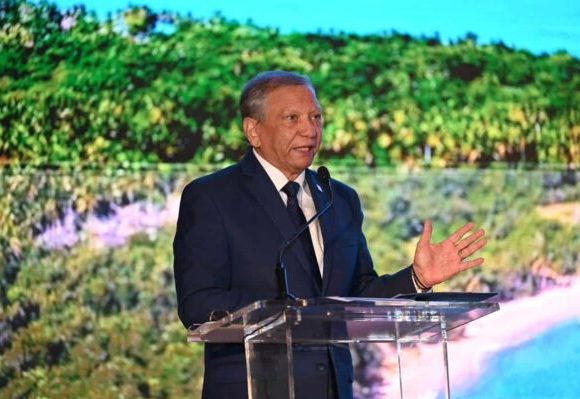
Banreservas: Punta Bergantín tourism project will be the “New North”
The Dominican Republic’s ambitious push to reactivate the North Coast’s tourism economy is gaining significant momentum, centered on the Punta Bergantín initiative, which Banco de Reservas (Banreservas) CEO Leonardo Aguilera has dubbed the region’s “New North.” This large-scale public-private partnership aims to restore Puerto Plata to its historic status as one of the country’s leading tourist destinations, a goal that has drawn strong backing from the Dominican business community, particularly from entrepreneurs based in the nearby city of Santiago.
Aguilera notes that the tourism-focused infrastructure component of the project is already well advanced, leaving real estate development as the key segment driving current investment interest from Santiago’s business leaders. A prominent example of this local investor engagement is Pantaleón Salcedo, a Santiago-based entrepreneur who has already seen remarkable traction on his 180-unit residential development within the Punta Bergantín footprint: 120 of the luxury apartments have already been sold to buyers.
Across the entire project, 263 individual land plots have now been sold to developers and private buyers. Following a recent gathering with Santiago-based business leaders, Aguilera confirmed that the project has closed a fresh round of sales totaling more than $40 million, a milestone that underscores strong market confidence in the initiative’s long-term potential.
Moving forward, the initiation of new hotel construction is the next critical step to fully expand Punta Bergantín’s integrated tourism and real estate offerings, according to Aguilera. He detailed the upcoming development timeline: the groundbreaking ceremony for the project’s second hotel, which is backed by foreign investment, is scheduled for early December this year. Meanwhile, construction on a third 500-room hotel owned by an international hospitality group is slated to kick off in March 2027.
Aguilera reiterated that Banreservas is leading the project as its “spearhead,” working hand-in-hand with private sector stakeholders under a public-private partnership framework designed to unlock broad-based tourism growth and economic development across the Dominican Republic’s entire North Coast.
-
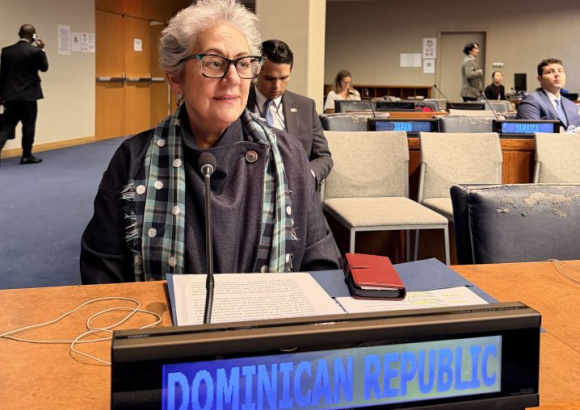
Dominican Republic reaffirms commitment to inclusive, sustainable development at UN
During a landmark high-level gathering at the United Nations commemorating four decades since the adoption of the Declaration on the Right to Development, the Dominican Republic has publicly reaffirmed its unwavering dedication to upholding the fundamental right to development for all people. The nation also used the platform to urge the global community to adopt inclusive, sustainable development frameworks that prioritize human well-being in public policy, while accounting for the unique socioeconomic and structural contexts of individual nations.
Delivering the Dominican Republic’s official position to attendees was Vilma Arbaje de Contreras, Vice Minister of Foreign Affairs for Economic Affairs and International Cooperation. In her address, she drew global attention to deep, long-standing inequities that continue to divide the international community, pointing out persistent gaps between developed and developing nations in access to development financing, functional institutional growth, cutting-edge technology, and equitable economic opportunity. She further noted that many developing economies face amplified exposure to systemic risks, from the accelerating impacts of climate change to a rapidly shifting, increasingly complex global geopolitical and economic landscape that exacerbates existing vulnerabilities.
Arbaje de Contreras called for a fundamental reevaluation of how the global community approaches development progress and access to international support. She argued that the international system must move beyond overreliance on traditional narrow economic metrics, and instead integrate measurements of national vulnerability, adaptive resilience, and institutional capacity into criteria for accessing global cooperation and development financing.
To illustrate its commitment to this people-first development vision, the Dominican Republic highlighted its own long-term domestic development agenda: the National Development Strategy and Meta RD 2036. This ambitious initiative outlines a clear roadmap to transform the nation’s economy by 2036, with core targets including doubling the country’s real gross domestic product, eradicating extreme poverty, tripling the average national salary, and generating an estimated 1.7 million new formal jobs. The overarching end goal of the strategy is to lift the Dominican Republic to developed-country status.
In closing, Arbaje de Contreras emphasized that traditional global development rankings, which are almost exclusively based on per-capita income, often fail to capture the full scope of structural challenges and inherent vulnerabilities that small and developing economies like the Dominican Republic navigate on a daily basis. This outdated measurement approach, she argued, can distort understanding of a country’s actual development needs and hinder access to critical international support.
-

Abinader pledges government support for Dominican Historical and Cultural Museum in New York
During an official visit to New York City on Friday, Dominican Republic President Luis Abinader announced his administration will explore all viable pathways to support the long-delayed completion of the Dominican Historical and Cultural Museum, a landmark project focused on preserving and celebrating the deep history and far-reaching cultural contributions of Dominican communities across the United States.
While touring the project’s proposed site, President Abinader requested that U.S. Congressman Adriano Espaillat and the museum’s core management team share full project blueprints, design schematics, and a detailed financial breakdown of remaining resources required to wrap up construction and launch operations. He framed the initiative as a transformative undertaking with profound historical, educational, and economic value for both the Dominican diaspora and the broader New York community, confirming his government will conduct a thorough review of all possible support mechanisms.
“Share with us your full requirements, and my administration will coordinate with you and Congressman Espaillat to identify how we can bring this project across the finish line,” Abinader told the leadership team overseeing the multi-decade effort.
Congressman Espaillat, who first introduced the idea for the museum more than 20 years ago, emphasized the institution’s critical significance to the hundreds of thousands of Dominicans who call New York home. The museum will be sited in Upper Manhattan’s Inwood neighborhood, a neighborhood located within the area officially designated as the Dominican District on the Federal Register of Historic Districts. Espaillat noted that the region already hosts the densest concentration of Dominican residents in the U.S., with an estimated 500,000 people of Dominican origin residing across western Bronx and Upper Manhattan alone.
After Espaillat first proposed the project, the Institute of Dominican Studies adopted the initiative, with the mission of building a permanent public institution dedicated to centering Dominican history and culture in the United States. The project has secured long-term institutional backing from the City University of New York (CUNY), and is being developed to operate as a university-affiliated public museum.
To date, project organizers have raised approximately $38 million in funding from a mix of local, state, and federal government sources and elected representative initiatives in New York. The completed facility will house five distinct exhibition halls, each dedicated to exploring different chapters and themes of Dominican history and cultural expression.
A core permanent feature of the museum will be an ongoing oral history project, which will collect and archive first-person testimonies from Dominican migrants who built families, community institutions, and cultural hubs across the United States. Additional planned amenities include a Spanish-language children’s library designed to preserve linguistic heritage for younger generations, dedicated exhibit spaces for Dominican baseball and sports, and galleries highlighting Dominican music and other traditional cultural practices.
Ultimately, organizers say the museum will fill a long-standing gap in public cultural representation, giving younger generations of Dominicans born in New York and across the United States the opportunity to connect with their ancestral roots and learn about the foundational contributions earlier generations made to both diaspora communities and American society at large.
-
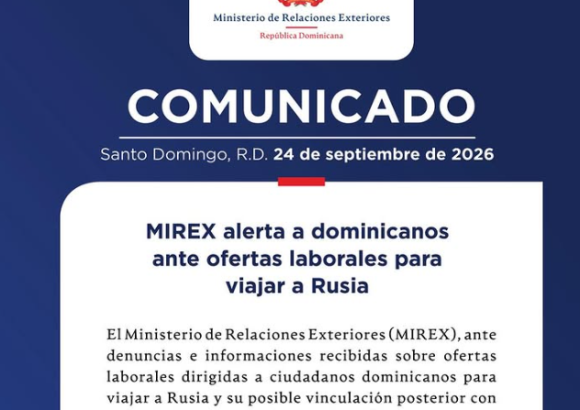
MIREX urges caution over job offers sending Dominicans to Russia
Santo Domingo, Dominican Republic – In an official public advisory released September 24, the Dominican Ministry of Foreign Affairs (MIREX) has issued an urgent warning to the nation’s citizens about fraudulent job recruitment schemes that falsely promise civilian employment in Russia, before funneling recruits into military service amid the ongoing Russia-Ukraine conflict.
The foreign ministry’s guidance comes in response to a growing number of formal complaints from Dominican nationals who have fallen victim to the deceptive operations. Recruiters typically operate entirely through online platforms or unvetted third-party intermediaries, luring job seekers with attractive work offers that require international travel to Russia. Once recruits arrive in the country, they are coerced or misled into signing military contracts and deployed to active frontline combat zones in Ukraine, according to survivor accounts.
One high-profile case that has brought national attention to the scam involves 28-year-old Juan Carlos Ávila Espaillat, a native of Higüey, Dominican Republic. Ávila Espaillat told reporters he traveled to Russia earlier this year after accepting what he believed was a legitimate civilian job offer. He only realized the true nature of the arrangement after being pressured to sign a military contract and shipped to the frontlines against Ukraine. The young man later shared graphic video footage from a Russian military hospital, where he was recovering from severe leg injuries sustained in a combined attack involving drones and landmines. His story has become a central example of the deadly risks posed by these fraudulent recruitment networks.
In its formal statement, MIREX urged Dominican citizens to exercise extreme vigilance when evaluating any international job offer, especially those that come through unconfirmed online channels or brokers with no verifiable professional credentials. The ministry outlined clear steps for job seekers to protect themselves: all applicants must independently verify the source of any employment offer, confirm the legal identity of the hiring organization, and review every term of a proposed contract in full before making travel arrangements or signing any binding documentation. The advisory repeated its recommendation that Dominicans complete full background checks on both job opportunities and the parties facilitating them before agreeing to travel internationally.
For citizens who have already fallen for the deceptive offers and found themselves trapped in high-risk or vulnerable situations abroad, MIREX confirmed it will extend full consular support to assist with resolving their cases and securing safe return where possible.