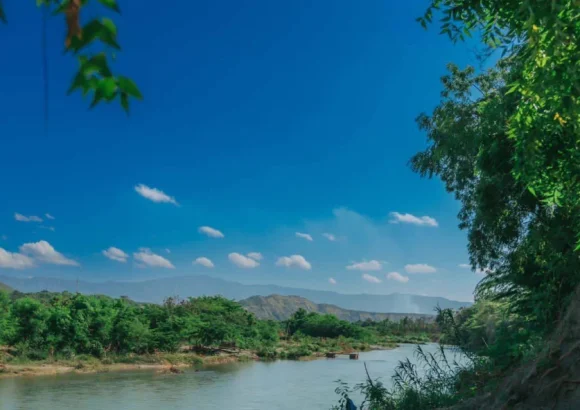
The Dominican Republic’s geographic landscape is woven together by an extensive, interconnected network of rivers and watersheds, all fed by mountain springs from the nation’s central mountain range. These water systems underpin every critical sector of Dominican life: they supply drinking water to millions of residents, support large-scale agricultural production, and fuel the country’s energy generation infrastructure. Among the nation’s most significant waterways are four that stand out for their economic, cultural, and ecological importance: Yaque del Norte, the longest river in the country, which acts as a lifeline for agricultural development across the northwest region; Yaque del Sur, a core source of irrigation for the highly productive southern agricultural zone; the Yuna River, which drains the fertile Cibao Valley before emptying into Samaná Bay; and the Ozama River, which flows along the capital city and holds deep historical and commercial importance for the nation.
标签: Dominican Republic
多米尼加共和国
-
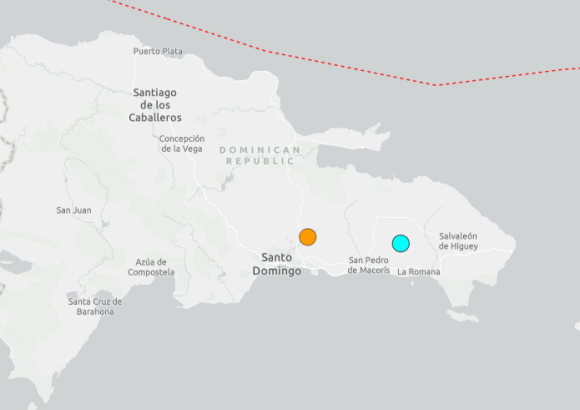
Several earthquakes recorded in the Dominican Republic this Sunday
On Sunday, September 27, the Dominican Republic was hit by a sequence of seismic events, with the strongest tremor recorded in the eastern portion of the Caribbean nation, according to compiled data from global and local geological monitoring agencies.
The first notable tremor was captured by the U.S. Geological Survey (USGS) at roughly 6:06 a.m. local time, with its epicenter positioned just 13 kilometers (8 miles) south-southwest of Bayaguana, a town in the province of Monte Plata. The USGS registered this event as a magnitude 4.2 earthquake.
Nearly simultaneous to that measurement, the National Seismology Center of the Autonomous University of Santo Domingo (UASD) recorded a separate magnitude 4.3 quake near San Antonio de Guerra, located in the country’s central Santo Domingo province. This tremor originated at a depth of approximately 95.7 kilometers, and shaking was reported across multiple districts of Greater Santo Domingo.
Residents and local officials confirmed the tremors were felt across a wide swathe of the country, extending beyond the capital region to neighboring provinces including Monte Plata, San Cristóbal, San Pedro de Macorís, Hato Mayor, Sánchez Ramírez, Monseñor Nouel and El Seibo. At the time of initial on-the-ground checks, emergency management teams had not received any reports of fatalities, injuries, or major structural damage linked to the morning’s seismic activity.
Later in the same day, a stronger, third earthquake was detected in the eastern region of the country. Global geological monitoring site Volcanodiscovery, processing raw seismic data, logged a magnitude 5.2 tremor at around 5:49 p.m. local Dominican Republic time, centered just 8 kilometers southeast of Ramón Santana in the San Pedro de Macorís area.
As of the most recent update compiled for this report, there are still no confirmed reports of significant structural destruction or human casualties linked to any of Sunday’s three recorded earthquakes.
Geographically, the Dominican Republic sits within one of the most seismically active zones in the Caribbean, where the interaction of multiple tectonic plates and underlying geological structures creates regular earthquake activity. Local and international seismological authorities maintain continuous monitoring of the region, updating magnitude and location measurements as new data is collected and processed.
-
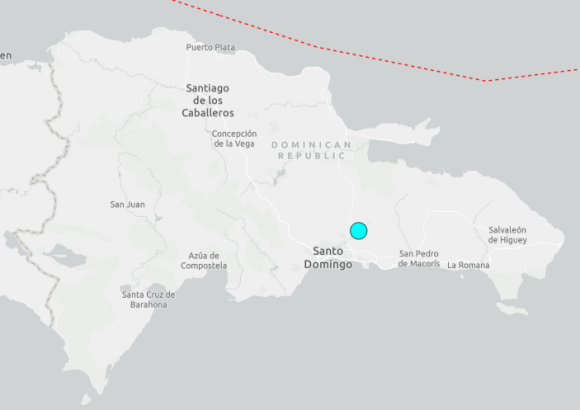
Magnitude 4.2 earthquake strikes near Bayaguana early Sunday
A moderate 4.2-magnitude earthquake rattled parts of the Dominican Republic in the early hours of Sunday, according to data released by the U.S. Geological Survey (USGS).
The seismic event hit at roughly 6:06 a.m. local time, with its epicenter positioned around 13 kilometers (8 miles) south-southwest of the town of Bayaguana, the USGS geolocation data shows. Bayaguana falls within the boundaries of Monte Plata province, a central inland region of the Caribbean nation.
As of initial reports following the tremor, no official statements have been issued regarding casualties, structural damage, or tsunami risks linked to the earthquake. The USGS has not yet announced any plans to revise the preliminary magnitude or epicenter coordinates recorded by its global seismic monitoring network.
-

Police report man’s death after alleged confrontation with DICRIM agents in Cabral, Barahona
A Dominican national wanted on four separate court warrants for alleged involvement in multiple criminal activities has died following a shootout with law enforcement investigators near a coastal lagoon in the country’s southern region, National Police officials confirmed this Thursday.
The fallen suspect was formally identified as Carlos Julio Féliz Sena, a resident of La Lista municipal district, which falls under the jurisdiction of Cabral municipality. According to the preliminary official account released by the National Police’s Southern Regional Directorate, members of the elite Central Directorate of Investigation (Dicrim) tracked Féliz Sena to a location near El Rincón, also known as Cabral lagoon, during a targeted surveillance operation.
When officers moved to apprehend the suspect, police report that Féliz Sena immediately initiated a physical assault on Dicrim agents in an attempt to evade arrest. The situation escalated quickly when the suspect reportedly drew a homemade unlicensed firearm locally referred to as a “chilena” from his waistband and fired a single round toward the responding officers, authorities said.
In line with standard use-of-force protocols, the Dicrim team returned fire to neutralize the ongoing attack, striking Féliz Sena. First aid was administered on scene before the wounded suspect was rushed to a local medical facility for urgent care. Despite medical intervention, Féliz Sena ultimately succumbed to his injuries at the center.
Police officials confirmed that Féliz Sena was the subject of four active court warrants — numbered 2026-AJ0030750, 2026-AJ0001107, 2026-AJ0017630, and 2026-AJ0041559 — all tied to alleged criminal acts committed within Cabral municipality. Internal police records also show multiple prior entries linking Féliz Sena to other criminal incidents, which prompted ongoing monitoring by national investigative bodies in the area.
Per standard operational procedure following officer-involved shootings, the National Police has launched a full formal investigation into the exact circumstances of the confrontation. All findings from the probe will be submitted to the Public Prosecutor’s Office to facilitate the required legal review and next steps. The account provided in this report reflects the preliminary law enforcement narrative, with the ongoing investigation expected to clarify the full sequence of events leading to Féliz Sena’s death.
-
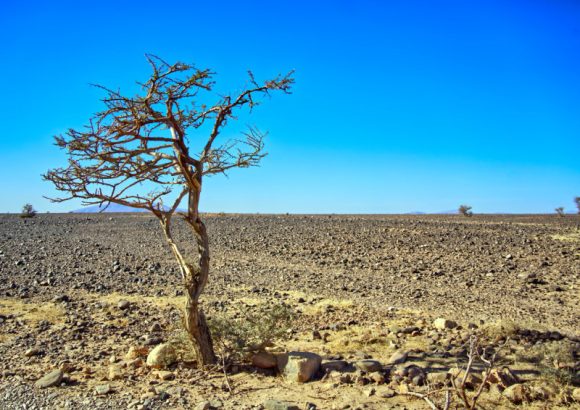
The Dominican Republic will face a moderate but persistent risk from El Niño
As forecasts point to one of the most intense El Niño events since 1950 set to peak in 2026, the Dominican Republic faces layered economic risks driven by extreme weather, even as the climate phenomenon delivers one unexpected upside for its key tourism industry, a new Deloitte analysis finds.
International meteorological bodies warn there is a 90% probability that the 2026 El Niño event will strengthen into a “very strong” category, with lingering impacts stretching into 2027. While the Dominican Republic holds a more advantageous position compared to neighboring nations across Central America and Panama, the primary threat does not stem from excess rainfall. Instead, the biggest danger comes from the combined stress of prolonged drought, systemic water scarcity, and record-high heat that threatens to disrupt the country’s most economically critical sectors.
Unlike Central America’s Dry Corridor, which faces catastrophic risks of widespread crop failure and deepening food insecurity, the Dominican Republic faces a moderate medium-term drought risk that will ripple through global and domestic supply chains to stoke inflation. Reduced rainfall across the region will cut into access to key production inputs including fertilizers and diesel, while low water levels on major global shipping routes have forced draft restrictions that push up global freight costs by as much as 15%. These higher costs are passed along step-by-step from logistics providers to retail outlets, ending with higher price tags for consumers at supermarkets and grocery stores.
Deloitte’s report notes that fertilizers and diesel make up between 50% and 70% of total agricultural production costs for the country. Though global urea prices saw a partial correction after nearly doubling in the first half of the year, the earlier price surge has already been locked in for the 2026 planting season, putting consistent downward pressure on corporate profit margins across the agricultural sector.
The country’s energy sector will also feel significant strain from reduced water availability. Lower reservoir levels at local hydropower dams will force grid operators to shift generation to more expensive fossil fuel-powered thermal plants, driving up overall electricity production costs thanks to the lagged economic impact of the weather event.
Despite these broad risks, El Niño brings one clear benefit to the Dominican Republic’s economy: the climate phenomenon’s warm Atlantic phase is historically tied to reduced cyclonic activity, cutting the risk of destructive hurricanes and tropical storms hitting the island. This lower storm risk guarantees greater operational stability for the tourism sector, the single largest source of foreign exchange for the national economy.
-

Beto Cuevas debuts in Santiago with an acoustic journey through his musical history
On a warm Saturday night in late September 2026, Chilean-Canadian music icon Beto Cuevas made his long-awaited debut in Santiago de los Caballeros, the Dominican Republic’s beloved “Heart City”, bringing his intimate, critically celebrated *Beto Cuevas Acústico* tour to the stage of the historic Gran Teatro del Cibao’s Restoration Hall. Drawing direct inspiration from La Ley’s genre-defining 2001 MTV Unplugged album — a project that cemented the rock band’s place in Latin American music history — the two-hour performance took attendees on a nostalgic yet deeply personal journey through every chapter of Cuevas’ 30-year career, blending chart-topping La Ley classics with fan-favorite solo tracks.
Opening the night with the beloved hit *La Mitad*, Cuevas immediately built an organic connection with the local crowd, pointing out a special shared bond: he was born in Santiago, Chile, making this first visit to the Dominican Santiago feel like a homecoming. Before diving into his set, the artist shared that he had already explored a bit of the city during his stay, stopping to see its iconic main monument and connect with local residents, and thanked the audience for the warm welcome they extended. “I’ve been able to see a little bit of the city, its main monument, and its people. Above all, what characterizes them. So thank you very much for the affection, the respect, and for being with us tonight,” he told the crowd.
Cuevas went on to explain the core concept behind the tour, which launched in 2025 and has already spanned more than 40 shows across Latin America. The entire project is conceived as a loving tribute to the 2001 MTV Unplugged album recorded with his former band La Ley, a release that marked a transformative milestone in the group’s trajectory. “It’s a tribute album to the famous album we made with La Ley in 2001, in La Ley Unplugged,” Cuevas explained, before inviting the audience to embrace the moment: “I invite you to live in the present, today, now.”
One of the most celebrated highlights of the evening was a surprise guest appearance by rising Chilean vocalist Javi Flores, whom Cuevas first discovered during his time as a judge on a Chilean talent competition. Gushing to the audience about Flores’ extraordinary talent, Cuevas called her “the best singer in Latin America,” noting that he knew she deserved global recognition far beyond the confines of a televised competition. “This girl can’t just get lost in a talent show; she needs to go out and be known all over the world,” he said before inviting her to the stage for a collaborative performance of *Todo es perfecto* (Everything is Perfect), an original new track recorded specifically for the acoustic tour. Cuevas added that the show marked both of their first performances in Santiago de los Caballeros, making the collaboration even more special.
Beyond the music, the show wove in moments of reflection and connection. The set included a dedicated segment featuring the track “Raymond”, followed by “La Luna” and a immersive sound bath experience. Speaking about this portion of the performance, Cuevas highlighted the deeply therapeutic power of music, drawing a parallel between sound and healing that resonated with the crowd. “Music is what we do in medicine for ourselves, and being able to share it with you throughout our history. Your music has literally been medicine for us,” he shared, thanking producers and collaborators for bringing the unique concept to life.
Midway through the set, Cuevas also took a moment to share a thoughtful message about global peace and mindful leadership, touching on his experience as a Chilean-Canadian artist residing in the United States. “I respect everyone’s opinion, but I think it’s important—especially when the time comes to elect leaders who will become the leaders of our nations—that we choose wisely, above all based on their values,” he said, reaffirming his unwavering support for peace across borders.
After running through a repertoire that also included *Día Cero*, *Vuelvo*, *Paraíso*, *Intenta Amar*, *Hombre*, *Animal*, *Cielo Market*, *Prisoners*, *Out of Me*, *Krazyworld*, a cover of Depeche Mode’s *Enjoy the Silence*, *Háblame* (Talk to Me), *Al final*, *Mentira*, *Tejedores de ilusión*, and *Delirando*, Cuevas saved the most iconic tracks for last, closing out the night with fan favorites that defined his decades-long career. The final sequence included a cover of Radiohead’s *Creep*, the legendary La Ley staple *El duelo*, *The Corridor*, and *Más allá*, bringing the performance to a close at 10:51 pm.
The stop at Gran Teatro del Cibao marked Cuevas’ first ever public appearance in Santiago de los Caballeros, coming fresh off a performance in the Dominican capital of Santo Domingo as part of the tour’s regional run. Centered on raw vocal performance, stripped-back acoustic arrangements, and genuine dialogue with the audience, the *Beto Cuevas Acústico* tour brings new life to the 30-year catalog of one of Latin rock’s most recognizable voices, while honoring the landmark MTV Unplugged session that redefined the genre more than two decades ago.
-
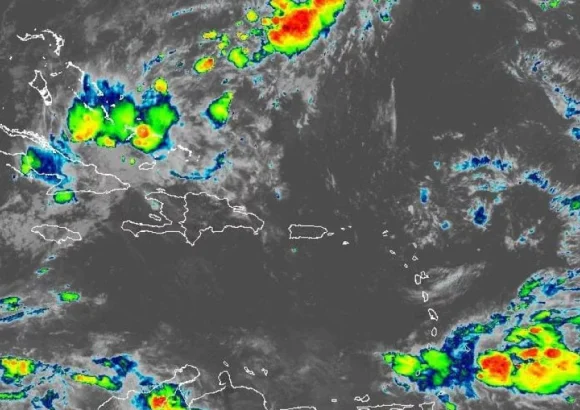
Be aware this afternoon: a trough will bring downpours to several provinces
The Dominican Institute of Meteorology (Indomet) has released a detailed weather forecast for this Sunday, outlining a mix of atmospheric conditions, persistent heat, and updates on two Atlantic tropical systems that currently pose no danger to the nation.
According to Indomet’s projections, most of the Dominican Republic will wake up to a blend of partial sunshine and hazy overcast skies on Sunday. This initial sky condition is driven by two key atmospheric factors: a dominant anticyclonic system that stabilizes conditions near the surface, and light concentrations of fine dust particles carried across the Atlantic from the Sahara Desert.
While the morning and early afternoon will remain largely calm, meteorologists warn that conditions will shift by the later afternoon. An upper-atmosphere trough linked to a distant frontal system, when combined with intense daytime solar heating and local topographical effects, will create enough atmospheric instability to trigger sudden downpours, rumbling thunderstorms, and gusty wind bursts across inland regions of the country.
Indomet has identified 10 northern and central provinces that are most likely to see these stormy conditions: La Vega, Santiago, Santiago Rodríguez, San Juan, Dajabón, Monte Cristi, Valverde, Puerto Plata, Espaillat, as well as adjacent areas surrounding these localities. Forecasters added that the rain activity could linger into the early overnight hours, bringing moderate wet accumulation to some communities.
Beyond the chance of afternoon storms, the agency emphasized that the ongoing stretch of hot weather will continue through Sunday, with elevated heat index values recorded across most of the national territory. To help residents avoid heat-related illnesses such as heat exhaustion or stroke, Indomet has issued a series of public health advisories. The guidance urges people to stay consistently hydrated by drinking plenty of water throughout the day, opt for light, loose-fitting, pale-colored clothing that reflects sunlight, avoid prolonged unprotected exposure to direct sun between 11 a.m. and 4 p.m. when UV and heat levels peak, and prioritize staying in cool, well-ventilated spaces during the warmest parts of the day.
In its weekly tropical cyclone outlook, Indomet also provided updates on two active weather systems in the Atlantic Ocean. The first, Tropical Depression Fay, is currently churning over open Atlantic waters more than 1,840 kilometers west of the Azores archipelago. The system carries maximum sustained winds of 55 kilometers per hour and is tracking slowly southward at a speed of 6 kilometers per hour. Based on its current position and projected trajectory, Fay does not pose any threat to the Dominican Republic’s land or coastal areas.
The second system under monitoring is a broad area of low pressure located southeast of Bermuda. Meteorologists give this disturbance a 10% probability of strengthening into a tropical cyclone over the next 48 hours, and a 20% chance of development over the coming seven days. Like Tropical Depression Fay, this low-pressure system’s location and forecast path mean it also carries no threat to Dominican territory at this time.
-
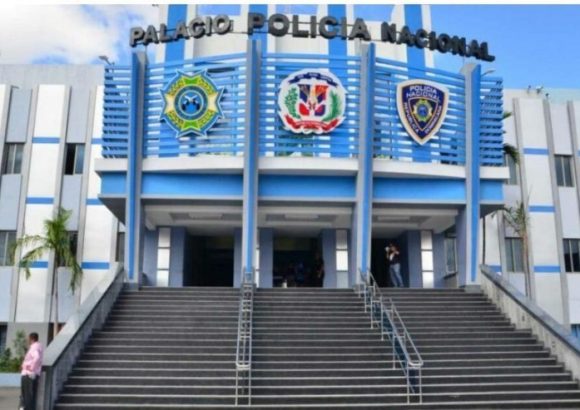
Man pursued by the National Police kills two people and wounds another at a fried chicken restaurant in Sabana Perdida
A violent incident unfolded this week in the Lotes y Servicios sector of Sabana Perdida, located in northern Santo Domingo, when a fugitive wanted by Dominican law enforcement opened violence inside a local fried chicken food business, leaving two people dead and a third person with serious injuries. The tragedy unfolded as the suspect, who was actively being pursued by Dominican National Police, barricaded himself inside the popular food establishment after the attack.
National Police spokesperson Diego Pesqueira confirmed to reporters that the suspect was already a person of interest in prior homicide investigations in the eastern Dominican city of San Pedro de Macorís, making him a high-priority target for law enforcement before the Sabana Perdida attack. After the violent outburst inside the food store, law enforcement teams successfully took the suspect into custody, ending the standoff that unfolded at the site.
As of the latest update, law enforcement officials are holding the detained suspect while they conduct a thorough, ongoing investigation into the full sequence of events that led to the mass casualty incident. Investigators are working to clarify key details, including the motive for the attack, whether the victims were targeted at random or had prior connections to the suspect, and any additional factors that contributed to the violent episode. Local residents have been left shaken by the unexpected violence in the normally quiet residential and commercial sector, as authorities work to bring clarity to the case.
-
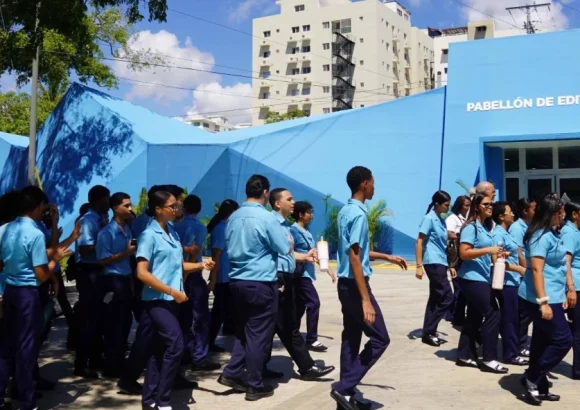
The atmosphere comes alive with the arrival of more visitors
The 28th iteration of the Santo Domingo International Book Fair (FILSD) 2026 entered a bustling new phase of activity Wednesday morning, as rising visitor numbers and coordinated school group visits transformed the Juan Pablo Duarte Cultural Plaza venue into a lively hub of literary and cultural exchange.\n\nFrom the moment gates opened at dawn, the sprawling venue began filling with a diverse stream of guests: teenagers browsing graphic novel stands, older adults searching for nonfiction titles, and organized groups of K-12 students moving between pavilions as part of school-led educational activities. Organizers noted that school participation has been a key driver of the increased foot traffic, injecting far more energy into the fair grounds than the opening days saw.\n\nAs visitors wandered the rows of exhibitor stands exploring the thousands of titles on offer and signing up for scheduled talks, writing workshops, and author meet-and-greets, local reporters conducted casual interviews to gauge public opinion on this year’s edition. Most attendees praised the wide selection of books from both domestic and international publishers, and highlighted how events like the FILSD play a critical role in fostering a reading culture among younger generations.\n\nJunior Méndez, a 24-year-old attendee, told reporters he came to the fair specifically to uncover lesser-known historical narratives that rarely appear in mainstream bookstores. Echoing the views of many literary enthusiasts at the event, he emphasized that consistent reading is one of the most accessible tools for intellectual enrichment. “I think every person owes it to themselves to give reading a real chance,” Méndez explained. “You don’t have to force yourself through genres you hate—just find what sparks your curiosity and give that a shot.”\n\nRetired educator Ernesto Betancourt echoed that sentiment, sharing that he made regular trips to the book fair with his students throughout his decades-long teaching career, and still encourages young people to attend today regardless of their individual interests. “Even when I was working full-time in the classroom, I always prioritized bringing my classes here,” Betancourt recalled. “I pushed them to pick up books, explore new topics, and immerse themselves in all the culture this event has to offer.”\n\nFor all the positive feedback around the breadth of the 2026 fair’s publishing offerings, a number of attendees shared one common criticism: many book prices are higher than expected. Several visitors told reporters that elevated price points will likely prevent them from purchasing multiple titles during their visit, even when multiple books catch their eye. “I came in expecting more accessible pricing, since this is a public book fair meant to encourage reading,” said attendee Pablo Henríquez. “But honestly, a lot of these prices are higher than I see at regular commercial bookstores—it’s disappointing.”’
-
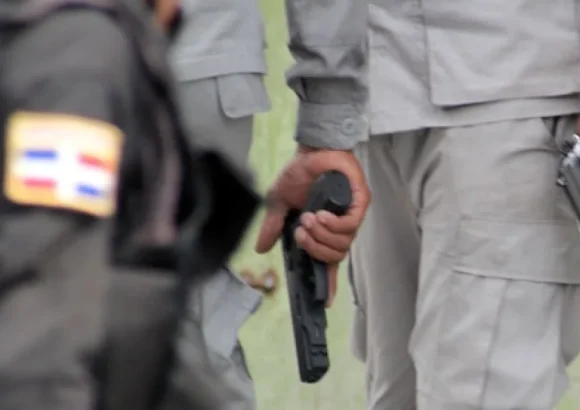
Dominican Republic reports rise in September gunfights
In the wake of a high-profile murder that sent shockwaves through Dominican society, a disturbing pattern of fatal police encounters has emerged, drawing condemnation from human rights advocates. Less than 24 hours after the country’s National Police confirmed that eight alleged criminals were shot and killed during separate gunfire exchanges across multiple regions of the Dominican Republic, human rights officials are sounding the alarm over a rapidly escalating death toll that far outpaces projections.
The most recent wave of police killings follows the murder of Zenaida Castillo, wife of renowned merengue singer Julián Oro Duro. That high-profile incident, which has already resulted in four arrests, shook public trust in law enforcement’s ability to keep communities safe, but human rights leaders say the response from police has raised even more pressing concerns.
Manuel María Mercedes, a representative of the Dominican Republic’s Human Rights Commission, reports that the official 8 fatalities in less than a day do not capture the full scale of the crisis. By his count, at least 31 people have been killed in police shootouts across the country already in September alone. When extended across the full calendar year, that figure jumps to 200 deaths linked to apparent exchanges of gunfire with police agents — a toll that Mercedes says has already far outpaced the projected total for 2025.
Mercedes has publicly called on Dominican President Luis Abinader to intervene immediately, demanding an end to what human rights activists describe as extrajudicial “police killings.” He argues that law enforcement should prioritize capturing suspects alive whenever possible, pointing to the successful arrest of four suspects in the Zenaida Castillo murder as a model for appropriate police action.
National Police spokesperson Diego Pesqueira has defended the most recent operations, noting that all eight people killed were alleged dangerous criminals with active arrest warrants and multiple criminal complaints filed against them. The fatal encounters took place across five jurisdictions: Los Alcarrizos, Cabral in Barahona province, Gaspar Hernández, Santo Domingo East, and Santo Domingo West.
The deceased individuals have been publicly identified by police: Gabriel Luis Montero (also known as “Campeón”), Domingo Santiago Valdez (“La Fama”), and José Daniel De La Cruz Valdez (“Hernán” or “Nay”) were killed in Los Alcarrizos; Carlos Julio Feliz Sena died in Cabral; Ricardo Polanco García (“Richard Gatillo”) was killed in Gaspar Hernández; Genny Santos Franco Jimenez, nicknamed “El Come Hombre de Los Frailes” or “Man Eater of Los Frailes,” was shot dead in Santo Domingo Este; and Haitian national José Manuel San Luis (“Negrón”) was killed in Las Caobas, Santo Domingo West. All were linked to a range of serious crimes including drug trafficking, homicide, and membership in organized criminal groups, with “Man Eater of Los Frailes” having been the subject of a widespread manhunt for months.
A ninth alleged criminal, Hansel “Boca Negra,” was killed separately in Samaná during a confrontation with arresting officers. Police say “Boca Negra” was the prime suspect in the fatal shootings of two DICRIM (Criminal Investigations Department) officers, Major Andrés Pascual and Corporal William Antonio Jesús Heredia, in separate previous attacks. He was found hiding in a building in the Honduras neighborhood of Samaná and was in possession of a Glock pistol when officers located him.
Pesqueira confirmed that the National Police is currently conducting a full review of all recent cases, with official detailed reports set to be released to the public in the coming days.