This entry submitted for news processing arrives incomplete: only social sharing buttons (for sharing, tweeting, pinning content) and a link to an image hosted on an external news server are included, with no full text of the original news story provided. Without the core journalistic content that would detail events, quotes, data, or context, no full, accurate rewrite of a specific news report can be completed. The image linked is dated July 6, 2026, and stored under a unique file identifier, but no accompanying descriptive text or narrative to outline the story’s topic, key players, or core claim is available for analysis or reconstruction.
标签: Dominica
多米尼克
-

Statement by Chargé d’Affaires Karin Sullivan, U.S. Embassy to Barbados, the Eastern Caribbean, and the OECS on the 250th Anniversary of the United States of America
As the United States prepares to mark the 250th anniversary of its founding under the national commemoration banner “Freedom 250”, the occasion offers more than just an opportunity to look back at the revolutionary ideals that birthed the nation. It also serves as a reminder of the shared global belief that the pursuit of freedom connects diverse populations across international borders and across generations. Echoing the framing of former President Donald Trump, who noted that “The story of America makes everyone free”, this 250-year legacy is not merely a chapter of history—it is a call to action to deepen collaborative work with global partners, including the island nations of the Eastern Caribbean, to build a shared future rooted in expanded opportunity, enhanced collective security, and widespread mutual prosperity.
Far from being only a retrospective celebration, Freedom 250 is positioned as a strategic launchpad for the next era of U.S. global engagement. Under the current administration’s diplomatic vision, the U.S. is forging new collaborative partnerships, prioritizing cross-border innovation, and shaping a 21st-century diplomatic framework that is intended to guide transatlantic and hemispheric relations for the next 250 years.
U.S. engagement across the Eastern Caribbean is anchored in a straightforward core principle: when regional nations succeed collectively, all populations benefit from greater safety, stronger national economies, and more resilient local communities. Today, that long-held collaborative approach is delivering measurable, tangible results for both U.S. and Caribbean stakeholders across every Eastern Caribbean nation.
In Barbados, which is rapidly emerging as a regional technology and innovation hub, the U.S. and Barbados are jointly building the foundational infrastructure for a thriving digital economy. U.S. investment in advanced cross-border connectivity has unlocked new opportunities across key high-growth sectors: from telemedicine that expands access to critical care to remote learning that improves educational outcomes, from artificial innovation development to fintech inclusion, and from climate-smart agricultural practices that reduce carbon emissions to food security. This modern partnership is built on shared commitments to democratic governance, transparent commercial practices, and inclusive mutual prosperity.
In Antigua and Barbuda, joint investment in modern energy infrastructure is advancing long-term climate resilience, creating new local economic opportunity, and driving sustainable, low-carbon growth. In Dominica, U.S. technical and financial support for geothermal energy development has expanded access to affordable, reliable power for local communities while strengthening the nation’s long-term energy independence and security. For Grenada, U.S. technical cooperation and local capacity building programs are strengthening national water security, advancing sustainable natural resource management, and boosting the nation’s ability to adapt to climate and resource-related shocks.
In Saint Kitts and Nevis, bilateral cooperation continues to deepen across priority areas including citizen safety, inclusive economic development, public education, and cultural heritage preservation. A key ongoing project is the U.S.-supported restoration of the historic Bath Hotel on Nevis, a landmark that ties together the centuries-long people-to-people connections between the U.S. and the Caribbean, as the site is closely linked to Alexander Hamilton, one of America’s founding fathers who was born in Nevis. In Saint Lucia, expanded collaboration with the U.S. Drug Enforcement Administration is boosting local capacity to detect illicit fentanyl shipments, strengthening cross-border criminal prosecution efforts, and making communities safer across the entire Eastern Caribbean region. In Saint Vincent and the Grenadines, U.S. Peace Corps volunteers continue to work alongside local educators to strengthen primary and secondary education, improve English literacy outcomes, empower local teaching staff, and advance community development projects that create lasting, people-to-people bonds between the two nations.
Beyond bilateral collaborations with individual Eastern Caribbean states, the U.S. is also working collectively across the region to address transnational challenges that do not respect national borders. To combat transnational organized crime and drug trafficking, the U.S. has committed more than $8 million in funding to upgrade forensic laboratories across the Caribbean, improve regional drug detection capabilities, and expand cross-border law enforcement cooperation. The U.S. also continues to invest in the next generation of leadership through long-standing professional and educational exchange programs, including the Fulbright Program, the Young Leaders of the Americas Initiative, and the International Visitor Leadership Program, which connect emerging business and civic leaders from both the U.S. and the Caribbean.
As the U.S. marks this historic 250-year milestone of independence, the commemoration celebrates not only the nation’s own history but the growing network of global partnerships that will shape its future. Freedom 250 is framed as a global initiative to honor the U.S. founding ideals of liberty, democracy, and individual freedom.
In closing, the statement notes that the United States is proud to stand alongside the people of the Eastern Caribbean as a trusted neighbor, committed partner, and long-time friend. As it has done since its founding in 1776, the U.S. remains a dynamic and reliable global partner ready to lead collaborative progress into the next 250 years. Together, the U.S. and Eastern Caribbean nations look forward to another quarter millennium of shared freedom, expanded opportunity, continuous innovation, and collective prosperity.
This commentary was written by Karin Sullivan, Chargé d’Affaires at the U.S. Embassy to Barbados and the Eastern Caribbean.
-

COMMENTARY: Sexual Abuse and Artificial Intelligence
Sexual harassment is a pervasive societal and workplace issue that defies outdated gendered assumptions. Contrary to long-held popular narratives that frame women as the only victims and men as the sole perpetrators, people of any gender can experience harassment or perpetrate harm, and abuse can occur between people of the same gender.
In workplaces across Jamaica and much of the globe, unbalanced hierarchical power dynamics that prioritize employer perspectives over employee well-being create a toxic environment where many victims choose to suffer in silence. The very real threat of job loss, paired with the widespread absence of labor unions to advocate for workers, leaves victims doubly vulnerable. For male survivors in particular, the burden is uniquely heavy: coming forward often leads to intrusive questioning of their sexual identity, and deep-seated homophobic cultural norms across Jamaican society push many to endure abuse in isolation. Breaking this culture of silence requires action not just within individual workplaces, but across every layer of society, as the right to a safe working environment that protects both physical and mental health is a non-negotiable standard that must be enforced for all.
The rise of artificial intelligence has amplified the global crisis of sexual abuse, opening new avenues for harm that disproportionately impact women and girls. Data from one global survey shows that 38% of women have personally experienced online violence, while 85% of women who use the internet have witnessed digital violence against other women. AI-facilitated violence against women encompasses all AI-generated and AI-spread digital abuse that causes harm across physical, sexual, psychological, social, political, or economic domains, and infringes on women’s fundamental rights and freedoms.
AI-powered tools have enabled the spread of harmful practices like catfishing, where bots simulate human conversation to interact with unsuspecting women and girls, luring them into sharing private personal information or agreeing to in-person meetings. Deepfake technology, which uses AI to create digitally altered images, audio, and video that appear to show people saying or doing things they never did, is also increasingly misused as a tool of abuse. While deepfakes can have legitimate creative and entertainment uses, they are regularly weaponized to create non-consensual sexual content, spread disinformation, and destroy survivors’ reputations.
Across the Caribbean Community (CARICOM), progress on formal sexual harassment legislation began decades ago, with the framers of the 1973 Treaty of Chaguaramas explicitly identifying “The Position of Women in Caribbean Society” as a core area of regional cooperation. By 1997, several English-speaking CARICOM nations had already enacted targeted anti-harassment laws: Belize passed its landmark Sexual Harassment Act in 1996, followed by Guyana, which added protections against sexual harassment under its 1997 Prevention of Discrimination Act. In subsequent years, Barbados implemented the Employment Sexual Harassment (Prevention) Act in 2017, and Trinidad and Tobago updated its framework via the Equal Opportunity Act alongside a national workplace policy adopted in 2019.
In Jamaica, the modern legal framework for addressing sexual harassment took shape with the passage of the Sexual Harassment (Protection and Prevention) Act in 2021, which officially entered into force on July 3, 2023. The legislation extends legal protection against unwelcome sexual conduct across multiple settings, including workplaces, educational institutions, and landlord-tenant relationships, and grants survivors multiple pathways to seek redress: through internal workplace complaint processes or via a dedicated, independent Sexual Harassment Tribunal (SHT). The law formally defines sexual harassment as any unwelcome sexual advances, requests for sexual favors, or sexually offensive conduct that causes humiliation or creates a hostile environment. It mandates all employers to develop, publish, and enforce a written anti-harassment policy and establish formal internal complaint mechanisms. Offenders convicted by the SHT face penalties including fines up to 1 million Jamaican dollars, imprisonment, or both, depending on the severity of the violation.
Despite this legislative progress, compliance monitoring remains a major unaddressed challenge in Jamaica. While larger corporations with dedicated human resources and legal departments are far more likely to meet the policy requirement, small businesses with only two to five employees often lack the resources and guidance to implement the required protections, leaving workers in these settings vulnerable. For survivors seeking recourse, the law outlines clear pathways: if harassment occurs in the workplace, victims can first raise the issue with their human resources manager, and if the issue is not resolved internally, they can file a report with local police or a field officer from the Bureau of Gender Affairs, or bring a claim directly to the SHT once it is convened. For harassment occurring outside the workplace, victims can report to police for guidance on next steps, including filing a claim with the tribunal. Free mental health support is also available through the Victim Services Unit at the Ministry of Justice, which offers both in-person and online counseling for all crime victims, including survivors of sexual harassment.
To better understand and identify abuse, it is critical to acknowledge that sexual harassment takes many forms beyond physical violence. Verbal harassment includes unwelcome comments about a person’s appearance, body, or personal life, sexually explicit jokes, and gender-based insults — harm that perpetrators often dismiss as “compliments” that do not justify concern. Intimidation or bullying, even when non-sexual on its face, also qualifies as sexual harassment when used to coerce silence about abuse or punish survivors who come forward. Voyeurism, or the secret watching, recording, or photographing of a person in a space where they have a reasonable expectation of privacy (including homes, public restrooms, and changing rooms), is another common form of harm. Non-verbal harassment also includes sexually suggestive gestures, from winking and sexually explicit body language to suggestive hand or facial movements.
Jamaica’s 2021 Sexual Harassment Act is rooted in three core guiding principles aligned with international human rights standards. The first is a Human Rights-Based Approach (HRBA), a framework rooted in international human rights norms that centers on addressing systemic inequality, discriminatory practices, and unequal power distributions that leave marginalized groups behind. This approach aligns with Jamaica’s obligations under two key international instruments: the Convention on the Elimination of All Forms of Discrimination against Women (CEDAW) and the Convention on the Rights of the Child (CRC).
The second foundational principle is gender equality, which is enshrined in the Universal Declaration of Human Rights, which affirms that all people are born free and equal in dignity and rights, and that all people are entitled to equal protection of their rights without distinction based on gender or other status. Gender equality is not a standalone goal; it is a core requirement for achieving all 17 United Nations Sustainable Development Goals.
The third core principle is the right to decent work, as defined by the International Labour Organization (ILO). The ILO frames decent work as productive employment that pays a fair wage, provides workplace safety and social protection for families, and guarantees workers the freedom to organize and voice their concerns. Workplace safety inherently includes freedom from sexual harassment.
While the 2021 Act marks a major step forward, it is not without open questions and gaps that need to be addressed. Critics have noted the two-year gap between the law’s parliamentary passage in 2021 and its 2023 implementation, a delay that is particularly concerning given the pervasiveness of rape culture in Jamaican society that demands urgent action. There are also ongoing concerns about the potential for overly lengthy investigation and hearing processes, and the need for clearer guidance on high-stakes procedural questions, such as whether an accused employee should remain in their role during an active investigation.
Under current requirements, companies must appoint an Authorized Officer to receive and process internal workplace complaints, as well as an internal Anti-Sexual Harassment Dispute Settlement Committee. The Authorized Officer is required to assess each claim per internal procedures: if a matter is resolved via agreement, the outcome is recorded in company records; if not resolved, or if the officer deems it necessary, the claim is referred to the SHT. Jamaica’s international obligations under global protocols and conventions already recognize sexual harassment as a form of violence, a violation of human rights, and a barrier to equitable development. The ILO has formally categorized workplace sexual harassment as a violation of fundamental worker rights, a workplace health and safety hazard, a form of gender discrimination, an unacceptable working condition, and a form of violence that disproportionately harms female workers. ILO Convention No. 111 on Discrimination in Employment and Occupation explicitly links the elimination of sexual harassment to both worker well-being and overall workplace productivity.
Looking ahead, the growing intersection of artificial intelligence and sexual abuse represents not just a technical policy challenge, but a broader moral crisis that demands coordinated, cross-sector action. Addressing this harm requires collaboration between national governments, technology platforms, law enforcement agencies, and the international community, including binding cross-border treaties and coordinated enforcement to hold perpetrators accountable across jurisdictions. What is clear above all is that there is an urgent need for widespread, robust public education campaigns to shift cultural norms around sexual abuse and sexual harassment, and to empower survivors to come forward and seek justice.
This analysis was written by Wayne Campbell, an educator and social commentator focused on the intersection of development policy, culture, and gender issues.
-
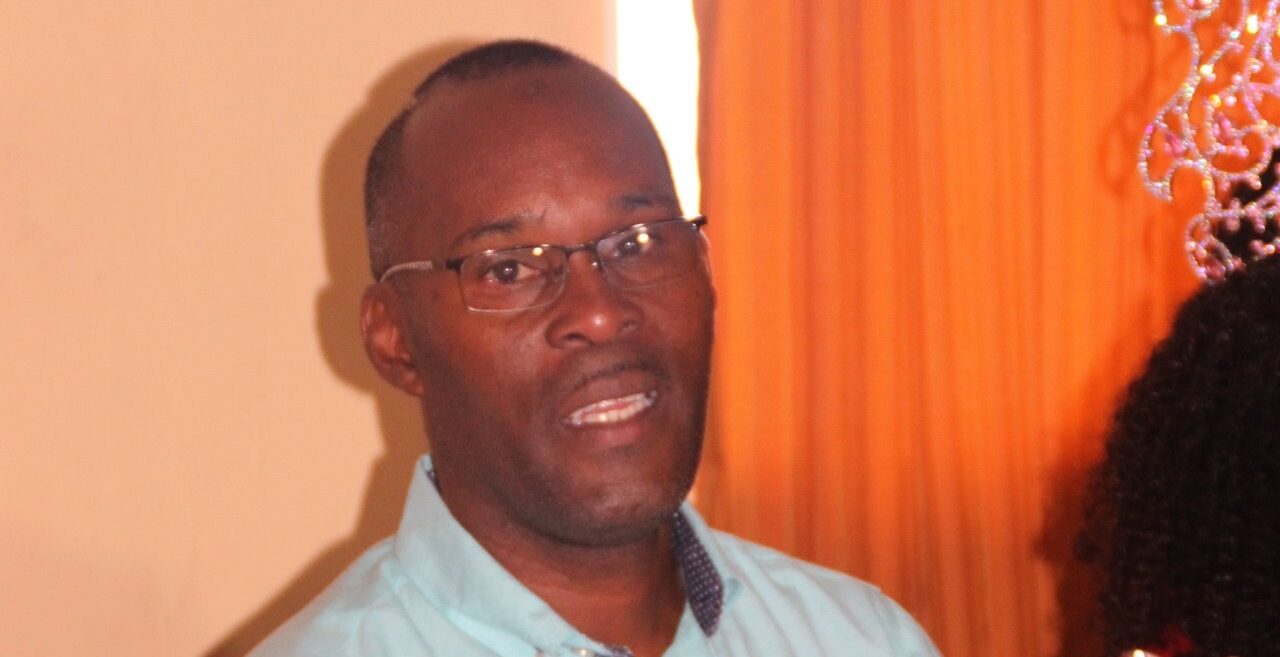
OP-ED: Balancing personal liberties and institutional neutrality – The case of Speaker Joseph Isaac and the rights of Dominican citizens
In the Caribbean nation of Dominica, a heated constitutional and political debate has erupted over the actions of House of Assembly Speaker Joseph Isaac, whose decision to speak at a rally for the ruling Dominica Labour Party (DLP) has exposed deep tensions between individual constitutional rights and the institutional requirement of political neutrality for senior public office holders.
The controversy began when Isaac joined DLP supporters gathered under the party’s red banners to address the crowd. As Speaker, Isaac holds a constitutional role tasked with presiding over parliamentary proceedings fairly and impartially, so his open appearance on a partisan ruling party platform immediately drew public outcry. In his defense, Isaac invoked Sections 10(1) and 11(1) of Dominica’s Constitution, which guarantee all citizens the fundamental rights to freedom of expression and freedom of assembly and association.
To understand the stakes of this dispute, it is necessary to contextualize both Isaac’s background and the constitutional framework governing his role. Appointed Speaker in 2020, Isaac has prior partisan affiliations with both the opposition United Workers Party and the ruling DLP. Dominica’s longstanding parliamentary conventions require the Speaker to act without fear, favor, affection or ill will toward any political group, treating all elected members equally regardless of party affiliation. Chapter I of the Commonwealth of Dominica Constitution enshrines core fundamental rights: Section 10(1) protects the right to hold opinions, share information and express ideas without interference, while Section 11(1) guarantees the right to associate with political parties and gather peacefully. Crucially, these rights are not absolute; the Constitution allows for reasonable restrictions justified by public order, national security or the rights and freedoms of other citizens.
Legally, Isaac’s defense holds surface merit. The text of Dominica’s Constitution extends these fundamental rights to all citizens, including public office holders, and no explicit statutory bar prohibits the Speaker from participating in partisan political events outside of parliamentary sittings. But constitutional permissibility does not erase the ethical and normative conflict at the heart of this case. Longstanding parliamentary norms across democratic systems hold that the Speaker must remain strictly neutral to preserve public trust in the integrity of legislative proceedings. In a small state like Dominica, where political divides are already sharply drawn, public alignment with the ruling party erodes public confidence that the Speaker will referee parliamentary debates fairly. Even in the absence of actual bias, the perception of partiality inflicts lasting damage on the credibility of parliamentary institutions.
What has amplified this controversy beyond a single officeholder’s actions are widespread allegations that the DLP government itself has systematically violated the very constitutional rights Isaac now invokes for himself. Opposition groups, civil society activists and ordinary dissenting citizens have repeatedly accused the administration of curtailing core fundamental rights protected in Sections 1 through 9 of the Constitution, ranging from freedom of peaceful assembly to freedom of the press and protection from arbitrary treatment.
Specific allegations include selective enforcement of public order rules to block opposition protests, with police regularly denying demonstration permits or dispersing anti-government gatherings; state control of major media outlets that marginalizes dissenting voices; targeted legal and administrative pressure on government critics; and widespread electoral irregularities that undermine citizens’ right to fair political representation. Many Dominican citizens report living in constant fear of state reprisal for open opposition to the DLP: retaliation ranges from intimidation by party surrogates on social media to being blocked from access to government scholarships, public health care, education opportunities and other state benefits, purely based on political affiliation. Critics argue this creates a glaring double standard: the DLP defends the Speaker’s exercise of constitutional rights when it serves the government’s political interests, while actively suppressing the same rights for ordinary citizens who oppose the ruling party.
From a constitutional perspective, any restrictions on fundamental rights must meet a strict test of being necessary and proportionate to a legitimate public aim. Critics note that the blanket, selectively enforced restrictions the DLP has allegedly imposed on opposition activity fail this test entirely, amounting to politically motivated suppression of core constitutional protections.
This controversy ultimately extends far beyond Joseph Isaac’s personal conduct. It cuts to a core principle of democratic governance: the equal application of constitutional rights to all citizens, regardless of political affiliation. While Isaac’s claim to his personal constitutional rights is legally grounded, the ethical question of whether he should exercise those rights in such a public, partisan way as Speaker remains unresolved. The Speaker, by virtue of their role as the neutral referee of parliamentary democracy, carries a special obligation to voluntarily limit some personal political expression to preserve institutional integrity. For the DLP government, the implication is clear: if the administration defends the Speaker’s right to political participation, it is bound by constitutional principle to extend that same right to all Dominican citizens, even those who oppose the government.
As things stand, the saga of Joseph Isaac and the DLP illustrates a broader, ongoing challenge for Dominican democracy: upholding the constitutional guarantee of equal rights for all, rather than applying rights selectively for political gain. Upholding this principle is not only essential to preserving the credibility of the Speaker’s office, it is core to sustaining the health of democracy in Dominica as a whole.
-

WEATHER (6:00 AM, July 4): Partly cloudy to cloudy, hazy and breezy with a few showers
As the next 24-hour forecast period unfolds, a persistent Atlantic high-pressure system will remain the dominant weather feature governing conditions across the region. Today, skies are projected to range from partly cloudy to fully overcast, with a small number of brief showers popping up in isolated areas. Overnight, this pattern will shift slightly to bring more scattered shower activity across a broader swath of the area. For the entire duration of the weekend, consistent breezy conditions will remain a constant feature of the local weather.
Beyond temperature and precipitation patterns, a major air quality concern is unfolding this week: a thick, widespread plume of Saharan dust is traversing the region, and it is expected to keep air quality in the moderate to unhealthy range all the way through next week. Public health officials are urging vulnerable groups who face heightened sensitivity to particulate dust — including people living with asthma, those who experience chronic allergies, and anyone managing other respiratory or skin conditions — to consistently follow recommended protective precautions to avoid adverse health reactions. For individuals working or traveling on local waterways, low visibility driven by the dust plume creates additional navigational hazards, so authorities have advised all mariners to ensure they carry fully functional electronic navigation tools for the duration of the event.
Coastal areas are also facing elevated marine hazards over the weekend, with wave heights projected to climb sharply across both the western and eastern coastlines. Along the western coast, waves are expected to build to nearly 5 feet, while open waters off the eastern coast could see waves reach as high as 8 feet. In response to these dangerous conditions, emergency management officials are reminding small watercraft operators and recreational sea swimmers to closely track changing marine conditions throughout the weekend and exercise heightened caution when entering the water.
-
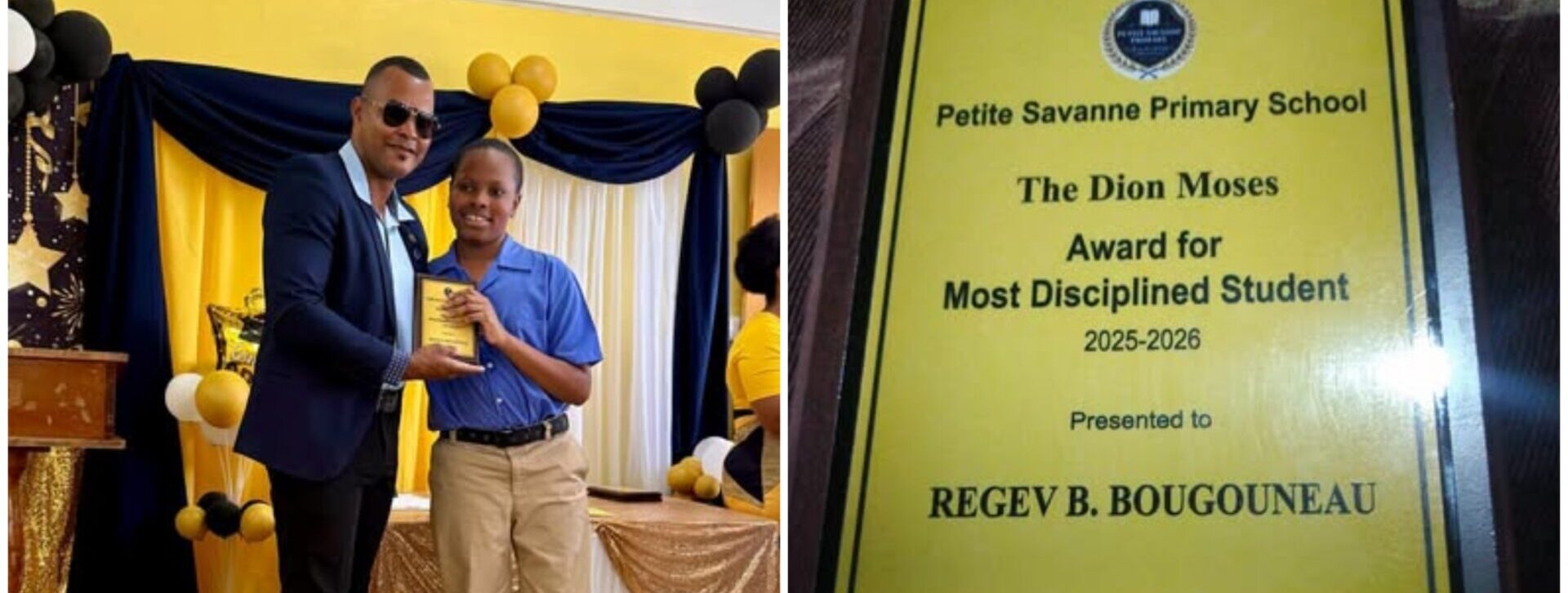
Acting Sergeant Dion Moses presents discipline award at Petite Savanne Primary graduation
On July 1, 2026, the graduation and annual awards ceremony of Petite Savanne Primary School in Dominica hosted a special recognition segment led by a local law enforcement officer, highlighting an ongoing partnership between the national police force and island educational institutions.
Acting Sergeant Dion Moses took to the stage during the event to present the inaugural Dion Moses Most Disciplined Student Award to graduating student Regev B. Bougouneau, who was selected for the honor out of all pupils at the school.
As outlined in an official announcement shared to the Commonwealth of Dominica Police Force’s public Facebook page, the award was created to celebrate students who maintain exceptionally high standards of conduct across an entire academic year. To earn the distinction, candidates must consistently show unwavering self-discipline, respect for peers and staff, a strong sense of personal responsibility, and behavior that serves as a model for other students throughout the school community.
This awards presentation is not an isolated event, but a core component of the Commonwealth of Dominica Police Force’s wider Community Policing Programme. The program was developed with a clear dual mission: to build deeper, trust-based connections between local law enforcement teams and educational institutions across the island, and to create consistent, positive opportunities for police officers to engage with Dominica’s young population outside of traditional law enforcement contexts.
In its statement, the police force emphasized that the long-term goal of this youth-focused initiative is to nurture strong moral character among school-aged children. By publicly celebrating positive behavior and outstanding conduct, organizers hope to inspire young Dominicans to practice intentional decision-making from an early age, empowering them to grow into engaged, responsible leaders who will contribute positively to their local communities in the years ahead.
Along with recognizing Bougouneau’s achievement, the police force’s Facebook post extended formal congratulations to every graduating student of Petite Savanne Primary School’s 2026 class, wishing each cohort member smooth transitions and ongoing academic achievement as they advance to the next stage of their educational careers.
-

CARPHA launches regional emergency operations centre to strengthen Caribbean health security
On July 3, 2026, the Caribbean Public Health Agency (CARPHA) formally launched the long-awaited Caribbean Regional Emergency Operations Centre (CREOC) during an official inauguration ceremony held at its headquarters in Port of Spain, the capital of Trinidad and Tobago. This landmark public health infrastructure initiative, funded by the European Union through the 11th European Development Fund’s Health Security Strengthening Programme, marks a major step forward in the Caribbean’s collective ability to confront cross-border public health risks.
The opening ceremony was co-led by three key stakeholders: Trinidad and Tobago’s Minister of Health Dr. Lackram Bodoe, European Union Ambassador to Trinidad and Tobago Her Excellency Cécile Tassin, and CARPHA Executive Director Dr. Lisa Indar, underscoring the shared regional and international commitment to strengthening Caribbean health resilience. Designed to function as the central coordinating hub for public health emergency action across CARPHA’s 26 member states, the new facility fills a critical gap in the region’s disaster and outbreak response framework.
Speaking at the event, Dr. Bodoe emphasized that health security is inherently a collective responsibility. “No single country, regardless of its available resources, can tackle the modern cross-border public health threats we face today alone,” he noted. “Our greatest strength comes from intentional partnership and regional collaboration.” Dr. Indar echoed this sentiment, pointing to the unique vulnerabilities of the Caribbean’s Small Island Developing States that make coordinated action non-negotiable. “Our economies, borders, and communities are deeply interconnected, which means any public health threat can spread across the entire region in a very short timeframe,” she explained. “This new operations centre will dramatically upgrade our capacity to detect threats early, align regional response efforts, and safeguard the health and well-being of all Caribbean people.”
Ambassador Tassin framed the CREOC as more than just a physical facility—it is a tangible symbol of regional solidarity. “This Centre represents the Caribbean’s shared determination to work together, strengthen regional health security, and protect its people through collective preparedness and pooled expertise,” she said.
The facility has been built and structured in full alignment with the World Health Organization’s (WHO) Public Health Emergency Operations Centre Framework, and has earned a Type C classification—the highest operational ranking under the WHO’s global system. This classification enables the CREOC to coordinate large-scale, complex public health emergencies that span multiple countries, while also providing critical support to national emergency operations centres across the Caribbean.
Powered by CARPHA’s custom-built Regional Integrated Early Warning Surveillance and Response System (RIEWSS), a tool tailored specifically to the Caribbean’s unique public health landscape, the centre leverages advanced surveillance technology to speed up early threat detection and improve situational awareness for decision-makers. When paired with standardized timeliness metrics and integrated multi-sector response mechanisms, the system is expected to cut response times and improve coordination between member states during crises. Beyond outbreak monitoring, the CREOC will serve as the central regional coordination point for ministries of health, national disaster management agencies, regional intergovernmental bodies, and international partner organizations. It will oversee deployment of specialized technical response teams, coordinate emergency logistics, lead region-wide risk communication efforts, and maintain a unified, real-time operating picture for all stakeholders during public health events.
The development of the CREOC was directly shaped by hard-won lessons from recent regional crises. The COVID-19 pandemic, repeated large-scale dengue outbreaks, and climate-driven disasters including Hurricanes Melissa and Beryl all exposed critical gaps in fragmented regional coordination, creating a clear urgency for a dedicated central hub. To adapt to the full range of possible scenarios, the centre will operate under a flexible scalable activation model, ranging from routine daily surveillance and monitoring to full-scale regional emergency activation, allowing CARPHA to rapidly scale up coordination efforts as situations evolve.
Moving forward, the CREOC will lead and support regional responses to a broad spectrum of public health emergencies, including infectious disease outbreaks, severe weather events that carry public health risks, environmental and chemical incidents, mass gatherings, and any other emergency with regional or international public health implications. It will also support Caribbean countries in meeting their obligations under the International Health Regulations (2005) by strengthening regional surveillance systems, emergency coordination, operational readiness, and cross-border information management.
For CARPHA, the inauguration of the Regional Emergency Operations Centre reflects the agency’s long-standing commitment to advancing regional health security and ensuring all Caribbean nations are better prepared to confront both existing and emerging public health threats in the years ahead.
-
Health Ministry issues Ebola travel advisory, strengthens border screening
The Dominican Ministry of Health, Wellness and Social Services has activated heightened public health protections against the Ebola Bundibugyo Virus Disease (EBVD), issuing an official travel advisory and ramping up screening protocols at all of the island nation’s points of entry amid growing cases in Central Africa.
Under the new guidance, Dominica is strongly discouraging Dominican residents and travelers from making non-essential trips to the Democratic Republic of the Congo (DRC) and Uganda, the two countries where confirmed EBVD cases have already been documented by public health officials. For journeys to additional African nations flagged by the Africa Centres for Disease Control and Prevention (Africa CDC) as facing elevated transmission risk, the ministry is urging prospective travelers to conduct a rigorous assessment of trip necessity, and to adhere strictly to public health guidance issued by local health authorities, the World Health Organization (WHO), and Africa CDC.
As a core component of the country’s preemptive preparedness strategy, enhanced health surveillance systems have been rolled out across every port of entry, including airports, seaports, and land border crossings. All travelers arriving from or transiting through affected regions will be required to complete additional screening steps, including detailed travel history checks and targeted risk evaluations to identify potential exposure.
Based on the outcome of individual risk assessments, travelers who are determined to have had high levels of exposure to the virus may be mandated to complete public health monitoring, quarantine, or isolation for a period of up to 21 days, aligned with established national public health protocols for viral hemorrhagic fevers. The advisory also extends guidance to recent returnees from affected countries, urging all individuals who have traveled to high-risk zones to actively monitor their own health for a 21-day period following arrival back in Dominica.
For anyone who develops EBVD-compatible symptoms within this window – which include fever, extreme muscle weakness, headache, sore throat, vomiting, diarrhea, abdominal pain, and unexplained bleeding or bruising – the ministry advises immediate self-isolation. Symptoms should not lead to unannounced visits to healthcare facilities; instead, affected individuals must contact local public health officials by phone first to receive structured, safe guidance for care.
Beyond travel-focused precautions, the ministry has reminded the general public of core preventive hygiene practices that reduce the risk of any viral infection, including frequent and proper hand hygiene, avoiding direct contact with other people’s blood or bodily fluids, steering clear of individuals displaying visible EBVD symptoms, and limiting exposure to wild animal reservoirs of the virus, particularly bats and non-human primates that are known to carry Ebola strains.
To coordinate an effective, data-driven response, the Dominican ministry said it is maintaining close, ongoing collaboration with regional and global public health partners, including the Pan American Health Organization (PAHO), WHO, and the Caribbean Public Health Agency (CARPHA). These partnerships support continuous real-time monitoring of the global outbreak trajectory and ongoing capacity building to strengthen Dominica’s domestic preparedness infrastructure.
In a reassuring note to the public, ministry officials emphasized that the current risk of EBVD being introduced to Dominica remains low. The intensified preparedness measures are being implemented out of an abundance of caution, to prevent introduction and rapid spread if the virus does reach the island. Officials also urged the public to only seek information from official sources, including the Ministry of Health and accredited international public health agencies, to avoid misinformation about the outbreak and response.
-
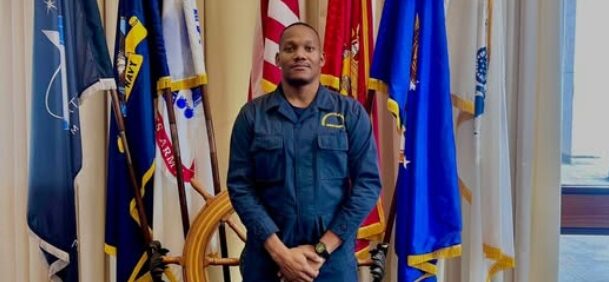
Acting Corporal Steven Celestine completes international maritime security training
A rising member of the Commonwealth of Dominica Police Force (CDPF) has marked a key milestone for the island nation’s maritime security capabilities, graduating from one of the world’s leading specialized training programs focused on the legal frameworks of maritime safety operations.
Acting Corporal Steven Celestine successfully wrapped up the 2026 iteration of the Legal Aspect of Maritime Security Operations (LAMSO) course, an intensive four-week educational initiative run by the Defense Institute of International Legal Studies at the Defense Security Cooperation University. Held from May 22 through June 18 this year, the program brought together 23 national delegations, creating a collaborative space for maritime security professionals from across the globe to exchange knowledge and build cross-border partnerships.
Unlike generic maritime training courses, the LAMSO program was intentionally designed to meet the needs of frontline practitioners and leaders working in the maritime security space: it caters specifically to military commanders, in-house legal advisors, active maritime law enforcement personnel, and civilian experts whose work touches on ocean governance and security. Over the course of the month, participants dove deep into the complex international legal architecture that regulates both military activities and civilian maritime law enforcement operations at sea. Trainees also analyzed U.S. maritime law enforcement regulations and procedural frameworks, exploring how these models could be adapted to strengthen operational capacity in their home jurisdictions.
Core curriculum topics spanned critical areas of maritime governance, including the United Nations Convention on the Law of the Sea, standardized rules of engagement for security operations, the long-standing international law of armed conflict, and legal protocols for coordinating humanitarian assistance and disaster relief responses in maritime settings.
In an official statement announcing Celestine’s completion of the program, CDPF leadership emphasized that the achievement reflects the force’s sustained, long-term investment in professional development for its ranks. The organization also noted that expanding training opportunities like this aligns with two core strategic priorities: growing collaborative international partnerships in the maritime security space, and upgrading Dominica’s overall ability to secure its territorial waters and coastal communities.
Closing the statement, CDPF extended formal congratulations to Celestine, noting that his commitment to professional excellence brings significant pride to both the police force and the entire Commonwealth of Dominica.
-
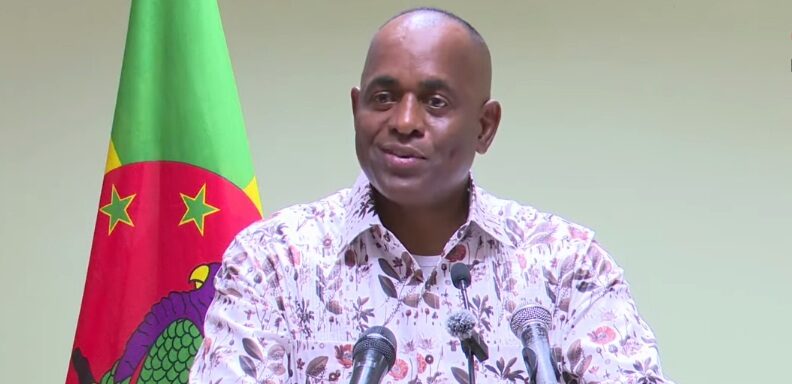
Voter ID card issuance set to begin by end of July, says Skerrit
The Caribbean nation of Dominica is on track to begin distributing official voter identification cards before July draws to a close, Prime Minister Roosevelt Skerrit confirmed during a press briefing with reporters Thursday.
The rollout marks a critical turning point for the country’s multi-year electoral modernization initiative, Skerrit explained, shifting the process from legislative drafting to tangible on-the-ground implementation. For years, the government has held extensive consultations with a broad range of stakeholders: national political parties, domestic civil society groups, and regional and international electoral experts, to craft a framework to update Dominica’s voting system. That work culminated in unanimous parliamentary approval of new electoral reform legislation, and the administration is now delivering on the policy commitments laid out in that bill.
“Voter ID issuance starting before the end of this month is another important milestone for our reform process,” Skerrit told journalists. This progress comes amid sustained public pushback from critics, including Gregor Nassief, owner of Secret Bay resort, and the Dominica Business Forum, both of which have questioned the Electoral Reform Commission’s capacity to independently and effectively oversee the full rollout of reform measures.
Despite the criticism, Skerrit affirmed that the process is moving forward on schedule. He noted that the ruling Dominica Labour Party has already launched outreach to its supporters, urging them to participate in the ongoing voter confirmation process that precedes ID distribution. The prime minister stressed that protecting and strengthening the country’s democratic institutions is not the responsibility of any single political group, calling on all parties, civic associations, and community organizations to join the effort to drive up participation.
“I again encourage every eligible Dominican who has not yet finished their voter confirmation to complete the process without delay,” Skerrit said. “This is a collective duty and responsibility for all of us.” He added that actions taken outside the official structured reform process cannot contribute to meaningful democratic strengthening, noting that the entire initiative is designed explicitly to reinforce the integrity of Dominica’s electoral system for all citizens.