标签: Dominica

多米尼克

  • Dominica hosts regional IICA white potato workshop

    Dominica hosts regional IICA white potato workshop

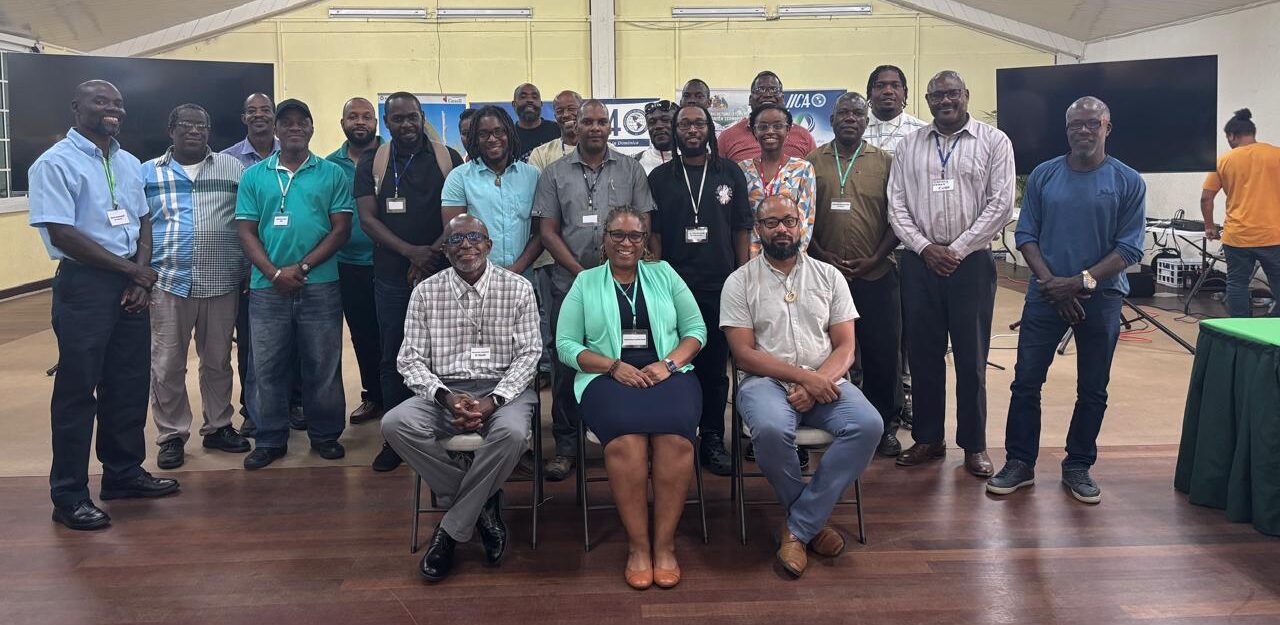
    In a significant move toward agricultural self-sufficiency, Dominica has hosted a landmark regional workshop focused on revolutionizing white potato production across the Eastern Caribbean. The event, orchestrated by the Inter-American Institute for Cooperation on Agriculture (IICA) from December 1-3, 2025, brought together over thirty key stakeholders from six OECS member states and territories.

    The workshop served as a practical platform for participants—including farmers, government technical officers, and representatives from IICA, OECS Commission, CARDI, and FAO—to engage in technical presentations, field visits, and strategic planning. The location was strategically chosen given Dominica’s unique status as the only OECS member with over forty years of continuous commercial white potato production, providing a viable model for regional emulation.

    This initiative addresses a critical economic vulnerability: in 2024 alone, OECS nations imported 8,890 tons of white potatoes valued at approximately US$7.6 million, with imports steadily increasing. IICA Eastern Caribbean representative Gregg Rawlins emphasized the urgency of ‘structured and coordinated production’ to strengthen food security and reduce this substantial import dependency.

    Dominica’s Minister of State for Agriculture, Jullan Defoe, reaffirmed the nation’s commitment to regional cooperation, aligning with both the OECS FAST Strategy and CARICOM’s goal of reducing food imports. He detailed government support mechanisms including improved financing access, land preparation assistance, and enhanced technical services through partnerships with CARDI, IICA, FAO, and WUSC-Caribbean.

    FAO Value Chain Development Specialist Vermaran Extavour noted the workshop’s alignment with regional policy priorities, including the ’25 by 2025 +5′ initiative, while praising Dominica’s production model as a foundational blueprint for other member states. OECS Director General Dr. Didacus Jules characterized the gathering as a pivotal shift from planning to implementation, highlighting that agricultural transformation requires robust regional cooperation and that white potato development exemplifies the integration of climate-smart agriculture, value chain enhancement, and public-private partnerships.

    The workshop is expected to directly inform the creation of a strategic regional framework for white potato research, development, production, and marketing across the OECS. This framework will aim to increase production capacity, enhance postharvest systems, and expand market access, collectively contributing to CARICOM’s broader objective of reducing the region’s food import bill and building economic resilience.

  • Final day of public voting for 2025 Dominican Music Awards

    Final day of public voting for 2025 Dominican Music Awards

    The 2025 Dominican Music Awards, organized by Creole Heartbeat, enters its climactic phase as public voting concludes at midnight tonight. Music enthusiasts worldwide have this final opportunity to influence the outcome by submitting their choices through the official portal at www.creoleheartbeat.com, with fan votes determining 60% of the final results.

    Leroy Wadix Charles, representative of Creole Heartbeat, confirmed in an official communiqué that following the public voting closure, an expert adjudication panel will commence evaluation of all entries. Their professional assessment will contribute the remaining 40% weighting toward determining the ultimate winners across all categories.

    The prestigious gala ceremony is scheduled for January 3, 2026, at the Intercontinental Dominica Cabaret Resort and Spa. This black-tie event will honor exceptional artistic achievement and cultural significance within the Dominican music industry, recognizing both domestic accomplishments and international influence.

    This year’s competition showcases remarkable diversity with 24 distinct award classifications featuring over 200 nominated artists. The musical spectrum encompasses traditional bouillon rhythms, contemporary cadence, reggae fusion, inspirational gospel, energetic soca, and authentic folk traditions. Beyond the competitive segments, the ceremony will confer lifetime achievement recognitions and two distinctive special honors celebrating extraordinary contributions to cultural preservation.

    The awards night promises an exquisite celebration of musical excellence and creative innovation, spotlighting Dominica’s vibrant cultural ambassadors. Ticket reservations for this premier event are currently available through the organization’s official website.

  • UWP Council in St. Lucia rejects Chastanet’s resignation for second time

    UWP Council in St. Lucia rejects Chastanet’s resignation for second time

    In a decisive move highlighting internal party dynamics, the United Workers Party (UWP) of Saint Lucia has formally rejected Political Leader Allen Chastanet’s resignation for the second consecutive time. The party’s National Council—its supreme governing body—convened on December 8 to address recent political developments, culminating in a unanimous vote to retain Chastanet until the next party convention.

    The rejection comes amid significant electoral setbacks. The UWP suffered a severe defeat in the December 1 general election, securing only one seat out of 17 contested constituencies. This marks the party’s second consecutive electoral loss following its 2021 defeat by the Saint Lucia Labour Party (SLP).

    Chastanet initially offered to resign shortly after the 2021 results, and again last week following the recent electoral performance. Both offers were declined following what the party described as “thorough deliberations.” Public Relations Officer Leonard ‘Spider’ Montoute emphasized the council’s commitment to organizational stability and renewal in an official communiqué.

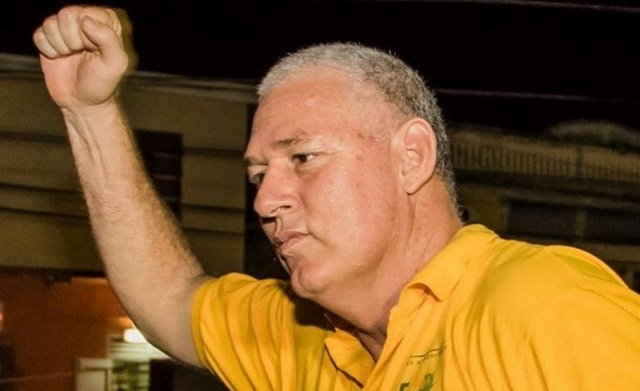
    The statement also expressed appreciation for member and supporter loyalty, reinforcing the UWP’s dedication to public service and strategic realignment. Chastanet, pictured raising a fist at a recent party event, remains at the helm amid calls for new leadership and party restructuring.

  • United Progressive Party launches first fully featured political website in Dominica

    United Progressive Party launches first fully featured political website in Dominica

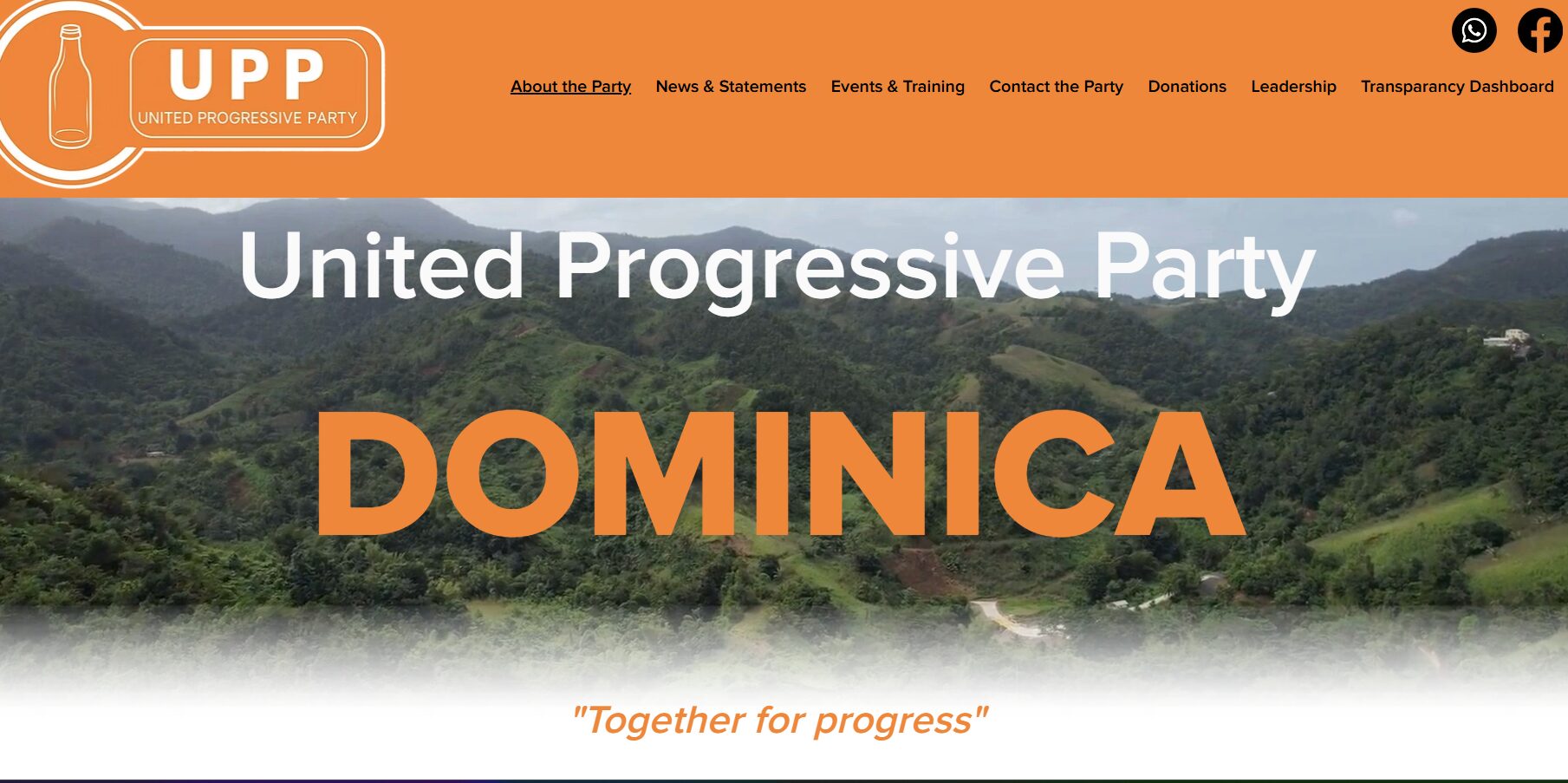
    In a groundbreaking move for Caribbean politics, the United Progressive Party (UPP) of Dominica has launched an innovative digital platform designed to revolutionize citizen engagement with political processes. The newly unveiled official website, www.uppdominica.com, represents a significant technological advancement in how political parties interact with their constituents.

    Party leader Joshua Francis heralded the launch as a transformative moment in Dominican democracy, characterizing the platform as “a digital town hall, policy laboratory, and movement headquarters all in one.” This comprehensive digital ecosystem effectively dismantles traditional barriers between elected officials and their communities, fostering unprecedented levels of transparency and dialogue.

    The platform’s sophisticated features include a secure online donation portal—making UPP the first political party in Dominica to offer direct digital contributions through its website. In a remarkable commitment to organizational transparency, the party has made its complete constitution publicly accessible, allowing citizens to examine its rules, structure, and core values without restriction.

    Additional functionalities include streamlined membership and volunteer registration forms, enabling participation from any location, and integrated translation support to engage the global Dominican diaspora. The platform’s design prioritizes accessibility, ensuring citizens worldwide can contribute to policy development and access information regardless of geographical constraints.

    Future development plans include interactive community forums, policy tracking mechanisms, and real-time transparency dashboards to further enhance public accountability. The UPP, established in 2022 in the Kalinago Territory, has built its identity around principles of fairness, accountability, and community-driven governance. Its distinctive orange bottle symbol signifies independence and freedom under the law, while its motto “Together for Progress” reflects its commitment to collective advancement.

    Citizens are encouraged to explore the platform to review the constitution, register support, contribute donations, and deepen their understanding of the party’s mission and values.

  • Anse De Mai jetty project almost complete, confirms PM

    Anse De Mai jetty project almost complete, confirms PM

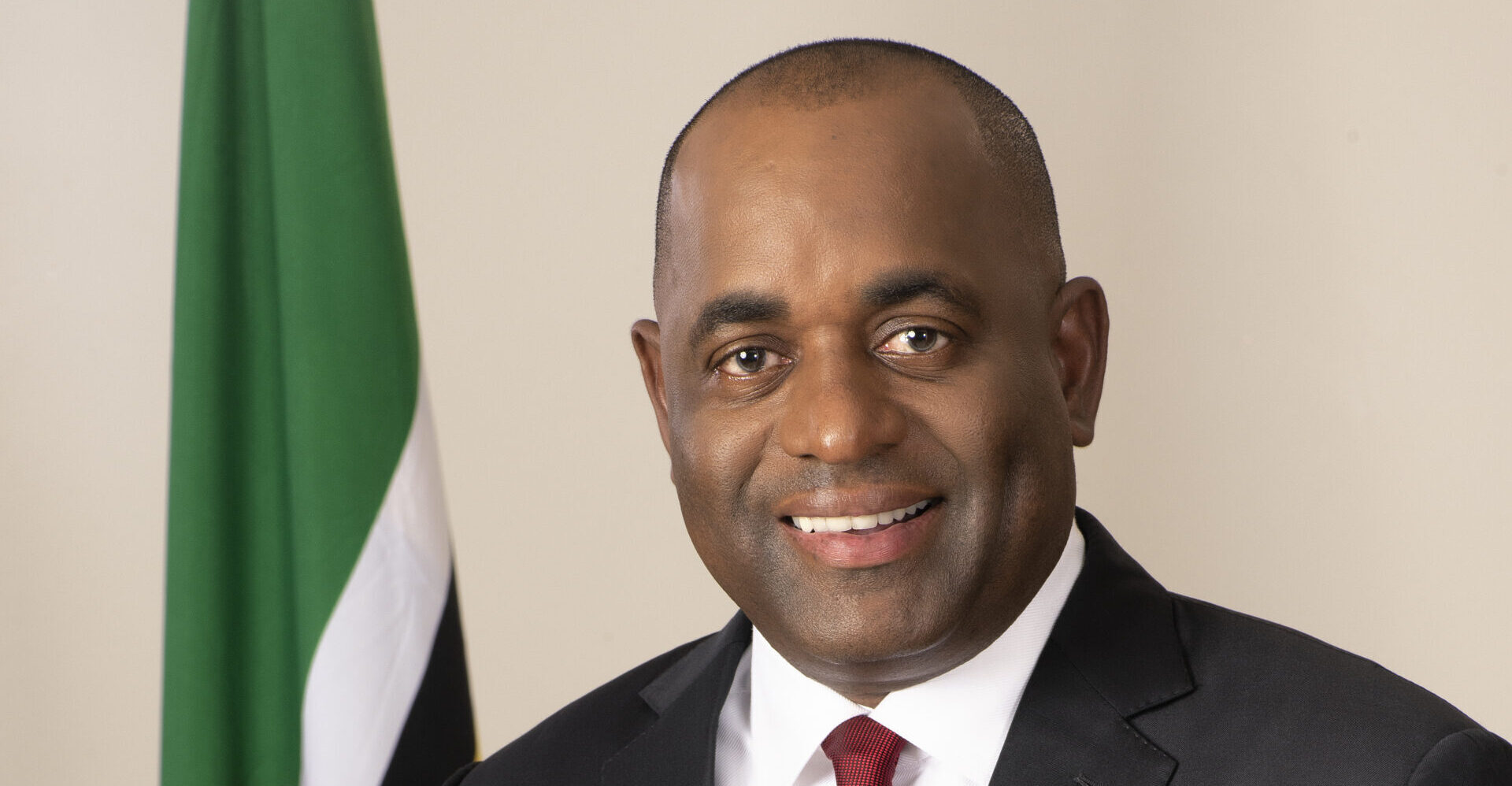
    The Government of Dominica has achieved a significant milestone in its infrastructure development program with the first phase of a $4 million jetty construction in Anse De Mai nearing completion. Prime Minister Roosevelt Skerrit confirmed the progress during a recent tour of the coastal area, emphasizing the project’s importance for both local communities and national infrastructure.

    This substantial investment represents the initial phase of development that will subsequently include enhanced facilities for customs and immigration services. Prime Minister Skerrit specifically acknowledged the patience and cooperation demonstrated by local fishermen and the communities of Anse De Mai and Bense throughout the development process. The Prime Minister also recognized the advocacy efforts from both current and former parliamentary representatives who championed the project.

    Parliamentary Representative Lakeyia Joseph of the Paix Bouche Constituency provided additional context, explaining that the area serves as both an official port of entry and an active fishing community connecting Portsmouth to the Kalinago Territory. Joseph emphasized the decades-long advocacy for this infrastructure project and described the construction as high-quality work that will significantly benefit daily users of the port.

    The completion of this jetty project marks the realization of a long-standing community priority that will enhance economic activities, improve operational facilities for customs and immigration services, and strengthen relationships with neighboring French communities. Both government officials and community members expressed satisfaction with the project’s progress and its potential to transform local infrastructure and economic opportunities.

  • STATEMENT: Caribbean Development Bank president on International Anti-Corruption Day 2025

    STATEMENT: Caribbean Development Bank president on International Anti-Corruption Day 2025

    The Caribbean Development Bank (CDB) has issued a powerful declaration reinforcing its institutional dedication to combating corruption during International Anti-Corruption Day 2025 observances. President Daniel Best emphasized that transparency, integrity, and accountability form the essential foundation for meaningful development progress across Caribbean nations.

    Corruption continues to present one of the most formidable obstacles to sustainable development globally. Citing alarming statistics from UN Secretary-General António Guterres, the Bank highlighted that approximately $1 trillion is paid in bribes annually while an additional $2.6 trillion is siphoned through corrupt practices. These enormous financial drains represent resources that could otherwise transform communities through essential infrastructure, education systems, and healthcare services.

    The Caribbean region faces particularly severe consequences from corruption due to constrained fiscal environments, substantial debt burdens, and minimal tolerance for inefficiency. For small island developing states served by the CDB, any resources lost to corruption directly translate into diminished development outcomes and missed economic opportunities.

    Accordingly, the Bank has positioned anti-corruption measures as central to its operational mandate rather than peripheral concerns. As a development finance institution serving vulnerable nations, maintaining impeccable integrity standards is crucial for securing continued access to resources required by Borrowing Member Countries. Robust governance frameworks and anti-corruption mechanisms directly enable the Bank’s core objectives of advancing economic growth, poverty reduction, and building resilient societies.

    For over a decade, CDB’s Office of Integrity, Compliance, and Accountability has functioned as the institutional cornerstone for governance frameworks encompassing ethics, accountability, and compliance. Through sustained capacity-building initiatives, training programs, and knowledge-sharing on anti-corruption practices, the Office has demonstrated regional leadership in governance standards.

    The 2025 observance theme, “Uniting with Youth Against Corruption: Shaping Tomorrow’s Integrity,” aligns perfectly with CDB’s institutional priorities and regional vision. With youth development embedded in its operational strategy, the Bank recognizes that empowering emerging generations requires providing young people with the values, knowledge, and tools to champion integrity across all sectors. Caribbean youth bring technological fluency, fresh perspectives, and determination to challenge outdated practices that have hindered progress.

    By investing in youth-led initiatives and creating platforms for young voices in governance discussions, CDB supports the emergence of a generation demanding higher institutional integrity standards. As global progress toward Sustainable Development Goals remains significantly off-track, the Bank reaffirms its commitment to championing anti-corruption and good governance.

    Effective anti-corruption systems enable institutions to operate more efficiently, attract sustainable financing, and deliver transformative development outcomes. With strengthening anti-corruption mechanisms becoming increasingly urgent, CDB will continue collaborating with governments, civil society, and youth to build a Caribbean where development resources fulfill their promise, institutions operate with unwavering integrity, and citizens trust that development genuinely serves public interests.

  • Pastor Rodney throws his hat in political ring, says it’s time for servanthood in governance, not self-aggrandizement

    Pastor Rodney throws his hat in political ring, says it’s time for servanthood in governance, not self-aggrandizement

    In a significant political development, Pastor Randy Rodney has announced his candidacy for office under the banner of the United Workers Party (UWP), framing his decision as a divine calling rather than a personal ambition. The announcement, made during a recent radio program on Q-95, marks a notable shift from the pulpit to the political arena.

    Rodney described his choice as the culmination of ‘prayerful reflection’ and ‘thoughtful consultation,’ characterizing it as an ‘assignment’ driven by purpose. He positioned his entry into politics as a direct response to a national crisis, asserting that Dominica stands at a critical ‘crossroads’ requiring leaders grounded in servanthood rather than mere policymaking. ‘Our nation needs leadership rooted in servanthood and guided by a genuine mandate to lift people,’ he declared.

    The pastor-turned-politician outlined a philosophy of governance emphasizing moral stewardship over personal gain. He criticized the current political climate for fostering division and unaccountable leadership, promising instead to champion transparency and integrity. Rodney committed to addressing the ‘bread and butter issues’ of ordinary citizens, condemning what he described as calculated impoverishment and wealth concentration among a privileged few over the past two decades.

    Rodney’s alignment with the UWP stems from his belief in the party’s constitutional safeguards against dictatorial leadership and its stated principle of ‘people before party.’ He contrasted this with the current administration, which he accused of being accountable to no one but itself. His platform calls for reduced partisan fighting, an end to cronyism, and serious consideration of citizens’ interests beyond superficial promises.

    The candidate acknowledged his imperfections while promising presence, listening, and action. His vision looks toward restoring unity and opportunity, enabling families to build futures as in ‘years gone by.’ Rodney concluded with an appeal to UWP delegates ahead of their upcoming conference, urging them to elect ‘leadership with a servant heart’ for the good of the Commonwealth of Dominica.

  • NEW DNO POLL: Should work on the International Airport be paused over freshly raised public concerns about the environmental impact?

    NEW DNO POLL: Should work on the International Airport be paused over freshly raised public concerns about the environmental impact?

    Growing environmental apprehensions surround the ongoing development of Dominica’s International Airport, with citizens and experts urging immediate governmental intervention. Former Chief Physical Planner Annie Edwards has emerged as a prominent voice demanding an immediate suspension of construction activities, citing severe ecological disruptions already observable in the Marigot region.

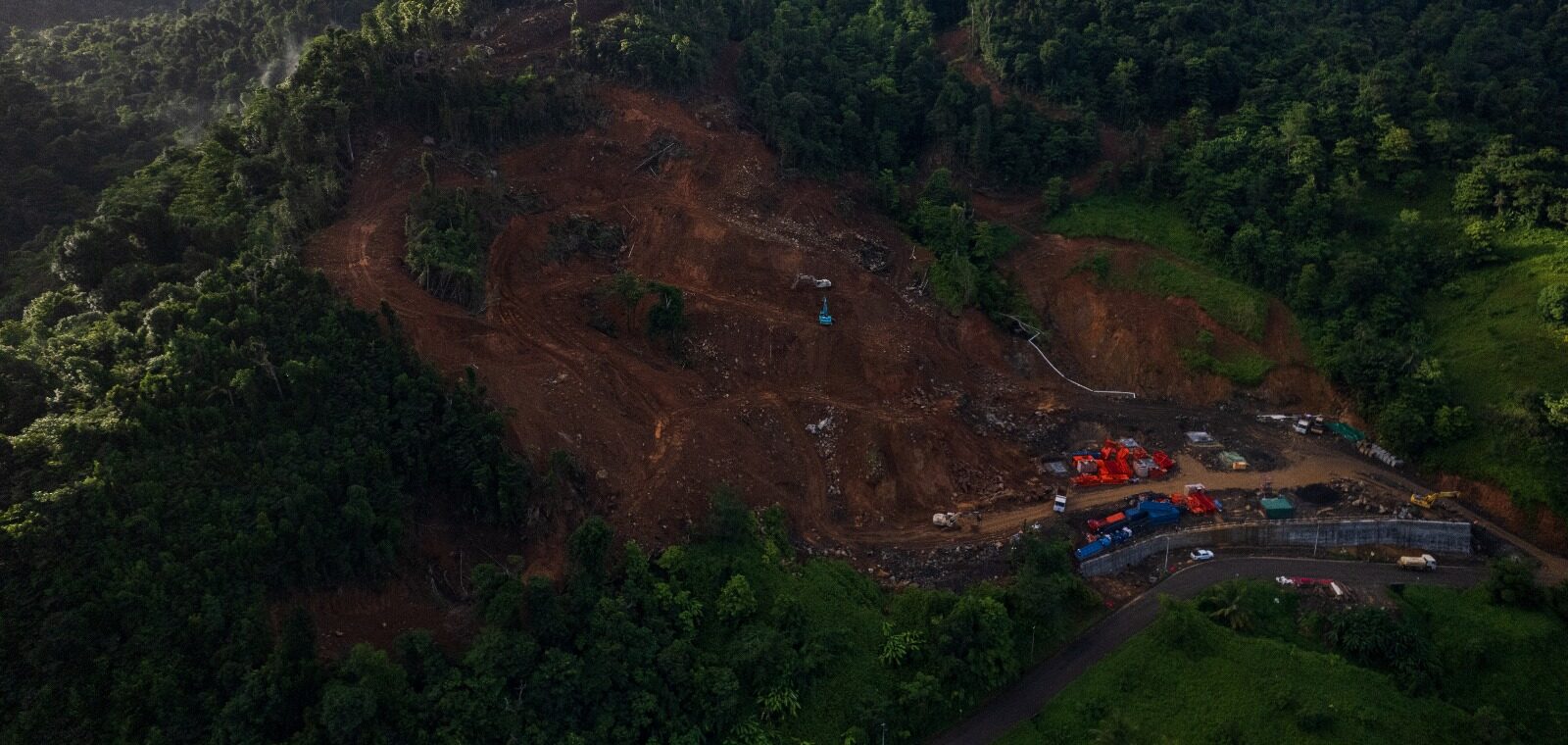
    The primary environmental concern centers on significant sediment discharge into local river systems, transforming previously clear waterways into turbid, brown flows. Edwards warns this sedimentation phenomenon represents just the initial manifestation of broader ecological damage. Additional alarms have been raised regarding potential encroachment into legally protected forestry zones, suggesting possible violations of environmental preservation statutes.

    This developing situation has sparked substantial public discourse, with media outlets initiating official polls to gauge citizen sentiment. The critical question posed to the public asks whether construction should be halted until all environmental compliance standards undergo thorough verification and are completely satisfied. These poll results, expected within fourteen days, are anticipated to influence governmental decision-making regarding the project’s continuation.

    The controversy highlights the enduring tension between infrastructural development and environmental conservation, particularly significant for Dominica’s ecology-sensitive landscape. Public commentary continues to expand across various platforms as stakeholders await both official responses and comprehensive environmental impact assessments.

  • UWP joins calls for halt to quarrying at Deux Branche

    UWP joins calls for halt to quarrying at Deux Branche

    A significant environmental and legal confrontation is unfolding in Dominica as the United Workers Party (UWP) – Team Dominica forms a coalition with residents of Concord, the Kalinago Territory, and Marigot, alongside environmental experts and geologists. The alliance demands an immediate halt to quarrying operations at Deux Branche in Concord, condemning them as unlawful and ecologically devastating.

    The UWP, in an official press release, detailed the extensive damage already inflicted, particularly on the Pagua River, which has suffered from severe sedimentation. This degradation has directly harmed local livelihoods, disrupting recreational uses, diminishing tourism prospects, and compromising traditional food sources for Concord communities.

    Central to the dispute is a alleged violation of the nation’s Physical Planning Act. The party asserts the operation lacks the mandatory planning approval, directly contravening Section 17(1) of the legislation. This statute explicitly requires prior authorization from the Development and Planning Authority for any development, a category which includes quarrying activities contingent on a completed environmental impact assessment (EIA).

    The UWP expressed profound disturbance over what it characterizes as a ‘blatant disregard’ for legal protocols, ostensibly justified by the international airport project and associated developments. These projects, the party contends, are generating substantial negative externalities and community stress spanning from Concord to Woodford Hill.

    Emphasizing non-negotiable environmental safeguards, the UWP underscored the critical function of EIAs. These studies are designed to meticulously evaluate social, ecological, and economic ramifications, identify potential hazards, and prescribe mitigation measures. In certain scenarios, an EIA may conclude that a proposed location is fundamentally inappropriate for development due to insurmountable environmental risks.

    A particularly alarming dimension of the controversy involves the quarry’s alleged encroachment into the Central Forest Reserve. This protected rainforest, established in 1952, constitutes a cornerstone of Dominica’s natural heritage. It acts as a refuge for rare species and unique ecosystems, protected under a suite of laws including the Forests Act, the Forestry and Wildlife Act, the National Parks and Protected Areas Act, and the National Forest Policy of 2022, all mandating conservation, sustainable management, and biodiversity protection.

    In its concluding remarks, the UWP issued a direct appeal to the Roosevelt Skerrit administration, urging an immediate cessation of the current operation and the pursuit of an alternative site for quarrying where environmental and social impacts would be substantially mitigated.

  • Antifreeze poisoning named in death of Grenadian opposition senator

    Antifreeze poisoning named in death of Grenadian opposition senator

    A shocking development has emerged in the Caribbean nation of Grenada, where forensic evidence indicates that opposition senator Neilon Franklyn’s untimely death resulted from antifreeze poisoning. The 28-year-old politician passed away on August 24, 2025, under circumstances that have now triggered a potential murder investigation.

    Renowned regional pathologist Professor Hubert Daisley, based in Trinidad and Tobago, conducted the comprehensive autopsy which identified ethylene glycol—a highly toxic compound commonly found in automotive antifreeze—within Franklyn’s system. Professor Daisley’s detailed report, submitted to the Royal Grenada Police Force several weeks ago, has prompted serious consideration of criminal foul play.

    The investigation faces complexities due to Grenada’s limited forensic capabilities, which necessitated sending biological samples to advanced laboratories in Port-of-Spain, Trinidad, for confirmatory analysis. Law enforcement sources, including an unnamed retired police superintendent, emphasize that the inquiry remains in preliminary stages but requires meticulous examination of several critical angles.

    Authorities are particularly focused on determining how such dangerous chemicals entered Grenada, whether ethylene glycol-based products are readily available locally, and investigating the possibility that contaminated beverages might have been administered to the senator. The police have specifically requested Professor Daisley maintain confidentiality regarding his findings to preserve the integrity of their ongoing investigation.

    Notably, medical records indicate Franklyn exhibited symptoms consistent with organ failure upon hospital admission, further supporting the poisoning hypothesis. Investigators are now examining the senator’s social and professional circles to identify individuals with potential access to such toxic substances and possible motives.

    The Grenadian government previously honored Franklyn’s service in an official statement, recognizing his “dedication and distinction” during his Senate tenure and his tireless advocacy for Grenadian citizens. His thoughtful contributions to legislative processes, particularly during budget debates, earned him widespread respect among political peers.

    This case has drawn significant attention across the Caribbean region, highlighting concerns about political safety and toxic substance regulation in island nations.