标签: Dominica

多米尼克

  • Reminder: Dominica Council on Ageing’s panel discussion on seniors’ legal rights this Saturday

    Reminder: Dominica Council on Ageing’s panel discussion on seniors’ legal rights this Saturday

    As populations across the Caribbean age, local advocacy groups are stepping up efforts to ensure older residents are fully informed of the legal safeguards designed to protect their well-being. The Dominica Council on Aging (DCOA) has issued a public reminder for its upcoming panel discussion, focused exclusively on the legal rights and protections available to the country’s senior population, scheduled to kick off this Saturday, July 11 at the Dominica Public Service Union conference room starting at 10:00 AM.

    Unlike many closed industry forums, this event is open to all members of the public and carries no admission fee. Organizers structured the session to serve a broad cross-section of stakeholders: not only current older adults, but also people preparing for their own retirement, professional caregivers, immediate family members, and friends who support senior loved ones. The core goal is to cut through legal jargon and demystify the complex web of local protections that exist for seniors, making critical information accessible to everyone who needs it.

    The panel will center its conversation on four high-priority issues that disproportionately impact older Dominicans: access to quality healthcare, long-term financial security, safe and affordable housing, and the right to independent personal decision-making. Beyond just educating attendees, DCOA organizers also aim to foster open, constructive dialogue about gaps in current legislation and policy. The forum will create space to discuss how existing frameworks can be strengthened to better shield seniors from financial exploitation, neglect, and other forms of abuse, while ensuring that the personal wishes of older adults are centered and respected in all legal and care matters.

    Leading the discussion will be a multidisciplinary panel of experts drawn from both public and private sectors across the island. Participants include two practicing attorneys-at-law, Singoalla Blomqvist-Williams and John Elue Charles, who bring deep experience in elder law and civil rights. Psychiatrist Dr. Nadia Wallace will contribute perspective on the intersection of mental health, autonomy, and legal decision-making for older adults. Financial expertise will be provided by official representatives from two of the country’s leading financial institutions: the National Bank of Dominica (NBDU) and the National Cooperative Credit Union (NCCU). Additional panelists include Mary-Therese Junkere from the non-profit organization PHARCS and Ainsworth Irish, representing the DCOA itself.

    The DCOA is actively urging all interested parties—from individual seniors and senior community groups to caregivers, relatives, and community members—to attend the session. Organizers emphasize that building greater public awareness of existing rights, protections, and support resources is a critical step toward helping all older adults in Dominica maintain their personal dignity, live independently on their own terms, and enjoy a high quality of life as they age.

  • Boland scores 29 as Dominica falls to Turks and Caicos in FIBA AmeriCup Pre-Qualifier opener

    Boland scores 29 as Dominica falls to Turks and Caicos in FIBA AmeriCup Pre-Qualifier opener

    The road to FIBA AmeriCup 2029 got off to a tough start for Dominica’s senior men’s national basketball team, the Bouyon Ballers, who dropped their opening Caribbean Pre-Qualifiers matchup to the Turks and Caicos Islands by a final score of 81-64. While the result was disappointing, the team delivered a gritty second-half performance highlighted by a career-defining outing from star guard Ethan Boland, leaving fans and staff optimistic about what comes next.

    According to an official press statement released by the Dominica Amateur Basketball Association (DABA), the opening match set a challenging tone from the opening tip. Turks and Caicos jumped out to an early advantage, taking the first quarter 21-16 and repeating that scoring margin in the second frame to enter halftime with a comfortable 42-32 lead. For much of the first 20 minutes, Dominica struggled to find its offensive rhythm, particularly from long range, allowing their opponents to dictate the pace of play.

    Coming out of the halftime locker room, however, Dominica flipped the script. The Bouyon Ballers turned in their most dominant stretch of the contest, outscoring Turks and Caicos 19-15 in the third quarter and trimming the once double-digit deficit to just six points heading into the final 10 minutes. The comeback push put Dominica within striking distance of a stunning upset, bringing energy back to the side and silencing early doubts about their ability to compete at the regional level.

    Unfortunately for Dominica, Turks and Caicos regained their control of the game in the closing quarter. The side stepped up its defensive intensity, limiting Dominica to just 13 points, while knocking down 24 points of their own to lock in the 17-point win. The final scoreline masked how competitive the contest was for long stretches, with statistical breakdowns showing the two teams were closely matched across most key categories.

    Boland, Dominica’s standout player, led all scorers in the matchup with an impressive 29 points, accounting for more than a third of his team’s total offensive output. He was the driving force behind the third-quarter comeback, keeping Dominica in the game when it would have been easy for the side to fold under pressure. From the field, Dominica finished the game with a 36% shooting percentage, compared to 39% for Turks and Caicos. The two sides were nearly identical on two-point attempts, with Dominica hitting 46.3% of its looks and Turks and Caicos converting 46.9% of theirs.

    The one glaring gap that ultimately decided the contest was three-point shooting, DABA confirmed in its release. Dominica converted just 12.5% of its attempts from beyond the arc, a cold stretch that left too many points on the table and prevented the side from completing its second-half comeback. The team fared much better at the charity stripe, knocking down 71.4% of its free throw attempts to stay within reach.

    Despite the opening loss, DABA emphasized that the third-quarter performance proved Dominica can compete with higher-ranked regional sides even after falling behind early. The biggest takeaway from the matchup is the need to sustain that level of intensity and offensive aggression across all four quarters, a key adjustment the team will focus on ahead of its next contest.

    Now, the Bouyon Ballers face a quick turnaround ahead of their second group stage matchup, where they will take on tournament hosts Guyana on the evening of July 10. Playing on the host’s home court will present a new set of challenges, but team representatives say the side is already focused on bouncing back and picking up its first win of the pre-qualification tournament.

    In the days between matches, the coaching staff and players will prioritize physical recovery, fine-tuning tactical strategies, and fixing the three-point shooting inconsistency that derailed their opening game comeback bid. For the Dominican national basketball program, the FIBA AmeriCup 2029 Caribbean Pre-Qualifiers represent far more than just a qualification run: it is a critical milestone that gives emerging local players invaluable high-level international experience as they progress along the regional qualification pathway. With one game down, the Bouyon Ballers remain locked in on their goal of advancing out of the pre-qualifiers, DABA added.

  • Defoe rejects claims of political bias as government completes hand over of fishing boats

    Defoe rejects claims of political bias as government completes hand over of fishing boats

    # Dominica Government Completes $2M Fishing Vessel Replacement Program, Rejects Claims of Political Favoritism

    In a formal ceremony held in the coastal community of Scotts Head, Dominican government officials marked the completion of a landmark $2 million fisheries rehabilitation initiative, formally handing over the final batch of eight newly built fishing vessels to local fishermen. This delivery brings the total number of replacement vessels distributed through the program to 54, all constructed by local boat-building craftspeople as part of the government’s pledge to restore the island nation’s fishing sector.

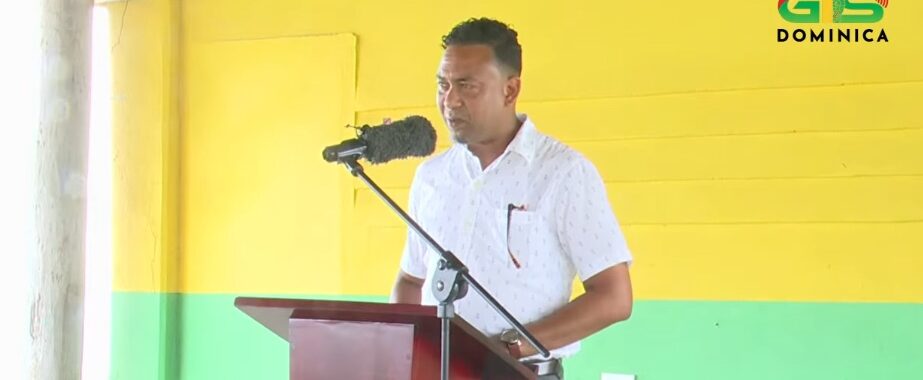
    Addressing attendees at the event, Jullan Defoe — Minister of State for Agriculture, Fisheries, Blue and Green Economy — pushed back against widespread public speculation that political party affiliation influenced which fishermen received new vessels. Defoe stressed that every beneficiary selected for the program underwent a rigorous, transparent verification process to confirm their eligibility.

    “Every single one of the 54 individuals who have received replacement boats had their claims of lost or damaged vessels independently assessed, cross-checked, and verified,” Defoe explained. “Public speculation about political favoritism is unfounded — I can state clearly on this public platform that political affiliation played zero role in the selection process.”

    The minister outlined the core eligibility criteria that all applicants were required to meet: each beneficiary had to prove they were the registered owner of a vessel that was confirmed destroyed or lost, with physical evidence of the damage or loss reviewed by officials before approval. “These are not handouts to politically connected individuals,” Defoe emphasized. “These fishermen were already active, invested participants in our fishing industry, and this program simply helps them restore the livelihoods they lost.”

    Racquel Andrew, representative for the Soufriere Constituency, delivered remarks on behalf of Tourism Minister Denise Charles-Pemberton, acknowledging the inherent challenges of small-scale fishing in the Caribbean. “Fishing is far from an easy profession: some days bring abundant catches, other days leave you empty-handed, yet bills still need to be paid, and children still need to go to school,” Andrew noted. She added that the government’s vision extends far beyond simply distributing replacement vessels, focused instead on building a more robust, sustainable fishing industry overall.

    As part of this broader strategy, Andrew highlighted ongoing government projects that will enable local fishermen to produce value-added seafood products — including packaged fresh seafood, smoked fish, and fish dips — that can be sold at premium prices. This investment, she explained, is particularly critical as Dominica enters the annual Atlantic hurricane season, building greater economic resilience for coastal fishing communities.

    Andrew framed each new vessel as more than just equipment: it is a symbol of hope, opportunity, and the government’s commitment to the fishing community. “May these vessels bring you safe voyages, bountiful catches, and brighter futures for your families,” she said. “My hope is that one day, products marked ‘Made in Scotts Head, Dominica’ will be recognized across the Caribbean and beyond as a benchmark of quality, pride, and excellence.”

    Wynnona Joseph, Acting Chief Fisheries Officer, echoed these sentiments, framing the completion of the vessel distribution as a reflection of the government’s ongoing commitment to the fishing communities that sustain Dominica’s food security and coastal economies. “This ceremony is about far more than handing over boats,” Joseph said. “It represents a transformative investment in the future of our fisheries sector, and most importantly, an investment in the hard-working men and women whose dedication keeps this vital industry running.”

    Joseph noted that the new, purpose-built vessels will offer fishermen improved working conditions, greater operational efficiency, enhanced safety at sea, and expanded opportunities to boost productivity and incomes. The program also marks a key milestone in the government’s broader push to modernize Dominica’s fisheries sector and improve livelihoods across all of the island’s fishing communities.

    She urged beneficiaries to treat their new vessels as valuable long-term assets, encouraging responsible use, regular maintenance, sound financial planning, and continued reinvestment in their operations. Joseph also emphasized the non-negotiable importance of sea safety, reminding fishermen that safe return after every voyage must always be their top priority. “The sea provides our livelihood, but it demands our respect,” she said. “We urge all fishermen to conduct routine maintenance, carry proper safety equipment, check weather forecasts before every departure, and fully comply with all fisheries regulations.”

    Joseph reaffirmed the Dominican Fisheries Division’s ongoing commitment to supporting fishing communities across the island through targeted training, technical assistance, improved infrastructure, and expanded development opportunities. “We will continue working hand-in-hand with our fishermen to build a modern, resilient, and sustainable fisheries sector that delivers benefits for current and future generations of Dominicans,” she added.

  • UWI forum examines Cuba crisis, calls for stronger Caribbean cooperation

    UWI forum examines Cuba crisis, calls for stronger Caribbean cooperation

    Against a backdrop of mounting global geopolitical tension and economic pressure on Cuba, The University of the West Indies (UWI) recently brought together leading diplomats, academics and policy specialists for a high-level virtual forum focused on unpacking the multifaceted crisis facing the island nation and its implications for the entire Caribbean region. Held on June 25 under the banner of the university’s Vice-Chancellor’s Forum series, the event titled “Perspectives on the Current Cuban Crisis: Issues, Impact, and Imperatives” aimed to bridge academic analysis, diplomatic insight and on-the-ground perspective to frame a collective regional response.

    Chaired by Ambassador Gillian Bristol, director of UWI’s Latin American-Caribbean Centre (LACC) who served as programme chair for the gathering, the discussion was co-moderated by Pro Vice-Chancellor for Undergraduate Studies Professor Canute S. Thompson and Professor Don D. Marshall. In opening remarks delivered on behalf of UWI Vice-Chancellor Professor Sir Hilary Beckles, Thompson emphasized that the regional public university does not position itself as a detached bystander to pressing global and regional challenges. “We are not passive observers; we are activists,” he stated, reaffirming the institution’s longstanding commitment to confronting issues that shape the future of Caribbean nations.

    Cuba’s Ambassador to Jamaica, Her Excellency Tania López Larroque, framed the root of the country’s current struggles in the context of 60-plus years of punitive U.S. sanctions. She noted that restrictions on economic, commercial and financial activity have been sharply ramped up since the start of this year, directly undermining access to basic necessities including food, fuel and life-saving medicine, while blocking critical foreign investment. Larroque rejected claims that sanctions serve the interests of the Cuban people, and called for renewed global commitment to multilateral cooperation and unwavering respect for sovereign national self-determination.

    International relations scholar Professor Andy Knight of the University of Alberta characterized the current global order as an “interregnum,” a period of transition where long-accepted international norms are facing growing erosion. He warned that the erosion of sovereignty and non-intervention principles in the case of Cuba sets a dangerous precedent that threatens all small developing states. “If the principles of sovereignty and non-intervention are compromised… no small state can presume it will remain protected,” Knight argued, urging regional leaders to take a clear, principled stand in defense of Cuba.

    Dr. Miriam Nicado, rector of the University of Havana, offered a firsthand account of the crisis, describing the country’s economic and diplomatic isolation as “a strangling.” She detailed the crippling impact of persistent electricity shortages on Cuba’s higher education sector, particularly disrupting online learning initiatives. Even amid these challenges, Nicado highlighted the ongoing UWI-Havana Centre for Sustainable Development as a powerful example of productive regional collaboration that continues to deliver shared benefits.
    Professor Emerita Jessica Byron-Reid reflected on more than half a century of partnership between the Caribbean Community (CARICOM) and Cuba, recalling the island nation’s enduring contributions to regional education and public healthcare systems across the Caribbean. She emphasized that the region can never fully repay the debt of solidarity it owes to Cuba, arguing that the current crisis presents a critical opportunity for CARICOM to reciprocate that longstanding support.

    UWI St. Augustine’s Dr. Indira Rampersad offered analysis of Cuba’s ongoing reform agenda, which includes 176 targeted economic adjustments. Rampersad noted that the reforms represent a deliberate effort to expand market-oriented policy flexibility while retaining the country’s core socialist political framework, drawing comparisons to the successful development models pursued by China and Vietnam.
    Professor Bert Hoffmann of the German Institute for Global and Area Studies (GIGA) confirmed that the current reform package is the most ambitious and far-reaching Cuba has undertaken in its modern history. However, he stressed that meaningful economic recovery will remain out of reach unless the country regains access to global banking systems and sees meaningful relief from sanctions, which continue to deter all major foreign investment flows.

    Throughout the discussion, participants united around a call for intentional regional engagement rather than the risk of turning away and ignoring the crisis. Byron-Reid outlined a clear path forward for CARICOM, urging the bloc to prioritize preserving the Caribbean as a neutral zone of peace, protecting Caribbean citizens residing in Cuba, delivering targeted humanitarian relief, and backing Cuba’s efforts to rebuild its economy. Echoing this call, Knight noted that the Caribbean’s collective response to Cuba’s crisis will ultimately shape the region’s own standing and future in the global order.

    To translate the forum’s call for action into tangible support, UWI used the closing of the event to announce the launch of its One-UWI Humanitarian Effort, led by the university’s School of Graduate Studies and Research. The initiative is calling on staff, students, alumni and institutional partners across all five of UWI’s campuses to make financial contributions to fund essential supplies for the Cuban people, with donations open through an online fundraising platform until September 30.

  • CARPHA and IFRC renew five-year partnership to boost public health and community resilience

    CARPHA and IFRC renew five-year partnership to boost public health and community resilience

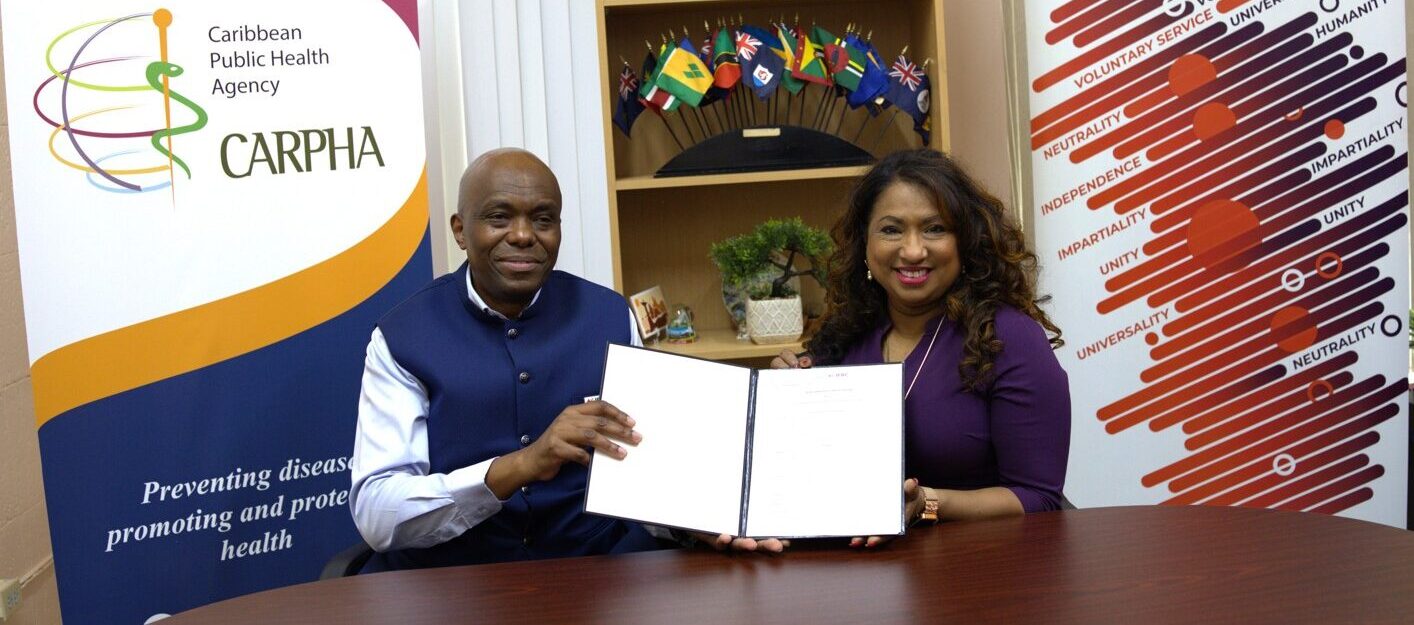
    The Caribbean region’s leading public health body and the world’s largest humanitarian network have formalized a new five-year collaborative agreement to confront growing interconnected health and climate challenges across the Caribbean. The Caribbean Public Health Agency (CARPHA) and the International Federation of Red Cross and Red Crescent Societies (IFRC) signed the renewed memorandum of understanding (MOU) on July 2, 2026, establishing a structured framework for expanded joint action that builds on years of prior cooperation between the two organizations.

    This renewed partnership merges CARPHA’s specialized regional public health technical expertise with IFRC’s unparalleled on-the-ground community network and decades of humanitarian response experience to tackle some of the Caribbean’s most urgent public health threats. The agreement outlines a clear set of priority focus areas, ranging from the prevention and management of vector-borne and non-communicable diseases — including mental health support — to strengthening food and nutrition security, and boosting community-level resilience to climate change, natural disasters, and disease outbreaks.

    Dr. Lisa Indar, Executive Director of CARPHA, emphasized that the combined strengths of the two organizations will transform regional public health outcomes for member states. “This collaboration with the IFRC combines CARPHA’s regional public health expertise with the extensive community reach and humanitarian experience of the Red Cross Red Crescent network,” Indar explained. “Together, we will strengthen community resilience, enhance preparedness for health emergencies, and support sustainable, people-centred approaches to health across our Member States.”

    Beyond direct program implementation, the MOU creates structured pathways for the exchange of technical knowledge, public health data, evidence-based tools, and best practices in community-centered health work. It also formalizes joint training opportunities and capacity-building initiatives, including professional development programs and internships for emerging young public health professionals across the region. CARPHA officials note that this exchange of resources and expertise will strengthen the region’s ability to rapidly respond to health emergencies while supporting the development of data-backed public health programs that deliver real impact.

    Necephor Mghendi, Head of the IFRC Country Cluster Delegation for the Dutch and English-speaking Caribbean, highlighted that rising complexity of regional challenges demands cross-organizational collaboration that connects top-level technical expertise to local communities. “The challenges facing the Caribbean are increasingly complex and interconnected, requiring partnerships that bridge regional expertise and community action,” Mghendi said. “This collaboration is about shared impact. Through its network of National Societies and volunteers, the IFRC brings the vital last-mile connection that enables information, services, and support to reach the people who need them most, where they need them and when they need them. Together with CARPHA, we can help ensure that communities across the region are better informed, better connected, and better equipped to address current and emerging health challenges.”

    The two organizations will coordinate closely on resource mobilization, joint monitoring and evaluation of all initiatives to guarantee long-term effectiveness and measurable impact. The renewed partnership comes at a critical juncture for Caribbean nations, which are facing escalating risks from climate-fueled natural disasters, rising rates of chronic non-communicable diseases, persistent food insecurity, and growing threats from vector-borne disease outbreaks. Both organizations reaffirmed their shared commitment to empowering local communities, strengthening domestic public health capacity, and advancing sustainable solutions that will build a healthier, safer, and more resilient Caribbean for all residents.

  • Martinique and Barbados strengthen Caribbean partnership through new cooperation agreement

    Martinique and Barbados strengthen Caribbean partnership through new cooperation agreement

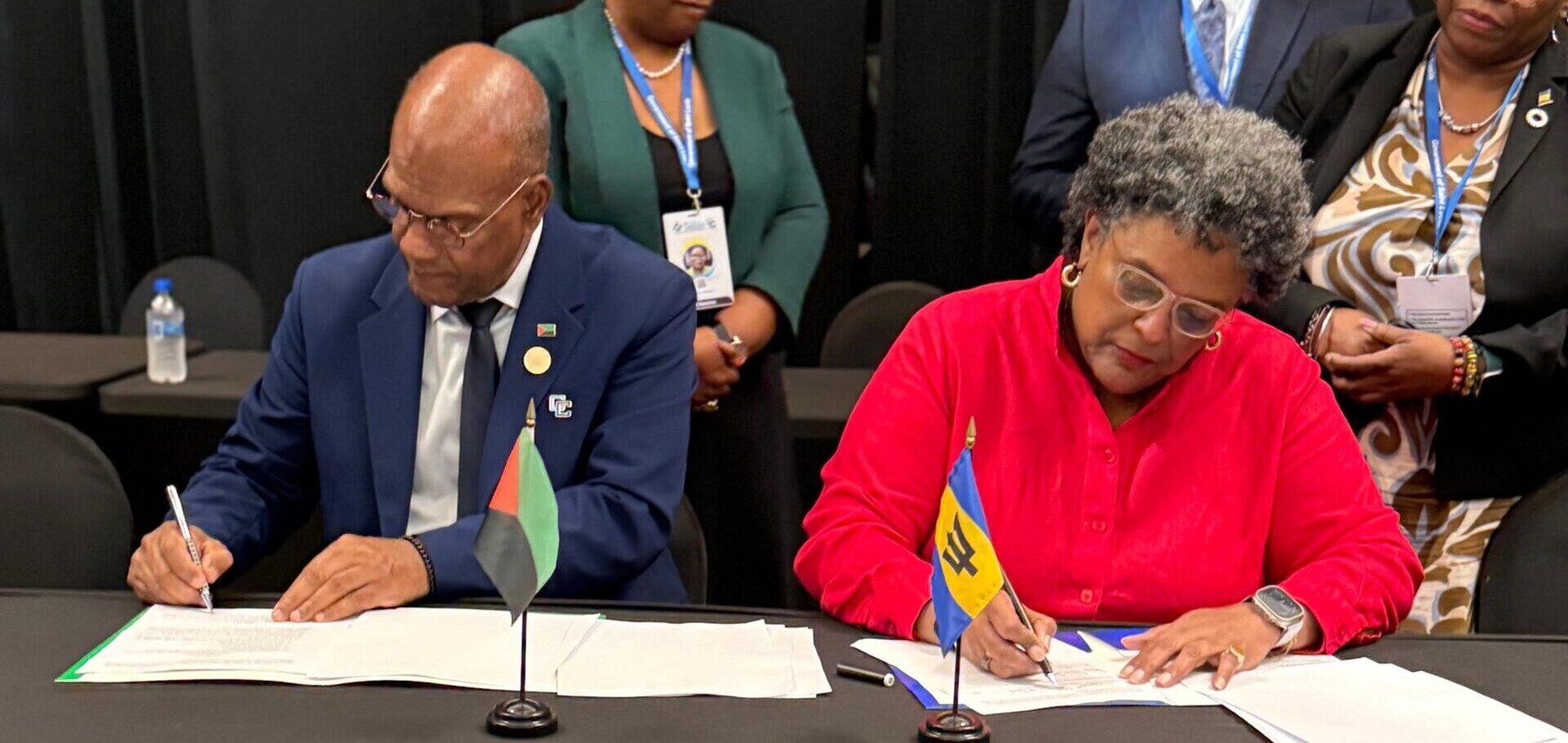
    Against the backdrop of growing demand for coordinated regional action in the Caribbean, Martinique and Barbados have cemented a groundbreaking new partnership that paves the way for deeper cross-territory collaboration across multiple critical sectors. The formal signing of the agreement took place July 7 on the margins of the annual CARICOM Summit, marking Martinique’s first high-level participation in the gathering since it gained associate membership in the Caribbean Community (CARICOM) this past February.

    The historic document was signed by Serge Letchimy, President of Martinique’s Executive Council, and Mia Amor Mottley, Prime Minister of Barbados, in a ceremony witnessed by regional stakeholders from across the Caribbean bloc.

    In an official press statement published by the Territorial Collectivity of Martinique (CTM), local authorities framed the new agreement as a key milestone in Martinique’s bid to embed itself more deeply in regional Caribbean affairs, turning its new associate membership status into tangible, people-centered progress.

    For Letchimy, the partnership sends a clear message that Martinique is committed to more than just symbolic participation in CARICOM. “Martinique is not simply taking its seat at the CARICOM table. It is here to build, propose, cooperate, and act. With Barbados, we are opening a new chapter: one of useful, operational, organised and results-driven Caribbean cooperation. We share a common responsibility: to turn our geographical, historical and human proximity into concrete projects for our peoples,” he said in remarks following the signing.

    The sweeping cooperation framework covers a broad range of priority areas identified as foundational to the long-term prosperity and stability of Caribbean communities. These include cultural and creative industries, sports exchanges, formal education, vocational skills training, climate and disaster risk management, public health collaboration, sustainable tourism development, fisheries management, and streamlined trade procedures between the two territories.

    Officials project that the partnership will unlock new opportunities for youth workforce development, expand cross-border economic ties, boost regional capacity to adapt to climate change, strengthen core productive sectors, and leverage shared cultural heritage as a unifying driver of cooperation and growth.

    Unlike many broad regional cooperation pacts that stall after signing, the new agreement includes formal institutional structures designed to ensure accountability and deliver measurable, on-the-ground results. A joint bilateral Cooperation Committee, co-led by senior representatives from both Barbados and CTM, will be tasked with setting annual cooperation priorities, approving work programs, tracking activity progress, evaluating outcomes, and recommending adjustments for future initiatives.

    A dedicated Technical Secretariat will also handle day-to-day project tracking and provide logistical support for implementation. To maintain full transparency, the two partners will publish a joint annual report that details completed activities, allocated resource usage, performance metrics, unmet challenges, and planned work for the coming year.

    The agreement will remain in force for an initial five-year term, with provisions for renewal through mutual consent, creating a stable, long-term framework for sustained collaboration. For Martinique, the partnership also reaffirms its long-term strategic goal of acting as a collaborative bridge connecting the Caribbean region to Europe, the Americas and Africa, while contributing directly to inclusive regional development and integration.

  • UPP presses government to release contracts for major infrastructure projects

    UPP presses government to release contracts for major infrastructure projects

    The main opposition United Progressive Party (UPP) of Dominica has issued a formal challenge to the ruling administration, demanding the immediate public release of full contractual documents for three of the island nation’s largest ongoing infrastructure projects. In an official statement released July 7, 2026, UPP leader Joshua Francis framed the call for disclosure as a critical step to boost governmental accountability and rebuild public trust in national development initiatives.

    The three projects at the center of the demand collectively represent hundreds of millions of dollars in foreign and domestic investment, and are expected to reshape Dominica’s economic trajectory, environmental landscape, and long-term public finances for coming generations. They include a new international airport, being developed by a partnership between Montreal Management Consultants (MMC) and China Railway No. 5 Engineering Group (CR5); a mountain cable car project awarded to Austria’s Doppelmayr Group in collaboration with local firm ABL Holdings; and the Cabrits Marina resort development, led by Range Developments, with a yet-unidentified international operator set to take over management once construction is complete.

    While the Skerrit government has repeatedly shared public updates on construction timelines and touted the expected tourism and job growth benefits of the projects, UPP argues that all core details of the binding contractual agreements have been deliberately kept hidden from the Dominican public and national legislature. The opposition says this lack of openness has fueled widespread public suspicion of secretive “sweetheart deals” that could prioritize private developer interests over the public good, with no parliamentary oversight to guard against mismanagement of national assets and public funds.

    According to the UPP statement, Dominican citizens hold a fundamental right to access a full range of unredacted contract details: the exact financial obligations the government has committed to under each deal, any tax concessions, sovereign guarantees or other favorable terms granted to developers, the full documentation of the procurement process used to award the multi-million contracts, whether independent cost-benefit analyses were completed before approval, the binding performance standards and penalty clauses for contractors, and a full accounting of long-term fiscal risks for the state.

    “Transparency is not an obstacle to development—it is the foundation of public trust,” the party said in its statement.

    The UPP has laid out four clear demands for the government: publish unredacted full contracts and all subsequent amendments for the three projects, release complete records of the procurement processes for each award, share detailed public and parliamentary reports that outline full project financing, binding contractual obligations and long-term public liabilities, and establish a permanent policy of proactive disclosure for all future large-scale public infrastructure contracts.

    Party leaders were careful to clarify that the request for transparency does not amount to opposition to the projects themselves. The UPP says it fully supports sustainable national development, but only when that development is rooted in the principles of transparency, accountability, and rule of law.

    “The people of Dominica deserve more than announcements and ceremonial groundbreaking events. They deserve access to the agreements that will shape the country’s future and determine how public resources are managed,” the statement read.

    Concluding its address, the party emphasized: “Good governance demands openness. Democracy demands accountability.” The UPP reaffirmed its longstanding commitment to protecting the rights and interests of all Dominican citizens, and will continue pushing for greater integrity and openness across all branches of government.

  • New Zealand climate-smart agriculture team advances resilience efforts in Dominica

    New Zealand climate-smart agriculture team advances resilience efforts in Dominica

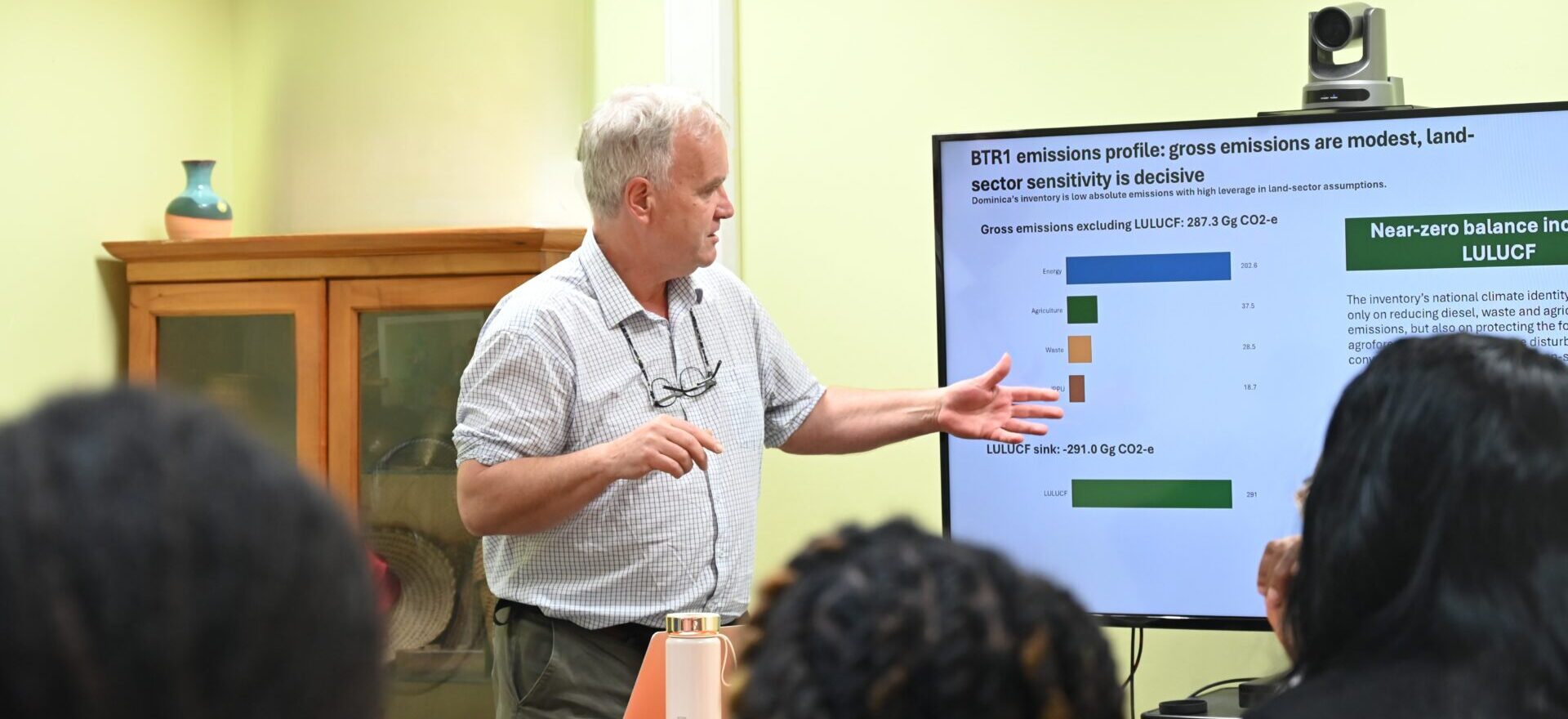
    A high-level technical mission focused on advancing climate-resilient, low-emission farming has wrapped up successfully in Dominica, bringing five days of collaborative work between New Zealand’s Climate Smart Agriculture Initiative and local agricultural stakeholders to a close. Running from June 22 to 26, 2026, the mission was led by Programme Manager Lee Nelson and senior Project Consultant Dr. Julian Hill, operating under the formal project banner *Advancing Climate-Smart Agricultural Practices in Dominica to Increase Production and Mitigate Greenhouse Gas Emissions*.

    This partnership represents a coordinated global effort to cut agricultural greenhouse gas output, and is being executed locally by the Inter-American Institute for Cooperation on Agriculture (IICA) on behalf of Dominica’s Ministry of Agriculture, Fisheries, Blue and Green Economy. Funding comes from the government of New Zealand through its regional Climate Smart Agriculture Initiative (NZCSA-LAC), which contributes to New Zealand’s commitments to the Global Research Alliance on Agricultural Greenhouse Gases (GRA), with administrative oversight handled by the Ag Emissions Centre.

    Per an official statement released by IICA, the visiting delegation held high-level strategic meetings with two key stakeholders: Ryan Anselm, Permanent Secretary of Dominica’s Ministry of Agriculture, Fisheries, Blue and Green Economy, and Her Excellency Linda Te Puni, New Zealand’s Ambassador to the Organization of Eastern Caribbean States (OECS). During these talks, participants reviewed finalized project findings, assessed completed deliverables, and mapped out a clear roadmap for upcoming project activities.

    Permanent Secretary Anselm expressed full backing for all evidence-based recommendations laid out in the project’s final report, and reaffirmed the Dominican government’s long-term commitment to embedding climate-smart agriculture into core national policy frameworks. This includes the country’s landmark Climate Resilience and Recovery Plan and its overarching National Resilience Development Strategy.

    Beyond high-level policy discussions, the mission centered heavily on capacity building for local agricultural actors, with three targeted national workshops delivered over the course of the week. The first of these, a Train-the-Trainer session focused on Land Use and Watershed Management held June 23, covered critical practical topics including soil erosion control, protection of riparian buffer zones, slope stabilization, integration of agroforestry systems, and spatial planning for expanding livestock production without harming local forest ecosystems. Attendees included representatives from Dominica’s Physical Planning department, regional agricultural extension team leaders, and faculty and students from Dominica State College.

    The next day, June 24, was dedicated to direct engagement with working farmers from across Dominica’s diverse agricultural regions. This interactive session opened space for dialogue on accessible, on-farm sustainable practices such as organic mulching, contour planting to reduce runoff, active soil cover management, optimized timing for fertilizer application, and evidence-based improvements to livestock health management.

    A second Train-the-Trainer workshop, focused on sustainable Agricultural Production Systems, followed on June 25. This session delved into advanced practices including split nitrogen fertilizer application to reduce runoff and emissions, on-farm manure composting to cut waste and improve soil health, improved forage production systems for livestock, protected cropping to boost yield and reduce climate risk, precision irrigation monitoring, and farm-level record-keeping protocols for accurate measurement, reporting, and verification of emissions and productivity gains.

    As part of their field visit, the delegation also toured the state-of-the-art Dominica-China Agricultural Science Complex located at the North Agriculture Station in Portsmouth. This cutting-edge facility houses a high-capacity tissue culture laboratory that can produce and hold up to 500,000 disease-free plant seedlings, a dedicated seed storage and national seed bank, a climate-controlled smart greenhouse, controlled plant propagation zones, hydroponic demonstration systems, and active research test plots. As Dominica’s largest centralized seedling production hub, it also functions as a key technology exchange hub and demonstration facility, offering hands-on farmer training in modern seedling propagation and controlled greenhouse cultivation techniques.

    To expand public outreach for the initiative, mission leaders Lee Nelson, Dr. Julian Hill, and Dr. Al-Mario Casimir, the Dominican Ministry of Agriculture’s project focal point, appeared on a national radio program during the visit. The segment allowed the team to share key project outcomes and explain the long-term benefits of climate-smart agriculture to the general public across the country.

    This five-day mission marks the official completion of the project’s core technical assessment and planning phase. Looking ahead, IICA confirmed that the next phase of the project will prioritize scaling up local capacity through ongoing in-country train-the-trainer programs. These programs will equip agricultural extension officers and local farmer leaders with the skills and resources needed to roll out climate-smart farming practices across every agricultural region of Dominica, laying the groundwork for long-term agricultural resilience and lower national greenhouse gas emissions from the sector.

  • UPP’s Cabral Douglas calls on Dominicans to check in on family and friends following tragic death

    UPP’s Cabral Douglas calls on Dominicans to check in on family and friends following tragic death

    The small community of Dominica is grappling with an unexpected tragedy that has prompted a leading political party to issue a heartfelt reminder about the importance of mental and emotional support for those around us. On July 5, 2026, the lifeless body of 35-year-old Maradona Melvon Bruno, a resident of Savanne Paille, was found inside his home located in the Lagoon neighborhood of Portsmouth.

    In the wake of this devastating loss, the United Progressive Party (UPP) has publicly extended its deepest condolences to Bruno’s family, friends and loved ones. Speaking in an official statement on the party’s behalf, UPP International Secretary Cabral Douglas shared his sympathy for all those impacted by the passing, while urging Dominican communities across the country to turn this tragedy into a catalyst for greater care and connection.

    In a moving address, Douglas emphasized, “I would like to extend a special gesture of solidarity to his family, his daughters, and his parents. We want you to know that you carry the full support of this community and the Dominican people. This moment should also be a chance for all of us to reflect on what it means to show up for the people around us.”

    Douglas went on to note that small acts of kindness can carry enormous weight for people fighting internal battles. “Sometimes somebody needs a hug, sometimes somebody needs a quick phone call, and sometimes all they need is just a simple acknowledgement that they exist to feel loved, a sense of belonging, and respect,” he explained.

    Remembering Bruno, Douglas described him as a young, ambitious and talented individual who still had his entire life ahead of him. He added that the tragedy has exposed a quiet truth many people overlook: even as Bruno interacted with his community daily, he was quietly struggling with deep loneliness.

    “You can look at a man’s face, but you can never see what lives in his heart,” Douglas said of the painful loss. He framed the incident as a critical “wake-up call” for people across the country to prioritize checking in with the people in their lives, rather than assuming everything is fine based on outward appearances.

    “Sometimes all it takes is reaching out and asking: Is everything alright? How are you really doing today? Can I help you with anything?” he said. “Deep feelings of negativity, insecurity and inner pain can fade when people have a strong support network to lean on. What many people don’t realize is that those struggling don’t always cry out for help — it can be anyone, even the person who seems fine on the surface.”

    Douglas closed his statement by reinforcing that this tragedy serves as a universal reminder: anyone can be fighting inner battles, even when there are no obvious outward signs of struggle. He encouraged all members of the public to carve out time to check in on family members, friends, and neighbors in their local communities.

  • Dominica to assume chairmanship of ECCB Monetary Council as new EC currency design Is unveiled

    Dominica to assume chairmanship of ECCB Monetary Council as new EC currency design Is unveiled

    On July 9, a landmark dual ceremony hosted at the InterContinental Dominica Cabrits Resort’s Trafalgar Ballroom marked two pivotal moments for the Eastern Caribbean currency union: the official handover of the Eastern Caribbean Central Bank (ECCB) Monetary Council chairmanship to the Commonwealth of Dominica, and the long-awaited public reveal of a fully redesigned collection of Eastern Caribbean (EC) banknotes and coins.

    Per official announcements from the ECCB, the rotating gavel passes this year from Gaston Browne, Prime Minister of Antigua and Barbuda, the outgoing chair, to Dr. Irving McIntyre, Dominica’s Minister for Finance. This annual rotation follows a longstanding alphabetical order convention among the ECCB’s eight full member polities: Anguilla, Antigua and Barbuda, the Commonwealth of Dominica, Grenada, Montserrat, Saint Kitts and Nevis, Saint Lucia, and Saint Vincent and the Grenadines.

    As the highest governing and decision-making body of the ECCB, the Monetary Council draws representation from the finance ministry of each member jurisdiction, guiding monetary policy and institutional priorities across the currency union. This year’s leadership transition coincides with a major milestone for the Eastern Caribbean dollar, prompting the ceremonial launch of the updated currency series.

    The redesign initiative was launched to celebrate the 50th anniversary of the EC dollar’s fixed peg to the United States dollar, a policy anchor that has supported monetary stability across the region for five decades. In a 2023 decision at the council’s 105th plenary meeting, members approved two core changes: first, removing the portrait of the late Queen Elizabeth II from circulating currency, and second, opening the new design process to public input from residents across all member territories.

    Public consultation workshops and feedback collection rounds ran between July and December 2023, with results showing overwhelming public support for featuring regional national heroes and foundational nation builders on the new notes and coins, aligning the currency more closely with the region’s independent identity and historical legacy.

    For those unable to attend the in-person ceremony, the ECCB arranged free live streaming of the full event via its official ECCB Connects Facebook page and YouTube channel, extending access to audiences across the Eastern Caribbean and global stakeholders interested in the region’s monetary development.