标签: Cuba

古巴

  • “Cuba has the duty and responsibility to protect its territorial waters”

    “Cuba has the duty and responsibility to protect its territorial waters”

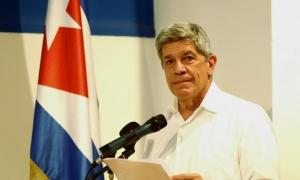
    Cuba has formally reiterated its unequivocal opposition to all forms of terrorism through an official statement delivered by Deputy Foreign Minister Carlos Fernández de Cossío. The declaration comes in response to a recent attempted infiltration of Cuban territorial waters by ten individuals aboard a Florida-registered vessel suspected of terrorist intentions.

    Minister Fernández de Cossío emphasized Cuba’s exemplary record in combating terrorism, noting the nation’s adherence to all 19 international counterterrorism conventions. “Our country maintains an exemplary record in the fight against terrorism and has fulfilled and will continue to honor its commitments in this area,” he stated during a press briefing.

    The incident, which occurred Wednesday, involved the interception of a vessel carrying substantial military equipment including assault rifles, sniper weapons, Molotov cocktails, night vision devices, bulletproof vests, and paraphernalia from counter-revolutionary organizations. Four individuals died during the confrontation with Cuban naval forces.

    Cuban authorities have identified the involved parties as Cristian Ernesto Acosta Guevara, Conrado Galindo Serrior, José Manuel Rodríguez Castelló, Leordán Cruz Gómez, Amijail Sánchez González, Roberto Álvarez Ávila, Pavel Alling Peña, Michael Ortega Casanova, Ledián Padrón Guevara, and Héctor Duani Cruz Correa. Notably, Sánchez González and Cruz Gómez appear on Cuba’s official list of wanted individuals previously shared with United States authorities.

    The Deputy Foreign Minister confirmed ongoing communication with U.S. counterparts through established diplomatic channels, including the State Department and Coast Guard. Both governments have expressed willingness to collaborate in the investigation, with Cuba formally requesting information about the vessel and individuals involved.

    Fernández de Cossío contextualized this event within Cuba’s six-decade history of experiencing terrorist attacks largely organized from U.S. territory. He highlighted concerns about increased violent plots against Cuba and the perceived impunity of their perpetrators. The Cuban government maintains that protecting territorial waters constitutes both a sovereign right and national defense obligation under international law.
  • Our Revolution completed the work of our liberators

    Our Revolution completed the work of our liberators

    In a profound historical reflection drawn from archival speeches and writings, the enduring legacy of Fidel Castro continues to illuminate Cuba’s revolutionary journey. The commemorative piece, originally published in Granma, showcases Castro’s deep reverence for pivotal dates in Cuba’s independence struggle—particularly February 24th, which marks the 1895 uprising orchestrated by national hero José Martí.

    Castro’s words, spanning decades of leadership, consistently emphasized the philosophical and practical continuities between Cuba’s independence wars and his own revolutionary movement. He articulated how October 10th (1868), February 24th (1895), and July 26th (1953) formed an unbroken chain of revolutionary consciousness against colonial and neocolonial oppression.

    The historical analysis reveals Castro’s particular admiration for José Martí, whom he described as “one of the most extraordinary thinkers of our hemisphere” during a 1988 speech in Ecuador. Castro highlighted Martí’s conceptualization of “a necessary and useful war” as the only path to genuine independence—a philosophy that directly informed Castro’s own revolutionary strategies.

    Photographic evidence accompanying the original article showed Castro wielding a replica of Antonio Maceo’s machete during the 35th anniversary of the Revolution, visually connecting the revolutionary generations. The imagery reinforces Castro’s frequent references to independence leaders like Carlos Manuel de Céspedes, Ignacio Agramonte, Antonio Maceo, and Máximo Gómez.

    Castro’s speeches, particularly his 1953 “History Will Absolve Me” defense, emphasized how Cuban education systematically instilled revolutionary values: “We were taught that October 10th and February 24th are glorious days of national celebration because they mark the days when Cubans rebelled against the yoke of the infamous tyranny.”

    The compilation demonstrates Castro’s consistent historical worldview: that his revolution completed the work begun by nineteenth-century independence fighters, replacing “false symbols” and “false dates” with authentic revolutionary continuity. This perspective framed contemporary political struggles as extensions of Martí’s ideological battles against opportunism and compromise.

    Castro’s 1991 speech during Special Period economic hardships particularly emphasized this historical resilience: “When some said that the necessary war would never start again, Martí said, ‘Yes! The necessary war will return.’” This rhetorical strategy consistently mobilized historical precedent to address contemporary challenges throughout Castro’s leadership.

  • Reborn schools in Guantánamo

    Reborn schools in Guantánamo

    In an extraordinary display of resilience and coordinated effort, Guantánamo province has successfully restored all 277 educational facilities damaged by Hurricane Melissa’s devastating impact in late October. The comprehensive rehabilitation project, completed in less than four months, represents a significant achievement in post-disaster recovery and educational continuity.

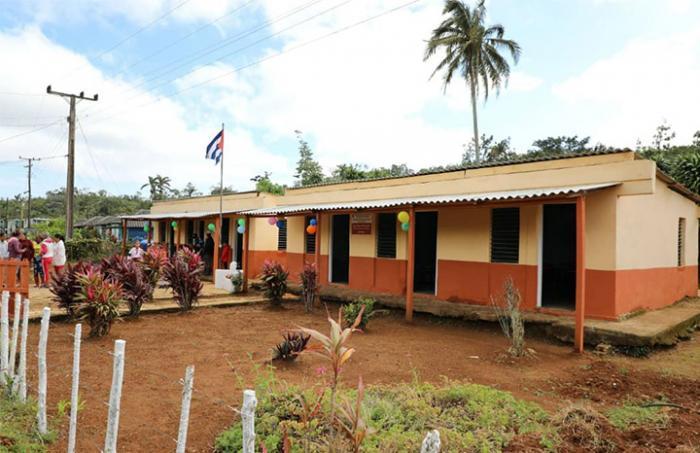
    The Alfredo López Pérez multi-grade school in the Santa Catalina community, which Hurricane Melissa reduced to rubble and isolated through road destruction, now stands fully operational. The institution has been transformed with fresh construction materials and new furniture, welcoming back its ten elementary students from grades one through five. The reopening ceremony was attended by Yoel Pérez García, First Secretary of the Communist Party in Guantánamo, alongside education officials and local government representatives.

    During the immediate aftermath of the hurricane, which caused substantial damage throughout eastern Guantánamo, the educational community demonstrated remarkable adaptability. Temporary learning spaces were established in private homes, agricultural cooperative facilities, and even beneath shaded outdoor areas. Particularly noteworthy was the solidarity shown by 23 mountain schools that expanded their capacity to accommodate students from neighboring institutions that had been completely destroyed.

    This collective effort ensured educational continuity in severely affected areas including La Tagua, Santa Catalina de Manuel Tames, Maisí, Imías, and Baracoa—regions that remained inaccessible for weeks following the hurricane. The successful restoration operation highlights how organizational unity and community cooperation can overcome significant natural disasters while maintaining essential public services.

  • We will fight, we will struggle, we will resist, we will transform, and above all adversity and imperial threats, we will rise and triumph!

    We will fight, we will struggle, we will resist, we will transform, and above all adversity and imperial threats, we will rise and triumph!

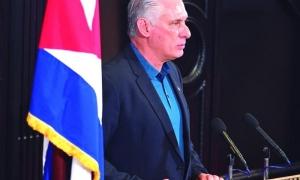
    In a historic address commemorating the 50th anniversary of Cuba’s Local Bodies of People’s Power, President Miguel Díaz-Canel delivered a powerful call for democratic renewal amid significant national challenges. Speaking at the National Capitol Building on February 24, 2026—a date deeply embedded in Cuban revolutionary history—the leader framed the occasion as both a tribute to past achievements and an urgent mandate for systemic improvement.

    The President’s comprehensive speech traced the historical significance of February 24th through Cuba’s independence struggles, from José Martí’s 1895 uprising to the establishment of socialist democracy. He emphasized that the People’s Power system, initiated in 1976, represented the materialization of revolutionary principles where governance truly emanates from citizen participation.

    Díaz-Canel presented a candid assessment of contemporary challenges, citing economic difficulties exacerbated by the longstanding U.S. embargo, Cuba’s controversial inclusion on terrorism sponsorship lists, and internal administrative shortcomings. He acknowledged public frustrations with supply shortages, infrastructure problems, and youth disengagement while condemning external pressures as economically suffocating measures.

    The address outlined four fundamental imperatives for revitalizing People’s Power: enhancing community-level responsiveness, fostering genuine participatory mechanisms rather than ceremonial attendance, embracing critical self-evaluation to combat formalism and excessive centralization, and safeguarding national hope through concrete local achievements.

    President Díaz-Canel issued specific directives to delegates, urging them to prioritize street-level engagement over bureaucratic processes and transform criticisms into actionable solutions. He challenged local administrations to align governmental actions with community-identified priorities and eliminate procedural obstacles that dilute popular will.

    Calling for citizen involvement beyond electoral periods, the President emphasized that participatory democracy manifests through accountability assemblies, community organizing, and collective support for vulnerable populations. He characterized Cuba’s democracy as ‘trenches democracy’—built through sacrifice and daily perseverance rather than ceremonial performance.

    While celebrating the People’s Power system as a unique Cuban creation rooted in revolutionary thought and José Martí’s legacy, Díaz-Canel acknowledged it as an unfinished project requiring adaptation to demographic changes, technological evolution, and contemporary social expectations. He declared the anniversary a turning point for institutional transformation that strengthens social justice while preserving foundational principles.

    The address concluded with emotional tributes to grassroots delegates and reaffirmations of revolutionary slogans, positioning People’s Power as both governance structure and living expression of popular sovereignty in the face of ongoing challenges.

  • A collection to love, to learn from

    A collection to love, to learn from

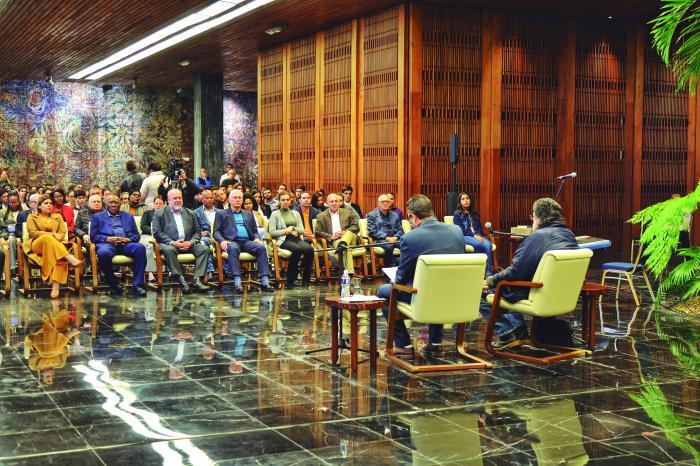
    HAVANA – In a ceremony rich with historical symbolism, Cuban President Miguel Díaz-Canel Bermúdez presided over the formal presentation of “Selected Works of Army General Raúl Castro Ruz” at the Palace of the Revolution’s Portocarrero Hall on Tuesday. The event, attended by one hundred carefully selected young Cubans, marked the unveiling of a comprehensive nine-volume collection documenting Castro’s six-decade revolutionary career.

    President Díaz-Canel framed the publication as essential reading for contemporary youth, emphasizing its value in “a world where truth is one of the most wounded virtues.” In his prologue to the collection, the Cuban leader characterized Castro as representing “that generation that valued life above all else and fought to defend it, even if it meant his own life.”

    The February 24th timing carried profound historical significance, as noted by Dr. Elier Ramírez Cañedo, PhD in Historical Sciences, who co-presented the works alongside Abel Prieto Jiménez, president of Casa de las Américas. The date coincides with multiple pivotal moments in Cuban history: the 1895 resumption of liberation struggles, General Máximo Gómez’s 1899 entry into Havana, the 1956 founding of the Revolutionary Directorate, and the 1976 proclamation of Cuba’s first Socialist Constitution.

    Compiled by Ediciones Celia over four years, the collection represents a monumental archival achievement containing more than 500 documents spanning over 5,000 pages, supplemented by extensive scholarly annotations. Each volume incorporates QR technology linking to photographic documentation of Castro at corresponding life stages.

    Prieto Jiménez highlighted the collection’s distinctive illumination of Castro’s leadership style, describing it as fundamentally different yet complementary to Fidel Castro’s approach. He emphasized Raúl’s deeply Martí-inspired philosophy, his distinctive colloquial communication style, and his consistent humanism manifested through policies rejecting the humiliation of subordinates.

    The presentation attracted Cuba’s highest leadership, including Prime Minister Manuel Marrero Cruz, Organization Secretary Roberto Morales Ojeda, Vice President Salvador Valdés Mesa, and Secretary of the Council of Ministers José Amado Ricardo Guerra—all Political Bureau members.

    Simultaneously, at the University of Havana, historians emphasized the collection’s academic significance. Daily Sánchez Lemus, deputy director of the Office of Historical Affairs, noted the deliberate university venue selection, stating the institution traditionally teaches “how to be revolutionaries and to defend the Homeland.” The compilation begins appropriately with Castro’s 1951 article published in Saeta, the university’s publication.

    The digital edition has been available for several months through Communist Party platforms and national press outlets, with physical copies distributed to youth representatives from the Vladimir Ilich Lenin Pre-University Vocational Institute and various social sectors.

  • As in the liberating wilderness: Independence or Death!

    As in the liberating wilderness: Independence or Death!

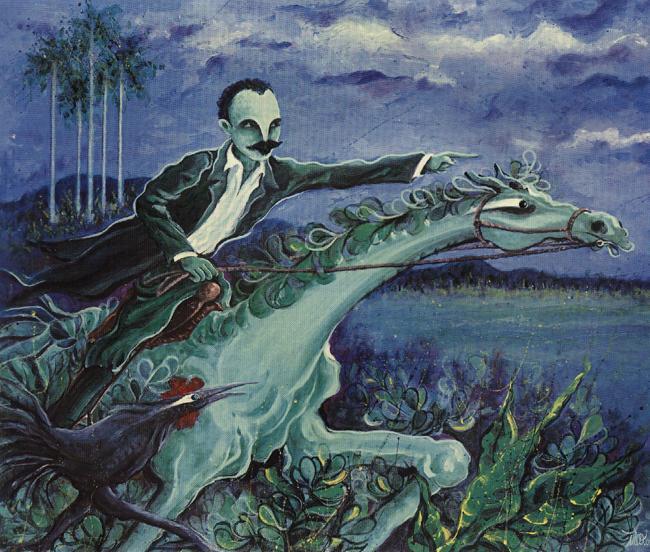
    The Cuban struggle for independence represents a continuous thread of revolutionary spirit spanning over a century, beginning with Carlos Manuel de Céspedes’ initial uprising at La Demajagua sugar mill on October 10, 1868. This foundational act set the stage for José Martí’s organized War of Independence, which formally commenced on February 24, 1895.

    The initial Ten Years’ War (1868-1878) concluded without achieving independence through the Pact of Zanjón, prompting Antonio Maceo’s historic Protest of Baraguá. Learning from past divisions, Martí established the Cuban Revolutionary Party in 1892 with the dual purpose of securing Cuba’s freedom and supporting Puerto Rico’s liberation.

    Martí envisioned a necessary war that would restore hemispheric balance while establishing a republic dedicated to universal welfare. However, these aspirations were compromised when United States intervention transformed hard-won independence into neocolonial subjugation, epitomized by the Platt Amendment’s imposition on Cuba’s 1901 Constitution.

    Despite this setback, revolutionary ideals persisted through generations. Figures like Mella, Villena, Guiteras, and José Antonio kept the emancipatory flame alive, culminating in Fidel Castro’s Centennial Generation and the 1953 Moncada Barracks attack. The ultimate triumph came on January 1, 1959, when bearded rebels from the Sierra Maestra mountains established a sovereign nation.

    The date February 24 maintains profound constitutional significance, marking both the 1976 socialist Constitution and the 2019 constitutional ratification. As Commander-in-Chief Fidel Castro noted in 1960, revolutions serve as complex teachers that strengthen national consciousness through struggle.

    Today, Cuba continues to draw strength from its revolutionary roots, maintaining unity through the principles articulated by Martí and Castro. The nation persists in its commitment to independence despite contemporary challenges, upholding the cry that first echoed on February 24, 1895.

  • A date that marked the maturity and crystallization point of the project conceived by Martí

    A date that marked the maturity and crystallization point of the project conceived by Martí

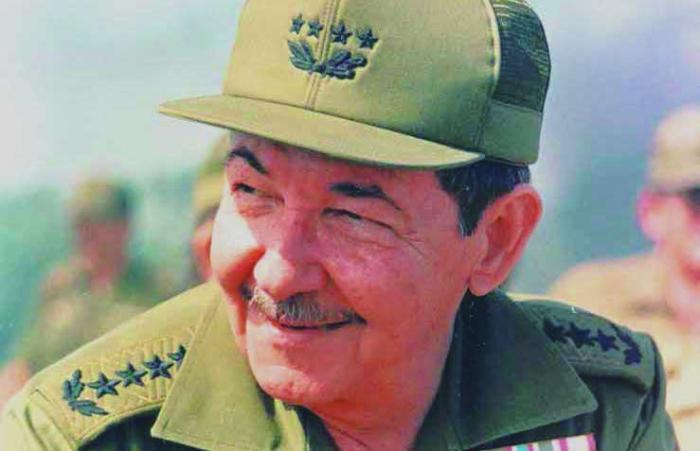
    Granma, Cuba’s official newspaper, has republished significant excerpts from Army General Raúl Castro Ruz’s historic addresses delivered on February 24th across pivotal moments in the nation’s development. These speeches reveal the ideological continuity and constitutional evolution of the Cuban Revolution.

    The compilation begins with Castro’s 1976 address at Havana’s Karl Marx Theater, marking the proclamation of Cuba’s first socialist Constitution—the first in the Americas. He recalled Fidel Castro’s description of the document as embodying José Martí’s aspiration for “the full dignity of humankind,” approved by 95.7% of eligible voters aged sixteen and over.

    In his 2008 parliamentary address, Castro assumed leadership responsibilities while emphasizing Fidel’s irreplaceable role as Commander-in-Chief. He affirmed the Communist Party as “the sure guarantee of the unity of the Cuban nation” and heir to the people’s trust, referencing Article 5 of the Constitution approved by 97.7% of voters. He connected historical struggles against U.S. intervention to contemporary challenges, invoking Martí’s principle of choosing “the hard path of duty.

    The 2013 speech featured Castro’s unequivocal declaration: “I was not elected president to restore capitalism in Cuba, nor to surrender the Revolution. I was elected to defend, maintain, and continue perfecting socialism.” He reiterated Fidel’s standard for revolutionary cadres: never coveting positions but earning them through merits, work, virtues, and patriotism.

    The most recent excerpt from 2018 honored the 123rd anniversary of Cuba’s War of Independence resurgence. Castro highlighted José Martí’s strategic brilliance in founding the Cuban Revolutionary Party and achieving national unity. He quoted Fidel’s historical assessment: “We would have been like them then, and they would be like us today!” affirming the enduring commitment to revolutionary ideals across generations.

  • Six decades of Granma International, a voice that transcends time and geography

    Six decades of Granma International, a voice that transcends time and geography

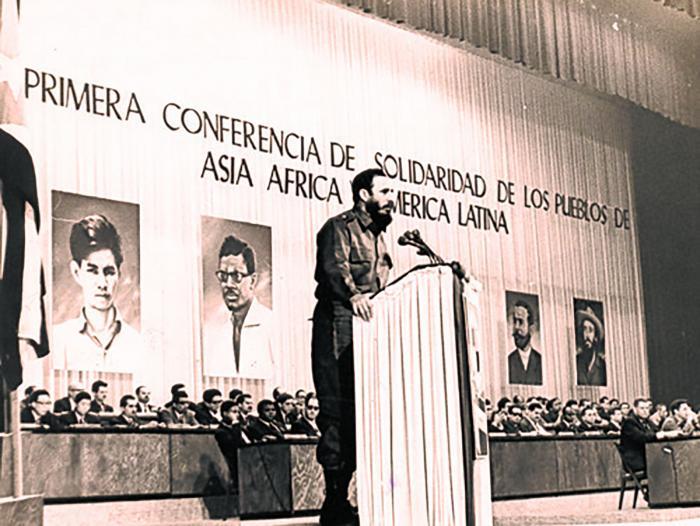
    Celebrating its 60th anniversary on February 20, 2026, Granma International has evolved from its ideological origins at the Tricontinental Conference to become a digital-era publication maintaining unwavering commitment to revolutionary principles and global justice movements.

    Born from the historic 1966 Tricontinental gathering in Havana, the weekly publication emerged as a multilingual platform (Spanish, English, and French) designed to counter Western media narratives about Cuba’s Revolution. The inaugural edition’s mission statement declared its purpose: “to make known outside our country the reality of the Cuban Revolution” through curated selections from Granma newspaper.

    Throughout its development, the publication transformed from reproducing Granma content to establishing its own editorial agenda under pioneering directors including Alberto Rubiera and Gabriel Molina Franchossi. The 1980s witnessed expansion with Portuguese editions, while the 1990s brought revolutionary changes: rebranding as Granma International, adding German and Italian editions, and establishing international reprints through global solidarity networks.

    Demonstrating remarkable adaptability, the publication achieved digital pioneering status in 1996 by becoming the first Cuban press outlet to establish online presence, garnering millions of early web hits. Even during the COVID-19 pandemic, Granma International maintained circulation through innovative work reorganization and distribution channel adaptations.

    Currently distributed across 20 countries through reprints in Germany, Argentina, and Brazil, the publication serves both international audiences and domestic institutions including government ministries, business groups, and hospitality venues. Its pages have featured interactions with literary icons including Gabriel García Márquez, while maintaining consistent advocacy for anti-imperialist struggles and global justice movements.

    The publication’s six-decade journey demonstrates how revolutionary media can evolve across technological eras while maintaining ideological consistency, proving that alternative media ecosystems can sustain meaningful global reach and influence despite geopolitical challenges.

  • Tax benefits for investments in renewable energy sources expanded

    Tax benefits for investments in renewable energy sources expanded

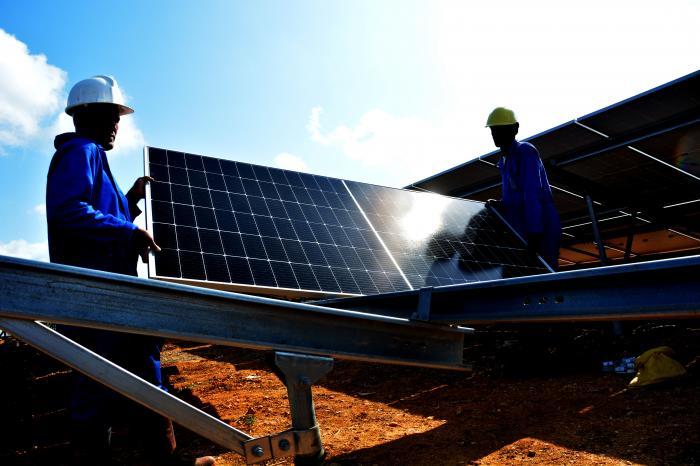
    Cuba has significantly broadened its renewable energy tax incentive program to include private sector participants through newly enacted Resolution 41/2026. The updated regulatory framework, published in the extraordinary Official Gazette No. 30, extends income tax exemptions to self-employed workers, agricultural producers, artists, intellectuals, and other individual economic actors who invest in renewable energy projects.

    Deputy Minister of Finance and Prices Yenisley Ortiz Mantecón clarified that the benefits apply equally to projects designed for self-consumption and those capable of contributing electricity to the National Electric Energy System. This policy revision builds upon the foundation established by Decree-Law 345 of 2017 and subsequent regulations, specifically addressing previous limitations that restricted exemptions to certain tariff items applicable to individuals.

    The incentive program requires applicants to obtain technical certification from the National Office for the Rational Use of Energy (Onure) verifying that their investment genuinely supports renewable energy development. Approved projects can enjoy tax benefits for up to eight years, corresponding to their investment recovery period as determined by Onure.

    Since the initial resolution in 2023, Onure has received 168 energy license applications—95 from non-state entities and 73 from the state sector. Currently, 56 projects are operational with granted tax benefits across provinces including Villa Clara, Camagüey, and Havana, while 112 applications remain under evaluation.

    The government acknowledges that these measures may reduce immediate tax revenues but emphasizes their strategic importance in accelerating Cuba’s energy transition. The policy includes compliance mechanisms: Onure conducts periodic audits, and the National Tax Administration Office (ONAT) may revoke exemptions if investments fail to meet established requirements or if imported equipment doesn’t correspond to approved projects.

  • Cuba congratulates art instructors on their day

    Cuba congratulates art instructors on their day

    Cuban leadership has publicly celebrated the nation’s art instructors, recognizing them as vital ambassadors who propagate and safeguard authentic Cuban cultural values across the globe. These educators are credited with transformative work that liberates and preserves national identity through artistic expression.

    The historical significance of Cuba’s cultural mission traces back to April 14, 1961, when Fidel Castro established the inaugural National School of Art Instructors during the Literacy Campaign. This pivotal moment occurred just three days preceding the Bay of Pigs invasion, with four thousand students initially enrolled. The institution emerged as a cornerstone in the country’s social transformation, deliberately reshaping cultural accessibility by removing elitist barriers that previously limited artistic engagement.

    This cultural democratization initiative deployed young pioneers throughout the nation, including Olga Alonso González, a Havana native who joined the vanguard movement transporting artistic education to remote communities. Tragically, at nineteen years old, Alonso perished in an accident on March 4, 1964, while serving as a theater instructor in Fomento municipality, Sancti Spíritus province. Her legacy endures through the commemoration of Art Instructor’s Day annually on February 18, her birthdate, honoring her sacrifice and dedication to cultural dissemination.