标签: Cuba

古巴

  • Nasalferon granted sanitary registration for the treatment of acute respiratory infections

    Nasalferon granted sanitary registration for the treatment of acute respiratory infections

    Cuban health authorities have granted full regulatory approval to Nasalferon, an innovative nasal spray treatment, following conclusive evidence from Phase III clinical trials demonstrating its effectiveness against respiratory illnesses. The breakthrough medication, developed by Cuba’s Center for Genetic Engineering and Biotechnology (CIGB), represents a significant advancement in accessible antiviral therapy.

    The comprehensive clinical research, conducted throughout 2025 across multiple healthcare facilities in Old Havana, yielded compelling results regarding the treatment’s protocol adherence and therapeutic performance. Trial data confirmed Nasalferon’s capacity to effectively manage and completely resolve symptoms associated with respiratory infections while maintaining an excellent safety profile.

    Nasalferon utilizes recombinant human alpha 2b interferon as its active pharmaceutical component, a well-established molecule with proven efficacy across various therapeutic applications and pharmaceutical formulations. The product had previously received conditional authorization specifically for SARS-CoV-2 infection prophylaxis during the COVID-19 pandemic. This latest approval significantly expands its indicated use to encompass general acute respiratory infections.

    With formal regulatory clearance now obtained, the medication is being distributed through community pharmacies nationwide, available to patients with appropriate medical prescriptions. The Cuban Ministry of Health has established a retail price point of 172.50 Cuban Pesos (CUP) for each 2 milliliter bottle.

    Looking toward future applications, CIGB’s research team is planning additional clinical studies to evaluate Nasalferon’s safety and efficacy in pediatric populations. This developmental pathway aims to extend the therapeutic benefits to younger patients once appropriate data collection and analysis are complete. Supported by stable manufacturing capabilities within Cuba’s robust biotechnology sector, Nasalferon stands positioned to become a mainstream therapeutic option for respiratory conditions among the Cuban population.
  • A small revolutionary State within another

    A small revolutionary State within another

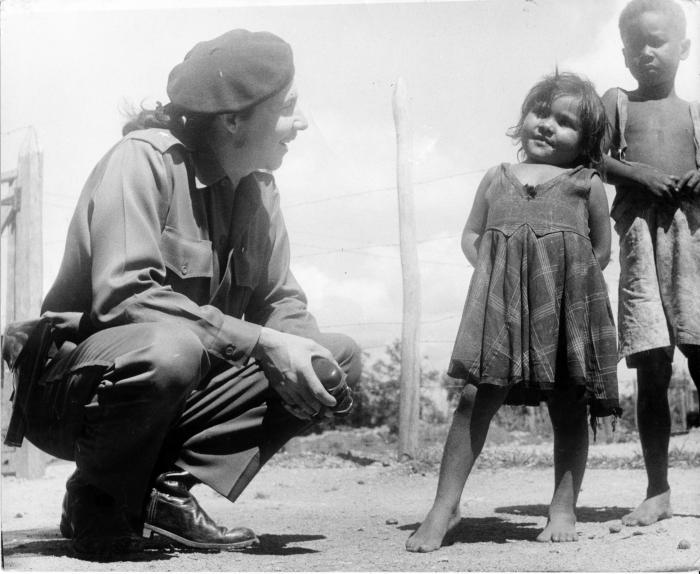
    Six decades after its revolutionary triumph, Cuba continues to honor the strategic military campaign that significantly contributed to its historical transformation. The Second Eastern Front Frank País García, established on March 11, 1958, by then-Commander Raúl Castro Ruz under Fidel Castro’s directive, remains a cornerstone of Cuba’s revolutionary narrative.

    The mountainous region of Mícara in eastern Cuba served as the operational base for this sophisticated guerrilla force that eventually controlled approximately 12,000 square kilometers across what now constitutes the provinces of Santiago de Cuba, Guantánamo, and Holguín. During its nine-month and twenty-two-day campaign, the Front executed over 250 combat operations, captured 31 military barracks, and successfully liberated numerous towns and cities from Batista’s regime.

    Beyond military accomplishments, the 27-year-old Raúl Castro demonstrated remarkable administrative vision by establishing multiple governmental departments including Justice, Public Health, Infrastructure Development, Treasury, Education, and Propaganda. The Front established approximately 20 medical facilities and 400 educational institutions, substantially improving living conditions for mountain communities. Fidel Castro would later describe this achievement as “an exemplary model of organization, administration, and order.”

    The commemorative mausoleum at the foot of the Mícara hills serves as a permanent memorial where official ceremonies regularly honor the revolution’s heroes. The site pays particular tribute to female combatants including Vilma Espín Guillois and Asela de los Santos Tamayo, whose courageous contributions in high-risk missions remain integral to the Front’s legacy.

    The municipality of Segundo Frente, developed around the former operational territory, now features extensive socioeconomic infrastructure and modern architecture, representing the revolution’s enduring impact on regional development.

  • A daily struggle for every drop of hope

    A daily struggle for every drop of hope

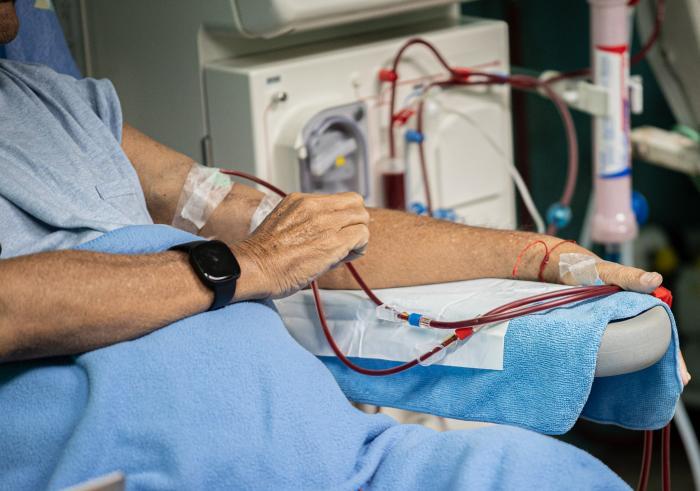
    In the hemodialysis units of Cuba’s Dr. Abelardo Buch López Institute of Nephrology, patients like Zurama confront a daily reality of survival tied to medical machinery. ‘I have to depend on it,’ she states, reflecting on her post-COVID-19 renal failure diagnosis since 2020. ‘If there’s no fuel, nobody here could get hemodialysis.’

    The institute, serving 45 of Cuba’s 57 hemodialysis centers supporting over 3,000 renal replacement therapy patients, faces systemic challenges. Julio César Candelaria Brito, head of hemodialysis services, emphasizes that treatment continuity relies on an integrated system encompassing transportation, medical supplies, and electricity—all compromised by national fuel shortages.

    Critical supply deliveries, once routine, now arrive in precarious small batches. ‘We’re waiting for the truck to arrive today to ensure we can start tomorrow’s session,’ Candelaria reveals. Dialysis machines demand uninterrupted power for operation and water deionization, with aging backup batteries posing additional risks. Nurse Dairy Rodríguez Barreto confirms: ‘Without hemodialysis, the patients could die.’

    Transportation compromises have forced taxi services to limit patient shuttle routes, sometimes excluding essential companions. Nurse José Carlos Castillo Curbeco notes consequent emergency admissions when missed treatments endanger lives. The institute has prepared contingency beds for such crises.

    Director Yamilé García Villar acknowledges infrastructure strains: ‘We’ve experienced breakdowns in water treatment systems delaying sessions until 4:00 a.m.’ Despite these challenges, she affirms the program’s uninterrupted operation through staff dedication. However, U.S. economic restrictions have impeded vital annual maintenance on dialysis equipment designed for five-year lifespans, accelerating mechanical failures.

    The psychological toll compounds physical vulnerabilities. Patients experience palpable fear about treatment continuity despite assurances of political will and staff commitment. As one caregiver summarizes: ‘All illnesses have a psychological component, and the certainty that treatment is guaranteed provides well-being.’ When that certainty fractures, so does hope for Cuba’s most medically vulnerable.

  • Cuba regrets the Jamaican government’s decision to cease medical cooperation, yielding to pressure from the United States

    Cuba regrets the Jamaican government’s decision to cease medical cooperation, yielding to pressure from the United States

    The Cuban Ministry of Foreign Affairs has expressed profound regret over Jamaica’s decision to discontinue their longstanding medical cooperation agreement, attributing the move to undue pressure from the United States government. On March 4, Jamaican authorities formally notified Cuba’s embassy of their unilateral termination of the health collaboration that has connected both Caribbean nations for over three decades.

    Cuban officials characterized this development as a capitulation to US geopolitical interests that disregards the healthcare needs of the Jamaican population. The termination effectively deprives Jamaican communities of essential medical services traditionally provided by Cuban healthcare professionals.

    In response to Jamaica’s actions, Havana has exercised its sovereign right to recall the entire Cuban Medical Brigade from Jamaican territory. These medical personnel depart with an enduring legacy of service, returning home with the professional satisfaction of duties fulfilled and continued readiness to extend their solidarity elsewhere.

    This collaboration represents a paradigm of genuine international cooperation. Historical data reveals extraordinary achievements: approximately 4,700 Cuban medical professionals have served in Jamaica over the past 30 years alone. The current contingent of 277 specialists has made substantial contributions to strengthening Jamaica’s healthcare infrastructure.

    The partnership’s quantitative impact demonstrates remarkable scope:
    – Over 8.17 million patient consultations conducted
    – Performance of 74,302 surgical interventions
    – Assistance in 7,170 childbirth procedures
    – Preservation of more than 90,000 lives through medical intervention

    Additional initiatives include Operation Miracle, which has restored or enhanced vision for approximately 25,000 Jamaicans since 2010. Cuban medical expertise has also proven instrumental in disease control programs addressing malaria and COVID-19 pandemic response.

    The Brigade’s dedication was particularly evident following Hurricane Melissa’s recent devastation, where Cuban medical teams maintained continuous 72-hour shifts while supporting hospital and community recovery efforts.

    Despite this diplomatic setback, Cuba reaffirms its commitment to fraternal relations with the Jamaican people, emphasizing that selfless cooperation remains available whenever needed.

    Official statement issued in Havana, March 6, 2026.

  • Raúl congratulates our exemplary women

    Raúl congratulates our exemplary women

    In a special commemorative message marking International Women’s Day, Army General Raúl Castro Ruz extended heartfelt congratulations to Cuba’s exemplary women, acknowledging their profound dedication and sustained contributions to the nation’s revolutionary endeavors. The statement, released from Havana on March 8th, 2026, emphasized the critical role women have played in shaping Cuba’s social and political landscape.

    Castro’s tribute highlighted the multifaceted participation of Cuban women across various sectors of society, recognizing their ongoing commitment to revolutionary principles. The message conveyed both admiration and affection, concluding with a symbolic embrace and kiss—gestures representing the nation’s appreciation for women’s past achievements and future potential.

    This public acknowledgment from one of Cuba’s most prominent revolutionary leaders underscores the official recognition of women’s integral role in the country’s development. The statement serves as both a celebration of International Women’s Day and a reaffirmation of women’s central position within Cuba’s revolutionary narrative, reflecting the government’s continued emphasis on gender equality as a fundamental component of socialist ideology.

  • In food production, turning challenges into opportunities

    In food production, turning challenges into opportunities

    Despite facing significant economic constraints, Cuba is demonstrating remarkable innovation in renewable energy adoption, particularly in photovoltaic solar technology. The Caribbean nation is leveraging solar power to transform its industrial operations, achieving substantial energy savings while reducing environmental impact.

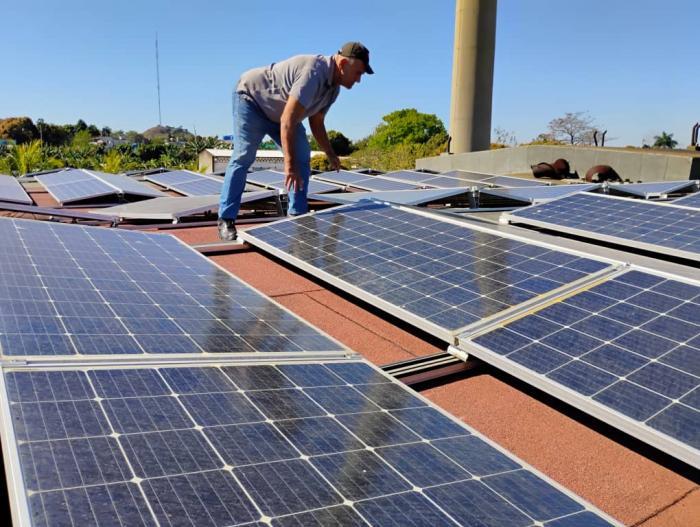
    In Villa Clara province, the local dairy industry has emerged as a pioneering example of this sustainable transition. The Villa Clara Dairy Company has implemented a comprehensive solar energy system featuring 400 photovoltaic panels installed across its facility rooftops. This strategic investment has yielded impressive results: the company eliminated its previous daily consumption of 2,200 liters of diesel for milk collection operations, reducing fuel requirements to just 259 liters through optimized transportation logistics.

    The technological transformation extends beyond mere fuel conservation. The Santa Clara dairy plant now conducts all milk pasteurization processes using exclusively solar-generated electricity. This shift produced dramatic environmental benefits in 2025 alone, saving 47 tons of diesel fuel while preventing approximately 131 tons of carbon dioxide emissions from entering the atmosphere.

    Engineer Gilberto León Gonzalez, Transportation and Energy Director at the dairy company, revealed ambitious expansion plans: “We aim to install 1,364 additional panels this year, which would guarantee 10% of the complex’s total energy consumption for various production processes.” The operation further enhances sustainability through using traditional cooking methods (firewood or charcoal) for employee meals and planning to acquire 18 electric tricycles for internal transportation.

    The renewable revolution extends across multiple industries. The “La Purísima” food processing factory, known for its popular mayonnaise and dressings, has installed solar panels to ensure continuous production despite energy challenges. According to Gustavo Benítez Fumero, regional director for the Food and Fishing Industry sector, this represents “the first major investment in the sector’s energy transition,” with additional facilities in Remedios and other locations preparing similar implementations.

    Other significant adopters include the UEB Matadero «Chichi Padrón» slaughterhouse, which is installing 272 solar panels to generate approximately 300 kilowatts for its operations, and the “Agustín Rodríguez Mena” Central Rum Distillery in Santo Domingo, which has operated since 2016 using 2,752 panels that generate surplus energy for the national grid.

    These developments demonstrate how necessity-driven innovation is enabling Cuban industries to overcome external economic pressures while building more sustainable operational models. The widespread adoption of photovoltaic technology across diverse sectors highlights both the viability and economic benefits of renewable energy solutions in challenging circumstances.

  • Investigation into foiled terrorist infiltration attempt moves forward. U.S. authorities express willingness to cooperate

    Investigation into foiled terrorist infiltration attempt moves forward. U.S. authorities express willingness to cooperate

    Cuban authorities have confirmed significant developments in an ongoing terrorism investigation, revealing both domestic progress and international dimensions to the case. The Ministry of Interior reported that forensic and investigative procedures are advancing under Cuban legal frameworks to fully clarify the events and establish the involvement of all perpetrators.

    Investigators have obtained statements from detained suspects alongside comprehensive investigative procedures that have strengthened evidence against them. The inquiry has further uncovered new elements suggesting the participation of additional individuals based in the United States, adding an international dimension to the case.

    The Cuban government has maintained consistent communication with U.S. authorities throughout the investigation. On March 2, 2026, American officials expressed through diplomatic channels their commitment to fully cooperate in the investigation. This collaboration may encompass information and evidence exchange, alongside other joint investigative actions.

    Given the serious nature of the events and the global threat posed by terrorism, Cuban authorities emphasized their historical stance on international cooperation in confronting this universal danger. The government considers reciprocal collaboration a duty in addressing security threats that endanger all humanity.

    Regarding the detained individuals, authorities confirmed that injured suspects continue receiving specialized medical care appropriate to their health conditions and injury severity. The ministry additionally disclosed that one detainee, Roberto Álvarez Ávila, succumbed to his injuries on March 4, 2026.

    The Ministry of Interior, in its March 5 statement, committed to keeping the public informed as the investigation progresses, underscoring the transparency of the process despite the sensitive nature of the security matter.

  • Cuban President signs book of condolences in honor of Grand Ayatollah Ali Khamenei

    Cuban President signs book of condolences in honor of Grand Ayatollah Ali Khamenei

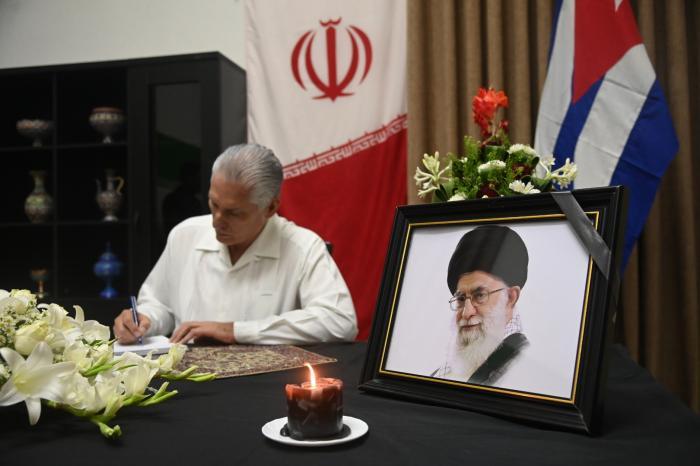
    Cuban President Miguel Díaz-Canel Bermúdez delivered a forceful condemnation of the assassination of Iran’s Supreme Leader during a solemn visit to the Iranian Embassy in Havana on Thursday. The First Secretary of the Communist Party of Cuba characterized the killing of Grand Ayatollah Seyed Ali Khamenei as a “flagrant violation of all norms of international law and human dignity” resulting from what he termed “vile aggression” by the United States and Israel.

    In a carefully orchestrated diplomatic gesture, Díaz-Canel signed the official Book of Condolences while expressing Cuba’s “deep sorrow and grief” over the incident. The Cuban leader memorialized Khamenei as “the outstanding statesman and leader of the Iranian people” who had played a pivotal role in strengthening bilateral relations between Havana and Tehran.

    The president extended formal condolences on behalf of both the Cuban government and citizens, offering sympathy to the late leader’s family, associates, and compatriots. The ceremony at the diplomatic mission featured the presence of Iranian Ambassador Zabihollah Naderi, alongside Cuban Foreign Minister Bruno Rodríguez Parrilla and Director General of Bilateral Affairs Carlos Miguel Pereira Hernández.

    This embassy visit followed earlier statements Díaz-Canel made through social media platforms regarding the February 28th attacks against Iran. The Cuban leader had previously asserted that these actions not only breached international legal standards and the UN Charter but also derailed nuclear negotiation efforts while jeopardizing regional and global stability.

    On March 4th, the president further amplified his criticism via social media, declaring that Cuba aligned with international appeals demanding an immediate cessation of hostilities against Iran and Lebanon. He specifically denounced what he described as “political assassinations and indiscriminate attacks” that have resulted in child casualties and escalated tensions throughout the Middle East.

    Díaz-Canel emphasized Cuba’s diplomatic position advocating for respect toward national sovereignty and territorial integrity across the region. He called for an end to military actions that damage civilian infrastructure and cause human suffering in Arab Gulf states, nations with which Cuba maintains friendly cooperative relations. The Cuban leader reiterated the necessity of upholding principles of neighborly conduct, moderation, and peaceful dialogue during this critical juncture in international affairs.

  • My flag is the one that has never been mercenary

    My flag is the one that has never been mercenary

    On the 165th anniversary of his birth, Cuban literary circles commemorate Bonifacio Byrne (1861-1936), the Matanzas-born poet whose work seamlessly blended artistic expression with revolutionary fervor. Born during Cuba’s struggle for independence, Byrne’s poetic journey evolved from modernist sophistication to becoming what renowned writer José Lezama Lima described as “the poet of the revolution” and “the singer of separatism.

    Byrne’s multifaceted career extended beyond poetry into journalism and playwriting, where he established several newspapers advocating for Cuban independence. During the Necessary War of 1895, he abandoned ornamental modernist styles to dedicate his craft to the liberation cause, ultimately facing exile in the United States. There, he founded the Revolutionary Club in Tampa and contributed to publications including Patria, El Porvenir, and El Expedicionario.

    The defining moment of Byrne’s literary legacy occurred upon his return to Havana on January 3, 1899, when he witnessed the American flag flying alongside the Cuban banner at El Morro. This poignant sight inspired his seminal work “My Flag,” a poem that scholar Virgilio López Lemus characterizes as “a document in verse, a virile protest capable of representing the feelings of an entire nation.”

    Despite some critics dismissing its compositional simplicity, “My Flag” has transcended academic circles to become embedded in Cuba’s national consciousness for over 120 years. The poem’s enduring power lies in its visceral portrayal of patriotic devotion, particularly its iconic final stanza envisioning even the dead rising to defend the national emblem.

    Byrne’s masterpiece continues to resonate in contemporary Cuban society, serving as what the original author describes as “a collective cry that grows stronger each time an imperial threat attempts to desecrate our flag.” The poem stands as a testament to how artistic expression can capture and preserve national identity across generations, maintaining relevance through its uncompromising defense of sovereignty and symbolic representation of Cuban resilience.

  • Cuba calls for an end to U.S. and Israeli aggression against Iran and an avoidance of escalation in the Middle East

    Cuba calls for an end to U.S. and Israeli aggression against Iran and an avoidance of escalation in the Middle East

    The Cuban Ministry of Foreign Affairs has issued a stern condemnation of military operations conducted by the United States and Israel against Iranian territory on February 28, 2026. In an official statement released from Havana, Cuban authorities characterized the attacks as a severe violation of Iran’s sovereignty and territorial integrity, asserting they represent a flagrant breach of both the United Nations Charter and established international legal standards.

    According to the Cuban government, this calculated aggression marks the second instance where diplomatic progress on nuclear negotiations has been deliberately undermined by external military action. The statement emphasizes that these operations pose grave dangers to regional and international peace, with immediate destabilizing effects already manifesting across the Middle East.

    Cuba has aligned itself with global appeals demanding an immediate cessation of hostilities, noting the attacks have resulted in unspecified civilian casualties, including children. The Caribbean nation warned against further escalation driven by hegemonic interests and military domination strategies that risk drawing additional regional actors into the conflict with unforeseeable consequences.

    The statement advocates for upholding fundamental principles of international law, including sovereign equality of states, non-interference in internal affairs, and the prohibition of force against territorial integrity. Cuba specifically called for enhanced diplomatic neighborliness between Iran and Arab states during this critical juncture.

    Cuba urged the United Nations Security Council to fulfill its primary responsibility for maintaining international peace and security, while simultaneously requesting the UN General Assembly to mobilize global efforts toward peace restoration with urgent determination. The statement concludes by reaffirming Cuba’s commitment to multilateral diplomacy and peaceful conflict resolution.