标签: Cuba

古巴

  • Vietnam will continue to support Cuba

    Vietnam will continue to support Cuba

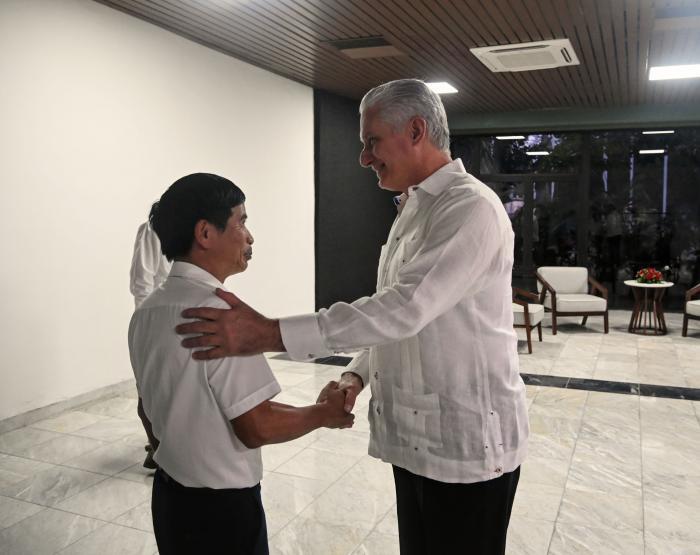
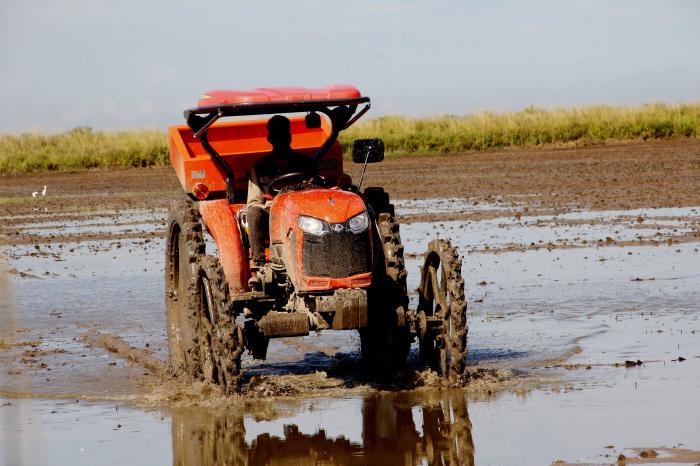
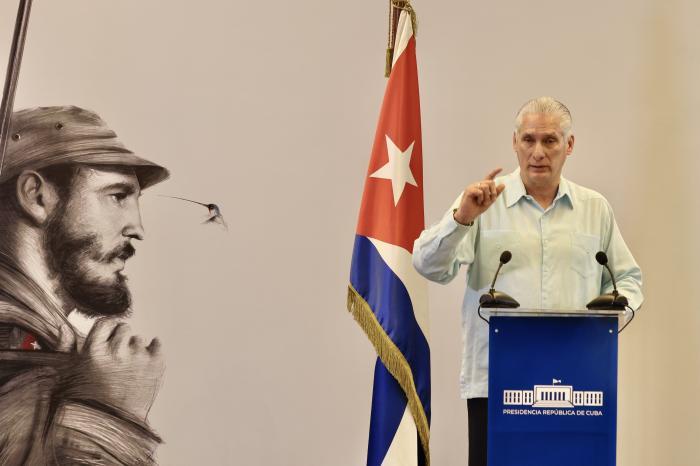
    In a significant development for Cuba’s agricultural sector, President Miguel Díaz-Canel Bermúdez met with Nguyen Van Quang, President of Vietnamese firm Agri-VMA, to review the substantial progress of a collaborative rice cultivation project in Pinar del Río. The high-level discussion centered on the tripartite management model being pioneered in Los Palacios, which is demonstrating remarkable success in boosting wet paddy rice yields.

    The innovative project, operating through the Mariel Special Development Zone, employs a multifaceted approach: direct cultivation on usufruct land under a fully foreign-owned enterprise, formal partnership agreements with local Cuban producers, and the sale of advanced technological packages and inputs to growers in the Vueltabajo region for foreign currency. This diversified strategy is proving highly effective, generating impressive production metrics.

    President Díaz-Canel positioned these achievements as a direct manifestation of the agreements solidified with To Lam, General Secretary of the Communist Party of Vietnam, during his official 2024 visit to Cuba. The Cuban leader expressed profound gratitude for Vietnam’s steadfast support, asserting that such collaboration paves a clear path toward national rice self-sufficiency in the near future. He urged Agri-VMA to expedite the completion of established plans and to further intensify cooperative production and technological marketing efforts with local farmers, noting the project’s role as a beacon for attracting additional Vietnamese investment.

    In response, Mr. Quang conveyed his appreciation for the warm reception and reaffirmed the commitment of Vietnam’s leadership to continue supporting Cuba through its current economic challenges. He emphasized that his nation stands fully prepared to assist its ‘sister nation’ in overcoming these difficulties, highlighting the deep, fraternal bonds between the two communist-led countries. The meeting underscores a strategic international partnership actively working to strengthen Cuba’s food security and agricultural resilience.
  • Measures facilitating participation of Cubans abroad in the national economy

    Measures facilitating participation of Cubans abroad in the national economy

    In a landmark economic reform, Cuba has eliminated longstanding restrictions that previously limited domestic investment exclusively to permanent residents. The new provisions now empower Cubans residing abroad to invest directly in private enterprises and form partnerships with Cuban private economic actors under the Foreign Investment Law.

    Deputy Prime Minister and Minister of Foreign Trade and Foreign Investment, Oscar Pérez-Oliva Fraga, announced these transformative measures as part of Cuba’s comprehensive strategy to update its economic model. These changes reflect ongoing dialogues with the Cuban diaspora and demonstrate the government’s commitment to strengthening ties with global citizens who wish to contribute to national development.

    The reforms represent a significant decentralization effort aimed at increasing foreign capital participation and diversifying private sector involvement across economic sectors. The most notable change removes the permanent residency requirement that previously barred diaspora investment, while simultaneously opening banking sector opportunities and establishing new cooperation and investment funds.

    Under the new framework, expatriate Cubans can now establish partnerships with private companies through overseas-registered entities—a privilege previously reserved for state-owned enterprises. The financial sector reforms authorize diaspora participation in creating non-bank financial institutions and investment banks, subject to Central Bank approval, including opportunities in virtual asset services.

    To facilitate operations, diaspora investors will enjoy equal banking rights as domestic residents, including foreign currency account access. The government is also creating specialized funds to streamline cooperation efforts and maximize impact in priority areas.

    Food production receives particular emphasis, with the government encouraging agricultural investment at municipal levels. The Deputy Prime Minister cited successful Vietnamese rice production ventures as potential models for diaspora engagement through land usufruct arrangements.

    Despite these openings, officials acknowledge the persistent challenges posed by the US economic blockade, which restricts access to capital markets and financing. The humanitarian consequences include disrupted medical treatments, food production limitations, and widespread energy deficiencies affecting water access.

    The government is concurrently improving administrative mechanisms to ensure efficient processing of investment proposals, with enhanced business opportunity portfolios and reduced bureaucratic delays. These measures collectively represent Cuba’s strategic commitment to engaging its global diaspora in building a prosperous and sustainable economy grounded in social justice principles.

  • There are many lessons to be learned in this country during these difficult times

    There are many lessons to be learned in this country during these difficult times

    In a major address to the national press from the Palace of the Revolution, Cuban President Miguel Díaz-Canel provided a comprehensive assessment of the nation’s ongoing fuel crisis, confirmed preliminary diplomatic contacts with the United States, and detailed the government’s multifaceted response to severe economic challenges.

    The President confirmed that Cuba has not received fuel shipments for over three months due to what he termed an “energy blockade,” creating devastating effects across all sectors of society. The national power grid operates under extreme instability, with prolonged blackouts lasting over 30 hours in some municipalities affecting water supply, healthcare, education, transportation, and communications.

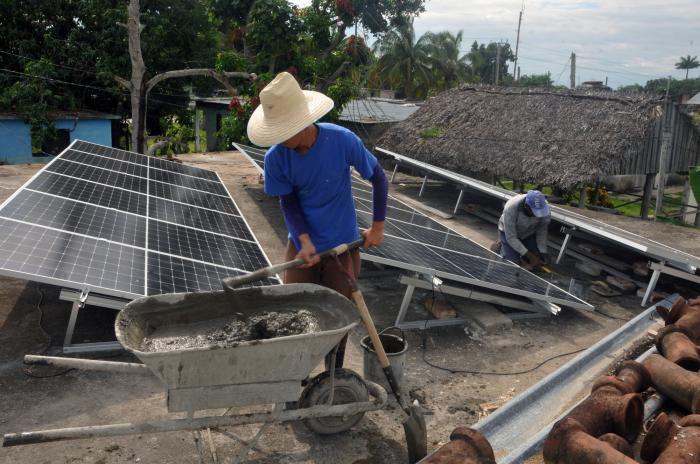
    Despite these challenges, Díaz-Canel highlighted several adaptive measures: solar farms now provide 49-51% of daytime energy, over 1,000 photovoltaic systems have been installed in remote communities, and 10,034 solar modules have been provided to essential workers. The energy transition includes converting bakeries to alternative fuels, expanding electric transportation, and developing battery storage systems for grid stability.

    Regarding international relations, the President confirmed that Cuban officials have held preliminary talks with U.S. representatives through international facilitators. He emphasized that any dialogue must proceed on principles of equality, respect for sovereignty, and reciprocity. The process remains in early stages with no concrete agreements yet reached.

    The address also covered labor adjustments necessitated by the crisis, with the government encouraging job relocations to community projects rather than layoffs. Educational institutions have shifted to blended learning models utilizing community settings, while maintaining academic continuity despite power limitations.

    President Díaz-Canel strongly defended Cuba’s handling of international donations, particularly from Mexico, emphasizing transparent distribution systems and audit mechanisms. He also provided updates on security matters, including an ongoing investigation into a recent armed infiltration attempt and cooperation with U.S. authorities through FBI involvement.

    The government announced the sovereign decision to release 51 prisoners based on good behavior, characterizing it as a humanitarian gesture consistent with Cuban legal practices.

    Throughout the address, Díaz-Canel emphasized national resilience, praising electricity workers maintaining systems despite personal hardships and highlighting continued functioning of essential services despite unprecedented challenges.

  • An eternal symbol of the revolutionary resolve that guides Cuba

    An eternal symbol of the revolutionary resolve that guides Cuba

    Cuban President Miguel Díaz-Canel Bermúdez has declared the nation’s perpetual indebtedness to its “legacy of dignity” during commemorations marking the 148th anniversary of the Baraguá Protest. The historic event, regarded as one of Cuba’s most principled acts, continues to shape the country’s political ethos and resistance against external pressures.

    In a series of official statements and social media posts, Cuba’s highest leadership collectively emphasized the enduring significance of General Antonio Maceo Grajales’ 1878 defiance against peace agreements that would compromise Cuban independence. President Díaz-Canel characterized the Baraguá Protest as embodying the “spirit of resistance” that remains the nation’s “non-negotiable compass” in contemporary geopolitics.

    The President invoked Maceo’s legendary declaration—”We do not understand each other”—describing it as a perpetual mandate to “break the circle” in defense of national sovereignty. This historical reference was echoed throughout the government, with National Assembly President Esteban Lazo Hernández labeling the event an “emblem of Cuban steadfastness” and Prime Minister Manuel Marrero Cruz asserting that Maceo’s stance “raised the nation’s flags to their highest point.”

    Roberto Morales Ojeda, Secretary of Organization of the Central Committee, drew direct parallels between historical and contemporary challenges, stating that any modern attempts to undermine Cuban sovereignty would “clash with the same wall of principles as at Baraguá.” The leadership collectively contrasted Maceo’s revolutionary integrity with what they termed “zanjoneros”—a reference to those who advocated compromise in the past and present.

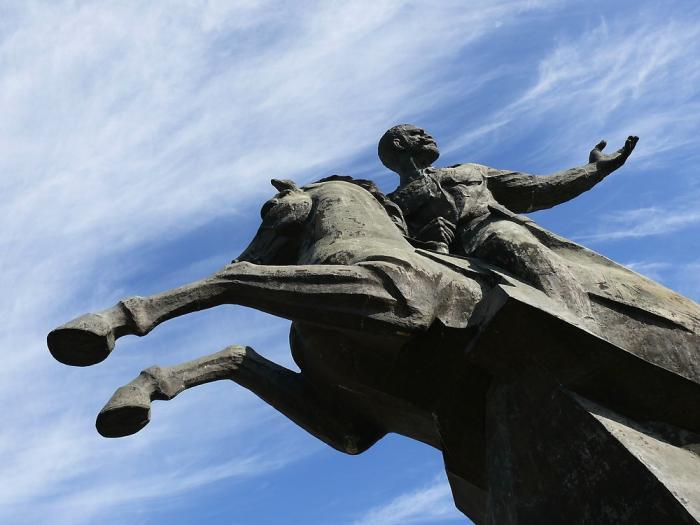
    The commemorations, centered around Santiago de Cuba’s Revolution Square where a monument to Maceo stands, reinforced the government’s position that the Baraguá Protest remains a living force mobilizing national consciousness. The leadership explicitly connected this historical legacy to Fidel Castro’s political philosophy, framing Cuba’s future as “an eternal Baraguá” in its unwavering defense of independence and revolutionary principles.

  • “The Cuban press is not standing still; it is fighting and innovating”

    “The Cuban press is not standing still; it is fighting and innovating”

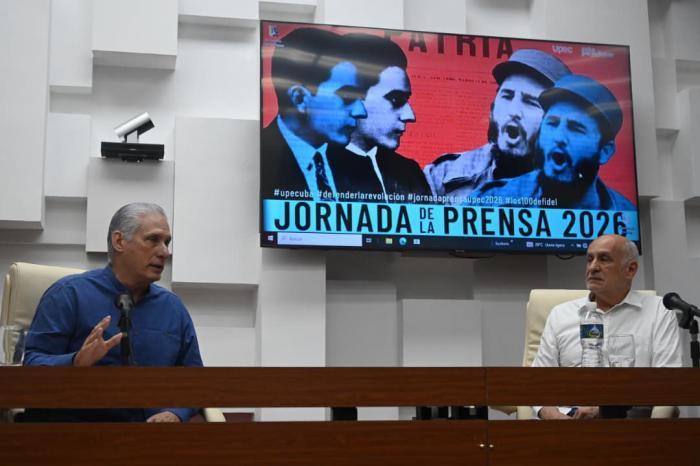
    In a landmark address commemorating Cuban Press Day, President Miguel Díaz-Canel Bermúdez outlined an ambitious vision for the nation’s media landscape, emphasizing digital transformation and revolutionary continuity. The gathering brought together over 80 media professionals, including veteran journalists and emerging digital specialists, to discuss the evolving role of press in contemporary Cuba.

    Addressing representatives from print, digital, television, and radio outlets, the President highlighted the dual challenge and opportunity presented by new technologies. “We now possess digital platforms, social media channels, and artificial intelligence tools that transcend traditional limitations of space and time,” Díaz-Canel stated, positioning these developments as crucial assets in modern information warfare.

    The dialogue revealed significant structural shifts within Cuban media organizations. Granma newspaper, the official Communist Party publication, has fundamentally reorganized its operations to function as “a digital newspaper with weekly print editions,” according to editor-in-chief Yoerky Sánchez Cuellar. This transformation required overcoming print-centric mentalities and implementing 24/7 digital news cycles.

    President Díaz-Canel emphasized the strategic importance of digitizing Cuba’s extensive historical archives, containing priceless photographic records and original writings by revolutionary leaders including Fidel Castro. These materials, he noted, represent both cultural treasures and ideological resources for current geopolitical struggles.

    The discussion addressed practical adaptations to Cuba’s economic challenges, including fuel shortages that have necessitated community-based reporting and increased reliance on social media platforms. Media organizations like Ideas Multimedios and Cubadebate have developed self-funded models that maintain financial stability while expanding renewable energy infrastructure and employee compensation.

    Díaz-Canel framed the media’s role within the context of “sixth-generation warfare,” describing Cuban journalists as frontline defenders in ideological and cultural conflicts. “The press serves as both communication tool and sovereign agent,” he asserted, emphasizing its educational function in developing public media literacy and resistance to manipulation.

    The President concluded by celebrating the press’s active role in promoting popular participation, documenting positive national experiences, and maintaining constructive criticism—all while preserving the revolutionary merit that has historically characterized Cuban journalism.

  • To create spaces for understanding and cooperation, Cuban officials have recently held talks with representatives of the U.S. government

    To create spaces for understanding and cooperation, Cuban officials have recently held talks with representatives of the U.S. government

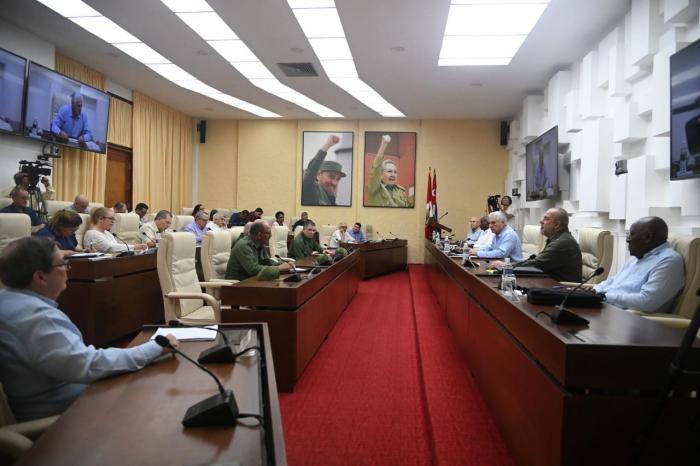
    In a significant diplomatic development, Cuban President Miguel Díaz-Canel Bermúdez has announced the initiation of formal talks between Cuban officials and representatives of the United States government. The announcement was made during a high-level meeting at the headquarters of the Central Committee of the Communist Party of Cuba, attended by members of the Political Bureau, the Secretariat, and the Executive Committee of the Council of Ministers.

    President Díaz-Canel emphasized that these discussions aim to resolve bilateral differences through constructive dialogue, facilitated by evolving international circumstances. The Cuban leadership has expressed its commitment to conducting this delicate process on principles of equality, mutual respect for political systems, sovereignty, and governmental self-determination.

    The comprehensive agenda includes identifying specific bilateral problems requiring resolution, determining mutual willingness to take concrete actions benefiting both populations, and exploring cooperative avenues to address shared security threats while promoting regional peace. The talks particularly focus on enhancing security and stability throughout Latin America and the Caribbean region.

    Díaz-Canel notably addressed the unusual nature of this public disclosure, explaining that while Cuban leadership traditionally avoids responding to speculative campaigns, the sensitivity of these negotiations warranted transparency. He characterized the process as demanding serious, responsible handling given its significant implications for bilateral relations.

    The Cuban delegation has emphasized reciprocity and adherence to International Law as fundamental principles guiding these exchanges. The president acknowledged that during periods of heightened tension with the US government, certain individuals and institutions have historically emerged to facilitate diplomatic channels, creating opportunities for understanding despite confrontational environments.

    High-ranking officials including National Assembly President Esteban Lazo Hernández, Prime Minister Manuel Marrero Cruz, and Vice President Salvador Valdés Mesa participated in the meeting, demonstrating the collective leadership approach characterizing Cuba’s decision-making process.

  • A date that is a symbol

    A date that is a symbol

    Sixty-nine years after the historic events of March 13, 1957, Cuba commemorates the courageous assault on the Presidential Palace and Operation Radio Reloj, operations that profoundly impacted Havana and the entire nation. These actions stand as enduring symbols of extraordinary bravery, selfless heroism, and unwavering commitment to revolutionary ideals.

    The operation’s legacy is powerfully encapsulated in the Political Testament of José Antonio Echeverría, who famously declared: ‘If we fall, may our blood mark the path to freedom. Whether or not our action achieves immediate success, the commotion it creates will propel us toward ultimate victory, though the people’s collective action remains decisive in achieving liberation.’

    This historical episode represents a critical chapter in Cuba’s revolutionary tradition, born from the strategic alliance between the Revolutionary Directorate and the July 26 Movement. The combatants embodied anti-imperialist principles, drew inspiration from Cuba’s rich student protest heritage, and demonstrated profound identification with the aspirations of the common people.

    The participants confronted the oppressive Batista regime with extraordinary courage, transforming ideological convictions into decisive action and revolutionary principles into unbreakable resolve. Their willingness to sacrifice everything for national liberation, even facing death with patriotic fervor, established an immortal example that continues to inspire subsequent generations.

    The enduring significance of March 13th was acknowledged by Fidel Castro during a 1961 memorial ceremony at the University of Havana, where he emphasized that while Cuba commemorates numerous historical dates, certain events achieve symbolic status worthy of perpetual national remembrance. The legacy of these revolutionaries remains deeply embedded within Cuban academic institutions and continues to serve as both inspiration and rallying banner for preserving revolutionary achievements.

  • In Cienfuegos, powered by the sun

    In Cienfuegos, powered by the sun

    Cienfuegos province has positioned itself at the forefront of Cuba’s renewable energy revolution, implementing a multifaceted solar energy program that extends far beyond conventional photovoltaic parks. While four major solar farms form the backbone of this initiative, the true transformation manifests through decentralized applications improving daily life across urban and rural communities.

    The solar transformation encompasses critical infrastructure including water pumping systems that now serve over 20,000 residents across multiple municipalities. Beginning in San Marcos settlement, the program has expanded to include 63 pumping stations with motors under 10kW capacity, particularly benefiting regions like Lajas that historically faced severe water table challenges. The Real Campiña community hosts the largest system with 64 photovoltaic modules delivering 20 liters per second.

    International cooperation has accelerated progress, with Japan funding a €63,000 project providing potable water to 1,200 residents in Abreus municipality. Meanwhile, Swiss solidarity organizations have supported artistic communities in the Escambray Mountains through solar-powered pumps serving 87 families and sustaining community gardens.

    The provincial government has additionally launched a residential solar program benefiting 470 education and health sector workers through structured payment plans. This initiative has been met with widespread appreciation, recognized both for its practical benefits and as symbolic recognition of professional dedication.

    Urban infrastructure has similarly undergone transformation with 78 solar-powered street lights now illuminating key thoroughfares including San Fernando Boulevard and José Martí Park. These installations generate daily savings of 690 kWh, translating to approximately $65,000 in annual cost reduction.

    Looking forward, Cienfuegos continues expanding its renewable capacity with construction underway on a new 5 MW photovoltaic park in the CEN-Juraguá area, part of China’s 120 MW donation package. Provincial plans envision four additional 21.87 MW facilities, potentially bringing total large-scale installations to eight. Combined with existing smaller facilities, the province’s 127 MW solar capacity now saves an estimated 41,000 tons of fossil fuels annually, demonstrating renewable energy’s tangible economic and environmental benefits.

  • The International Peoples’ Assembly stands in solidarity with Cuba

    The International Peoples’ Assembly stands in solidarity with Cuba

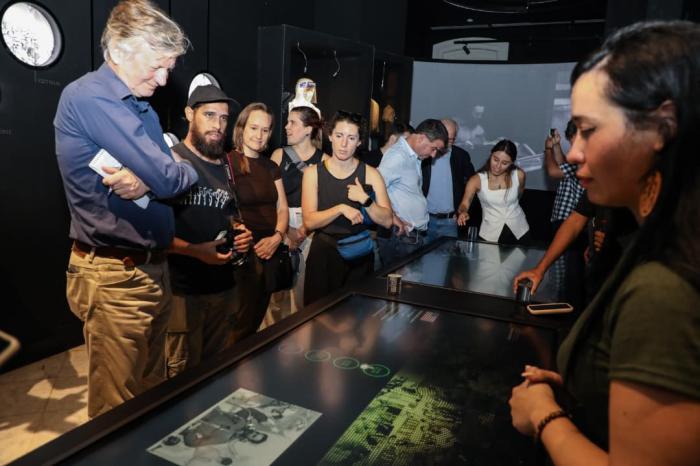
    A distinguished delegation from the International Peoples’ Assembly (IPA) is currently conducting an intensive fact-finding mission in Cuba to document the severe humanitarian consequences of the six-decade-long economic, commercial, and financial blockade imposed by the United States. The delegation, comprising representatives from Brazil, the United States, Zambia, Colombia, Italy, India, and Argentina, aims to gather firsthand evidence of how the sanctions have crippled essential sectors including healthcare, education, transportation, and food security.

    João Pedro Stédile of Brazil’s Landless Rural Workers Movement articulated the mission’s primary objectives: expressing solidarity with the Cuban people and government, assessing the real-world impact of Washington’s policies, and developing concrete actions to counter the blockade. The delegation has already visited critical facilities including the Latin American School of Medicine and multiple hospitals, where they witnessed the acute shortage of medical supplies despite Cuba’s advanced healthcare system.

    Brian Becker, leader of the US Party for Socialism and Liberation, highlighted the particular cruelty of medicine restrictions affecting even pediatric cancer patients. Fred M’membe, president of Zambia’s Socialist Party, emphasized that Cuba represents no threat beyond ‘the kindness of its people’ and recalled Africa’s profound gratitude for Cuba’s historical support against colonialism. The delegation plans to engage with both government officials and ordinary citizens before returning to their respective countries to mobilize international solidarity efforts.

  • “We will be with you for whatever you need,” the International Peoples’ Assembly (IPA) told Cuba

    “We will be with you for whatever you need,” the International Peoples’ Assembly (IPA) told Cuba

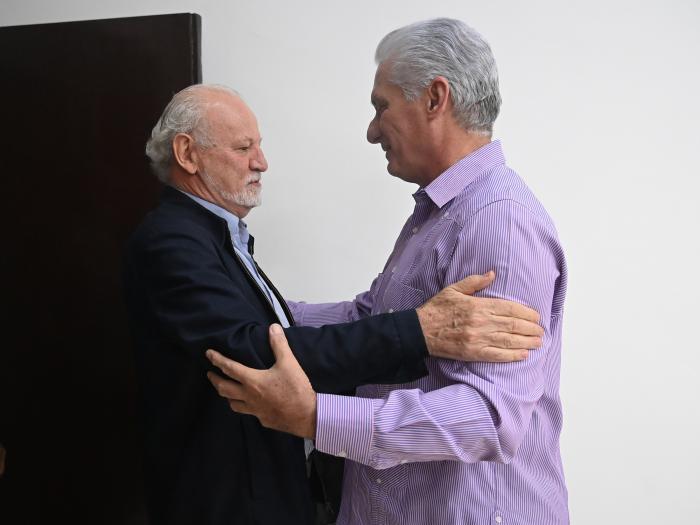
    In a significant demonstration of international solidarity, Cuban President Miguel Díaz-Canel Bermúdez convened with representatives from the International Peoples’ Assembly (IPA) at the Central Committee headquarters of the Communist Party of Cuba on Tuesday. The high-level meeting featured prominent figures including João Pedro Stedile of Brazil’s Landless Workers Movement (MST) and representatives from the U.S. Party for Socialism and Liberation.

    The delegation, engaged in an extensive program across Cuba since Sunday, had previously visited key institutions including the Latin American School of Medicine, the Fidel Castro Center, and the Martin Luther King Center. President Díaz-Canel emphasized the shared anti-capitalist and anti-colonial objectives uniting Cuba with international movements, highlighting the necessity of coordinated actions to counter what he described as U.S. hegemonic ambitions and ideological warfare.

    ‘The United States government employs force to undermine multilateralism and suppress the rights of sovereign nations,’ Díaz-Canel stated during the cordial exchange. He expressed profound appreciation for the delegation’s presence, noting that Cuba feels ‘motivated and supported by your solidarity during these challenging times.’

    In a reciprocal gesture, João Pedro Stedile conveyed the delegation’s familial connection to Cuba, assuring continued support despite geographical distances. ‘We are here to embrace you and stand ready to provide whatever assistance you may require,’ Stedile affirmed, referencing ongoing projects designed to deliver concrete aid.

    The meeting culminated in the signing of a formal Exchange and Cooperation Agreement between the Communist Party of Cuba and Brazil’s MST movement. The document, endorsed by Emilio Lozada García for Cuba and João Pedro Stedile for Brazil, establishes a framework for strengthened bilateral relations. The ceremony was attended by senior Cuban officials including Organization Secretary Roberto Morales Ojeda, Foreign Minister Bruno Rodríguez Parrilla, and ICAP President Fernando González Llort.