标签: Cuba

古巴

  • A Sea of Torches for Action

    A Sea of Torches for Action

    Havana witnessed a powerful display of revolutionary continuity as thousands of Cuban students filled the streets between the University of Havana and Fragua Martiana for the historic Torchlight March on January 28th. The event transformed the university steps into a sea of flames and political commitment, echoing the same revolutionary spirit that characterized the original march 73 years ago.

    The gathering served as both tribute and call to action, with participants invoking the legacy of both José Martí and Fidel Castro in the year marking the centennial of the Commander-in-Chief’s birth. Litza Elena González Desdín, national president of the University Students’ Federation, explicitly framed the event as forward-looking rather than nostalgic: “This is not an act of nostalgia, it is a call to action,” she declared before the assembled crowd.

    In a significant announcement, González Desdín revealed that Havana will host the First International Colloquium “Fidel: Legacy and Future” from August 10th to 13th. The event aims to gather global supporters of just causes, including social movements, political figures, cultural icons, scientists, and scholars studying Castro’s legacy. The student leader extended a worldwide invitation to “friends of the Cuban Revolution throughout the globe” to participate in this extraordinary event.

    The march itself represented a massive oath-taking ceremony, with Cuban youth reaffirming their commitment to national sovereignty, social justice, Latin American unity, and anti-imperialism. González Desdín articulated the generation’s resolve: “We accept neither new nor old chains and will neither surrender nor sell out.

    The political leadership demonstrated strong support for the event, with President Miguel Díaz-Canel Bermúdez leading the pilgrimage alongside high-ranking officials including Esteban Lazo Hernández, President of the National Assembly; Roberto Morales Ojeda, Secretary of Organization of the Central Committee; and Teresa Amarelle Boué, Secretary General of the Federation of Cuban Women.

    The event also served as a platform to condemn recent imperialist aggression against Venezuela and the kidnapping of its President and First Lady, while honoring 32 Cuban combatants who fell in defense of Venezuelan sovereignty. González Desdín pledged continued vigilance: “With the same unity and fierceness as theirs, we swear that there will be no silence or indifference. Serene sentinels of dignity.”

  • “We are committed to Cuba forever”

    “We are committed to Cuba forever”

    Despite facing severe economic constraints exacerbated by longstanding trade restrictions, Cuba’s healthcare system has achieved a remarkable 80% survival rate for pediatric cancer patients through innovative protocols and government commitment. This impressive milestone was highlighted during the eighth humanitarian donation from the US-based Hatuey Project (Health Advocates in Truth, Unity and Empathy) to the island nation.

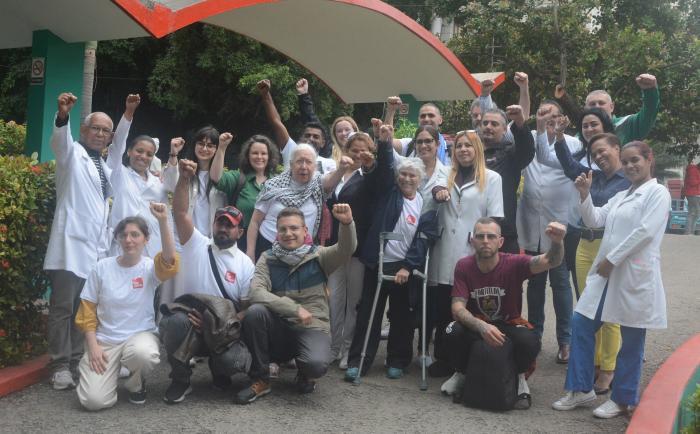
    At the Cuban Institute of Friendship with Peoples (ICAP) headquarters, project coordinator Gloria La Riva presented a substantial shipment of medical supplies and medications destined for pediatric oncology units at Havana’s Juan Manuel Márquez Hospital and Villa Clara’s José Luis Miranda Hospital. The donation will also support maternity facilities across the island.

    Dr. Carlos Alberto Martínez Blanco, head of the Cancer Control Section at Cuba’s Ministry of Public Health, acknowledged the critical challenges healthcare professionals face in maintaining treatment standards without access to first-line medications and advanced technologies due to trade limitations.

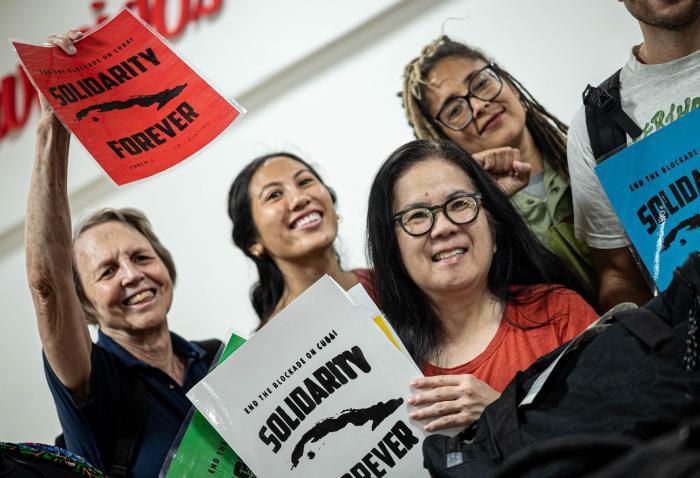
    The ceremony was attended by ICAP President Fernando González Llort, a Hero of the Republic, where La Riva declared the project’s unwavering solidarity: “We are committed to Cuba forever. We know that Cuba will not give in, it will not surrender, and neither will we. There are many people in the United States who support and love Cuba.”

    The event also served as a platform to condemn the US government’s continued inclusion of Cuba on its list of state sponsors of terrorism, which participants described as “infamous and false.” The Hatuey Project reaffirmed its stance alongside the Cuban people in opposing what they characterized as imperialist policies that compound healthcare challenges.

  • The flame that remains

    The flame that remains

    HAVANA – The historic Torch March, a century-old tradition symbolizing Cuba’s anti-imperialist resistance, once again transformed Havana’s streets into a flowing symphony of light on Tuesday evening. This annual ritual represents more than mere ceremony—it embodies the materialization of countless personal commitments coalescing into a powerful public declaration.

    The procession originates not in organized spectacle but in private dedication. Each torch is first kindled in imagination before being physically constructed in courtyards, workshop tables, and homes across the city. This initial spark evolves into a manifestation of collective will transformed into radiant light, where personal conviction merges with common purpose to create what participants describe as ‘a geography of warmth and purpose.’

    As darkness recedes before the advancing tide of flames, the night accepts the ritualistic progression. The march serves as both symbolic gesture and active declaration—a testament to the principles and courage of previous generations honored through this tradition. Participants emphasize that the significance lies not merely in carrying torches but in forming the tightly-knit community marching beneath their glow, sharing in their radiant, inviting warmth.

    Confronting what organizers characterize as ‘the old enemy threatening the homeland,’ the event symbolizes the ongoing struggle requiring both illuminating and purifying fire. The march incorporates the anti-imperialist ideology of Cuba’s founding fathers into living tradition, creating a space of pure presence where beauty manifests and becomes embedded in the city’s collective memory.

    While the grandiose image of an illuminated crowd creates powerful imagery, participants suggest the most enduring aspect may be the sequential lighting of torches—passing flame from friend to neighbor, ensuring nothing extinguishes along the route. The night’s testimony becomes generational certainty: like hope itself, the fire persists.

  • José Martí Memorial: the highest tribute

    José Martí Memorial: the highest tribute

    Havana’s Revolution Square has been home to an iconic tribute to Cuban national hero José Martí since January 27, 1996, when revolutionary leader Fidel Castro inaugurated the monumental complex at the base of the square’s towering obelisk. Recognized as the world’s largest monument dedicated to Martí, the memorial stands as both an architectural marvel and a profound symbol of Cuban national identity.

    The concept for this permanent tribute originated with Fidel Castro Ruz, who championed the idea of creating a dedicated space to honor the intellectual architect behind the Moncada Barracks assault. The project gained momentum during 1995, coinciding with the centenary of Martí’s death in combat, ultimately materializing as the impressive structure that dominates Havana’s urban landscape.

    During the inaugural ceremony, Castro expressed profound satisfaction with the realization of this vision, noting: “One feels satisfaction that a man like him has received such a beautiful, aesthetic tribute. The combination of everything here is truly beautiful. The design has been excellent, so now we have a Memorial, which we thought we had, because there was a Monument and the star. I think many people will come to see it; there will not be a citizen who does not come to this place.”

    The memorial complex encompasses not only the striking obelisk but also an extensive museum dedicated to preserving and exhibiting valuable historical documents, photographs, and artifacts that chronicle Martí’s life and intellectual legacy. More than just an architectural achievement, the institution serves as a living testament to Martí’s enduring influence on Cuban revolutionary thought and national consciousness.

    Three decades after its establishment, the José Martí Memorial continues to function as both an educational center and a pilgrimage site for Cubans and international visitors alike. Its dual significance—combining majestic physical presence with deep historical resonance—cements its status as one of Cuba’s most important cultural and patriotic landmarks, ensuring that Martí’s philosophical contributions remain accessible to future generations.

  • “When we have united, history has shown that we have always achieved victory”

    “When we have united, history has shown that we have always achieved victory”

    Cuban President Miguel Díaz-Canel Bermúdez oversaw extensive military exercises on National Defense Day, emphasizing the nation’s preparedness against potential foreign aggression. The tactical demonstrations at the Great Tank Unit of Combat Glory Rescate de Sanguily featured combined forces from regular military units, Territorial Troop Militias, and Production and Defense Brigades.

    Accompanied by high-ranking military officials including Army Corps General Álvaro López Miera and General Roberto Legrá Sotolongo, Díaz-Canel observed the drills that began three weeks prior. The President highlighted the significance of these exercises in the current geopolitical climate, specifically referencing the “hegemonic offensive being carried out by the United States government” since January 3.

    The drills demonstrated remarkable coordination between different components of Cuba’s territorial defense system. Díaz-Canel praised the “levels of preparation, cohesion, and cooperation” as admirable, noting that the systematic preparation program is yielding concrete results while strengthening national patriotism and anti-imperialist sentiment.

    The President later visited university students practicing rifle assembly, mine deployment, and other combat skills. He emphasized to the future professionals that defense preparedness remains crucial, echoing historical warnings from Fidel and Raúl Castro that the best deterrent against aggression is comprehensive military readiness. The students responded with revolutionary slogans including “Fatherland or Death!” and “No one surrenders here!”

    The inspection concluded at an air defense unit where Díaz-Canel verified combat technology conditions and observed demonstrations of Cuba’s response capabilities to potential enemy attacks.

  • International Congress on Thousand Cities sccessfully ends in Havana

    International Congress on Thousand Cities sccessfully ends in Havana

    An international congress focused on building happier, more sustainable cities through artificial intelligence and strategic communication concluded successfully in Havana. Hosted by the National Institute of Economic Research (INIE), the event brought together global experts to address urban development challenges in the digital age.

    The conference, jointly sponsored by Plaza de la Revolucion Cultural District, the University of Sao Paulo’s International Center for Innovation and Development of Thousand Cities (CIIDCMIL-USP), and the Center for Studies in Evaluation and Measurement of Communication and Marketing, achieved its primary objective of disseminating innovative approaches to urban happiness. According to Felipe Chibas-Ortiz, executive coordinator of CIIDCMIL-USP, the gathering specifically targeted overcoming cultural barriers and countering hate narratives through effective communication strategies.

    The comprehensive program featured expert panels examining media literacy, creative economy models, institutional ethics, and family dynamics. Additional sessions explored gender equality considerations, public health promotion, robotics integration, and practical guidance for developing AI-enhanced urban projects. The congress attracted participation from nine countries through both physical attendance and virtual engagement platforms.

    Distinguished participants included Cuban intellectual Miguel Barnet, Cuban Association of Social Communicators President Rosa Maria Gutierrez, INIE Director Maile Yiser, and University of Zaragoza Vice-Rector Carmen Marta-Lazo from Spain. UNESCO representation featured several high-level officials, including Paris Office Director Alton Grizzle and Media Literacy Network Director Manuel Perez Tornero.

    The event culminated in two significant cultural contributions: the presentation of the book ‘Thousand Cities: Challenges and Solutions for Sustainable Development in the Age of Artificial Intelligence’ and a special cartoon exhibition titled ‘Thanks to the Thousand Cities’ by renowned Brazilian artist Dorinho Bastos.

  • The Uruguayan brigade “Fidel Castro” traveled to Cuba with aid

    The Uruguayan brigade “Fidel Castro” traveled to Cuba with aid

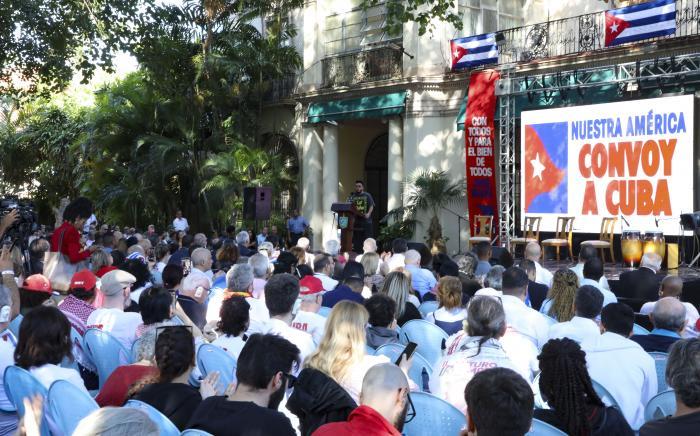
    A contingent of Uruguayan citizens representing diverse segments of society has embarked on a humanitarian mission to Cuba, carrying both medical resources and a profound message of international solidarity. The group, formally designated as the ‘Fidel Castro’ brigade, departed from Carrasco International Airport in Montevideo with a cargo of essential medical supplies and pharmaceuticals meticulously packed in their luggage.

    Complementing the tangible aid, the delegation transported a financial contribution of approximately $17,000. This sum was accumulated through a nationwide fundraising campaign orchestrated by the Coordinating Committee in Support of the Cuban Revolution, which saw active participation from ordinary citizens, political groups, and various social organizations. These funds are expressly destined to bolster the Caribbean nation’s public health infrastructure.

    The brigade comprises a cross-section of Uruguayan society, including students, active workers, and retirees, all united by a common purpose. For many, like Lucia Moderneli, a sociology student at the University of the Republic, the journey represents the fulfillment of a deeply personal and political ambition. “I am fulfilling a political dream of expressing my support for the Cuban people, and a family dream, since my father always wanted to make this journey but couldn’t,” Moderneli explained in an interview with Prensa Latina.

    The mission is widely perceived by its participants as a reciprocal act of gratitude. For nearly two decades, Cuba’s Operation Miracle program has provided free ophthalmologic surgeries across South America, notably in Uruguay. Moderneli highlighted this legacy, expressing profound thanks on behalf of the estimated 130,000 Uruguayans—including her own grandfather—who have regained their eyesight through the skill and generosity of Cuban medical professionals. This initiative, she stated, is a modest effort to ‘return Cuba’s internationalism and cooperation with the world.’

  • Cubans residing in Nicaragua reiterate support for Venezuela

    Cubans residing in Nicaragua reiterate support for Venezuela

    The Cuban community residing in Nicaragua has issued a powerful declaration of solidarity with Venezuela, condemning what it describes as systematic aggression and destabilization campaigns targeting the Bolivarian nation’s sovereignty. The statement, disseminated through official social media channels, emerges amid heightened geopolitical tensions in Latin America.

    This proclamation strategically coincides with the 173rd anniversary of Cuban national hero José Martí’s birth, observed annually on January 28th. The timing underscores the deliberate invocation of Martí’s philosophical legacy, particularly his advocacy for Latin American unity and resistance against external intervention.

    The comprehensive statement articulates three primary concerns: the employment of unilateral coercive measures against Venezuela, coordinated disinformation campaigns designed to undermine democratic processes, and systematic attacks on the nation’s right to self-determination. These elements, according to the declaration, represent a concerted effort to disrupt regional stability.

    Drawing direct parallels between historical anti-colonial struggles and contemporary political challenges, the Cuban community in Nicaragua emphasized the enduring relevance of Martí’s vision. The statement characterized current events as a continuation of historical patterns of foreign intervention in Latin American affairs, necessitating renewed commitment to regional integration and mutual defense of sovereignty.

    Furthermore, the declaration reaffirmed Nicaragua’s alignment with Venezuela through the framework of regional cooperation alliances, highlighting existing bilateral agreements and diplomatic coordination mechanisms between left-leaning governments in the region.

    The statement concludes with an impassioned call for strengthened brotherhood between Cuban and Venezuelan peoples, framing this solidarity as both a moral imperative and strategic necessity in confronting perceived external pressures. This diplomatic communication represents the latest development in ongoing ideological alignment among certain Latin American nations advocating for reduced U.S. influence in the region.

  • Cuba celebrates World Day of African and Afro-descendant culture

    Cuba celebrates World Day of African and Afro-descendant culture

    Cuba’s top diplomat has publicly affirmed the nation’s profound cultural and historical connections to Africa, framing the relationship as one of shared heritage and familial bonds. In a statement released on social media platform X, the official characterized Cuban identity as the product of a dynamic fusion of diverse cultures, traditions, and religious practices cultivated over hundreds of years.

    The declaration emphasized that this rich national character stems from a long history of continuous exchange, solidarity, and fraternal ties between the Cuban people and the African continent. “We Cubans feel part of the African continent and children of Africa,” the Foreign Minister stated, underscoring a sense of shared destiny and belonging.

    This recognition coincides with the global observance of World Day of African and Afro-descendant Culture on January 24. The annual celebration, championed by UNESCO, honors the vast and vibrant cultural expressions originating from Africa and its diasporic communities worldwide. The event reinforces the international body’s core mission to advance respect for cultural diversity and human creative expression across the globe.

    This commemoration highlights Africa’s invaluable contribution to world heritage, positioning cultural appreciation as a fundamental pillar for achieving sustainable development, fostering mutual understanding, encouraging dialogue, and maintaining global peace.

  • Venezuela’s acting President highlights Program for Coexistence

    Venezuela’s acting President highlights Program for Coexistence

    Venezuela’s interim President Rodriguez has inaugurated an ambitious national security initiative, establishing a 100-day timeline to develop a comprehensive peace plan addressing the nation’s political, social, and economic dimensions. The launch ceremony brought together government ministers alongside representatives from academic, political, private enterprise, and social sectors, signaling a collaborative approach to national stability.

    President Rodriguez emphasized the program’s inclusive nature, noting that a “diverse and pluralistic group of Venezuelans” had already contributed substantial ideas toward what she described as “a common destiny.” The initiative will be administratively coordinated by Culture Minister Ernesto Villegas, with Professor Ana Maria San Juan appointed as executive secretary to oversee daily operations.

    A significant component of the peace initiative addresses economic stability, with Rodriguez highlighting that “peace also depends on economic peace.” The government has collected numerous proposals from entrepreneurs and business leaders, which will form an ideas bank to inform the developing National Plan.

    In a parallel confidence-building measure, Rodriguez announced the release of 626 individuals currently deprived of liberty, characterizing this action as part of Venezuela’s ongoing political process while acknowledging that some parties are attempting to manipulate the situation.

    The administration simultaneously conducted a dramatic demonstration as part of its “We Want Them Back” campaign. Thousands of drones illuminated the night sky over Fort Tiuna’s Military Academies in Caracas, projecting images of Nicolas Maduro and Cilia Flores in a public appeal for the presidential couple’s release.