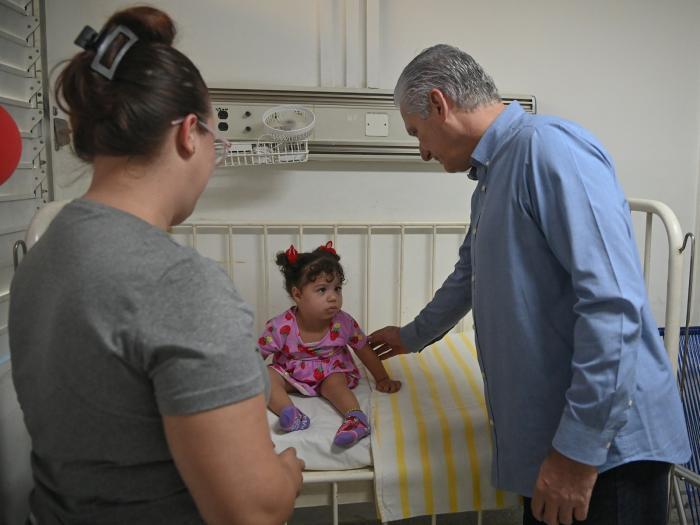
Against the backdrop of decades of intensified economic and energy blockades that have strained resource access across every sector of Cuban society, one of the nation’s most prestigious medical institutions is emerging as a trailblazer for digital transformation in public health. On a working visit in April 2026, Cuban President Miguel Díaz-Canel Bermúdez—accompanied by senior government officials including Deputy Prime Minister Eduardo Martínez Díaz, Public Health Minister José Angel Portal Miranda, and Communications Minister Mayra Arevich Marín—highlighted the groundbreaking work of the Institute of Neurology and Neurosurgery, praising its team for turning resource constraints into a catalyst for innovation.
Díaz-Canel’s institutional visits across Cuba are a core component of the national government’s digital transformation strategy, which prioritizes innovation in three critical public sectors: healthcare, K-12 education, and higher education. Since the close of 2025, the president has conducted monthly site visits to leading health centers, which have been designated as the vanguard of the country’s push to integrate digital tools into public services. During his tour of the 64-year-old neurology institute, Díaz-Canel emphasized that the team’s ability to advance ambitious digital projects despite severe external limitations is a powerful example of what Cuban officials term “creative resistance.” “On each of these visits, we see teams raise the bar higher, launch new initiatives, consolidate existing progress, and scale results to bring more institutions into these processes,” the president noted during discussions with facility leadership and clinical staff. He added that the institute’s longstanding national and international prestige made it a fitting leader for this national shift.
Founded shortly after the Cuban Revolution, the Institute of Neurology and Neurosurgery stands as the nation’s leading hub for specialized neurological care and research, leading national working groups for both neurology and neurosurgery. While the facility is compact in terms of bed count and physical footprint, its leadership says it punches far above its weight in the scope of specialized care it delivers to patients across the country—from complex neurosurgeries on pediatric patients to specialized care for adults. During the recent 2025-2026 Chikungunya outbreak, the institute stepped in to manage all national cases of the virus presenting with neuropathic pain, a responsibility its team was able to take on due to pre-existing specialized training and preparedness, according to institute director general Dr. Orestes López Piloto.
For the institute, the push into digital transformation and telemedicine did not begin overnight. Digital pilot programs first launched at the facility back in 2012, and work accelerated dramatically starting in 2018 when the Cuban government identified digital transformation as a core national priority. Dr. Duniel Abreu Casas, deputy director of Diagnostic Services at the institute, explained in an interview that while the country’s prolonged blockade has created steep barriers to accessing critical technology components and specialized software, the team’s collective commitment to advancing care has allowed the project to cross key milestones. “We’ve already won 50% of this battle,” Abreu Casas noted, pointing to persistent challenges such as accessing specific software application packages that are often blocked by international sanctions.
Despite these obstacles, the institute has achieved widespread digitization across its core operations. All diagnostic laboratories have transitioned to digital record-keeping, feeding directly into a centralized national electronic health record system that clinicians can access remotely from any workstation on the facility’s internal network. Three dedicated high-definition teleconsultation stations have been established, enabling real-time collaborative care between the institute’s specialists and medical teams at regional facilities across Cuba, as well as partner clinicians abroad. Digital storage of medical imaging and patient documentation has also eliminated the space constraints and retrieval delays associated with physical paper records, giving clinicians instant, location-independent access to critical patient data.
Abreu Casas emphasized that telemedicine is not just a technological upgrade for the Cuban healthcare system—it is a practical solution to the resource shortages imposed by the blockade. “While it is technically demanding, telemedicine delivers significant long-term savings across paper, printing, and clinical time, which is why the entire world is shifting toward this model,” he explained. “For us, it is a strategic way to address the tremendous shortages we face.”
Following his tour, Díaz-Canel left a note of tribute in the institute’s guestbook celebrating the team’s achievements. “It is very heartening, in these difficult times we are living through—marked by severe shortages and the impact of the intensified blockade, compounded by the energy blockade—to witness the dedication, determination, professionalism, tenacity, and drive to excel demonstrated by the staff of the National Institute of Neurology and Neurosurgery,” he wrote. “The progress made in the development of the digital transformation process and the use of AI at this important institution is particularly noteworthy. If we can do it today, we can always do it.”
Dr. López Piloto shared that the visit was a point of deep pride for the institute’s entire staff, from veteran clinicians with decades of experience to early-career researchers. For 2026, the institute’s core priorities are consistent: expanding access to high-quality neurological care for patients across Cuba, while continuing to scale up its work in telemedicine, digital transformation, and tele-education to share the institute’s expertise across the national healthcare system.