标签: Belize

伯利兹

  • Can Courts Help People Change Instead of Just Locking Them Up?

    Can Courts Help People Change Instead of Just Locking Them Up?

    BELIZE CITY – In a landmark judicial reform initiative, Belize is spearheading a transformative approach to criminal justice that prioritizes rehabilitation over traditional incarceration. This week, senior justice officials, including judges, prosecutors, and prison administrators, convened with international experts from Brazil and Trinidad and Tobago to operationalize the country’s groundbreaking Adult Alternative Sentencing Act of 2024.

    The high-level symposium, orchestrated by the United Nations Development Programme (UNDP) with financial backing from the European Union, examined practical implementation strategies for supervised community programs, probation systems, and other corrective alternatives to imprisonment. This paradigm shift promises to reduce prison overcrowding, enhance community-based rehabilitation infrastructure, and offer judicial discretion for non-violent offenses.

    At the heart of this judicial transformation lies the newly established Adult Probation Unit, created through the EU-funded PACE Justice Project. This institution will enforce rigorous supervision protocols and accountability measures to ensure public safety while facilitating offender rehabilitation.

    UNDP Belize representative Amilin Méndez emphasized the human-centric philosophy driving these changes: ‘This reform fundamentally reimagines justice as a vehicle for accountability with dignity rather than mere punishment.’

    Echoing this perspective, Adele Catzim-Sanchez, CEO of the Ministry of Human Development, articulated the government’s vision: ‘We’re transitioning from punitive approaches to purpose-driven rehabilitation. Evidence consistently demonstrates that structured support systems effectively address root causes of criminal behavior and promote sustainable societal reintegration.’

    Justice officials underscored that these alternatives represent neither leniency nor reduced commitment to public safety. Rather, they constitute an evidence-based methodology that simultaneously strengthens community protection mechanisms while tackling the underlying drivers of criminal activity.


  • More Than 2,300 Refugees Now Living in Belize

    More Than 2,300 Refugees Now Living in Belize

    Belize has emerged as a critical humanitarian sanctuary in Central America, currently providing refuge to 2,361 individuals fleeing violence and instability across the region. Official statistics reveal that the majority of these refugees and asylum-seekers originate from neighboring nations including El Salvador, Honduras, and Guatemala.

    The most recent quarterly data from October to December 2025 indicates a steady flow of displaced persons, with the national Refugees Department processing 45 new asylum applications during this period. Concurrently, 58 individuals received essential legal assistance and counseling services through the collaborative efforts of the United Nations High Commissioner for Refugees (UNHCR).

    Belize’s commitment to international protection standards stems from its longstanding adherence to the 1951 Refugee Convention. The nation’s humanitarian framework is formally established through its national Refugees Act, which provides the legal foundation for refugee rights and protections.

    UNHCR maintains an active partnership with the Belizean government, focusing on three key areas: strengthening the country’s asylum processing system, enhancing access to fundamental rights, and facilitating social integration programs. This cooperation includes direct funding for technical assistance and specialized training for personnel within both the Refugees Department and the Refugee Eligibility Committee.

    Beyond immediate protection concerns, the international agency advocates for legislative reforms to address potential statelessness issues. UNHCR additionally collaborates with various government ministries to ensure refugee populations can access essential national services including healthcare, education, and social welfare programs.

  • 98% of BTL Severance Paid, But What About Claims Older Than 6 Years?

    98% of BTL Severance Paid, But What About Claims Older Than 6 Years?

    Belize Telemedia Limited (BTL) has announced the near-completion of its severance payment obligations to former employees, fulfilling a mandate from last November’s Caribbean Court of Justice ruling. The telecommunications company reports successfully disbursing 98% of eligible claims that fall within the six-year limitation period established by national law.

    According to an official statement, BTL initiated payments promptly following the judicial decision, though three former employees have yet to collect their entitled compensation. The company attributes this remaining balance to the individuals’ failure to complete necessary disbursement procedures at BTL offices.

    This adherence to the statutory limitation period has ignited significant public debate regarding corporate responsibility versus legal technicalities. Critics argue that severance pay constitutes earned compensation that should transcend temporal legal boundaries, representing a fundamental matter of social justice rather than merely a contractual obligation.

    Prime Minister John Briceño recently weighed in on the controversy, expressing his view that severance claims should not be subject to statute limitations. His comments came following parliamentary proceedings where he emphasized the moral imperative to compensate all former employees regardless of temporal constraints.

    The Belize Communication Workers for Justice (BCWJ) has mobilized public demonstrations, conducting a three-day protest outside BTL’s Belize City headquarters. The labor advocacy group demands comprehensive payment for all affected workers, including those whose employment terminated beyond the six-year threshold.

    In response to mounting pressure, BTL’s Board of Directors has initiated review procedures for claims predating the limitation period. A conclusive determination regarding these historically excluded cases is anticipated during the board’s forthcoming meeting.

  • “I Just Saw Him Yesterday”: Family Grieves “Sparrow” After Dangriga Shooting

    “I Just Saw Him Yesterday”: Family Grieves “Sparrow” After Dangriga Shooting

    The coastal community of Dangriga is grappling with the tragic loss of a cherished resident following a fatal shooting incident on Friday evening. Bernaldo Gorosica, affectionately known throughout the town as ‘Sparrow,’ was killed in the Riverside area, sending shockwaves through this tight-knit Belizean community.

    Gorosica, remembered as a perpetually cheerful fisherman from the Salty Dog neighborhood, was described by those who knew him as a beacon of positivity. His cousin, who spoke with local media through tears, painted a portrait of a man whose infectious smile and vibrant personality touched everyone he encountered. ‘He was a cool person, always happy, full of vibes, always had a big smile on his face,’ she recounted emotionally.

    The victim’s sudden and violent death has left his family, including his two sons, devastated. The emotional impact is particularly profound given that many relatives had interacted with Gorosica mere hours before the tragedy. His cousin revealed the heartbreaking detail that she had exchanged greetings with him just one day prior to the shooting, making the loss even more difficult to process.

    Local law enforcement authorities have launched a comprehensive investigation into the circumstances surrounding the shooting. While police continue to pursue leads and evidence, the community focuses on mourning a man whose presence defined the character of his neighborhood. The incident has raised concerns about public safety in the area, though official details regarding potential suspects or motives remain undisclosed as the investigation progresses.

  • New Power Lines to Reach 150 Homes in Five Villages

    New Power Lines to Reach 150 Homes in Five Villages

    A landmark rural electrification initiative has brought transformative change to five previously underserved communities in Belize’s Orange Walk District. The collaborative project connecting Indian Church, San Carlos, San Benito Poite, Jalacte, and San Vicente to the national grid represents a significant infrastructure advancement for the region.

    For generations, residents of these villages endured unreliable electricity access that constrained domestic life, agricultural productivity, and entrepreneurial development. The newly operationalized project—spearheaded through a tripartite partnership between the European Union, Belize Electricity Limited (BEL), and the Belizean Government—has altered this reality fundamentally.

    During the official inauguration ceremony, Public Utilities Minister Michel Chebat emphasized the government’s commitment to inclusive development, stating: “This project clearly demonstrates that rural communities matter… no village is left behind in our national progress.”

    The undertaking evolved strategically from initial micro-grid conceptions to a more comprehensive grid-connection solution following extensive community consultations. BEL engineered a ten-mile interconnection to the national infrastructure, while the EU and utility provider co-financed complementary components including utility poles, transformers, distribution networks, street lighting systems, and residential wiring installations.

    Karique Marin, BEL’s General Manager for Distribution and Energy Solutions, highlighted the broader implications: “We are not merely activating electrical current; we are collectively powering socioeconomic progress. Reliable electricity possesses the transformative capacity to redefine family living standards, agricultural operational efficiency, and youth future-planning capabilities.”

    Initiated in 2021, the project now delivers sustainable power to over 150 households, creating unprecedented opportunities for agricultural enhancement, small business development, and improved quality of life across the beneficiary communities.

  • Government Hits Pause on BTL–Speednet Talks

    Government Hits Pause on BTL–Speednet Talks

    The Belizean government has instituted a temporary suspension of negotiations concerning the proposed acquisition of telecommunications provider Speednet by Belize Telemedia Limited (BTL). Prime Minister John Briceño mandated the pause in response to mounting public scrutiny and concerns surrounding the potentially market-altering deal.

    Michel Chebat, Minister of Public Utilities, clarified that this intervention represents a strategic delay rather than an outright termination of proceedings. The government’s objective is to ensure meticulous adherence to legal protocols while expanding opportunities for civic engagement and transparent dialogue.

    Despite the formal negotiation hiatus, consultation processes will persist through both public forums and internal deliberations within BTL and the Social Security Board. Minister Chebat emphasized that any prospective acquisition must undergo rigorous evaluation by the Public Utilities Commission (PUC), the autonomous body regulating Belize’s telecommunications sector.

    The PUC has concurrently initiated an independent assessment to determine whether BTL constitutes a dominant market force, with preparations underway to implement corresponding consumer protection regulations. Critical factors including market competition, service quality, pricing structures, and long-term industry sustainability will undergo comprehensive examination throughout this regulatory review.

    Minister Chebat reaffirmed the government’s commitment to prioritizing consumer interests and national welfare, stating: ‘The people of Belize must be the ultimate beneficiaries. This process will be guided by transparency, fairness, and due process.’ The government maintains that respecting the integrity of established regulatory frameworks remains paramount throughout this temporary suspension period.

  • PM Briceño Orders Reset, Brings PUC In

    PM Briceño Orders Reset, Brings PUC In

    In a significant regulatory intervention, Belize Prime Minister John Briceño has mandated a comprehensive pause in telecommunications discussions, emphasizing the necessity for proper oversight and transparency. The decision effectively resets ongoing negotiations between telecommunications entities and brings the Public Utilities Commission (PUC) into a central regulatory role.

    Prime Minister Briceño characterized previous approaches as putting “the cart ahead of the horse,” highlighting that the PUC should have been involved from the outset to provide essential legal and regulatory scrutiny. Drawing parallels to established procedures for Belize Electricity Limited (BEL), where the PUC examines multi-million dollar equipment purchases and rate increase proposals, the Prime Minister emphasized that telecommunications require identical oversight mechanisms.

    The suspension aims to address what government officials describe as widespread misinformation from multiple stakeholders. Minister responsible for Public Utilities, Michel Chebat, initiated the halt to enable the PUC to thoroughly evaluate proposals from Belize Telemedia Limited (BTL) and determine whether they align with national interests. The commission is expected to provide recommendations for a structured way forward once its assessment is complete.

    This intervention also addresses longstanding regulatory gaps in the telecommunications sector. PM Briceño referenced previous litigation where Smart successfully argued that BTL operates as a dominant provider, a case that resulted in court recognition of market imbalance. However, the previous administration failed to implement necessary legislation or regulations to create equitable conditions between industry players, creating the current regulatory vacuum that now requires resolution.

  • BCCI Reiterates Firm Rejection of BTL Acquisition

    BCCI Reiterates Firm Rejection of BTL Acquisition

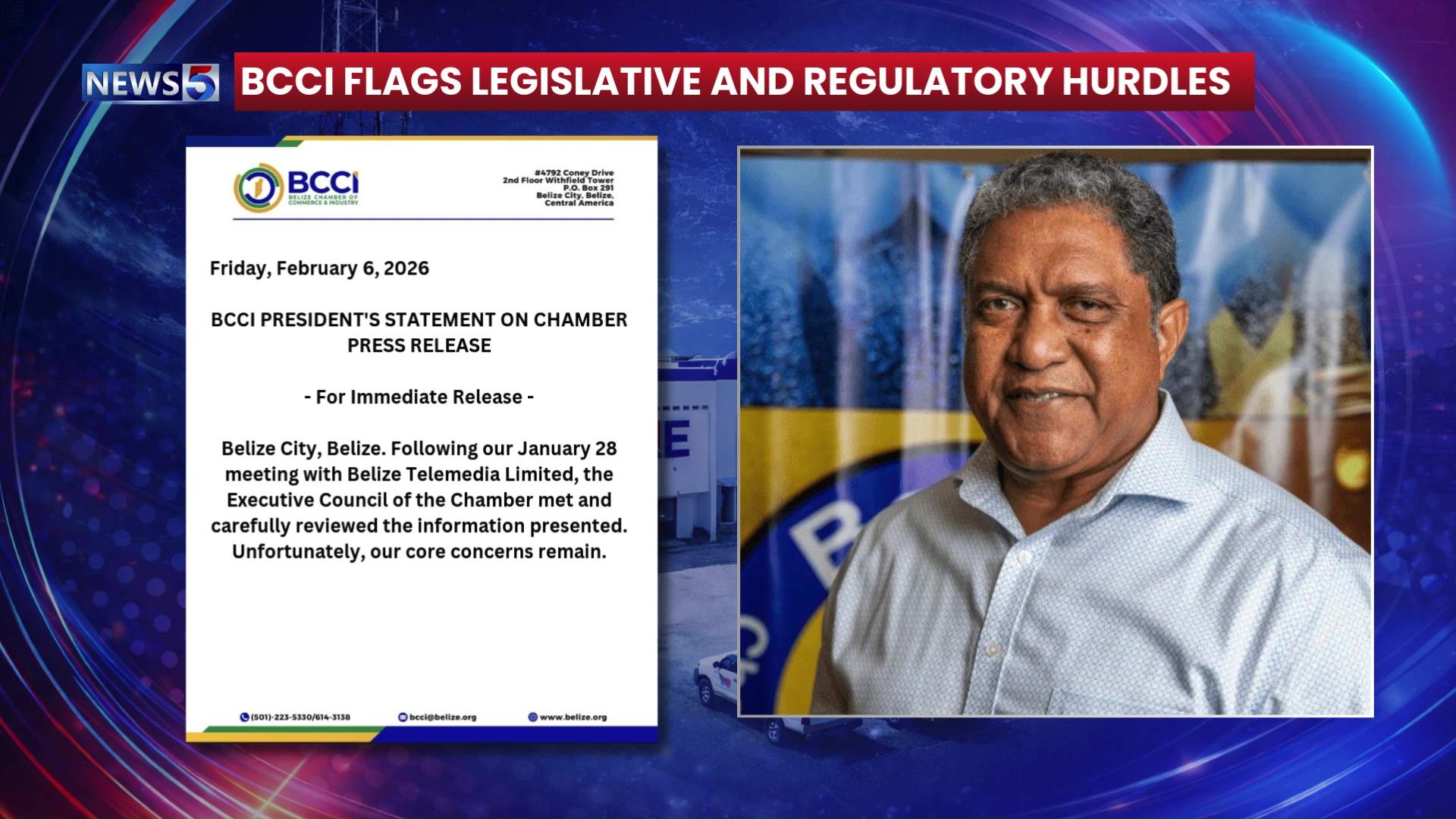
    The Belize Chamber of Commerce and Industry (BCCI) has escalated its resistance to Belize Telemedia Limited’s proposed acquisition of Speednet, declaring that fundamental concerns regarding legal, policy, and economic implications remain entirely unaddressed. Following a recent high-level meeting with BTL representatives, the chamber concluded that the transaction, as proposed, presents unacceptable risks to the nation’s economic landscape.

    In a strongly-worded statement issued on February 6, 2026, BCCI President Giacomo Sanchez articulated multiple grounds for opposition. The chamber emphasized that Belize’s current regulatory framework lacks modern competition and merger control legislation, creating significant legislative hurdles that must be resolved before any market consolidation of this magnitude can be considered.

    The valuation methodology presented for the acquisition has come under particular scrutiny, with the BCCI demanding independent verification of the figures, especially given the involvement of public funds and exposure of the Social Security Board. “Where public trust and financial security are concerned, independent validation is not merely advisable—it is absolutely essential,” Sanchez asserted.

    Beyond financial transparency, the chamber expressed deepening concerns about perceived politicization of the process and potential conflicts of interest, calling for a completely transparent procedure that is beyond reproach. The BCCI is advocating for a comprehensive national dialogue to examine the acquisition’s potential effects on market competition, service reliability, consumer pricing, and the broader business environment before any further progression of the deal.

  • PM Says BTL Acquisition Boosts Underserved Areas

    PM Says BTL Acquisition Boosts Underserved Areas

    BELIZE CITY – Prime Minister John Briceño has forcefully countered opposition from the Belize Chamber of Commerce and Industry regarding Belize Telemedia Limited’s proposed acquisition of Speednet. The escalating debate centers on the valuation methodology and strategic benefits of the telecommunications merger.

    Briceño characterized the Chamber’s position as deliberately overlooking the broader strategic picture, emphasizing that BTL’s primary interest lies in acquiring Speednet’s substantial customer cash flow rather than physical assets. The Prime Minister articulated that market saturation makes customer migration between providers virtually cost-free since both companies offer identical services.

    Technical valuation was conducted by Moore Global, an international accounting firm with headquarters in Brazil, which determined the acquisition represents sound financial logic. Briceño highlighted significant infrastructure advantages, particularly the transfer of Speednet’s tower network that would enable BTL to rapidly expand telecommunications coverage into currently underserved regions like Toledo District.

    The Prime Minister addressed concerns regarding Social Security Board investments, noting the institution currently receives merely two percent returns on its BTL investments – a rate insufficient to recoup initial capital. Briceño briefly acknowledged his family’s involvement in the matter before redirecting focus to the national development benefits, including accelerated telecom deployment in rural communities where service provision was previously economically unfeasible.

  • PM Responds After Northern Caucus Backs Deal

    PM Responds After Northern Caucus Backs Deal

    Prime Minister John Briceño of Belize finds himself at the intersection of political leadership and governmental authority as internal party dynamics complicate the controversial BTL-Speednet acquisition proposal. While his administration maintains an official stance of procedural caution, the ruling People’s United Party’s Northern Caucus has independently endorsed the telecommunications merger, creating a visible rift between party politics and executive governance.

    The political landscape intensified this week when PUP’s northern faction publicly declared support for the acquisition, directly contrasting with the Cabinet’s more reserved position of allowing regulatory processes to unfold. This divergence prompted journalists to question Briceño about his seemingly contradictory roles as both party leader and head of government.

    In response to media inquiries, Briceño articulated a clear distinction between his governmental and political capacities. “There are two things, one is the Cabinet and one is the party,” he stated, explaining that while the Cabinet seeks thorough consultation processes, the party’s executive felt compelled to respond to political pressure from opposition groups. The Prime Minister emphasized that the Northern Caucus’s endorsement represents a political position separate from the government’s official procedural approach.

    The situation highlights the complex balance required of democratic leaders who must simultaneously navigate party politics and national governance. Briceño’s response suggests an attempt to maintain both his party’s cohesion and his government’s regulatory integrity amid growing public and business community scrutiny of the proposed telecommunications merger.