标签: Belize

伯利兹

  • BNTU Explains Policy After Family Questions Denied Benefits

    BNTU Explains Policy After Family Questions Denied Benefits

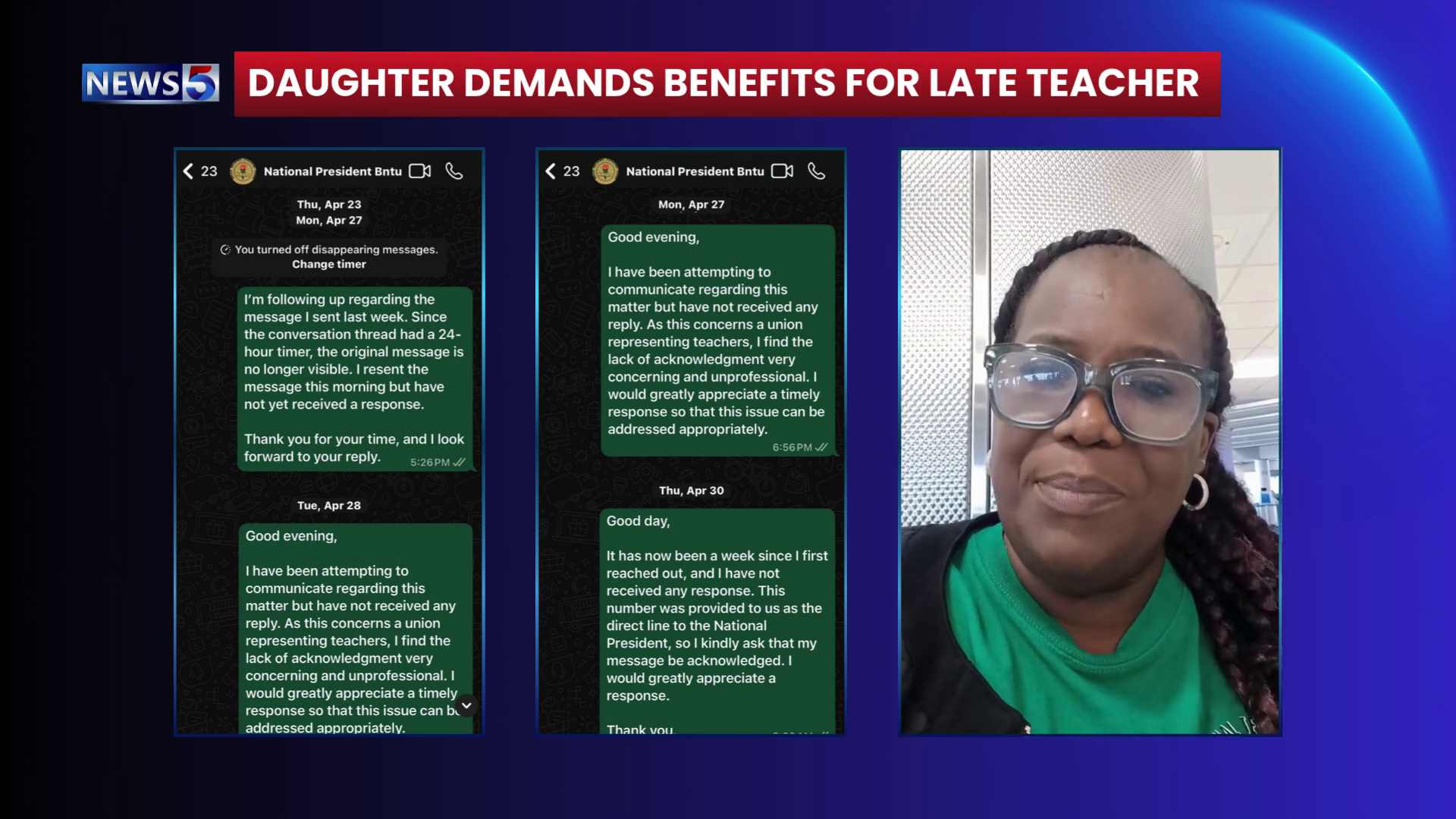
    In a public debate that has rocked Belize’s teaching community, a grieving daughter’s viral social media post has thrown a harsh spotlight on outdated death benefit rules at the Belize National Teachers’ Union (BNTU), prompting the union’s leadership to confirm long-planned policy overhauls to better protect retired educators.

    The controversy began when Odalisa Alonzo shared her family’s heartbreaking story: her mother, Eda Carballo, a veteran retired educator who paid union contributions for 25 years, was posthumously denied death benefits after falling behind on small annual dues while battling a long-term illness in retirement. Carballo had allowed her payments to lapse as she focused on medical care, a decision that ultimately cost her family the benefits she spent decades contributing toward.

    BNTU President Nadia Caliz acknowledged the family’s pain in a public address, confirming that the union’s current constitution explicitly requires members to maintain up-to-date dues to qualify for any benefits, and she lacks the legal authority to override this longstanding rule. Caliz also pushed back against any suggestion of miscommunication between union branches and the Alonzo family, noting that branch representatives have already produced documented proof of their conversations with the family, which will remain private to avoid escalating conflict.

    Despite standing by the existing legal framework, Caliz emphasized that the high-profile case has amplified a reform push she has led for years, long before she took the union’s top leadership role. For decades, the BNTU has required retired members to pay just $2 a month ($24 annually) in addition to a $30 annual fee, totaling $54 a year, to retain eligibility for death benefits. If payments stop, all benefits are permanently forfeited – a rule that has impacted dozens of retired teachers who contributed to the union for most of their careers.

    Caliz highlighted that the current contribution model actually works in members’ favor: over a 33-year teaching career, a union member pays roughly $724 in dues, but qualifies for a $3,000 death benefit, far outpacing their total contributions. But the rule that strips benefits for lapsed payments remains a point of deep injustice for many retired members facing illness or financial hardship after leaving the classroom.

    Caliz recalled that even before she became president, she repeatedly introduced resolutions at BNTU conventions to create a one-time payout for retiring members who choose to end their union membership, a reform that was voted down every time. Now, as union president, she has advanced a new proposal that already secured member approval: a modest increase in active member dues will fund two key changes to benefits: an increase in the total death benefit payout, and a multi-year benefits guarantee (three to five years) for all retired members after they leave the classroom. Under the new framework, retired members will not need to keep paying monthly dues to retain benefits during this guarantee period, eliminating the gap that led to Carballo’s denied claim.

    In addition to policy reform, the BNTU is also updating its administrative systems: a new centralized member database is being rolled out to track dues payments more closely and automatically flag retirees who are at risk of falling behind on payments, allowing union representatives to reach out proactively before benefits are forfeited.

    While Caliz reaffirmed that the current rule barring benefits for out-of-date members remains in place for the time being, the controversy sparked by Alonzo’s post has created new momentum for the reform package, which is already moving through the union’s approval process.


  • Transport CEO Chester Williams Denies Auto Parts Favoritism

    Transport CEO Chester Williams Denies Auto Parts Favoritism

    Amid growing public scrutiny over potential preferential treatment in government procurement, the top leader of Belize’s Ministry of Transport has publicly pushed back against accusations that his department unfairly favors a single auto parts supplier for official vehicle maintenance and inventory restocking. In a press briefing held July 17, 2026, Chief Executive Officer Chester Williams directly addressed circulating concerns that Special Effects Performance Auto Parts has gained an improper inside track to Ministry of Transport contracts, calling the claims unfounded.

    Williams explained that the ministry follows a strict competitive bidding process designed specifically to cut public costs and avoid favoritism. Under the protocols he has mandated, procurement teams are required to solicit price quotes from at least three separate auto parts vendors before making any purchase. Regular suppliers that the ministry routinely reaches out to include Special Effects, Westrac, Caribbean Motors, Belize Diesel and Belize Estate, he confirmed.

    “My instructions to my people is, when they are going to get parts, they are going to get invoices from three different locations. I will look at the one that is more cheaper and I will direct that they get it from the cheaper one,” Williams told reporters. “If we are getting parts from Special Effects it simply means that the parts there is cheaper and sometimes the parts are the same. My interest is to save the government money and ensure I do not spend it unreasonably for things that you can get cheaper at other locations.”

    When pressed by a reporter on whether all ministry auto parts contracts are steered exclusively to Special Effects, Williams rejected the assertion outright. He pointed to multiple recent purchases from other competing suppliers to back up his denial. “That is not true. We have also procured parts from Westrac. We have gotten parts from Belize Diesel, Caribbean Motors, Belize Estate. So it is not true to say that we only get from Special Effects, that is not true, no,” he emphasized.

    This report is a transcribed version of an evening television newscast, with all non-standard Kriol language adjusted to adhere to a standardized spelling system for published distribution.

  • Postal Service Launches “Celebrating Belize” Stamp Collection

    Postal Service Launches “Celebrating Belize” Stamp Collection

    On July 17, 2026, Belize took a creative step to share its unique national story with the global community, launching a brand-new definitive stamp collection that turns ordinary mail into moving miniature portraits of the nation. Organized under the evocative theme “Celebrating Belize”, the 11-stamp series from the Belize Postal Service weaves together the diverse threads of Belizean life, capturing iconic people, beloved landscapes, and defining cultural moments that shape the country’s collective identity. For the next half decade, these stamps will serve as Belize’s official postage, doubling as unexpected cultural ambassadors that carry Belizean spirit to every corner of the globe via international mail.

    The project, which has been more than 12 months in development, involved a collaborative planning process that brought together a cross-sector committee to brainstorm and refine the collection’s content. Postmaster General Dr. Marsha Price explained that the team deliberately set out to create a product distinct from previous definitive stamp issues, prioritizing breadth and freshness to reflect the full spectrum of modern Belize. “We gathered a committee to pool different perspectives on what elements of Belize deserved to be highlighted,” Price noted in remarks at the launch ceremony. “It took time to reconcile everyone’s vision, but we ultimately landed on a selection that feels new, different, and entirely representative of our country. We wanted something grand for 2026, and that’s what we’ve delivered.”

    The collection spans every core pillar of Belizean society, from education, agriculture, and sports to music, religion, and national celebrations, capturing the vivid energy and color of daily life across the nation. One of the most personal inclusions is the portrait of Samantha Ramirez, the current reigning Queen of the Bay, who called her selection a profound honor. For Ramirez, the stamps are far more than just printed paper for postage: they are tangible representations of Belize’s shared cultural heritage and national identity. She used the moment to encourage young Belizean women to embrace national cultural opportunities, noting that her participation in the Queen of the Bay pageant opened unprecedented doors, including the chance to feature on a stamp that will circulate globally.

    Logistics Minister Michel Chebat, who spoke at the launch event, echoed the framing of the collection as a global outreach effort for Belize. “These stamps act as ambassadors for our country, sharing our story and preserving moments of national pride for audiences both here at home and across the world,” Chebat said. Walking through the collection’s imagery, he highlighted how the range of subjects – from the historic Ruta Maya route to traditional woven tapestries to portraits of Belizean children – accurately captures the breadth of Belizean life and community interaction. “The bright, bold colors really lift the spirit,” he added. “At a time when we all need a little light, this collection is exactly that bright spot.”

    Alongside the celebration of traditional heritage, Chebat noted that the Belize Postal Service is also adapting to meet the demands of the digital age, rolling out modern upgrades including digital mail tracking, expedited delivery services, and new regional service hubs to remain relevant for 21st century users. The report from News Five’s Britney Gordon, who attended the launch event, brings this milestone cultural initiative to audiences across Belize.

  • Environment Minister Calls Jaguar Incident A Teaching Moment

    Environment Minister Calls Jaguar Incident A Teaching Moment

    A viral video showing two men cornering and handling a wild jaguar cub in Belize’s Mountain Pine Ridge reserve has triggered widespread public outrage across the Central American nation in recent days. Conservation experts have emphasized that the reckless encounter endangered both the jaguar cub and the two men involved, and may constitute a violation of Belize’s existing wildlife protection regulations. While authorities are currently reviewing the case to assess potential legal charges, the country’s Minister of Sustainable Development and Environment Orlando Habet is pushing for the incident to be framed not just as a violation requiring punishment, but as a critical turning point for national conservation education.

    Habet, an animal scientist by training, argued that broad public education must be the central priority moving forward, noting that many people—both foreign visitors and native Belizeans alike—often lack awareness of existing wildlife laws and the risks of interfering with wild animals in their natural habitats. Responding to fierce online calls for aggressive legal action, including widespread social media demands for a public manhunt and immediate arrest of the men involved, Habet pushed back against what he called excessive punitive measures. He addressed common public concerns that human interaction would lead the jaguar cub’s mother to reject her offspring, noting that while animal imprinting and bonding can occur early in development, widespread assumptions about permanent rejection are not universally accurate in such cases.

    “Harsher policing is not the answer for every incident involving human-wildlife interaction,” Habet stated. “Overly aggressive action in this case can end up working against our broader conservation goals, rather than supporting them.” Habet added that the incident should serve as a national teaching moment to reinforce the core principle of respecting wildlife boundaries in their natural ecosystems. He outlined a collaborative approach to this education effort, noting that Belize’s national zoo and partner conservation organizations have already stepped forward to support outreach and public awareness initiatives, with the zoo’s director issuing public guidance and contributing to ongoing conservation education work. Habet emphasized that coordinated, multi-stakeholder education efforts are far more valuable for long-term conservation than excessive punishment in this case, repeating, “Education, education, education” as the core priority moving forward.

  • Portable Sawmill, Heavy Equipment Seized in Forest Reserve Operation

    Portable Sawmill, Heavy Equipment Seized in Forest Reserve Operation

    On a multi-day enforcement operation deep in Belize’s protected Sibun Forest Reserve, authorities have uncovered a large-scale illegal logging operation that has underscored the deadly risks frontline conservation workers face when protecting the country’s vital forest ecosystems. The July 2026 operation, a joint effort between the Belize Forest Department and the Police Mobile Interdiction Unit, yielded a cache of critical evidence including freshly cut timber, a portable sawmill unit, and multiple pieces of heavy logging equipment tied to the unauthorized harvesting operation. One suspect was taken into custody during the raid, as conservation and law enforcement teams moved to document the scope of the illegal activity and secure contraband.

    Following the raid, Sustainable Development Minister Orlando Habet confirmed that a lead Forest Department officer involved in the operation has received explicit death threats, a consequence of the government’s year-long crackdown on rampant illegal logging across Belize’s protected areas. Since October 2025, the Belizean government has ramped up compliance enforcement within the Forest Department, with the dual goals of curbing unauthorized timber harvesting and eventually eliminating the practice entirely. As part of this broader effort, officials also imposed a moratorium on early-stage logging licenses, after internal investigations found that the license framework was enabling rapid deforestation of protected forest lands.

    Habet explained that the rising threats against enforcement officers are a direct outcome of the more aggressive crackdown: illegal logging has served as an unregulated, long-standing source of income for criminal networks and individuals, and the new enforcement policies are cutting into that profit stream. “Because we have been cracking down on it severely, and I think now the threats are starting to come into the department because it has been the livelihood for some of these illegal loggers for many years,” Habet said in an interview following the operation.

    The primary suspect identified in the latest operation, Marco Tulio Garcia of Armenia Village, is a repeat offender with a prior conviction for illegal logging: he was first charged with unauthorized harvesting of logwood back in 2017. Authorities executed a search warrant at Garcia’s residence following the Sibun Reserve raid, and seized multiple pieces of heavy logging equipment linked directly to the unauthorized operation.

    In response to the death threats against officers, the Belizean government has moved quickly to strengthen protection for frontline conservation staff. Habet confirmed he has held direct consultations with the national police minister and raised the issue during a recent cabinet meeting with Prime Minister. In coordination with government officials including Minister Kareem Musa, authorities have approved the creation of a dedicated joint task force that will pair specialized police units with Forest Department officers for all high-risk anti-logging operations. The new task force structure is also designed to address long-standing challenges with operational security: past raids have been undermined by leaks that tipped off illegal loggers, allowing them to move timber and escape before authorities arrive. The collaborative, planned task force model aims to close these security gaps and reduce risk to enforcement teams.

    This report is a transcribed excerpt from an evening television news broadcast, with all Kriol-language content rendered using a standardized spelling system for accessibility.

  • UNICEF Supports Climate Study on Belizean Children

    UNICEF Supports Climate Study on Belizean Children

    As climate change accelerates its global impacts, small coastal nations like Belize are facing increasingly severe disruptions to daily life, with the youngest members of society bearing a disproportionate burden that has long been overlooked in national policy planning. Now, a new collaborative initiative between UNICEF and Belize’s Sustainable Development Unit aims to change that, launching the nation’s first Climate Landscape Analysis (CLAC) specifically designed to map how rising temperatures, extreme weather and prolonged droughts harm children and other marginalized groups.

    For Belize’s children, climate change is not an abstract future threat: it brings overheated classrooms that derail learning, flooded school commutes that force extended closures, and extended droughts that strain community food and water supplies relied on by their families. In May 2026 alone, soaring regional temperatures forced schools across the country to launch emergency “Beat the Heat” programs to cope with unsafe learning conditions. The new study seeks to formalize documentation of these harms, centering the voices of the children most affected to build more responsive, equitable national policy.

    Elizabeth Emmanuel, project consultant for the CLAC initiative, explains that the research prioritizes identifying disparities in climate impact across different communities. “Children in low-income, vulnerable communities face far greater harm than their peers in more resourced areas,” Emmanuel notes. “The goal of this analysis is to pinpoint exactly where and why children face the worst risks, so that not just climate policies, but poverty reduction and social protection frameworks can prioritize these groups and address their needs early in national development planning.”

    Unlike many top-down climate impact assessments, the CLAC project centers direct input from children themselves to shape its findings. Sajid Ali, UNICEF’s representative in Belize, emphasizes that even school-aged children can provide critical, on-the-ground insight that adult policymakers often miss. “Climate impacts are not abstract for these kids — they live them every day, from sweltering classrooms that make it impossible to focus, to hurricanes and floods that destroy their homes and disrupt their education for months,” Ali says. “You can’t get an accurate picture of vulnerability without sitting down and listening directly to the people who are experiencing it.”

    Orlando Habet, Belize’s Minister of Climate Change, adds that the harms children face from climate change are often invisible when national policies are drafted, even as they are more severe today than in previous generations. “The intensity of heat and extreme weather now affects children far more than it affected us when we were in school,” Habet explains. “In rural communities, the gap is even wider: kids walk to school through flood mud after storms, arrive soaked or overheated, and their ability to learn is completely undermined. These are the impacts we have failed to account for until now.”

    Beyond shaping domestic policy, Belize’s government expects the study’s findings to strengthen its case for accessing international climate financing, which the nation will need to implement child-focused adaptation measures, from cooling systems for rural schools to flood-resilient infrastructure that protects learning facilities. Ali notes that Belize has already emerged as a leader in inclusive climate action among small developing nations. “Many countries are still rolling out new climate policy frameworks, which means this is the perfect time to embed equity from the start,” Ali says. “Belize’s government, communities and people have a far greater appetite to address these vulnerabilities head-on than most nations, putting them years ahead of the curve in building inclusive climate resilience.”

    When the analysis is finalized, it will serve as a national roadmap to reframe Belize’s climate response: moving beyond treating children and other vulnerable groups as afterthoughts, and instead positioning their protection as a core priority for all climate action in the country.

  • Belizeans Pick Sides for World Cup Final

    Belizeans Pick Sides for World Cup Final

    The 2026 FIFA World Cup final is just days away, set to pit Argentina against Spain in one of the most anticipated football matches of the year. While Belize did not qualify for the tournament’s final stage, that has done nothing to dampen the passion of Belizean football fans, who have already picked their allegiances and are gearing up for collective watch parties across the country. Local outlet News Five’s reporter Paul Lopez hit the streets and popular venues to speak with organizers and fans about their plans for the blockbuster matchup.

    One of the most unique community viewing events is being hosted at Belize’s Life Church, where Pastor Corny Dueck explained the initiative grew out of his own sons’ lifelong love of the sport. “My sons are all into football, and from the last World Cup to now they’ve been crazy about the game, playing in local city clubs,” Dueck said. “As the final drew closer, we realized our church is all about building community and family connection. If people would otherwise be stuck watching alone at home, why not gather here for a family-friendly party to enjoy the match together?”

    To add extra fun to the gathering, the church has planned a range of interactive activities for attendees. Organizers have secured an official replica of the 2026 World Cup match ball, and set up a 90-square betting grid, with each square corresponding to one minute of regulation play. Fans can pay a $5 fee to claim a square, marking the minute they predict the first goal of the match will be scored. The holder of the correct minute will win a prize, with a random wheel spin used to break ties if multiple participants pick the same minute. The church is also running a silent auction for signed memorabilia featuring star players from both finalist squads.

    For fans who prefer a more traditional outing to bars, lounges or restaurants, new local venue Social Lounge is also preparing for a full house of football fans. Public relations representative George Jones noted that the venue has invested heavily in technology to deliver an unbeatable viewing experience, even for a sold-out crowd. “We’re one of the newest venues in the area, and we’ve loaded up on large-screen displays,” Jones explained. “No matter where you’re seated, every angle gives you a clear view of the game. We’ll open our doors at 1 PM on Sunday for fans to come in, enjoy great food and great company, and soak in the atmosphere. This is going to be a historic match, one that fans will talk about for years. No matter whether you’re here for Messi and Argentina or for Yamal and Spain, it’s a win for football fans, and that’s what we’re most excited for.”

    Beyond organized public events, Lopez also spoke to casual fans across Belize to find out where they would be watching and who they were supporting. The overwhelming majority of fans polled threw their support behind Argentina, almost universally citing captain and global superstar Lionel Messi as the main draw. One fan said he planned to watch the match from his own home, picking up a couple of drinks to enjoy the game, and summed up his support simply: “Argentina of course, because of Messi, the greatest.” Another fan attending a public gathering said her group was “voting for Argentina all the way,” while a third fan at home simply answered “Messi” when asked who he supported, explaining that Messi is “the GOAT” (Greatest of All Time) of the sport.

    Still, a small but passionate contingent of fans are throwing their support behind Spain, with many pointing to young Spanish star Lamine Yamal as their pick. One Spanish supporter joked when asked why he backed Spain over Messi’s Argentina: “Because Argentina the thief, Messi the thief in general. Because they deh thief, deh the thief my dog Lamine Yamal.” Other fans were equally vocal in their support, chanting “Go Spain, Yeah!” as Lopez interviewed them on the street.

    This report is a transcript of an evening television broadcast from News Five, with Kriol language dialogue transcribed using a standardized spelling system for online readers.

  • $1.4 Million Upgrade Transforms Stann Creek ITVET Campus

    $1.4 Million Upgrade Transforms Stann Creek ITVET Campus

    In a major milestone for technical and vocational education in southern Belize, the Stann Creek Institute for Technical and Vocational Education and Training (ITVET) has formally opened the doors to its fully renovated campus this week. The $1.4 million infrastructure upgrade, entirely funded by the Basic Needs Trust Fund (BNTF), was celebrated with an official ribbon-cutting ceremony that brought together education leaders, government representatives, and community stakeholders to mark the completion of the project.

    The rehabilitation work addressed longstanding structural issues across multiple campus facilities, bringing critical improvements to building foundations, exterior and interior surfaces, and roofing systems. BNTF Project Manager Dorett Tennyson explained that persistent roof leakage had been one of the most disruptive problems plaguing the campus for years, disrupting classes and creating unsafe learning conditions for both students and staff. “A big part was the leaks; we had leaks on the roof. So you know, we cleared it, we sealed it, and we repainted it, so we shouldn’t have leaking roofs again,” Tennyson said in comments following the ceremony.

    After the official cutting of the ribbon, attending guests toured the refreshed campus spaces, where institution leaders outlined the far-reaching impacts of the upgrade beyond just structural repairs. For Stann Creek ITVET, the renovated facilities create the infrastructure needed to expand access to technical skills training for both enrolled students and community members across the region.

    Gwendolyn Garcia Martinez, manager of the Stann Creek ITVET campus, emphasized that the upgrade removes long-standing capacity barriers that have limited the institution’s ability to meet growing demand for skilled workers in southern Belize. The improved facilities will allow the institute to grow its student intake and deepen collaborative partnerships with local businesses and industry organizations that rely on ITVET to train a qualified workforce. Garcia Martinez noted that local tourism industry employers have already reached out to establish new training partnerships to upskill current and future employees, and the institution is also exploring new programming to serve marginalized groups including people seeking asylum. “It has given us another level whereby we will be able to better serve more persons within this area,” Garcia Martinez said.

    Dr. Louis Zabaneh, Acting Area Representative for the districts of Dangriga, Hope Creek, and Sarawee, reflected on the challenges the institution faced prior to the renovation. For years, underinvestment in campus infrastructure contributed to low enrollment numbers and left a gap in technical skills training access for communities in southern Belize. The completed upgrade is expected to reverse these trends, positioning the campus as a key driver of economic development and workforce preparation across the region.

  • Belize Postal Service Launches New Stamp Series Celebrating National Identity

    Belize Postal Service Launches New Stamp Series Celebrating National Identity

    On July 17, 2026, the Belize Postal Service launched a highly anticipated new definitive stamp collection, titled “Belize Definitive Stamp Issue 2026: Celebrating Belize,” designed to showcase the Central American nation’s unique character to both domestic audiences and the global community. The 11-stamp series, which will remain in general circulation for the next five years, weaves together a visual narrative of Belizean life through designs covering a diverse range of core cultural touchstones: popular sports, traditional pageantry, deeply rooted religious faith, local artistic expression, and beloved community-wide celebrations. Unlike limited-edition commemorative releases, definitive stamps serve as the standard, everyday postage for a nation’s postal system, making this collection a persistent, visible showcase of Belizean identity that will travel on mail to every corner of the globe. During the official launch ceremony, Michel Chebat, Belize’s Minister of Public Utilities, emphasized that the release represents far more than just an update to the country’s postage offerings. In his remarks at the event, Chebat noted that the series acts as a collective mirror, reflecting the shared experiences, individual stories, and landmark achievements that bind the Belizean people together as a community. “We celebrate much more than the release of 11 new postage stamps,” Chebat said. “We celebrate the people, traditions, milestones, achievements and shared experiences that define us as Belizeans.” Beyond their functional role as official postage, the new stamps will also act as a living archival resource, preserving visual representations of key themes tied to Belize’s national heritage for current and future generations. By integrating these images of national life into everyday mail, the Belize Postal Service has created a subtle, widespread tool for cultural preservation and international outreach, turning every mailed letter or package into a small ambassador for the country’s identity.

  • Thousands Sick as U.S. Investigates ‘Explosive Diarrhoea’ Outbreak

    Thousands Sick as U.S. Investigates ‘Explosive Diarrhoea’ Outbreak

    In a developing public health incident rocking the United States, federal and state health authorities are racing to trace the source of a sprawling cyclospora outbreak that has already sickened thousands of people across multiple states, with symptoms including extreme, sometimes explosive, watery diarrhea. As of the latest update from July 17, 2026, the total confirmed cases of the foodborne parasite infection have climbed to nearly 7,000 nationwide, making this one of the largest recorded cyclosporiasis events in U.S. history. Hardest hit by the outbreak is the state of Michigan, which has recorded more than 3,300 confirmed infections, accounting for nearly half of all national cases.

    Cyclosporiasis, the disease caused by the microscopic Cyclospora parasite, spreads when humans ingest food or water that has been contaminated with the pathogen. People who contract the infection typically experience a range of debilitating gastrointestinal symptoms beyond severe diarrhea: common effects include intense stomach cramping, persistent nausea, overwhelming fatigue, bouts of vomiting, and a sharp loss of appetite that can last for weeks. While health officials emphasize that the illness is rarely fatal, its impact on daily life and public health systems remains significant, with many patients requiring medical care to manage prolonged symptoms.

    Investigators have zeroed in on contaminated fresh produce as the most likely origin of the widespread outbreak, with the U.S. Centers for Disease Control and Prevention (CDC) formally linking shredded iceberg lettuce served at Taco Bell restaurant locations across five Midwestern and Appalachian states to the spike in infections. The investigation’s geographic focus has centered on Taco Bell outlets in Indiana, Kentucky, Michigan, Ohio, and West Virginia, all of which received lettuce from a single common supplier. Following the CDC’s preliminary findings, Taco Bell acted quickly to remove the implicated product from its supply chain and has halted all use of lettuce from the supplier named by public health investigators. The chain has also supported the CDC’s public advisory, urging consumers who may have eaten shredded iceberg lettuce at its affected locations in recent weeks to monitor their health and seek medical care if they develop symptoms consistent with cyclosporiasis.

    As the investigation continues, public health officials are working to trace the full distribution chain of the contaminated produce, identify additional potential exposure sites, and update guidance for consumers and healthcare providers across the country. Health authorities are also reminding the public that prompt diagnosis and treatment can reduce the severity and duration of cyclospora infections, and anyone experiencing persistent gastrointestinal symptoms after eating out in the affected regions should contact their healthcare provider immediately.