标签: Belize

伯利兹

  • Belize Left Off Spain’s Visa-Free List? Foreign Affairs Ministry “Clarifies”

    Belize Left Off Spain’s Visa-Free List? Foreign Affairs Ministry “Clarifies”

    On July 20, 2026, Belize’s Ministry of Foreign Affairs and Foreign Trade (MFAFT) issued an official statement to clear up widespread public confusion sparked by Spain’s recent publication of an updated visa-free travel list for the Schengen Area, which failed to include Belize.

    The MFAFT emphasized that the July 14 list released by Spanish authorities does not represent a new policy change targeting Belize. Instead, it is merely a consolidated restatement of long-standing visa exemption rules already codified in European Union Regulation 2018/1806, which has kept Belize excluded from the Schengen visa-free regime since the regulation took effect. All decisions on visa exemption status for non-EU countries are made collectively by all EU member states, not unilaterally by any single national government, the ministry noted.

    For Belize to gain full visa-free access to the entire Schengen Area, a formal amendment to existing EU-level legislation is required. This legislative process is entirely separate from domestic announcements individual member states like Spain issue to update their own public travel guidance, the statement explained.

    According to the MFAFT, Belize has pursued full Schengen visa waiver status for Belizean nationals through years of sustained diplomatic lobbying, targeted at both Spanish authorities and EU governing institutions. That long-term effort already delivered a major breakthrough in November 2025, when EU officials approved a new arrangement that allows Belizean citizens holding valid biometric passports to obtain multiple-entry Schengen visas valid for up to five years.

    The ministry framed that 2025 reform as a meaningful step forward that has significantly streamlined travel for Belizeans visiting Spain and other Schengen Area countries for a wide range of purposes, including business trips, leisure tourism, educational exchanges, and family visits. The new regime represents a substantial improvement over the stricter, more restrictive visa rules that were in place before the 2025 agreement, the statement added.

    The nine CARICOM member states that are included on Spain’s updated visa-free list, all of which already hold full Schengen visa exemption under existing EU rules, are Antigua and Barbuda, the Bahamas, Barbados, Dominica, Grenada, Saint Kitts and Nevis, Saint Lucia, Saint Vincent and the Grenadines, and Trinidad and Tobago.

    The 27-country Schengen Area, which allows for free movement across internal borders between participating European states, counts Austria, Belgium, Bulgaria, Croatia, Czechia, Denmark, Estonia, Finland, France, Germany, Greece, Hungary, Iceland, Italy, Latvia, Liechtenstein, Lithuania, Luxembourg, Malta, the Netherlands, Norway, Poland, Portugal, Romania, Slovakia, Slovenia, Spain, Sweden, and Switzerland among its current members.

    In closing, the MFAFT reaffirmed that it will continue advancing Belize’s request for full visa-free access through all appropriate diplomatic channels, with the goal of securing the legislative change needed to fully remove the visa requirement for all Belizean travelers.

  • Dozens of Baby Sea Turtles Found Dead on Belize Beach

    Dozens of Baby Sea Turtles Found Dead on Belize Beach

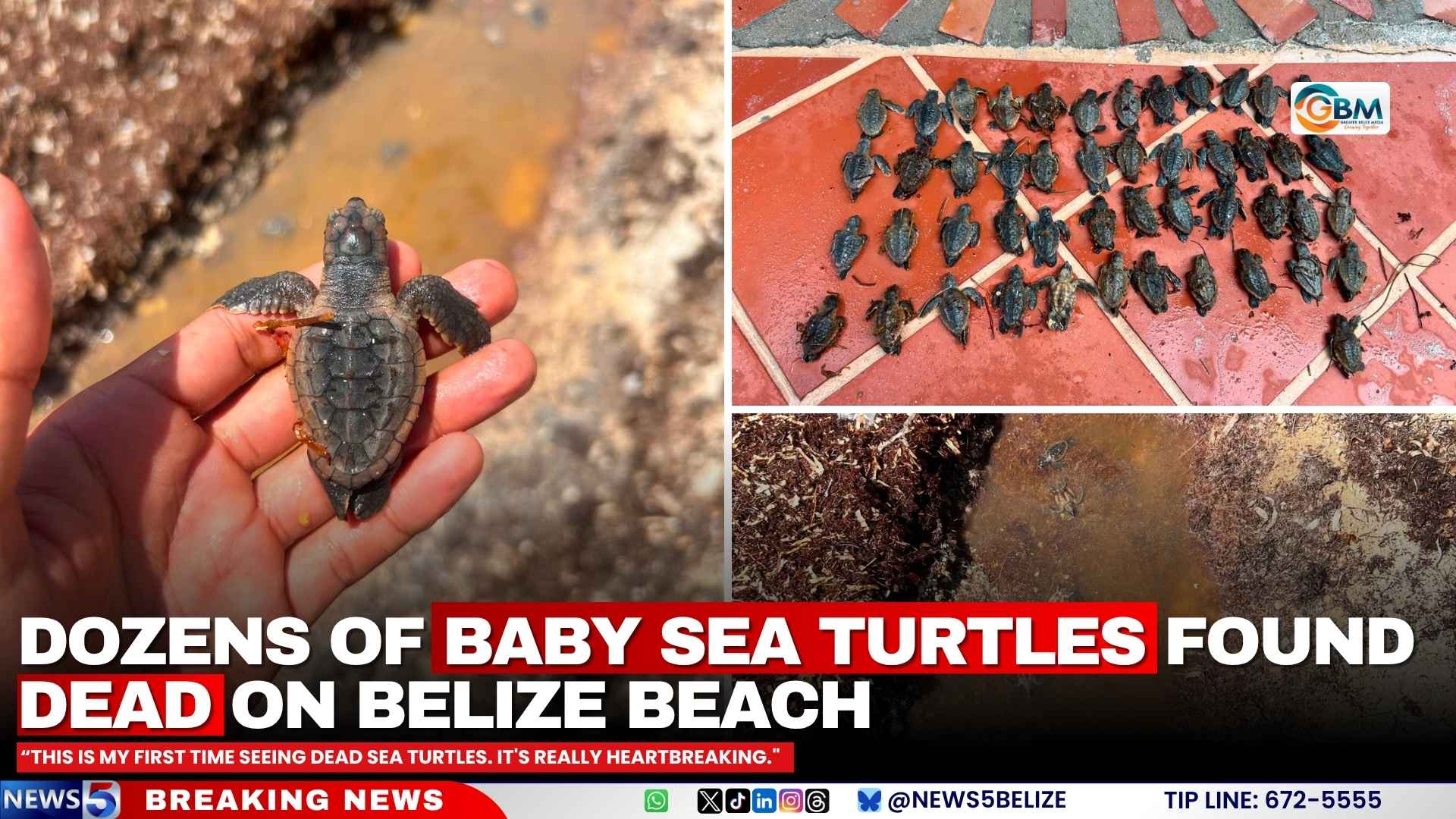
    On a quiet private stretch of shoreline on Belize’s Ambergris Caye, a devastating discovery earlier this month has thrown a harsh spotlight on the escalating sargassum seaweed crisis threatening Caribbean coastal ecosystems. At least 52 dead loggerhead sea turtle hatchlings, all from what appears to be a single complete nest that never reached the ocean, were found trapped in thick mats of rotting seaweed, triggering urgent calls for government intervention to address the growing environmental disaster.

    The grim find was made early one morning by Joshua Seguro, a part-time property worker who has been spending summers on this stretch of coast for more than 15 years. As he made his routine walk along the shore, he immediately recognized the small creatures as loggerheads – a globally threatened species of sea turtle – and realized none were still alive. Following protocol, he first notified the property’s owners before reaching out to the Belize Fisheries Department, which coordinated next steps with the Belize Sea Turtle Network.

    Fisheries officer Alicia Eck guided the local team remotely, instructing them not to disturb the protected wildlife and to conduct a full count to establish the scale of the die-off. By the time the count was completed, the group had documented 52 dead hatchlings, confirming the entire nest had perished before reaching open water. For local observers, the cause of death is unambiguous: the overwhelming blanket of decomposing sargassum that has choked Belize’s shorelines in recent years.

    Property co-owner Maria Sussman recalled that her family initially thought the hatchlings were alive when Seguro first brought the news. Excited to share the experience with their 5-year-old daughter, the whole group rushed to the beach, only to find more and more small bodies tangled in the thick seaweed as they walked along the pier. The team searched for the original nest in the hope of rescuing any remaining unhatched turtles, but could not locate it – it is believed to be buried deep beneath the pier, trapped under layers of accumulated sargassum.

    Seguro, who remembers watching healthy turtle hatchlings make their way to the ocean as a child, says this mass die-off is the starkest marker yet of how dramatically the coastal ecosystem has declined. He notes that successful turtle hatchings have become extremely rare in the area, with his last live sighting of a hatchling roughly a decade ago – that individual was also trapped in sargassum, but was rescued and released successfully. “We’ve never seen anything like this. Especially dead. This is my first time seeing dead sea turtles. It’s really heartbreaking,” he said.

    Crucially, this mass mortality event is not an isolated incident. Seguro says a similar discovery of dead hatchlings was made just 300 feet along the same coastline, raising alarming questions about the true scale of turtle deaths across Belize’s entire 200-plus miles of coast. “Now imagine the entire coastline of Belize. How many turtles are dying every single day?” he asked.

    Property co-owner Scott Sussman has called the deaths an unacknowledged tragedy, warning that uncounted thousands of turtles could be dying every month during hatching season without any formal documentation. He is pushing the Belizean government to take immediate, large-scale action to manage the sargassum crisis, pointing to successful mitigation efforts in neighboring Mexico as a model. Sussman noted that the government recently received $25 million in earmarked funds to address the sargassum problem, arguing that targeted investment in clearing and management would not only protect vulnerable marine species but also preserve Belize’s critical tourism industry.

    Today, Sussman says the sargassum accumulation on his beach is so thick that the shore cannot be traversed without hiring labor to clear a path, and the problem grows worse with every passing month. Beyond turtles, the sargassum bloom is damaging the entire coastal ecosystem: during a recent boat trip just five miles north of the property, Sussman encountered water thick with discoloration and reeking of decomposition, with hundreds of seabirds feeding on dead fish. Long-time residents report that once-common species including porpoises and abundant lobster populations have vanished from the area, replaced by 150 feet of murky brown water choked with rotting seaweed.

    Roberta Schulte, Sussman’s mother-in-law, added that the mass die-off of loggerhead hatchlings raises broader concerns about species preservation and economic risk. “You’re talking about the preservation of a species, and you don’t know what other species are being impacted,” she said. “People come to Belize for the sea, and to see what is being allowed to happen is really disappointing and possibly a deterrent for tourism.” Without urgent government intervention, locals warn, the damage to Belize’s marine ecosystems could become irreversible.

  • What Would International Accreditation Mean for UB Students?

    What Would International Accreditation Mean for UB Students?

    In a landmark move that promises to reshape higher education in Belize, the University of Belize (UB) has announced the formal submission of its Application for Accreditation Candidacy to the Southern Association of Colleges and Schools Commission on Colleges (SACSCOC), a leading regional accrediting body for higher education across the United States and portions of the Caribbean. The July 2026 announcement marks the end of years of behind-the-scenes institutional improvement and the start of a new chapter for the public university, which has long aimed to earn global recognition for its academic programs.

    UB President Dr. Vincent Palacio framed the submission as a defining milestone for the institution in comments released alongside the announcement. “This is a historic day for the University of Belize,” Palacio stated. “Our submission represents the culmination of years of work to strengthen our academic and administrative systems and position UB to meet internationally recognised standards of excellence. Today, we have taken a decisive step toward our vision of becoming an internationally accredited university.”

    To prepare the candidacy application, UB undertook widespread systemic reforms across all divisions of the institution. These upgrades included a complete overhaul of the university’s institutional effectiveness measurement framework, updated requirements for faculty credentialing to align with global standards, and revisions to hundreds of academic and administrative policies to build a robust, transparent quality assurance system that meets SACSCOC’s strict criteria.

    While university leadership has celebrated the submission as a major achievement, institutional officials have been clear that the process is far from complete. Candidacy status itself is not equivalent to full international accreditation, and the application now enters a multi-stage review process overseen by SACSCOC. First, accrediting body officials will conduct an in-depth review of UB’s submitted materials to verify that the institution meets all baseline eligibility requirements. If the application passes this initial screen, SACSCOC will dispatch an official Candidacy Committee to conduct an on-campus review to assess institutional practices firsthand. Only after completing this on-site evaluation will the commission vote to grant or deny UB candidacy status, a required prerequisite for full accreditation and SACSCOC membership.

    If UB ultimately earns full accreditation, the impact will extend far beyond institutional prestige for the Belizean university. International accreditation from SACSCOC would significantly boost the global recognition of UB degrees, making it easier for graduates to pursue graduate study at top international institutions and secure employment with global organizations. For faculty, the accreditation would open new doors for collaborative research partnerships with universities in the United States and across the Caribbean, while also increasing access to regional and international funding opportunities for academic projects. For Belize as a whole, the accreditation would help position the country as a regional hub for quality higher education, attracting more international students and strengthening the nation’s education sector.

  • The Defenders: Champions at Last

    The Defenders: Champions at Last

    After eight consecutive years of near-misses and relentless pursuit of top honors, the Belize City Defenders have written their names into Belizean basketball history, securing their first-ever National Elite Basketball League (NEBL) championship in a gripping Game Five showdown on Friday night.

    The title-deciding match unfolded at the Orange Walk Multipurpose Complex, where the Defenders held off a fierce comeback push from the Orange Walk Running Rebels to close out the best-of-five series. Entering the critical final game with a 2-1 series lead, the Belize City side held firm through four tense quarters, and when the final whistle sounded, a packed crowd of traveling supporters erupted into jubilant celebration, with players and coaching staff embracing on the court amid falling confetti.

    For veteran forward Nigel Jones, the long-awaited trophy carries far more weight than any individual career honor. Jones, who has been with the franchise through all eight years of its existence, spoke post-game about the intentional sacrifices he made this season to prioritize team success. “I’ve been showing up to the court for decades, and this championship was the one gap on my career resume I couldn’t fill,” Jones explained. “Going into this season, I made a promise to myself: I would cut out every distraction that had kept me from being fully focused on this team. I didn’t care about winning MVP, I didn’t care about averaging 20 points a game — all I wanted was to lift this trophy this year. I thank God that he let me and my teammates get this done; we never would have reached this moment without his grace.”

    General Manager John Marsden, who helped launch the Defenders franchise back in 2018, echoed Jones’ gratitude, turning praise toward the fanbase and corporate partners that stuck with the organization through its rebuilding years. “I just have so much gratitude for every single Defenders fan that has ridden with us from our very first game in 2018 all the way to this night,” Marsden said. “And I have to thank every sponsor that stayed with us through the ups and downs, when we weren’t winning and when we were still building something special.”

    Marsden called the championship win one of the most meaningful moments of his entire life, placing it alongside the biggest personal milestones. “This organization takes so much pride in competing at the highest level, and in making sure every one of our players is supported and taken care of the way they deserve,” he noted. “When that final buzzer went off, I felt a joy that I haven’t experienced since the birth of my second child. This is the happiest moment of my professional life, hands down.”

    For the Defenders franchise and its loyal fanbase, the win brings a close to an eight-year wait for a first major title, cementing the team’s place as one of Belize’s top competitive basketball programs and setting the stage for a title defense run in the 2027 NEBL season.

  • Belize Expresses Solidarity Following Guyana Ferry Tragedy

    Belize Expresses Solidarity Following Guyana Ferry Tragedy

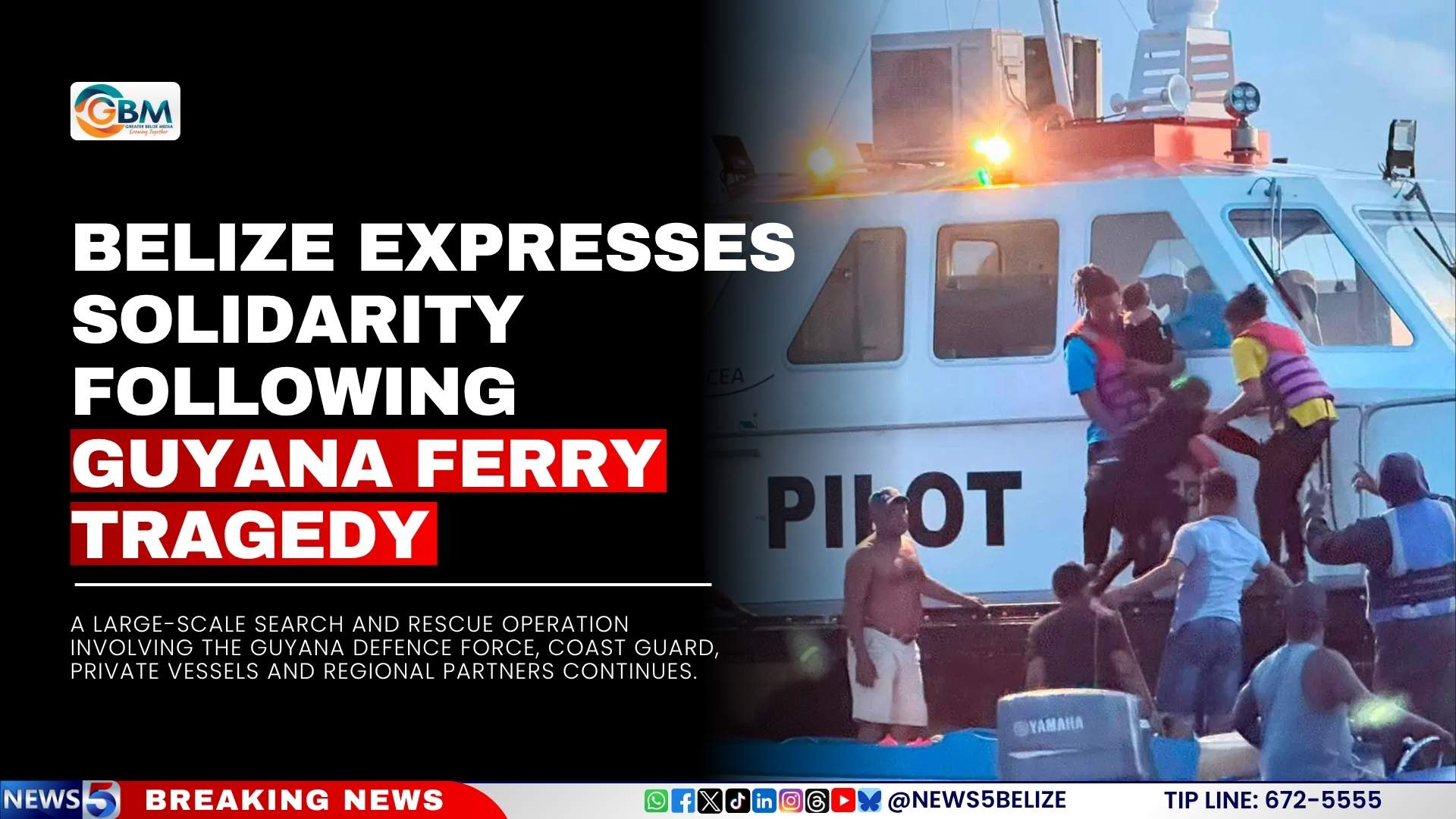
    In the wake of a devastating ferry disaster off Guyana’s northern coast that has left dozens of people presumed dead and dozens more unaccounted for, the Central American nation of Belize has formally extended its deepest condolences and unwavering solidarity to the government and people of Guyana.

    The tragic incident unfolded late Saturday, when the MV Barima, a passenger vessel carrying 116 passengers and 17 crew members, capsized mid-journey en route from Guyana’s capital Georgetown to the far-northern port of Port Kaituma. As of Sunday, local rescue authorities had successfully pulled 67 survivors from the water, but hope is fading for the remaining passengers and crew who have not been located.

    In an official statement released Sunday, Belizean Prime Minister John Briceño voiced his country’s shared grief with Guyana amid ongoing search efforts. “The thoughts of the people of Belize are with the people of Guyana as they grapple with this tragedy,” Briceño’s statement read. The prime minister added that the entire nation of Belize is praying for the miraculous safe recovery of those still missing, and extends heartfelt comfort to the families waiting anxiously for any update on their loved ones.

    To date, a large-scale multi-agency search and rescue operation is still underway. The effort brings together personnel from the Guyana Defence Force, the Guyana Coast Guard, privately owned local vessels, and regional partner organizations, all working around the clock to locate survivors and recover the remains of victims of the disaster.

  • Too Many Agencies, Too Little Coordination? Here’s the New Plan for Protecting Children

    Too Many Agencies, Too Little Coordination? Here’s the New Plan for Protecting Children

    On July 18, 2026, the Central American nation of Belize launched a groundbreaking institutional reform to strengthen its national safeguards for vulnerable youth, merging two disconnected oversight bodies into the unified Child Protection and Child Justice Steering Committee (CPJSC). Designed to address longstanding systemic weaknesses, the new committee will steer national-level reforms rather than handling individual child protection cases, operating under a structured five-year action plan spanning from 2026 to 2031.

    The consolidation brings together the former Child Protection Thematic Working Group and Child Justice Steering Committee, creating a single collaborative platform that unites stakeholders across government ministries, the judicial branch, law enforcement agencies, civil society organizations, and international development partners. The restructuring comes after a nationwide audit of Belize’s existing child protection framework, which identified critical gaps: fragmented institutional coordination and misaligned strategies among bodies tasked with preventing and responding to childhood violence, abuse, neglect, and exploitation.

    Attorney General Anthony Sylvestre, whose ministry holds a seat on the new committee, emphasized that years of parallel operations under two separate bodies made clear that a more integrated approach was non-negotiable. “Experience has shown over time that it’s best to have a collaborative effort,” Sylvestre noted. “You have stakeholders from various agencies, whether it be law enforcement, whether it be the court, whether it be in social service, all coming together to address the issue of child protection and child justice.” He added that having the Attorney General’s office represented directly on the committee will accelerate the legislative process for policies impacting children and families, ensuring urgent reforms move through parliament far more quickly than in previous years.

    Leadership of the CPJSC is headed by Justice Natalie Dixon, with the Director of Belize’s Department of Human Services serving as Vice-Chair and the National Commission for Families and Children acting as the body’s administrative secretariat. Justice Dixon reiterated that the committee’s core mandate is focused on systemic oversight, not case management, clarifying that its work will center on tracking and guiding national reform efforts across the sector.

    The committee’s work is anchored in five core strategic priorities: fortifying the overall national child protection infrastructure, updating and modernizing Belize’s outdated child justice system, expanding access to prevention programming and early intervention services, improving data collection practices and institutional accountability, and upskilling the workforce that supports children and families across the country.

    Sajid Ali, representative for the United Nations Children’s Fund (UNICEF) in Belize, which has supported the reform process, pointed out that children have historically been sidelined from key policy discussions that shape their lives. Ali stressed that young people’s perspectives must be placed at the center of all decisions that impact their well-being. “Strong coordination and accountability are essential to building a child protection system that can effectively respond to the needs of children and families,” he said.

    The CPJSC’s 2026-2031 action plan is fully aligned with both Belize’s national Children’s Agenda and the United Nations Convention on the Rights of the Child, the global treaty outlining fundamental rights for all children.

  • Captain Arrested, Scores Feared Dead After Guyana Ferry Disaster

    Captain Arrested, Scores Feared Dead After Guyana Ferry Disaster

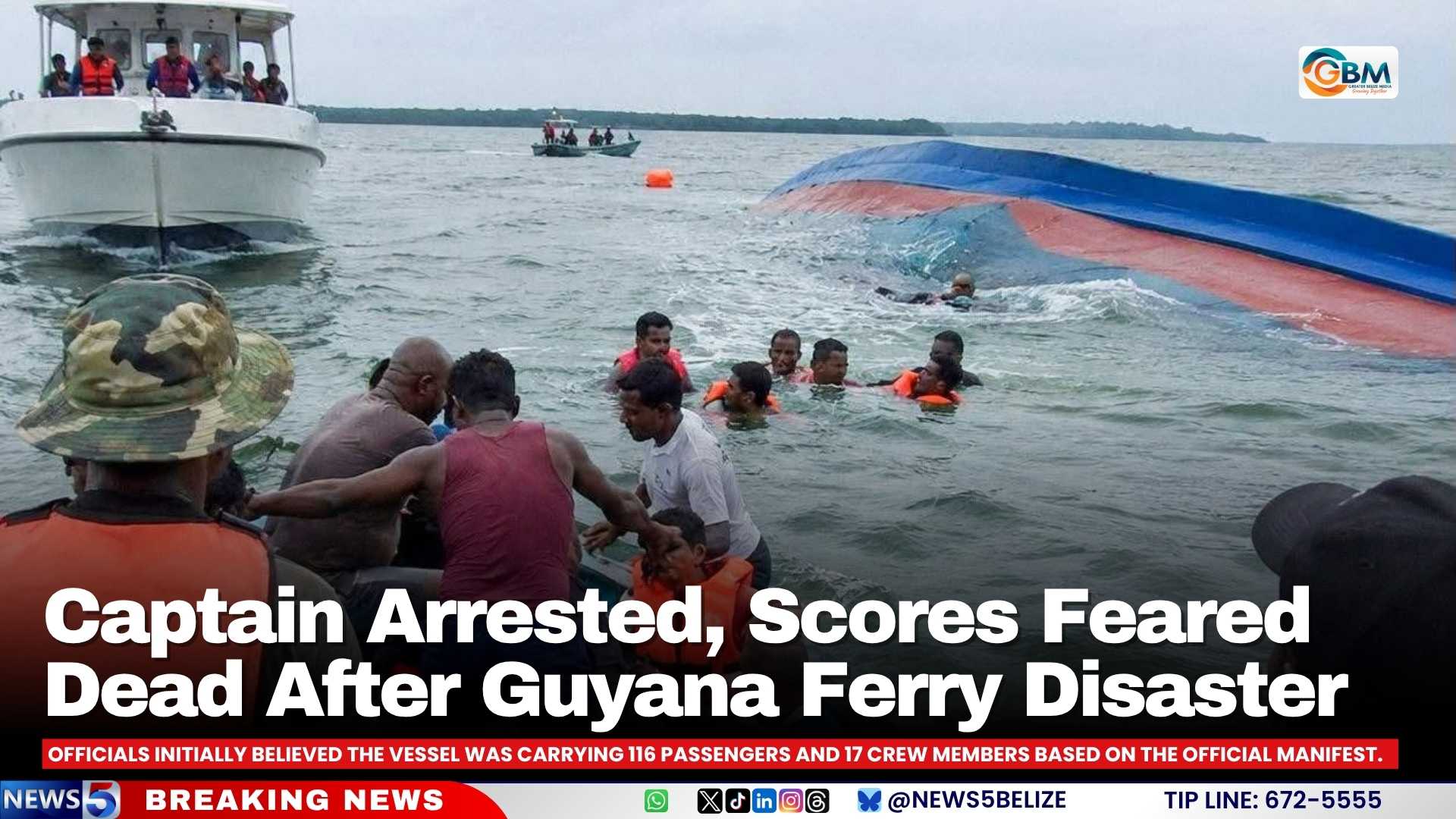
    Two full days after a aging passenger ferry overturned in open waters off Guyana’s northern shore, regional emergency crews pressed on with a massive search and rescue mission Monday, as authorities confirm at least two fatalities, hold 67 survivors in care, and brace for what could become the South American nation’s deadliest maritime disaster in more than 50 years. The incident, which unfolded late Saturday, has already sparked a full criminal probe into systemic safety failures, with the vessel’s captain and lead engineer taken into custody on Sunday following positive drug tests.

    The MV Barima, a 87-year-old ferry that provided critical transportation between the capital city of Georgetown and the remote northwestern community of Port Kaituma, issued a frantic distress call to maritime authorities at approximately 11:00 p.m. local time. Roughly 15 minutes after the call went out, the vessel overturned roughly seven miles from the coast, according to initial incident reports.

    From the earliest hours of the response, officials have grappled with severe uncertainty over just how many people were aboard the ferry when it capsized. Initial official passenger manifests listed 116 passengers and 17 crew members set to make the voyage, but investigators have since confirmed that the document is wildly inaccurate — a discrepancy that has deepened fears that far more people were on the vessel than officially recorded, raising the potential death toll far higher than initial estimates. Public Works Minister Juan Edghill confirmed Monday that just 35 of the 67 people pulled alive from the Atlantic appear on the official passenger roll, confirming that dozens of unregistered travelers boarded the vessel without being logged.

    Edghill framed the unrecorded boardings and broader safety gaps as a deliberate operational failure that has severely hampered rescue efforts, telling reporters Monday the situation qualifies as a criminal matter. “We are talking about operational breaches. People will be dealt with,” the minister said.

    Retired Brigadier and Prime Minister Mark Phillips echoed that commitment to accountability in a public address Sunday, noting that the full scope of the disaster cannot be assessed until investigators untangle the true passenger count and root causes of the capsizing. “Where negligence, misconduct or criminal wrongdoing is established, those responsible will face the full force of the law,” Phillips said.

    The investigation’s first major arrests came Sunday, when authorities took the ferry’s captain and first engineer into custody after both tested positive for marijuana. The two remain in police detention as investigators continue to question witnesses and comb through evidence related to the vessel’s operations, passenger logging procedures, cargo loading practices, and overall compliance with national maritime safety regulations.

    As search operations stretch into a third day, rescue teams have warned that hopes of finding additional surviving passengers are fading fast. Most of the 67 survivors pulled from the water spent between 12 and 24 hours clinging to overturned hull debris, life jackets, and floating cargo before rescuers could reach them. Among the survivors are 15 children, the majority of whom are being treated for minor injuries including cuts, bruises, and hypothermia from prolonged exposure to cold Atlantic waters.

    Multiple survivors have given consistent first-hand accounts that the vessel began taking on water soon after it encountered rough sea conditions mid-voyage, with several reporting that water had been seeping into the lower cargo hold for hours before the ferry suddenly rolled and capsized. Shipping records confirm the MV Barima was originally constructed in 1939, and underwent routine scheduled maintenance in 2024. The vessel was slated to undergo a major full dry docking refit later this year, according to Guyana’s maritime authority.

    Local community leaders have described the ferry route as a critical lifeline for residents of the remote interior, who rely on the vessel to travel to the capital for medical care, work, and family visits. As the search continues, Guyana’s government has come under renewed pressure to overhaul the country’s aging maritime transportation infrastructure and enforce stricter safety regulations for inter-island and inter-community passenger vessels.

  • US-Iran Conflict Escalates: What Has Been Targeted So Far?

    US-Iran Conflict Escalates: What Has Been Targeted So Far?

    Just one month after diplomatic peace talks failed to de-escalate long-running tensions between the United States and Iran, the region has slid into a rapidly intensifying armed conflict that is leaving a rising toll of civilian casualties and widespread destruction of critical infrastructure. The core point of contention driving the latest wave of violence is strategic control over the Strait of Hormuz, the world’s most important chokepoint for global oil trade, where neither superpower is willing to concede dominance to the other.

  • Spain Beats Argentina 1-0 to Win 2026 World Cup

    Spain Beats Argentina 1-0 to Win 2026 World Cup

    The 2026 FIFA World Cup delivered a historic final Sunday at New Jersey’s MetLife Stadium, where Spain claimed their second men’s world title with a tense 1-0 extra-time victory over defending champion Argentina, blocking Lionel Messi’s bid for an unprecedented second consecutive World Cup trophy.

    The match-winning moment came in the 106th minute of extra time, when substitute forward Ferran Torres tapped home the only goal of the game. The play unfolded after a piercing through-ball split Argentina’s defensive line, winger Nico Williams pulled the ball back across the goalmouth, and Torres finished from close range to put Spain ahead — a lead they would never give up.

    This triumph marks Spain’s first World Cup title since their iconic 2010 victory in South Africa, capping a nearly flawless tournament run for the European side. Spain entered the final unbeaten through all previous rounds, having conceded only a single goal across six matches ahead of the title decider. Sticking to their signature possession-based playing style, La Roja controlled the tempo of the final from the opening whistle, pinning Argentina back for most of the 120 minutes.

    In contrast, Argentina’s road to the final followed a far more rugged path. Entering the match fueled by the leadership of 39-year-old Messi, widely expected to make his final World Cup appearance, the South American side had battled through a series of narrow, hard-fought knockout matches to reach the title game. Their challenge became exponentially more difficult in the second half of regulation, when star midfielder Enzo Fernández was shown a second yellow card and sent off, leaving Argentina to play more than 50 minutes of football with 10 men.

    Regulation time ended goalless after 90 minutes, with Argentina putting in a gritty defensive shift to keep Spain off the scoresheet. Despite being a man down and outpossessed by a wide margin, Argentina held on through the first half of extra time. Spain kept pushing for a winner, however, testing Argentina goalkeeper Emiliano Martínez repeatedly with consistent chances. Martínez turned in a man-of-the-match performance for the losing side, making a string of spectacular saves to keep the game scoreless for more than 100 minutes before Torres finally broke through.

    Notably, Argentina failed to register a single shot on target across the entire 120 minutes of the final, a testament to Spain’s sustained control and Argentina’s limited attacking opportunities after going down to 10 men. With the final whistle, Spain’s squad erupted in celebration, wrapping up a dominant tournament that cements their status as one of the top men’s national teams in international football, while Messi’s final World Cup campaign ends one win short of history.

  • Volleyball’s Golden Guys Receive Heroes’ Welcome

    Volleyball’s Golden Guys Receive Heroes’ Welcome

    On July 17, 2026, months of grueling training and decades of unmet ambition culminated in a euphoric homecoming for Belize’s senior men’s national volleyball team, who returned to a nation overflowing with pride after claiming the country’s first-ever Central American men’s senior volleyball championship. The historic victory came against tournament hosts Costa Rica, marking a watershed moment for Belizean sports that has been generations in the making.

    Even a two-hour delay in the team’s scheduled arrival could not dim the excitement of hundreds of waiting fans. Family members, loyal supporters, and young aspiring athletes gathered outside the Belize Elementary School Gym overnight, holding out for a chance to cheer their heroes across the finish line at home. The celebration stretched into the following day, with local development program EA Volleyball Academy hosting a celebratory lunch for the champions at SJC Gym, where rising young volleyball talent got the chance to honor their idols.

    For team captain Elton Anderson, who has spent years mentoring young players through his grassroots development program, the victory carried extra emotional weight. Standing before a room of aspiring young athletes, Anderson fought back tears as he noted that multiple graduates of his program now wear the Belizean national jersey – a full-circle moment that made the gold medal far more than a personal or team win. Anderson emphasized that the milestone belongs to the entire nation, calling for cross-sport unity to foster future success across all Belizean athletic disciplines. “This is not only about us, this is about the entire country,” he said. “All the other disciplines, we would like them to come out to support because maybe the next gold medal might come from another discipline. And the more we stand, the more we support each other, the more successful we will become as a country.”

    Among those Anderson mentored is Francis Hauze, who earned tournament Most Valuable Player honors for his performance in Costa Rica. Hauze reflected on years of showing up to regional tournaments, watching champions hoist the trophy while dreaming of the day Belize’s national anthem would echo through the arena. “Every year we go, we look at the first place team and say, ‘We want to hear our national anthem being sung,’ and just to be proud and this year we finally did it,” he said. “So it’s a really great, great feeling.”

    The win also delivers closure for a decades-long family legacy for outside hitter Ernest Broaster Jr. His father and earlier generations of Belizean volleyball players spent years chasing the regional title, never quite reaching the top spot – a burden Broaster Jr. carried into this year’s tournament. “This is an amazing feeling, not just for me, but for my family as well. Just like you said, second generation, you know. Everybody knows I’m carrying a legacy on my back. It’s not just a name. It’s not just a number. It’s more than that, you know? It’s the reason I play,” he explained. The outpouring of support from Belizean fans waiting for the team’s arrival only reinforced that sense of purpose: “The amount of people that was there waiting for us is very nice. It was very surprising and very heartwarming welcoming. I loved it. Everybody was there, big smiling. We heard the music.”

    The celebration reached its peak Thursday with a victory motorcade that wound through the streets of Belize City, where crowds lined the route waving Belizean flags, honking car horns in celebration, and cheering the team that made history. The championship comes one year after a devastating early exit from the same tournament, turning 2025’s heartbreak into 2026’s glory for the underdog Belizean side.

    For 18-year-old Daniel Musa, the team’s youngest member, the win is about more than just one title – it is a beacon for the next generation of Belizean athletes. “It’s just an inspiration for all the younger kids to be able to play at a higher level. We have a talented team, and the future is looking bright,” Musa said. As the celebrations wind down, the team says its new goal is to build on this historic breakthrough, cementing a culture of winning volleyball in Belize for years to come.